
Baldcypress (Taxodium distichum, )
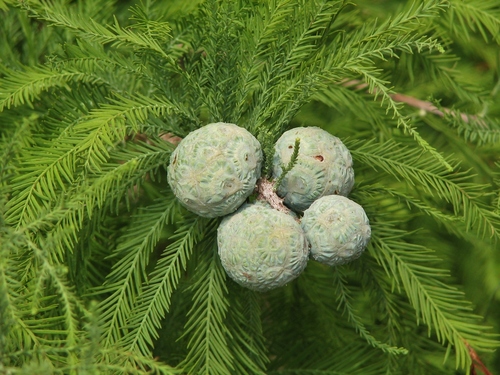

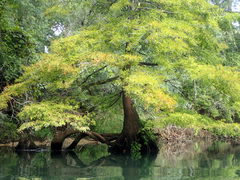
Baldcypress (Taxodium distichum) is a deciduous conifer in the Cupressaceae family, native to wetlands in the southeastern United States. Its soft foliage turns rusty orange in fall, its trunk has a bottle-shaped base, and root knees emerge from waterlogged or flooded ground.
Read moreBaldcypress, Bald cypress and Swamp cypress
Allow a few hours of direct sun per day, preferably morning or evening.
Full sun to light partial shade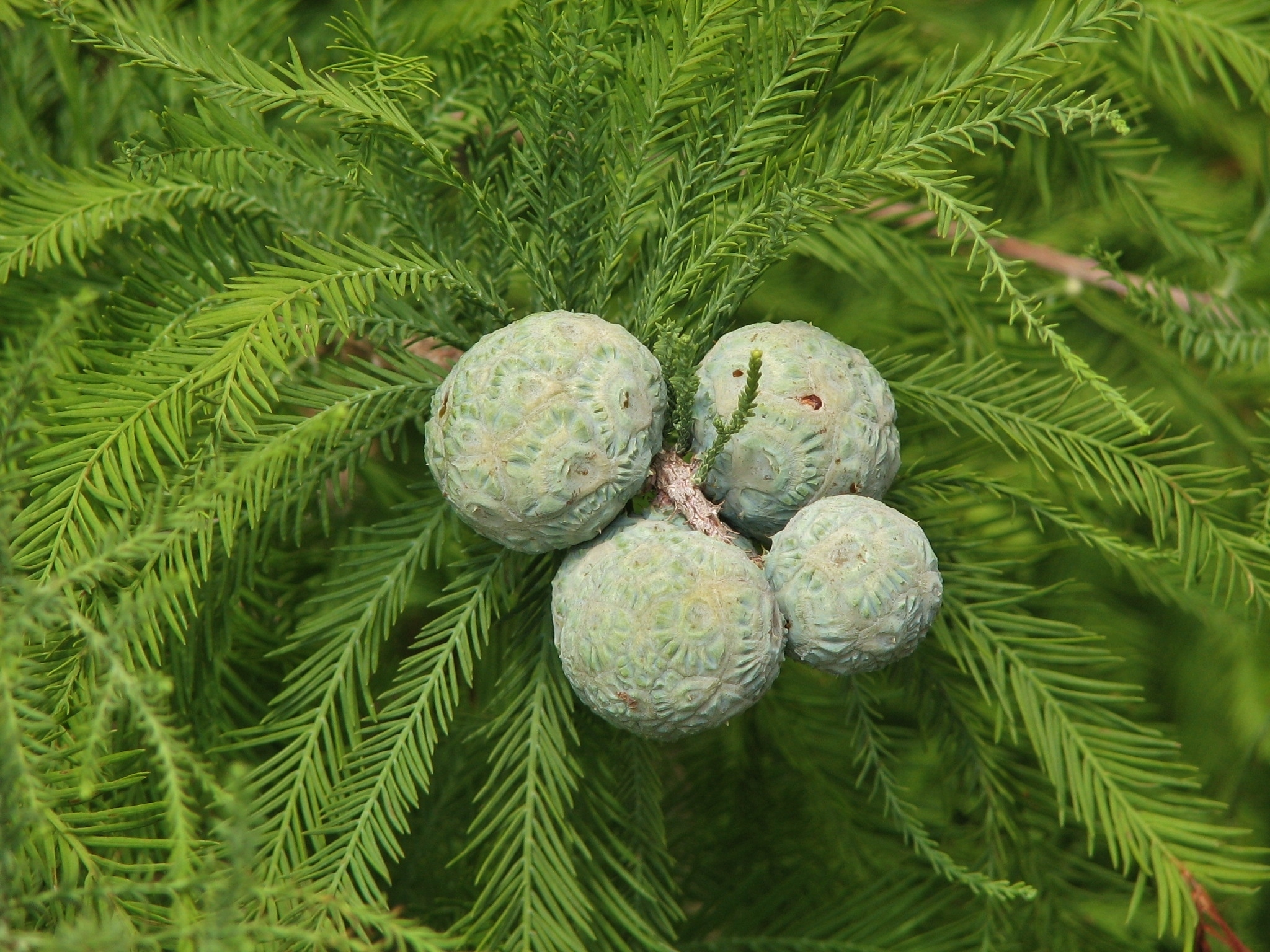
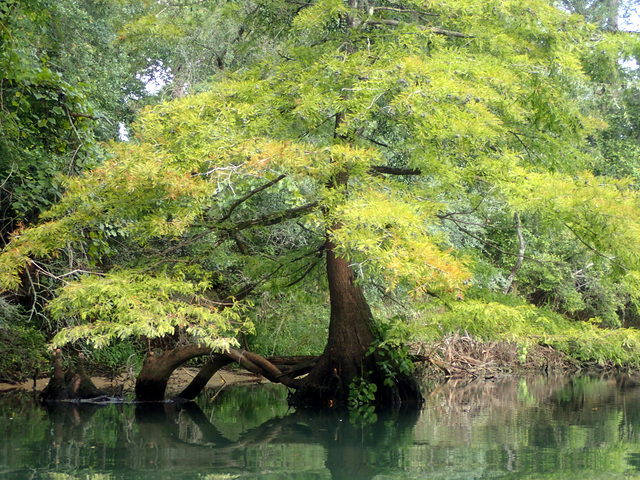


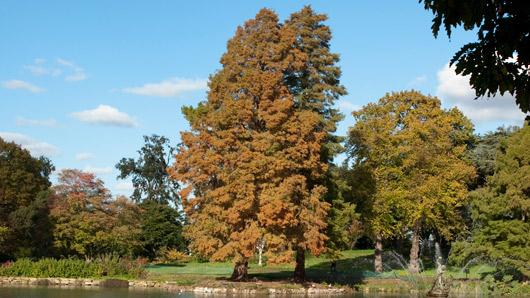
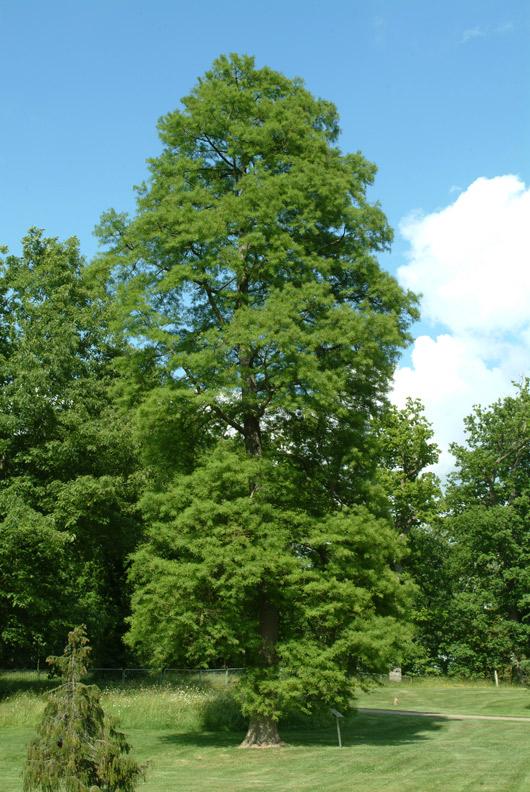
© photo
(c) Annika Lindqvist, some rights reserved (CC BY), uploaded by Annika Lindqvist · cc-by
William J. Deml · cc-by
iNaturalist User · cc-by
Taken Aug 10, 2022 by Auré Atinsi (cc-by-sa)
Taken Aug 1, 2022 by Kai Best (cc-by-sa)
Taken Oct 23, 2020 by Ines Guilbaud (cc-by-sa)
Taken May 6, 2022 by Tristan Jaton-Maria (cc-by-sa)
Taken Oct 12, 2019 by claude lerat -gentet Mme (cc-by-sa)
© copyright of the Board of Trustees of the Royal Botanic Gardens, Kew.




Global distribution
The native range of Taxodium distichum covers the southeastern United States, from Delaware and Maryland south to Florida and Texas, then north along the Mississippi Valley to southern Illinois and Missouri. Some taxonomic references extend it to Mexico and Guatemala by including populations close to Taxodium mucronatum; the strict native range remains centered on southeastern North America.
- Native1
- Introduced1
- United States
- China
Hexagons: regions where the plant occurs. Green dots: native range.1
Identity
Baldcypress (Taxodium distichum (L.) Rich., 1810), also known as bald cypress, is a conifer in the Cupressaceae family. Unlike most conifers, it sheds its soft foliage each fall: the bare winter crown explains its common name. 1 5
The genus name Taxodium combines the Greek taxos, yew, and eidos, form, referring to foliage that resembles yew without a close botanical relationship. The epithet distichum describes a useful feature: leaves arranged in two opposing rows along the branchlet. 5
Carl Linnaeus first described this tree in 1753 as Cupressus disticha. French botanist Louis-Claude Richard transferred it to Taxodium in 1810, creating the combination Taxodium distichum that is still accepted today. 1
Recognition
Cultivated Taxodium distichum commonly reaches 20–35 m (66–115 ft) tall. Exceptional wild trees exceeded 43–46 m (141–151 ft) in the old-growth forests of the southeastern United States before extensive logging. 7
Soft green summer foliage turns a distinctive rusty orange in fall before falling with entire small branchlets. The fibrous bark is reddish to grayish and peels in thin vertical strips. 3
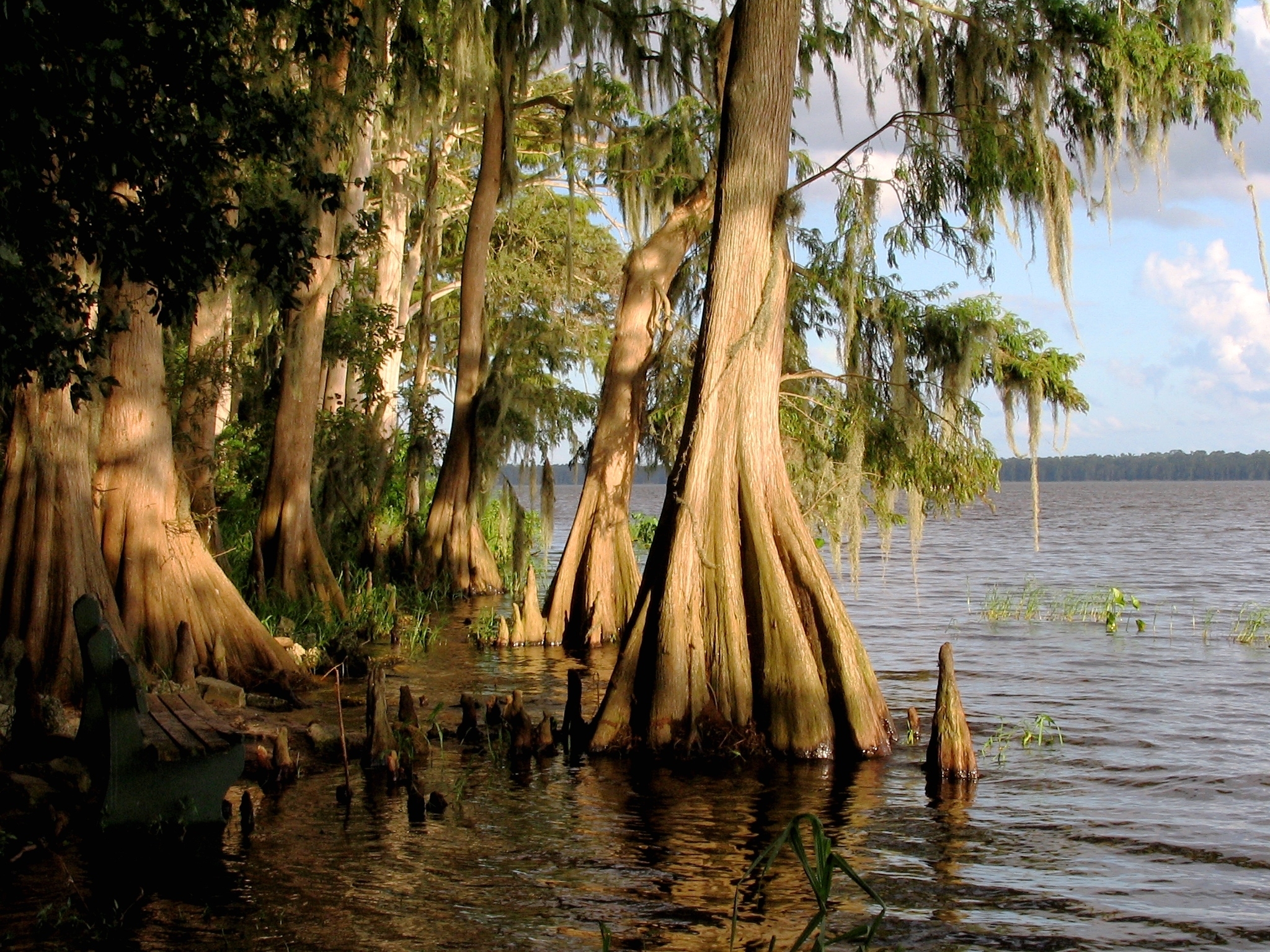
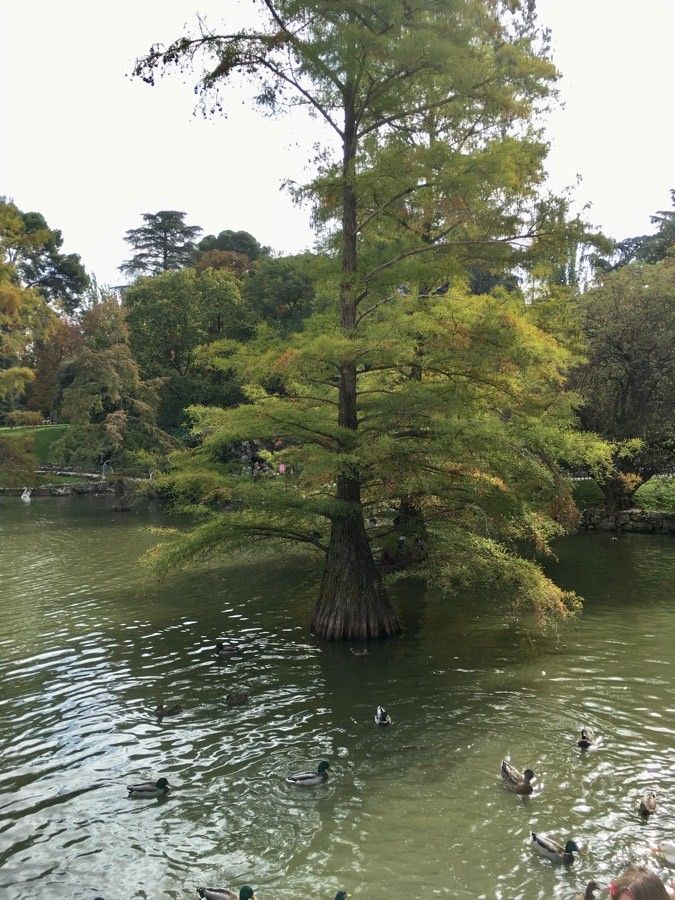
A bottle-shaped, flared trunk base is a more dependable clue than foliage color or bark appearance, both of which vary with local climate. The most characteristic features are the knees, conical root outgrowths projecting above water or waterlogged soil. Their role remains debated: a review of American forestry research confirmed no decisive physiological function, despite frequent suggestions of aeration or anchorage. 7 3
Useful taxonomy
Current taxonomic references accept several botanical varieties within this species. The typical variety, Taxodium distichum var. distichum, is Baldcypress in the strict sense. Pond cypress, Taxodium distichum var. imbricarium (Nutt.) Croom, differs in having short leaves pressed against the branchlet rather than spreading. 1
A third form, Taxodium distichum var. mexicanum (Carrière) Gordon & Glend., represents more southerly populations close to Montezuma cypress (Taxodium mucronatum), an evergreen Mexican tree. This relationship explains why some references extend the range of Taxodium distichum to Guatemala, while others restrict it to the southeastern United States. 1
The accepted scientific name provides the safest reference amid extensive synonymy: Taxodium ascendens Brongn., Taxodium nutans Aiton and Cupressus disticha L. all refer, wholly or partly, to the same taxon. 1 5
Habitat and range
Southeastern North America is home to Taxodium distichum, from Delaware and Maryland south to Florida and Texas, and north along the Mississippi Valley to southern Illinois, Indiana and Missouri. 7
Baldcypress inhabits freshwater to slightly brackish saturated soils along rivers, in bayous and in seasonally flooded swamps. Once rooted, it tolerates long periods of standing water, but its seeds do not germinate underwater. Germination requires saturated, un-submerged ground for 1–3 months after seedfall. 7
The International Union for Conservation of Nature assesses Taxodium distichum as Least Concern, with a population considered stable across its native range. 6
Introductions for ornamental planting have brought Baldcypress to Europe, including French parks and water gardens since the 19th century, and to China, where it is used in wetland reforestation programs. 5
Life cycle and reproduction
Both sexes occur on each Baldcypress tree: Taxodium distichum is monoecious. Hanging clusters of male cones release pollen in spring. The female cones are round and blue-green, turning brown as they mature; they measure about 2–3 cm (0.8–1.2 in) across and ripen in fall. 3
Floodwater carries cones and scales along waterways, dispersing the seeds and providing the main means of natural spread. Good seed crops occur every 3–5 years. 7
Few wetland trees match the longevity of Baldcypress, which can live for more than a millennium. Tree-ring analysis and radiocarbon dating placed a tree in North Carolina’s Black River basin at no less than 2,624 years old, making it the oldest known tree in eastern North America and the oldest documented wetland tree species worldwide. 8
Uses and risks
Lightweight, rot-resistant Baldcypress wood was long used for shingles and barrels, even in damp conditions, and later for railroad ties. Its natural durability still makes it valued for outdoor carpentry. 3 4
Garden-grown Taxodium distichum has no documented toxic compounds affecting people or domestic animals, and the references consulted do not classify it as invasive. 4
Established trees tolerate both waterlogged and drier ground. Mild salinity tolerance is useful in compacted urban soils and along occasionally flooded banks. The root system remains stable in strong winds even in saturated soil, a behavior documented in storm-prone areas. 7
Varieties, look-alikes and related plants
Several garden selections meet distinct space requirements. Shawnee Brave has a narrow, columnar crown and produces few or no knees even in waterlogged soil, an advantage in public spaces. Cascade Falls is a grafted weeping form, while Peve Minaret stays dwarf and suits container growing. 2
Dawn redwood (Metasequoia glyptostroboides) is the main look-alike, another deciduous conifer with apparently similar two-ranked foliage. Leaf attachment separates them: opposite in Metasequoia, alternate in Taxodium distichum. The narrower pond cypress variety, var. imbricarium, with appressed foliage, can also cause confusion; it is a recognized botanical variety sometimes incorrectly sold as a separate garden form. 1
Main sources
- Plants of the World Online / Kew, Taxodium distichum (L.) Rich.
- Royal Horticultural Society, Taxodium distichum - swamp cypress
- NC State Extension, Taxodium distichum (Bald Cypress)
- Plants For A Future, Taxodium distichum
- INPN / MNHN, Taxodium distichum (L.) Rich., 1810 (cd_nom 125811)
- IUCN Red List of Threatened Species, Taxodium distichum assessment
- USDA Forest Service, Silvics of Baldcypress
- Stahle et al. 2019, Longevity of Black River bald cypress, Environmental Research Communications
Frequently asked questions
Does Baldcypress really lose its leaves?
Yes. Unlike most conifers, Taxodium distichum is deciduous. Its foliage turns rusty orange in fall, then drops with the small branchlets, leaving the tree bare in winter.
What do Baldcypress knees do?
Their function remains debated. Root aeration and mechanical anchorage are longstanding hypotheses, but forestry research has not confirmed a decisive physiological function for tree survival.
Does Baldcypress only grow in water?
No. It tolerates soil flooded for part of the year, but also grows well in ordinary garden soil if it is deep and does not become too dry in summer.
Is Baldcypress toxic to cats and dogs?
No toxicity has been documented in this species for domestic animals or people, unlike many other ornamental conifers.
How does Baldcypress differ from pond cypress?
Taxodium distichum var. imbricarium, known as pond cypress, has leaves pressed against the branchlet rather than spreading, and often a narrower habit. It is a recognized botanical variety rather than a separate species.
Is Baldcypress invasive in France?
No invasive status is recorded for this species in the references consulted, despite widespread ornamental planting in Europe since the 19th century.
How old can Baldcypress get?
Some trees live for more than a millennium. A tree in the Black River basin of North Carolina was dated to at least 2,624 years, making it the oldest known tree in eastern North America.
Similar plants
If you are unsure about a plant’s toxicity, ask a botanist or veterinarian for advice.