
Weeping willow (Salix babylonica, )
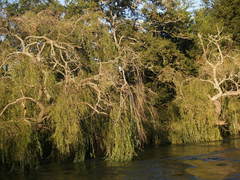

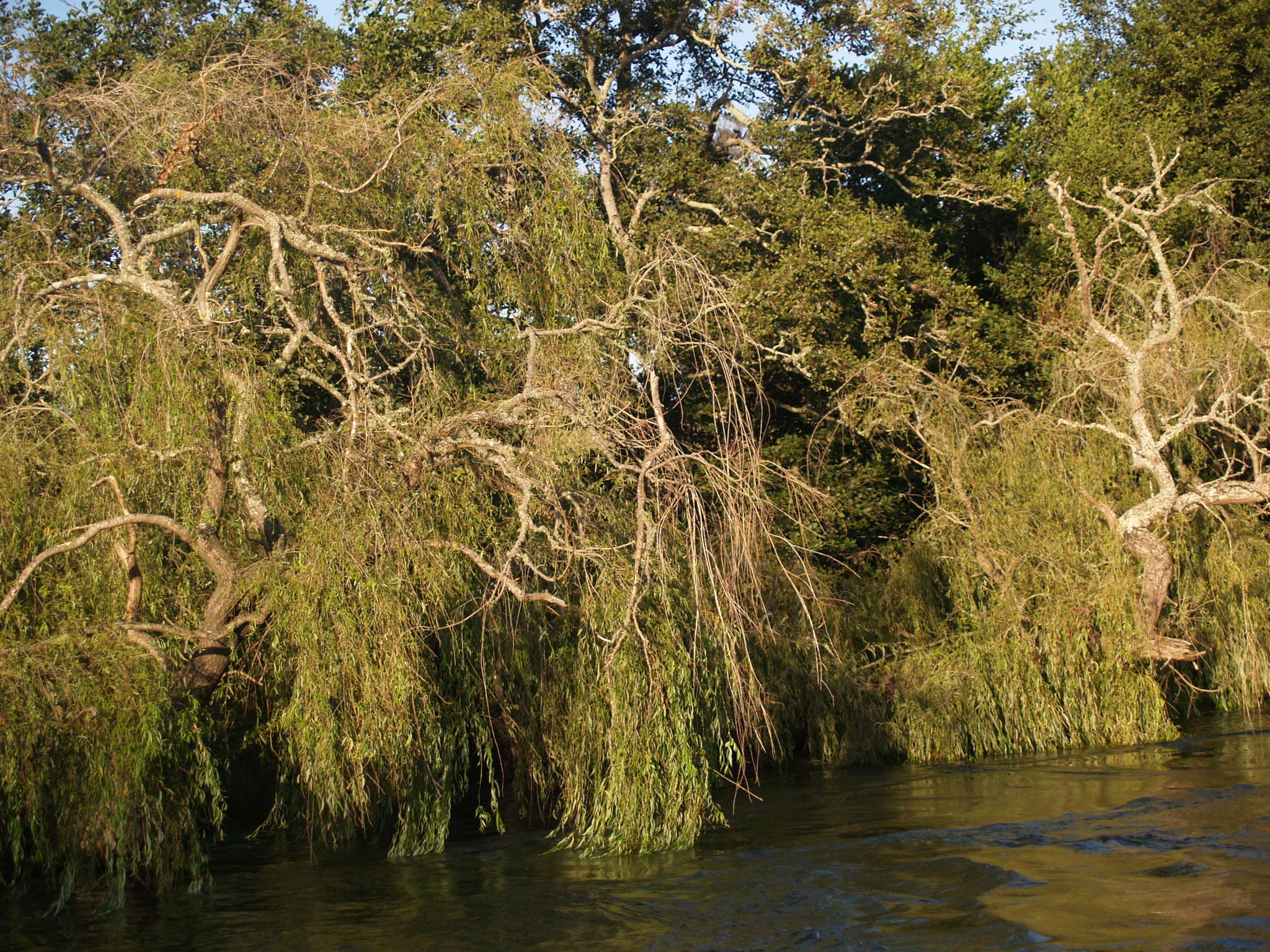
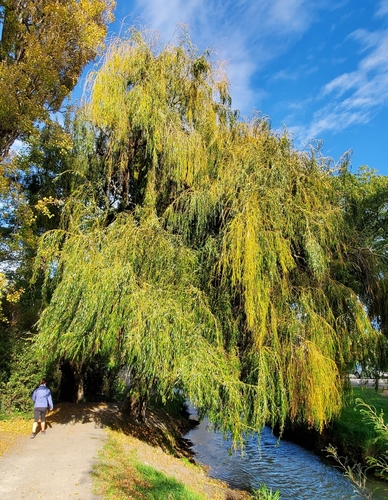
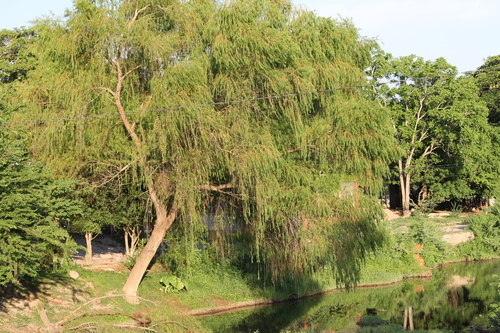
Weeping willow (Salix babylonica) is a deciduous tree in the Salicaceae family, native to northern and central China. Its long, flexible twigs hang almost vertically toward the ground, creating a recognizable silhouette even in winter. It grows rapidly beside water but has brittle wood and a relatively short lifespan.
Read moreWeeping willow, Babylon willow and Peking willow



© photo
(c) Carlos Eduardo Simental Crespo, some rights reserved (CC BY-NC), uploaded by Carlos Eduardo Simental Crespo · cc-by-nc
Samuel Brown · cc0
Rob Cruickshank · cc0
(c) Rob Cruickshank, some rights reserved (CC BY-SA) · cc-by-sa
(c) Wesley Webb, some rights reserved (CC BY) · cc-by
Global distribution
Salix babylonica is native to northern and central China around the Yellow River and Yangtze basins, with related populations in Korea, Mongolia, Japan and Siberia. Spread along the Silk Road since antiquity, it is now grown as a planted tree in most temperate regions, without extensive spontaneous naturalization.
- Native5
- China
- South Korea
- Mongolia
- Japan
- Russia
Hexagons: regions where the plant occurs. Green dots: native range.1
Identity
Weeping willow (Salix babylonica L., 1753), also called Babylon willow, is a deciduous tree in the Salicaceae family, native to northern and central China. Its long, thin, flexible twigs hang almost vertically toward the ground. This strongly weeping habit, unlike the more upright branching of many other willows, makes the tree recognizable from a distance even when it has no leaves. 1 2
The botanical name records a mistake by Linnaeus, who associated the tree with the biblical psalm set beside the waters of Babylon. The trees described in that passage were Euphrates poplars rather than willows, but the epithet babylonica remained. Introduced to London around 1730 from Aleppo, in the Euphrates region, weeping willow subsequently spread through European parks and gardens. 6
Recognition
A short trunk and a broad, drooping crown give Salix babylonica its familiar outline. Trees commonly reach 8–15 m (26–49 ft) in height with a similar spread. Older trunks carry deeply fissured gray-brown bark. Flexible, often yellowish-brown young twigs hang vertically instead of growing upright, unlike those of white willow (Salix alba) and other willows with a conventional tree habit. This character is visible without flowers. 2 3
The narrow, lance-shaped leaves have finely toothed edges and measure 4–16 cm (1.5–6 in) long but barely 2 cm (0.8 in) wide. They are light green above and blue-green beneath. Foliage turns yellow in fall before dropping, leaving the tree bare through winter. Growth is fast, but the tree is relatively short-lived, generally lasting no more than 40–75 years. 5 3
Male and female catkins develop on different trees because the species is dioecious. The upright, greenish to yellowish catkins appear in spring alongside the young leaves. Most trees cultivated in the West descend from a single female clone distributed through cuttings, which explains why fruit is seldom seen outside China. 3 6
Useful taxonomy
Nursery labels can obscure the boundaries around Salix babylonica, even though its botanical name remains stable. Several forms and closely related species circulate under similar names. Recognizing the following combinations helps distinguish a botanical name from a garden selection or a hybrid:
- Salix matsudana Koidz., treated by many botanists as a synonym or a very closely related variety;
- Salix babylonica f. pekinensis (A.Henry) Geerinck, the group that includes corkscrew willow with twisted twigs;
- Salix babylonica var. crispa Loudon, a form with leaves curled into rings;
- Salix x sepulcralis (Salix alba x Salix babylonica), a hybrid now planted more often than the pure species.
The treatment of Salix matsudana illustrates the problem. Russian botanist Alexei Skvortsov long regarded it as identical to Salix babylonica. The only difference noted was the number of nectaries in the female flowers, a feature considered too variable to separate the two taxa reliably. 1 6
Habitat and range
Northern and central China, especially the Yellow River and Yangtze basins, hold the native range of Salix babylonica, with related populations in Korea, Mongolia, Japan and Siberia. The precise wild form is still poorly documented. Trees outside China represent an ancient clone selected for its weeping habit and then carried over thousands of kilometers. 1 4
Trade along the Silk Road spread the tree from antiquity onward, first into southwestern Asia and then into Europe in the 18th century. In France, INPN records it as introduced after 1500, without a generalized invasive status today. Its shallow roots can nevertheless be locally aggressive around engineered riverbanks. This French classification describes its status in France rather than a worldwide designation. 7
The International Union for Conservation of Nature assessment places this species in the Data Deficient category. Reliable surveys have not adequately separated genuinely wild populations from old plantings, leaving uncertainty about the species in the wild rather than establishing a secure conservation picture. 8
Life cycle and reproduction
Spring budbreak and flowering occur together in weeping willow. Male catkins release pollen that wind and insects carry to female catkins on other trees, following the usual reproductive pattern of willows. Outside China, cultivated trees rarely fruit because male and female plants are seldom grown close enough together. 3 5
Nurseries propagate the tree almost entirely by cuttings, using woody twigs collected in winter or partly ripened stems collected in summer. Willow cuttings root readily, often without rooting hormone. Seeds, by contrast, lose their ability to germinate within just a few days of release, which greatly limits their usefulness in nursery production. 4
A planted tree develops its characteristic weeping silhouette within 10–15 years. Rapid annual growth makes it popular for quickly furnishing the edge of a pond, but the wood remains weak and brittle, vulnerable to storms, snow and ice. Established trees tolerate frost down to about −20 °C (−4 °F), while late spring frost can reduce the vigor of tender young shoots. 5 2
Uses and risks
A solitary specimen beside a pond, river or water garden is the classic ornamental use of weeping willow. Its dense roots also help stabilize banks. Around some oases in northern China, it forms shelterbelts that protect farmland from winds blowing out of the Gobi Desert. On shallow, dry limestone soil, however, its roots remain short of water and growth slows markedly, explaining its absence from dry Mediterranean gardens. 5 4
Fresh bark contains salicin, a natural precursor of salicylic acid related to aspirin. It was traditionally used against fever, rheumatic pain and certain skin conditions. Young shoots and the inner bark are technically edible but unpalatable, associated with food shortages rather than ordinary meals. 4
No toxicity is documented for cats, dogs or humans, while the position for horses remains uncertain. The principal hazards are physical: vigorous roots can lift paving and affect pipes, brittle wood can break in storms, and fallen leaves and twigs create substantial litter. These combined traits make the species a poor choice for a small residential garden. 5 3
Varieties, look-alikes and related plants
Leaf shape and branching distinguish several garden cultivars more clearly than major botanical differences do. Crispa, known since the early 19th century, has leaves curled into tight rings. Tortuosa, placed under variety pekinensis, has corkscrew twigs and is sold as corkscrew willow. Babylon, the female clone closest to the original form, dominates plantings. Lavallei is a rarer male form with less strongly drooping branches. 6
The hybrid Salix x sepulcralis 'Chrysocoma' causes much of the confusion in nurseries. This cross between Salix alba and Salix babylonica has bright yellow twigs. Young trees are more frost-resistant and less susceptible to willow anthracnose, helping explain why the hybrid is now planted much more often than the pure Chinese species. Although many nurseries sell it simply as weeping willow, it is not Salix babylonica. 6 2
Other plants that can be confused with it include:
- Salix matsudana, botanically very close and sometimes treated as a synonym;
- Salix alba 'Tristis', another weeping willow, but with less delicate twigs;
- small shrubby willows, whose habit differs from the tall weeping tree.
Close inspection of the twigs resolves many look-alikes. An almost vertical fall toward the ground, combined with narrow leaves that are blue-green beneath, points toward Salix babylonica rather than its closest hybrids and relatives. 2
Main sources
- Plants of the World Online / Kew, Salix babylonica L.
- Royal Horticultural Society, Salix babylonica - weeping willow
- Missouri Botanical Garden Plant Finder, Salix babylonica
- Plants For A Future, Salix babylonica
- NC State Extension, Salix babylonica (Weeping Willow)
- Trees and Shrubs Online, Salix babylonica
- INPN / MNHN, Salix babylonica L., 1753 (cd_nom 119954)
- IUCN Red List of Threatened Species, Salix babylonica assessment
Frequently asked questions
Is weeping willow toxic to dogs and cats?
Available information reports no known toxicity to cats, dogs or humans. Its status remains uncertain for horses; the bark contains salicin, a precursor of salicylic acid.
Where does the scientific name babylonica come from?
Linnaeus thought this tree was the willow described beside the waters of Babylon in a biblical psalm. The trees in that passage were actually Euphrates poplars, but the Latin name remained.
Is weeping willow invasive in France?
INPN records it as introduced after 1500, without a generalized invasive status today. Its shallow roots can nevertheless be locally aggressive, especially near pipes and foundations.
Can I plant weeping willow in a small garden?
It is not recommended. Its mature size, vigorous roots, brittle wood and abundant fallen leaves and twigs make it a poor choice for a small plot.
How does Salix babylonica differ from Salix x sepulcralis 'Chrysocoma'?
Salix x sepulcralis is a hybrid between Salix alba and Salix babylonica, with greater hardiness and resistance to anthracnose. In Europe and North America, it is now planted much more often than the pure Chinese species.
Does weeping willow lose its leaves in winter?
Yes. It is deciduous: leaves turn yellow in fall before dropping, and the tree remains bare throughout winter, unlike some shrubby willows that are semi-evergreen in mild climates.
Has weeping willow bark been used medicinally?
Fresh bark contains salicin, a natural precursor of salicylic acid related to aspirin, traditionally used against fever and pain. This historical use does not replace medical advice.
Similar plants
If you are unsure about a plant’s toxicity, ask a botanist or veterinarian for advice.