
Wine grape (Vitis vinifera, )
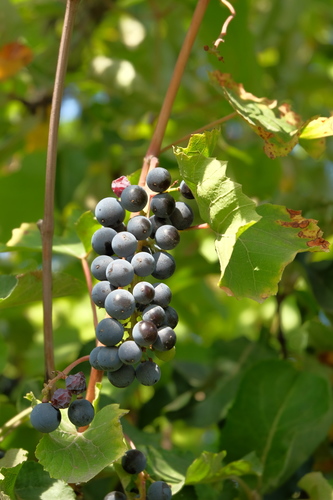
Wine grape (Vitis vinifera) is a deciduous woody climber in the Vitaceae family, native to the Mediterranean basin, central Europe, and southwestern Asia. It climbs with tendrils, bears toothed, palmately lobed leaves, and in its cultivated form produces bunches of fleshy berries used for table grapes and wine.
Read moreWine grape, Common grape vine and Grape
Place in full sun, with intense direct light all day long.
Full sun needed for fruit to ripen well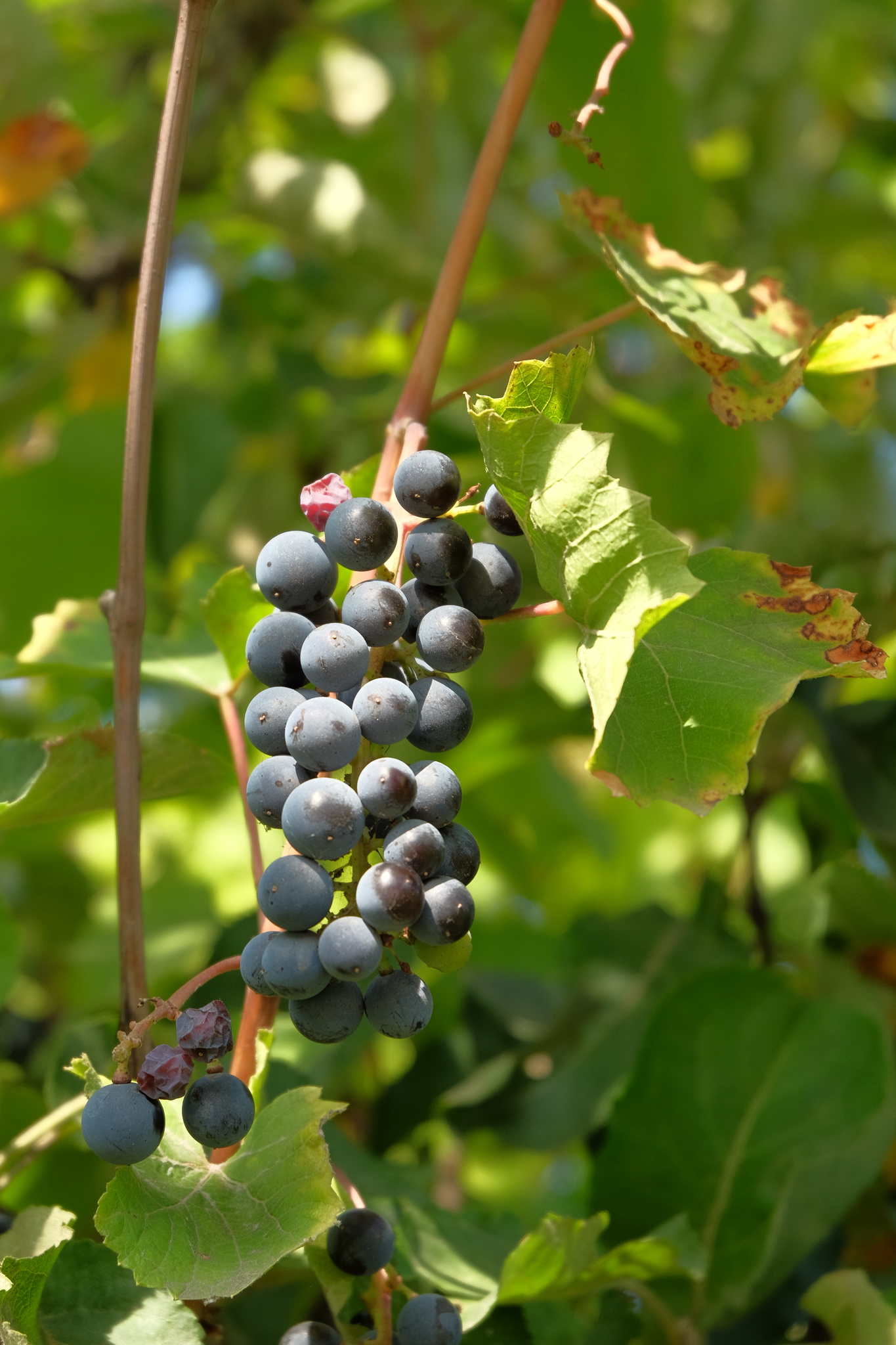


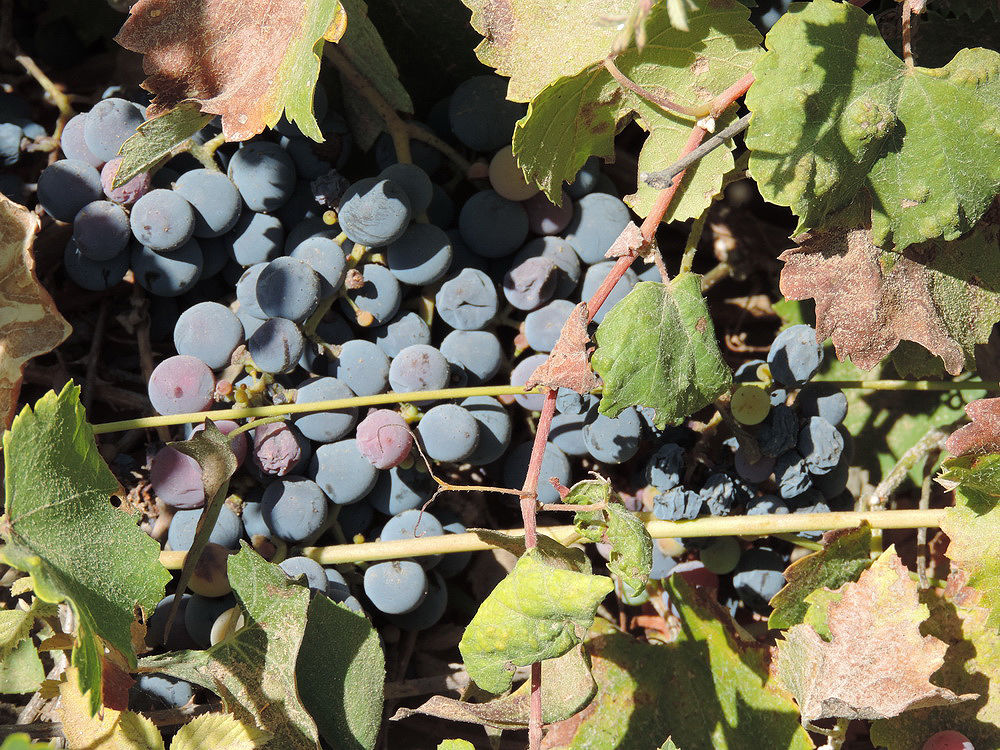
© photo
(c) andrey_p, some rights reserved (CC BY), uploaded by andrey_p · cc-by
iNaturalist User · cc0
Quentin Groom · cc0
Taken May 6, 2022 by Kai Best (cc-by-sa)
Taken May 26, 2022 by Kai Best (cc-by-sa)
Taken Jun 27, 2020 by Giode Tonpino (cc-by-sa)
Taken Apr 23, 2019 by Julie Ju (cc-by-sa)
Taken Sep 12, 2021 by Thierry LE COM (cc-by-sa)
© copyright of the Board of Trustees of the Royal Botanic Gardens, Kew.




Global distribution
Vitis vinifera is native around the Mediterranean, in central Europe and southwestern Asia, from Morocco and Portugal north to southern Germany and east to northern Iran. Its wild form, subsp. sylvestris, is declining in its original riverside woodland habitats in the Caucasus and Near East. The cultivated form has been introduced to every continent with temperate or Mediterranean climates.
- Native4
- Introduced4
- Georgia
- Iran
- Turkey
- Greece
- United States (California)
- South Africa
- Australia
- Chile
Hexagons: regions where the plant occurs. Green dots: native range.1
Identity
Wine grape (Vitis vinifera L., 1753) is a deciduous woody climber in the Vitaceae family. It is the only Vitis species grown on a large scale outside its native range, recognizable by toothed leaves with 3–5 lobes and tendrils opposite the leaves. 1 2
The French name vigne comes from Latin vinea, itself derived from vinum, meaning wine. This etymology reflects the plant’s longstanding use. 4
Two markedly different forms belong to this species. Wild grape, often treated as Vitis vinifera subsp. sylvestris, has separate male and female plants and cannot fruit unless both are nearby. Selection reversed this trait in cultivated grapevines: self-fertile, hermaphroditic flowers allow a single plant to fruit regularly. 7 8
Dormant wood tolerates temperatures down to −20 °C (−4 °F), allowing winter survival and helping explain cultivation as far north as southern Germany. 4
Recognition
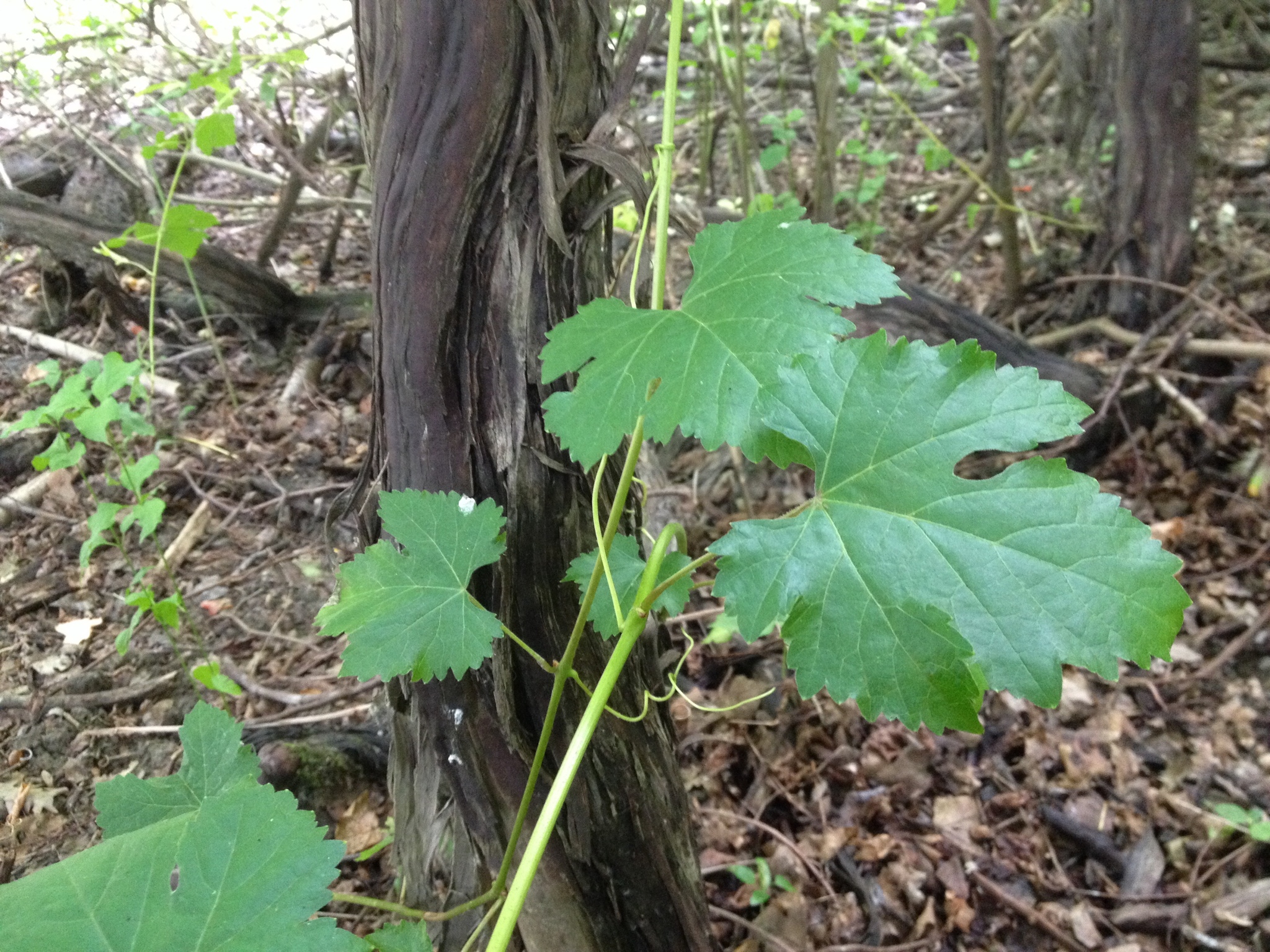
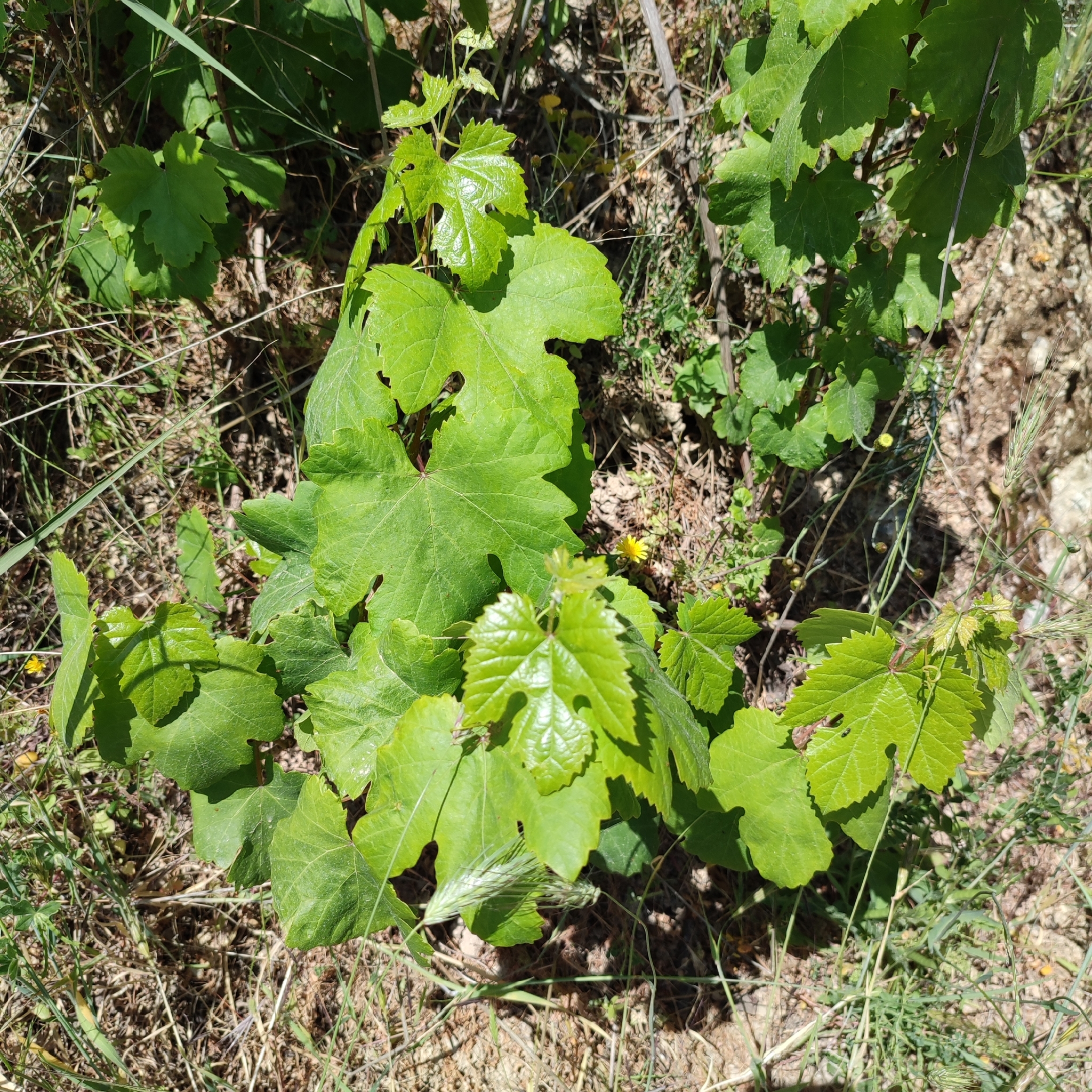
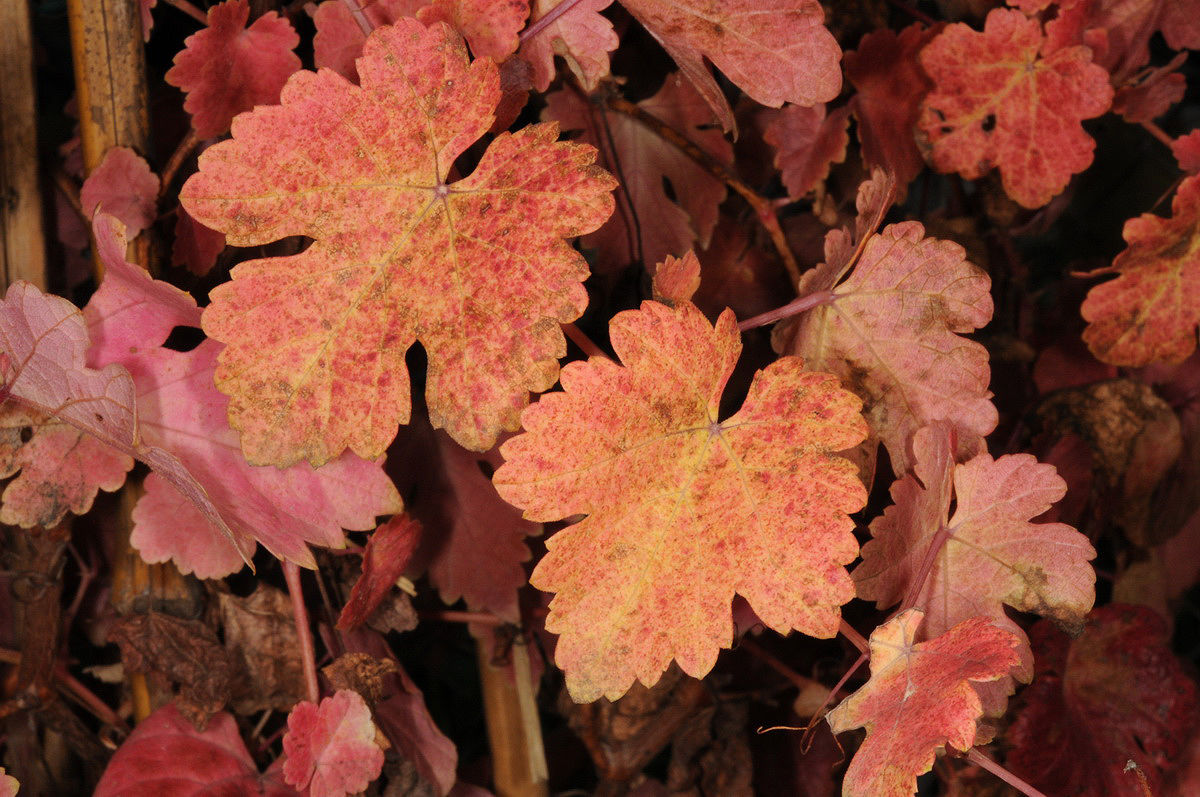
Coiling tendrils anchor the vine, arising opposite leaves at regular intervals. They attach at their tips and then contract like springs to pull the stem toward a stake or trellis, rather than wrapping directly around it. The palmate leaves have 3–5 coarsely toothed lobes, a heart-shaped base, and often a downy underside depending on the variety. 2 3
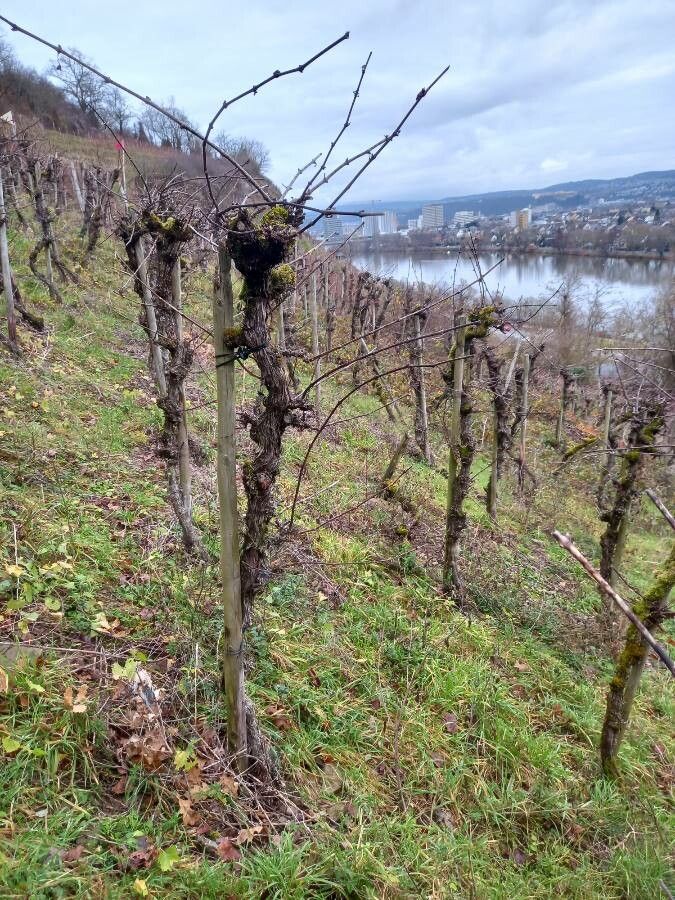
Older canes shed their bark in long, fibrous strips, a useful winter clue after leaf fall. Greenish, fragrant flowers form loose panicles in May or June depending on climate. Measuring only 0.3–0.5 cm (0.1–0.2 in), they easily go unnoticed beneath the leaves. 3
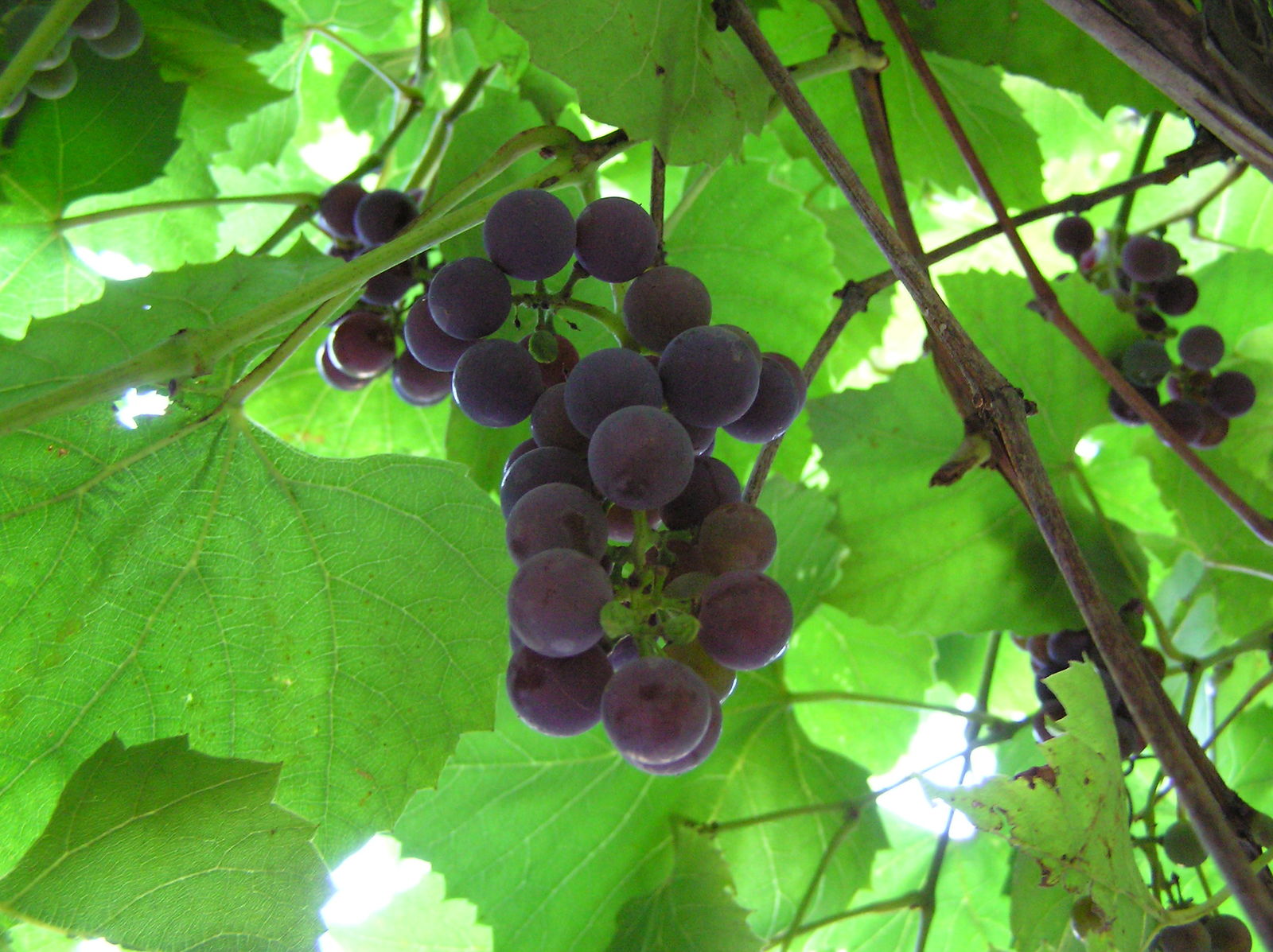
Fleshy berries form bunches, varying greatly in size, shape, and color from pale green to purplish black across thousands of varieties. Unpruned in the ground, a vine can climb to 18 m (59 ft). In vineyards, winter pruning generally keeps the working height at 1–2 m (3–6.5 ft) to direct resources into the bunches. 2 3
Useful taxonomy
For wild and cultivated plants alike, Vitis vinifera remains the accepted species name. The main synonyms and forms include:
- Vitis vinifera subsp. sylvestris (Willd.) Hegi, the wild form
- Vitis vinifera var. sylvestris Willd., botanical variety
- Vitis vinifera var. semisylvestris Risso, botanical variety
- Vitis sylvestris C.C.Gmel., historical separate name
Plants of the World Online treats these forms as synonyms of one species rather than separate taxa. This explains why wild grape and thousands of cultivated varieties share a scientific name. 1 8
Habitat and range
From Morocco and Portugal in the west to northern Iran in the east, the native range spans the Mediterranean basin, central Europe, and southwestern Asia. Domestication probably began in the Caucasus and Near East, where wild plants still survive in riverside woods and forest edges. 4 5
Cultivated vines have spread beyond that range to every continent with temperate or Mediterranean climates, including California, South Africa, Australia, and Chile. They need well-drained, preferably calcareous soil and full sun for grapes to ripen. Relatively dry air, around 30–60% humidity, also limits downy and powdery mildew, fungal diseases favored by stagnant moisture. 4 5
Life cycle and reproduction
Bud break begins in spring when temperatures remain above 10 °C (50 °F), followed by flowering in May or June. Growth continues at 15–30 °C (59–86 °F). Cold or rain during flowering can cause millerandage, incomplete fertilization that leaves tiny, seedless berries beside normal berries on the same bunch. 3 2
Berry ripening, or veraison, continues through summer until the fall harvest. Cuttings of ripened wood can produce own-root plants, but most vineyards use grafting onto resistant American rootstock, a practice that became standard after the phylloxera crisis. 4
Hardened wood withstands frost down to −20 °C (−4 °F), while tender shoots emerging after bud break can be killed by the first late spring frost. In frost-prone areas, some growers prune later than usual to delay bud break by a few days and allow the risk to pass. 2
Uses and risks
Wine grapes, table grapes, and raisins are the principal products, with secondary uses for seed oil and young leaves in cooking. Ripe fruit has no known toxicity to humans. 5 4
For dogs, both fresh grapes and raisins can cause acute kidney failure through a toxic mechanism that veterinary research has not yet isolated. The ASPCA advises preventing accidental access to fallen bunches and harvest leftovers. 6
Late in the 19th century, the phylloxera aphid destroyed most European vineyards by attacking the roots of susceptible varieties. Systematic grafting onto American rootstocks enabled their replanting and remains the standard protection in most wine-growing regions. 4 3
Varieties, look-alikes and related plants
Records list 5,000–10,000 varieties of Vitis vinifera, though only a small proportion are commercially significant. Cabernet Sauvignon, Chardonnay, and Merlot are widely grown. Older and genetically unstable Pinot Noir has produced numerous clones, while seedless Sultanine illustrates selection for table grapes dried as raisins. 2 8
Creepers of the genus Parthenocissus are common look-alikes. Their tendrils end in adhesive disks and their berries are inedible, whereas Vitis vinifera climbs with coiling tendrils. In some regions, the wild form is also confused with cultivated varieties descended directly from it. 7
Main sources
- Plants of the World Online / Kew, Vitis vinifera L.
- Royal Horticultural Society, Vitis vinifera - grape vine
- Missouri Botanical Garden Plant Finder, Vitis vinifera
- NC State Extension, Vitis vinifera plant profile
- Plants For A Future, Vitis vinifera
- ASPCA Animal Poison Control, Grape and Raisin toxicity
- INPN / MNHN, profile of Vitis vinifera L.
- Tela Botanica, BDTFX reference, Vitis vinifera L.
Frequently asked questions
Are wine grapes toxic to dogs?
Fresh grapes and raisins are documented as toxic to dogs, with a risk of acute kidney failure. The exact mechanism remains unknown; the ASPCA recommends preventing any accidental ingestion by dogs.
Why do some grapes stay tiny?
This condition, called millerandage or shot berries, occurs when incomplete fertilization during flowering leaves small, seedless berries beside normal berries on the same bunch.
Does a grapevine have to be grafted?
In most established wine-growing regions, yes. Phylloxera destroys the roots of susceptible varieties; grafting onto American rootstock remains the most reliable protection.
How is wine grape different from Virginia creeper?
Creepers in the genus Parthenocissus climb with tendrils ending in adhesive disks and produce inedible berries. Vitis vinifera attaches by coiling tendrils and produces grapes.
Why does a young grapevine not produce grapes in its first year?
The early years establish the trunk and framework. Bunches that appear too soon are often removed to strengthen the plant before it enters production.
Where did cultivated wine grape originate?
Its wild ancestor, subsp. sylvestris, still grows in the Caucasus and Near East. Domestication selected plants with hermaphroditic flowers, which fruit more reliably than the dioecious wild form.
How many Vitis vinifera varieties are there?
Between 5,000 and 10,000 varieties have been recorded, but only a small proportion are commercially important for wine or table grapes.
Similar plants
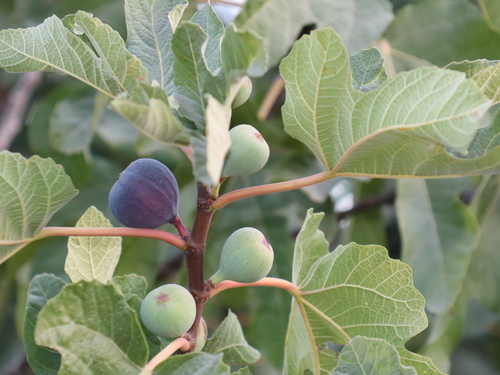
If you are unsure about a plant’s toxicity, ask a botanist or veterinarian for advice.