
Hardy kiwifruit (Actinidia arguta, )
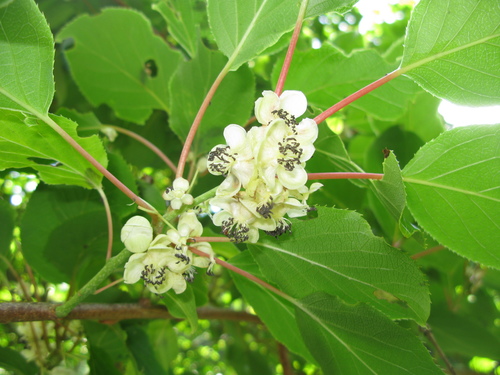

Hardy kiwifruit (Actinidia arguta) is a deciduous, dioecious vine in the Actinidiaceae family, native to Japan, Korea, northeastern China and the Russian Far East. It withstands extreme winter cold, bears small cream-white spring flowers and produces smooth, hairless fruits with edible skin and sweet flesh.
Read moreHardy kiwifruit, Hardy kiwi, Kiwiberry, Tara vine and Siberian kiwi
Allow a few hours of direct sun per day, preferably morning or evening.
Full sun to light partial shade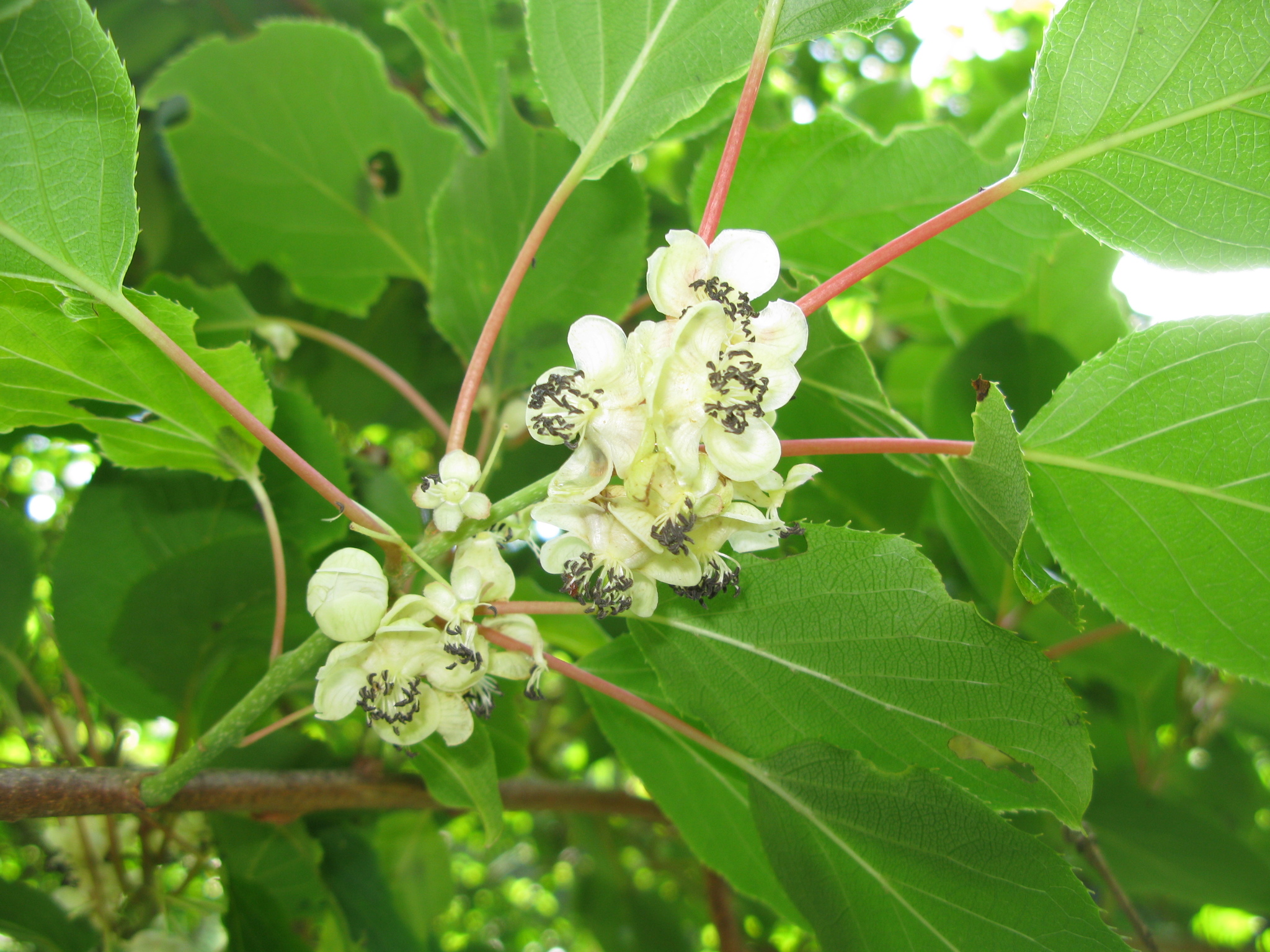

© photo
(c) Qwert1234, some rights reserved (CC BY-SA) · cc-by-sa
Мария Ткаченко · cc-by
Wikimedia Commons · CC BY-SA or Public Domain
© copyright of the Board of Trustees of the Royal Botanic Gardens, Kew.


Global distribution
Actinidia arguta is native to the temperate Far East, from Japan and Korea to northeastern China and the Russian Far East. It is now cultivated for fruit in temperate regions elsewhere, with notable commercial plantings in North America, New Zealand and Chile. In the northeastern United States, some escaped populations are considered locally invasive.
- Native4
- Invasive1
- Japan
- Korea
- Northeastern China
- Russia (Far East)
- United States (Massachusetts, Long Island)
Hexagons: regions where the plant occurs. Green dots: native range.1
Identity
Hardy kiwifruit (Actinidia arguta (Siebold & Zucc.) Planch. ex Miq., 1867), also called kiwiberry or tara vine, is a deciduous climber in the Actinidiaceae family. Its botanical author citation records the original description in another genus by Siebold and Zuccarini, followed by the combination published by Planchon in Miquel’s work in 1867. 1 8
The French name kiwaï refers to both vine and fruit. At 2–3 cm (0.8–1.2 in) long, the fruit is smaller and smoother than ordinary kiwifruit and lacks its characteristic fuzz. Similar names often lead to confusion with Actinidia deliciosa, a distinct species in the same genus. 8
Recognition
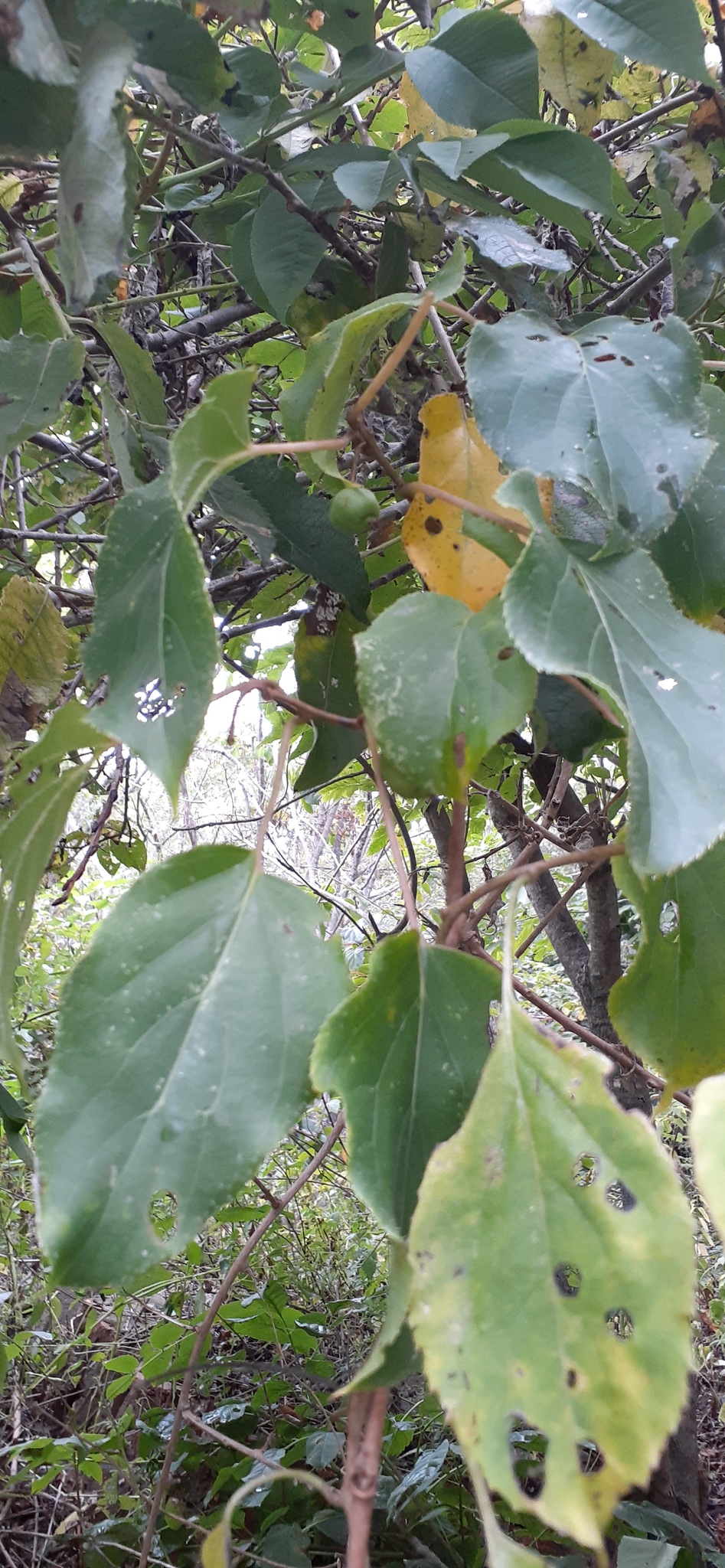
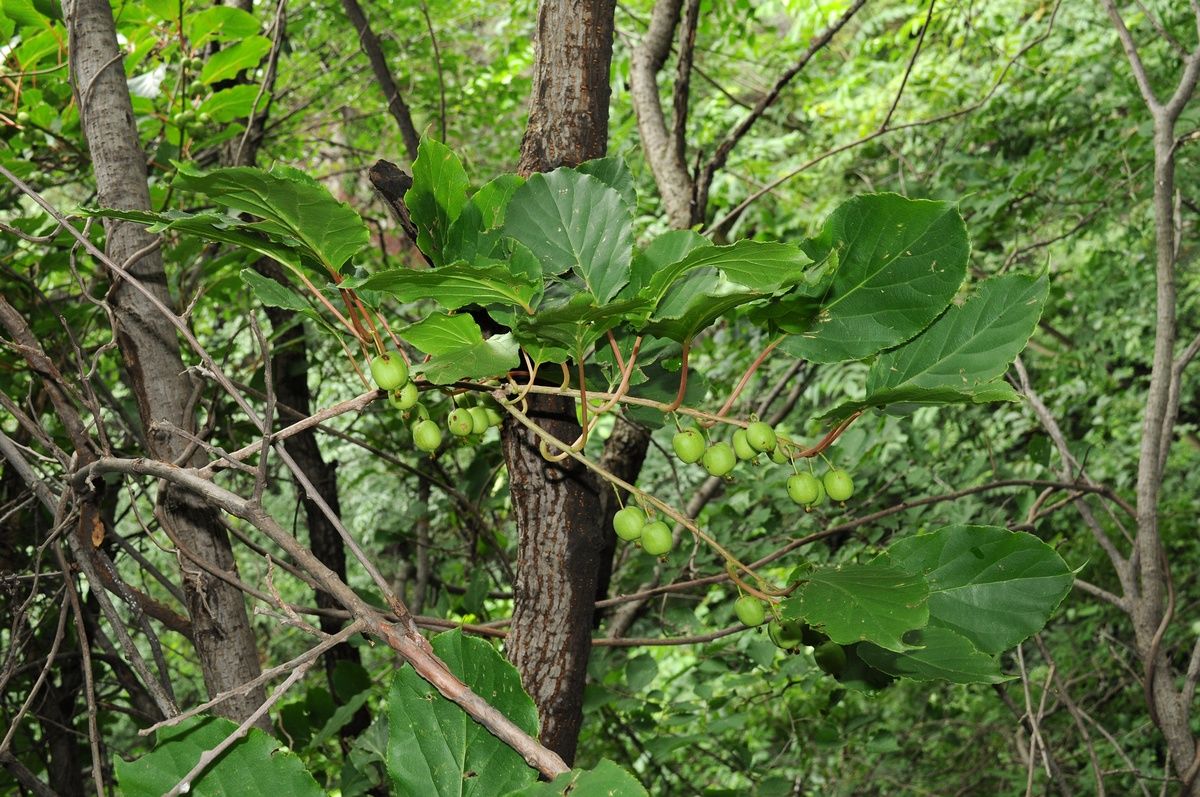
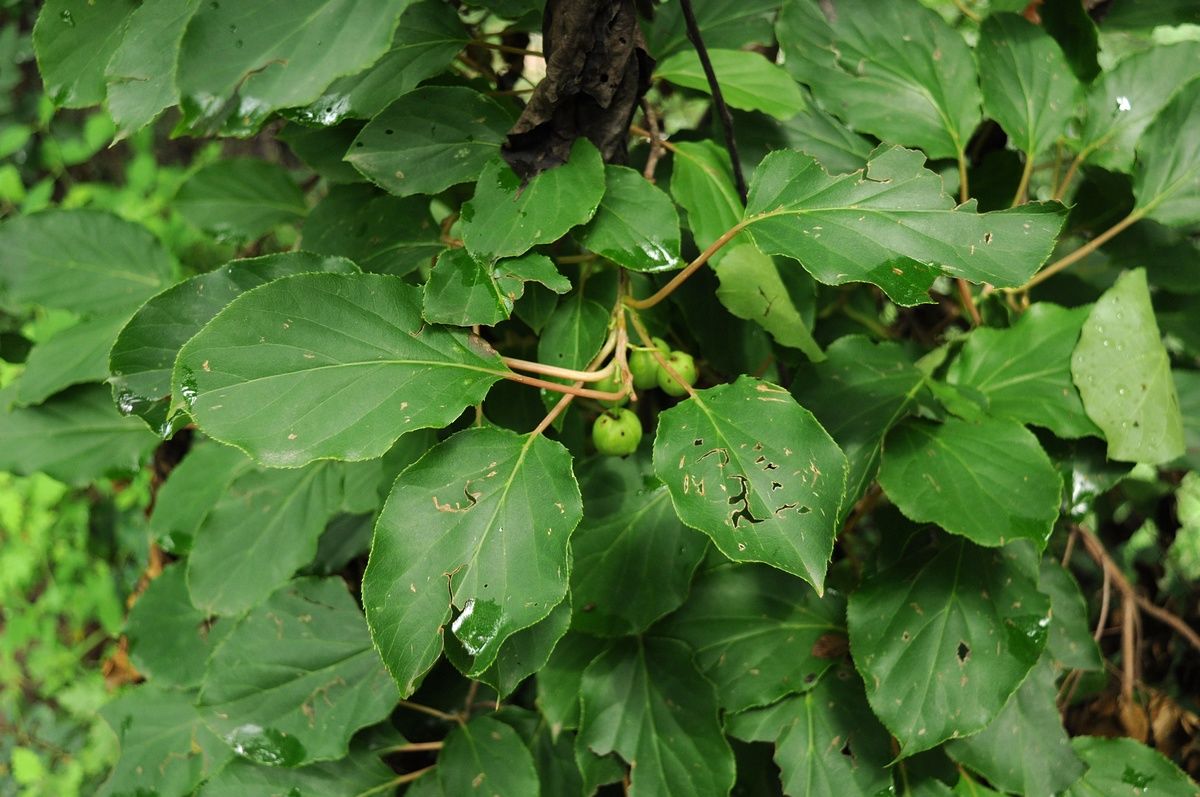
A vigorous twining vine, Actinidia arguta has deciduous, heart-shaped to oval leaves with finely toothed edges, 8–10 cm (3–4 in) long. On a pergola or trellis it commonly reaches 3–9 m (10–30 ft). In its native forests, it can climb trees 20–30 m (66–98 ft) tall, a much more expansive habit than in a managed garden. 2 3
The species is dioecious. Small, lightly scented cream-white flowers open in groups of three at the leaf axils in spring, on separate male and female plants. After pollination, females produce smooth, oval fruit about 2–3 cm (0.8–1.2 in) long. Green at first, they become brownish-purple when ripe, with thin, entirely edible skin. 2 7
Useful taxonomy
POWO/WCVP accepts Actinidia arguta (Siebold & Zucc.) Planch. ex Miq. Four botanical varieties or homotypic synonyms are listed, all linked to the same original description:
- Actinidia arguta var. giraldii (Diels) Vorosch.
- Actinidia arguta var. hypoleuca (Nakai) Kitam.
- Actinidia rufa var. arguta (Siebold & Zucc.) Dunn
- Actinidia callosa var. arguta (Siebold & Zucc.) Makino
The scientific name provides a stable reference because nursery plants are often confused with ordinary kiwifruit (Actinidia deliciosa) or Actinidia kolomikta, a related species with white and pink variegated leaves. 1 2
Habitat and distribution
Native populations span the temperate Far East: Japan, Korea, northeastern China and the Russian Far East, at 150–3,600 m (490–11,800 ft) elevation depending on region. The vine grows in mountain forests, along woodland margins and stream banks, and in moist thickets. 4 7
Introduced to North America as an ornamental in the late nineteenth century, hardy kiwi has been commercially planted since the late 1990s in North America, New Zealand and Chile. 7
In the northeastern United States, where it was introduced in 1876, it has sometimes escaped gardens and spread through woodland in Massachusetts and Long Island. Its vigor there led regional authorities to consider Actinidia arguta locally invasive. 6
Life cycle and reproduction
Spring flowers develop on separate male and female plants. Without a nearby pollinizer, an isolated female can flower every year without producing fruit. Once pollinated, the flowers set fruit that ripens in fall, following the local growing season. 3 2
Propagation is mainly by semi-ripe cuttings taken in summer, with a high rooting rate within a few weeks. Seed propagation is possible after three months of stratification, but produces mainly male plants and late, uncertain fruiting. 4
Uses and risks
The main crop is fruit, eaten fresh and whole without peeling, or made into jam, juice and wine. In Korea, young leaves are also cooked as a vegetable under the name darae. 8 7
Hardy kiwifruit is non-toxic to cats, dogs and horses. Its bark and roots nevertheless release a catnip-like scent that encourages some cats to dig up or gnaw young plants. 5 7
Outside the native range, this vigorous vine needs firm annual pruning and strong support. Near woodland edges, an unmanaged planting can sometimes lead to unwanted naturalization, as observed in the northeastern United States. 6
Varieties, lookalikes and related plants
Five cultivars account for most fruit production. 'Issai' is self-fertile and needs no pollinizer, while 'Ananasnaya' and 'Weiki' form the most common female-male pairing in North America and Chile. 'Geneva' is an early-fruiting North American selection. 'Kuilv' is among the most widely planted cultivars in China, alongside 'Long Cheng No. 2'. 7
Frequent lookalikes include:
- Actinidia deliciosa, ordinary kiwifruit, with much larger fruit covered in brown fuzz;
- Actinidia kolomikta, with leaves often variegated white and pink, less vigorous in the ground;
- young grapevines (Vitis), whose climbing foliage can cause confusion before the first fruit appears.
The scientific name distinguishes ordinary kiwifruit from hardy kiwi, two fruiting vines with markedly different growing requirements and cold tolerance.
Main sources
- Plants of the World Online / Kew, Actinidia arguta (Siebold & Zucc.) Planch. ex Miq.
- Royal Horticultural Society, Actinidia arguta (f/F) — hardy kiwi
- Missouri Botanical Garden Plant Finder, Actinidia arguta
- Plants For A Future, Actinidia arguta
- NC State Extension Gardener Plant Toolbox, Actinidia arguta
- Northeastern IPM Center, Invasive Hardy Kiwi in the Northeastern United States
- Wikipedia (EN), Actinidia arguta
- Wikipédia (FR), Kiwaï
Frequently asked questions
Is hardy kiwi the same plant as ordinary kiwifruit?
No. Hardy kiwifruit (Actinidia arguta) and ordinary kiwifruit (Actinidia deliciosa) are separate species in the same genus. Hardy kiwi produces smaller, smooth, hairless fruit with entirely edible skin.
Do you need two hardy kiwi plants to get fruit?
Usually, yes. The species is dioecious, with male and female flowers on separate plants. An isolated female flowers without ever fruiting. The self-fertile cultivar Issai is an exception.
Is hardy kiwi toxic to cats and dogs?
No. It is not classified as toxic to cats, dogs or horses. Its bark and roots do, however, release a catnip-like scent that can prompt cats to dig around young plants.
Why is hardy kiwi considered invasive in the northeastern United States?
Introduced in 1876 as an ornamental and fruiting vine, it escaped cultivation in Massachusetts and Long Island. Its vigorous woodland growth led to a local invasive designation.
What support does hardy kiwi need?
A sturdy pergola, trellis or wall is essential. This twining vine grows several meters (several yards) a year once established; a light support often bends under its weight.
Can you eat hardy kiwi skin?
Yes. Its smooth, thin skin is one of the fruit’s advantages over ordinary kiwifruit: you can eat it whole without peeling.
How do Issai and Ananasnaya differ?
Issai is self-fertile and needs no pollinizer. Ananasnaya is a female cultivar that needs a nearby male plant such as Weiki.
Similar plants
If you are unsure about a plant’s toxicity, ask a botanist or veterinarian for advice.