
African baobab (Adansonia digitata, )


African baobab (Adansonia digitata) is a deciduous tree in the Malvaceae family, native to the dry savannas of sub-Saharan Africa and the southern Arabian Peninsula. It is leafless for much of the year and develops a massive trunk that stores water through the dry season. Radiocarbon dating places some individuals at more than a thousand years old, making it one of the oldest known flowering trees.
Read moreAfrican baobab, Baobab, Monkey bread tree and Upside-down tree

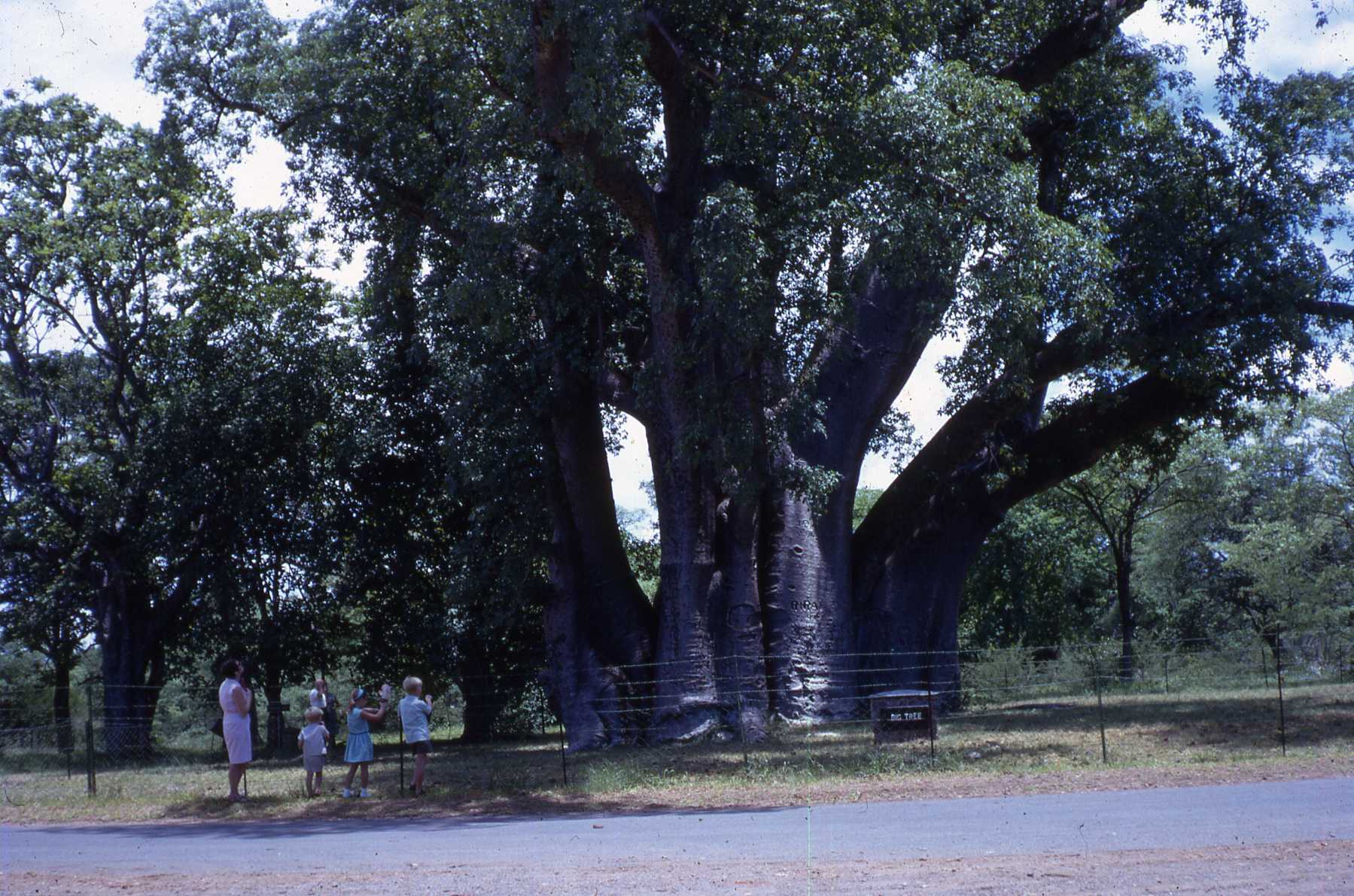
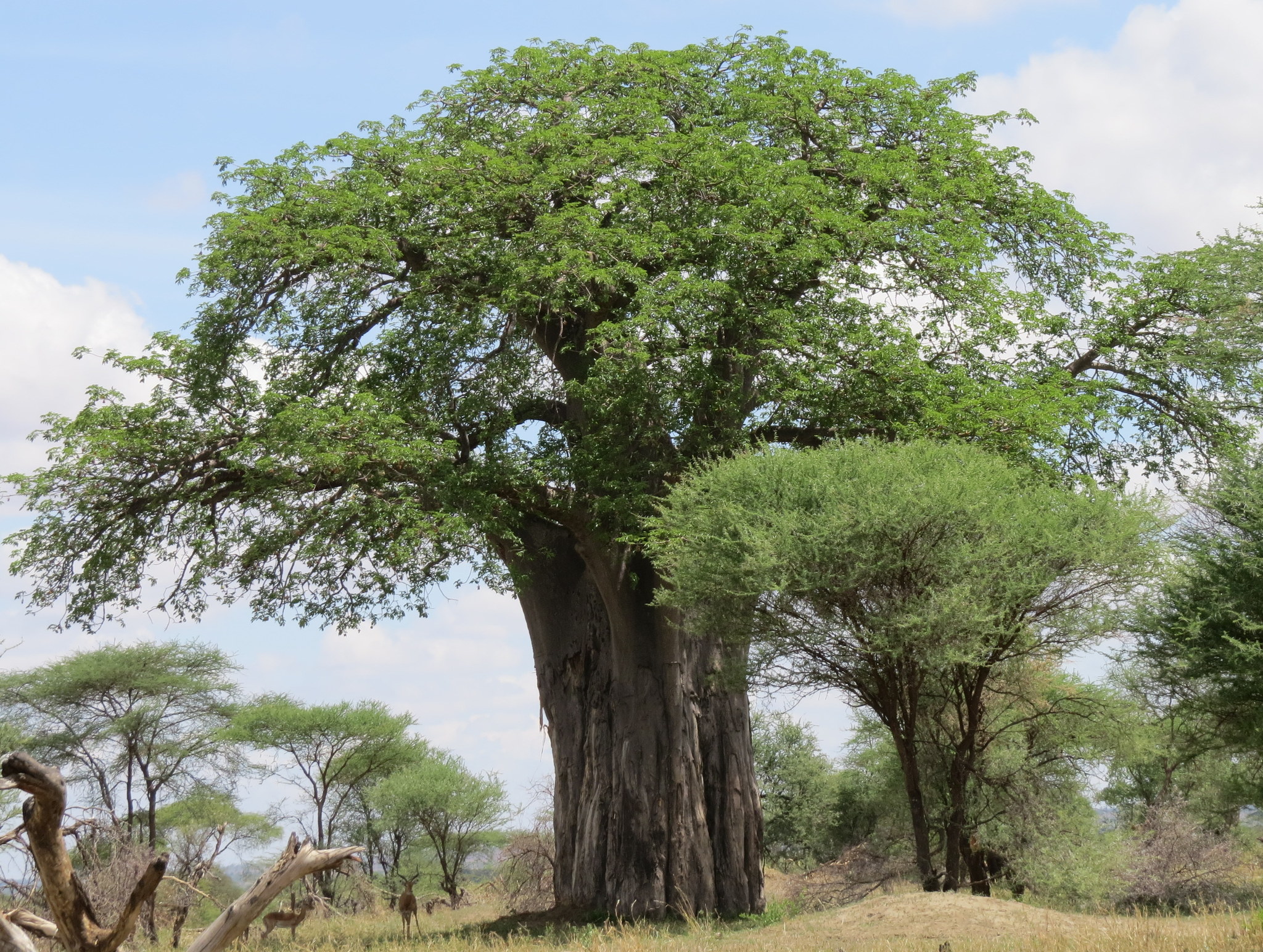



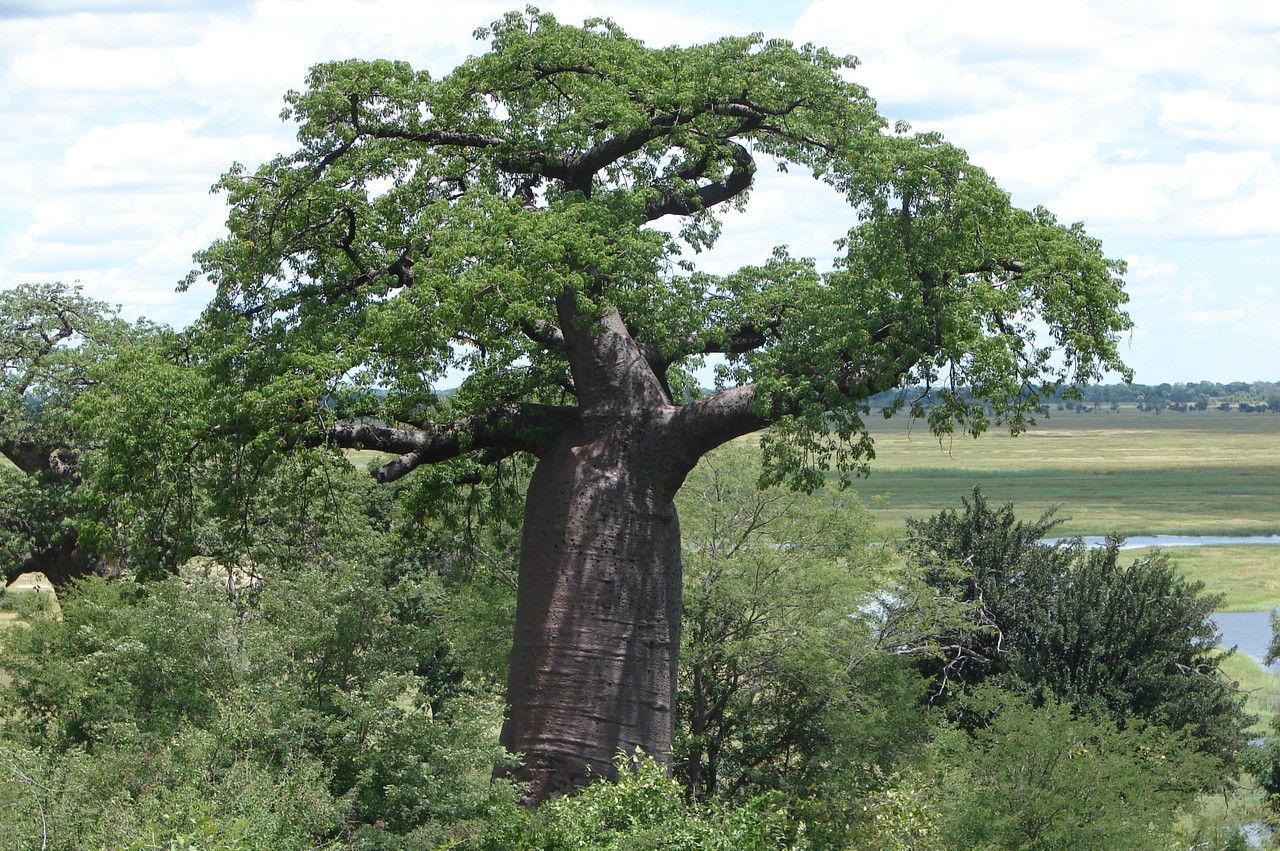
© photo
(c) leuli, some rights reserved (CC BY-NC) · cc-by-nc
Simon Tonge · cc0
Adam Kranz · cc0
Taken Feb 23, 2017 by Tela Botanica − Liliane ROUBAUDI (cc-by-sa)
Taken Nov 23, 2020 by FERREIRA DIEGO CÉSAR (cc-by-sa)
Taken Mar 1, 2017 by Tela Botanica − Liliane ROUBAUDI (cc-by-sa)
© copyright of the Board of Trustees of the Royal Botanic Gardens, Kew.




Global distribution
Adansonia digitata is native to the dry savanna belt of sub-Saharan Africa, from Senegal to Sudan and southern Africa, with an extension into the southern Arabian Peninsula. Ancient trade routes also brought it to Madagascar and India, where it has naturalized. In metropolitan France it occurs only in pots, greenhouses or botanical collections.
- Native6
- Introduced2
- Senegal
- Mali
- Sudan
- Tanzania
- South Africa
- Yemen
- Madagascar
- India
Hexagons: regions where the plant occurs. Green dots: native range.1
Identity
African baobab (Adansonia digitata L., 1759), also called baobab, also known in French as calebassier du Sénégal, is a deciduous tree in the genus Adansonia, placed in the Malvaceae subfamily Bombacoideae. 1 2
The genus honors the French naturalist Michel Adanson, who described the tree in Senegal in the mid-eighteenth century. Linnaeus published its full scientific name in 1759. The epithet digitata refers to the five or seven leaflets arranged like the fingers of a hand. 1
The French name pain de singe, or monkey bread, primarily denotes the fruit, whose sweet, floury pulp also attracts baboons. Upside-down tree describes its dry-season silhouette: without leaves, its bare branches resemble roots pointing skyward. 4
Recognition
The trunk identifies a baobab even without leaves or flowers. Massive, smooth and gray-brown, it exceeds 10–14 m (33–46 ft) in diameter in the oldest trees, against an overall height of 5–25 m (16–82 ft), a diameter-to-height ratio unmatched by other African savanna trees. Its fibrous, spongy wood stores water; a large tree can retain tens of thousands of liters (thousands to tens of thousands of US gallons), explaining the trunk’s seasonal swelling with rainfall. 3 4
Leaves are simple on young plants but become compound, with five or seven fingerlike leaflets, on mature trees. The species is fully deciduous, shedding all its foliage during the long dry season and remaining bare for much of the year. This readily distinguishes it from an evergreen tree. 4
The white, pendant flowers measure 12–20 cm (4.7–7.9 in) across. They open at dusk, release a musky scent and wilt in less than twenty-four hours, a brief flowering window favoring nocturnal rather than daytime pollinators. Fruit develops only on mature trees: a velvety, woody capsule 20–55 cm (8–22 in) long, containing white, floury pulp rich in vitamin C. 4 3
Useful taxonomy
The accepted name remains Adansonia digitata L. Its homotypic synonym Baobabus digitata (L.) Kuntze belongs to a genus no longer recognized. Other eighteenth- and nineteenth-century names, including Adansonia bahobab L., Adansonia baobab Gaertn. and Adansonia sulcata A.Chev., were placed in synonymy after collections were compared. 1
Unlike those settled synonyms, the status of Adansonia kilima Pettigrew & al. remains debated. Described in 2012 for East African highland baobabs on the basis of genetic differences and fruit shape, it is treated as a synonym by Kew’s reference databases, though not by every author in the specialist literature. 1
Habitat and distribution
Its native range spans the dry savannas of sub-Saharan Africa, from Senegal and Mauritania to Sudan and southern Africa, with an extension into the southern Arabian Peninsula. It grows in well-drained sandy soils from sea level to 1,500 m (4,920 ft), with annual rainfall of 300–1,000 mm (12–39 in). 3 4
Introduced long ago along trade routes, African baobab has naturalized in Madagascar and India, where some centuries-old trees now receive local protection. In metropolitan France it occurs only in pots, greenhouses or botanical collections, because the outdoor climate does not meet its hardiness requirements. 6
Life cycle and reproduction
The nocturnal flowers were long associated chiefly with fruit-bat pollination. More recent work in southern Africa shows that hawkmoths account for most pollination in that region, with bats rarely visiting the flowers observed. 7
Young baobabs grow quickly for their first two years, then slow dramatically for the rest of their lives. This near standstill explains their exceptional longevity. Radiocarbon dating has confirmed trees more than 1,000 years old, including Panke in Zimbabwe, estimated at about 2,450 years before its trunks collapsed in 2010–2011. Several other large southern African trees have since shown a similar decline. 5
Between 2005 and 2017, nine of the thirteen oldest known baobabs and five of the six largest died or partially collapsed. No identified disease explained the phenomenon in these trees. Researchers suggest climatic stress from heat and drought, favoring the collapse of the oldest trunks. 5
Uses and risks
The baobab’s edible parts have many uses. Vitamin C-rich fruit pulp is eaten fresh or made into drinks; leaves are cooked like spinach or dried into a powder to thicken sauces; and roasted seeds provide an edible oil. Dried pulp has been authorized as a food ingredient in the European Union since 2008, launching its commercial use as a powdered superfruit. 3 4
The fibrous bark supplies traditional rope and cloth without killing the tree, which regenerates its bark. Hollowed trunks have long served as cisterns or shelters, while the tree itself provides a gathering place, known in West Africa as the arbre à palabres, or discussion tree. No toxicity is documented in humans, cats or dogs; its status in horses remains unknown for lack of data. 4
Varieties, lookalikes and related plants
African baobab has no established horticultural cultivars comparable to those of familiar houseplants. Garden centers sometimes sell young seedlings as desktop curiosities. Their naturally very slow growth after the initial spurt keeps them small for years. 3
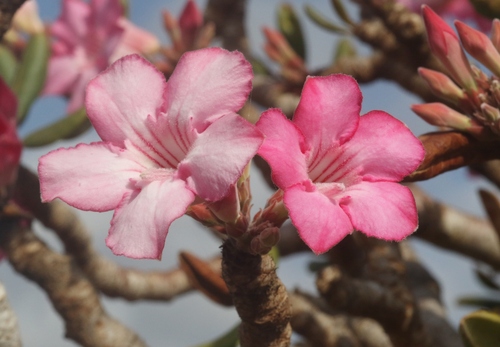
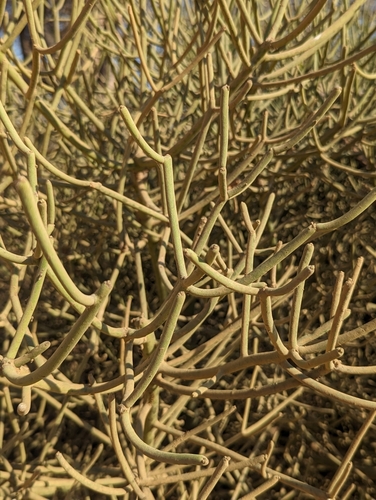
The most frequent confusion involves other baobabs: Madagascan species such as Adansonia grandidieri Baill. and Adansonia za Baill., with more cylindrical, bottle-shaped trunks, and the Australian boab Adansonia gregorii F.Muell., separated from Africa by thousands of kilometers (thousands of miles). Other unrelated African trees with swollen trunks, such as Adenium obesum and Euphorbia tirucalli, share its preference for dry conditions but belong to different botanical families.
Main sources
- Plants of the World Online / Kew, Adansonia digitata L.
- Royal Horticultural Society, Adansonia digitata - baobab
- Plants For A Future, Adansonia digitata
- PROTA / PlantUse, Adansonia digitata
- Patrut et al. 2018, The demise of the largest and oldest African baobabs, Nature Plants
- GBIF, Adansonia digitata L. species record
- Karimi et al. 2022, Evidence for hawkmoth pollination in the chiropterophilous African baobab, Biotropica
Frequently asked questions
Is baobab toxic?
No toxicity is documented in humans, cats or dogs. Its status in horses remains unknown for lack of data.
Why is baobab leafless for much of the year?
It is deciduous and sheds its leaves in the dry season to limit water loss. This normal behavior explains its nickname, upside-down tree.
How old can a baobab become?
Radiocarbon dating has confirmed individuals more than 1,000 years old, including the Panke tree in Zimbabwe, estimated at about 2,450 years before its trunks collapsed in 2010–2011.
Is African baobab the same as Australian boab?
No. Adansonia gregorii, the Australian boab, belongs to the same genus but is a distinct species, separated from Africa by thousands of kilometers (thousands of miles).
Can you grow a baobab in a pot in France?
Yes, as a young seedling kept in a bright indoor space or heated conservatory. It cannot tolerate frost and will never reach its adult size in a pot.
Is baobab fruit edible?
Yes. Dried pulp has been authorized as a food ingredient in the European Union since 2008 and is sold as a vitamin C-rich superfruit.
What pollinates baobab flowers?
Fruit bats were long considered the main pollinators, but recent studies show that hawkmoths account for most pollination in southern Africa.
Similar plants
If you are unsure about a plant’s toxicity, ask a botanist or veterinarian for advice.