
Wild onion (Allium ascalonicum, )
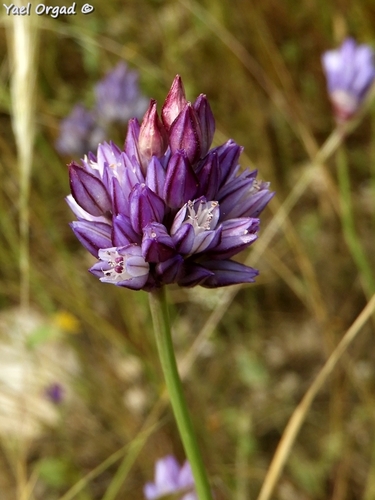
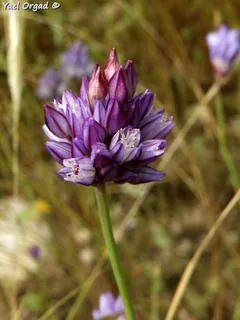
 +22
© photo
Allium ascalonicum, the wild species rather than the cultivated shallot, is a small bulbous species in the Amaryllidaceae, native to eastern Mediterranean deserts and steppes through the Arabian Peninsula. Its scientific name was long misapplied to cultivated shallots, a different plant. Blue flowers, unique among regional Allium, distinguish this wild species.
Read moreWild onion
Allow a few hours of direct sun per day, preferably morning or evening.


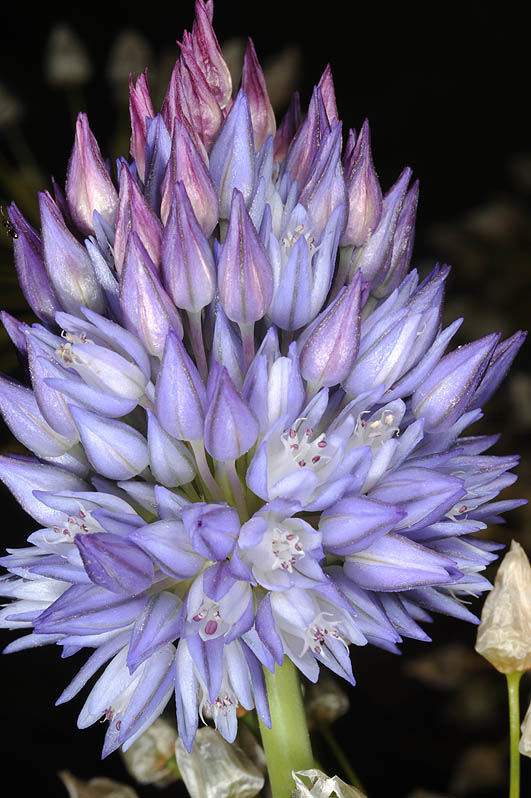
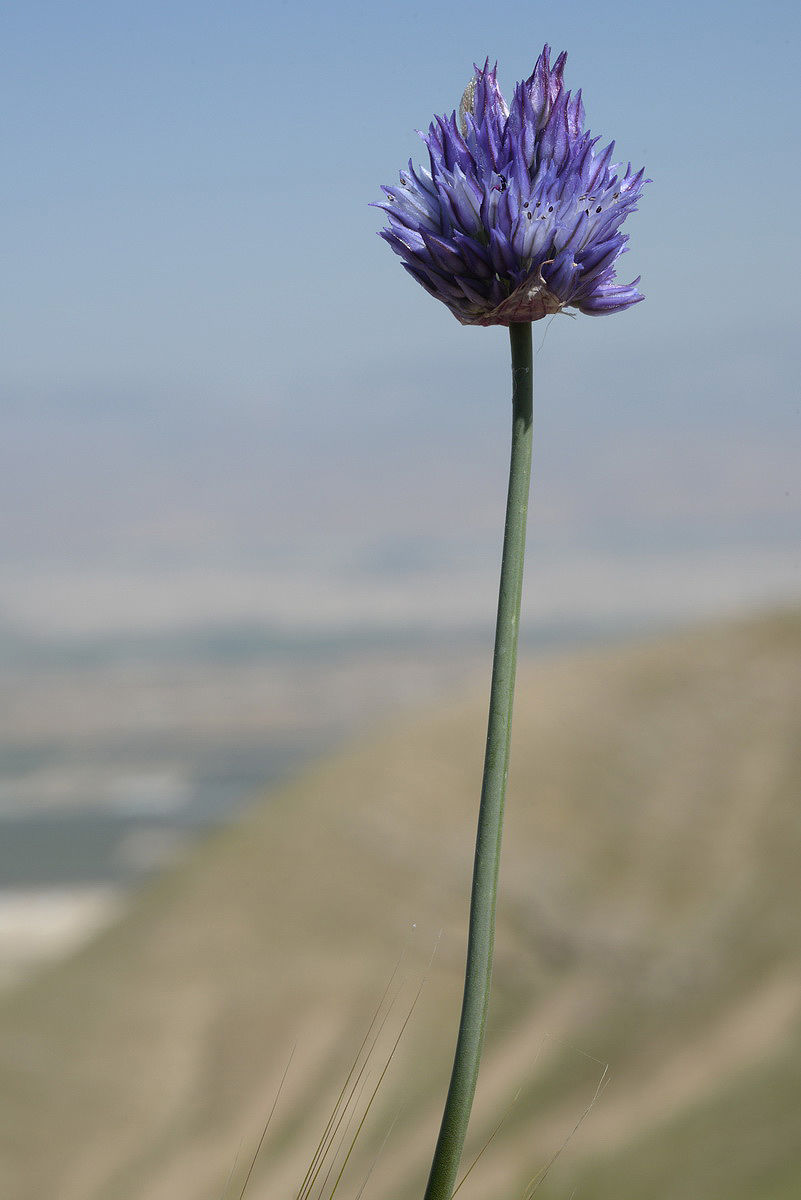
© photo
(c) Yael Orgad, some rights reserved (CC BY-NC), uploaded by Yael Orgad · cc-by-nc
Wikimedia Commons · CC BY-SA or Public Domain
Taken Mar 25, 2020 by Philippe Morvan (cc-by-sa)
Taken Jan 17, 2022 by Annemarie Ahrens-Stehle (cc-by-sa)
Taken Aug 13, 2022 by Joseph Dupont (cc-by-sa)
© copyright of the Board of Trustees of the Royal Botanic Gardens, Kew.



Global distribution
Allium ascalonicum is a wild species native to the eastern Mediterranean and Arabian Peninsula, from Egyptian and Libyan deserts to the Levant and southern Turkey. It is not grown as a vegetable and is absent from western European gardens and vegetable plots, unlike the cultivated shallot that long bore the same name.
- Native8
- Egypt
- Libya
- Lebanon
- Syria
- Palestine
- Jordan
- Saudi Arabia
- Turkey
Hexagons: regions where the plant occurs. Green dots: native range.1
Identity
Allium ascalonicum (L., Fl. Palaest., 1756) is a small, slender bulbous species in the Amaryllidaceae, native to the deserts and dry steppes of the eastern Mediterranean and Arabian Peninsula. Linnaeus described it in Flora Palaestina in 1756. Its accepted binomial was long misapplied by gardeners and botanists to the cultivated shallot rather than this wild Levantine plant. The shared historical name therefore conceals two different plants: a domesticated vegetable and a slender desert bulb with blue flowers. 1 4
The Latin ascalonicum derives from Ascalon, an ancient Philistine city now Ashkelon, Israel. The same root produced French échalote, which came to denote the cultivated vegetable rather than the wild species legitimately bearing the scientific name. 7
Recognition
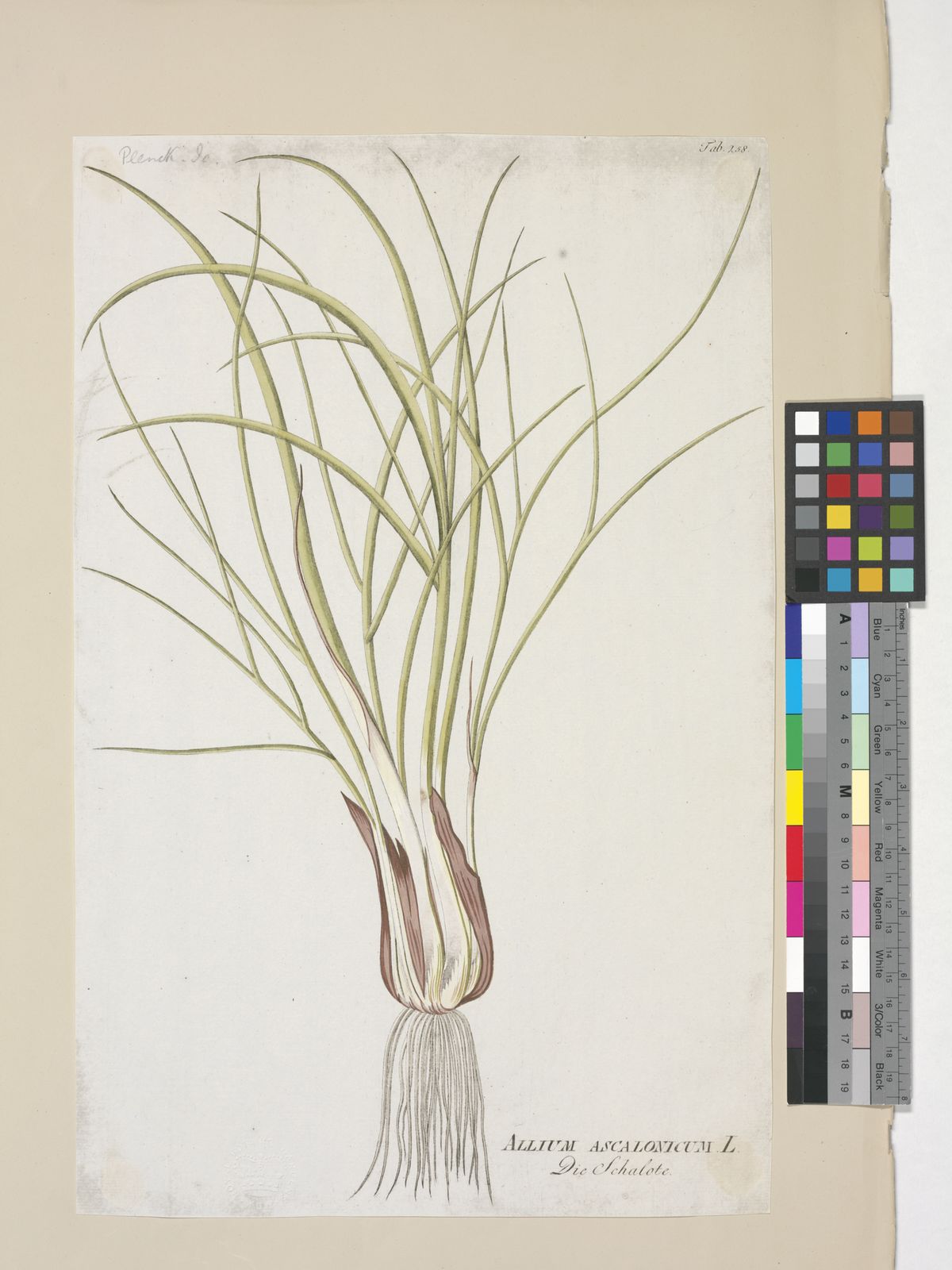
Allium ascalonicum is a small, slender species 30–60 cm (12–24 in) tall. Blue flowers distinguish it from every other wild eastern Mediterranean Allium, whose flowers are white, pink or lilac, never blue. Flower color is thus the principal distinction, with the small stature and early flowering completing the identification. 6
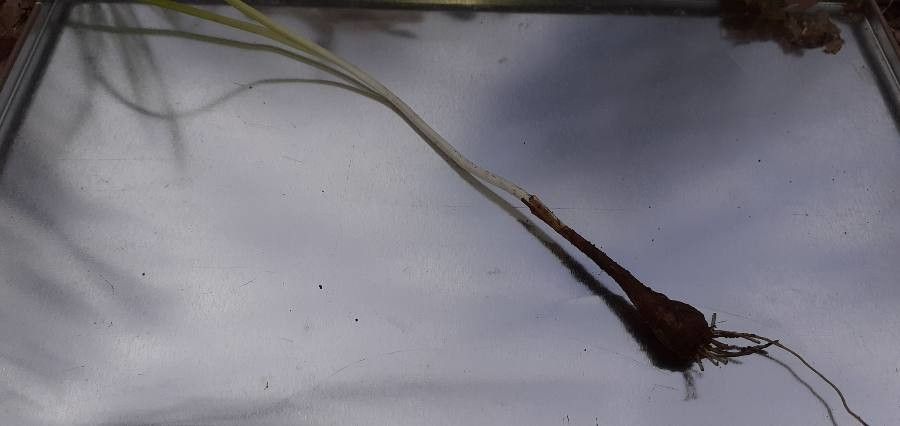
The bulb consists of several joined cloves, like garlic, while the leaves are fine and tubular, resembling onion leaves. Flowering occurs early, in early spring under the native desert climate, before summer heat brings dormancy. 6 3
Useful taxonomy
The complex synonymy of Allium ascalonicum is important for distinguishing names. These botanical names belong to the wild species, even when their similarity to familiar vegetable names suggests otherwise:
- Cepa ascalonica (L.) Garsault, homotypic synonym
- Porrum ascalonicum (L.) Rchb., homotypic synonym
- Allium carneum Willd., heterotypic synonym
- Allium fissile Gray, heterotypic synonym
- Allium hierochuntinum Boiss., heterotypic synonym used in the Levant
A further naming complication is Allium ascalonicum auct., meaning “of authors,” long used horticulturally for cultivated shallot. Fritsch and Friesen’s 2002 revision placed that crop under Allium cepa var. aggregatum, leaving Allium ascalonicum for Linnaeus’s wild species, accepted as such by POWO, GBIF and ITIS. 5 2 7
Habitat and distribution
The native range extends from Egypt and Libya in North Africa through Lebanon, Syria, Palestine, Jordan, Saudi Arabia and southern Turkey. It grows in a subtropical climate with the hot, dry summers characteristic of the eastern Mediterranean. 3 5
Allium ascalonicum occupies deserts and dry steppes on sunny sandy or stony soil. Unlike the widely cultivated European vegetable shallot, it remains strictly wild, absent from vegetable gardens and seldom encountered outside its native range. 1 6
Life cycle and reproduction
The cycle follows summer-dormant Mediterranean Allium. Leaf growth begins with late-autumn and winter rains. Blue flowers appear in late local winter or early spring, then foliage yellows and the plant enters dormancy until the following autumn. 6 3
Vegetative propagation uses division of cloves. Bulbs naturally split into several units between seasons, a feature shared with cultivated shallots that partly explains their historical confusion. Sexual reproduction produces black seeds after flowering. 2
Uses and risks
Allium ascalonicum is not a vegetable crop. Edibility is not documented as it is for onions or cultivated shallots, and it has no established culinary or commercial use. Its interest is botanical and horticultural, for collectors of Mediterranean rock-garden bulbs. In cultivation it suits a dry, frost-free rock garden in full sun, with very free-draining soil. It remains rare in general horticulture, rather than a replacement for the shallots grown in vegetable plots. 6
Like other Allium, it contains sulfur compounds, thiosulfates and disulfides, capable of irritating or poisoning domestic animals. The ASPCA lists Allium as toxic to cats, dogs and horses: substantial bulb ingestion causes hemolytic anemia. 8 9
Varieties, lookalikes and related plants
The main confusion is with cultivated shallot, now Allium cepa var. aggregatum. They share a historical name and multi-cloved bulbs, but otherwise differ markedly. Shallot is a domesticated vegetable with white or greenish flowers and large fleshy bulbs; Allium ascalonicum is a slender wild species with blue flowers, growing in Levantine deserts. 7
The synonym Allium hierochuntinum Boiss. does not denote a separate plant. It is a name for the same species, now included in Allium ascalonicum synonymy. Blue flowers remain the decisive distinction in the field or botanical garden, absent from other familiar culinary or ornamental Allium in the region. 5
Main sources
- Plants of the World Online / Kew, Allium ascalonicum L.
- GBIF / Catalogue of Life, Allium ascalonicum L.
- Integrated Taxonomic Information System, Allium ascalonicum L. (TSN 506481)
- International Plant Names Index, Allium ascalonicum L., Flora Palaestina (1756)
- Wikispecies, Allium ascalonicum
- Pacific Bulb Society, Allium ascalonicum
- Wikipedia, Shallot (etymology and historical synonymy)
- ASPCA, onion (Allium) toxicity entry
- Merck Veterinary Manual, plants toxic to animals
Frequently asked questions
Is Allium ascalonicum the same plant as the cultivated shallot?
No. Cultivated shallot is now classified as Allium cepa var. aggregatum. Allium ascalonicum was long misapplied to it, but botanically denotes a separate wild Near Eastern species.
Is Allium ascalonicum toxic?
Like other Allium, it contains irritating sulfur compounds. The ASPCA lists Allium as toxic to cats, dogs and horses, with a risk of hemolytic anemia after substantial bulb ingestion.
Where does Allium ascalonicum grow wild?
Its native range spans the eastern Mediterranean and Arabian Peninsula, from Egypt and Libya to Lebanon, Syria, Palestine, Jordan, Saudi Arabia and southern Turkey, in desert or steppe habitats.
How can you identify Allium ascalonicum?
Blue flowers are the most reliable distinction: it is the only blue-flowered Allium in the eastern Mediterranean. Small stature, a multi-cloved bulb and late-winter flowering complete the identification.
Can you eat Allium ascalonicum?
Its edibility is not established as cultivated shallot’s is. This is a wild species, rather than a vegetable crop, and it is not sold as a vegetable.
Can Allium ascalonicum be grown in a garden?
Yes, in a dry frost-free rock garden in full sun with very free-draining soil. It remains rare in general horticulture and mainly interests collectors of botanical bulbs.
Where does the name Allium ascalonicum come from?
It derives from Latin ascalonia cepa, onion of Ascalon, an ancient Levantine city now Ashkelon in Israel. The same name later denoted cultivated shallots for centuries before their 2002 reclassification.
Similar plants
If you are unsure about a plant’s toxicity, ask a botanist or veterinarian for advice.