
Saskatoon (Amelanchier alnifolia, )
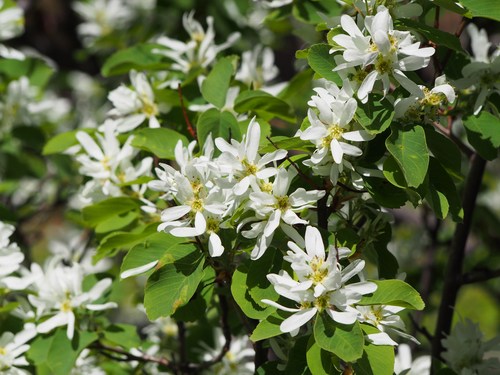
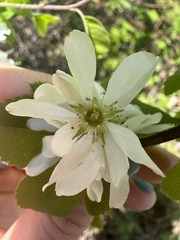
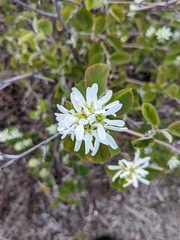
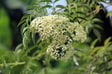
Saskatoon (Amelanchier alnifolia), also called western serviceberry, is a deciduous Rosaceae shrub native from Alaska through western Canada to the northwestern and north-central United States. White, five-petaled spring flowers are followed by fleshy blue-purple pomes in summer, valued by wildlife and foragers. Teeth on the upper half of the leaves recall alder foliage and explain the species epithet.
Read moreSaskatoon, Saskatoon serviceberry, Juneberry, Western serviceberry and Pigeon berry
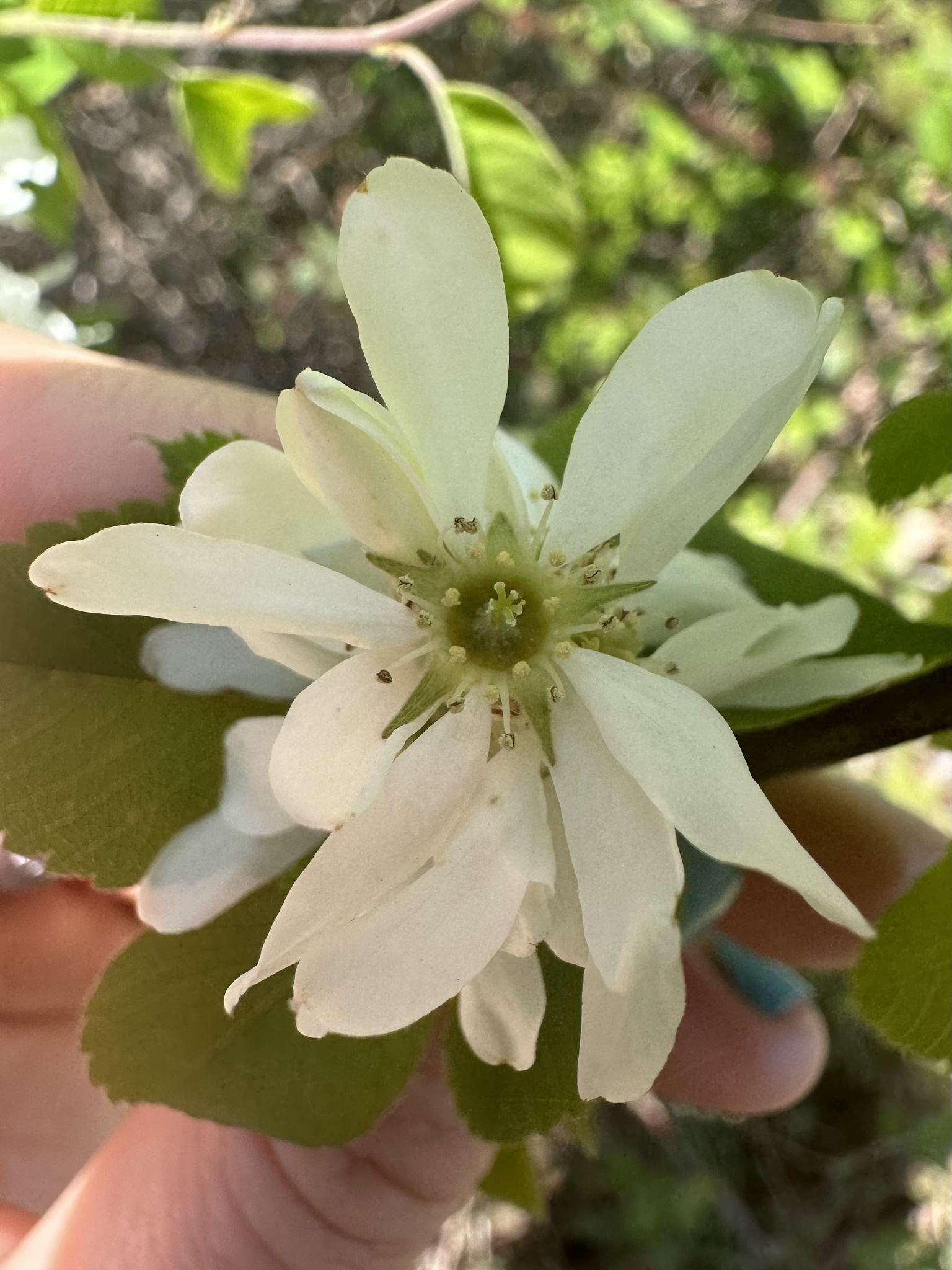
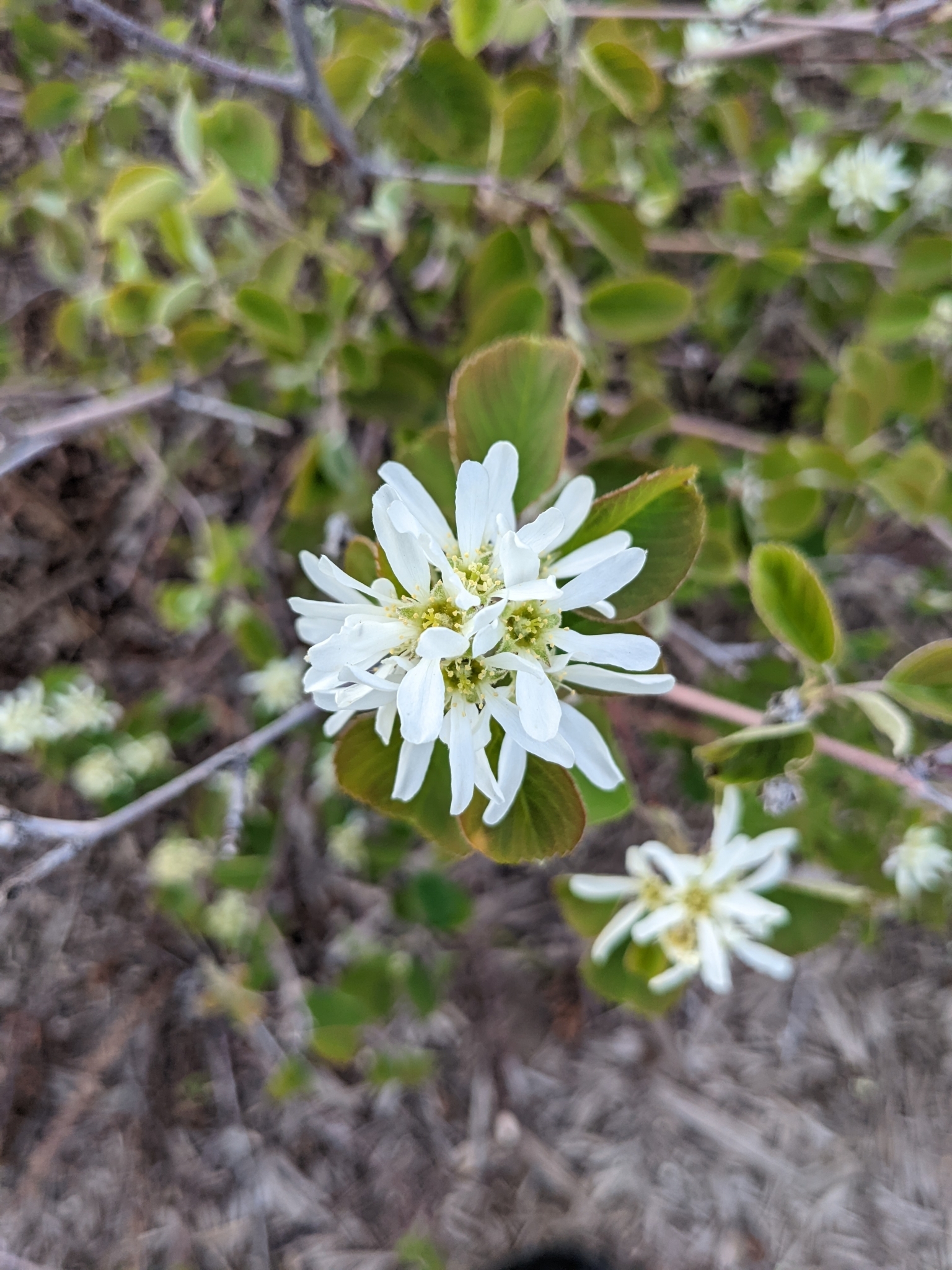

© photo
(c) Wendy Feltham, some rights reserved (CC BY-NC), uploaded by Wendy Feltham · cc-by-nc
Kate Manning · cc0
Troy McConaghy · cc0
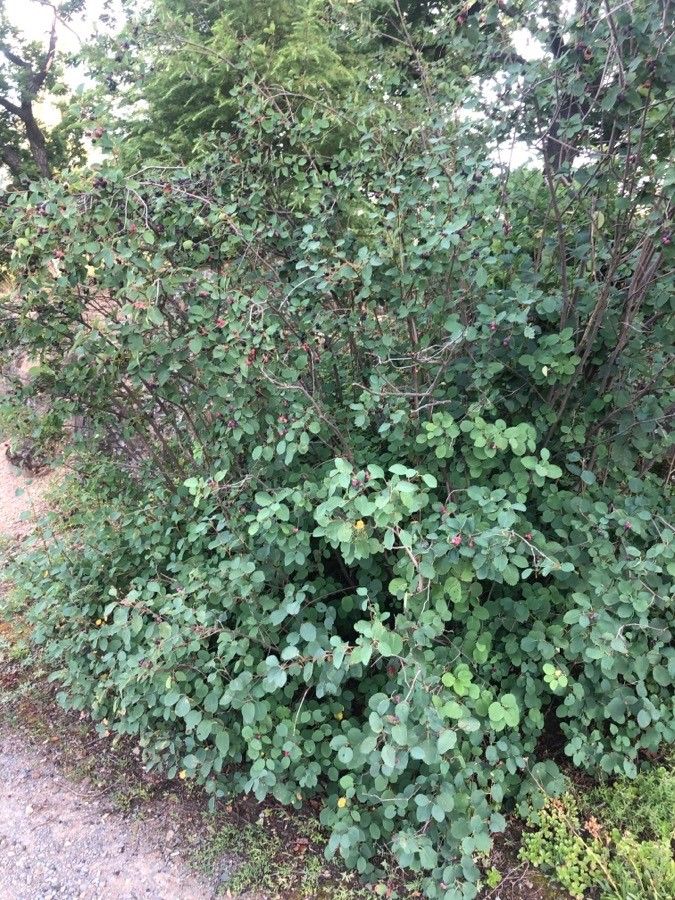
Taken May 7, 2021 by manuseitz (cc-by-sa)
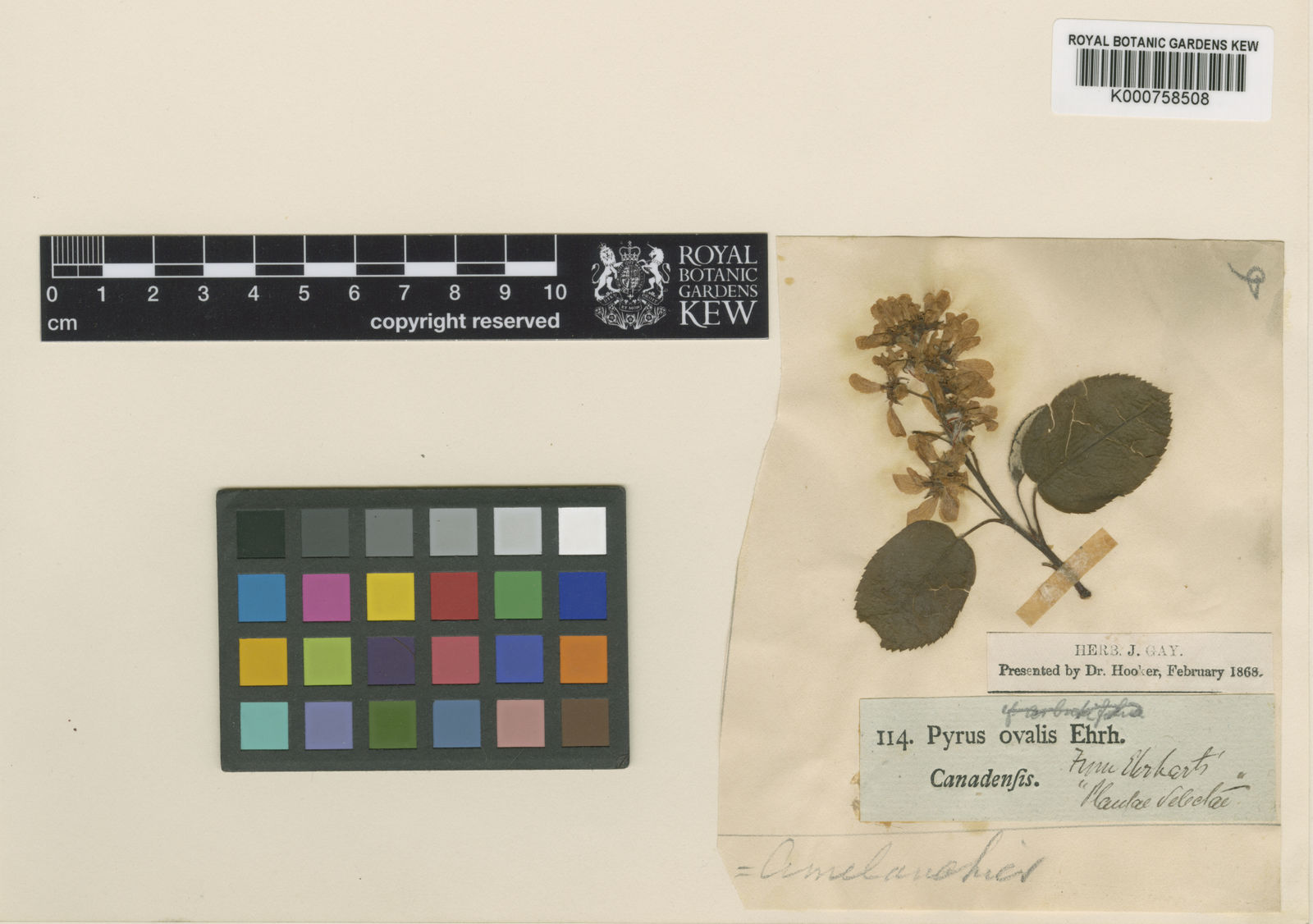
© copyright of the Board of Trustees of the Royal Botanic Gardens, Kew.




Global distribution
Saskatoon is native from Alaska and Yukon through western Canada to the northwestern and north-central United States. It is cultivated far beyond this range, including temperate Europe, with no documented invasive naturalization in France.
- Native2
- Introduced1
- Canada
- United States
- Czechia
Hexagons: regions where the plant occurs. Green dots: native range.1
Identity
Saskatoon (Amelanchier alnifolia (Nutt.) Nutt. ex M.Roem., 1847), or saskatoon serviceberry, is a deciduous shrub in the Rosaceae, related to apples and hawthorns. The Latin epithet alnifolia combines “alder” and “leaf,” describing the toothed foliage that resembles alder more closely than that of other North American serviceberries. 1 7
Saskatoon comes from Cree misâskwatōmina, the name of the fruit. The city of Saskatoon in Saskatchewan was named after the fruit, rather than the other way around. Juneberry and western serviceberry are other English names, reflecting regional usage and the harvest season. 7
Recognition
On poor or dry soil, saskatoon remains a shrub 1–4 m (3–13 ft) tall. In deep, rich ground, it can reach 8 m (26 ft) and develop into a small tree. 2 3
The oval to rounded leaves are 2–5 cm (0.8–2 in) long, with teeth chiefly along the upper half. This distinguishes the species from serviceberries with fine teeth along the whole leaf margin. 7
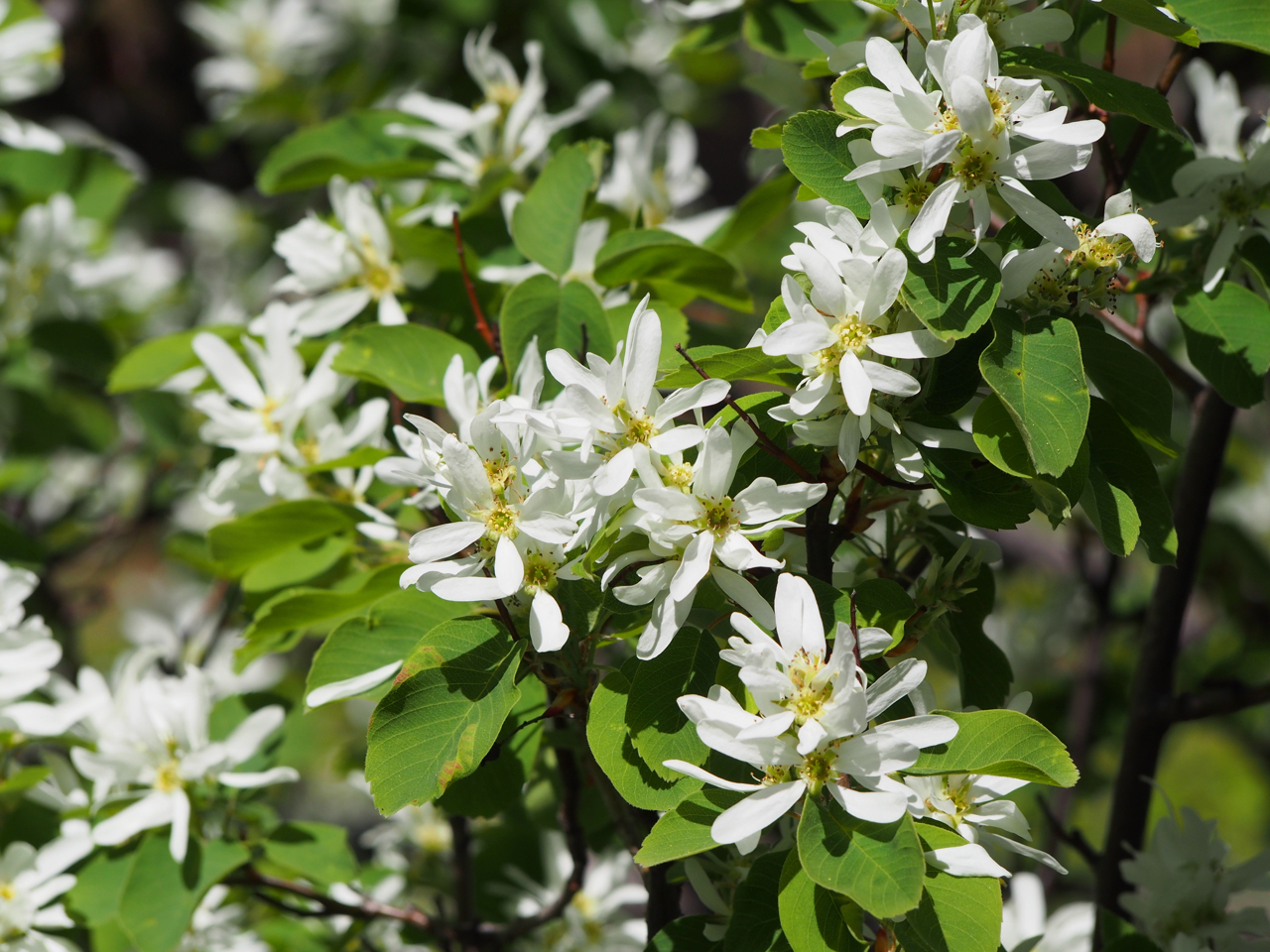
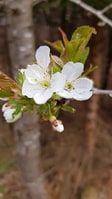
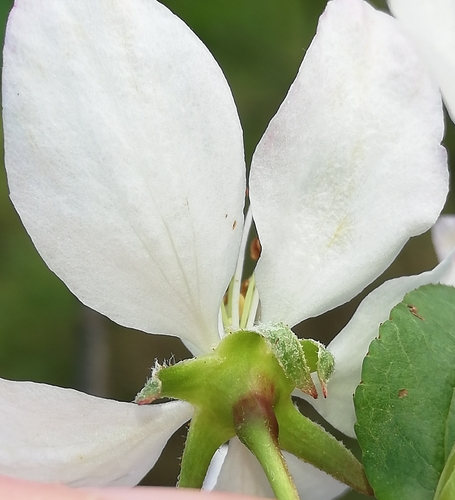
White flowers with five narrow petals 2–3 cm (0.8–1.2 in) long open in spring, with or just before leaf emergence, in short, upright racemes. 2
The fruit is a small, fleshy pome 5–15 mm (0.2–0.6 in) across. It changes from red to deep blue-purple when fully ripe in early summer. Its sweet flesh recalls blueberry, with the almond note characteristic of the genus. 3 7
Useful taxonomy
The current combination, Amelanchier alnifolia (Nutt.) Nutt. ex M.Roem., dates from 1847. It derives from a name Thomas Nuttall published in 1818 under another genus. The principal names are:
- Aronia alnifolia Nutt., 1818, the basionym;
- Pyrus alnifolia (Nutt.) Lindl., 1821, an intermediate combination;
- three accepted varieties: Amelanchier alnifolia var. alnifolia, var. pumila (Nutt.) C.K.Schneid. and var. semiintegrifolia (Hook.) C.L.Hitchc..
The typical variety occurs in the northeastern part of the range, pumila in the Rocky Mountains and Sierra Nevada, and semiintegrifolia along the Pacific coast. The accepted species name, Amelanchier alnifolia, remains the stable reference. 1 7
Habitat and distribution
Its native range stretches from Alaska and Yukon through western Canada to the northwestern and north-central United States, in subarctic to temperate conditions. 1 5
The species occupies forest edges, thickets and streambanks on moist, well-drained soil. In mountains it reaches 2,600 m (8,500 ft) in northern California and 3,400 m (11,200 ft) in the Rockies. 3 7
Beyond its native range, it is chiefly planted as an ornamental and fruiting shrub in Britain and France. Invasive naturalization is not documented in metropolitan France, unlike occasional garden escapes in some central European countries. 2
Life cycle and reproduction
Early flowering exposes the blossoms to late frost during the local spring. Frost during bloom destroys many open flowers and reduces that year's harvest accordingly. The risk follows the local flowering season and weather. 7
After bee pollination, fruit ripens within weeks and is harvested by hand or machine according to the scale of production. Orchard rows are 4–6 m (13–20 ft) apart, with plants 0.5–1 m (1.5–3 ft) apart. A single clump can remain productive for more than 30 years. 7
Seed propagation is slow: germination requires cold stratification and may take up to 18 months. Division of basal suckers produces fruiting plants sooner. 3
Uses and risks
Ripe fruit is eaten fresh, dried or made into preserves. Indigenous peoples of the Canadian Prairies have long included it in pemmican, a traditional mixture of dried meat, fat and berries. 7
Saskatoon fruit supplies fiber, riboflavin, biotin, iron and manganese, with a nutritional profile resembling blueberry's. 7
The toxic risk concerns the leaves and seeds, rather than ripe fruit. They contain cyanogenic glycosides; very large amounts of wilted foliage or crushed seeds can poison cattle and horses, a risk documented chiefly during grazing. 4
In agroforestry, the shrub also reduces wind in field hedges and stabilizes sloping ground. It is used for erosion control and streambank restoration. 5
Varieties, lookalikes and related plants
The Canadian cultivars 'Smoky' and 'Northline' dominate commercial production for their sweet fruit and good yields. Both belong to Amelanchier alnifolia and are not separate species. 7
Frequent lookalikes include:
- other North American serviceberries with white spring flowers, such as Amelanchier canadensis and Amelanchier laevis, more tree-like species widespread in the east;
- hawthorns (Crataegus), which flower in the same season but have thorns and dry, stony fruits, features absent from serviceberry;
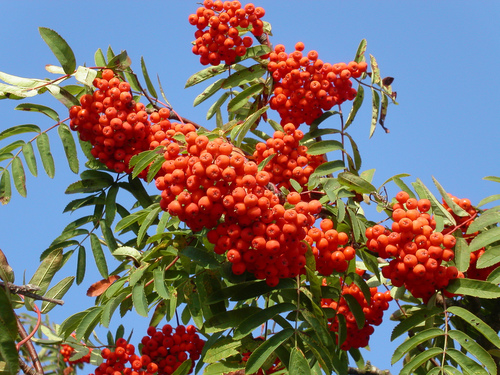
- wild apples and pears, relatives in the Rosaceae with much larger fruit. 4 3
Against thorny hawthorns and other serviceberries, two features together are more reliable than either alone: clustered, small fleshy pomes 5–15 mm (0.2–0.6 in) across, and leaves toothed only on their upper half.
Main sources
- Plants of the World Online / Kew, Amelanchier alnifolia (Nutt.) Nutt. ex M.Roem.
- Royal Horticultural Society, Amelanchier alnifolia details
- Plants For A Future, Amelanchier alnifolia
- North Carolina Extension Gardener Plant Toolbox, Amelanchier alnifolia
- USDA GRIN Taxonomy, Amelanchier alnifolia
- USDA PLANTS Database, Amelanchier alnifolia profile
- Wikipedia EN, Amelanchier alnifolia
Frequently asked questions
Is saskatoon fruit edible?
Yes. Ripe saskatoon fruit is eaten raw, dried or cooked into preserves. Indigenous peoples of the Canadian Prairies have long used it in pemmican, a traditional mixture of dried meat, fat and berries.
Is the plant toxic to animals?
Ripe fruit has no known associated risk. Leaves and seeds contain cyanogenic glycosides; very large amounts of wilted foliage or crushed seeds can poison cattle and horses, especially during grazing.
Where does the name saskatoon come from?
It comes from Cree misâskwatōmina, the name of the fruit. The city of Saskatoon in Saskatchewan was named after the fruit, rather than the reverse.
How does it differ from other North American serviceberries?
Amelanchier canadensis and Amelanchier laevis are more tree-like, upright plants widespread in the east. Saskatoon suckers more readily and chiefly occupies western and north-central North America.
What soil and exposure does it need?
Well-drained clay to sandy soil with a neutral to slightly alkaline pH and full sun give the best flowering and harvest. It tolerates partial shade, but produces fewer fruits.
How long does it take to bear fruit?
The first flowers often appear at 3–4 years, with full commercial production more often reached at 5–6 years. A well-managed clump can then remain productive for over 30 years.
How can you identify saskatoon in winter?
Look for a suckering clump of smooth gray, thornless stems and elongated, pointed buds. The absence of thorns distinguishes it from hawthorns, which flower in the same season.
Similar plants
If you are unsure about a plant’s toxicity, ask a botanist or veterinarian for advice.