
Rigid hornwort (Ceratophyllum demersum, )
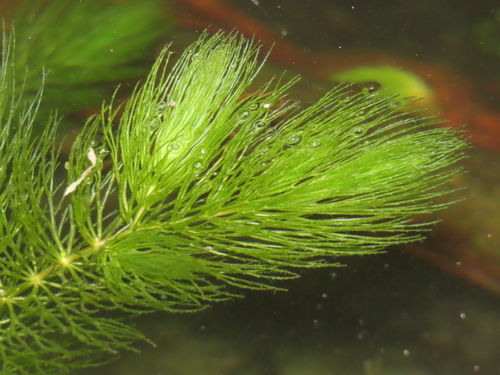
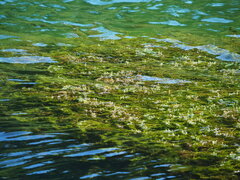
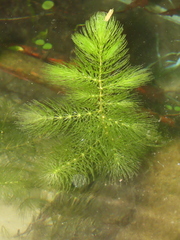
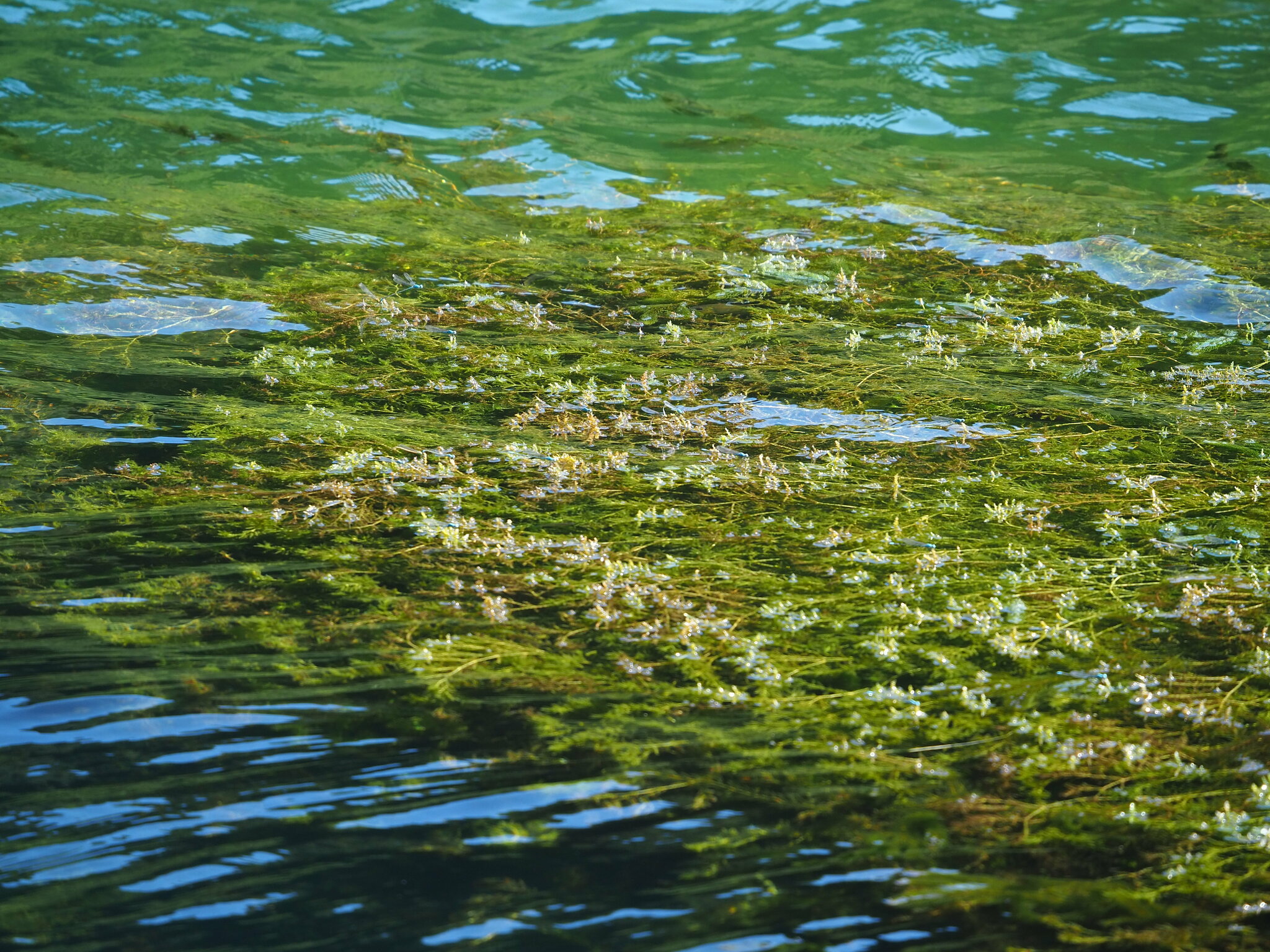
Rigid hornwort (Ceratophyllum demersum) is a perennial aquatic plant in the Ceratophyllaceae, entirely without true roots. Its brittle stems carry whorls of stiff, forked leaves edged with small spiny teeth. Found on every continent except Antarctica, it serves as a natural oxygenator in aquariums and garden ponds, where it competes with algae through allelopathy.
Read moreRigid hornwort, Coontail and Hornwort
Give plenty of ambient light without direct sun on the leaves.
Bright to moderate light underwater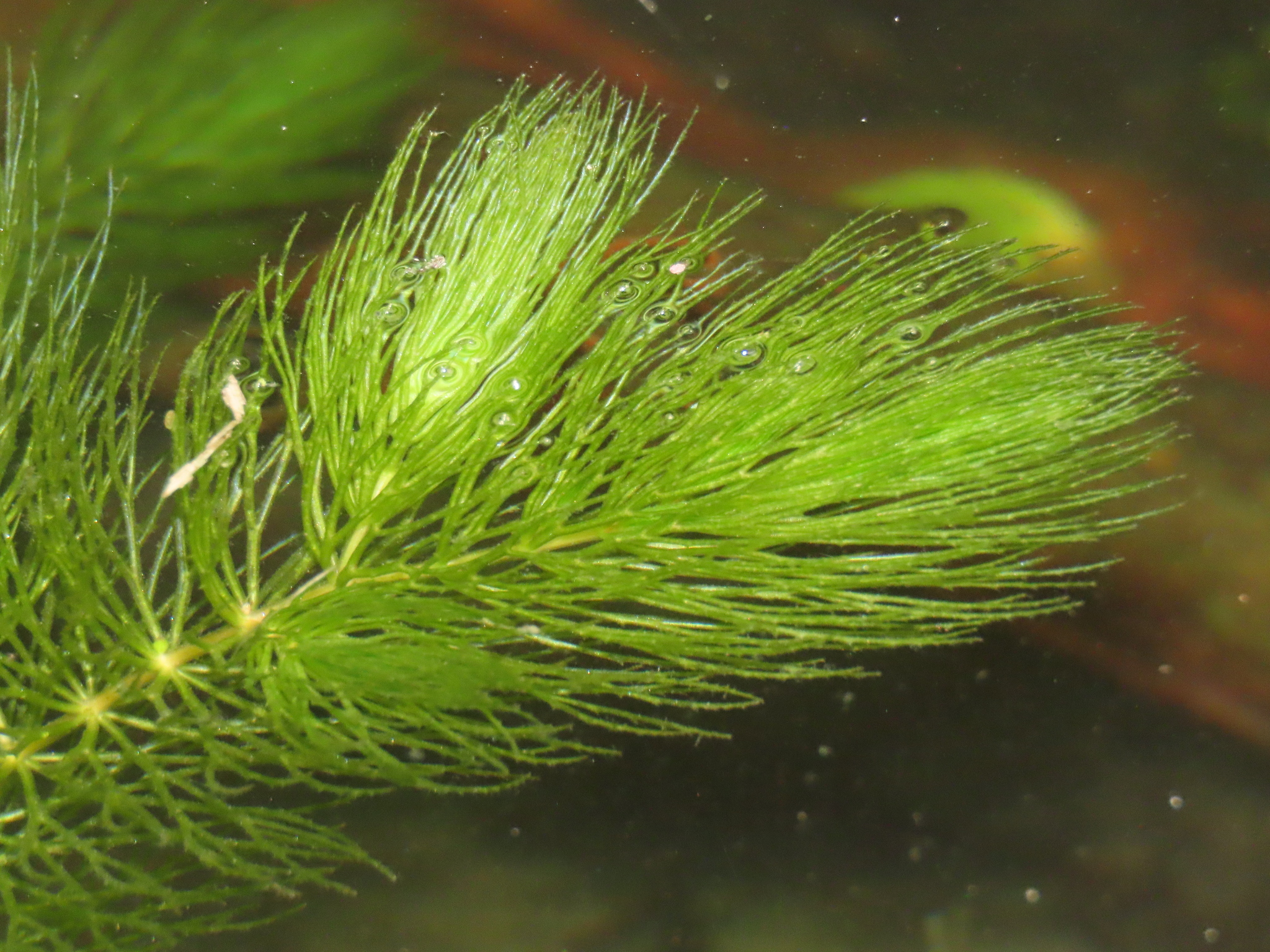



© photo
(c) chiuluan, some rights reserved (CC BY), uploaded by chiuluan · cc-by
葉子 · cc0
iNaturalist User · cc-by
Taken Sep 15, 2007 by Photoflora - Yann QUELEN (©)
Taken Jan 1, 1970 by Photoflora - L'Abbé COSTE (©)
Taken Dec 31, 1848 by Tela Botanica − Herbier PONTARLIER-MARICHAL (cc-by-sa)
Taken Aug 19, 1877 by Tela Botanica − Herbier PONTARLIER-MARICHAL (cc-by-sa)
© copyright of the Board of Trustees of the Royal Botanic Gardens, Kew.


Global distribution
Ceratophyllum demersum has a cosmopolitan range on every continent except Antarctica, from North America and Europe to China, West Africa and Vietnam. It is native to mainland France. Introduced beyond its usual range through the aquarium trade, it has become a regulated weed in New Zealand and a declared weed in Tasmania; it is not considered invasive in France.
- Native6
- Introduced1
- Invasive1
- France
- Germany
- United Kingdom
- United States
- Norway
- China
- New Zealand
- Australia
Hexagons: regions where the plant occurs. Green dots: native range.1
Identity
Rigid hornwort (Ceratophyllum demersum L., 1753), also called coontail, is a perennial aquatic plant in the Ceratophyllaceae, the sole family in the monotypic order Ceratophyllales. 5 1 It is the type species of Ceratophyllum, a genus with only a handful of recognized species worldwide. 2 One useful identifying feature is its complete lack of true roots; a submerged stem can exceed 3 m (10 ft) during a single growing season.
The genus name combines the ancient Greek keras, horn, and phyllon, leaf, directly describing the stiff, pointed segments of each forked leaf. The French name cornifle likewise derives from Latin cornu, horn. Coontail instead compares the plant’s dense, bushy growth with a raccoon’s furry tail. 5 3
Recognition
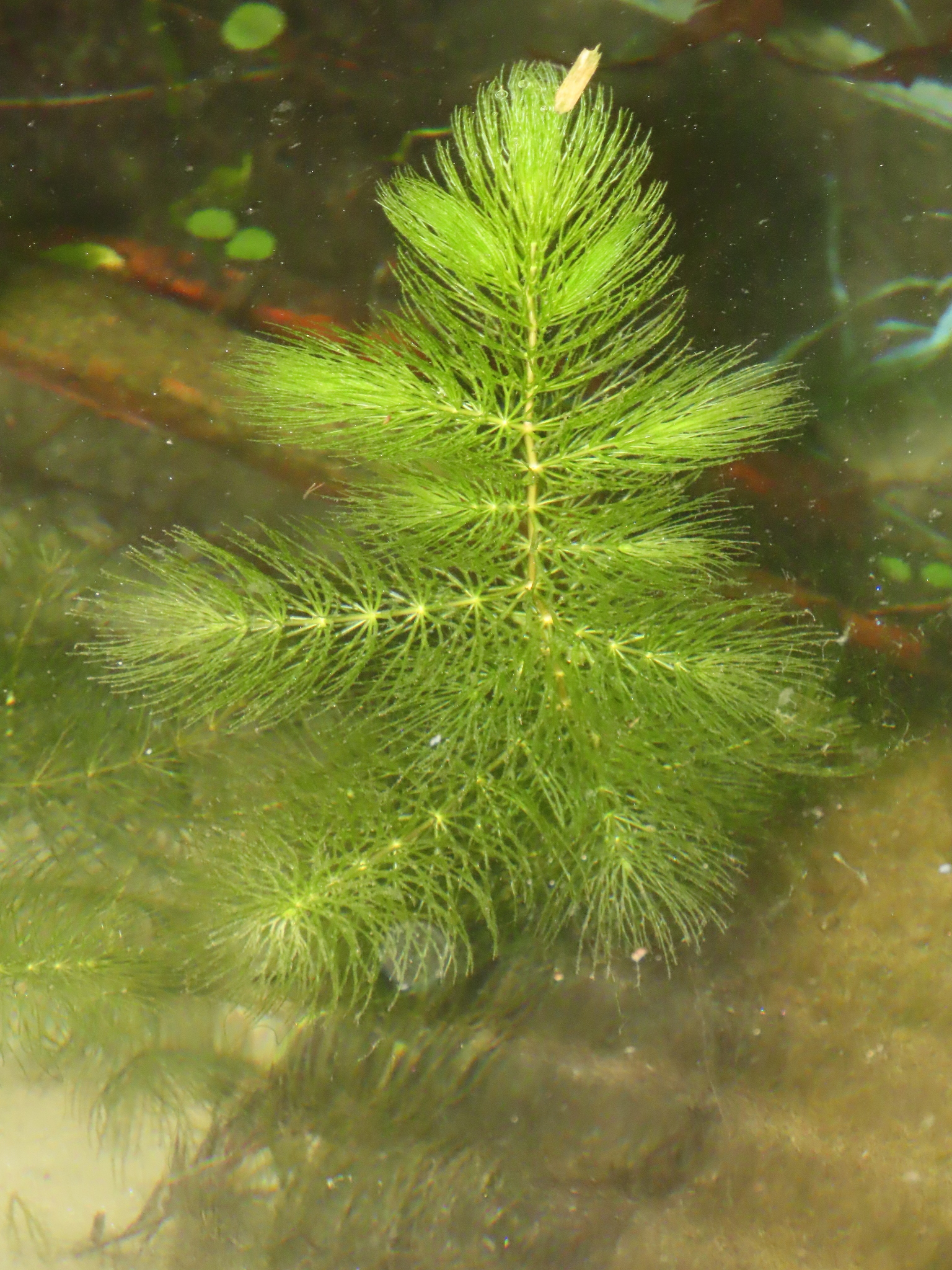
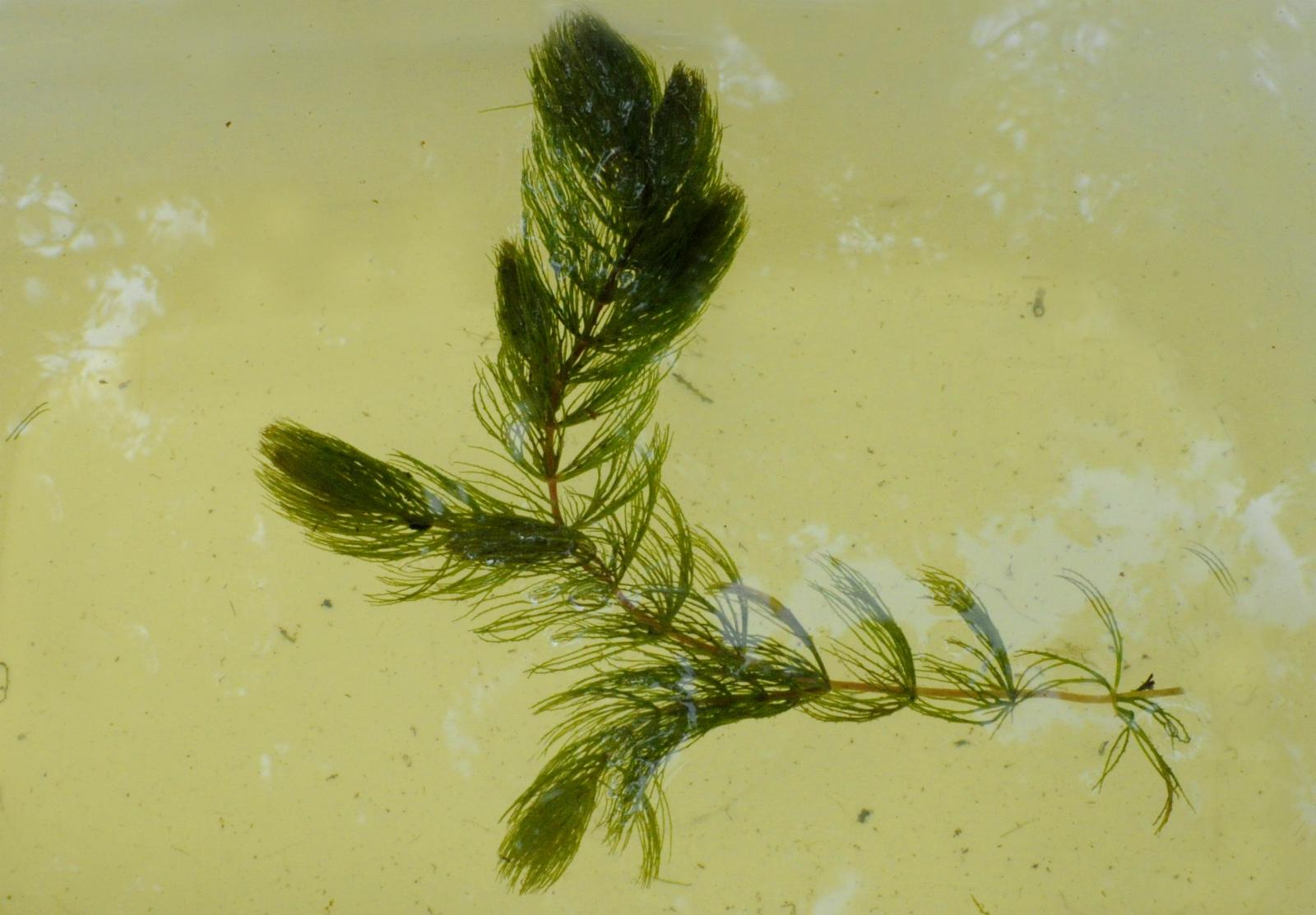
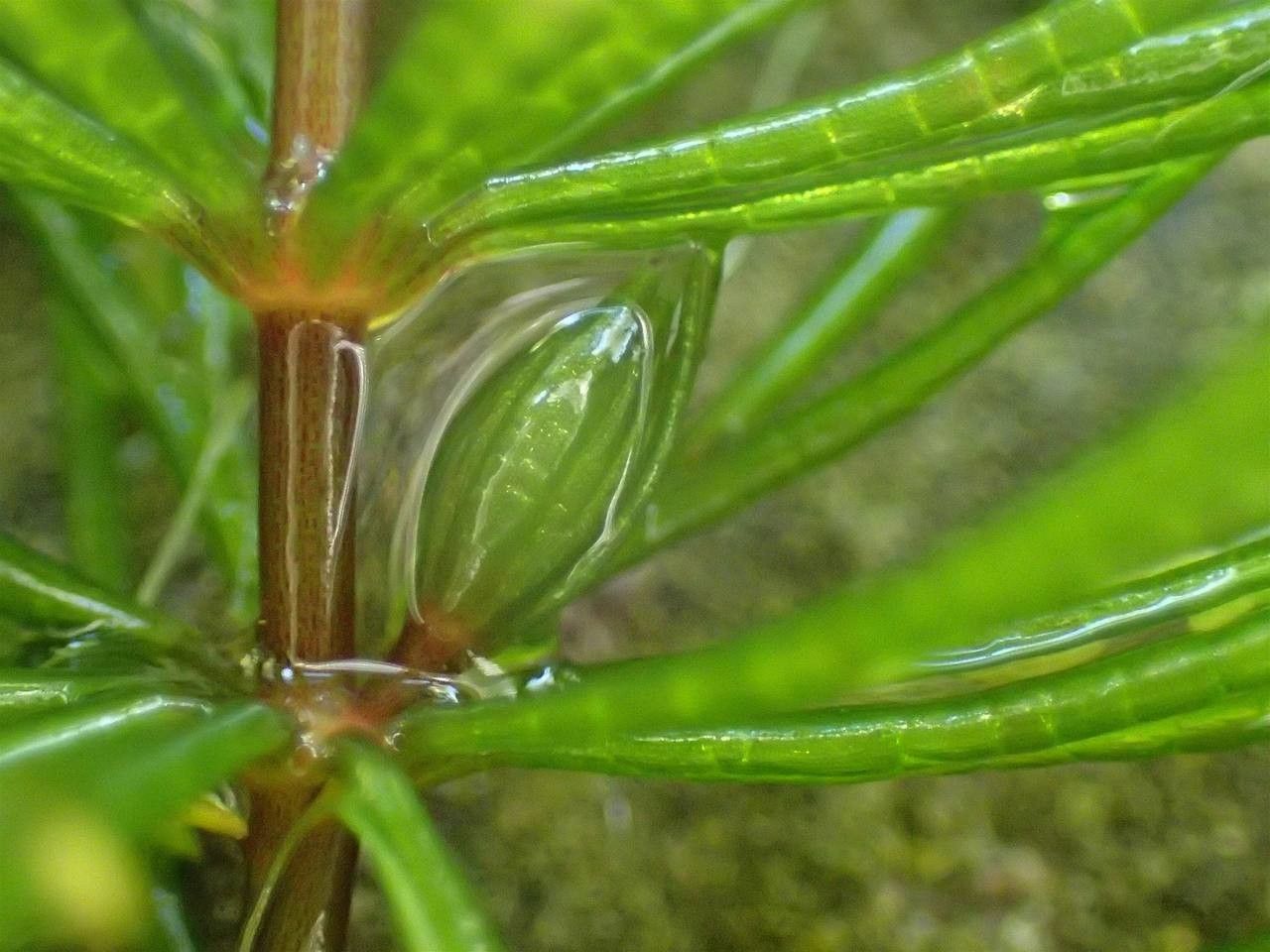
Entirely without true roots, rigid hornwort floats freely in the water column or anchors to the bottom through leaves modified into rhizoids, never developing a conventional root system. 5 Branched stems, brittle to the touch, can exceed 3 m (10 ft) under favorable conditions, forming a dense, bushy mass below the surface. 6
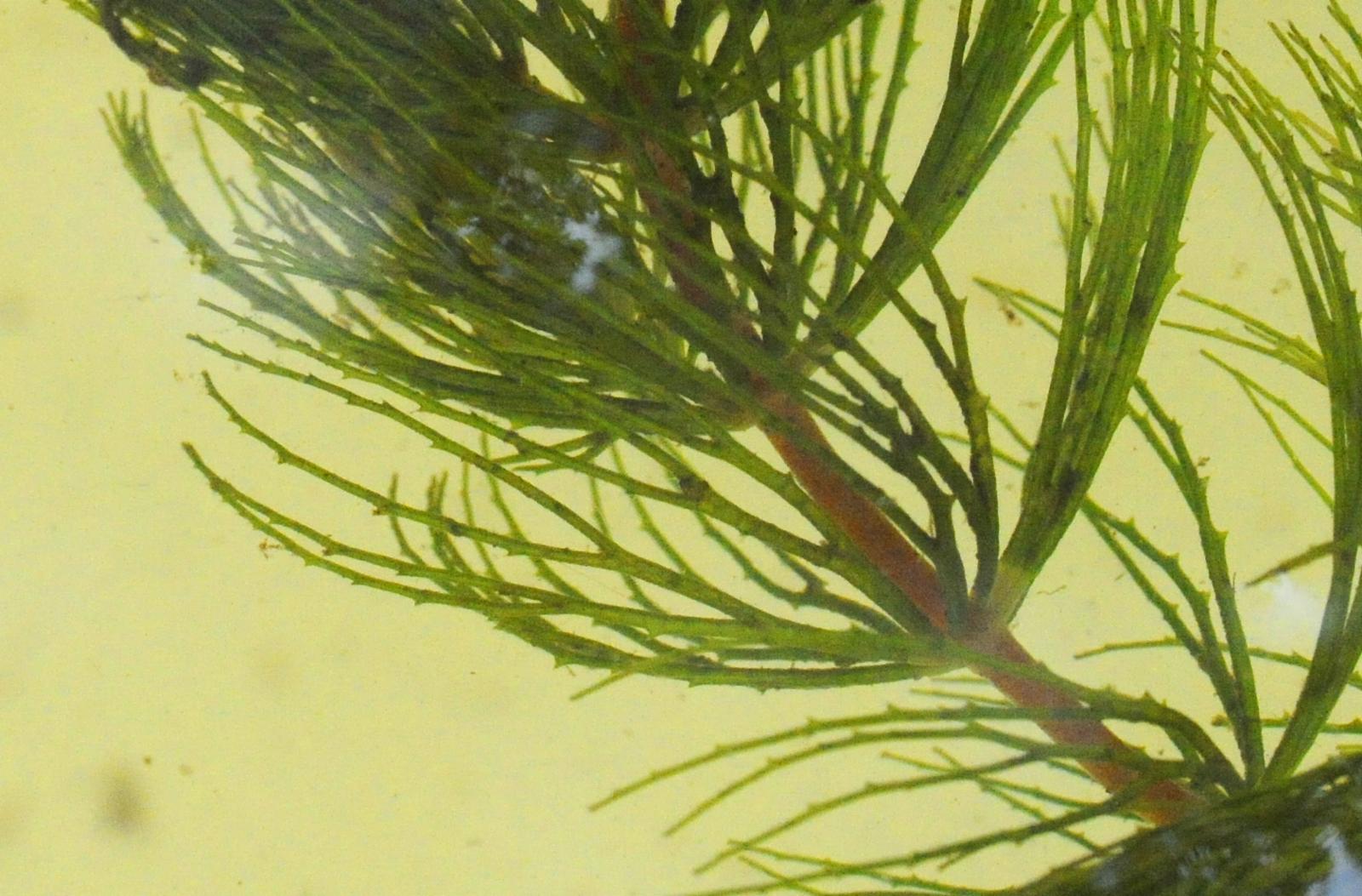
Leaves occur in whorls of 6–12, measure 8–40 mm (0.3–1.6 in) and fork once or twice into threadlike segments edged with small spiny teeth. They are stiff and snap readily between the fingers. 6 10 The plant is monoecious: tiny, separate male and female flowers, barely 1–2 mm (0.04–0.08 in) long and lacking visible petals, appear in the leaf axils during summer and into early autumn in the Northern Hemisphere. 10 5 The fruit is an ovoid achene, 4–6 mm (0.16–0.24 in) long, with two or three spines, one terminal and often two at the base. 6
Taxonomy and names
As the genus’s type species, Ceratophyllum demersum provides a reference for distinguishing other hornworts. The frequently confused Ceratophyllum submersum has finer leaves, divided three or four times into more numerous, less rigid segments without conspicuous teeth. 5 Ceratophyllaceae represents a distinct lineage among flowering plants, studied to understand their evolutionary relationships. This makes it a useful reference organism for evolutionary genomics. 6
No subspecies or botanical variety commands worldwide consensus, apart from a few locally described regional forms; the accepted name remains Ceratophyllum demersum L. 1
Habitat and range
A cosmopolitan distribution takes rigid hornwort to every continent except Antarctica, from North America and Europe to China, West Africa and Vietnam. 6 In Europe it reaches 66° north in Norway, a remarkable northern limit for an entirely submerged plant. 6 It is native to mainland France, where INPN records it in most departments, although its regional status is Near Threatened in Limousin and Corsica. 7 5
Nutrient-rich standing or slow-moving water in ponds, lakes, ditches and backwaters provides its habitat, with optimal summer growth at 15–30 °C (59–86 °F). 6 10 Aquarium introductions beyond its native range have made it a regulated weed in New Zealand, where it disrupts hydroelectric installations, and a declared weed in Tasmania. These are regional designations. 6 9
Life cycle and reproduction
Sexual reproduction contributes relatively little to population dynamics. Pollination occurs underwater, with pollen released by male flowers floating or sinking to nearby female flowers. 5 Vegetative propagation by fragmentation predominates. Each broken stem segment can regenerate a complete plant, explaining how quickly rigid hornwort colonizes a new body of water. 5
Where temperatures fall in autumn, the change triggers turions: dense buds packed with reserves that detach, sink and overwinter below the reach of frost, then rise in spring to rebuild the clump. 6 In favorable, nutrient-rich conditions, growth can reach 10–20 cm (4–8 in) per week, among the fastest rates recorded for a temperate aquatic plant. 5
Uses and risks
Among the most widely used oxygenating plants in aquariums and garden ponds, rigid hornwort grows quickly and produces dense foliage that filters water, shelters young fish and competes directly with filamentous algae. 6 Its effects are also chemical: it releases allelopathic compounds that inhibit phytoplankton and cyanobacterial growth, a strategy studied as an alternative to algicide treatments. 6 5
Its tissues efficiently accumulate certain dissolved heavy metals, including copper, zinc, cadmium and lead, making it a subject of phytoremediation research. The plant and its epiphytes also help break down herbicide residues such as atrazine. 5 6 No toxicity is reported in humans, fish or domestic animals in the references used, consistent with its widespread aquarium use. 6 Outside its usual setting, that vigor has a cost: dense stands have disrupted New Zealand hydroelectric plants, even as the species serves elsewhere as a model organism in closed life-support systems for space research. 6
Varieties, look-alikes and related plants
Aquarium suppliers mainly distinguish batches by clump size rather than a stable botanical variety. No horticultural cultivar is recognized for this species. The most frequent look-alikes are:
- Ceratophyllum submersum, with finer, more divided leaves that feel less rigid;
- Myriophyllum species, which have true roots and pinnate rather than forked leaves;
- Elodea species, with simple, undivided leaves attached directly to a rooted stem.
Against these three neighboring genera, the most reliable feature is the complete absence of roots combined with stiff, forked leaves in tight whorls, a combination characteristic of Ceratophyllum. 5
Main sources
- Plants of the World Online / Kew, Ceratophyllum demersum L.
- GBIF Backbone Taxonomy, Ceratophyllum demersum L.
- Encyclopaedia Britannica, coontail
- Atlas of Florida Plants, Ceratophyllum demersum
- Wikipedia FR, Ceratophyllum demersum
- Wikipedia EN, Ceratophyllum demersum
- INPN / MNHN, Ceratophyllum demersum L., 1753
- Tela Botanica, Ceratophyllum demersum L.
- Global Invasive Species Database, Ceratophyllum demersum
- Info Flora, Ceratophyllum demersum
Frequently asked questions
Is rigid hornwort poisonous to fish or animals?
No. No toxicity is reported in humans, fish or domestic animals, accounting for its widespread use in thousands of aquariums and ponds.
Why does rigid hornwort have no roots?
The species lives entirely underwater, taking up water and nutrients across its whole surface. When needed, it anchors itself with leaves modified into rhizoids, without ever developing true roots.
Is rigid hornwort invasive in France?
No. It is native to mainland France and is not classified as invasive there. Beyond its usual range, notably in New Zealand and Tasmania, introduced populations have become troublesome.
How does rigid hornwort reproduce?
Mostly through vegetative fragmentation of its stems. Sexual reproduction occurs but plays a minor role, with pollination taking place entirely underwater.
How can rigid hornwort be distinguished from related plants?
Ceratophyllum submersum has finer, more divided leaves. Myriophyllum and Elodea have true roots, whereas rigid hornwort has none at all.
What happens to rigid hornwort in winter?
It forms reserve-rich winter buds, called turions, which sink in autumn, overwinter below the reach of frost and rise naturally the following spring to rebuild the clump.
Does rigid hornwort help control algae?
Yes. It releases allelopathic compounds that inhibit phytoplankton and cyanobacterial growth, an effect studied as an alternative to conventional algicides.
Similar plants

If you are unsure about a plant’s toxicity, ask a botanist or veterinarian for advice.