
Fat hen (Chenopodium album, )
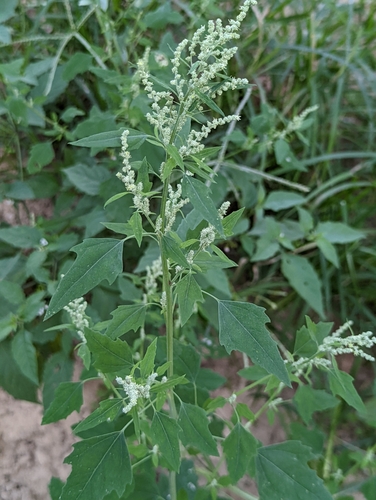
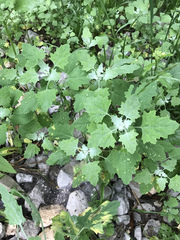
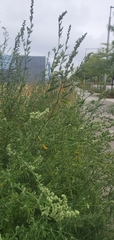
Fat hen (Chenopodium album L., 1753), also called lambsquarters, is an annual in the Amaranthaceae, native to temperate Eurasia and now found on every continent except Antarctica. Angular stems and a whitish, mealy coating distinguish this weed of fields, gardens and waste ground. Its young leaves are eaten, while large quantities in livestock feed raise concerns about nitrates.
Read moreFat hen and Lambsquarters

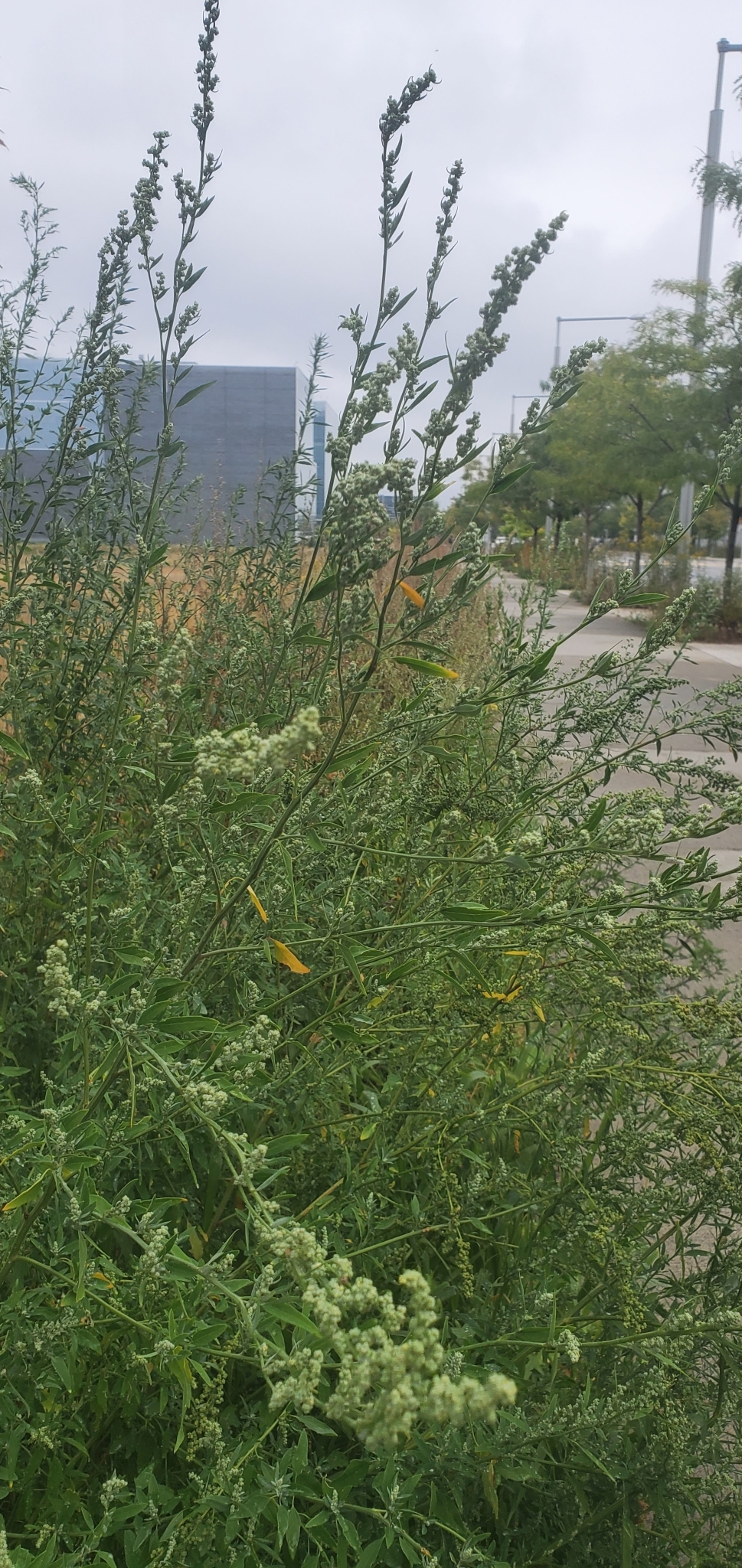


© photo
no rights reserved, uploaded by Kristi Zoebelein · cc0
iNaturalist User · cc0
Amayes Touabi · cc0
Taken Jan 20, 2022 by Nebil Temsamani (cc-by-sa)
Taken Aug 7, 2021 by Toby Austin (cc-by-sa)
Taken Jun 28, 2019 by sasha lev (cc-by-sa)
Taken Jan 19, 2016 by Tela Botanica − Ans GORTER (cc-by-sa)
Taken Aug 15, 2021 by Jani Zadrgal (cc-by-sa)
© copyright of the Board of Trustees of the Royal Botanic Gardens, Kew.


Global distribution
The native range is associated with temperate Eurasia, from the Indian subcontinent to western Europe, but millennia alongside agriculture obscure its boundaries. Now cosmopolitan, it occurs on every continent except Antarctica, associated with disturbed, nitrogen-rich soils.
- Native3
- Introduced3
- Metropolitan France
- Europe
- Temperate Asia and the Indian subcontinent
- United States
- Canada
- Australia
Hexagons: regions where the plant occurs. Green dots: native range.1
Identity
Fat hen (Chenopodium album L., 1753), also known as lambsquarters, is an annual herb in the genus Chenopodium and the family Amaranthaceae. Plants of the World Online accepts this name, published by Linnaeus in 1753, within a genus of about 250 species. 1
The genus name combines the Greek khến (goose) and poús (foot), referring to the outline of the leaf blade. English names include fat hen and lambsquarters; French names include chou gras, poule-grasse and senousse. 6 9
Recognition
An upright, angular stem, often streaked green and purplish red, commonly reaches 10 cm–1.5 m (4 in–5 ft) depending on soil fertility. Exceptional plants exceed 3 m (10 ft). 2 4
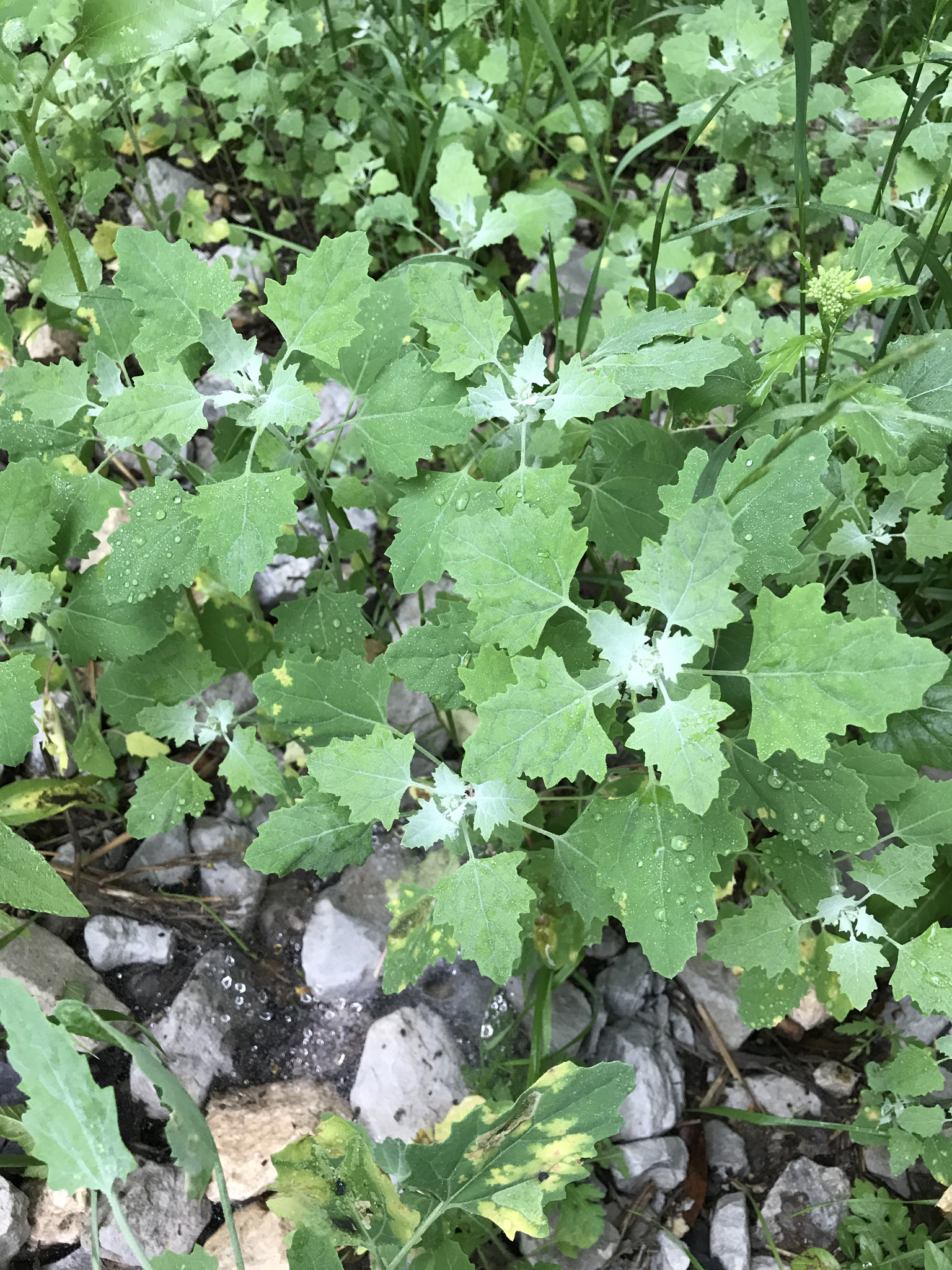
Alternate leaves change shape along the stem. Broad lower leaves are diamond-shaped or almost triangular, with irregular teeth; narrow, lanceolate upper leaves have nearly entire margins. Young leaves carry a whitish, mealy coating, especially beneath. This coating of young tissues gives the species its name. 3 4
The tiny flowers, 2–2.5 mm (0.08–0.10 in) across, lack petals and form tight clusters along branched spikes. Each has five stamens and five greenish sepals, often with the same mealy coating. 4
Useful taxonomy
Within Plants of the World Online, Chenopodium album belongs to the expanded Amaranthaceae, which also incorporates former Chenopodiaceae such as beet and spinach. Three botanical varieties are recognized: Chenopodium album var. album, widespread from temperate Eurasia to the Indian subcontinent; Chenopodium album var. missouriense (Aellen) Bassett & Crompton, from the central and eastern United States; and Chenopodium album var. reticulatum (Aellen) Uotila, described from western Europe. 1
The synonymy is extensive. Chenopodium viride L., long treated as a separate species, is now placed under Chenopodium album var. album, as is Chenopodium album var. viride (L.) Mérat. Amid these changing names, the name accepted by Plants of the World Online provides a stable reference for identifying the plant across different sources. 1 7
Habitat and range
Temperate Eurasia, from the Indian subcontinent to western Europe, is regarded as its native range, although millennia alongside agriculture make the boundary difficult to establish with certainty. 1
In France, where INPN records it as native under the name chénopode blanc, it grows in cultivated fields, gardens, urban waste ground and along roads. 6
Human activity has carried Chenopodium album to every continent except Antarctica. This cosmopolitan plant remains associated with disturbed, nitrogen-rich soils, including rubble, manure heaps and waste ground. In Illinois, for example, it occurs in every county but never establishes in high-quality natural habitats, illustrating its association with disturbed soil rather than one particular climate. 8
Life cycle and reproduction
One well-grown plant commonly produces 50,000 seeds or more, which can remain viable in soil for up to 40 years. This longevity allows the seed bank to persist from one growing season to the next in cultivated fields. 8
Flowering runs from midsummer into autumn, lasting one to two months within a colony. Wind-pollinated flowers develop into lens-shaped achenes only 1–1.5 mm (0.04–0.06 in) across, with a shiny, smooth black seed enclosed in a persistent membranous covering. 8 4
Unlike the plumed seeds of many weeds, fat hen's seeds have no flight structures. They travel mainly with disturbed soil, farm implements, seed-eating birds, particularly sparrows, and mammals such as white-tailed deer, whose digestion leaves seeds undamaged. 8
Uses and risks
Young leaves are eaten raw or cooked, with a flavor resembling spinach, another member of the Amaranthaceae. Unopened flower clusters can be prepared as a broccoli substitute, and dried seeds are ground into flour. 9 2
Despite these food uses, Chenopodium album is documented as potentially poisonous to livestock. Its tissues readily accumulate nitrates, especially on excessively nitrogen-rich soil. A veterinary account records three cattle dying within half an hour after eating fat-hen hay, following ataxia, bluish mucous membranes and respiratory distress. 5
The nitrate risk chiefly concerns dried forage eaten in large quantities by cattle, horses, sheep and pigs. Sheep are the most sensitive, while cattle can detoxify some oxalates in the rumen. For humans, cooking greatly reduces leaf oxalic acid and saponins, with no documented harm from reasonable quantities. Cooking, rather than simply harvesting the plant, thus distinguishes risky forage from an edible vegetable. 5 2
Varieties, look-alikes and related plants
Recognized horticultural cultivars are absent from Chenopodium album. It is a wild plant and crop weed, never selected as an ornamental; its diversity lies in three botanical varieties rather than garden forms. 1
The best-documented look-alikes are Chenopodium berlandieri, with large, conspicuous rounded cells on the fruit surface, and Chenopodium strictum, whose oval achene is longer than wide, with the seed protruding beyond spreading sepals. 3
Examining the fruit with a hand lens is usually the decisive distinction between these close relatives. A smooth surface points to Chenopodium album; a honeycombed surface or elongated shape points toward one of the species most often mistaken for it.
Main sources
- Plants of the World Online / Kew, Chenopodium album L.
- Plants For A Future, Chenopodium album
- Go Botany / Native Plant Trust, Chenopodium album - lambsquarters, white goosefoot
- Minnesota Wildflowers, Chenopodium album - Lamb's-quarters
- Cornell University, Plants Poisonous to Livestock - Lambsquarters
- INPN / MNHN, Chenopodium album L., 1753 - Chénopode blanc
- Tela Botanica / eFlore bdtfx, Chenopodium album L.
- Illinois Wildflowers, Lamb's Quarters (Chenopodium album)
- Encyclopaedia Britannica, Lamb's quarters
Frequently asked questions
Is fat hen poisonous?
Its tissues can accumulate nitrates, especially on excessively nitrogen-rich soil, a documented risk to livestock eating large quantities of fat-hen hay. For humans, cooking greatly reduces leaf oxalic acid, with no documented harm from reasonable quantities.
Can you eat fat hen?
Yes. Young leaves are eaten raw or cooked and taste rather like spinach. Unopened flower clusters are sometimes prepared as a broccoli substitute.
Why are young fat-hen leaves whitish?
Their mealy coating consists of small, air-filled epidermal bladders. It gives the species its name and gradually fades as leaves age.
How do you distinguish Chenopodium album from related species?
The fruit surface is the most reliable guide. Chenopodium berlandieri has conspicuous rounded cells, absent from Chenopodium album, whose achene is smooth.
Where is fat hen native?
Its native range is associated with temperate Eurasia, from the Indian subcontinent to western Europe. Millennia alongside agriculture make its exact limits difficult to establish.
Is fat hen invasive?
In France, where it is native, it remains a common weed of crops and waste ground. Elsewhere, particularly in North America, it is documented as an economically harmful weed in several agricultural regions.
How many seeds can one fat-hen plant produce?
A well-developed plant can produce more than 50,000 seeds. They remain viable in soil for up to 40 years, allowing the seed bank to persist from one season to the next.
Similar plants
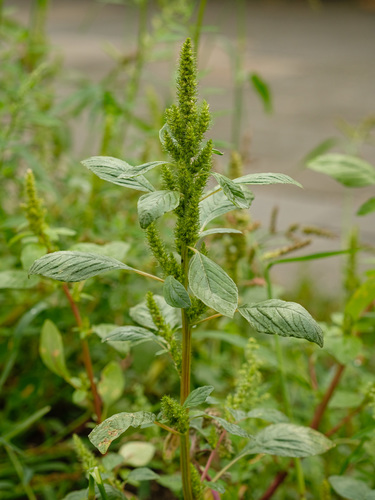

If you are unsure about a plant’s toxicity, ask a botanist or veterinarian for advice.