
Siam weed (Chromolaena odorata, )
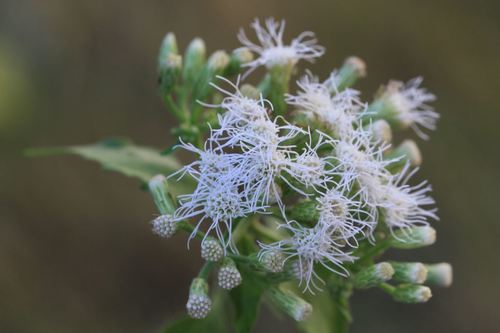
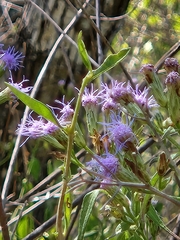

Siam weed (Chromolaena odorata) is a perennial shrub native to the tropical Americas, now established across much of the tropics and listed among the world’s 100 most invasive species. Its familiar English name is geographically misleading. Introduced to India in the 19th century, it later spread to West Africa and Oceania, where its expansion continues.
Read moreSiam weed and Jack in the bush
Place in full sun, with intense direct light all day long.
Full sun; tolerates light partial shade at forest edges


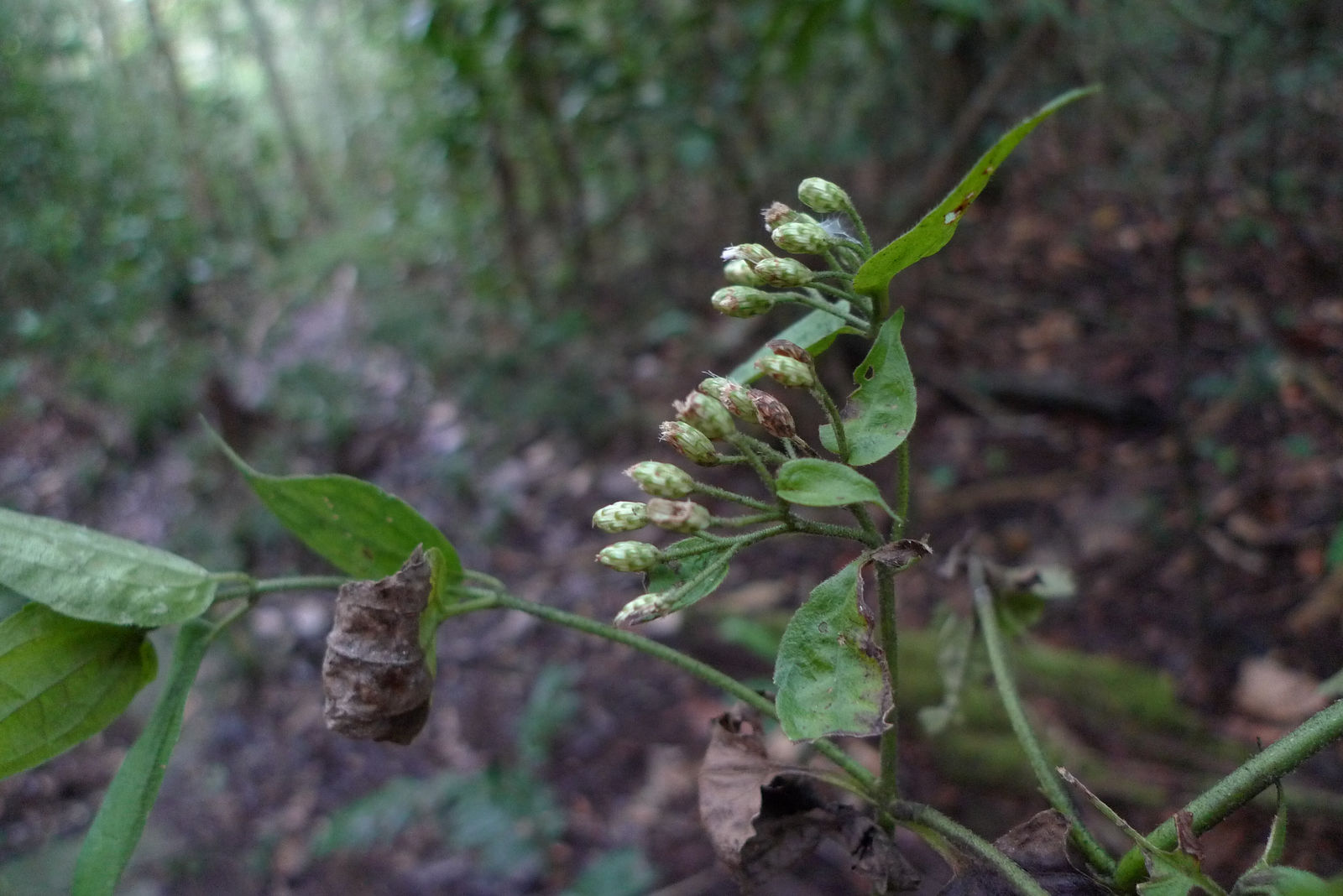
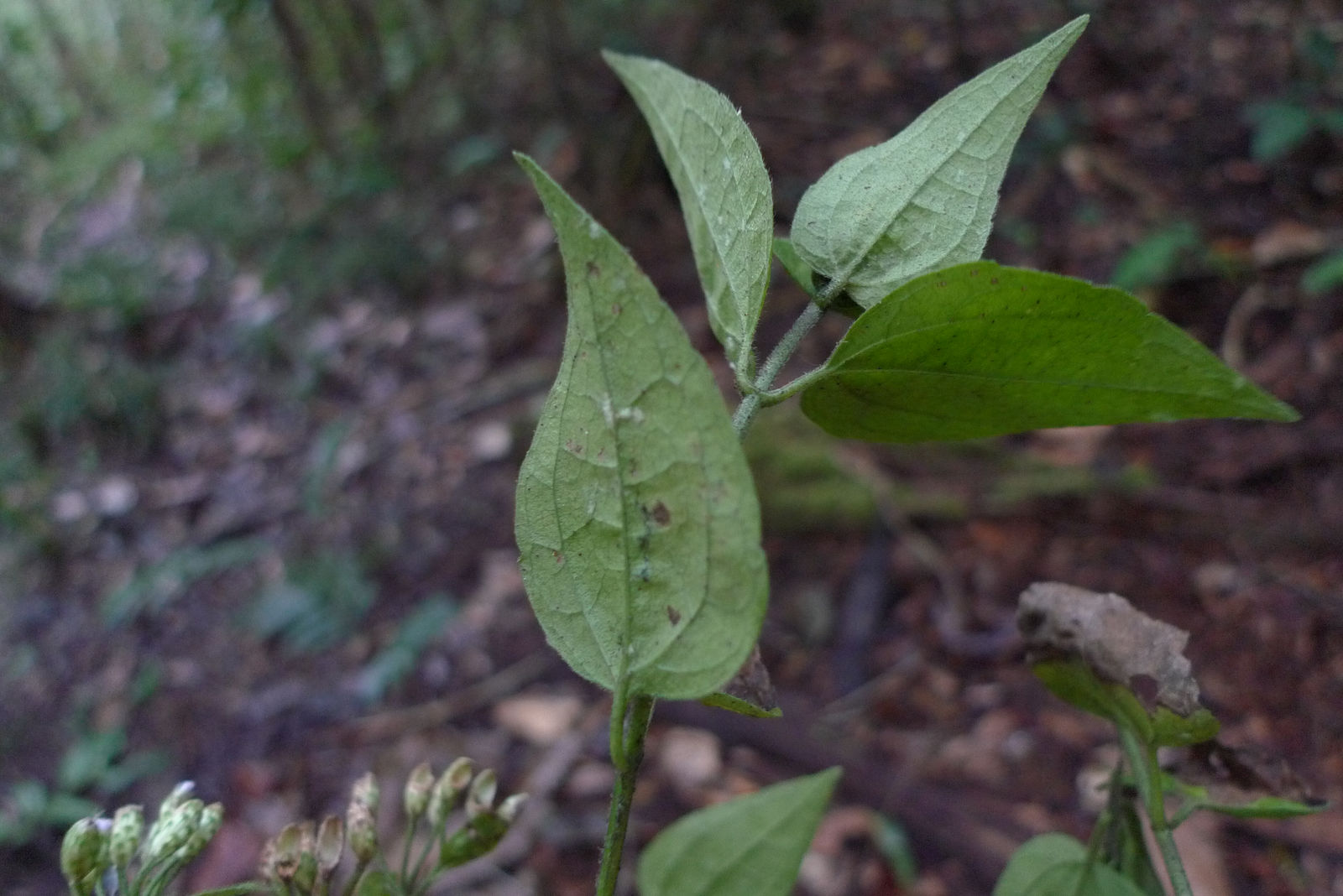
© photo
(c) Brian Oakes Haiti Hunter, some rights reserved (CC BY), uploaded by Brian Oakes Haiti Hunter · cc-by
Jo Roberts · cc0
Francisco Farriols Sarabia · cc-by
Taken Dec 8, 1963 by Royal Botanic Garden Edinburgh - Bhaskar Adhikari (cc-by-nc)
Taken Dec 5, 1963 by Royal Botanic Garden Edinburgh - Bhaskar Adhikari (cc-by-nc)
Taken Sep 25, 2018 by Royal Botanic Garden Edinburgh - Bhaskar Adhikari (cc-by-nc)
© copyright of the Board of Trustees of the Royal Botanic Gardens, Kew.




Global distribution
Chromolaena odorata is native to tropical America, from Florida and Texas in the United States through Mexico and the Caribbean to northern Argentina and Brazil. It was introduced to tropical Asia in the 19th century, West and Central Africa in the 1950s, then Oceania, including French New Caledonia. IUCN lists it among the world’s 100 worst invasive alien species.
- Native3
- Introduced1
- Invasive6
- United States (Florida, Texas)
- Mexico
- Brazil
- Côte d’Ivoire
- India
- Indonesia
- Nigeria
- South Africa
- Australia
- New Caledonia
Hexagons: regions where the plant occurs. Green dots: native range.1
Identity
Siam weed (Chromolaena odorata (L.) R.M.King & H.Rob., 1970), also called jack in the bush, is a perennial shrub in the Asteraceae. Its familiar name does not indicate an Asian origin: it is American. Linnaeus described it as Eupatorium odoratum in 1759; King and Robinson transferred it to Chromolaena in 1970. 1 4
Siam weed is the most familiar English name, alongside the less frequent jack in the bush. French usage favors herbe du Laos, with fausse-ramie, fleurit-Noël, langue à chat and guérit-tout among the alternatives. These names reflect its introduced history rather than its native range. In Laos itself it is instead known as the French weed, referring to its colonial introduction. 7
Chromolaena odorata has no recognized ornamental role in a garden. IUCN lists it among the world’s 100 worst invasive alien species, a reason to recognize and report it rather than cultivate it. 5
Recognition
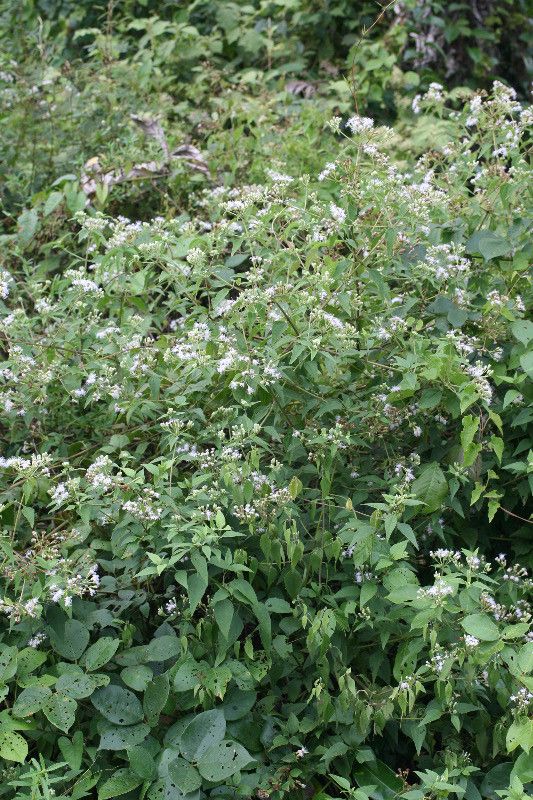
Dense, tangled thickets stand 1.5–2 m (5–6.5 ft) high in open vegetation, but can reach 6 m (20 ft) when supported by other plants in shade. Stems are herbaceous at the base, become woody with age and branch freely. 5
Opposite, triangular to oval leaves have three prominent veins and coarsely toothed margins. Crushing them releases a sharp, penetrating odor that, even for a non-specialist, rules out confusion with other shrubby Asteraceae with toothed leaves before flowers appear. 5
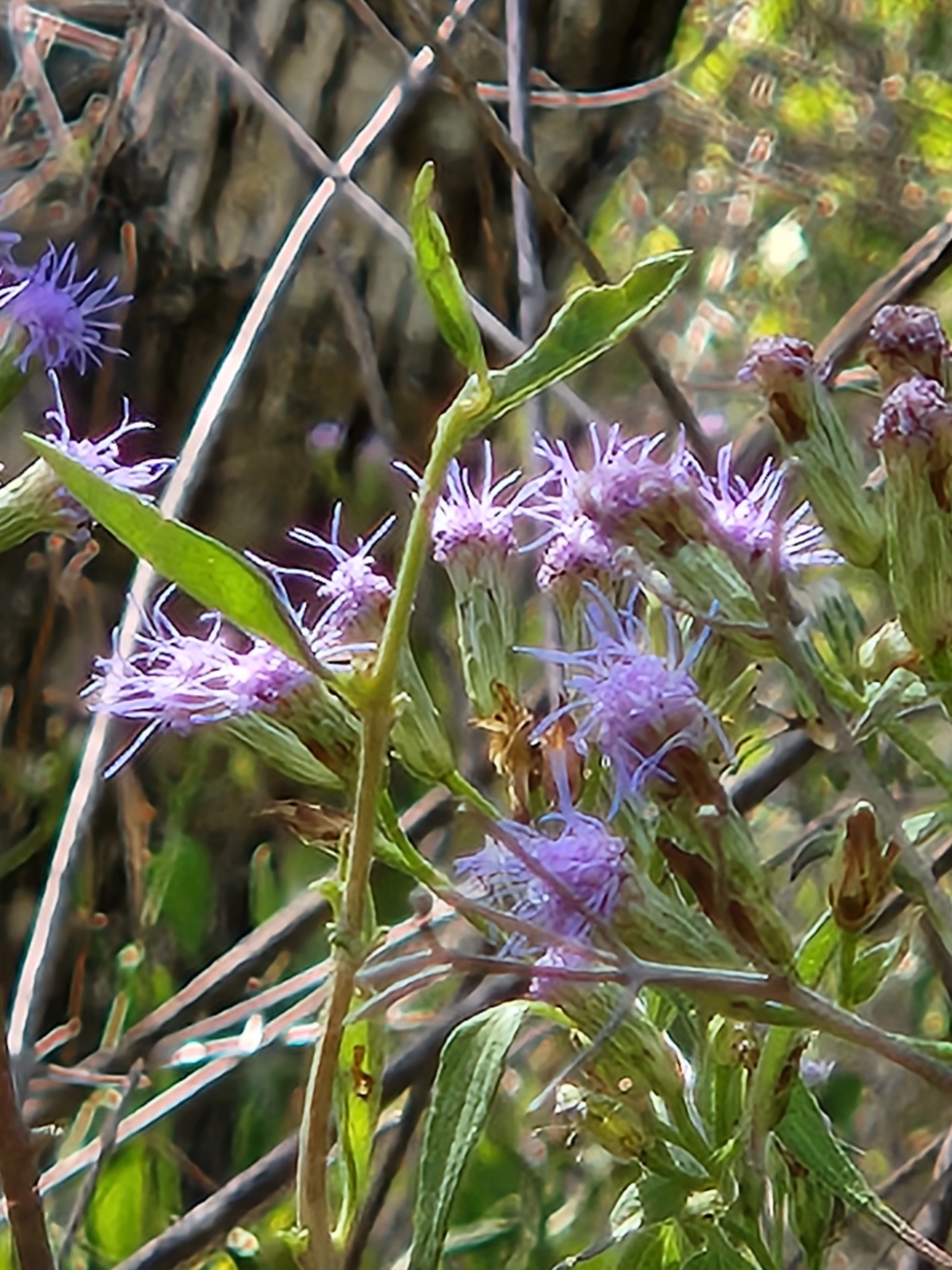
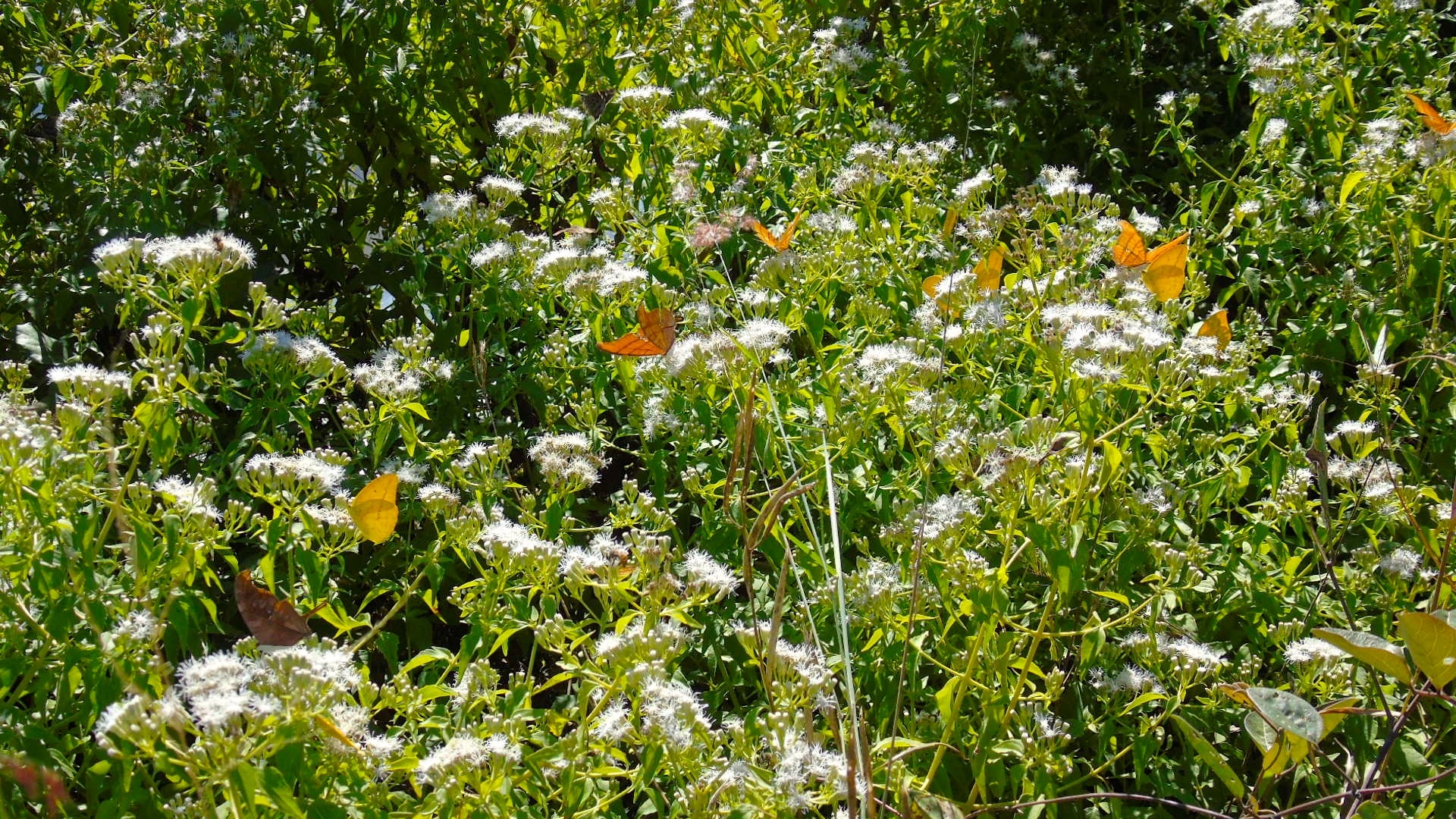
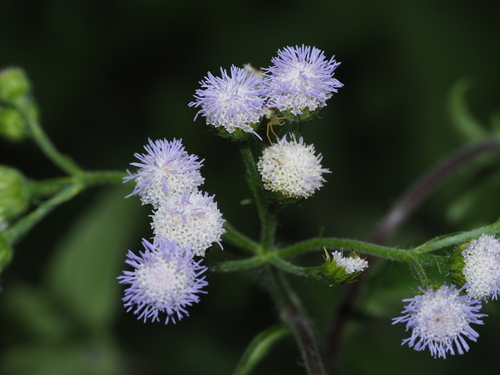
White to pale mauve flowers form heads of 10–35 florets, themselves gathered in large terminal panicles that cover the plant late in the season. This gives rise to the French name fleurit-Noël. Each head produces 25–30 dark achenes, with white bristles forming a plume for long-distance wind dispersal. 7 8
Roots remain shallow, generally extending no deeper than 20–30 cm (8–12 in) in most soils. This favors rapid occupation of the soil surface rather than deep anchorage. 5
Taxonomy and names
The stable botanical reference is Chromolaena odorata (L.) R.M.King & H.Rob. Its basionym, Eupatorium odoratum L., was published in 1759. The current combination dates to 1970, when King and Robinson divided the older genus Eupatorium and transferred the species to Chromolaena. 2 4
An older, less frequent synonym remains in some databases: Osmia odorata (L.) Sch.Bip. These changes of genus explain why older scientific literature, particularly from Africa, sometimes continues to use Eupatorium odoratum. 3
ITIS assigns the species the taxonomic serial number TSN 37034. This identifier allows records in different databases to be matched without relying on its many regionally variable common names. 3
Habitat and range
The native range of Chromolaena odorata spans tropical America, from Florida and Texas in the United States through Mexico and the Caribbean to northern Argentina and Brazil. 1 6
Its arrival in Asia dates to the 19th century, probably through the Calcutta Botanic Garden, followed by spread across the Indian subcontinent and Southeast Asia. It was deliberately introduced to Côte d’Ivoire in 1952 as a cover crop to suppress competing grasses, then spread through West and Central Africa. It reached Queensland, Australia, in 1994. 5
In the Pacific, it is now invasive in New Caledonia, a French territory, as well as Indonesia, East Timor and the Philippines. 7
Disturbed soils are colonized first: forest edges, waste ground, roadsides, construction sites and degraded pasture. Siam weed tolerates a wide rainfall range, from humid forests receiving over 1,500 mm (59 in) annually to scrub savannas with under 500 mm (20 in). Dense shade beneath closed forest canopy prevents germination. 5
Life cycle and reproduction
Siam weed has one of the fastest growth rates known among shrubs. Under favorable conditions, a shoot can extend by more than 3 cm (1.2 in) a day. Germination to first flowering takes only 8–12 months, compared with several years for most perennial shrubs in the same family. 5
An adult plant produces 80,000–90,000 seeds; estimates for dense stands reach 260,000 seeds per square meter (about 24,000 per sq ft). Germination rates range from 20 to 46%, and seeds remain viable in the soil for up to five years. This persistent seed bank prevents eradication by a single season of cutting. 5
Wind carries the plumed achenes almost exclusively, although seeds also attach to livestock hair, clothing and farm or forestry machinery. These additional routes help explain rapid colonization along transport corridors. 5
Uses and toxicity
In several West and Central African countries, notably Ghana and the Democratic Republic of the Congo, sap and crushed leaves are traditionally used to stop minor bleeding and protect fresh wounds. This practice explains the French nickname guérit-tout, meaning cure-all. In Ghana, foliage is also used to protect cut stem surfaces after nursery pruning. 7
Repeated ingestion of the foliage causes digestive problems in livestock, and several agricultural reviews classify the plant as toxic to cattle. In sensitive people, sap contact and inhaled pollen trigger skin and respiratory allergies. 6 8
The plant also provides bee forage and is locally used as an erosion-control cover crop. This deliberate agricultural use helped its initial spread in West Africa. 7
Impacts, control and look-alikes
Single-species thickets prevent natural forest regeneration after clearing or shifting cultivation. Dry, flammable foliage spreads fires into forest edges. In South Africa’s Greater St. Lucia Wetland Park, Siam weed shades Nile crocodile nesting sites and changes egg incubation temperatures, skewing hatchling sex ratios toward females. 5
Control combines repeated cutting before flowering, targeted herbicides such as triclopyr, measures to prevent transport of contaminated material, and biological control. The gall fly Cecidochares connexa, introduced to Indonesia from 1995, causes plant death within 3–5 years under favorable climatic conditions. The defoliating caterpillar Pareuchaetes pseudoinsulata has been used successfully in the Pacific and Guam. No single agent eliminates the seed bank on its own. 5
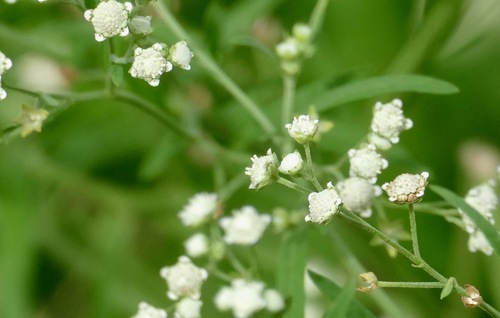
Toothed leaves and white panicles can resemble other invasive shrubby Asteraceae. Only checking the scientific name alongside the characteristic sharp odor of crushed foliage rules out confusion before reporting or intervention. 8
Main sources
- Plants of the World Online / Kew, Chromolaena odorata (L.) R.M.King & H.Rob.
- International Plant Names Index, Chromolaena odorata record
- ITIS, Chromolaena odorata (L.) R.M. King & H. Rob., TSN 37034
- USDA ARS GRIN-Global, Chromolaena odorata taxonomy record
- IUCN / ISSG Global Invasive Species Database, Chromolaena odorata full account
- USDA PLANTS Database, Chromolaena odorata plant profile (CHOD)
- Wikipedia, Chromolaena odorata (French article)
- Wikipedia, Chromolaena odorata (English article)
Frequently asked questions
Is Siam weed native to Asia?
No. It is native to tropical America, from Florida and Texas to northern Argentina and Brazil. The French name herbe du Laos reflects its early introduction to Southeast Asia, not its geographical origin.
Why is Siam weed considered invasive?
It forms dense thickets that prevent forest regeneration, burns readily in the dry season and is listed by IUCN among the world’s 100 worst invasive alien species.
Is Siam weed poisonous?
Eating substantial amounts of foliage causes digestive problems in livestock. Contact or inhaled pollen can trigger skin or respiratory allergies in sensitive people.
Why is it called guérit-tout in West Africa?
Its sap and crushed leaves are traditionally used there to stop minor bleeding and protect fresh wounds. This popular use explains the French nickname, meaning cure-all.
How is Siam weed recognized in the field?
It is a bushy shrub with opposite, triangular leaves that smell strongly when crushed. Large panicles of small white to pale mauve flowers cover it late in the season.
How is Siam weed controlled?
Management combines repeated cutting before flowering, targeted herbicides and biological control, notably the gall fly Cecidochares connexa and the defoliating caterpillar Pareuchaetes pseudoinsulata, introduced in Asia and the Pacific.
Similar plants

If you are unsure about a plant’s toxicity, ask a botanist or veterinarian for advice.