
Adamant creeper (Cissus quadrangularis, )
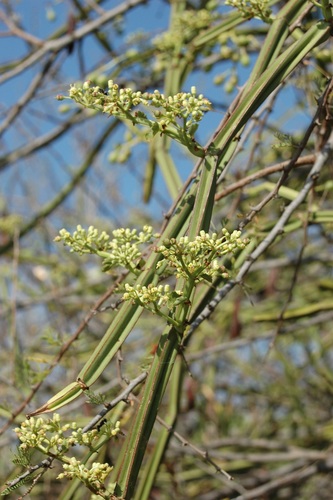
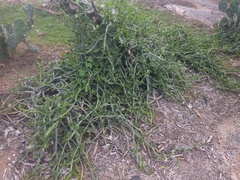
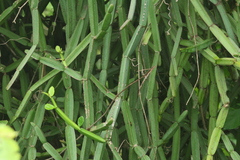
Adamant creeper (Cissus quadrangularis) is a succulent climber in the Vitaceae, the grape family. Fleshy, square stems perform most photosynthesis because the small, three-lobed leaves fall early. Native to tropical Africa, Madagascar, the Arabian Peninsula and the Indian subcontinent, it is also known for traditional use in fracture healing.
Read moreAdamant creeper, Veldt-grape and Winged treebine
Allow a few hours of direct sun per day, preferably morning or evening.
Full sun to light partial shade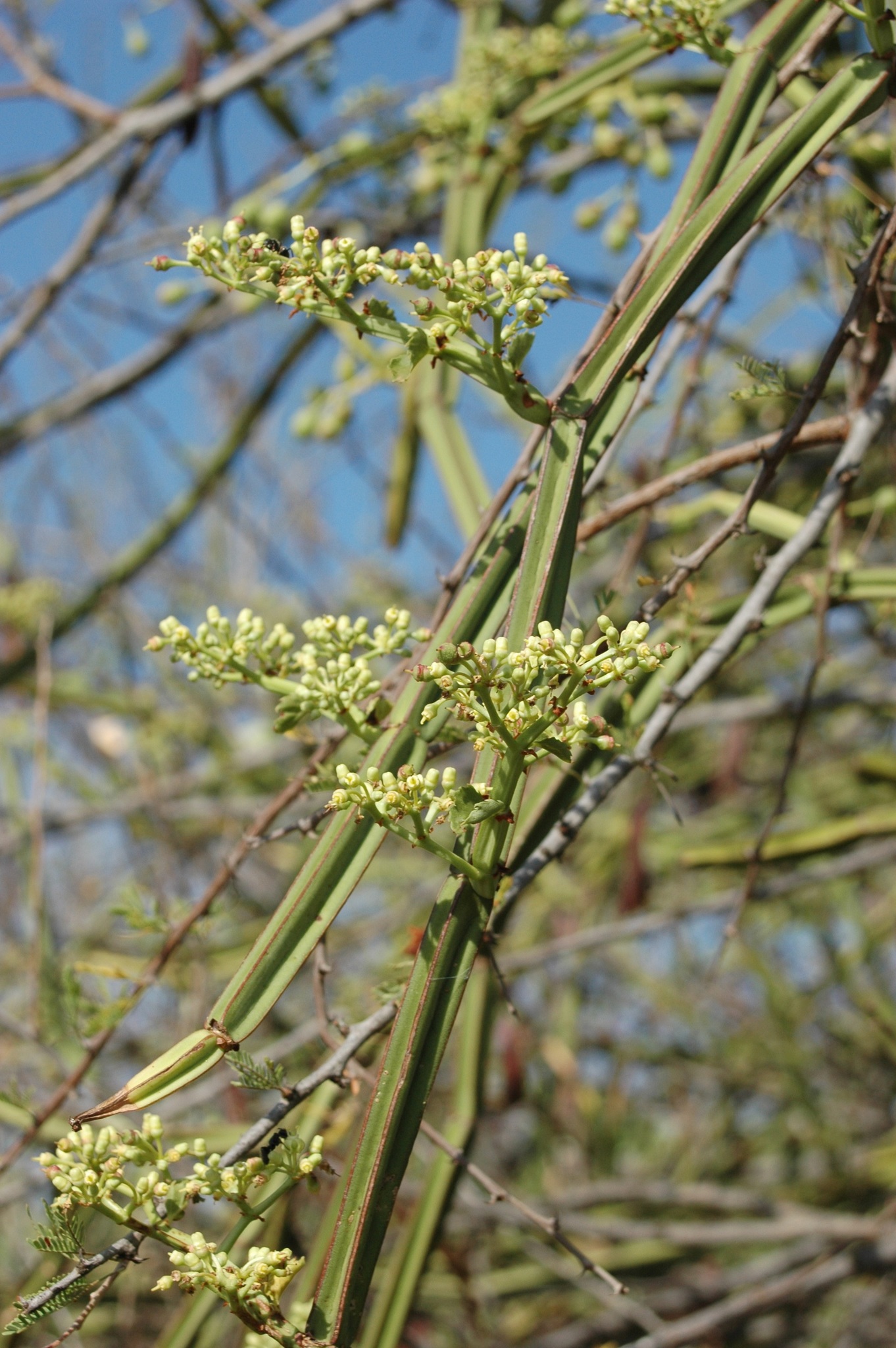
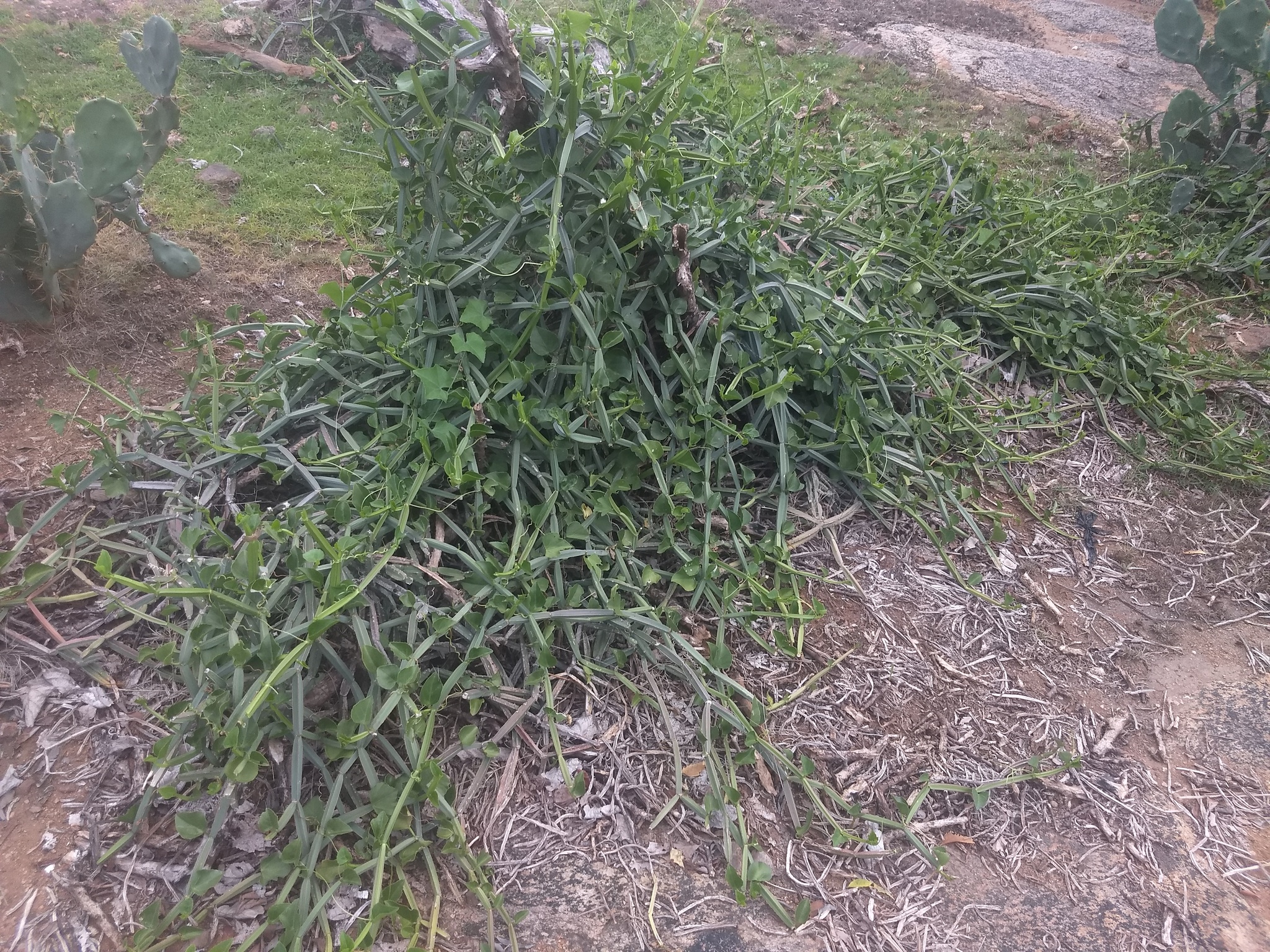
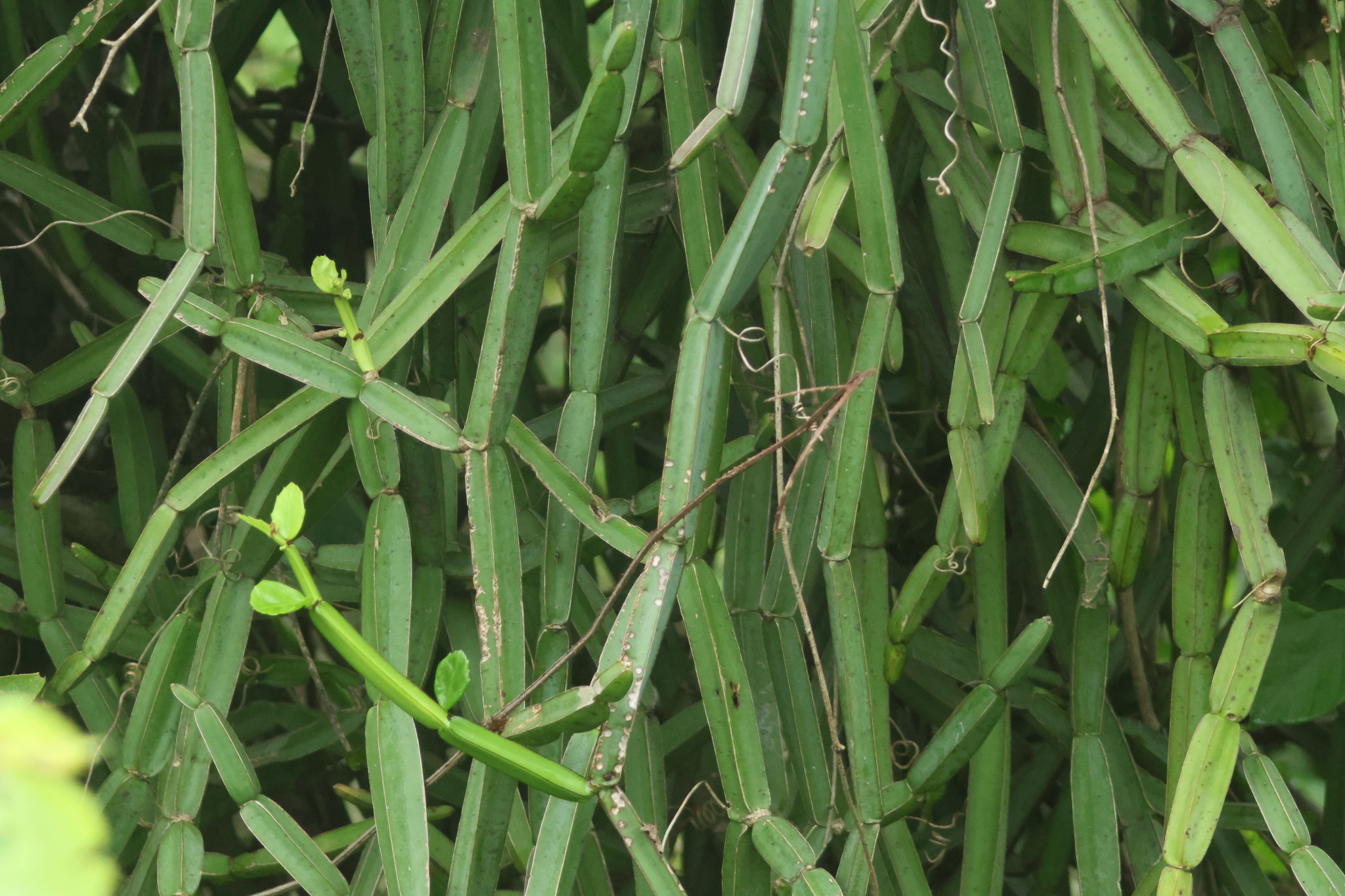


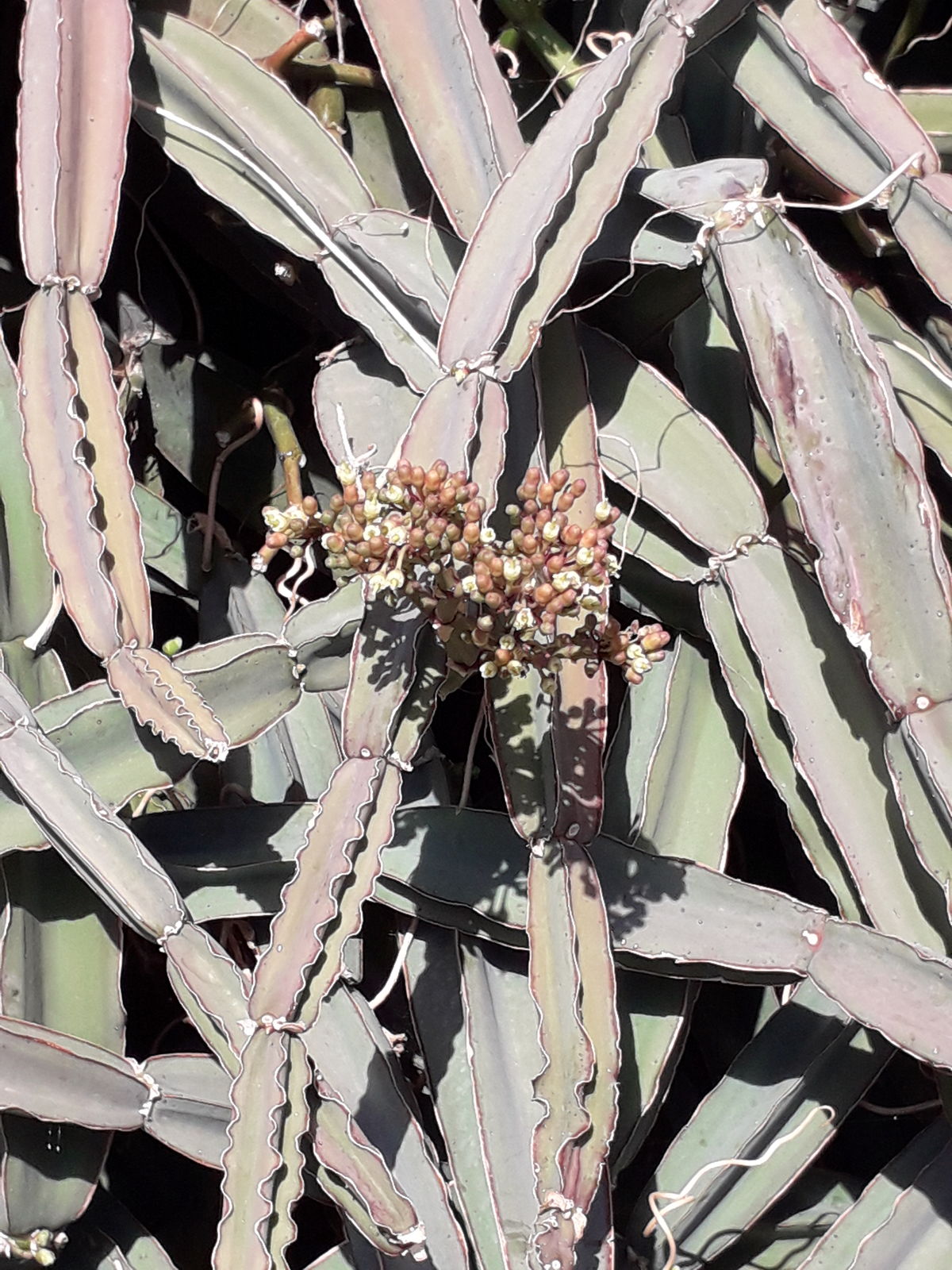

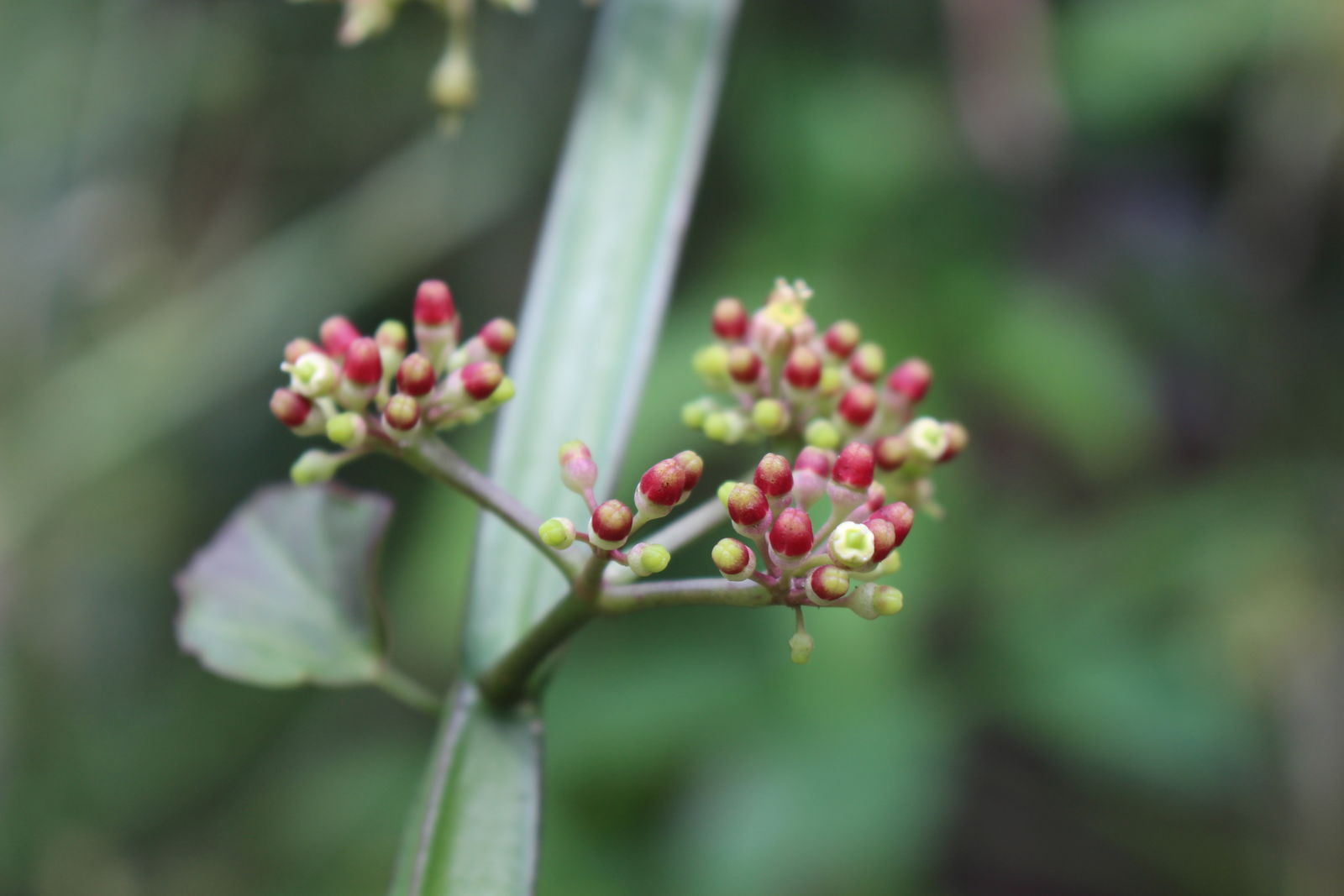
© photo
(c) World Agroforestry, some rights reserved (CC BY-NC-SA) · cc-by-nc-sa
P Jeganathan · cc-by
Mark Liptrot · cc-by-sa
Taken Feb 2, 2020 by susan brown (cc-by-sa)
Taken Jul 12, 2021 by Sudhanshu Kumar (cc-by-sa)
Taken Aug 12, 2021 by Siva Kumar (cc-by-sa)
© copyright of the Board of Trustees of the Royal Botanic Gardens, Kew.




Global distribution
The native range of Cissus quadrangularis includes tropical and southern Africa, Madagascar, the Arabian Peninsula and the Indian subcontinent east to Myanmar. Elsewhere it is chiefly cultivated as an ornamental or medicinal plant, and recorded as introduced in Florida without a confirmed invasive status.
- Native6
- Introduced3
- India
- Sri Lanka
- Myanmar
- Yemen
- South Africa
- Madagascar
- Thailand
- Philippines
- United States (Florida)
Hexagons: regions where the plant occurs. Green dots: native range.1
Identity
Adamant creeper (Cissus quadrangularis L., 1767), also known as veldt-grape and winged treebine, is a perennial succulent climber in the genus Cissus, family Vitaceae, the grape family. The French names cisse à quatre angles and liane carrée describe its angular stems; the former is retained by the INPN, France's national natural heritage inventory. 4 1
Its Sanskrit name asthisamharaka, meaning that which prevents bone destruction, directly reflects its use in Ayurvedic and Siddha medicine for fractures. This traditional use is described in several scientific reviews. 6
Several hundred Cissus species occur throughout tropical and subtropical regions. Other succulent species sold under approximate labels can therefore be confused with this one. 1
Recognition
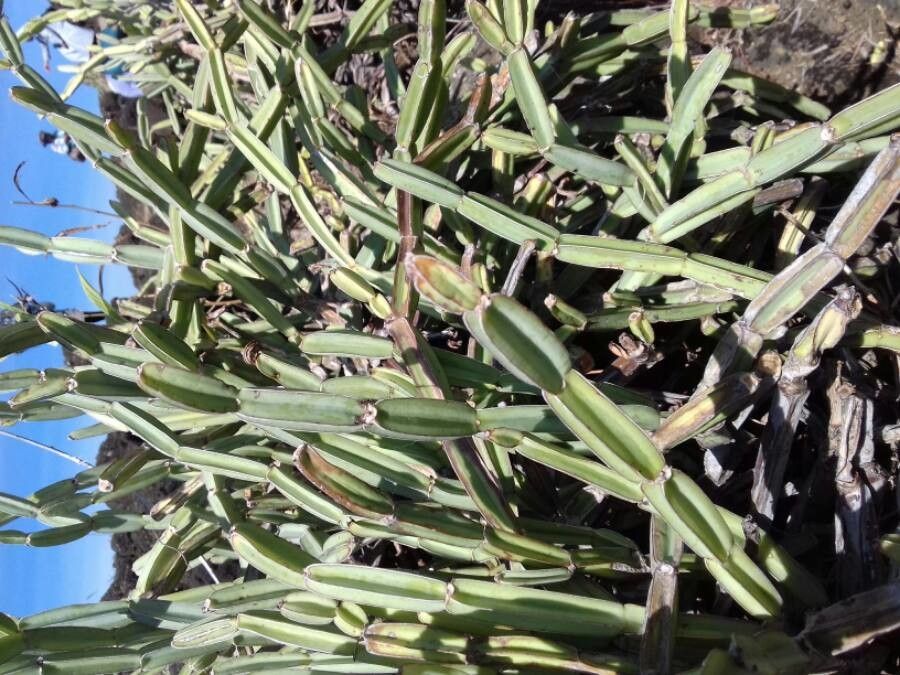
Its characteristic square succulent stems often have wings along their angles, with internodes 8–10 cm (3–4 in) long. Small, toothed, three-lobed leaves, 2–5 cm (0.8–2 in) across, appear at young nodes and fall early. The plant remains almost leafless for most of its cycle, with the square stems performing most photosynthesis. 3
At each leafy node, a simple tendril develops opposite the leaf, a typical feature of Vitaceae absent from true cacti. These tendrils, rather than adventitious roots, provide support for climbing. Small whitish, yellowish or greenish flowers form cymes, followed by globular berries that ripen red and later black. A plant can climb to 5 m (16 ft) in the ground, compared with 1.5–2.5 m (5–8 ft) in a pot. 2 3
Useful taxonomy
The accepted scientific name is Cissus quadrangularis L., published in 1767. Older names now treated as synonyms include Vitis quadrangularis (L.) Wall. ex Wight and Saelanthus quadragonus (L.) Forssk. ex J.F.Gmel.; only the accepted name serves as the botanical reference. 1
Three varieties differ in geography and stem structure, useful distinctions within a genus of many similar species: Cissus quadrangularis var. quadrangularis, the widespread typical form; var. pubescens Dewit, with hairy stems in tropical Africa; and var. aculeatangula Verdc., known only from northern Kenya and distinguished by prickly stem angles. 1
The Vitaceae, which include the cultivated grape (Vitis vinifera) and several hundred other woody or succulent climbers, offer a simple distinguishing feature: tendrils opposite the leaves. True cacti never have these. 4
Habitat and range
The native range spans tropical and southern Africa, Madagascar, the Arabian Peninsula and the Indian subcontinent east to Myanmar. It grows in savannas, dry thickets and dry tropical forest margins on well-drained soil, from sea level to about 2,250 m (7,400 ft). 1 3
In a dry climate, this elevation range is reflected in tolerance of substantial temperature variation: the plant withstands 15–38 °C (59–100 °F) according to season, provided the soil drains freely and it is protected from frost. 3
Outside that range, Cissus quadrangularis is chiefly cultivated in succulent collections or for medicinal use. It is not native to Florida, where records establish an introduced presence without a confirmed invasive status. 5
Traditional uses and research
The traditional use documented in scientific literature chiefly concerns bone healing. Young stems and roots are applied as poultices or taken in decoctions and described as analgesic and healing agents in Ayurvedic and Siddha texts. 6
Studies in ovariectomized rats measured an effect: a petroleum-ether extract restored femur weight to 0.44 g (0.016 oz), compared with 0.37 g (0.013 oz) in untreated animals and 0.49 g (0.017 oz) in healthy controls, while reducing markers of bone resorption. These results concern an animal model, not a human dose. 7
Traditional food uses include young stems fried or cooked in curries, cooked leaves, ripe fruit and seeds pressed for oil. In India, the ash also serves as a substitute for baking powder in some regions. 3
In India, these food and medicinal uses have supported commercial cultivation: the species is now harvested on a large scale to produce standardized extracts for nutritional research. 8
Safety and consumption
The cited safety study concerns a standardized extract of Cissus quadrangularis. This subchronic study found no adverse effects at oral doses up to 2,500 mg/kg/day (about 1,130 mg/lb/day) in animals over three months, and detected no mutagenicity. 8
Longstanding consumption of young stems and ripe fruit in India and Africa provides a separate record of traditional food use; it does not establish safety for every extract or exposure. Medical advice nevertheless remains advisable before taking concentrated supplements, since controlled human trials remain limited. 3 8
Varieties and look-alikes
A standardized extract marketed as CQR-300 is studied in nutritional research. This is a commercial product name, not a recognized botanical cultivar. 8
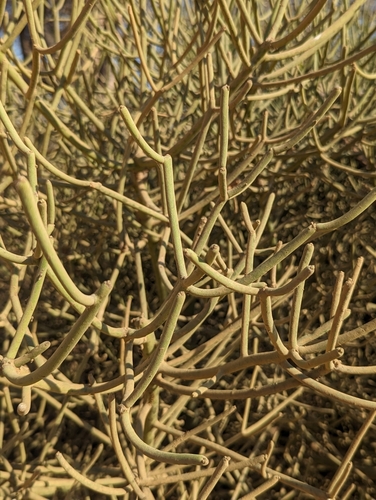
The usual confusion is with spineless cacti: fleshy, four-angled stems can resemble some Cactaceae at first glance. Opposite tendrils and the small, three-lobed leaves at young nodes identify Vitaceae instead; cacti have areoles. 2
Other succulent Cissus species with equally angular stems appear in the rare-plant trade under approximate labels. The full scientific name, with author and publication year, remains the only reliable reference when buying a plant. 1
Main sources
- Plants of the World Online / Kew, Cissus quadrangularis L.
- Royal Horticultural Society, Cissus quadrangularis
- Plants For A Future, Cissus quadrangularis
- INPN / MNHN, Cissus quadrangularis L., 1767 — Cisse à quatre angles
- Atlas of Florida Plants (USF), Cissus quadrangularis
- PMC, review of Cissus quadrangularis in fracture and bone healing
- PMC, petroleum-ether extract of Cissus quadrangularis on ovariectomy-induced osteoporosis in rats
- PubMed, subchronic toxicity and mutagenicity study of Cissus quadrangularis extract (CQR-300)
Frequently asked questions
Is adamant creeper a cactus?
No. Despite its fleshy, four-angled stems, Cissus quadrangularis belongs to the Vitaceae, the grape family. It produces leaves and tendrils at the nodes, a structure absent from true cacti, which have spiny areoles.
Is adamant creeper poisonous to cats and dogs?
The cited references do not document toxicity for this species. Young stems and ripe fruit are traditionally eaten in India and Africa, but human food use alone does not establish safety for cats and dogs.
Why are the stems four-angled?
Their succulent form stores water and carries out photosynthesis after the short-lived leaves have fallen. This is a drought adaptation specific to this climbing species.
Does adamant creeper really heal fractures?
Its Sanskrit name means that which prevents bone destruction, and it remains traditionally used for fractures. Animal studies report effects on bone healing, but these do not replace medical advice.
How is adamant creeper propagated?
Stem cuttings with a node are the simplest and fastest method. Air layering also works on stems that have become well lignified.
What does the French name cisse à quatre angles mean?
This French vernacular name, retained by the INPN, France's national natural heritage inventory, directly describes the conspicuous square cross-section of the stems.
Similar plants
If you are unsure about a plant’s toxicity, ask a botanist or veterinarian for advice.