
Smokebush (Cotinus coggygria, )
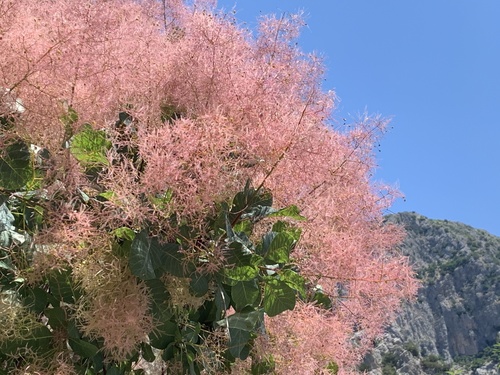
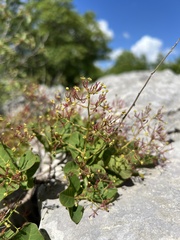
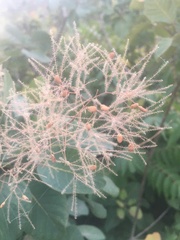
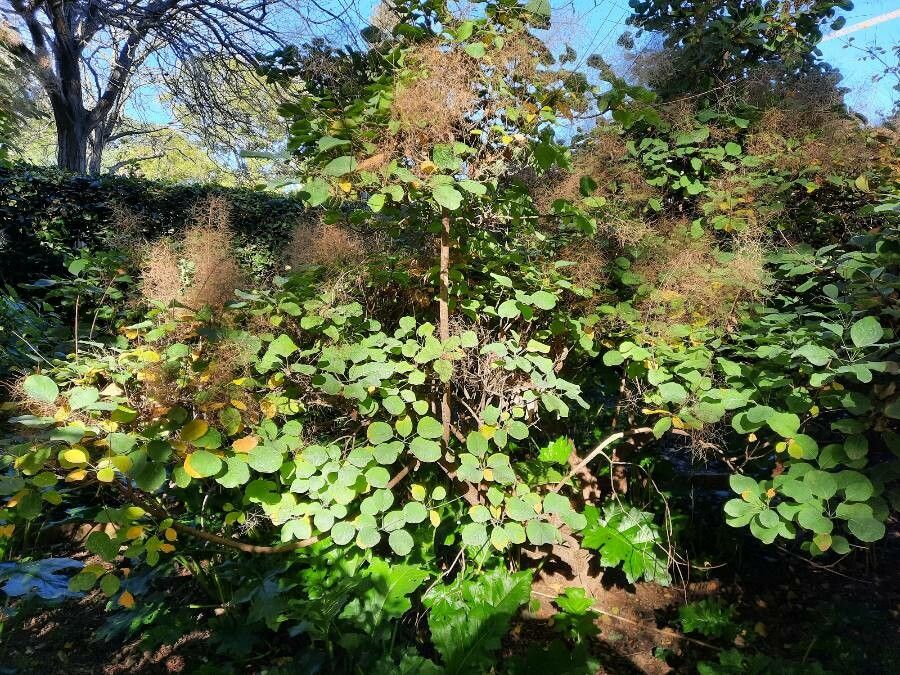
Smokebush (Cotinus coggygria), also called smoke tree, is a deciduous shrub in the Anacardiaceae, native from southern Europe and western Asia to central and southern China. In summer, long hairs on the stalks of sterile flowers create a pink cloud that turns smoky gray above blue-green leaves. Autumn brings yellow, orange and purple foliage.
Read moreSmokebush and Smoke tree
Allow a few hours of direct sun per day, preferably morning or evening.
Full sun; tolerates light partial shade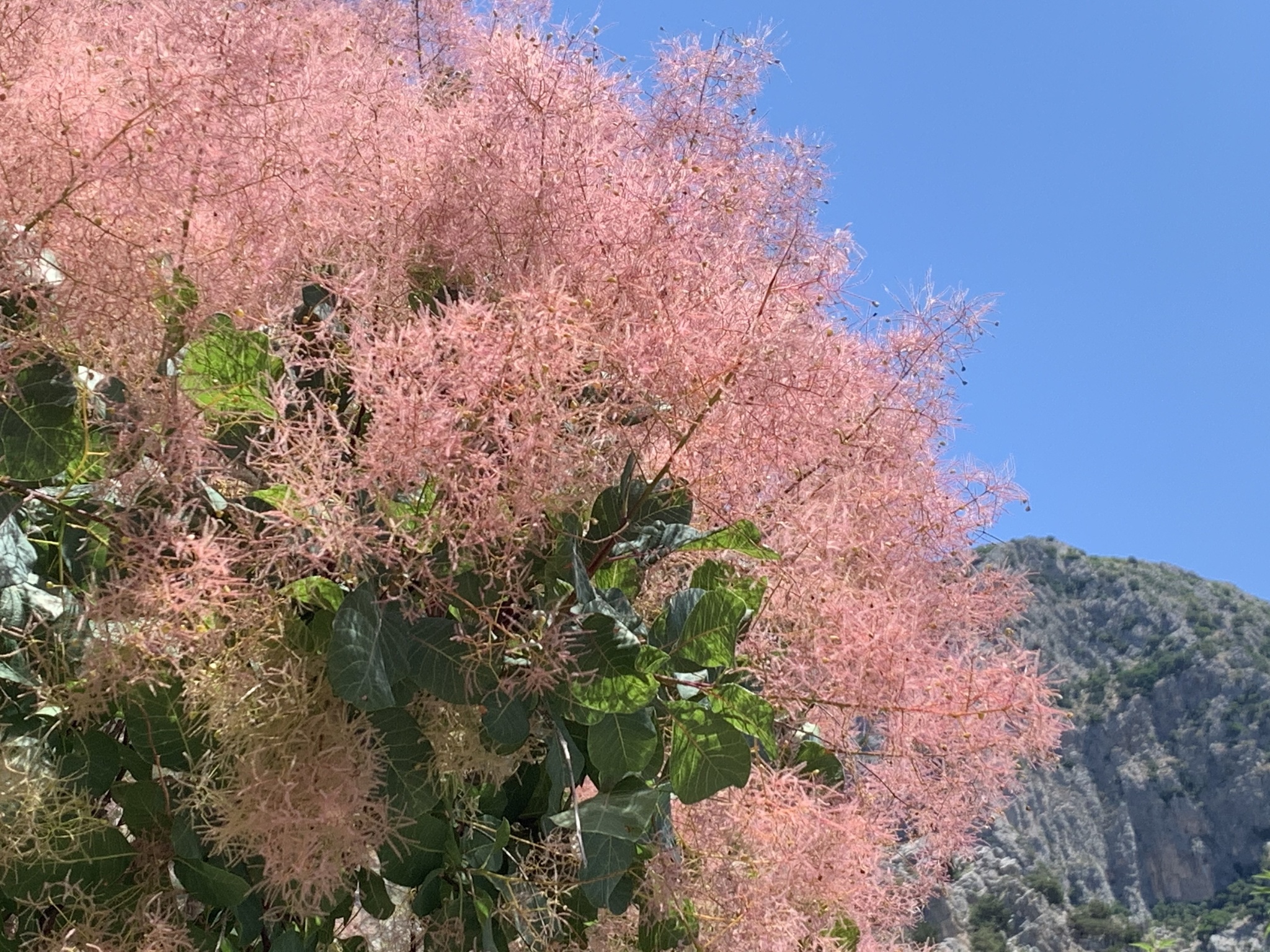
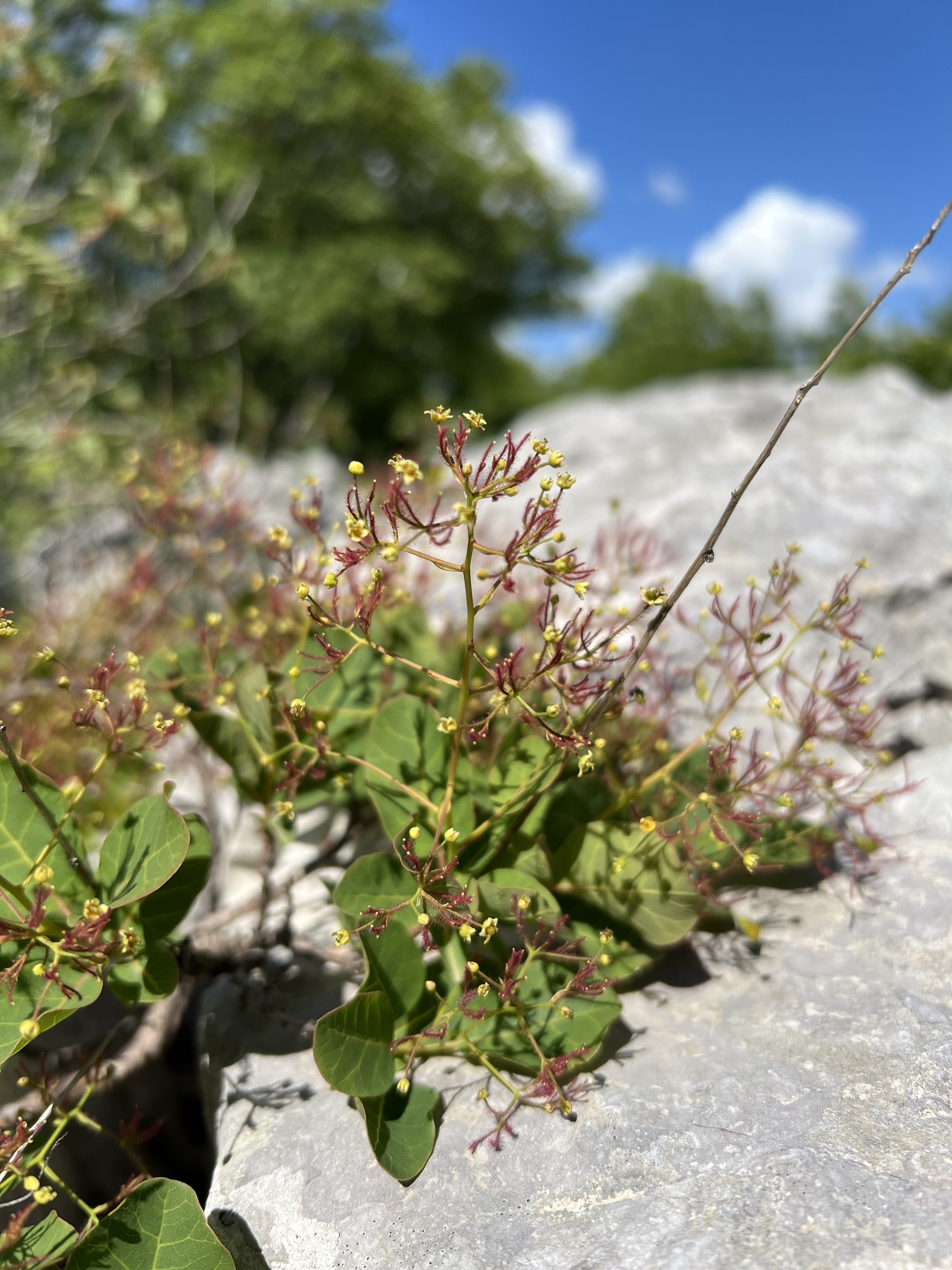
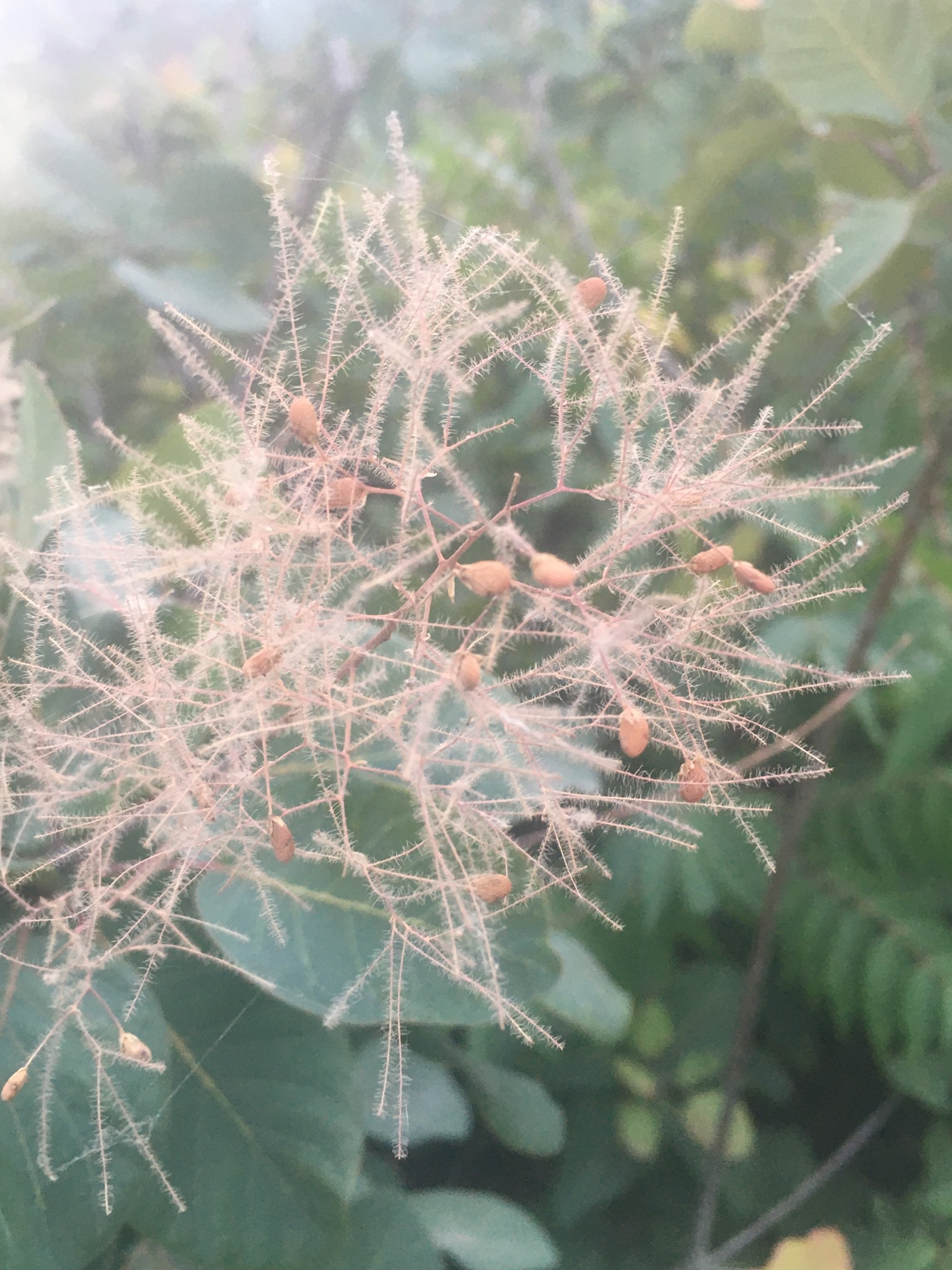


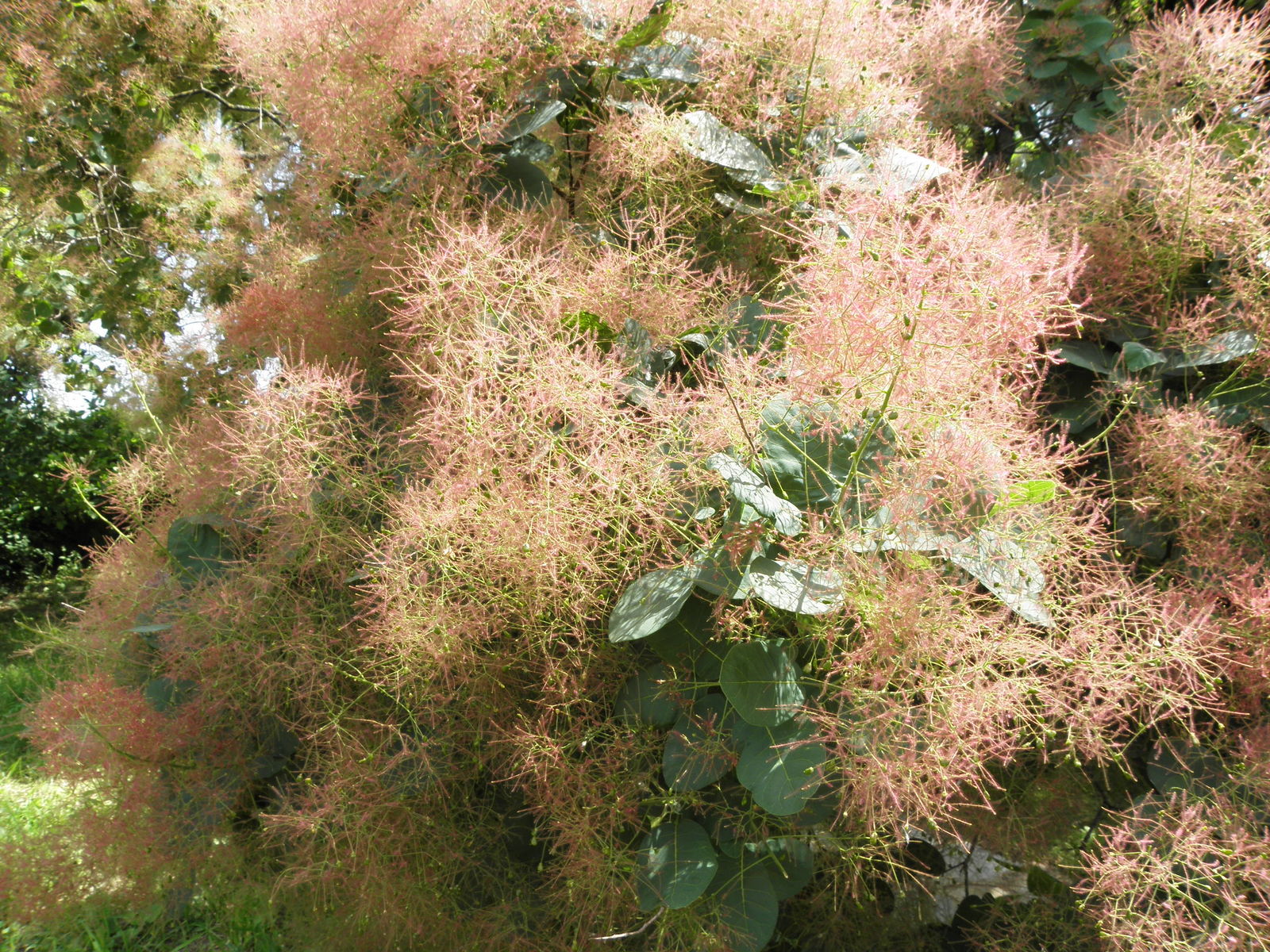

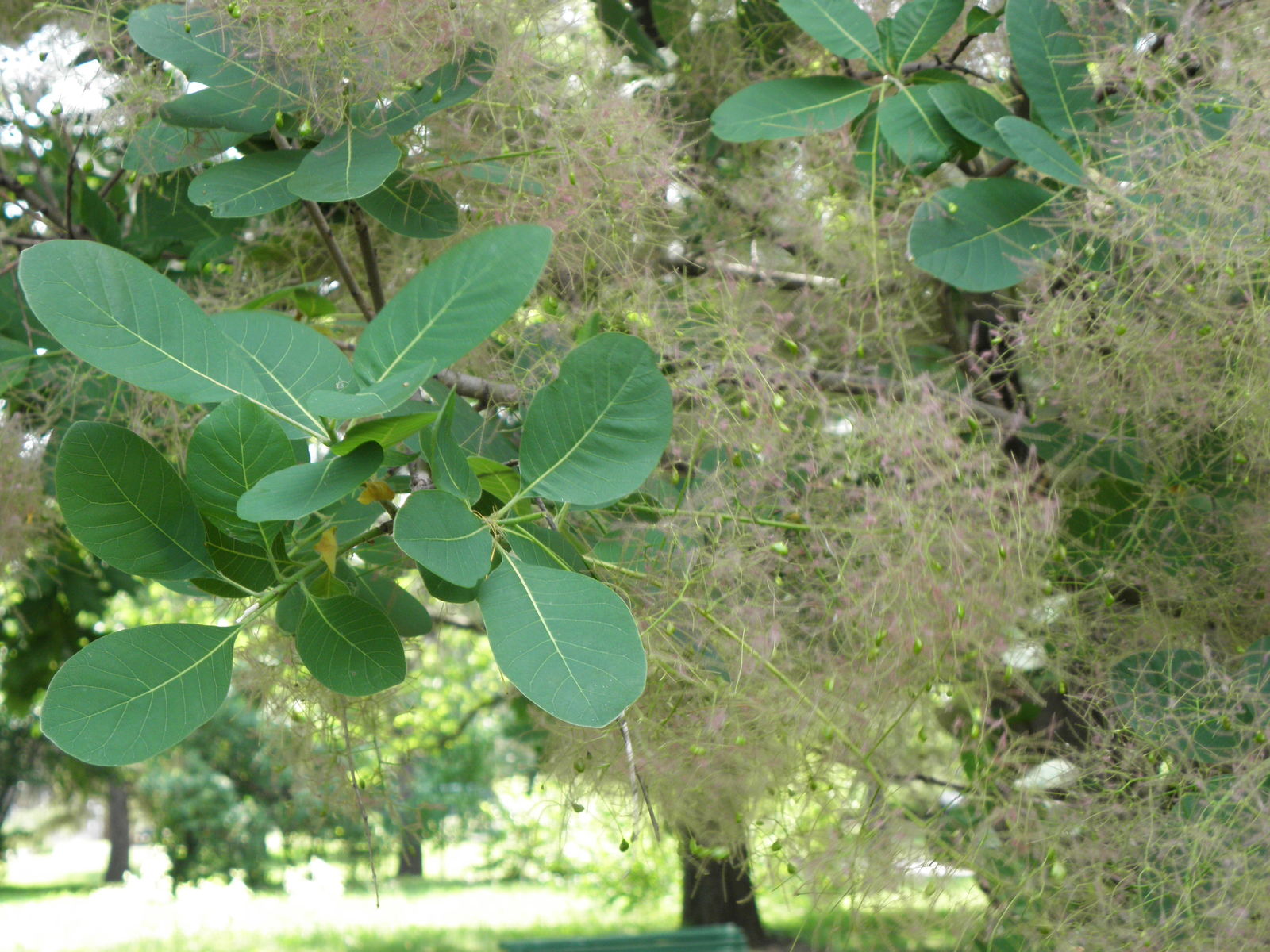
© photo
(c) Jeremy Schewe, some rights reserved (CC BY-NC), uploaded by Jeremy Schewe · cc-by-nc
Mirko Ubović · cc0
Максим Шумских · cc-by
Taken Aug 9, 2019 by Alix Le Corre (cc-by-sa)
Taken Nov 29, 2013 by Tela Botanica − Pierre Bonnet (cc-by-sa)
Taken Jun 27, 2020 by Giode Tonpino (cc-by-sa)
Taken Jul 21, 2022 by Oğuzhan (cc-by-sa)
© copyright of the Board of Trustees of the Royal Botanic Gardens, Kew.




Global distribution
Cotinus coggygria is native to southern and central Europe, the Caucasus and western Asia, extending to central and southern China. It is widely cultivated beyond this range for ornament, with no documented invasive behavior in France.
- Native5
- Italy
- Greece
- Turkey
- Iran
- China
Hexagons: regions where the plant occurs. Green dots: native range.1
Identity
Smokebush (Cotinus coggygria Scop., 1771), also called smoke tree, is a deciduous shrub in the genus Cotinus, family Anacardiaceae. Its common name describes the long hairs that clothe the stalks of sterile flowers in summer, creating a loose cloud above the leaves. The effect comes chiefly from these feathery stalks rather than from large, showy petals. 1 3
The French name fustet recalls an older use: the shrub's yellow wood supplied a dye for leather and textiles before synthetic dyes became widespread. Both English names, smoke tree and smokebush, instead emphasize the hazy outline of the summer flower clusters. The same plant therefore carries names drawn from its appearance and its practical history. 4
Recognition
Multiple stems form an upright shrub that becomes spreading with age, commonly reaching 2–5 m (6.5–16 ft) tall and wide. Simple, alternate leaves are rounded to obovate and blue-green. In autumn they turn yellow, orange or purple, with stronger coloring on a plant receiving full sun. 5 6
Tiny pale yellow to cream flowers appear in broad terminal panicles from late spring into summer. Most remain sterile. Their stalks subsequently lengthen and develop long hairs that change from pink to smoky gray; the few fertile flowers produce small, dry, brown fruits. The contrast between inconspicuous individual flowers and the large, airy clusters accounts for much of the shrub's ornamental appeal. 3 5
Useful taxonomy
The species is traced to Linnaeus's Rhus cotinus L. of 1753, followed by Scopoli's placement in Cotinus in 1771 under the currently accepted name. Its principal historical synonyms include:
- Rhus cotinus L., the historical basionym;
- Cotinus cotinus (L.) Sarg., a later name based on the same original name;
- Cotinus coggygria var. pubescens Engl., a markedly hairy variety.
The accepted name Cotinus coggygria remains the stable reference when these historical variants appear in horticultural literature. Such older combinations should not be mistaken for a separate garden species merely because the genus name differs. 1 2
Habitat and range
Its native range extends from southern and central Europe through the Caucasus and western Asia to central and southern China. Dry hillsides, limestone rock outcrops and open woodland edges provide its characteristic habitats, from sea level to about 1,300 m (4,300 ft). 1 4
Beyond that range, smokebush is chiefly grown as an ornamental shrub, including in France, the United Kingdom and the United States. No invasive behavior is documented to date in these cultivated settings. It remains associated with gardens and shrub borders rather than colonized natural habitats. 3
Hardiness to approximately −20 °C (−4 °F) helps explain its cultivation beyond Mediterranean conditions. Its stated USDA zones 5–8 are relevant to outdoor planting where local winter conditions fall within that range, rather than to one particular country's climate.
Life cycle and reproduction
Each panicle combines a large majority of sterile flowers with relatively few fertile ones. Only the fertile flowers form fruit. The sterile flowers contribute the elongated, feather-covered stalks that give the flowering display its characteristic smoky effect. This distinction explains why the most visible part of a panicle is not necessarily the part producing seed. 3 5
Propagation chiefly uses semi-ripe cuttings in mid- to late summer, described as more reliable than seed. Fresh seeds stratified in autumn can germinate, but often take more than twelve months. That delay reduces their nursery use in comparison with cuttings and means that a slow emergence should not automatically be mistaken for immediate failure. 4
Uses and risks
Smokebush is mainly an ornamental specimen or border shrub, grown for the contrast between colored foliage and smoky panicles. Historically its yellow wood provided the dye called young fustic, used on leather and textiles before synthetic dyes became commonplace. This practical use predates the prominence of modern purple- and gold-leaved selections in gardens. 5 4
The species is not listed as toxic to cats or dogs. Its resinous sap can nevertheless irritate skin, particularly during pruning. Like poison ivy, it belongs to the Anacardiaceae; repeated contact can cause contact dermatitis in sensitive people. 6
In North America, at least four species of lepidopteran larvae are recorded as depending on the genus Cotinus. These caterpillars give the shrub a role as a host plant in a varied garden, in addition to its decorative value. The record concerns the genus and should retain that scope. 6
Varieties, look-alikes and related plants
Royal Purple has almost black-purple foliage during the growing season and is among the selections most widely sold by nurseries. Golden Spirit, sold under the name Ancot, starts bright gold, greens slightly in midsummer and turns orange in autumn. Daydream retains clear green leaves and particularly dense panicles on a more compact plant. Pink Champagne is a less widespread trade name for orange-pink foliage; the supplier's naming should be checked. All four selections share the species' requirement for full sun. 6
The closest common confusion is Cotinus obovatus, American smoketree, native to limestone outcrops in the southern United States. It is larger, with longer leaves and less abundant flowering, so its feathery cloud is less dense than that of Cotinus coggygria. The full scientific name provides a useful distinction when buying a shrub for a particular size or flowering effect. 7
Main sources
- Plants of the World Online / Kew, Cotinus coggygria Scop.
- International Plant Names Index, Cotinus coggygria Scop.
- Royal Horticultural Society, Cotinus coggygria
- Plants For A Future, Cotinus coggygria
- Missouri Botanical Garden Plant Finder, Cotinus coggygria
- NC State Extension, Cotinus coggygria
- NC State Extension, Cotinus obovatus
Frequently asked questions
Is smokebush poisonous to cats and dogs?
No, smokebush is not listed as toxic to cats and dogs. Its sap can, however, irritate skin on contact, especially during pruning; it belongs to the same botanical family as poison ivy.
Why is it called smokebush?
Most flowers in each panicle remain sterile. Their stalks then lengthen and develop long hairs, changing from pink to smoky gray and making a cloud above the foliage.
Should smokebush be pruned hard every year?
No. Its panicles appear on the previous year's wood, so severe annual pruning reduces flowering and the feathery cloud. Reserve structural pruning for late winter and keep it moderate.
What soil suits smokebush?
It tolerates chalky, clay, loam or sandy soils provided they drain well. Waterlogged winter ground is the main concern because it encourages root rot.
Which plant resembles smokebush?
The most frequent confusion is Cotinus obovatus, American smoketree, which is larger, with longer leaves and less abundant flowering. The scientific name is the most reliable guide.
Is smokebush invasive in France?
No source documents invasive behavior in France. It remains a cultivated ornamental shrub there, without reported problematic naturalization. This French context is not a worldwide regulatory assessment.
Similar plants
If you are unsure about a plant’s toxicity, ask a botanist or veterinarian for advice.