
Common hawthorn (Crataegus monogyna, )
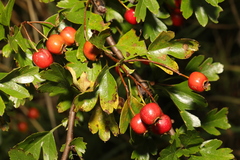
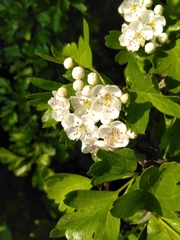
Common hawthorn (Crataegus monogyna Jacq., 1775) is a thorny shrub or small tree in the Rosaceae, native across almost all of Europe to the Caucasus and northern Maghreb. Deeply lobed leaves, one style per flower and one stone per haw distinguish it from Crataegus laevigata. Widely planted in rural hedges for its thorns and tolerance of clipping, it supports more than a hundred insect species and provides winter food for birds.
Read moreCommon hawthorn, one-seeded hawthorn and Whitethorn
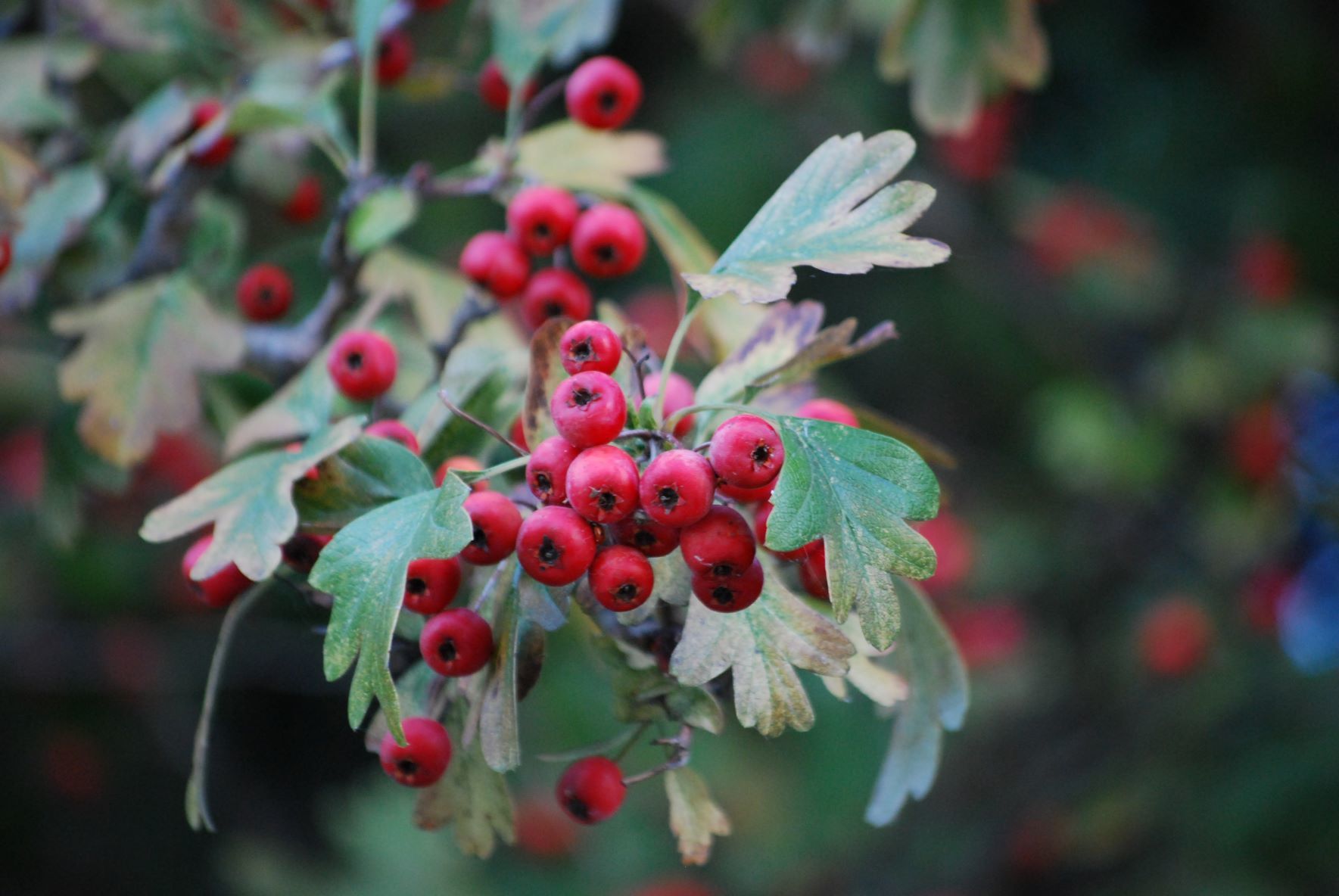
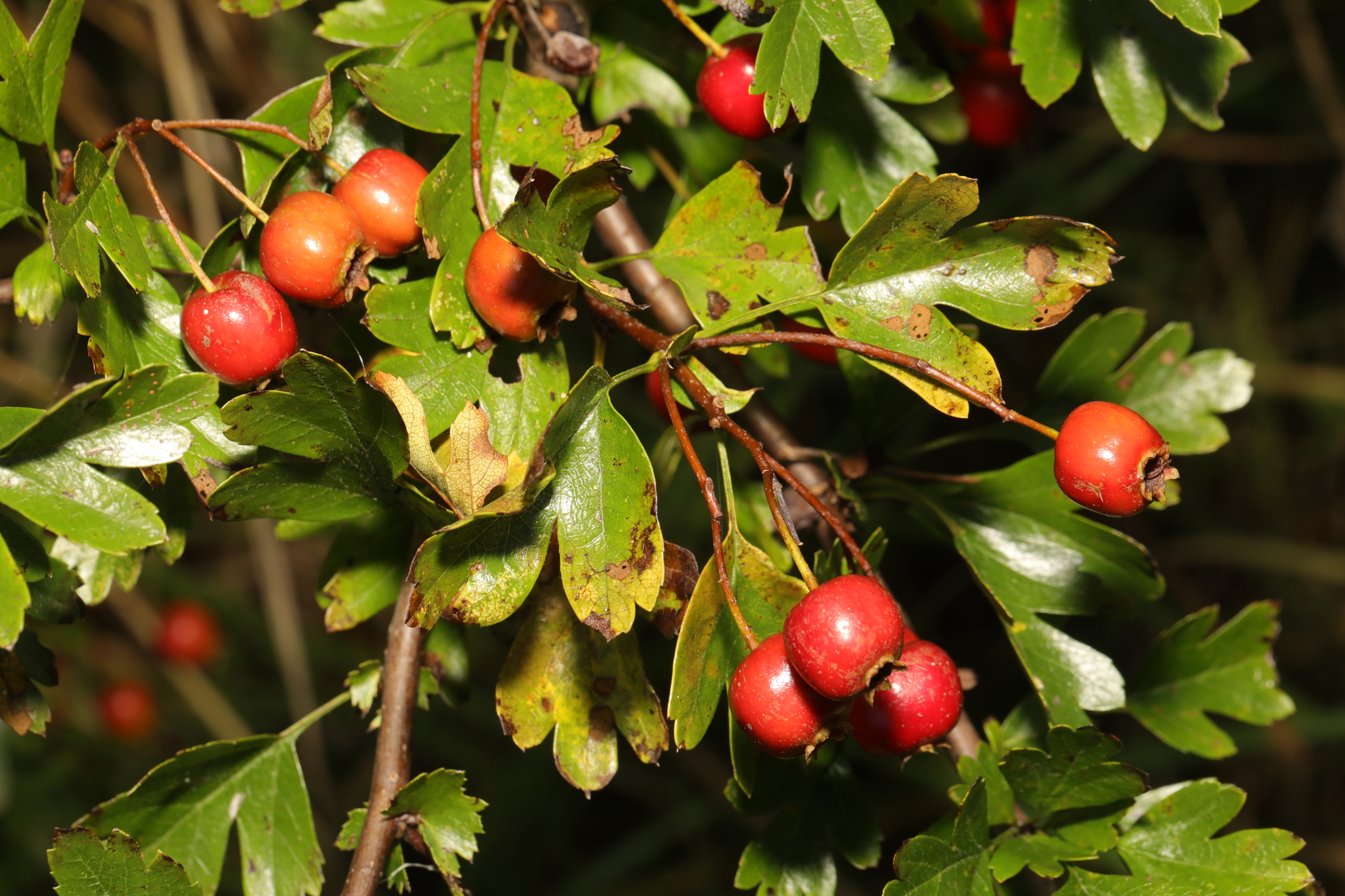
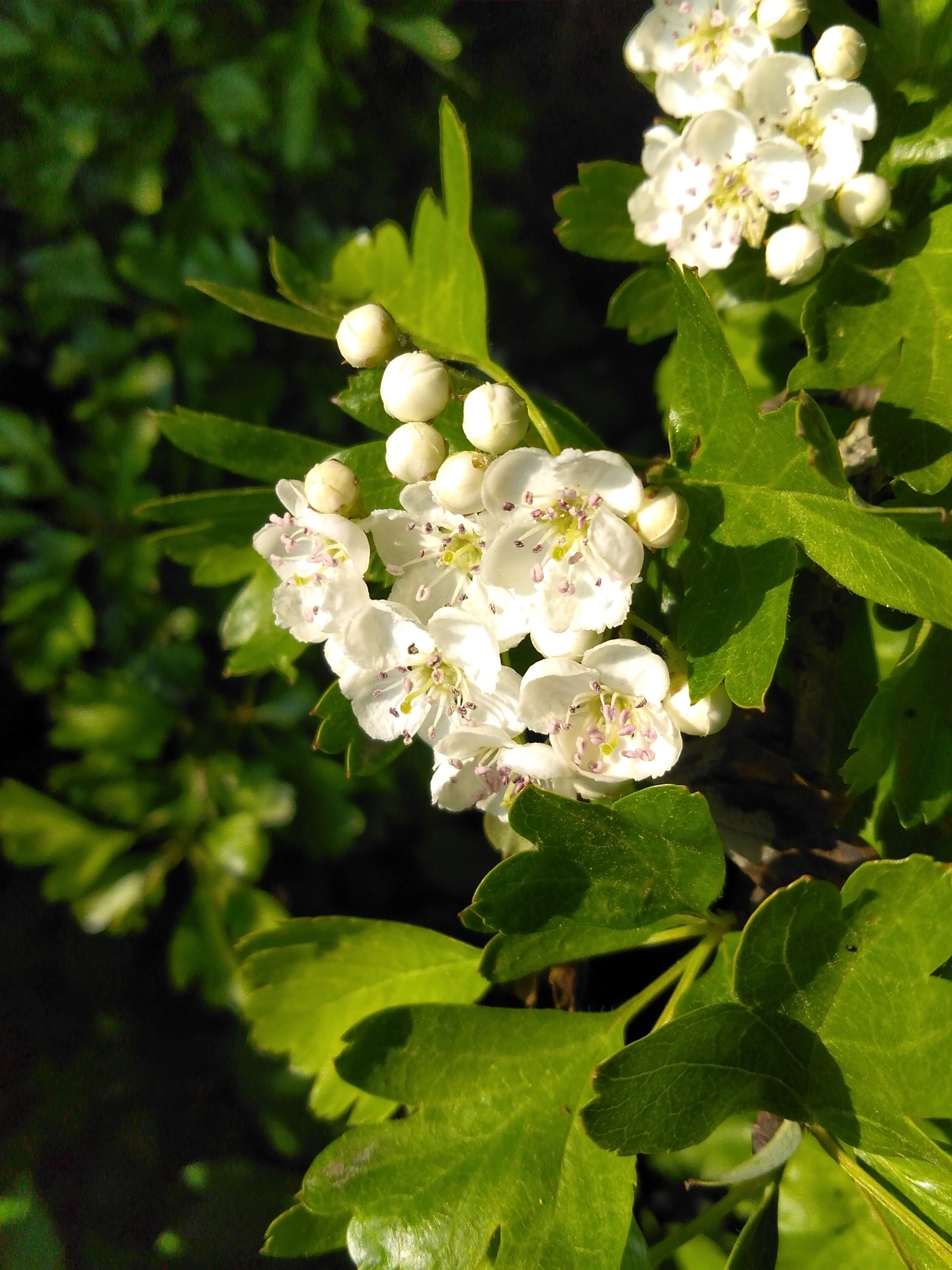
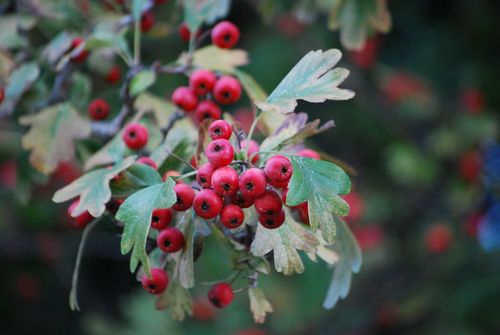
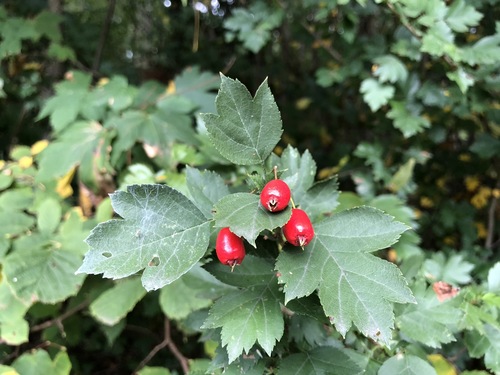
© photo
Mirela · cc0
Stephen James McWilliam · cc0
J Mark Earlam · cc0
no rights reserved · cc0
(c) Jason Grant, some rights reserved (CC BY) · cc-by

Global distribution
POWO places the native range of Crataegus monogyna across almost all of Europe north to about 60°N, around the Caucasus, in the northern Maghreb and parts of the Near East as far as Iraq. Very common in France up to 1,600 m (5,250 ft), it has been introduced for hedges and fodder in North America, Argentina, South Africa, Australia and New Zealand. It has naturalized there and is locally invasive in some open habitats.
- Native6
- Introduced3
- Invasive2
- Metropolitan France
- United Kingdom
- Ireland
- Central and northern Europe
- Caucasus and Near East
- North Africa
- North America
- Argentina
- South Africa
- Australia
- New Zealand
Hexagons: regions where the plant occurs. Green dots: native range.1
Identity
Common hawthorn (Crataegus monogyna Jacq., 1775), also called one-seeded hawthorn or Whitethorn, is a thorny shrub in Rosaceae. It grows as a clipped hedge or a small, free-standing tree across almost all of Europe. The naturalist Nikolaus Joseph von Jacquin described it under this name in 1775; POWO accepts the name today. 1 8
The epithet monogyna combines Greek monos, meaning single, with gunê, here referring to the pistil or style. It describes the difference from its close relative Crataegus laevigata: that species has two or three styles per flower, whereas Crataegus monogyna has one. The French name aubépine comes from Latin alba spina, white thorn, referring to the pale bark of young shoots and the predominant flower color. 5
Recognition
Crataegus monogyna forms a bushy shrub when clipped into a hedge, or a small free-standing tree up to 10 m (33 ft) tall. Unrestricted specimens can sometimes live beyond 300–500 years. Smooth, orange-brown young shoots bear short thorns up to 1.25 cm (0.5 in) long, which harden with age. Gray bark is smooth on young plants and becomes cracked into scales on older trees. 4 2
Leaves are 1–6 cm (0.4–2.4 in) long, deeply divided into 3–7 widely spreading lobes, sometimes cut almost to the midrib. This pronounced division distinguishes Crataegus monogyna from Crataegus laevigata, whose lobes are fewer and shallower. White, sometimes pinkish flowers are borne in corymbs; each flower is 10–15 mm (0.4–0.6 in) across, with five petals and many stamens bearing pink anthers. 5 4
The fruit, or haw, is a small, bright red pome 6–11 mm (0.24–0.43 in) across that ripens in late summer. A single feature distinguishes the species unambiguously: each haw contains one stone with one seed, compared with two or three in Crataegus laevigata. 4 2
Useful taxonomy
POWO accepts Crataegus monogyna Jacq. in Rosaceae, with a native range from Europe to the Caucasus, North Africa and Iraq. The genus Crataegus has accumulated hundreds of synonyms and local forms, long described as distinct varieties before being brought into this one species. Crataegus monogyna var. laciniata Ledeb. and Crataegus monogyna f. pteridifolia (Lodd. ex Loudon) Rehder are two familiar examples. 1 8
Crataegus oxyacantha, now regarded as an ambiguous name, was long used for the same plant. Taxonomists have abandoned it, but some older herbal literature still refers to Crataegus monogyna under this historical name. 4
Habitat and range
The native range of Crataegus monogyna covers almost all of Europe north to about 60°N, the area around the Caucasus, the northern Maghreb and parts of the Near East as far as Iraq. It is common across almost the whole of France, reaching 1,600 m (5,250 ft) in elevation. 1 5
Hedges, woodland edges, waste ground and calcareous hillsides provide its typical habitats. It favors disturbed or partly open ground over dense woodland understory. Introduced for hedging and fodder in North America, Argentina, South Africa, Australia and New Zealand, Crataegus monogyna has naturalized and become locally invasive in some open habitats. 4
Life cycle and reproduction
Flowering extends through spring into early summer, corresponding to April–June in the northern range, depending on latitude. Insects provide pollination. The flowers have a scent often considered unpleasant by people, attracting mainly flies and carrion-feeding beetles rather than bees. Other early-flowering Rosaceae share this trait. 5
Haws ripen in autumn, during September–October in its northern range. Thrushes, waxwings and several small mammals eat the pulp and pass the stone intact, dispersing the seeds. On the ground, seeds rarely germinate without passage through a digestive tract or several months of warm followed by cold stratification. This germination barrier partly explains slow natural regeneration where animal dispersal is absent. 3
Cultivated plants are propagated chiefly by stratified seed, or by grafting to preserve ornamental cultivars. A laid hedge, cut and then bent and interwoven using traditional hedgelaying methods, remains alive and functional for decades. 3
Uses and risks
The dense, pale wood is used for small mechanical parts and as fuel, burning with strong heat and little smoke. Thorns and tolerance of repeated clipping account for its main role as a defensive rural hedge. This use supports a long European tradition of hedgelaying. 4
Haws are mealy and not very sweet when raw, but are cooked and made into jellies, syrups or wine. Young leaves and petals are eaten raw in salads, a use documented since medieval times in England under the name bread and cheese. 4
Rich in flavonoids and triterpenic acids, hawthorn leaf and flower extracts are among the most extensively studied cardiovascular herbal preparations. Several clinical trials have explored their use as an adjunct in mild heart failure, without replacing prescribed treatment. The ASPCA classifies hawthorn as non-toxic to cats, dogs and horses. Only the stones, which should not be chewed, contain traces of cyanogenic compounds, as in many pome-bearing Rosaceae. 6 4
Varieties, look-alikes and related plants
A few horticultural cultivars differ from the wild form. 'Stricta' has a narrow, upright habit useful where space for a row of trees is limited. 'Biflora' sometimes flowers again in midwinter and represents the Glastonbury holy thorn associated in English legend with Joseph of Arimathea. 'Inermis' was selected for its almost thornless shoots. 2 4
The most frequent confusion is between Crataegus monogyna and Crataegus laevigata, the two-styled hawthorn. The latter has shallower leaf lobes, 2–3 styles per flower and 2–3 stones per haw, compared with one in Crataegus monogyna. Blackthorn (Prunus spinosa) serves a similar thorny-hedge role but is readily distinguished by its waxy blue-black fruits and longer, more rigid thorns. 4
Main sources
- Plants of the World Online / Kew, Crataegus monogyna Jacq.
- Royal Horticultural Society, Crataegus monogyna - common hawthorn
- Plants For A Future, Crataegus monogyna database entry
- Wikipedia (EN), Crataegus monogyna
- Wikipédia (FR), Aubépine monogyne
- ASPCA, Hawthorn (Crataegus) toxicity entry
- IUCN Red List, Crataegus monogyna assessment
- Integrated Taxonomic Information System, Crataegus monogyna
Frequently asked questions
Is common hawthorn toxic?
No. The ASPCA classifies hawthorn as non-toxic to cats, dogs and horses. Only the stones of the haws, which should not be chewed, contain traces of cyanogenic compounds, as in many pome-bearing Rosaceae.
How can Crataegus monogyna be distinguished from Crataegus laevigata?
Crataegus monogyna has more deeply lobed leaves, one style per flower and one stone per fruit. Crataegus laevigata has shallower lobes, two or three styles and two or three stones per fruit.
Can hawthorn haws be eaten?
Yes, cooked into jelly, syrup or wine. Raw, they are mealy and not very sweet. Young leaves and petals are eaten raw in salads, a use documented since medieval times in England under the name bread and cheese.
Why is hawthorn so common in rural hedges?
Its thorns and tolerance of repeated clipping form a natural barrier against livestock. This supported a long rural tradition of hedgelaying, in which cut stems are bent and interwoven while the hedge remains alive.
Does hawthorn have herbal uses?
Leaf and flower extracts, rich in flavonoids and triterpenic acids, are among the most studied cardiovascular herbal preparations. Their use is as an adjunct to prescribed treatment, not a replacement.
What is the Glastonbury holy thorn?
An English legend traces it to a staff planted by Joseph of Arimathea, with flowering twice a year. The original tree was felled in the 17th century, but grafted plants of the cultivar Biflora preserve the lineage.
Is common hawthorn invasive outside Europe?
Yes. Introduced for hedging and fodder in North America, Argentina, South Africa, Australia and New Zealand, it has naturalized and sometimes behaves invasively in open habitats.
Similar plants
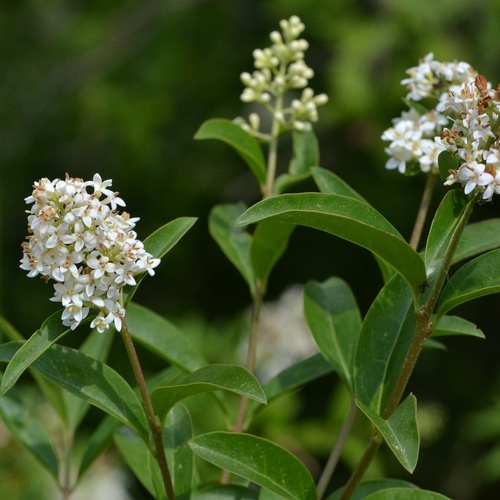
If you are unsure about a plant’s toxicity, ask a botanist or veterinarian for advice.