
Japanese cedar (Cryptomeria japonica, )
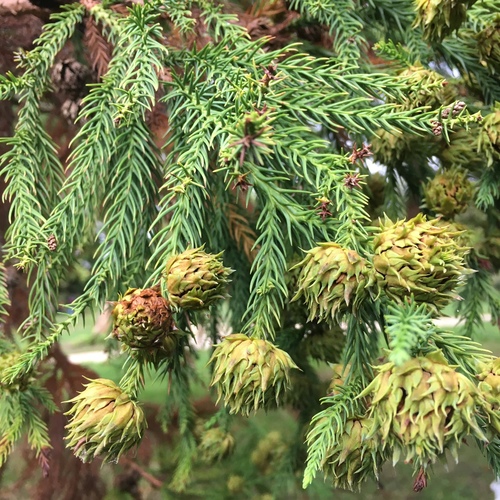
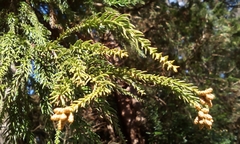
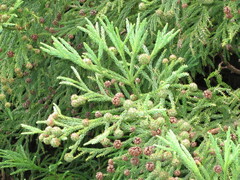
Japanese cedar (Cryptomeria japonica) is a large evergreen conifer in the Cupressaceae, native to Japan and the only living species in its genus. Its fibrous bark peels in long strips, curved awl-shaped leaves resemble sickles, and its narrow conical outline is familiar in forestry plantations in Japan and the Azores.
Read moreJapanese cedar, Sugi and Japanese redwood



© photo
(c) cspons, some rights reserved (CC BY-NC) · cc-by-nc
Takashi KOIKE · cc0
zebedeugalinha · cc-by
Taken May 13, 2021 by pratiwir pratiwir (cc-by-sa)
Taken Sep 22, 2020 by Dieter Albrecht (cc-by-sa)
Taken Jul 3, 2022 by Tristan Jaton-Maria (cc-by-sa)
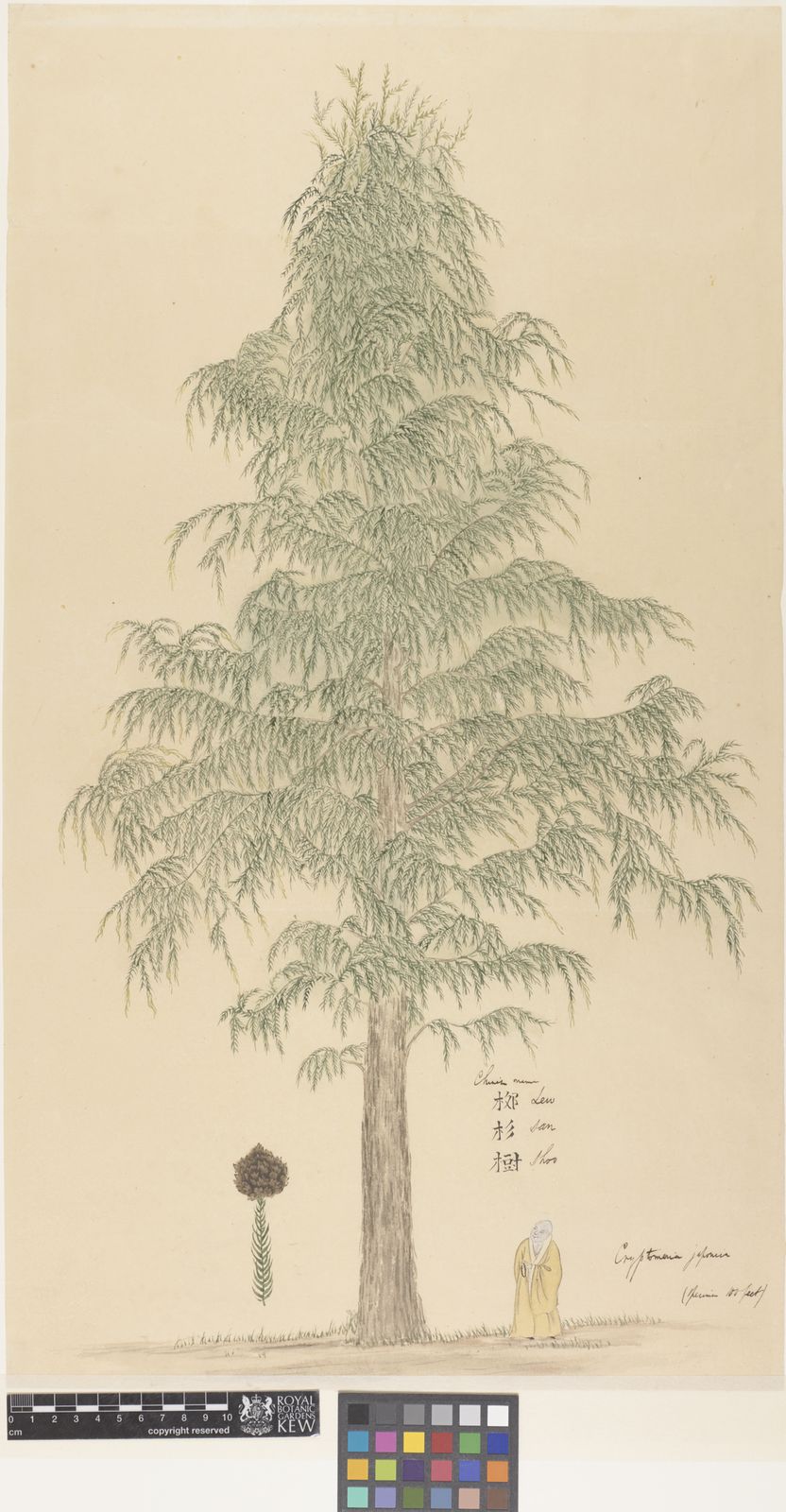
© copyright of the Board of Trustees of the Royal Botanic Gardens, Kew.




Global distribution
Cryptomeria japonica is native to Japan, from Kyushu to northern Honshu, below 400 m (1,300 ft). Plants of the World Online also includes a Chinese population from Sichuan to northwestern Zhejiang at 1,100–2,500 m (3,600–8,200 ft), whose native or introduced origin remains disputed. Beyond this range it is widely grown for timber and ornament.
- Native2
- Introduced3
- Japan
- China
- Portugal (Azores)
- Réunion
- Madagascar
Hexagons: regions where the plant occurs. Green dots: native range.1
Identity
Japanese cedar (Cryptomeria japonica (Thunb. ex L.f.) D.Don, 1838) is a conifer in the Cupressaceae and the only living species of Cryptomeria. It is also called Japanese redwood. In Japan, where it is called sugi, it is among the country's most widely planted forestry trees. 1 7
The common name Japanese cedar often causes confusion. This tree is not a member of Cedrus, the true cedars in the Pinaceae. It belongs to a separate Cupressaceae lineage, closer to bald cypress (Taxodium distichum) than to Mediterranean or Himalayan cedars. 4
The genus name comes from Greek kryptos, “hidden,” and meris, “part,” referring to seeds enclosed beneath the cone scales. British naturalist David Don published the full botanical description in 1838, using material originally collected by Thunberg. 1
Recognition
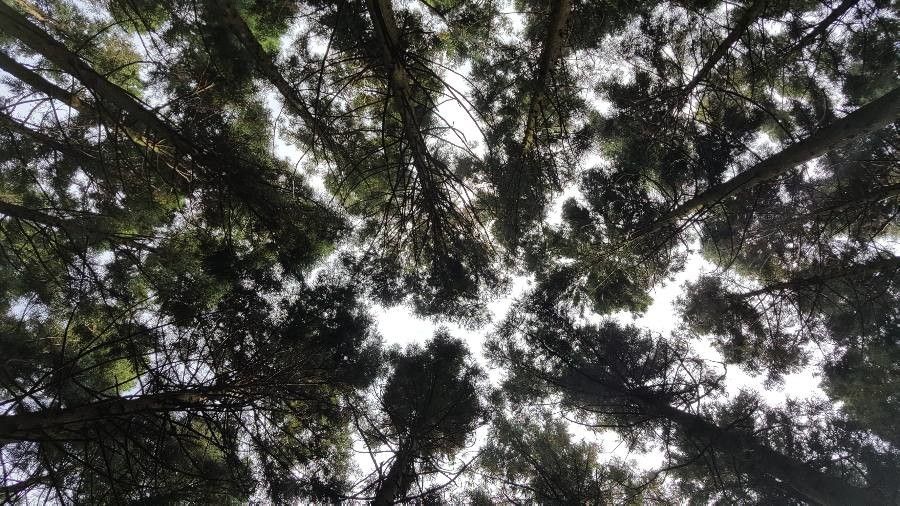
A narrow conical outline and rapid growth characterize this large conifer. In its native range, trees commonly reach 25–40 m (82–131 ft). Exceptional specimens exceed 50 m (164 ft), and the tallest measured individuals reach 65 m (213 ft); trunks can then exceed 3 m (10 ft) in diameter. 4
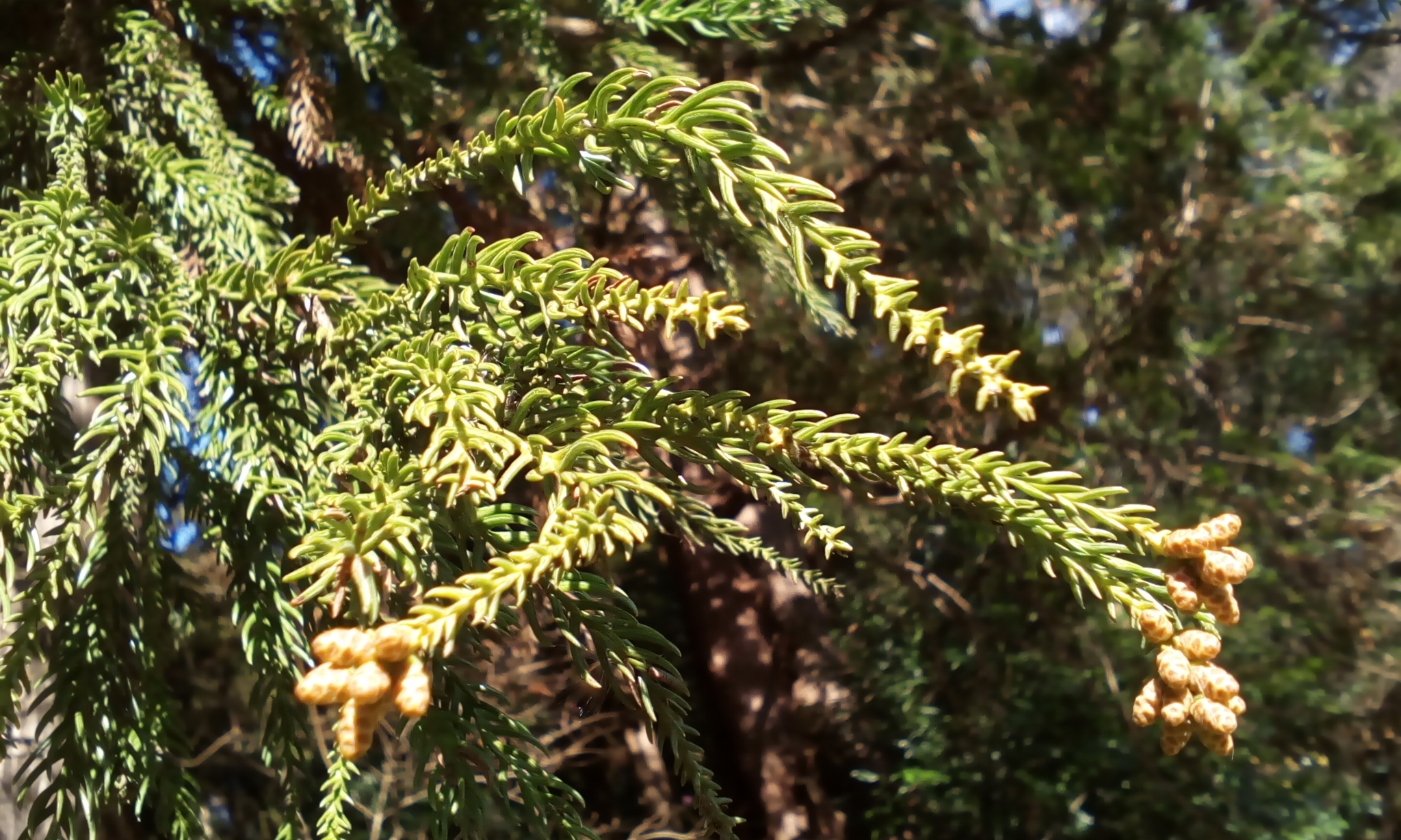
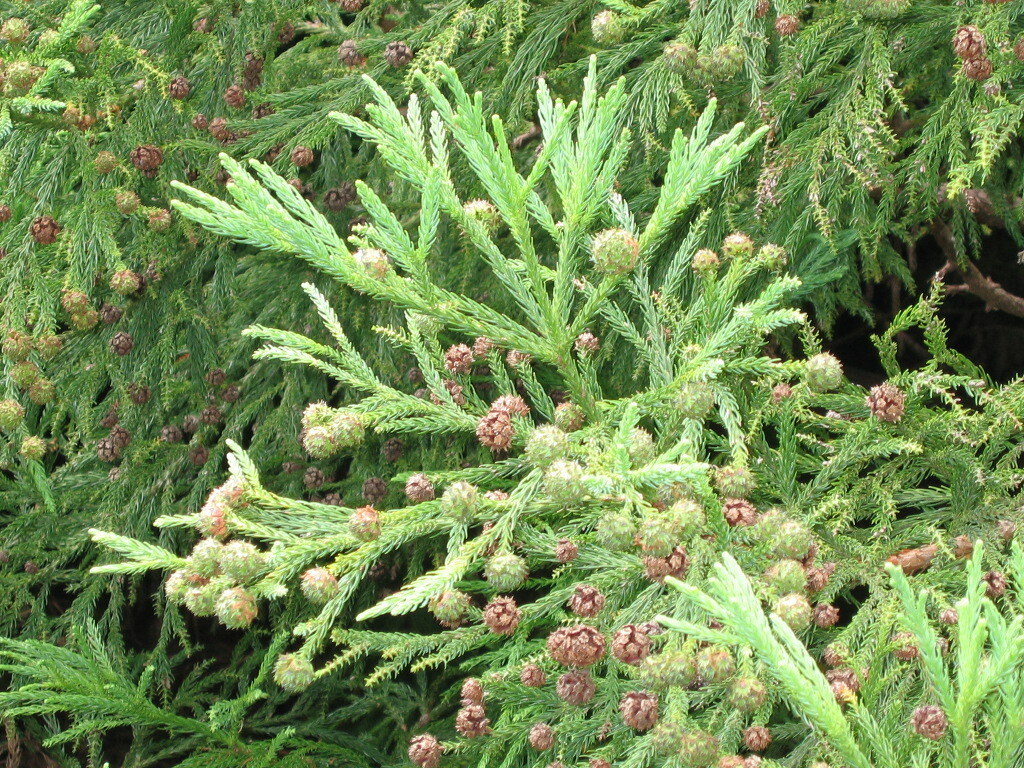
Reddish-brown, fibrous bark peels in long vertical strips. Several Cupressaceae share this feature, but it is rarely so pronounced. Curved, sickle-like, awl-shaped leaves measure about 0.7–1.4 cm (0.28–0.55 in) and form tight spirals around the twig. They persist for 4–5 years and often turn bronze to reddish in winter, both in the species and in several cultivars. 4 6
Small, globose female cones measure 0.9–1.6 cm (0.35–0.63 in) across, sometimes reaching 2.5 cm (1 in). They carry 20–30 pointed scales and ripen brown in autumn of their first year, unlike the cones that take several years in many other conifers. 4
Useful taxonomy
For Japanese cedar, POWO recognizes a native range encompassing central and southern Japan, from Kyushu to northern Honshu, at elevations up to 400 m (1,300 ft), as well as a Chinese population from Sichuan to northwestern Zhejiang at 1,100–2,500 m (3,600–8,200 ft). The Chinese population, sometimes named Cryptomeria japonica var. sinensis Miq., has a disputed status. Several studies interpret it as an ancient introduction associated with Buddhist culture rather than a natural distribution. 1 4
Monotypic describes the genus Cryptomeria: it has one living species and no living sister species within the genus. Once the genus is recognized, identification is therefore straightforward. Confusion chiefly occurs with other genera, including Cedrus, Taxodium and some evergreen, conical Chamaecyparis. 1
Habitat and range
Humid temperate mountain and foothill forests in Japan support pure or mixed stands, almost always below 400 m (1,300 ft). Japanese cedar also forms the main component of the country's extensive forestry plantations. Large-scale government replanting after World War II sought to rebuild depleted woodland resources. 4 7
Outside Japan, the tree has been introduced and widely grown for timber or ornament. In the Azores, it accounts for a substantial share of production forests. Plantings also occur on Réunion, Madagascar and in several European and temperate Asian countries. 7
The oldest documented trees grow on Yakushima. The Jōmon Sugi has a trunk 5.2 m (17 ft) in diameter and stands 25.3 m (83 ft) tall. A radiocarbon date suggests an age of about 3,000 years, although that figure is disputed. A trunk section held at Shimoyaku Forestry Office allows a direct count of 1,776 annual rings. 4
Life cycle and reproduction
Separate male and female cones grow on the same tree: Japanese cedar is monoecious. Wind carries pollen in late winter and early spring. Male cones form small terminal clusters of 6–35 conelets, changing from plum red to yellow at maturity. 4 5
Whereas many conifers take two years to mature cones, female cones of C. japonica mature in autumn of their first year, turn brown and release seed. Young trees grow rapidly, adding several tens of centimeters (several inches) a year, which helps explain the species' widespread forestry use. 4 5
Horticultural propagation uses seed, following two to three weeks of cold stratification, or autumn twig cuttings in a cold frame. Cuttings remain the only reliable way to reproduce a dwarf or colored-foliage cultivar true to type. 5
Uses and risks
Light, aromatic, fine-grained and naturally rot-resistant timber has been used for centuries in buildings, bridges, boats and furniture. Japanese cedar remains one of Japan's most widely used structural timbers. 4 5
Traditional plantings surround temples and shrines, where very old specimens may be revered as sacred trees. Sugi is also regarded as a national symbol of Japan. Its abundance around populated areas has a documented drawback: sugi pollen is a leading cause of seasonal allergic rhinitis in Japan, a public-health problem linked to mass reforestation after World War II. 7
ASPCA's general, nonexhaustive list does not establish that Cryptomeria japonica is safe for cats and dogs. Pollen can trigger allergy and resin, more rarely, contact dermatitis. 8
Varieties, look-alikes and related plants
Numerous dwarf and colored-foliage cultivars have been selected, several receiving the Royal Horticultural Society's Award of Garden Merit. Elegans retains soft juvenile foliage throughout its life and turns bronze in winter. Sekkan-sugi produces golden-yellow young shoots in spring. Globosa Nana and Vilmoriniana form very slow-growing dwarf balls suited to rock gardens. 2 3
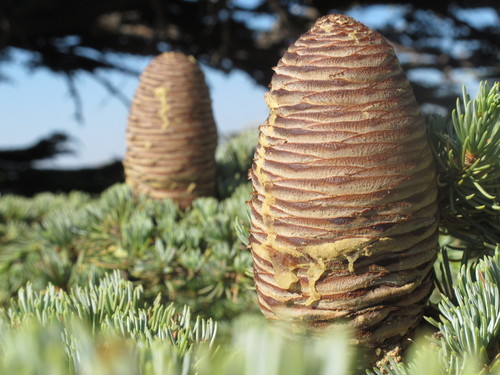
The main look-alikes are true cedars, genus Cedrus, with needles in clusters rather than spirals; bald cypress, Taxodium distichum, which is deciduous rather than evergreen; and certain Chamaecyparis, with flat scales instead of curved awl-shaped leaves. A narrow conical crown and bark peeling in long strips remain the most useful field characters. 4
Main sources
- Plants of the World Online / Kew, Cryptomeria japonica (Thunb. ex L.f.) D.Don
- Royal Horticultural Society, Cryptomeria japonica Bandai-sugi
- Royal Horticultural Society, AGM ornamentals list (cultivars Cryptomeria japonica)
- The Gymnosperm Database, Cryptomeria japonica
- Plants For A Future, Cryptomeria japonica
- NC State Extension, Cryptomeria japonica (Japanese Cedar)
- Encyclopaedia Britannica, Japanese cedar
- ASPCA, Toxic and Non-Toxic Plant List - Cats
Frequently asked questions
Is Japanese cedar a true cedar?
No. Cryptomeria japonica belongs to the Cupressaceae, whereas true cedars, genus Cedrus, belong to the Pinaceae. Japanese cedar is a common name, not a botanical classification.
Is Japanese cedar poisonous to cats and dogs?
ASPCA's general, nonexhaustive list does not establish that this species is safe for cats and dogs. Sugi pollen is a documented cause of allergy.
Does Japanese cedar also grow in China?
Plants of the World Online recognizes a Chinese population from Sichuan to northwestern Zhejiang, but whether it is native or introduced remains disputed. Several studies associate it with an ancient introduction linked to Buddhist culture.
How tall does a mature Japanese cedar grow?
In its native range it commonly reaches 25–40 m (82–131 ft). Exceptional trees exceed 50 m (164 ft), with the tallest measured individuals reaching 65 m (213 ft). Trees in parks and gardens generally remain smaller.
Why do Japanese cedar needles turn brown in winter?
Winter bronzing is normal in the species and several cultivars, including Elegans. More severe browning tends to indicate drying cold, strong wind or an exposed position in dry soil.
How can I distinguish Japanese cedar from Cedrus or Taxodium?
True cedars have needles in clusters rather than spirals. Bald cypress, Taxodium distichum, loses its foliage in winter, unlike Japanese cedar. Fibrous bark peeling in long strips remains the most useful field character.
Is Japanese cedar suitable for a small garden?
The species needs plenty of open space at maturity. Dwarf cultivars such as Globosa Nana or Vilmoriniana offer compact, much slower-growing alternatives for small gardens.
Similar plants

If you are unsure about a plant’s toxicity, ask a botanist or veterinarian for advice.