
Maidenhair tree (Ginkgo biloba, )
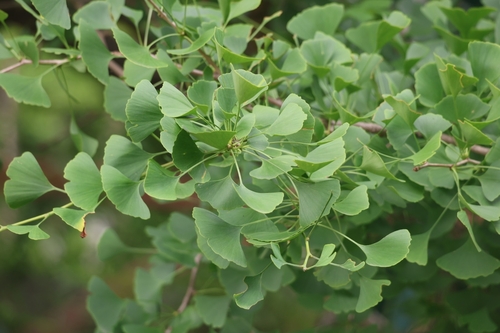
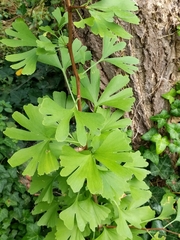
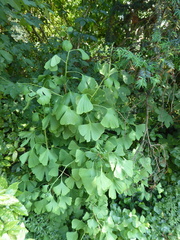
Maidenhair tree (Ginkgo biloba) is a deciduous gymnosperm and the only living species in Ginkgoaceae and Ginkgophyta. Native to eastern China, it is recognized by fan-shaped, often two-lobed leaves with forked veins. Widely planted as an ornamental and street tree, this living fossil has a lineage extending back to the age of dinosaurs.
Read moreMaidenhair tree and ginkgo




© photo
(c) 鐦鍆錒/锎钔锕(Man Hoimoon), some rights reserved (CC BY-NC), uploaded by 鐦鍆錒/锎钔锕(Man Hoimoon) · cc-by-nc
Matt Schultz · cc0
jamie-aa · cc0
Taken May 8, 2022 by Tristan Jaton-Maria (cc-by-sa)
Taken Nov 20, 2022 by Nathalie Potel (cc-by-sa)
Taken Jul 5, 2019 by Peteer Cerny (cc-by-sa)
Taken Nov 19, 2021 by mohammad fazel dehkordi (cc-by-sa)
Taken Dec 6, 2020 by Dieter Wagner (cc-by-sa)
© copyright of the Board of Trustees of the Royal Botanic Gardens, Kew.




Global distribution
The native range of Ginkgo biloba is restricted to a few areas of eastern China, particularly Zhejiang. Truly wild populations remain rare and disputed; most trees in China, including those near temples, descend from old plantings. Cultivated for centuries in East Asia, it was later introduced to Europe and planted worldwide as an ornamental and street tree.
Identity
Maidenhair tree (Ginkgo biloba L., 1771), also called ginkgo, is the only living species in Ginkgoaceae and Ginkgophyta. This deciduous gymnosperm can reach 35 m (115 ft) tall. It has no close living relative among conifers or other trees. 1 7
The name ginkgo comes from a transcription of Japanese established in the eighteenth century by the naturalist Engelbert Kaempfer. Long regarded as an error, that spelling nevertheless remained the accepted scientific name of the genus. The French nickname arbre aux quarante écus, or forty-crown tree, recalls the supposedly exorbitant price paid for early trees imported into France late in the same century. 6 7
Ginkgo is a living fossil. Fossils very similar to the modern species date to the Middle Jurassic, about 170 million years ago, while its related genera have disappeared. Six trees near the hypocenter of the 1945 atomic bombing of Hiroshima survived the blast and fire and remain alive, known in Japanese as hibakujumoku. 10
Recognition
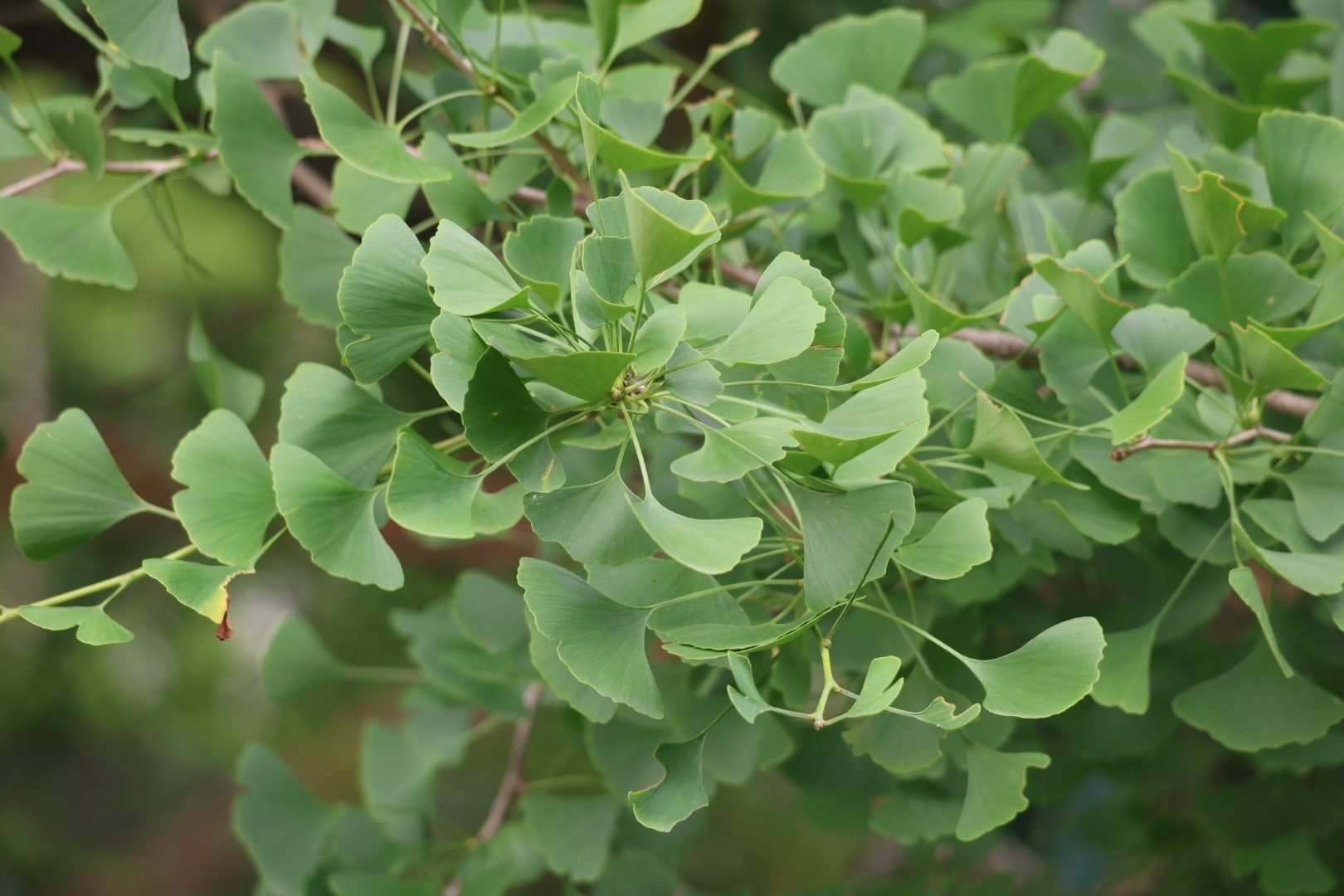
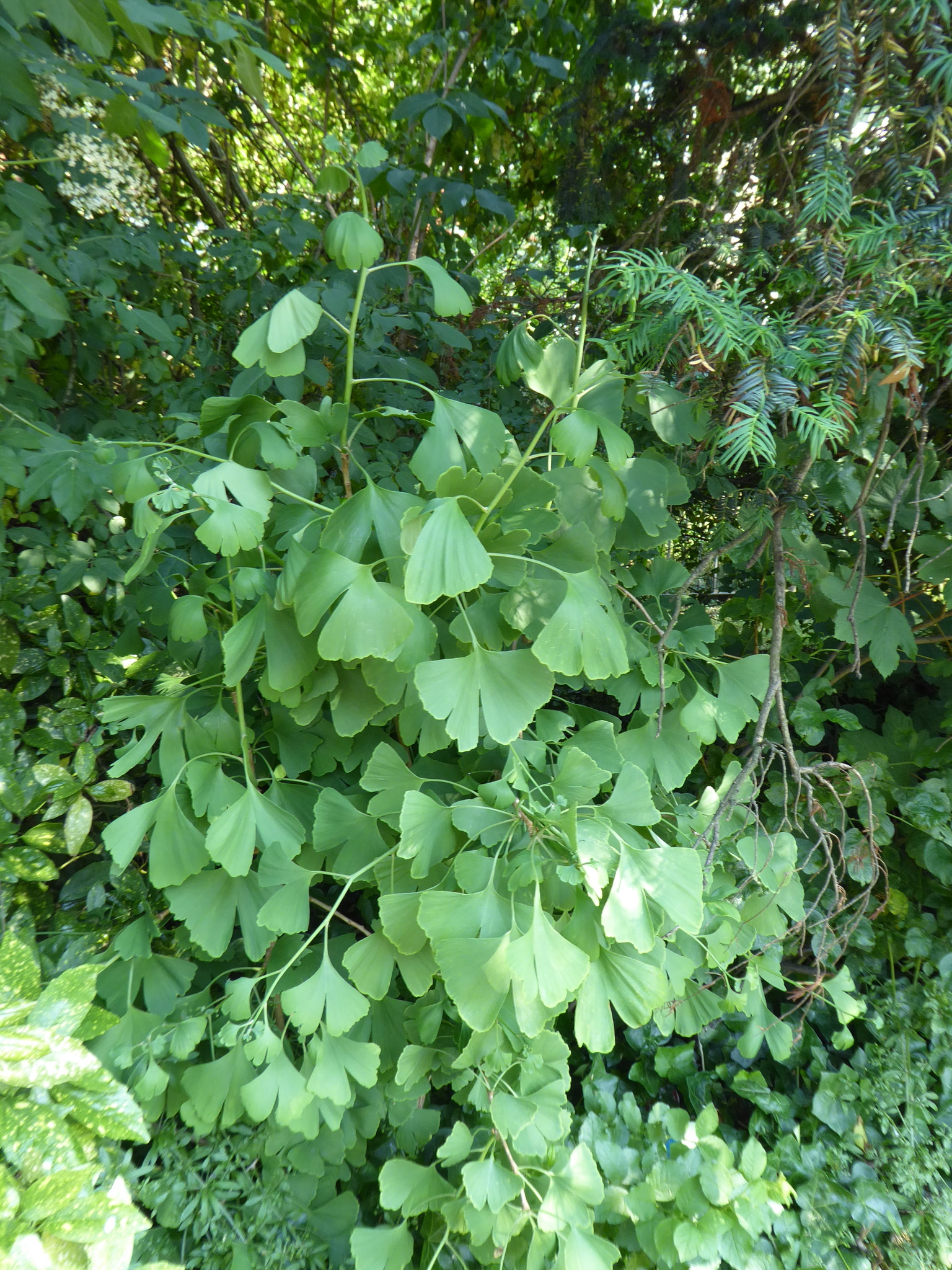
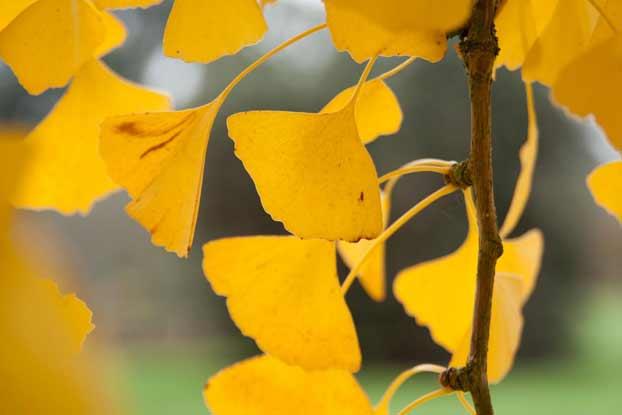
The fan-shaped leaves are carried on long stalks. Their parallel veins fork repeatedly without forming a network or a central midrib. A notch often divides the blade into two lobes, giving the epithet biloba. Some leaves, especially those on short shoots, remain almost undivided. 2 4
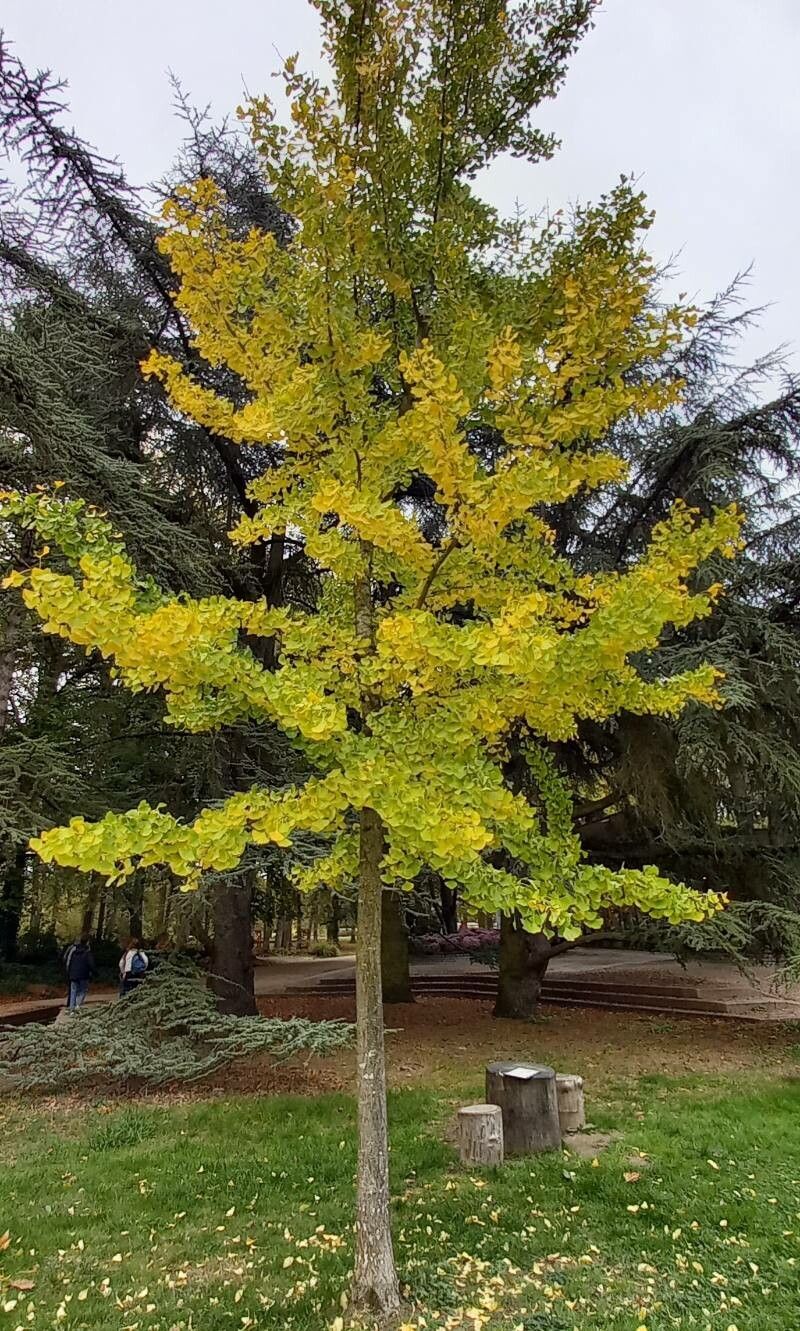
Mature trees commonly stand 20–35 m (66–115 ft) tall. A young conical crown becomes broader, more irregular and spreading with age. The trunk develops thick, gray, deeply fissured bark. Growth is slow to moderate, particularly during the first few decades. 2 3
Ginkgo biloba is dioecious: each tree bears male or female reproductive organs, never both together. Before reproductive maturity there are no visible reproductive structures to confirm the sex; these often appear after fifteen to twenty years. In fall the foliage turns an almost uniform yellow, then falls in large quantities over just a few days. 5 3
Useful taxonomy
Linnaeus described Ginkgo biloba L. in 1771. Its isolated position in plant classification makes it the sole living representative of Ginkgophyta, without a close modern relative. Its leaves resemble those of maidenhair ferns, explaining the English common name. 1 7
The accepted scientific name, Ginkgo biloba, identifies the species regardless of cultivar. Autumn Gold and Fastigiata, for example, are grafted selections of the same taxon rather than separate botanical varieties. Choosing between them changes the tree’s form, not its species. 2 3
Habitat and range
The native range is restricted to a few areas of eastern China, particularly Zhejiang. Truly wild populations are rare and disputed. Most ginkgos in China, including those beside temples, descend from old plantings rather than spontaneous forest populations. 1 8
After centuries of cultivation around East Asian temples and shrines, ginkgo reached Europe in the eighteenth century and subsequently became a widely planted ornamental and street tree worldwide. It tolerates air pollution, heat, drought once established, salt and compacted soil, explaining its success in urban landscapes. 4 3
The International Union for Conservation of Nature lists Ginkgo biloba as Endangered. This old assessment remains in force, reflecting the scarcity of abundant, well-documented wild populations. 8
Life cycle and reproduction
In spring, male trees release windborne pollen that reaches ovules on female trees. Although this resembles conifer reproduction, ginkgo has a rare feature among seed plants: motile sperm, capable of swimming to the egg. 5 1
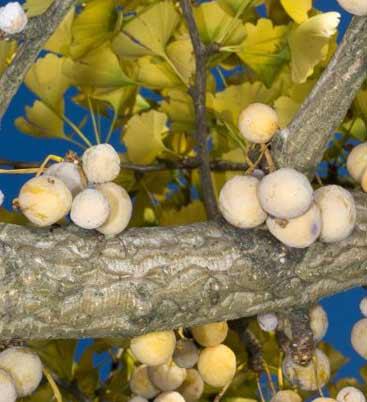
Seeds ripen in fall on female trees. Their fleshy yellow-orange coats develop an unpleasant odor as they drop and decay on the ground. This coat, rather than the tree itself, explains why nurseries generally favor grafted male cultivars for public planting. 4 2
Some ginkgos live for centuries or more than a thousand years, with such trees recorded in East Asia. The species is propagated from seed after stratification, but seedlings do not have a guaranteed sex. Grafting and cuttings are the reliable ways to reproduce a particular cultivar, including its sex. 5 2
Uses and risks
Ginkgo is chiefly an ornamental tree, planted in cities for its resilience and golden fall foliage, and around East Asian temples for its symbolic value. Shelled seeds, called bai guo in China and ginnan in Japan, are eaten cooked in small quantities in some traditional dishes. 4 5
Raw seeds or excessive quantities of seeds, as well as unprocessed fresh leaves, contain a toxic substance capable of causing convulsions, especially in children. Irritants in the fleshy seed coat can also cause contact dermatitis on sensitive skin. Gloves are therefore recommended when collecting fallen seeds. 9 2
Ginkgo leaf extract is widely sold as a supplement intended to support memory. Large clinical trials have not demonstrated convincing effectiveness in preventing cognitive decline or dementia. Interactions with anticoagulant medicines are also documented. 9
Varieties, look-alikes and related plants
A practical reason for choosing a cultivar is to avoid the odor of female seeds. Autumn Gold and Princeton Sentry are male selections: the former has a broad, regular crown, while the latter is narrow and columnar, suited to streets with limited space. Fastigiata has a comparable columnar form; Pendula has a drooping form, while the dwarf Mariken suits smaller gardens. 2 3
Ginkgo is difficult to confuse with another tree once its distinctive fan-shaped leaves have developed. As the only living species in its division, it has no close botanical relative. Misidentification is mainly a possibility with an unidentified young plant mistaken for an ordinary shrub before its characteristic leaves are fully developed. 7 1
Main sources
- Plants of the World Online / Kew, Ginkgo biloba L.
- Royal Horticultural Society, Ginkgo biloba - maidenhair tree
- Missouri Botanical Garden, Ginkgo biloba
- NC State Extension, Ginkgo biloba (Ginkgo, Maidenhair Tree)
- Plants For A Future, Ginkgo biloba
- Tela Botanica, Ginkgo biloba L.
- INPN / MNHN, Ginkgo biloba L., 1771 (cd_nom 100258)
- IUCN Red List of Threatened Species, Ginkgo biloba assessment
- NCCIH, Ginkgo - Usefulness and Safety
- Kew Gardens, Ginkgo biloba - the tree that outlived the dinosaurs
Frequently asked questions
Is ginkgo a conifer?
No. Like conifers it is a gymnosperm, but it belongs to a separate group, Ginkgophyta, of which it is the sole living representative. Its fan-shaped leaves are quite unlike needles or scales.
Why do some ginkgo trees smell unpleasant in fall?
Only female trees produce seeds. Their fleshy coats release an unpleasant odor as they fall and decay. Nurseries therefore favor grafted male cultivars for public spaces.
How can I tell a male ginkgo from a female?
The sex cannot be confirmed before reproductive maturity, often after fifteen to twenty years. It becomes apparent when male organs release pollen or ovules appear on female trees.
Is ginkgo toxic?
Raw seeds, or seeds eaten in excess, contain a toxic substance that can cause convulsions, especially in children. The fleshy coat can also irritate skin on contact, so gloves are recommended when collecting it.
Why is ginkgo called a living fossil?
Fossils very similar to the living species date from the Middle Jurassic, about 170 million years ago. All its closely related genera have disappeared, while modern ginkgo has changed very little.
Does ginkgo leaf extract improve memory?
Large clinical trials have not demonstrated convincing effectiveness in preventing cognitive decline or dementia, despite extensive marketing as a supplement. Interactions with anticoagulant medicines are also documented.
Is ginkgo invasive?
It is not considered an invasive species. Its slow growth and particular fertilization requirements limit spontaneous spread, even where it is widely planted in cities.
Similar plants
If you are unsure about a plant’s toxicity, ask a botanist or veterinarian for advice.