
Quince (Cydonia oblonga, )
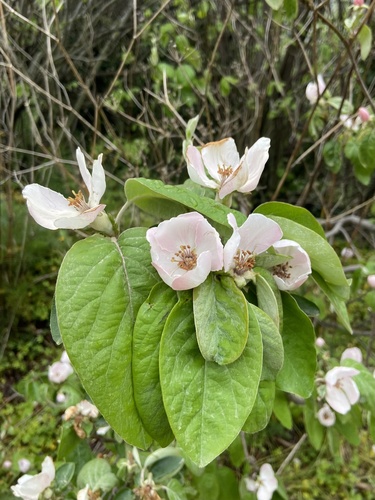
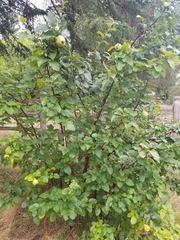
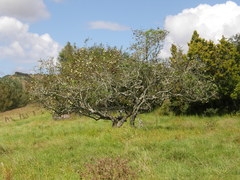
Quince (Cydonia oblonga) is a small deciduous fruit tree in the Rosaceae and the only species in its genus. Native to the Caucasus and Central Asia, it has been cultivated since antiquity for its fragrant fruit, usually eaten cooked. The tree also serves as a dwarfing rootstock for pears.
Read moreQuince and Common quince


© photo
(c) Nicolas Lagière, some rights reserved (CC BY-NC), uploaded by Nicolas Lagière · cc-by-nc
Corinne Helmer · cc0
David Whyte · cc-by-sa
Taken Apr 6, 2016 by Manuel Ramos (cc-by-sa)
Taken May 2, 2010 by Tela Botanica − Yoan MARTIN (cc-by-sa)
Taken Oct 29, 2022 by Annemarie Ahrens-Stehle (cc-by-sa)
Taken Mar 27, 2016 by concha. h (cc-by-sa)
Taken Oct 28, 2022 by Annemarie Ahrens-Stehle (cc-by-sa)
© copyright of the Board of Trustees of the Royal Botanic Gardens, Kew.




Global distribution
Quince originates in the Caucasus and Central Asia, with a center of origin in the Hyrcanian forests south of the Caspian Sea. Neolithic agriculture spread it early into Anatolia and the Near East, then Europe and the Mediterranean. It is now grown throughout temperate regions and sometimes naturalizes in hedges and thickets outside its original range.
- Native5
- Introduced1
- Armenia
- Azerbaijan
- Iran
- Turkmenistan
- Uzbekistan
- United States
Hexagons: regions where the plant occurs. Green dots: native range.1
Identity
Quince (Cydonia oblonga Mill., 1768) is a small deciduous fruit tree in the Rosaceae and the sole member of Cydonia. Two features immediately distinguish it from pear and apple: solitary flowers open after the leaves, and the raw flesh is too astringent to eat without cooking. 2 4
The fruit and tree share the English name quince. In French, cognassier derives from coing in the same way that pommier derives from pomme, distinguishing the tree from the fruit it bears. Membrillero is an established Spanish name for the tree. 1
Cultivation dates to antiquity: Near Eastern orchards grew quince before apple and pear. French coing derives from Greek kydónion mêlon, “apple of Kydonia,” a Cretan city known for its orchards, through Latin cotoneum and Old French cooin. 4 3
Recognition
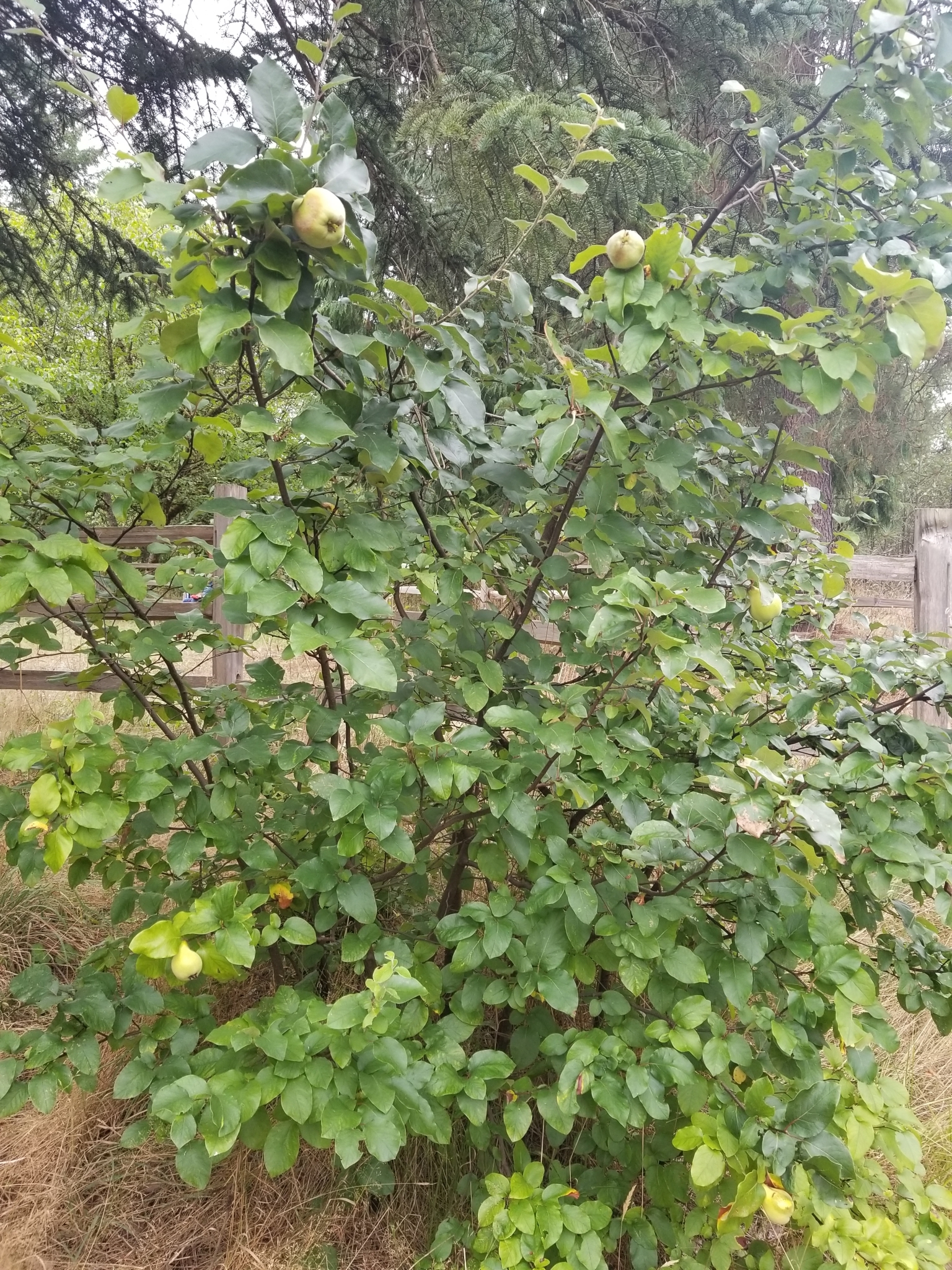
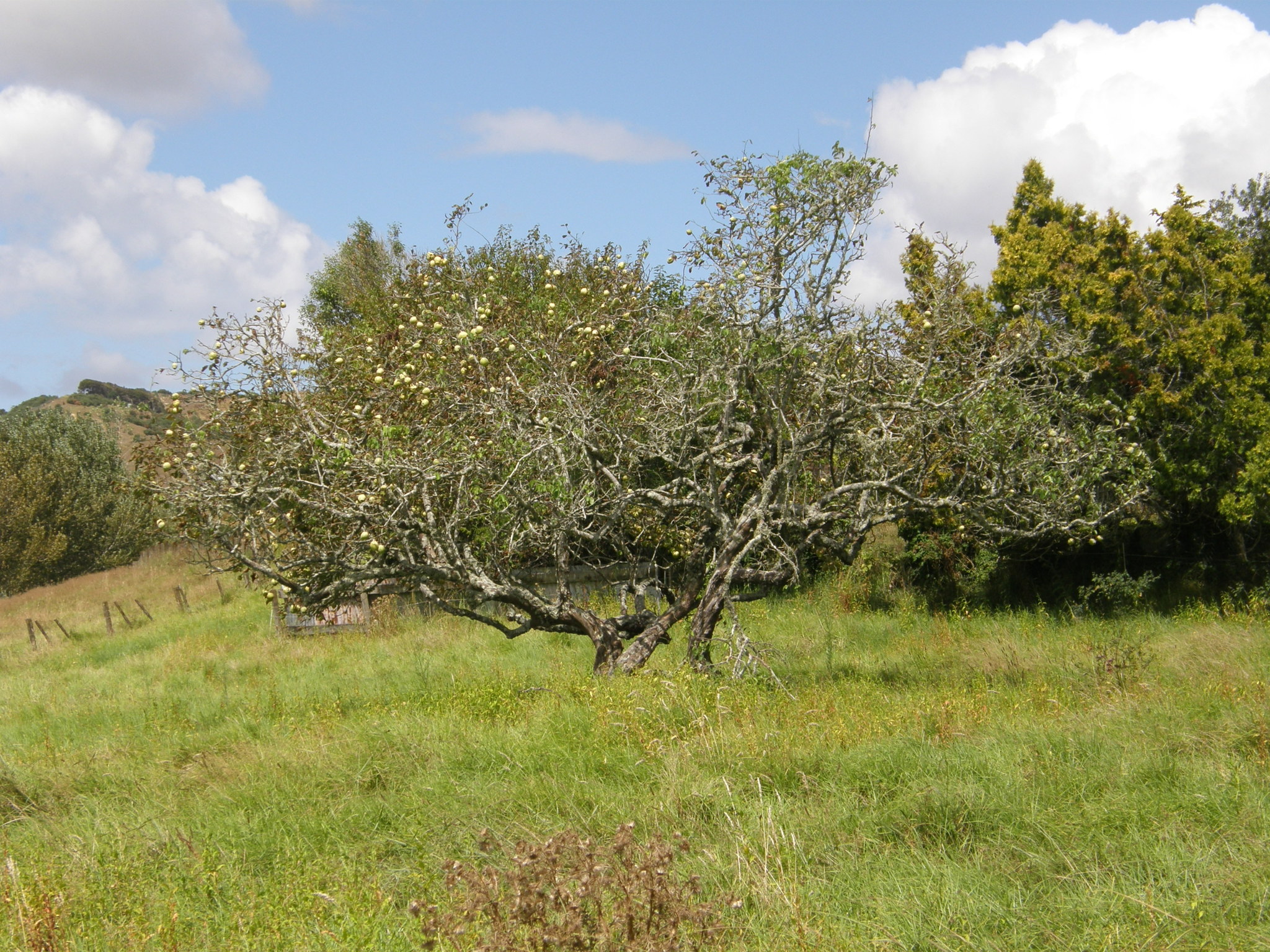
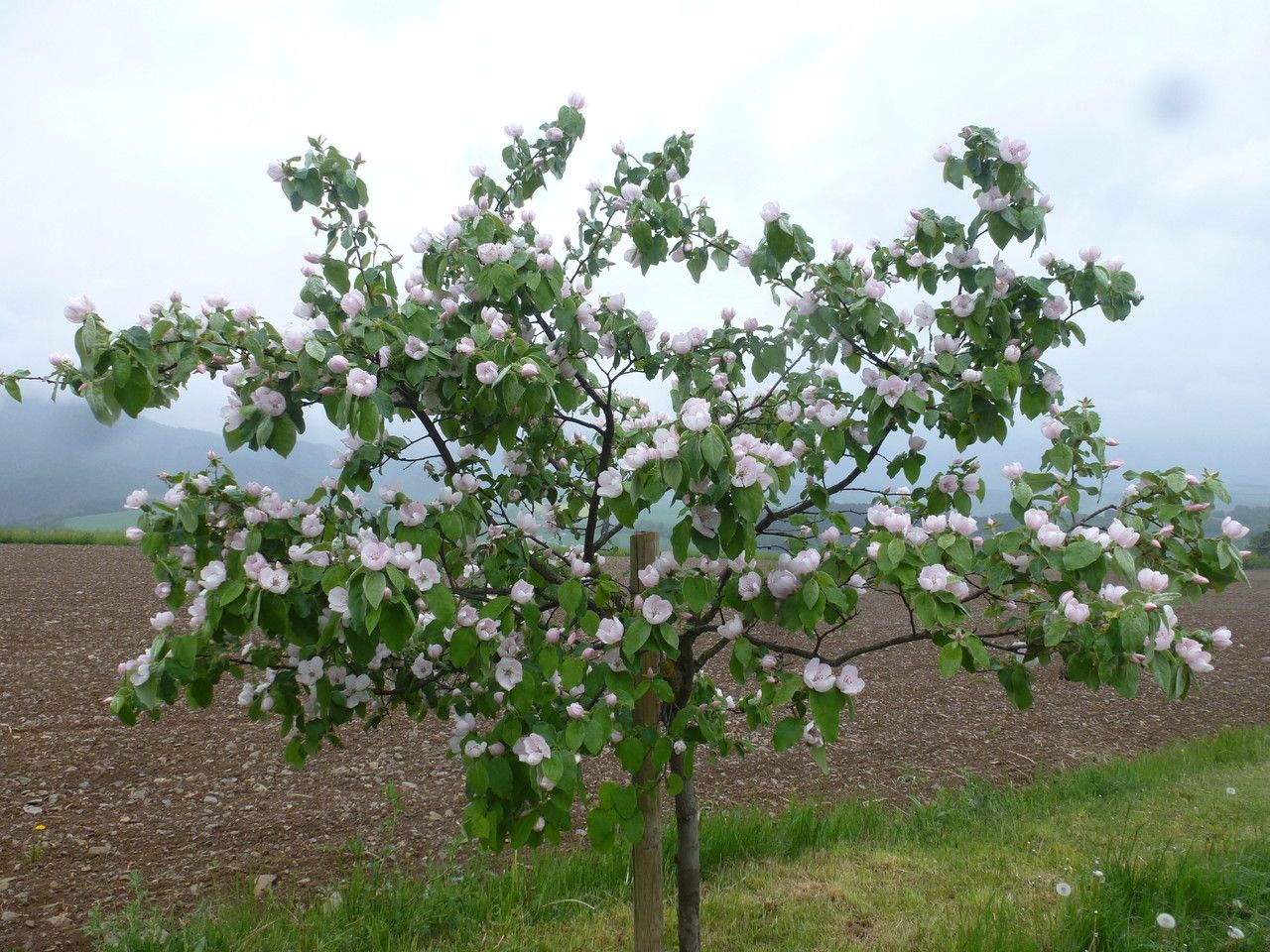
A twisting habit characterizes this small tree or large shrub, which rarely exceeds 6 m (20 ft) tall and spreads a similar distance. Gray, downy young shoots distinguish it from pear even in winter, before the leaves emerge. 2 3
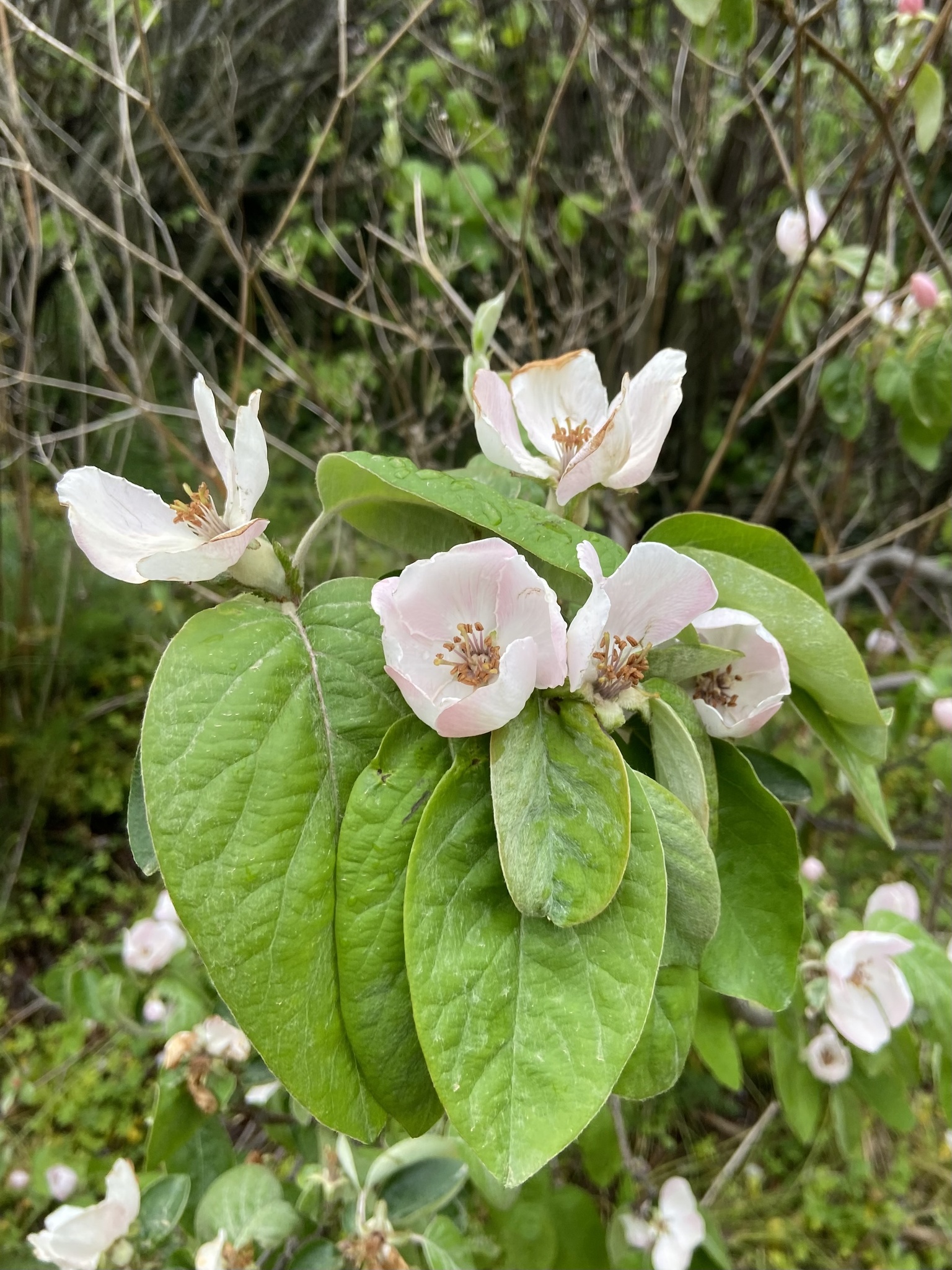
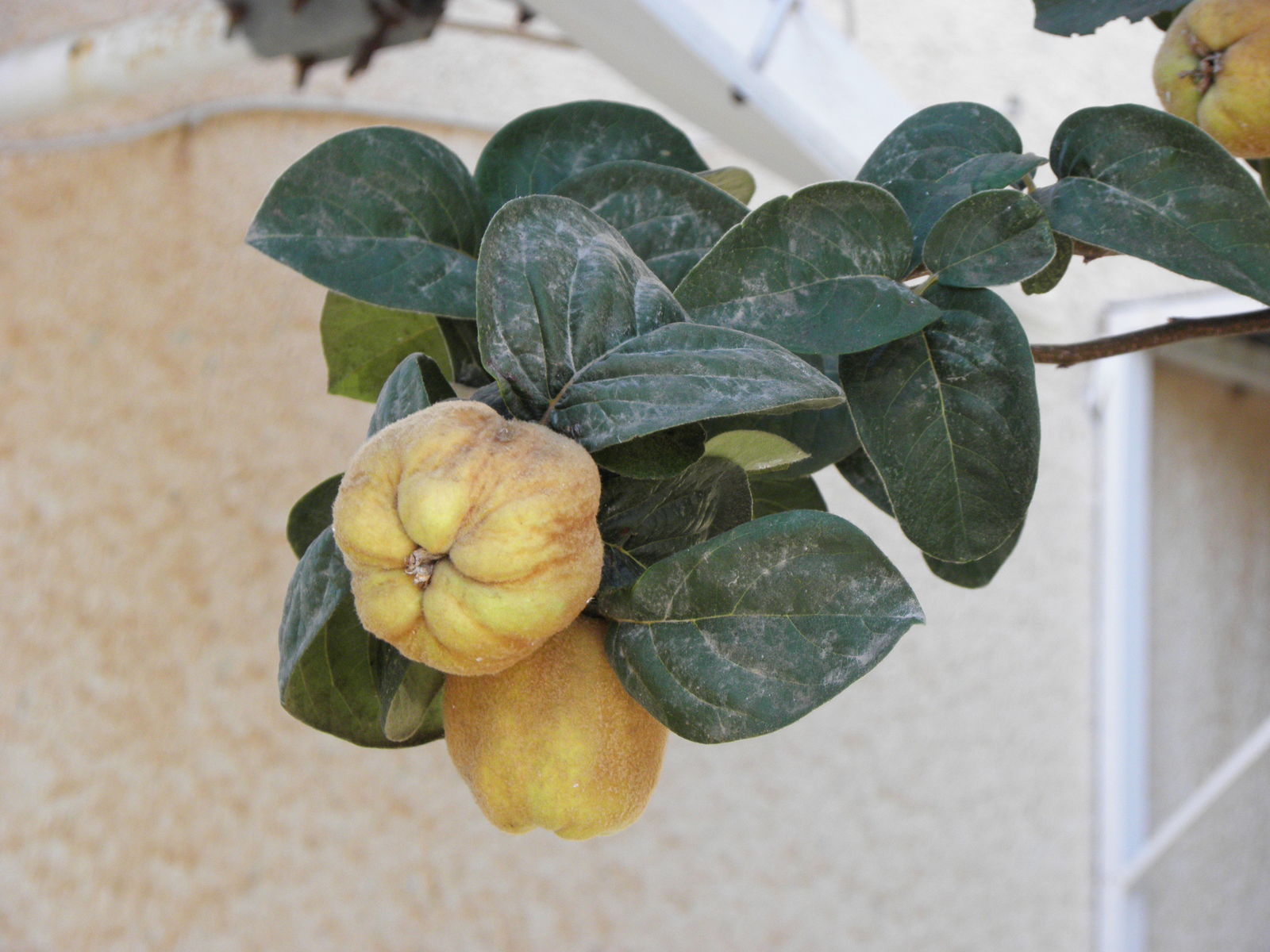
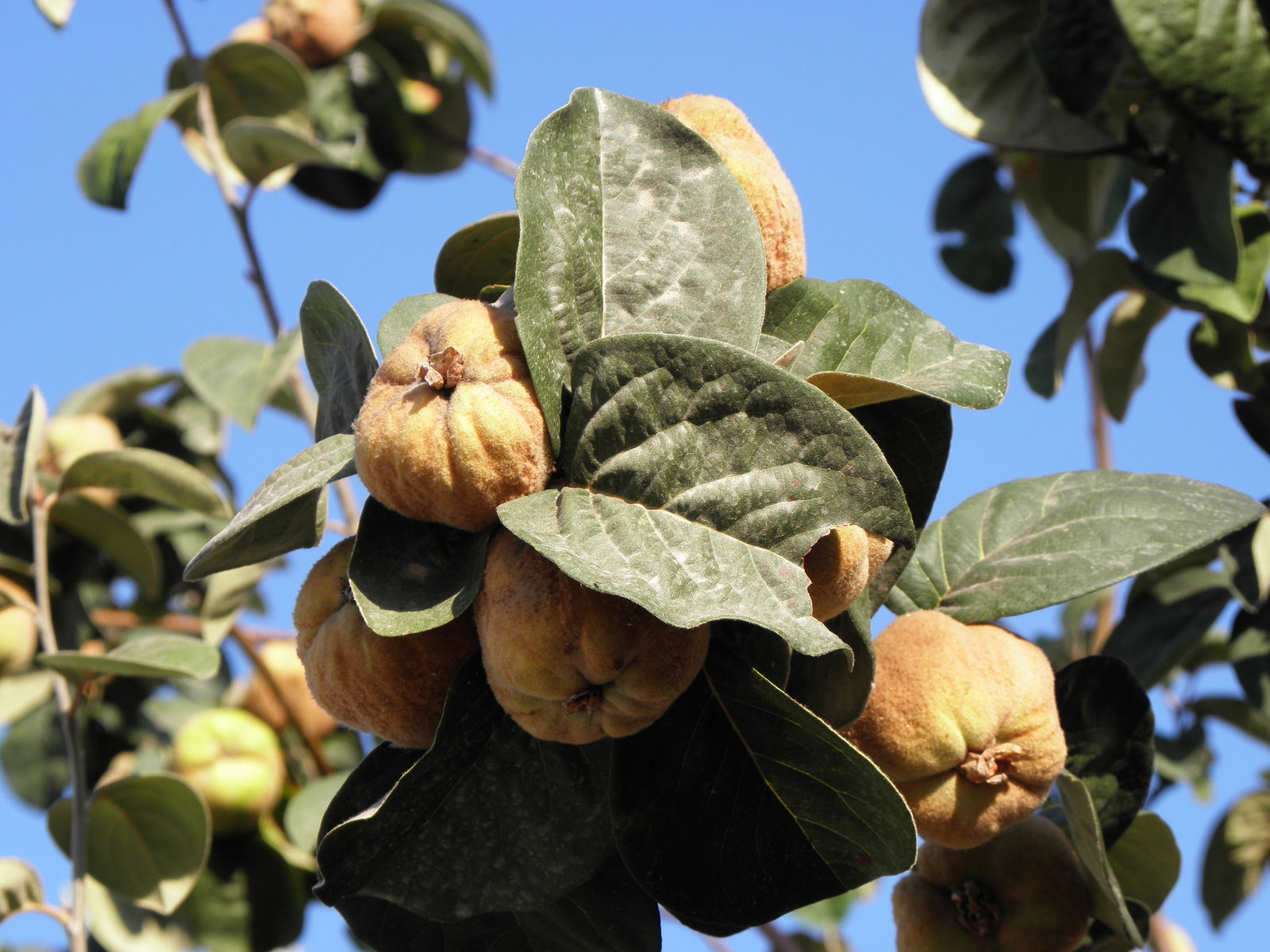
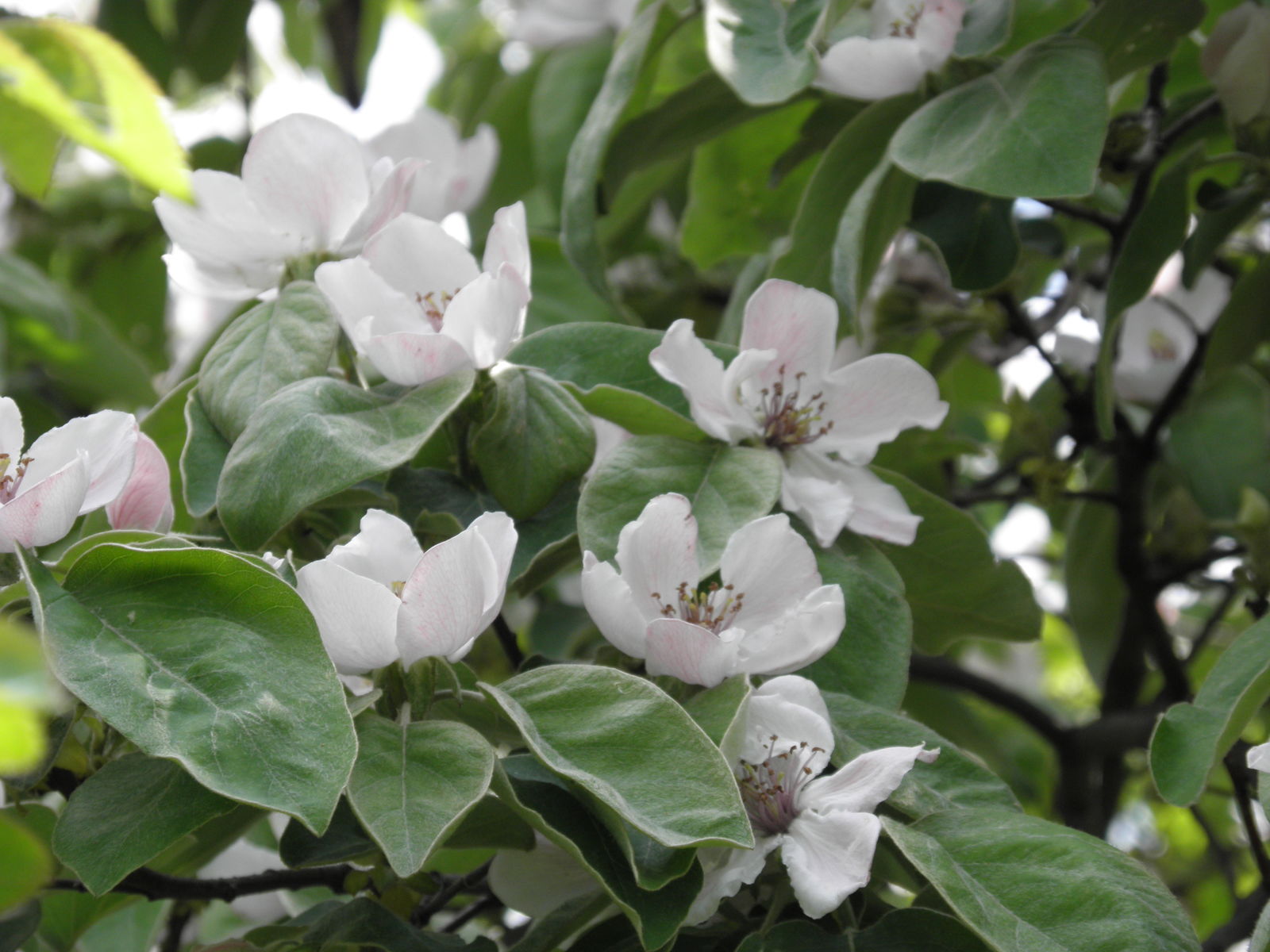
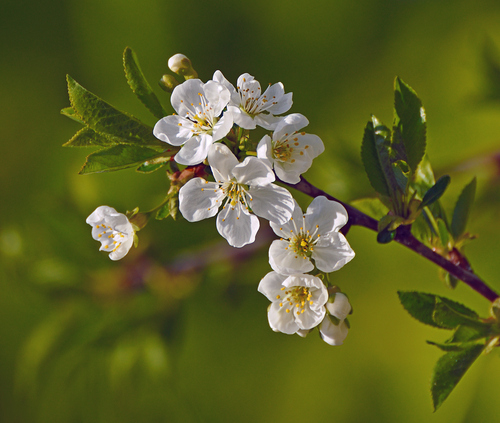
Simple, oval leaves have an entire, untoothed margin, separating them from the finely toothed leaves of apple and pear. Their upper surface is dull green, the underside white and downy. Most fruiting Rosaceae flower before or alongside their leaves; quince delays its solitary flowers, white to pale pink, until the foliage is fully open in late spring. 2 4
The resulting quince is pear-shaped or apple-shaped, golden yellow when ripe, downy on the surface and strongly fragrant. Some cultivars produce fruit weighing more than 1 kg (2.2 lb). Firm, gritty, astringent raw flesh means cooking is almost always necessary. 4 2
Useful taxonomy
Scottish botanist Philip Miller described Cydonia oblonga Mill. in 1768. The genus is monotypic, with quince its only species and no other wild member assigned to it. Several older names nevertheless persist in synonymy or historical usage:
- Cydonia vulgaris var. oblonga (Mill.) DC.
- Pyrus cydonia L.
- Cydonia communis var. oblonga (Mill.) Loisel.
- Cydonia silvestris var. oblonga (Mill.) Risso
Cydonia belongs to subtribe Pyrinae alongside pear and apple, explaining their resemblance and shared susceptibility to certain diseases. The accepted name Cydonia oblonga provides a stable reference. Cultivar names such as Vranja and Champion denote horticultural selections, not separate species. 1 2 8
Habitat and range
The Caucasus and Central Asia form quince's original range, with a historical center in the Hyrcanian forests south of the Caspian Sea in present-day Iran. Neolithic farmers spread it toward Anatolia, Azerbaijan and Central Asia around 5000–3000 BCE. 4 3
IUCN assesses the species as Least Concern globally, a status consistent with its widespread cultivation since antiquity. 5
In natural settings, quince occupies hedgerows and thickets on moist, rich soil. Agriculture carried it into Europe, Russia, China and North America. It is now cultivated in most temperate regions and sometimes naturalizes at woodland edges outside its original home. 3 1
Life cycle and reproduction
Late, solitary flowering distinguishes quince from pear and apple. Each flower opens alone after the leaves have fully unfolded, generally in late spring. This timing partly protects the crop from the earliest frosts, although late frosts can still damage advanced flowers. 2 4
The tree is self-fertile: one specimen can produce fruit, though another cultivar nearby often improves pollination and crop regularity. After fertilization, fruit takes several months to ripen. Harvest in the local late autumn, once it is fully yellow and fragrant, before hard frosts begin. 3 4
True-to-type propagation chiefly uses stem cuttings with a node, layering or grafting. Seed does not reproduce the parent cultivar faithfully and is used mainly to raise rootstocks. The first substantial crop comes 4–6 years after planting. 3 2
Uses and risks
Fruit production is the main use. High pectin content suits quince to jelly, quince paste, called membrillo in Spain and cotignac in France, and stewed fruit. It is almost always cooked. Aromatnaya is an exception: its sweeter flesh is sometimes eaten raw in small amounts, though suppliers do not all confirm this claim. 4 3
A second role is agricultural: quince dwarfs pear trees when used beneath a grafted pear cultivar. Compared with a seedling pear rootstock, it produces a smaller tree that bears earlier, a common arrangement in small orchards. 2 3
Cooked flesh is edible, with no recognized hazard to humans or domestic animals. As in other pome-bearing Rosaceae, only the seeds contain amygdalin, a cyanogenic glycoside. A large quantity would need to be crushed and swallowed to release enough cyanide to produce a real effect. The main health threat concerns the tree itself: cedar-quince rust, which alternates with nearby junipers, and fire blight are among the orchard's most serious diseases. 6 2
Varieties, look-alikes and related plants
Vranja, Champion, Meech's Prolific and Portugal are horticultural selections, not separate species. Vranja, often sold as Serbian Gold, produces particularly large fruit and has received the RHS Award of Garden Merit. Champion and Meech's Prolific bear early and abundantly; Portugal produces elongated fruit with softer flesh. Check the cultivar, rootstock and intended vigor before buying. 7 2
Other pome-bearing orchard Rosaceae cause most confusion:
- Pyrus communis, pear, has toothed leaves without conspicuous white down;
- Malus domestica, apple, bears clustered flowers that open before the leaves;
- Chaenomeles speciosa, flowering quince, shares the common name but is a botanically distinct, thorny ornamental shrub.
An entire leaf margin, gray down beneath the leaves and late solitary flowers together provide the most useful characters for confirming Cydonia oblonga. 1 4
Main sources
- Plants of the World Online / Kew, Cydonia oblonga Mill.
- Royal Horticultural Society, Cydonia oblonga - quince
- Plants For A Future, Cydonia oblonga
- Encyclopaedia Britannica, quince
- IUCN Red List, Cydonia oblonga assessment
- Missouri Botanical Garden, cedar-quince rust advisory
- Royal Horticultural Society, Cydonia oblonga Serbian Gold
- USDA PLANTS Database, Cydonia oblonga Mill.
Frequently asked questions
Can quinces be eaten raw?
Rarely. Most cultivars have firm, gritty, very astringent flesh when raw. A few, including Aromatnaya, are described as sweeter, but quince is almost always eaten cooked as jelly, paste or stewed fruit.
Why are pear trees grafted onto quince?
Quince is a dwarfing rootstock for pear. A pear cultivar grafted onto its roots makes a smaller tree that bears earlier than a seedling pear, simplifying pruning and harvest in a small garden.
Is quince poisonous?
Cooked quince flesh is edible and safe. As in other pome-bearing Rosaceae, only the seeds contain amygdalin, a cyanogenic compound. A large quantity would have to be crushed and swallowed to produce a real effect.
Do I need two quince trees for fruit?
No. Most cultivars are self-fertile and can bear on a single tree. Another cultivar nearby often improves pollination and crop regularity but is not essential.
When should I harvest quinces?
In late autumn, when fruits are fully yellow, downy and fragrant, before the first hard frosts. Picked too early, they remain green and hard; left too late, they suffer cold damage.
Which plants are confused with quince?
The main look-alikes are pear and apple, other pome-bearing orchard Rosaceae. Entire, untoothed leaf margins, gray down beneath the leaves and late solitary flowers distinguish quince from both.
Similar plants
If you are unsure about a plant’s toxicity, ask a botanist or veterinarian for advice.