
Lucky bamboo (Dracaena sanderiana, )
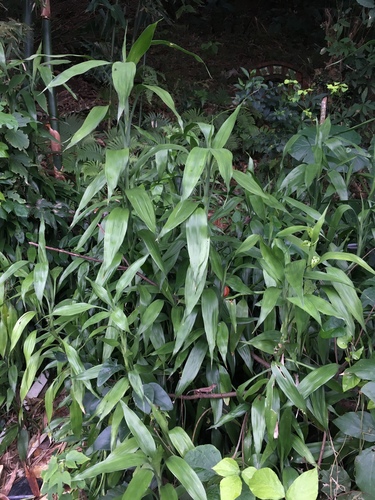
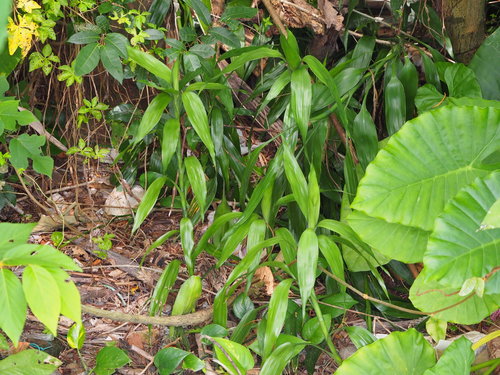
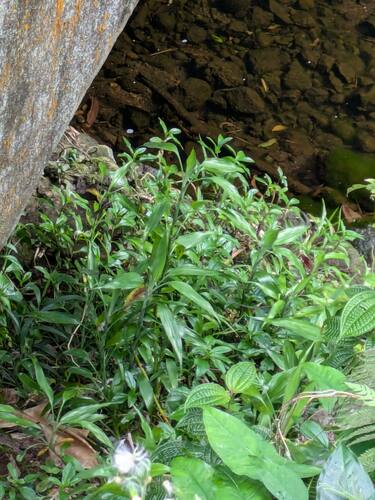
Lucky bamboo (Dracaena sanderiana), also called ribbon plant, is a shrub in the Asparagaceae native to tropical West and Central Africa. Despite the name, it is no true bamboo; its fleshy, bright green stems carry strap-like leaves and are often grown in water, braided or twisted into spirals.
Read moreRibbon plant and Belgian evergreen
Global distribution
The native range of Dracaena sanderiana covers tropical West and Central Africa, from Cameroon to northeastern Angola. Grown as a houseplant around the world, the species is mostly known outside that range through ornamental cultivation, which should be kept separate from its natural distribution.
- Native6
- Cameroon
- Gabon
- Republic of the Congo
- Democratic Republic of the Congo
- Angola
- Nigeria
Hexagons: sourced regions. Green dots: native range. Statuses according to POWO (Kew).
Identity
Lucky bamboo (Dracaena sanderiana Mast., 1892), also known as ribbon plant or Belgian evergreen, is a shrub in the genus Dracaena, family Asparagaceae. The trade name is misleading: the plant has nothing to do with true bamboos, which are grasses, and owes the comparison only to the jointed look of its green stems. 1 2
Across Europe, Asia and North America it is known above all as an undemanding houseplant, sold as braided, spiraled or straight stems standing in a bed of pebbles. The epithet sanderiana honors the nurseryman Henry Sander, who helped bring the plant into circulation in the late 19th century. 3 4
Recognition
Look first at the fleshy stem: green and clearly divided by regular rings, it mimics a bamboo cane. Leaves are long, narrow and strap-like, bright green to grayish green, spaced along the stem rather than clustered at the tip as in other dracaenas. 2 4
Growers rarely let it grow freely. Stems are often braided, coiled into spirals or trained on supports, which gives the decorative arrangements typical of the trade. In a pot it usually stays between 30 cm and 1 m (1 and 3 ft), and an old, well-grown plant can approach 1.5 m (5 ft). 3 2
Flowering is very rare indoors, appearing as small clusters of white flowers. It is not the point of growing the plant, which is kept for its foliage and the shape of its stems. 4 5
Useful taxonomy
Masters described the species as Dracaena sanderiana Mast. in 1892. The genus Dracaena was long split up, and several historical names still circulate for this plant; the main synonyms worth knowing are:
- Dracaena braunii Engl.
- Pleomele braunii (Engl.) N.E.Br.
- Pleomele sanderiana (Mast.) N.E.Br.
The stable reference point is the accepted name, Dracaena sanderiana, now placed in the Asparagaceae. Trade labels such as Victory or Lucky Gold refer to variegated horticultural selections, not to distinct species or botanical varieties. 1 2
Habitat and range
Wild plants grow in tropical Africa, in the west and center of the continent, from Cameroon to northeastern Angola. There the species lives in the understory and along the edges of humid forest, on moist soils in shade, which explains its tolerance of low light. 1 3
Few buyers know about this forest origin, because the plant is almost always met outside its range, as an ornamental. It is mass-produced in Asia, China in particular, then shipped worldwide as trained stems. 2 5
Frost is fatal to it, so it can only be grown in the ground in frost-free tropical or subtropical climates, roughly USDA zones 10 to 12. Wherever winters bring frost, it stays an indoor plant, and that cultivated presence should be kept clearly apart from its natural range. 2 3
Life cycle and reproduction
Blooms hardly matter in cultivation: the plant is grown for its stems and foliage, not its flowers. When flowering does happen, the inflorescence bears small white flowers in clusters, usually on older plants growing in the ground in the tropics. 4 5
Propagation relies mainly on stem cuttings with a node. Take a section carrying at least one node and set it in water or moist potting mix; the first roots appear within three to six weeks given warmth and bright indirect light. This ease of rooting is what allows the braided stems sold in stores to be produced so cheaply. 2 3
Unusually, the species can live for years in water, on a bed of pebbles that anchors the roots. Grown this way it needs clean water changed every week, ideally filtered water or rainwater, to limit the brown tips caused by chlorine and lime. 3 2
Uses and risks
Dracaena sanderiana is grown almost entirely for ornament and symbolism. It features widely in feng shui and is given as a good-luck gift, hence the name lucky bamboo; the number of stems in an arrangement is sometimes read as a wish for prosperity or harmony. 3 2
As for risks, the whole plant contains saponins. The ASPCA lists Dracaena as toxic to cats and dogs: eating it can cause vomiting, sometimes with blood, lethargy, loss of appetite, excessive drooling and, in cats, dilated pupils. The sap can also irritate skin. Keep it out of reach of pets and young children, and wash your hands after trimming. 6 7
Varieties, look-alikes and related plants
Plants sold under different names are not separate species. The classic green form is the most common; Victory, Lucky Gold and White Stripe are variegated cultivars, streaked with white, cream or gold, selected for their foliage and needing more light to hold their color. Before buying, check that the stems are firm, the roots healthy and the base free of yellowing. 4
The most frequent mix-ups involve:
- true bamboos, which are grasses unrelated to the Asparagaceae;
- Dracaena braunii, a historical name still often applied to the same plant;
- other fine-leaved Dracaena, such as some forms of Dracaena marginata.
A green, jointed stem, ribbon-like leaves spaced along it and frequent culture in water remain the most reliable clues that a plant sold as lucky bamboo really is Dracaena sanderiana. 1 2
Main sources
- Plants of the World Online / Kew, Dracaena sanderiana Mast.
- Royal Horticultural Society, Dracaena sanderiana, Belgian evergreen
- Missouri Botanical Garden, Dracaena sanderiana, lucky bamboo
- NC State Extension, Dracaena sanderiana (Lucky Bamboo)
- Encyclopaedia Britannica, Dracaena
- ASPCA, Ribbon plant (Dracaena spp.) toxicity entry
- Merck Veterinary Manual, houseplants and ornamentals toxic to animals
Frequently asked questions
Is lucky bamboo a real bamboo?
No. Despite its jointed stems and its name, Dracaena sanderiana belongs to the genus Dracaena, in the family Asparagaceae. True bamboos are grasses, with no botanical link to this plant.
Is lucky bamboo toxic?
Yes, to pets. The ASPCA lists Dracaena as toxic to cats and dogs because of saponins that cause vomiting, lethargy and loss of appetite. The sap can irritate skin, so keep the plant out of reach of pets and young children.
Can lucky bamboo grow in water?
Yes. It is one of the most common ways to grow it; the stems stand on a bed of pebbles in a container of water. Change the water every week and use filtered water to avoid brown tips.
Why do the leaves have brown tips?
Brown tips usually point to water high in chlorine or lime, air that is too dry, or unsuitable light. Filtered water or rainwater and regular wiping of the leaves keep the problem in check.
How much light does lucky bamboo need?
Bright but indirect light suits it best. The plant tolerates partial shade and low light, but direct sun scorches and bleaches the leaves.
Where does lucky bamboo come from?
Its native range lies in tropical West and Central Africa, from Cameroon to northeastern Angola. Ornamental cultivation, widespread in Asia and Europe, should be kept separate from that original range.
How tall does lucky bamboo grow?
In a pot it usually stays between 30 cm and 1 m (1 and 3 ft). In good conditions an old plant can approach 1.5 m (5 ft), but growth is slow.
Similar plants
Botanical data compiled from reference sources (RHS, Kew Gardens, POWO). This profile is for guidance only and is not a substitute for advice from a botanist or veterinarian if you have concerns about toxicity.