
Queen of the night (Epiphyllum oxypetalum, )
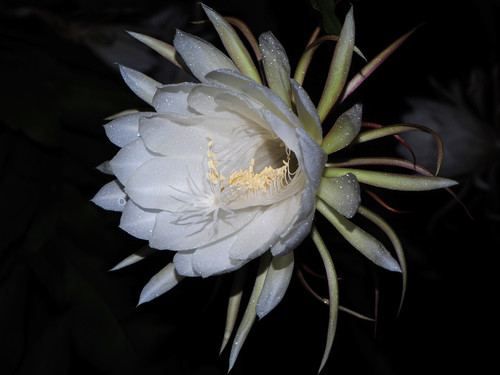
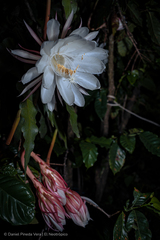

Queen of the night (Epiphyllum oxypetalum) is an epiphytic cactus in the Cactaceae family, native from central Mexico to Nicaragua. Its flattened stems bear large fragrant white flowers on one to a few nights per season, opening at dusk and fading before dawn.
Read moreQueen of the night, Dutchman's pipe cactus and Princess of the night
Give plenty of ambient light without direct sun on the leaves.
Bright indirect light; avoid direct afternoon sun



© photo
no rights reserved, uploaded by 葉子 · cc0
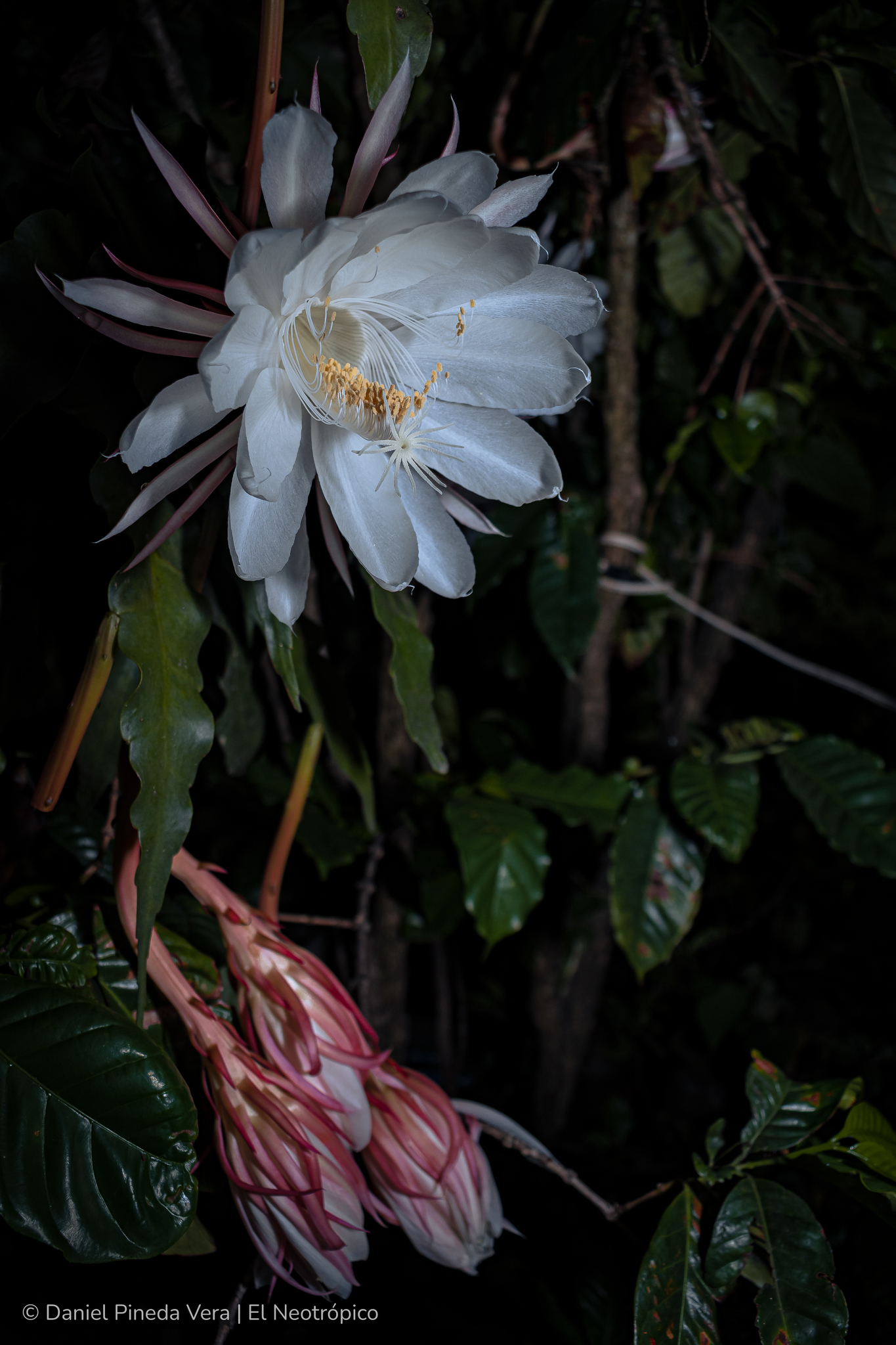
Daniel Pineda Vera · cc-by
Wikimedia Commons · CC BY-SA or Public Domain
Taken Apr 16, 2020 by Morais Mabilda (cc-by-sa)
Taken Jan 16, 2022 by tbdepolynesie tbdepolynesie (cc-by-sa)
Taken Jan 3, 2020 by Joffrey Monteiro (cc-by-sa)
Taken Apr 10, 2022 by Capelli Natalie (cc-by-sa)
Taken Feb 28, 2021 by Alan Davie (cc-by-sa)
© copyright of the Board of Trustees of the Royal Botanic Gardens, Kew.




Global distribution
The native range extends from central Mexico to Nicaragua in tropical forests with a marked dry season. Cultivation has spread the plant widely, particularly in East Asia, where its brief flowering is watched at communal gatherings.
- Native5
- Introduced1
- Mexico
- Guatemala
- Belize
- Honduras
- Nicaragua
- Hawaii
Hexagons: regions where the plant occurs. Green dots: native range.1
Identity
Queen of the night (Epiphyllum oxypetalum (DC.) Haw., 1829), also called Dutchman’s pipe cactus or princess of the night, is an epiphytic cactus in the Cactaceae family. The epithet oxypetalum means “sharp-petaled,” referring to the fine points of the flower's tepals. Its common name emphasizes the brief nocturnal display rather than providing a unique identification, since other plants share night-flower names. 1 7
Unlike a desert cactus, it naturally grows attached to tree trunks and rock faces in tropical forests, without a lasting connection to ground soil. This epiphytic origin explains why full sun and purely mineral growing media suitable for rock-garden cacti do not suit it. Forest conditions are a more useful guide to its character than the word cactus alone. 5 4
Recognition
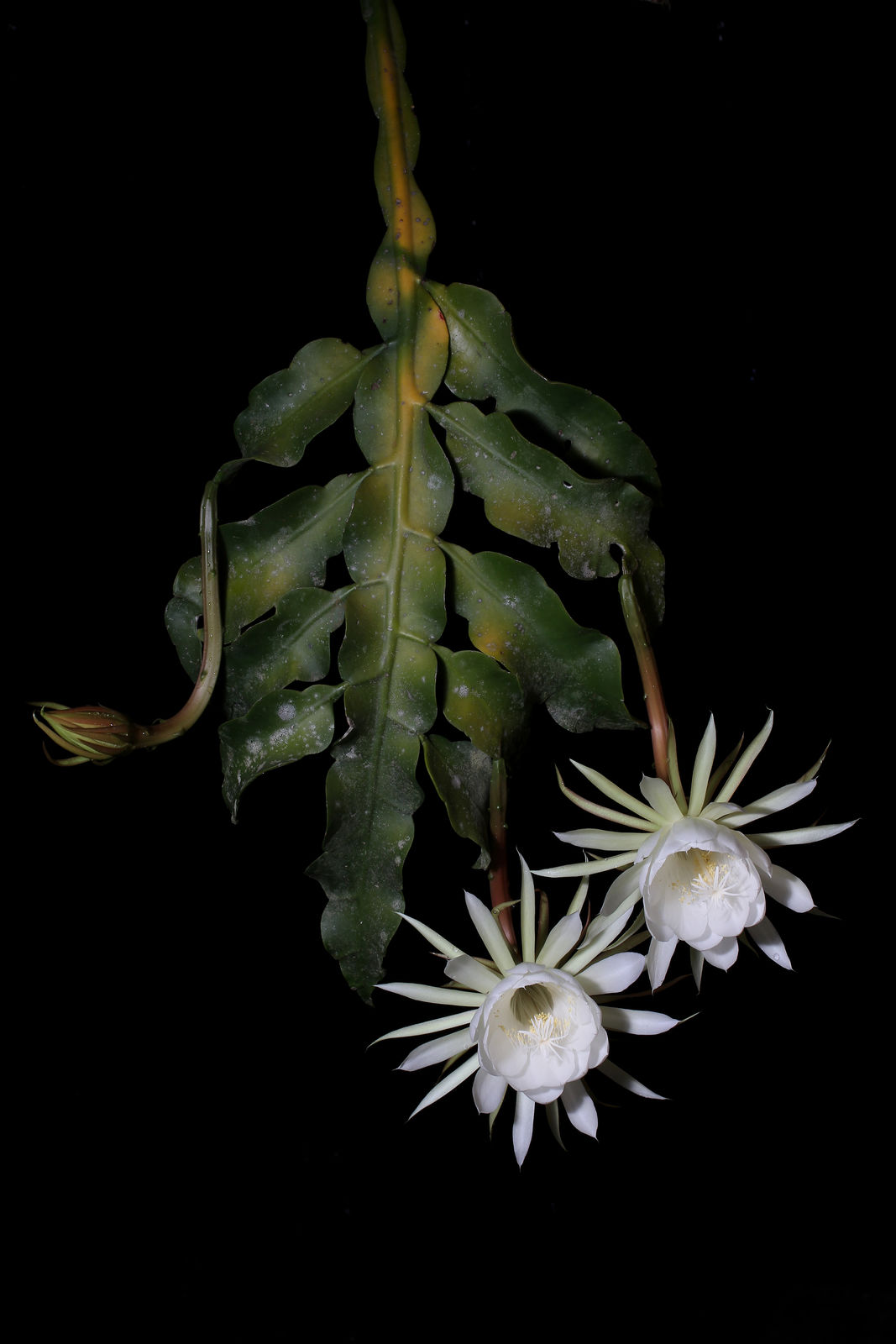
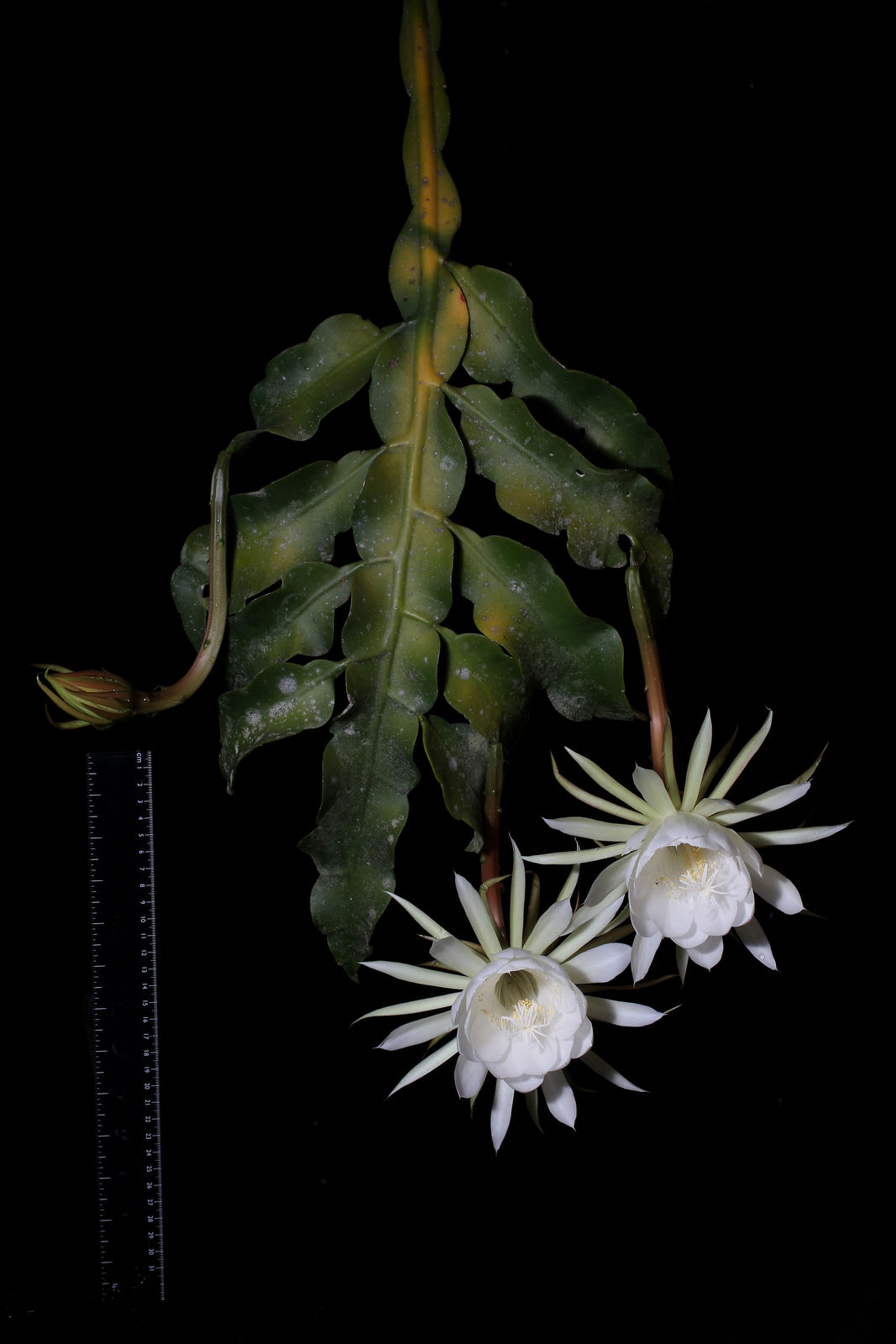
The plant has no true leaves. Flattened fleshy stems, with wavy or shallowly toothed edges, take over their function and provide the first identification clue. Fine aerial roots develop along the segments to attach to supports. What looks like a broad leaf is therefore a stem capable of supporting roots and flowers. 5 7
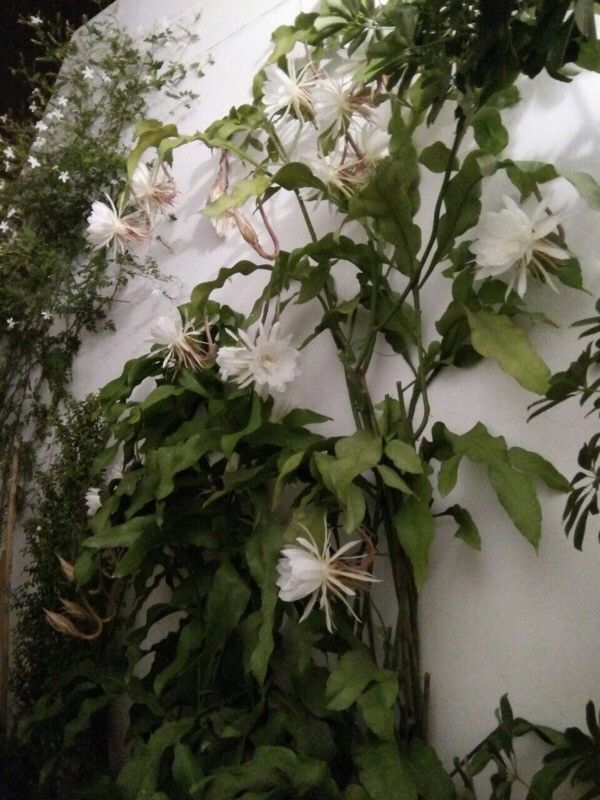
Flowers are distinctive: the floral tube can exceed 20 cm (8 in), with white inner tepals and reddish-brown outer tepals, while the open flower reaches 30 cm (12 in) across. It opens at dusk, strongly scents the surrounding room or garden and fades before dawn. A flower seen fully open belongs to a very short phase of the plant's annual activity. 7 4
A plant that never flowers is not necessarily ill. Maturity, often three to five years, and adequate light matter more than watering frequency alone. Young or shaded specimens can remain healthy without producing buds. Flowering failure therefore needs to be distinguished from a failure of vegetative growth. 5
Useful taxonomy
The accepted name is Epiphyllum oxypetalum, in Epiphyllum Haw., 1812, family Cactaceae. Its basionym and other historical names remain in horticultural circulation:
- Cereus oxypetalus DC., the basionym published in 1828;
- Phyllocactus oxypetalus (DC.) Link;
- Epiphyllum acuminatum K.Schum.;
- Epiphyllum latifrons (Zucc.) Pfeiff.;
- Phyllocactus grandis Lem..
The complete scientific name separates plants more reliably than queen of the night or similar night-flower names. Selenicereus grandiflorus also carries such names: it is another epiphytic night-flowering cactus, but belongs to a different genus. A shared common name does not establish that the stems, flowers or cultivation history are identical. 8
The IUCN assesses the species as Least Concern, describing a widespread, widely cultivated plant without a documented threat across its native range. That conservation assessment is distinct from whether a particular cultivated specimen is correctly named. 6
Habitat and range
Central Mexico to Nicaragua forms the native range. Tropical forests with a marked dry season support the plant as an epiphyte on trunks or a lithophyte on shaded rock faces. Both settings provide attachment and shelter while differing from the exposed mineral ground associated with desert cacti. 1 5
Cultivation has carried it far beyond that range, particularly into East Asia. In Taiwan and China it is known as tan hua (曇花), and the brief flowering prompts communal night-time gatherings, an association also documented in contemporary popular culture. Those traditions concern a cultivated plant outside its native Central American range. 7
Where cooler conditions require indoor cultivation, it grows in pots or hanging baskets with light shade and circulating air. Such a container setting differs from its natural lower-canopy habitat, but retains the need for shelter from harsh exposure and suitable air movement. 4
Life cycle and reproduction
Flowering occupies a short, concentrated window of one to a few nights per season, generally from late spring through late summer. Flowers open at dusk and wilt before dawn. 7 4
A pollinated flower produces an oblong, angular, reddish-purple fruit up to 12 cm (5 in) long and 8 cm (3 in) wide. It is edible but seldom harvested in home cultivation, where a plant produces only a few fruits each year. Fruit formation is therefore possible without being the main reason for growing the species. 7
Propagation chiefly uses stem-segment cuttings dried for a few days before planting to limit rot. Seed propagation is possible but slower, producing new own-root plants rather than giving the quick result associated with an established stem segment. Both methods must be distinguished from simply waiting for a young plant's first flowers. 4 5
Moving the pot or water stress during bud formation often causes buds to drop before opening. A stable position matters as much as regular watering at that stage. The presence of a developing bud does not guarantee a flower if conditions change abruptly. 5
Uses and risks
Ornamental use predominates in pots, hanging baskets or trained against a shaded wall, for the night flowers and strong fragrance. Supporting a large plant is part of its practical presentation, especially when long stems spread beyond a container. 4
Traditional medicine in India, Vietnam and Malaysia uses flowers and stems in preparations for respiratory complaints, bleeding or inflammation. These are traditional-use accounts and do not replace medical advice. 7
No toxic principle is documented for this genus, and it does not appear on the reference lists of plants toxic to cats, dogs or horses. That absence of documentation leaves the animal safety status unresolved. Avoid repeated stem chewing, especially by young children; mechanical irritation remains a reason for caution. 5
Pruning is occasional maintenance rather than an annual requirement. Remove damaged stems or reduce a plant that has become too heavy for its support. Clean, disinfected tools limit the spread of disease between plants. The purpose is to manage actual damage or weight, not to impose a routine cut regardless of growth. 4
Varieties, look-alikes and related plants
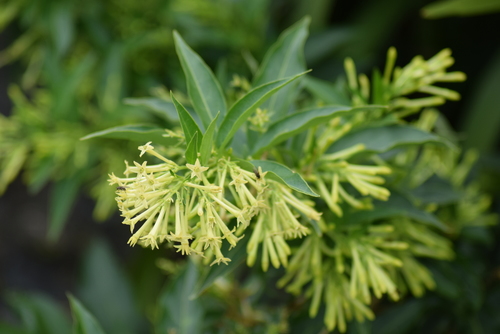
Several cacti share the name queen of the night. Selenicereus grandiflorus is a frequent example, with angular rather than flattened stems despite its similar night-flowering habit. Checking the binomial before buying avoids confusion between these distinct genera. A common label alone provides too little information for certainty. 8
Other species have similar flattened stems but useful distinctions:
- Epiphyllum crenatum has more yellowish tepals and more rounded stem margins;
- Epiphyllum anguliger has deeply saw-toothed stem outlines;
- horticultural “epicactus” hybrids often combine several Epiphyllum species and show pink, red or orange flowers absent from the typical species.
Before buying, check the complete scientific name, flattened wavy stems rather than triangular angular ones, and the stated tepal color. Those three features distinguish Epiphyllum oxypetalum from a hybrid or related genus more reliably than the promise of a large night flower. 5
Main sources
- Plants of the World Online / Kew, Epiphyllum oxypetalum (DC.) Haw.
- International Plant Names Index, Epiphyllum oxypetalum
- Integrated Taxonomic Information System, Epiphyllum oxypetalum
- Royal Horticultural Society, Epiphyllum oxypetalum details
- NC State Extension Gardener Plant Toolbox, Epiphyllum oxypetalum
- IUCN Red List, Epiphyllum oxypetalum assessment 2017
- Wikipedia EN, Epiphyllum oxypetalum
- Wikipedia FR, Epiphyllum oxypetalum
Frequently asked questions
Is queen of the night a true cactus?
Yes. It belongs to Cactaceae, but it is an epiphytic tropical forest cactus rather than a desert cactus. Full sun and purely mineral media suited to rock-garden cacti do not suit it.
Why does my queen of the night never flower?
Flowering depends mainly on maturity, often three to five years, and enough bright indirect light. A young plant or one in too much shade can remain healthy without forming buds.
How long does a queen of the night flower last?
One night. It opens at dusk, releases a powerful scent for several hours and fades before the next dawn.
Is queen of the night toxic to cats and dogs?
No toxic principle is documented for this cactus genus. That absence of documentation does not establish a safe status. Avoid repeated chewing of stems, especially by young children.
How does queen of the night differ from Selenicereus grandiflorus?
Both are epiphytic night-flowering cacti but belong to different genera. Selenicereus grandiflorus has angular ribbed stems, while Epiphyllum oxypetalum has flattened stems with wavy edges.
How do you propagate queen of the night?
Stem-segment cuttings dried for a few days before planting are the quickest, most reliable method. Seed also works but takes longer to produce a flowering plant.
Why do the flower buds fall before opening?
Moving the pot or water stress during bud formation are common causes. A stable position matters as much as regular watering.
Similar plants



If you are unsure about a plant’s toxicity, ask a botanist or veterinarian for advice.