
Air plant (Tillandsia, )

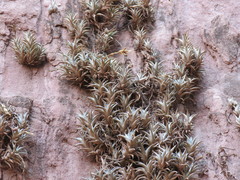
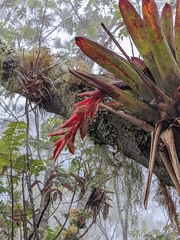
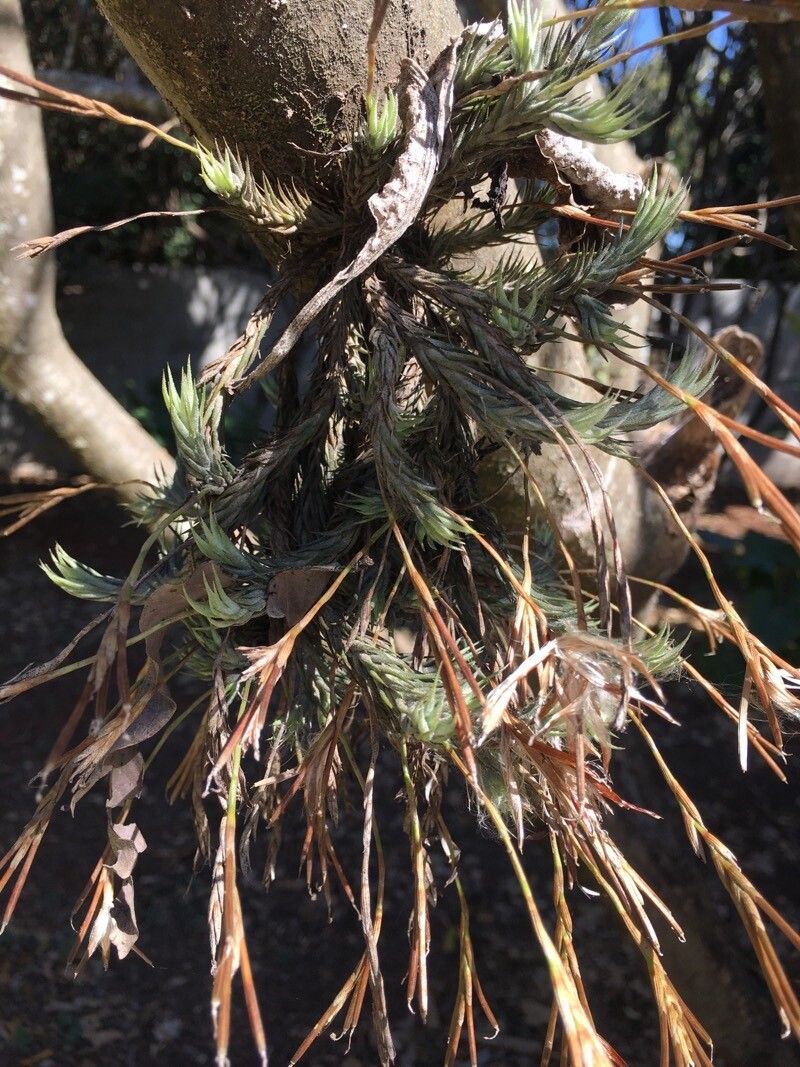
Tillandsia is a genus in the Bromeliaceae family from tropical America, with more than 700 species. These mostly epiphytic plants have few feeding roots and absorb water and nutrients through microscopic leaf scales called trichomes. They are grown mounted on supports without soil and watered by regular misting and soaking.
Read moreAir plant


© photo
Sandra Keller · cc-by
Nicolas Olejnik · cc-by
Zac Peterson · cc-by
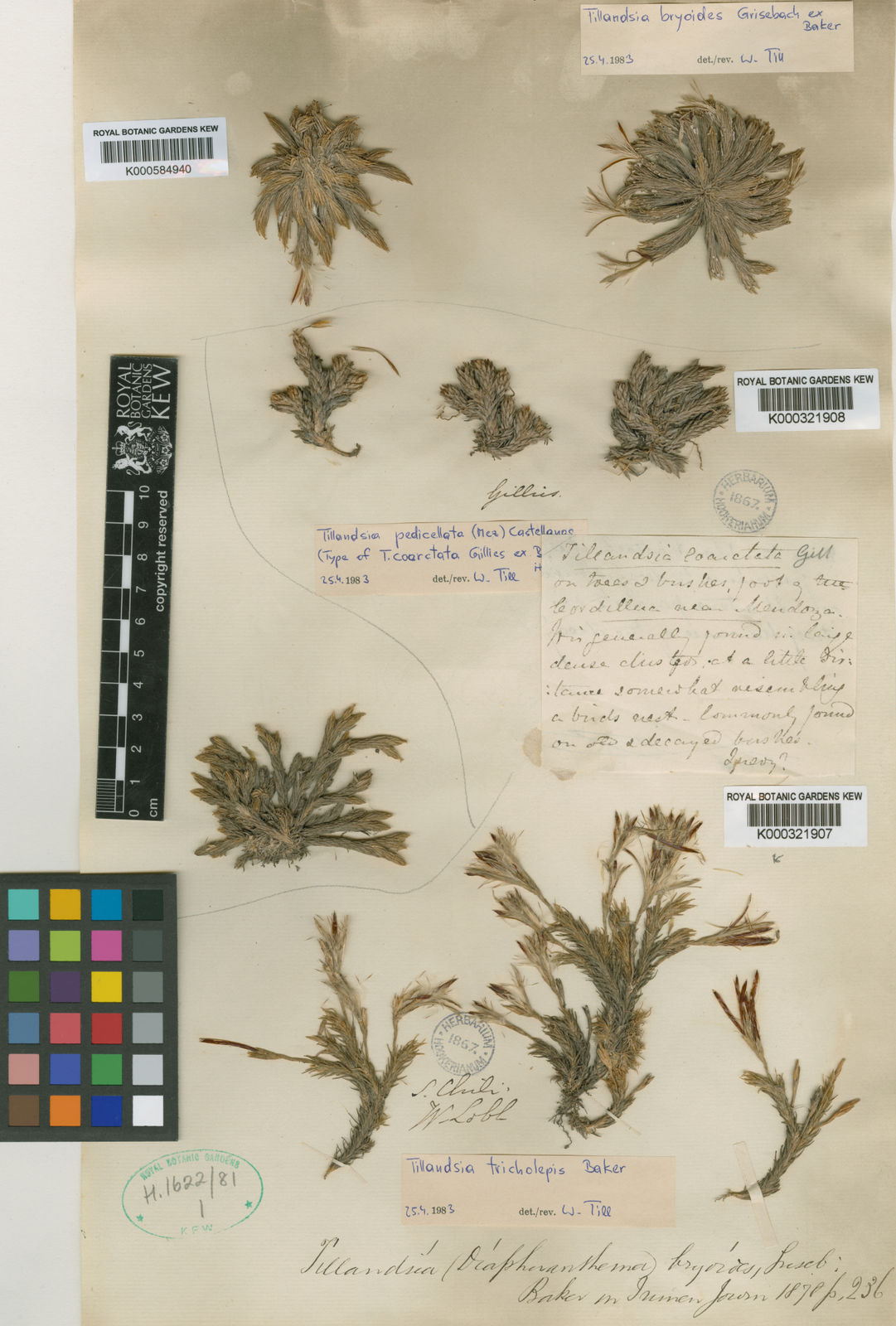
© copyright of the Board of Trustees of the Royal Botanic Gardens, Kew.




Global distribution
Tillandsia is native to tropical and subtropical America, from the southern United States to northern Argentina and Chile. Its habitats vary greatly between species, from humid forests to deserts and the high Andes. This native American range is distinct from temperate regions where plants are grown indoors.
- Native5
- Mexico
- Southern United States
- Guatemala
- Brazil
- Argentina
Hexagons: regions where the plant occurs. Green dots: native range.1
Identity
Tillandsia (Tillandsia L., 1753) is a large genus of flowering plants in the Bromeliaceae family, described by Linnaeus and now comprising more than 700 species. All are native to tropical and subtropical America, where most grow as epiphytes, attached to a support without taking nourishment from it. 1 2
An aerial way of life sets these plants apart: most tillandsias have roots reduced to anchoring holdfasts and absorb water and nutrients directly through their leaves. Microscopic scales called trichomes capture moisture from the air and rain, explaining the English name air plant and the Spanish-American name clavel del aire. 2 3
Recognition
A typical tillandsia has a rosette of narrow, channeled leaves and is displayed without a pot of soil, usually mounted on wood, cork or stone. Where roots are present, they mainly provide anchorage and have no significant feeding role. 3 2
Two broad forms occur within the group. Xerophytic species such as small Tillandsia ionantha and large Tillandsia xerographica have dense trichomes that create a hairy, silvery-gray appearance; they come from dry habitats and tolerate more light. Greener, smoother mesophytic species such as Tillandsia cyanea come from humid forests and need more moisture and shade. 3 2
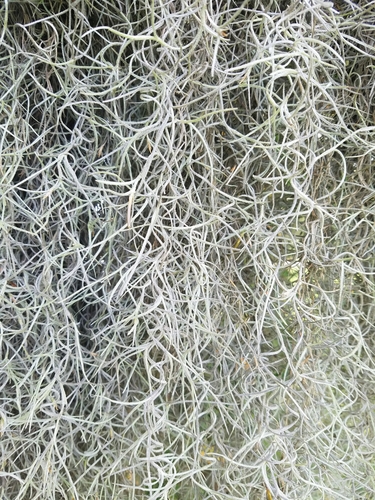
Beginners may find Spanish moss (Tillandsia usneoides) surprising: it hangs in long gray strands from oaks in the southern United States. Entirely rootless, it looks unlike a conventional rosette, yet it is a tillandsia nourished entirely through its trichomes. 4 3
Useful taxonomy
The genus Tillandsia was established by Linnaeus in 1753, hence the abbreviated authority L. after its name. It belongs to Bromeliaceae in the order Poales and is among the most species-rich genera of this American family. 1
At genus level, the accepted name Tillandsia provides a consistent reference. Nursery names usually refer to individual species or hybrids rather than distinct botanical ranks within the genus. Common cultivated species, including Tillandsia ionantha, Tillandsia xerographica, Tillandsia usneoides and Tillandsia cyanea, are sold under their species names, sometimes accompanied by trade names. 1 3
These botanical names help place the group:
- Tillandsia L., the genus of air plants;
- Tillandsia usneoides (L.) L., rootless Spanish moss;
- Tillandsia xerographica Rohweder, a dry-habitat species with a large silver rosette.
Habitat and range
Tropical and subtropical America is the native home of tillandsias, from the southern United States to northern Argentina and Chile. Depending on the species, habitats include humid forests, savannas, coastal deserts and the high Andes. 1 2
Their epiphytic or lithophytic habit allows them to settle on trunks, branches, cacti, rocks and even electricity or telephone wires without parasitizing the support. This ecology explains soil-free cultivation: trichomes collect what the plant needs from humid air and rain. 3 2
Beyond their native range, these plants are grown as ornamentals. In temperate settings such as France and Japan, they are kept indoors, mounted on decorative supports or suspended and soaked regularly. Their sensitivity to frost prevents naturalization in such temperate conditions. 5
Life cycle and reproduction
Flowering marks a key stage in a tillandsia rosette’s life. A mature rosette usually produces a brightly colored spike in spring or summer, with purple, blue, pink or red shades that attract hummingbirds and insects in its native habitat. This event happens only once in each rosette’s lifetime. 2 3
Once flowering ends, the mother plant declines slowly while producing young shoots called offsets at its base. These take over and maintain the clump; a well-cared-for tillandsia gradually develops into a colony of several rosettes. 3
Growers mainly propagate tillandsias by dividing offsets once they reach roughly one-third of the mother plant’s size, producing identical plants. Seed propagation using the feathery seeds is possible but very slow, suited to patient collectors. Spanish moss spreads readily through fragments carried by wind or birds. 3 4
Uses and risks
Decorative display is the main purpose of growing tillandsias. Plants can be mounted on driftwood, cork or stone, suspended in glass holders, or incorporated into frames and living walls, always without substrate. Two actions underpin care: regular soaking in low-mineral water and rapid drying to prevent rot in the rosette’s center. 5 3
Their safety profile is reassuring. The ASPCA lists tillandsias as non-toxic to cats, dogs and horses, with Spanish moss and ball moss (Tillandsia recurvata) explicitly included among non-toxic plants. No toxic effects following ingestion are reported, making them a safe choice for homes with pets or young children. 6 7
Varieties, look-alikes and related plants
Cultivated tillandsias are usually distinguished as species, rather than cultivars. Tillandsia ionantha is a widespread small gray species that turns red at flowering; Tillandsia xerographica has a large silver rosette of curling leaves; greener Tillandsia cyanea is grown in pots with a pink spike and blue flowers. When buying, check for a firm rosette without a soft center. 3 2
Other bromeliads and related-looking plants are frequent sources of confusion:
- Guzmania, a potted bromeliad with a large colorful bract;
- Vriesea, another epiphytic bromeliad with a flattened spike;
- Tillandsia usneoides, Spanish moss, sometimes mistaken for a lichen.
Trichome-covered rosette leaves, soil-free cultivation and the lack of feeding roots remain useful checks when confirming whether a plant sold as an air plant belongs to Tillandsia. 3 1
Main sources
- Plants of the World Online / Kew, Tillandsia L.
- Encyclopaedia Britannica, Tillandsia
- North Carolina Extension Gardener Plant Toolbox, Tillandsia
- North Carolina Extension Gardener Plant Toolbox, Tillandsia usneoides
- Royal Horticultural Society, Tillandsia search results
- ASPCA, toxic and non-toxic plant list for cats
- ASPCA, ball moss (Tillandsia recurvata) non-toxic plant entry
Frequently asked questions
Is Tillandsia toxic to cats and dogs?
No. The ASPCA lists tillandsias such as Spanish moss and ball moss as non-toxic to cats, dogs and horses. They are a safe choice for a home with pets.
How do you water an air plant?
Soak the plant rather than watering a pot. Immerse it in low-mineral water for 20–30 minutes once a week, then let it dry completely upside down to prevent crown rot.
Does Tillandsia need soil?
No. These epiphytes grow without a substrate, mounted on wood, cork or stone, or simply resting on a surface. Their roots serve as anchors rather than feeding organs.
Why does Tillandsia die after flowering?
This is normal: each rosette flowers only once, then slowly declines while producing offsets at its base. Keep these young shoots to replace it.
What is the difference between gray and green tillandsias?
Gray species covered in trichomes come from dry habitats and prefer more light. Smoother green species come from humid forests and need more moisture and shade.
Is Spanish moss a Tillandsia?
Yes. Spanish moss, Tillandsia usneoides, is a rootless species that forms long hanging strands and obtains all its nourishment through its trichomes.
How often should I mist Tillandsia?
Mist two or three times a week to supplement weekly soaking, especially in dry air. Rapid drying after each watering remains essential.
Species in this genus
Similar plants
If you are unsure about a plant’s toxicity, ask a botanist or veterinarian for advice.