
Spanish moss (Tillandsia usneoides, )
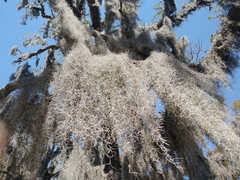
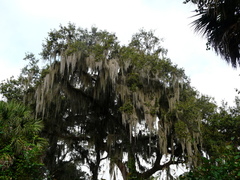
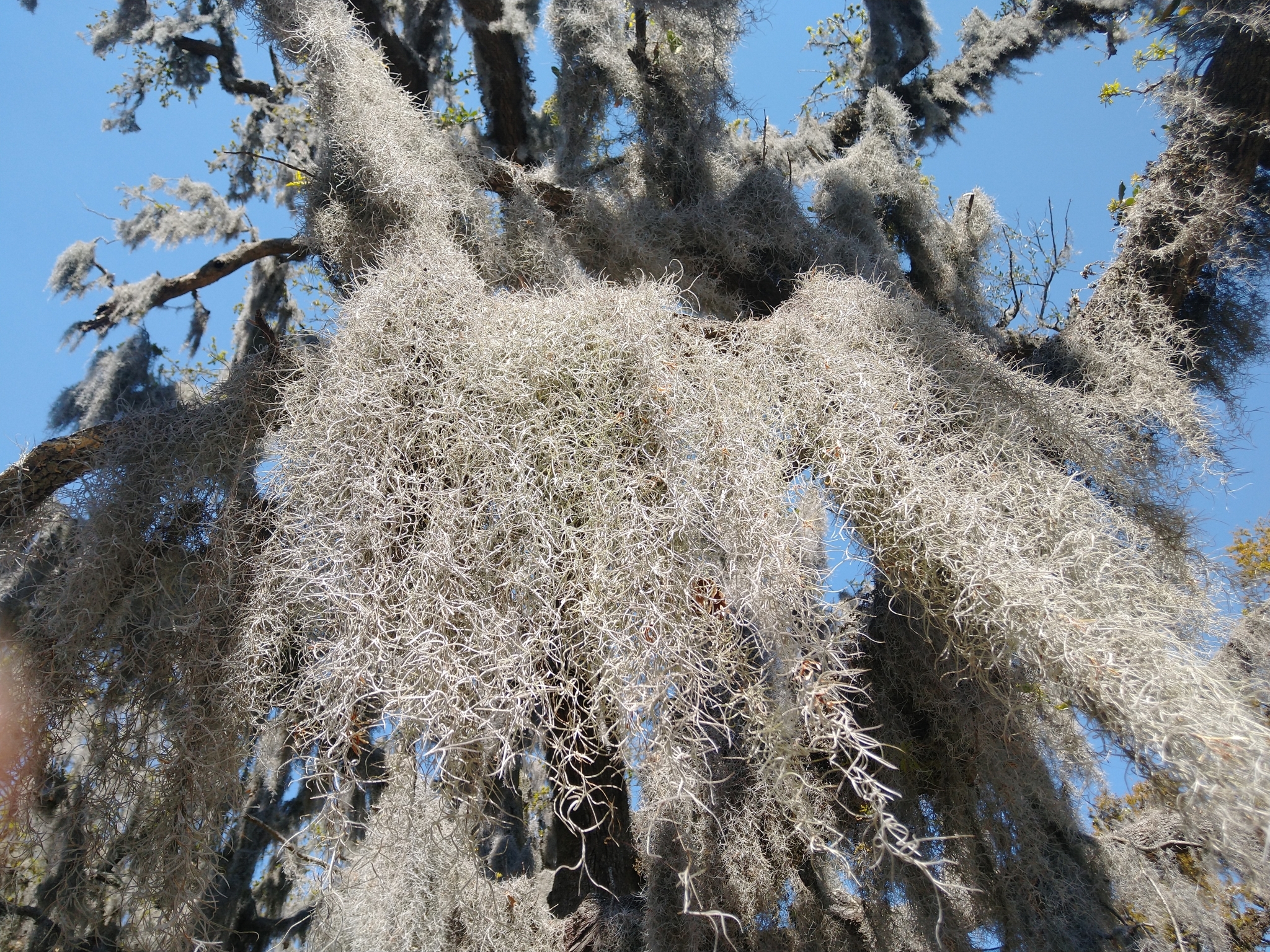
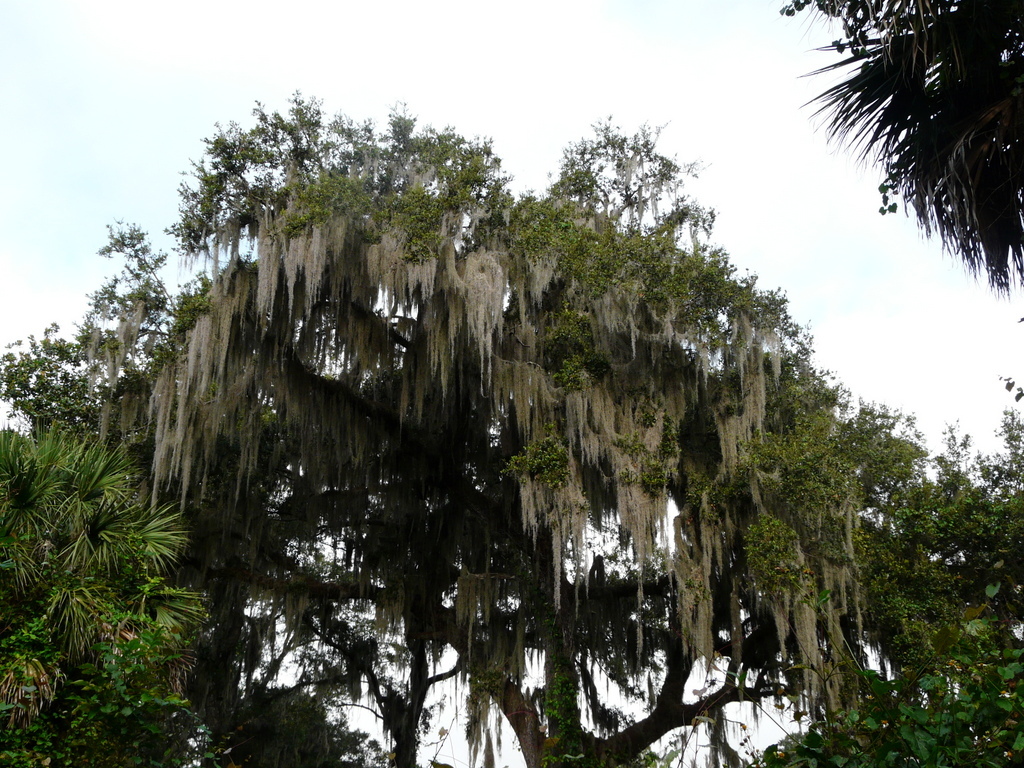
Spanish moss (Tillandsia usneoides (L.) L., 1762) is an epiphytic bromeliad ranging from the southeastern United States to Argentina and Chile. Rootless as an adult, it absorbs water and nutrients through microscopic scales and hangs in long gray strands from live oaks and bald cypresses.
Read moreSpanish moss and Old man’s beard
Give plenty of ambient light without direct sun on the leaves.
Bright filtered light; tolerates gentle full sun in humid climates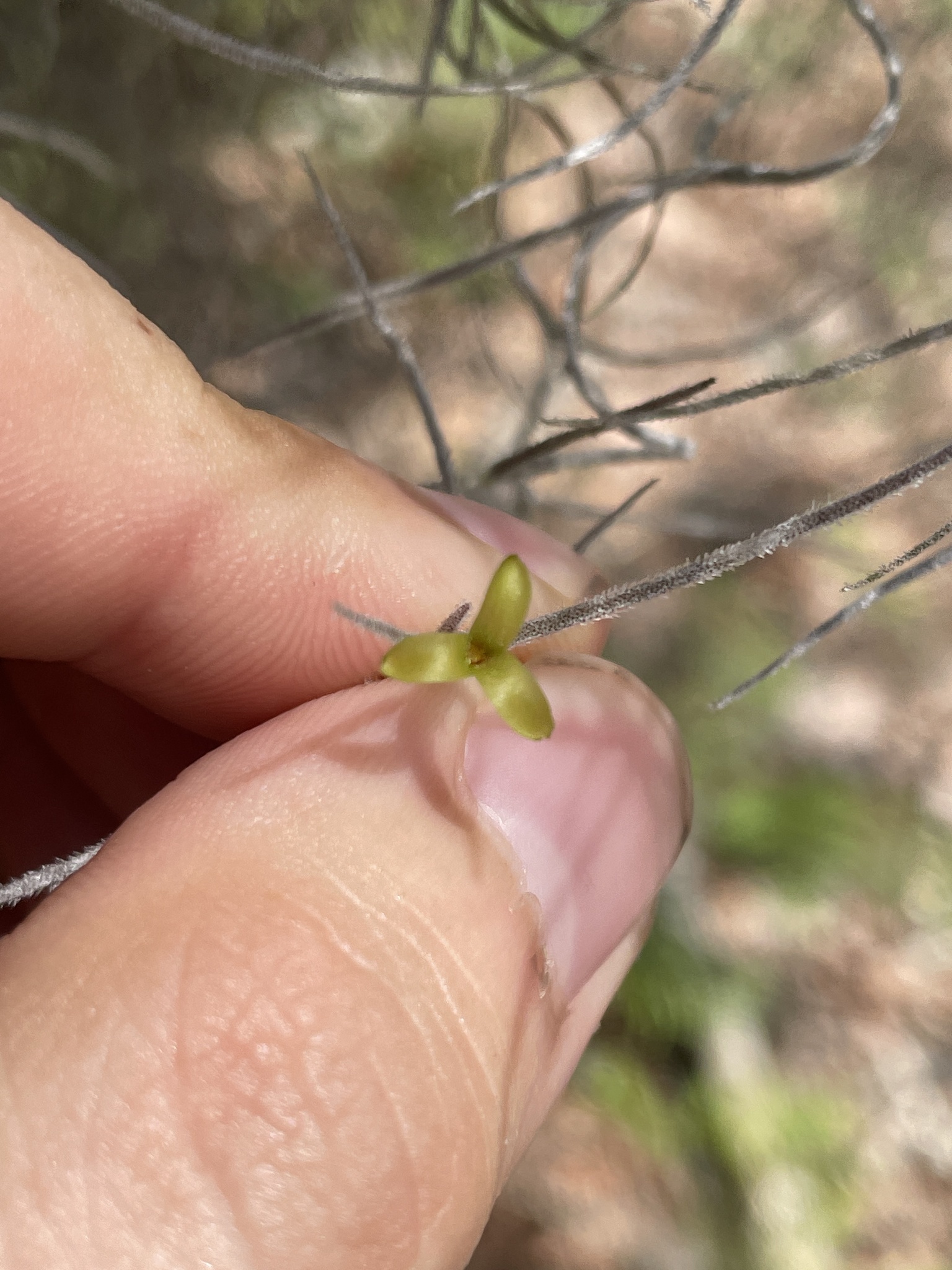


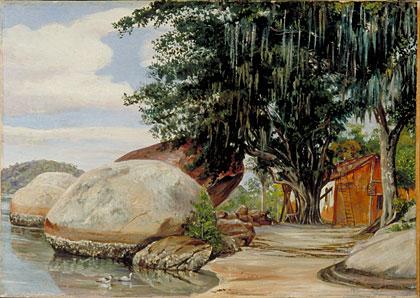
© photo
Brandon Wheeler · cc0
Juno Deffendall · cc0
Simon Tonge · cc0
Taken May 30, 2015 by Daniel Barthelemy (cc-by-nc)
Taken Feb 21, 2022 by alfieri david (cc-by-sa)
Taken Nov 17, 2010 by Tela Botanica − Liliane Roubaudi (cc-by-sa)
© copyright of the Board of Trustees of the Royal Botanic Gardens, Kew.




Global distribution
Tillandsia usneoides is native from the southeastern United States to Argentina and Chile, including Mexico, Bermuda, the Bahamas, Central America and the Caribbean. It has also naturalized in Queensland, Australia, and French Polynesia. Outdoor cultivation requires mild, humid conditions.
- Native6
- Introduced2
- Southeastern United States
- Mexico
- Bermuda
- Bahamas
- Brazil
- Argentina
- Queensland, Australia
- French Polynesia
Hexagons: regions where the plant occurs. Green dots: native range.1
Identity
Spanish moss (Tillandsia usneoides (L.) L., 1762) is neither a moss nor a lichen, and it is not native to Spain: it is an epiphytic flowering plant in the Bromeliaceae family. Linnaeus first described it as Renealmia usneoides in 1753, then moved it to Tillandsia himself in 1762. The epithet usneoides refers to its visual resemblance to threadlike Usnea lichens, an association based purely on appearance. 1
The familiar name Spanish moss is an old English expression with no botanical link to Spain. France’s INPN uses the literal name barbe à l’arbre, describing the long gray filaments hanging from branches. 5 4
Recognition
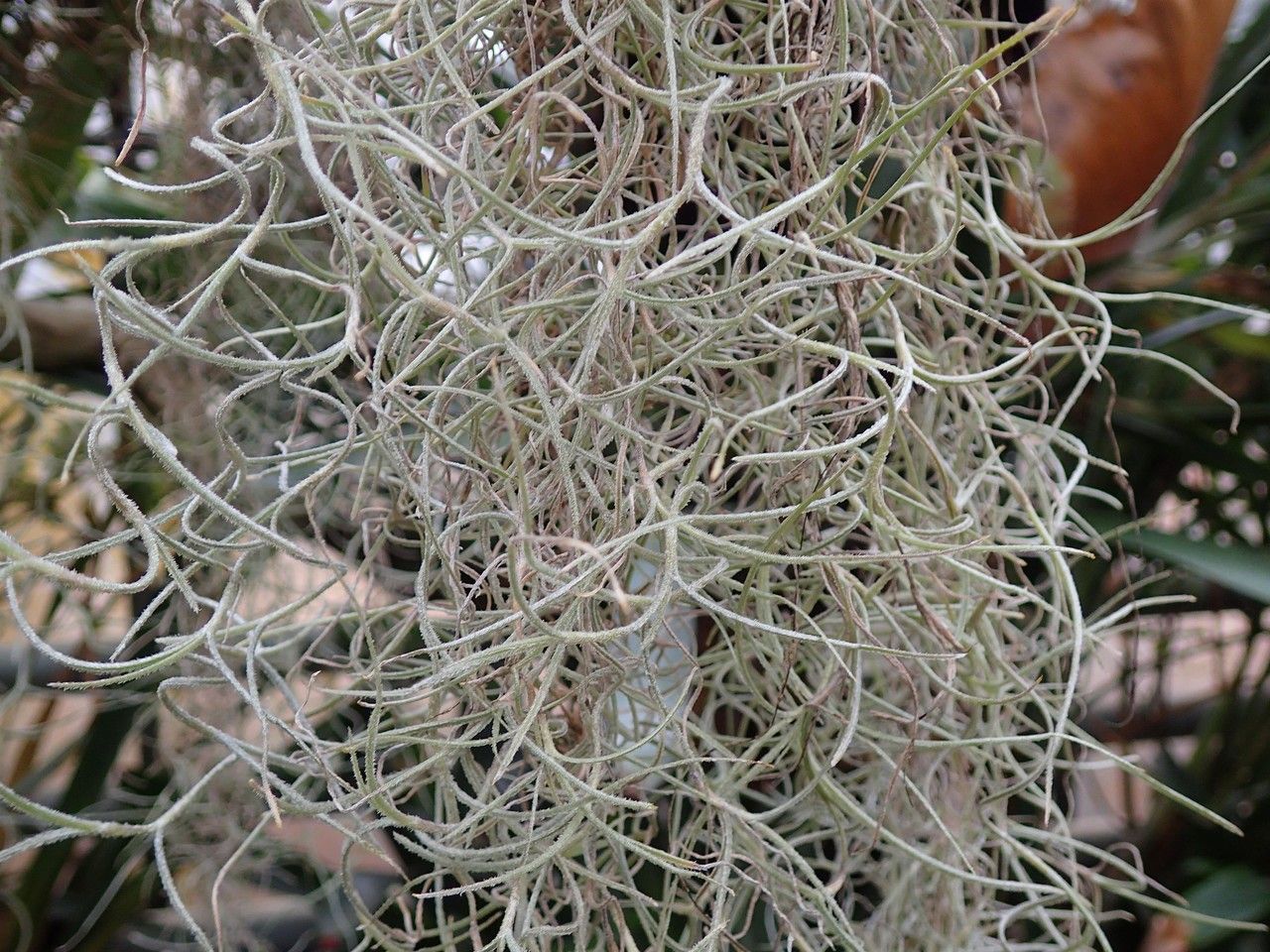
Interwoven, silvery-gray threadlike strands identify a colony of Tillandsia usneoides. Individual strands may be 10 cm (4 in) long, while mature colonies can hang more than 6 m (20 ft). Minute scales called trichomes cover the strands and capture water and nutrients from the air, giving the plant its powdery gray appearance. 4 7
Only young seedlings develop small temporary roots to anchor themselves to bark; these largely disappear a few weeks later. Without active roots as an adult, the plant cannot draw nutrients from soil. All water and minerals pass through leaf trichomes, an unusual arrangement even among epiphytic bromeliads. 7
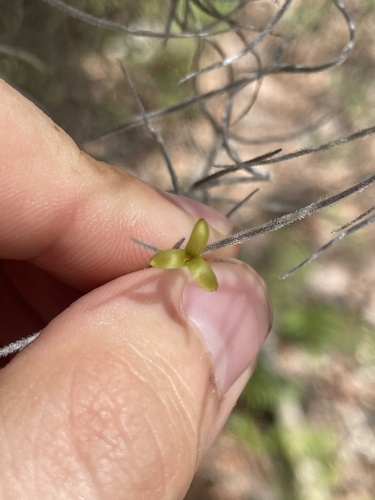
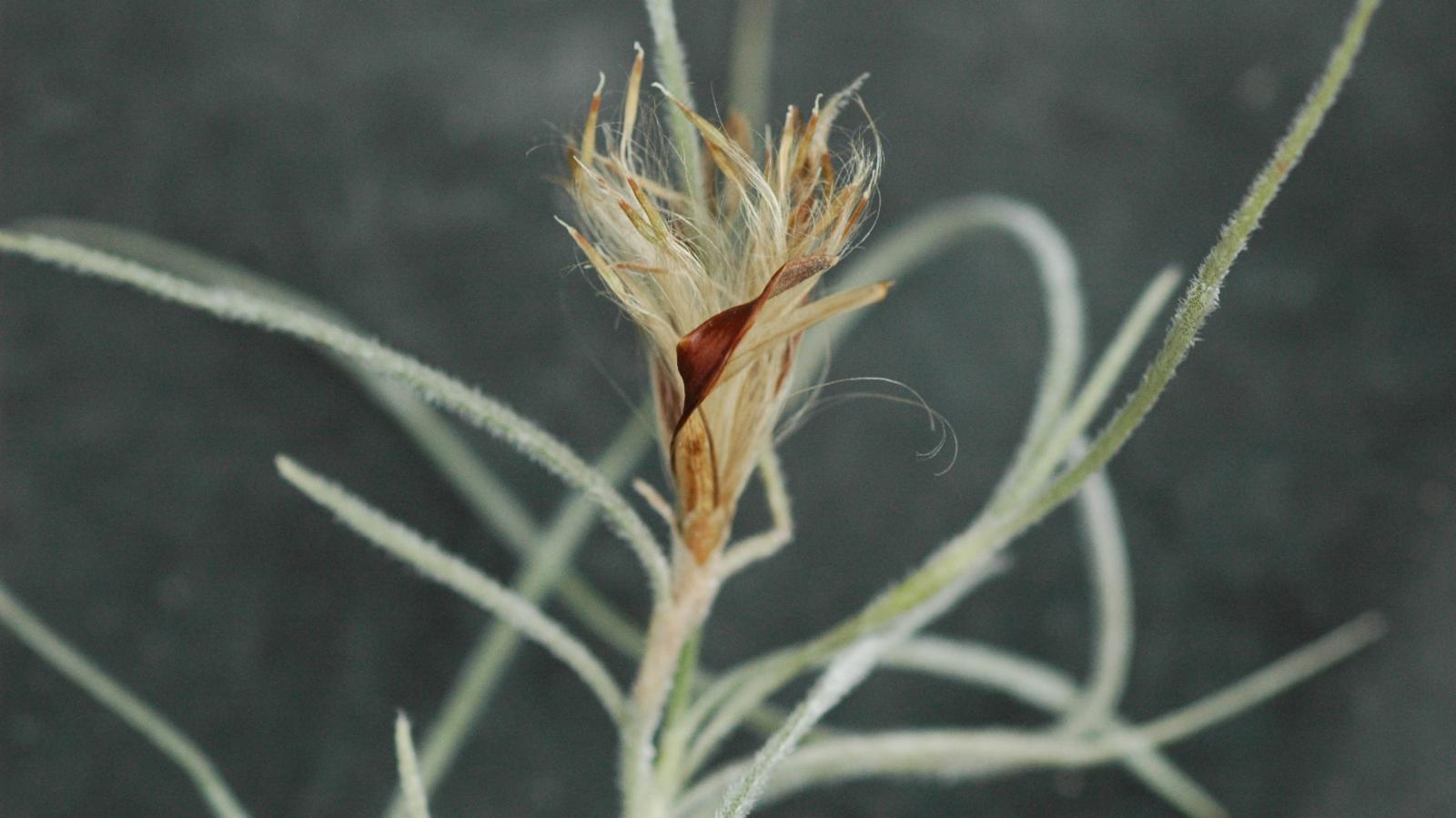
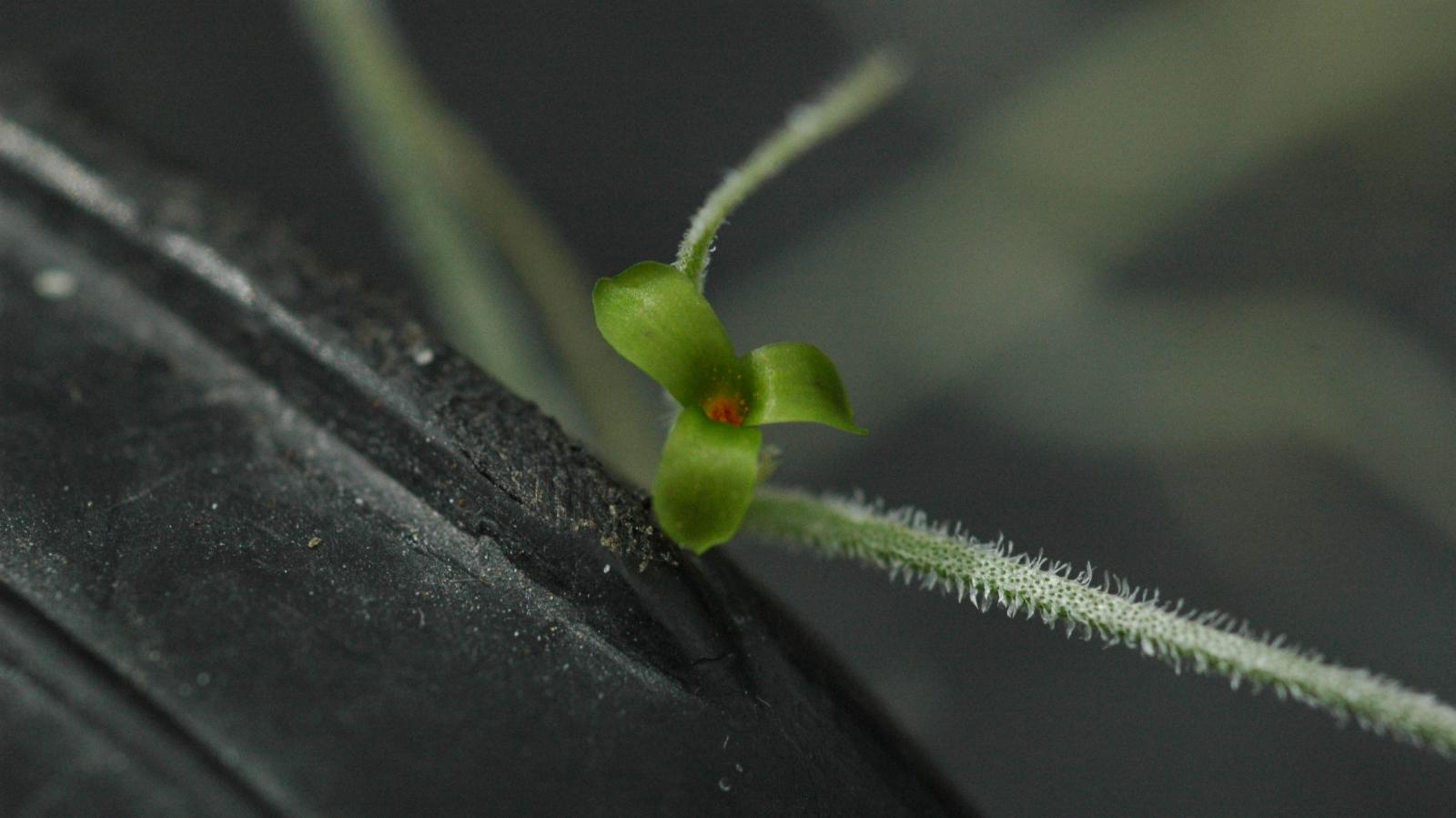
Tiny yellow-green flowers appear in summer, each 0.5–1 cm (0.2–0.4 in) across, with three petals and borne singly along the strands. They are followed by a brown capsule 2–3 cm (0.8–1.2 in) long that releases seeds with a silky plume for wind dispersal. 2
Taxonomy and names
WCVP/POWO accepts Tillandsia usneoides (L.) L. in Bromeliaceae, subfamily Tillandsioideae. Forms once described separately include var. filiformis (André) Mez, with particularly fine strands, and var. longissima (André) Mez, with very long garlands. Both are now treated as synonyms of the species. 1
Neither of those forms is accepted by POWO as an independent taxon. Individual strand length varies from 10 cm (4 in) to more than 1 m (3.3 ft) with light and moisture, rather than marking a distinct genetic identity. 1
Habitat and range
Across the Americas, the native range runs from the southeastern United States to Argentina and Chile, including Mexico, Bermuda, the Bahamas and Brazil, with a continuous presence through Central America and the Caribbean. Spanish moss is among the continent’s most widely distributed bromeliads. 4 3
Live oaks and bald cypresses support this epiphyte in humid forests, swamps and savannas. It uses trees solely as supports, drawing neither water nor nutrients from their tissues. It has naturalized in Queensland, Australia, and French Polynesia, where it is sometimes called “grandpa’s beard.” 3
IUCN assesses Tillandsia usneoides as Least Concern: its range is extensive and no major species-wide threat is documented, despite local collection for crafts. 8
Biology and reproduction
Tillandsia usneoides uses crassulacean acid metabolism (CAM) for photosynthesis. Stomata open at night to absorb CO2 and close by day, greatly reducing water loss in warm conditions. This metabolism helps it endure long dry periods without watering, unlike many conventional houseplants. Its shieldlike, or peltate, trichomes flatten when wet to absorb water by osmosis, then lift again within hours as the surface dries, reducing evaporation between waterings. 7 7
Fragmentation provides the main route of reproduction, both in cultivation and in the wild. Wind or birds detach pieces of strand; once caught on another branch, these establish an independent colony. Slower seed reproduction complements fragmentation and helps colonize distant trees beyond the reach of fragments carried by wind alone. 3
Uses and risks
Hanging strands grown without a pot or substrate are the main ornamental use. For more than a century, Spanish moss also supplied a stuffing industry for mattresses, car seats and insulation after retting removed its gray outer covering. Synthetic materials largely replaced this use from the mid-20th century. Its trichomes now make it useful as a bioindicator of air pollution, trapping airborne particles and heavy metals without a root system acting as a filter. 4
For pets, the ASPCA lists Spanish moss as non-toxic to cats and dogs. Horses are less well documented, although no toxic effect is reported, and it has occasionally served as supplementary livestock forage in rural parts of the southern United States. As an epiphyte it never parasitizes its host tree, but a very dense colony can shade nearby host foliage and add weight to branches after prolonged rain. 6 3
Look-alikes and related species
Threadlike lichens of the genus Usnea are the main look-alikes. Spanish moss takes its species epithet from their resemblance but shares no botanical relationship: it is a flowering plant, whereas a lichen is an association between a fungus and an alga. 1
Within Tillandsia, the loose hanging habit clearly separates Spanish moss from rosette species such as Tillandsia ionantha and Tillandsia xerographica. It is the familiar cultivated tillandsia with no visible rosette structure. Ball moss (Tillandsia recurvata), another North American epiphyte without active feeding roots, has a similar lifestyle but forms rounded clumps rather than hanging strands. 4
Main sources
- Plants of the World Online / Kew, Tillandsia usneoides (L.) L.
- Royal Horticultural Society, Tillandsia usneoides details
- Missouri Botanical Garden, Plant Finder, Tillandsia usneoides
- North Carolina Extension Gardener Plant Toolbox, Tillandsia usneoides
- INPN / MNHN, taxon entry Tillandsia usneoides (L.) L., 1762
- ASPCA, Spanish moss non-toxic plant entry
- PLOS ONE, complete chloroplast genome of the CAM epiphyte Spanish moss
- IUCN Red List, Tillandsia usneoides assessment
Frequently asked questions
Is Spanish moss really a moss?
No. Despite its name, Tillandsia usneoides is a flowering plant in the Bromeliaceae family, neither a moss nor a lichen. Its resemblance to Usnea lichens simply explains the epithet usneoides.
Does Spanish moss have roots?
Almost none. Small temporary roots anchor the seedling to bark and then disappear almost entirely. Adult plants absorb water and nutrients solely through the scales on their leaves.
Is Spanish moss toxic to cats and dogs?
No. The ASPCA lists Spanish moss as non-toxic to cats and dogs. Its precise status for horses is less documented, although no toxic effects are reported.
Does Spanish moss harm its host tree?
No. It is an epiphyte rather than a parasite, using the tree only as support and taking nothing from its tissues. A very dense colony can, however, shade the host foliage and add weight.
How do you water Spanish moss indoors?
Mist two or three times a week with low-mineral water and add a weekly soak during warm weather. The essential point is complete drying within a few hours after each watering.
Where does Spanish moss grow outside the United States?
Its native range also includes Mexico, Bermuda, the Bahamas, Central America and South America as far as Argentina and Chile. It has naturalized in Queensland, Australia, and French Polynesia. In France it is cultivated only in frost-free conditions.
Why is it called Spanish moss?
Spanish moss is an old colonial-era name with no botanical connection to Spain. The French INPN uses the more literal name barbe à l’arbre, referring to its beardlike appearance on trees.
Similar plants
If you are unsure about a plant’s toxicity, ask a botanist or veterinarian for advice.