
Indian banyan (Ficus benghalensis, )
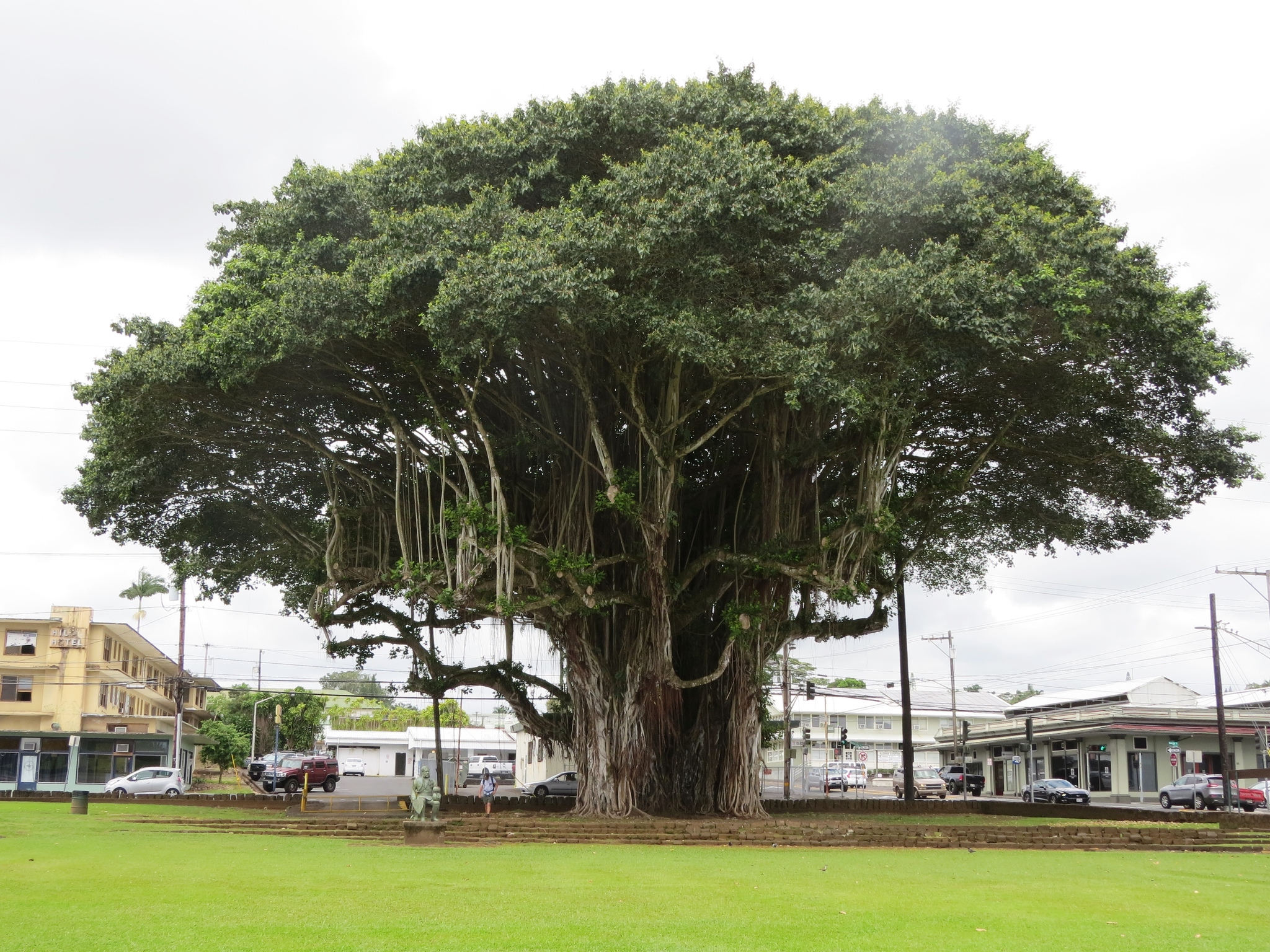
The Indian banyan (Ficus benghalensis) is a very large hemiepiphytic fig in the Moraceae family, native to the Indian subcontinent. In the wild, aerial roots descend from its branches and thicken into secondary trunks, allowing one tree to cover the area of an entire grove. In a pot it remains a robust houseplant, often sold as Ficus Audrey.
Read moreIndian banyan, Banyan, Indian banyan tree and Ficus Audrey
© photo
(c) Kate Turner, some rights reserved (CC BY-NC), uploaded by Kate Turner · cc-by-nc
Yoav Daniel Bar-Ness · cc-by
Ramnarayan K · cc-by
(c) Yoav Daniel Bar-Ness, some rights reserved (CC BY) · cc-by
(c) Ramnarayan K, some rights reserved (CC BY) · cc-by
Global distribution
Ficus benghalensis is native to the Indian subcontinent: India, Pakistan, Bangladesh, Sri Lanka and Nepal. It has naturalized beyond this range in tropical regions including northeastern Australia and parts of Florida, where it is not native. Temperate cultivation is confined to conservatories and heated greenhouses.
- Native5
- Introduced2
- India
- Pakistan
- Sri Lanka
- Bangladesh
- Nepal
- Northeastern Australia
- Florida (United States)
Hexagons: regions where the plant occurs. Green dots: native range.1
Identity
Indian banyan (Ficus benghalensis L., 1753) commonly exceeds 20 m (66 ft) in the wild, with a crown that can spread more than 100 m (330 ft) across. In a pot it generally stays within 2–3 m (7–10 ft) because the secondary trunks require unrestricted contact with the ground to develop. The epithet benghalensis refers to Bengal, where European botanists described the first specimens in the eighteenth century. 1 3
It is the national tree of India, planted for centuries near temples and markets for shade. In Europe it is chiefly sold as a large houseplant under the commercial name Ficus Audrey. The compact potted plant and the sprawling tropical tree belong to the same species, despite their very different outlines. 8 2
Recognition
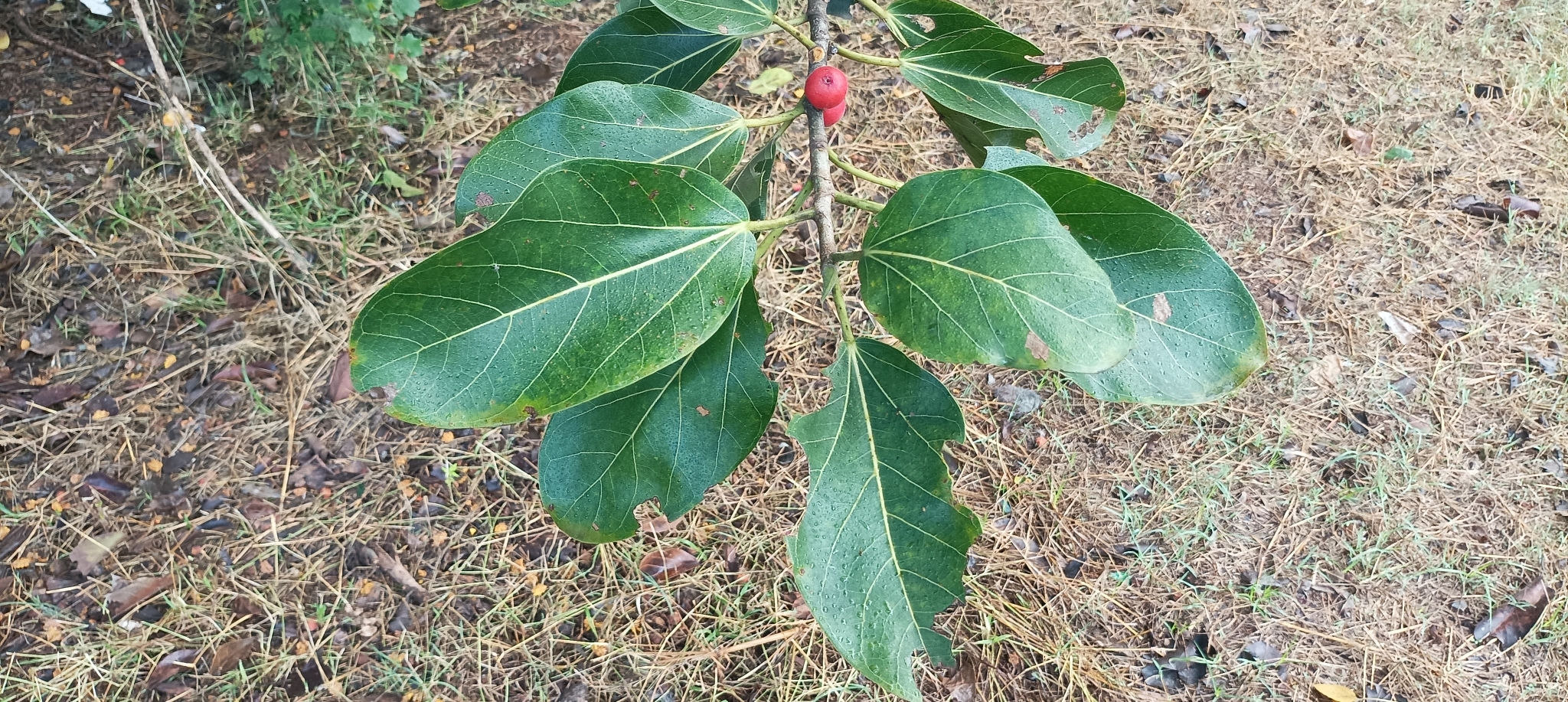
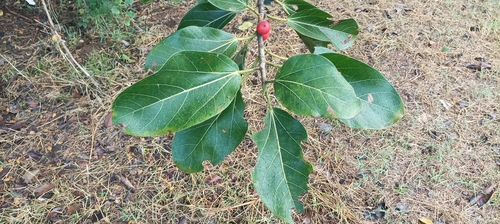
The leaves are oval to elliptical, leathery and glossy, 8–26 cm (3–10 in) long, dark green above and slightly downy underneath. Young growth emerges bronze before darkening with age. The contrast between the upper and lower leaf surfaces is useful when comparing young plants with other large-leaved indoor figs. 3 2
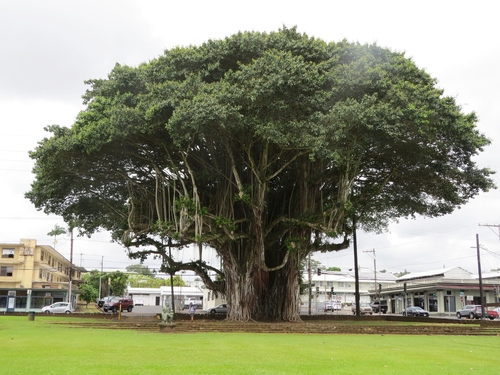
Numerous aerial roots descend from branches toward the soil. They distinguish this species from indoor figs such as Ficus elastica and Ficus lyrata, which develop practically none in pots. Once rooted, they thicken into secondary trunks supporting the branches. Over decades, one individual can occupy a whole grove’s area. Without free rooting into the ground, this mechanism almost never develops in a pot, so an old Ficus Audrey can retain one trunk and a compact size even after decades of cultivation. 6 3
Useful taxonomy
Linnaeus described the species as Ficus benghalensis in 1753, and this remains the accepted name. The large genus Ficus has accumulated many historical and horticultural names. Important synonyms include:
- Ficus indica L.
- Urostigma bengalense (L.) Gasp.
- Perula benghalensis (L.) Raf.
- Ficus karet Baill.
- Ficus banyana Oken
One natural variety deserves attention: Ficus benghalensis var. krishnae (C.DC.) Corner, whose leaves fold into cups, is sold as Krishnae. The accepted scientific name remains the stable reference. Labels such as Ficus Audrey designate a horticultural selection, rather than a separate species, and should not obscure the plant’s botanical identity. 1
Habitat and distribution
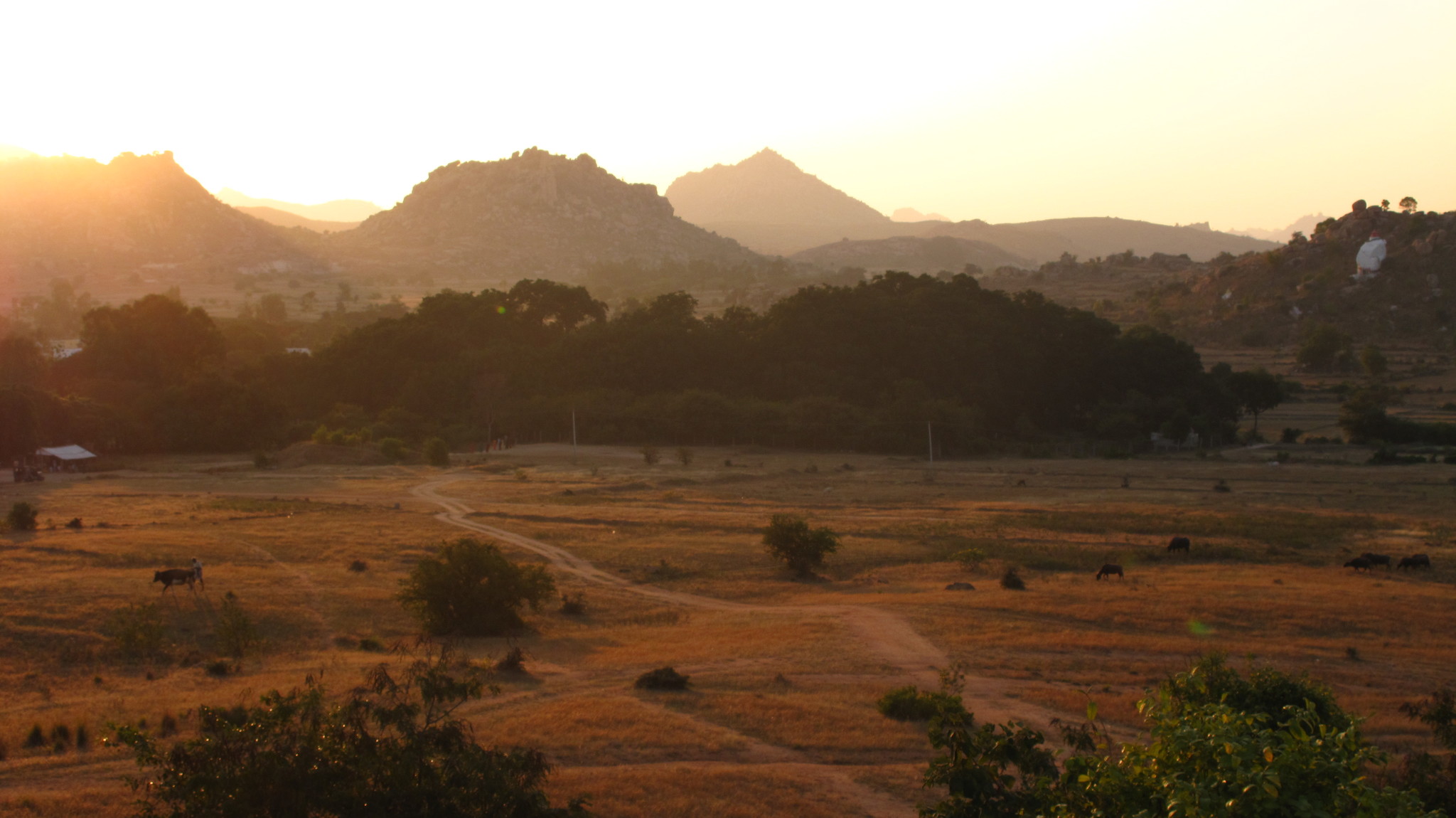
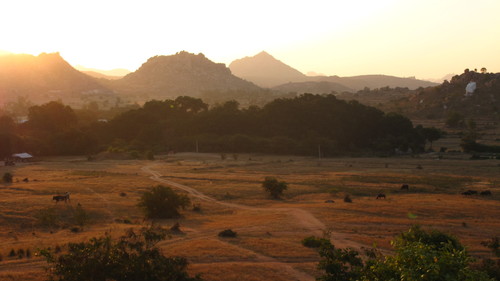
The species is native to the Indian subcontinent: India, Pakistan, Bangladesh, Sri Lanka and Nepal. It grows in monsoon and lowland tropical forests up to 600 m (1,970 ft) above sea level. These are the conditions in which its enormous crown and supporting trunks can develop beyond the restricted form familiar indoors. 1 3
Like many tropical figs, it often begins life as a hemiepiphyte. A seed germinates in a host tree’s branch fork, often after passing through a fruit-eating bird. The young fig then sends roots down to the ground. The initial perch and the later rooted tree are successive stages of this growth habit. 6 5
Widely planted for shade and ornament, it has naturalized in tropical regions beyond its native range, notably northeastern Australia, where it is not native. In Florida it is present but classified as introduced rather than indigenous. Cultivation and naturalization outside the Indian subcontinent therefore do not extend its native range. 5 7
Life cycle and reproduction
Like all Ficus, the tree has a distinctive inflorescence: flowers are enclosed in a hollow fig or syconium, an urn-shaped structure about 2 cm (0.8 in) across. Pollination depends on the specialized wasp Eupristina masoni. Without it, fertile seeds cannot form, making pollinator presence central to sexual reproduction. 3 6
Figs mature in pairs in the leaf axils, changing from green to orange and then red. Outside the native range, absence of the pollinator greatly reduces fruiting, so the plant almost never self-seeds. Ornamental cultivation alone is therefore different from the successful completion of its reproductive cycle. 3 5
Nursery-grown Ficus Audrey is chiefly propagated from stem-node cuttings, followed by air layering or seed. Seed needs about 20 °C (68 °F) to germinate. These different methods explain how potted plants can be produced even where pollination and fertile seed formation are limited. 5 4
Uses and risks
The principal traditional use is shade. Within its native range, it is planted near temples, markets and avenues for the cooling shelter of its canopy. Leaves also serve as livestock fodder, with a reported crude-protein content of about 9.6%. The mature tree’s usefulness is closely connected to its broad, densely shaded crown. 4 8
White latex released by a cut leaf or stem is a contact irritant to skin and eyes. It is also toxic if swallowed, with low severity. NC State identifies the species as a problem for cats, dogs and horses, describing appetite loss, drooling, nausea, vomiting and diarrhea after ingestion by animals or humans. Ficin and psoralen in the sap are responsible; Merck lists these substances for Ficus generally. Wear gloves when pruning and keep children and animals away from cut foliage and stems. 9 10 2
A vigorous root system can damage walls, foundations and pipes when the tree is planted in an unsuitable setting. Once established in the ground, it is difficult to remove completely. Conversely, tolerance of drought and salt spray helps explain its frequent use as a coastal avenue tree in the tropics. Allowing for its eventual rooting and crown spread matters when choosing a site. 5
Varieties, lookalikes and related plants
Horticultural forms are not separate species. Audrey denotes a compact selection suited to pots; Krishnae has naturally cup-folded leaves. Variegata carries cream or white variegation and grows more slowly, with a greater need for light than the wild type. Their differences concern selected appearance and habit within the species. 1
Frequent lookalikes include:
- Ficus elastica, rubber plant, with larger, very smooth leaves and a distinctive red stipule;
- Ficus microcarpa, Chinese banyan, with much smaller leaves and often clipped into a rounded crown;
- Ficus religiosa, the bodhi tree, whose leaf ends in a long, tapering point absent from Ficus benghalensis.
Downy leaf undersides, early aerial roots and white latex together distinguish a young potted Indian banyan from other indoor figs. Comparing the combination is more useful than identifying a nursery plant from leaf size alone. 3 2
Main sources
- Plants of the World Online / Kew, Ficus benghalensis L.
- Royal Horticultural Society, Ficus benghalensis - Banyan
- Monaco Nature Encyclopedia, Ficus benghalensis
- Purdue University NewCrop, Ficus benghalensis factsheet
- Useful Tropical Plants Database, Ficus benghalensis
- National Tropical Botanical Garden, Ficus benghalensis
- Florida Plant Atlas, Ficus benghalensis
- National Portal of India, Banyan tree - national tree of India
- NC State Extension Gardener Plant Toolbox, Ficus benghalensis
- Merck Veterinary Manual, Houseplants and Ornamentals Toxic to Animals
Frequently asked questions
Is Indian banyan poisonous to cats and dogs?
Yes, with low severity. NC State lists it as a problem for cats, dogs and horses. Ingestion causes loss of appetite, drooling, nausea, vomiting and diarrhea; the white latex irritates skin and eyes. Keep animals away from cut or chewed stems.
Why is it called banyan?
The word is associated with Indian merchants who traditionally held markets in the shade of these trees. The epithet benghalensis refers to Bengal, where the species was first described.
Can one Indian banyan really become a forest?
Yes, in the wild. Aerial roots descend from branches to the ground, then thicken into secondary trunks supporting the crown. Over time, one individual can cover several hectares, an area of many acres.
How does Indian banyan differ from rubber plant?
Both are large strangler figs with white latex. Ficus benghalensis has smaller leaves with downy undersides and numerous aerial roots visible from a young age. Ficus elastica has larger, very smooth leaves and a distinctive red stipule at the shoot tip.
Does Indian banyan flower indoors?
Rarely. Pollination depends on the specialized wasp Eupristina masoni, absent outside its native range. Potted plants are therefore grown chiefly for foliage rather than figs.
What light does a potted Indian banyan need?
Bright to indirect light suits it indoors. It even tolerates full outdoor sun after gradual acclimation. A position that is too dark produces sparse foliage.
Is Ficus Audrey a different species?
No. Ficus Audrey is a sales name for potted specimens selected for a compact habit, rather than a separate species or botanical variety of Ficus benghalensis.
Similar plants


If you are unsure about a plant’s toxicity, ask a botanist or veterinarian for advice.