
Chinese banyan (Ficus microcarpa, )
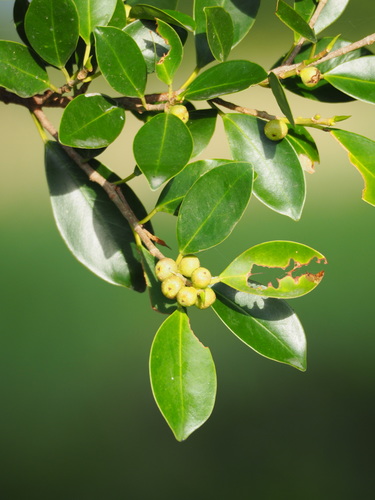

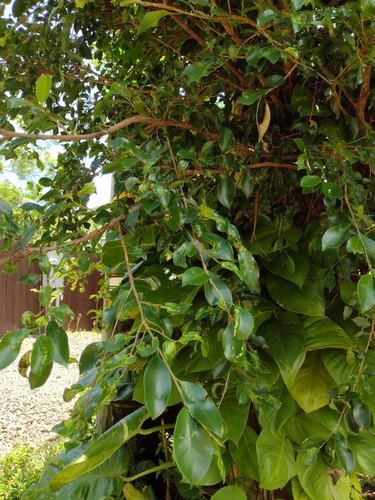
The Chinese banyan (Ficus microcarpa), also sold as ginseng ficus or Indian laurel, is a large fig in the mulberry family, Moraceae, native to tropical and subtropical Asia and the western Pacific. In the wild it grows into a strangler tree tens of meters tall, hung with aerial roots; indoors it is mostly sold as a bonsai with a swollen trunk.
Read moreGinseng ficus and Indian laurel
Global distribution
The native range of Ficus microcarpa runs from India to China and Japan, through Southeast Asia and the western Pacific to Queensland. Widely planted as a street tree, it has naturalized outside that range, notably in Florida, Hawaii and around the Mediterranean; these regions of introduction should be kept apart from the native range.
- Native5
- Introduced3
- India
- China
- Japan
- Malaysia
- Australia
- United States (Florida)
- Spain
- Italy (Sicily)
Hexagons: sourced regions. Green dots: native range. Statuses according to POWO (Kew).
Identity
The Chinese banyan (Ficus microcarpa L.f.), also known as ginseng ficus or Indian laurel, is a large fig in the genus Ficus, part of the mulberry family, Moraceae. The epithet microcarpa means "small-fruited" and refers to its tiny figs, among the smallest in the genus. 1 2
Most buyers meet this species as a houseplant, usually shaped into a bonsai with a swollen trunk. Small, smooth, glossy leaves and a high tolerance for pruning make it easy to train and to keep in a pot. 3 4
Recognition
Look first at the foliage: small, elliptic, leathery, shiny leaves 5–12 cm (2–5 in) long, arranged alternately on slender twigs. Each has a short tip and a clear midrib flanked by five to nine pairs of side veins. Cut a stem and it bleeds the white latex typical of figs. 4 5
On plants sold as ginseng ficus, the most obvious feature is the swollen trunk, smooth and pale, formed from roots raised above the soil. Large trees instead drop thin aerial roots from their branches down to the ground, the mark of their banyan habit. 3 2
Grown indoors, the Chinese banyan stays a shrub or bonsai of 1–2 m (3–6.5 ft). In its tropical range it is a true tree that commonly reaches 25 m (80 ft), sometimes more, with a spreading crown and a dense web of aerial roots. 4 1
Useful taxonomy
Linnaeus the Younger described the species as Ficus microcarpa L.f. in 1782. Ficus is a huge genus, and several old or horticultural names still circulate; the main synonyms and varieties worth knowing are:
- Ficus microcarpa var. microcarpa
- Ficus microcarpa var. latifolia (Miq.) Corner
- Ficus microcarpa var. crassifolia (W.C.Shieh) J.C.Liao
- Ficus microcarpa var. nitida F.C.Ho
- Ficus retusa auct., a name often misapplied
Ficus retusa causes the most trouble: the name was long used for plants grown as microcarpa, yet it belongs to a distinct species. The stable reference is the accepted scientific name, Ficus microcarpa, since labels such as Ginseng or Tigerbark describe horticultural presentations or selections, not botanical species. 1 3
Habitat and range
Native to tropical and subtropical Asia, Ficus microcarpa ranges from India to China and Japan, through Southeast Asia and the western Pacific to Queensland in Australia. It grows in the lowlands, in humid forest but also on coasts, forest edges and even in mangroves, which accounts for a degree of salt tolerance. 1 2
Like many tropical figs, it often starts life as a hemiepiphyte: a seed germinates in the fork of a host tree, on a wall or on a rock, and the young plant then sends roots down to the soil. As they thicken, those roots can encircle the support, which places the species among the strangler figs. 4 5
Widely planted as a street tree, the Chinese banyan has naturalized beyond its range, notably in Florida, Hawaii and around the Mediterranean, where it is locally considered invasive. These areas of introduction should be kept distinct from the native Asian range. 2 1
Life cycle and reproduction
Its flowers, as in every Ficus, are hidden inside a hollow fig, and pollination depends on a small specialist wasp, Eupristina verticillata. Where that pollinator is absent, fruit set is rare and the plant hardly self-seeds; in some regions, however, the wasp has been introduced too, and the species then turns invasive. 2 4
The figs are tiny, stalkless and clustered in the leaf axils. At about 1 cm (0.4 in), they turn from green to pink and then purple as they ripen, feeding birds and bats. Flowering indoors is therefore a curiosity and never the point of growing the plant. 5 3
Growers propagate it from stem cuttings with a node or by air layering, the latter especially handy for renewing a plant that has grown too tall. Either way, let the latex dry before potting up, or the cut will keep weeping and heal poorly. A cutting taken just below a node and kept warm in bright indirect light forms its first roots in four to eight weeks. The ginseng ficus sold in stores takes a longer process: the roots are thickened underground, then raised above the soil and topped with a branched graft to produce the sought-after swollen shape. 3 4
Uses and risks
Today Ficus microcarpa is grown mainly as an ornamental: a large foliage plant or bonsai indoors, and a shade and street tree in the tropics. Outdoors it needs a frost-free climate, roughly USDA zones 10 to 12; where winters bring frost, it stays indoors. It tolerates hard pruning and resprouts from old wood, which makes it a favorite for bonsai training. In several Asian countries, the bark, leaves and aerial roots also go into traditional medicine preparations, without established clinical validation. 2 5
The plant's white latex is a mild irritant. On contact it can cause redness and itching on sensitive skin; if swallowed, it can irritate the mouth and cause minor digestive upset. The ASPCA lists Ficus as toxic to cats and dogs, generally with moderate signs, so it makes sense to keep the plant out of reach of pets and young children and to wear gloves when pruning. 6 7
Varieties, look-alikes and related plants
None of the forms on sale is a separate species. Ginseng is the common swollen-trunk presentation; Tigerbark shows off pale, mottled bark; Moclame and Green Island are selections with dense, compact foliage; Hawaii is a variegated form that needs more light. Before buying, check the cultivar name, the condition of the roots and how dense the foliage is. 3
Common look-alikes include:
- Ficus benjamina, the weeping fig, with drooping branches
- Ficus retusa, a name long misapplied to plants grown as microcarpa
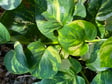
- Ficus elastica, the rubber plant, with much larger, thicker leaves
Small, very glossy leaves, a pale swollen trunk on ginseng plants, white latex and tiny figs remain the most reliable clues that a plant sold as Chinese banyan really is Ficus microcarpa. 4 1
Main sources
- Plants of the World Online / Kew, Ficus microcarpa L.f.
- Royal Horticultural Society, Ficus microcarpa
- North Carolina State Extension, Ficus microcarpa
- Encyclopaedia Britannica, Ficus (plant genus)
- Plants For A Future, Ficus microcarpa
- ASPCA, rubber plant (Ficus) toxicity entry
- Merck Veterinary Manual, houseplants and ornamentals toxic to animals
Frequently asked questions
Is Ficus microcarpa toxic?
Its white latex is a mild irritant to skin, eyes and the digestive tract. The ASPCA lists Ficus as toxic to cats and dogs, usually with mild signs; keep the plant out of reach of pets and young children, and wear gloves when pruning.
Is the ginseng ficus a different species?
No. A ginseng ficus is a Ficus microcarpa whose swollen roots were grown underground, then lifted above the soil and topped with a branched graft. It is a horticultural presentation, not a separate species or botanical variety.
Why is my Ficus microcarpa dropping leaves?
Sudden leaf drop almost always follows a change of position, a cold draft, or too much or too little water. Keeping temperature and watering steady limits this stress, which is common after purchase or a move.
Which plants are mistaken for Ficus microcarpa?
The usual mix-ups are Ficus benjamina, with its weeping habit, and Ficus retusa, a name long misapplied to this species. Small glossy leaves, white latex and tiny figs remain good clues.
How much light does a Chinese banyan need?
Bright but indirect light gives the best foliage. It tolerates a few hours of soft morning sun, but harsh direct sun scorches the leaves and makes them drop.
How big does Ficus microcarpa get?
In a pot or as a bonsai, it stays under 1–2 m (3–6.5 ft). In its tropical native range, it is a large strangler tree that commonly reaches 25 m (80 ft) and develops many aerial roots.
Is Ficus microcarpa invasive?
Outside its native range, it has naturalized in Florida, Hawaii and around the Mediterranean, where it is locally considered invasive. In mainland France it remains a cultivated plant with no invasive behavior.
Similar plants

Botanical data compiled from reference sources (RHS, Kew Gardens, POWO). This profile is for guidance only and is not a substitute for advice from a botanist or veterinarian if you have concerns about toxicity.