
Wood avens (Geum urbanum, )
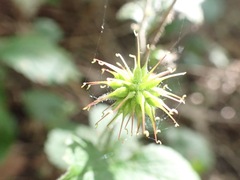
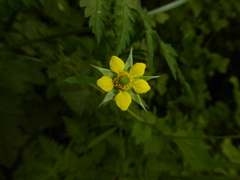
Wood avens (Geum urbanum) is a perennial in the rose family, native to Europe, the Caucasus, Central Asia, Iran and northwestern Africa. Its basal leaf rosette, upright yellow flowers and hooked dry fruits distinguish this familiar plant of hedges and woodland edges. Its roots have a clove-like scent and a long history of use as a seasoning.
Read moreWood avens, herb bennet and clove root
Place in indirect light or in a shaded room.
Partial to light shade; tolerates full sun in moist soil
© photo
(c) David Renoult, some rights reserved (CC BY-NC), uploaded by David Renoult · cc-by-nc
Sim Elliott · cc0
jamie-aa · cc0
no rights reserved · cc0
(c) Pto, some rights reserved (CC BY) · cc-by
Global distribution
The native range of Geum urbanum extends across Europe, the Caucasus and Central Asia to Iran, and includes northwestern Africa. Introduced beyond this range, it is now expanding in northeastern North America.
- Native4
- Introduced2
- Metropolitan France
- Europe
- Caucasus and Central Asia
- Northwestern Africa
- United States
- Canada
Hexagons: regions where the plant occurs. Green dots: native range.1
Identity
Wood avens (Geum urbanum L., 1753), also known as herb bennet and clove root, is a herbaceous perennial in the rose family, Rosaceae. Plants of the World Online accepts the name published by Linnaeus in 1753. Its native range reaches from Europe and the Caucasus through Central Asia to Iran, and also includes northwestern Africa. 1 8
The French name benoîte, like herb bennet, comes from the medieval Latin herba benedicta, meaning blessed herb. In the Middle Ages the plant was believed to ward off evil spirits and venomous bites. The epithet urbanum, meaning of towns, reflects its frequent occurrence beside hedges and in shaded places near homes. 6 2
Recognition
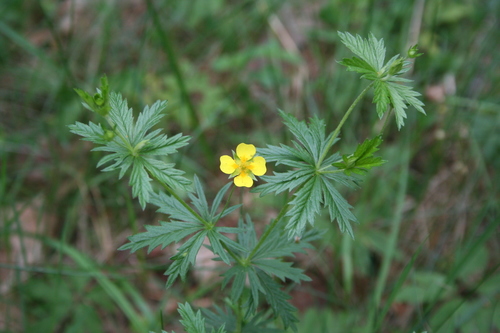
Geum urbanum first forms a basal rosette of hairy leaves, then produces a slender, upright, slightly hairy flowering stem. It commonly reaches 20–60 cm (8–24 in), occasionally 1 m (3.3 ft) in rich, moist soil. 4 3
The basal leaves are lyrate-pinnate, with five to seven unequal leaflets and a terminal leaflet much larger than the lateral ones. Higher on the stem, the leaves are reduced to three rounded, toothed leaflets, with leaflike stipules at their bases. 4 2
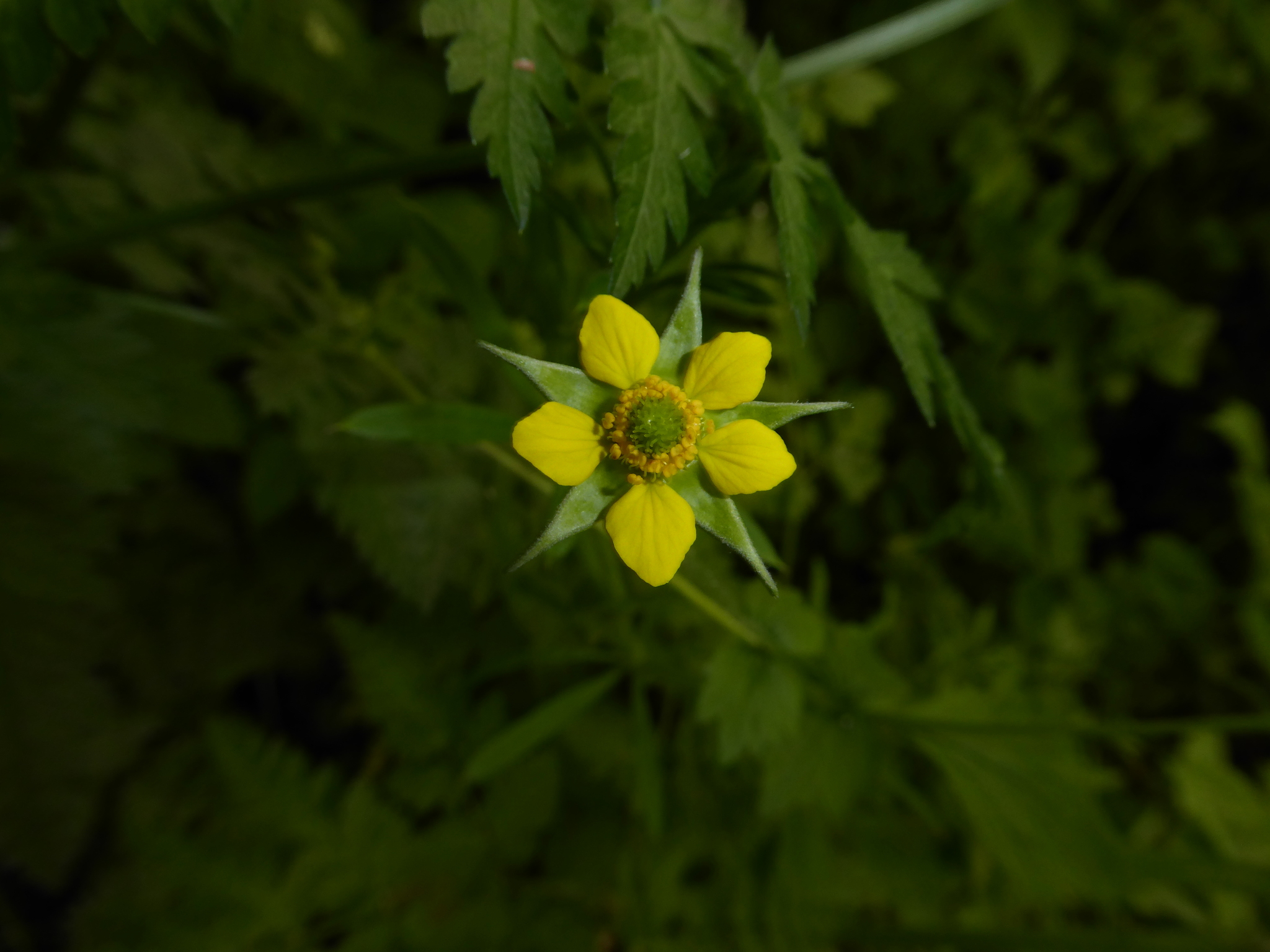
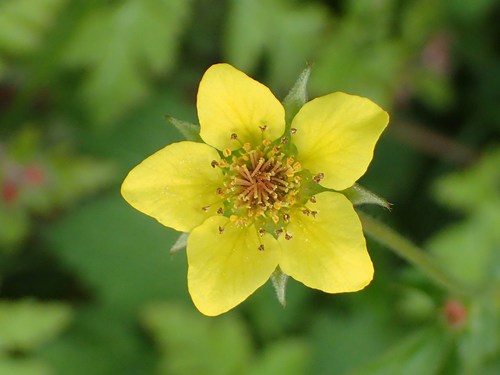
The small yellow flowers have five spaced petals, each 4–7 mm (0.16–0.28 in) long, and more than thirteen stamens. They face upward rather than nodding. In the field this posture quickly separates the two neighboring species: upright flowers in Geum urbanum, downward-facing flowers in Geum rivale. 3 4
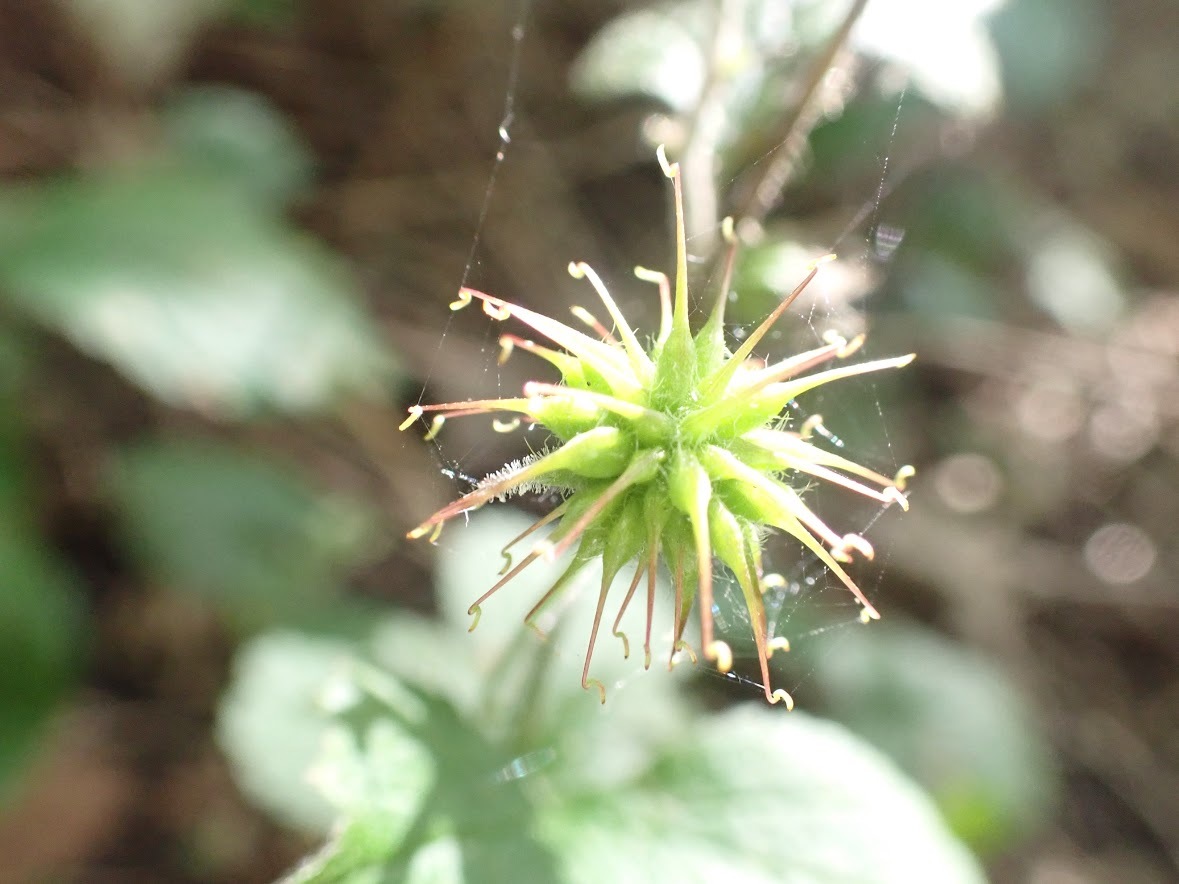
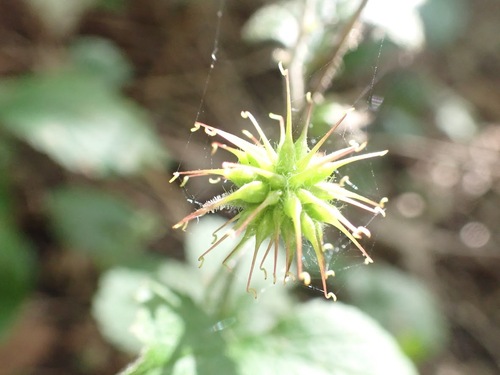
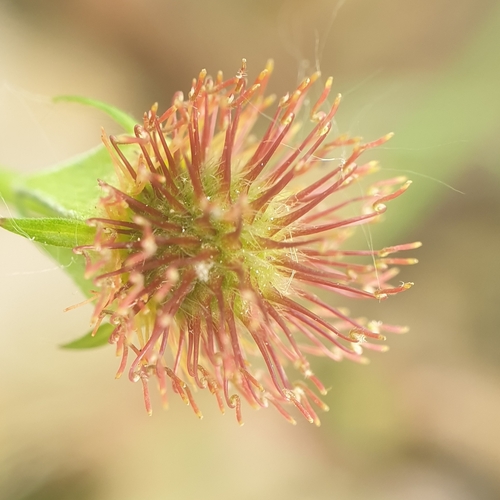
After flowering, each flower develops into a cluster of dry achenes, each tipped by a persistent hooked style. These hooks catch on fur or clothing and carry the seeds away from the parent plant. 4
Useful taxonomy
Published in 1753, Geum urbanum L. remains the accepted name in Plants of the World Online. Regional floras and older herbarium collections also use several synonyms: 1
- Geum caryophyllata Gilib.
- Geum hederifolium C.C.Gmel.
- Geum umbrosum Dumort.
- Geum vidalii Sennen
Within Rosaceae, Geum belongs to the subfamily Rosoideae alongside Fragaria, Potentilla and Rubus. These plants share five-petaled flowers; in Geum, a raised floral receptacle bears numerous achenes. 8 6
Habitat and range
The native range includes Europe, the Caucasus, Central Asia as far as Iran, and northwestern Africa. In France, where the species is native, INPN records it through almost all of metropolitan France, from country hedges to light woodland. 1 5
Outside that range, North American records extend back more than a century. Early, scarce herbarium specimens came from around Chicago and Cambridge, Massachusetts. Wood avens continues to spread in disturbed habitats of the northeastern United States and eastern Canada. Some jurisdictions now regard it as potentially invasive rather than merely an occasional urban introduction. 4
Life cycle and reproduction
In northern temperate regions, flowering extends from May to October. The flowers are hermaphroditic and self-fertile, and small insects visit them. The basal rosette often remains visible through winter, giving the plant semi-evergreen foliage in mild temperate climates. 3 2
Seed dispersal depends on attachment rather than flight. Each achene carries a hooked style that catches on a passing animal or a garment. This zoochory helps explain the plant’s frequency beside busy paths. In cultivation, division of the rhizomatous rootstock spreads plants more slowly than self-sown achenes, but gives greater control. 4 2
Uses and risks
The root smells of cloves because it contains eugenol; its fragrance is strongest in spring. Dried root was traditionally used in cooking as a clove substitute, and root preparations flavored beer and wine before hops became widespread. 2
The root contains about 9% tannin. Traditional herbal medicine used it as an astringent for diarrhea and inflammation of the mouth, and as a remedy for fever. Before cinchona became widely available, it also served as a substitute for quinine in fever treatment. 2
Plants For A Future reports no known hazards for Geum urbanum. The species is also absent from ASPCA lists of plants toxic to cats, dogs and horses. Young leaves, less prominent in traditional use than the root, are sometimes cooked as a green vegetable. 2
Varieties, look-alikes and related plants
Geum urbanum has no recognized horticultural cultivar. It is a wild plant rather than one selected for ornamental display, unlike garden relatives such as Geum coccineum and Geum chiloense. 3
The most frequent look-alike is Geum rivale, whose pink or purple flowers nod instead of facing upward. The two species hybridize readily where their habitats overlap, producing Geum × intermedium Ehrh., a fertile hybrid with nodding yellow flowers and characters from both parents. 7
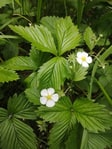
Before flowering, other Rosaceae rosettes, especially Fragaria vesca and Potentilla species, can be confusing. The fruit provides the decisive distinction among these plants: Geum urbanum bears achenes ending in a persistent hook, which strawberries and cinquefoils lack. 6
Main sources
- Plants of the World Online / Kew, Geum urbanum L.
- Plants For A Future, Geum urbanum
- Royal Horticultural Society, Geum urbanum - wood avens
- Go Botany / Native Plant Trust, Geum urbanum - town avens
- INPN / MNHN, Geum urbanum L., 1753 - Benoîte commune
- Tela Botanica / eFlore bdtfx, Geum urbanum L.
- BSBI, Geum rivale x urbanum = G. x intermedium
- Integrated Taxonomic Information System, Geum urbanum L.
Frequently asked questions
Is wood avens toxic?
No toxicity is documented. Plants For A Future reports no known hazards, and the species is not listed among ASPCA plants toxic to cats, dogs or horses.
Why does wood avens root smell of cloves?
It contains eugenol, the same aromatic compound found in tropical cloves. The dried root was traditionally used as a clove substitute in cooking and to flavor beer before hops became widespread.
How can I distinguish wood avens from water avens?
Flower orientation is the quickest clue: Geum urbanum holds its flowers upright, while Geum rivale has nodding flowers. Their fertile hybrid, Geum × intermedium, combines yellow flowers with a nodding posture.
Why do wood avens seeds stick to clothing?
Each achene retains a hooked style that catches on animal fur or fabric. This form of animal-assisted dispersal, called zoochory, is particularly effective beside well-used paths.
Where does the name herb bennet come from?
Like the French name benoîte, it derives from the medieval Latin herba benedicta, meaning blessed herb. In the Middle Ages the plant was believed to protect against evil spirits and venomous bites.
Is wood avens invasive?
In France, where it is native, wood avens is a common hedgerow plant. In North America, where it was introduced, it is expanding through disturbed habitats in the northeast and is considered potentially invasive in some places.
Can wood avens be eaten?
The dried root is traditionally used as a spice, and young leaves are sometimes eaten cooked. Its traditional uses are mainly aromatic and medicinal rather than as an everyday food.
Similar plants
If you are unsure about a plant’s toxicity, ask a botanist or veterinarian for advice.