
Ground-ivy (Glechoma hederacea, )
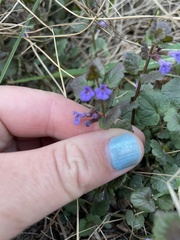
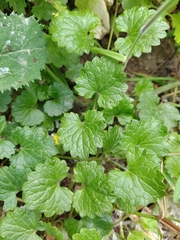
Ground-ivy (Glechoma hederacea) is an aromatic creeping perennial in the Lamiaceae family, native from Europe to western Siberia. Round, scalloped leaves and violet-blue flowers form a low carpet. Square stems that root at every node distinguish it from mallows and dead-nettles.
Read moreGround-ivy, Creeping Charlie, Alehoof and Gill-over-the-ground
Give plenty of ambient light without direct sun on the leaves.
Partial shade to gentle sun; moist soil recommended
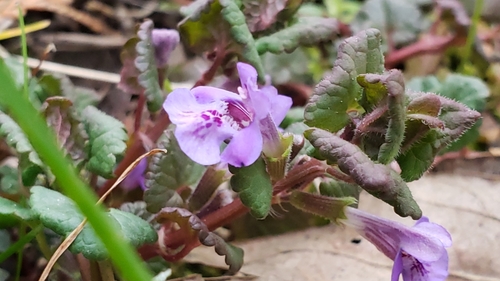
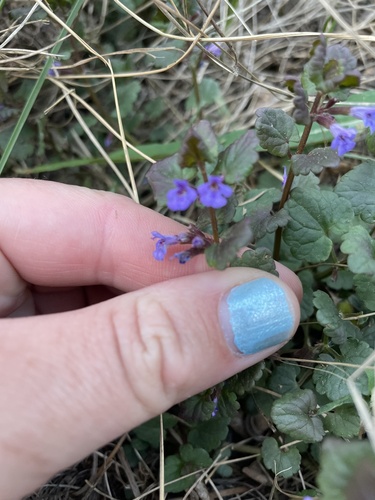
© photo
(c) viktorie_kolouchova, some rights reserved (CC BY-NC) · cc-by-nc
Allison McCabe · cc0
Carminda Santos · cc-by
(c) Gavin Slater, some rights reserved (CC BY) · cc-by
no rights reserved · cc0
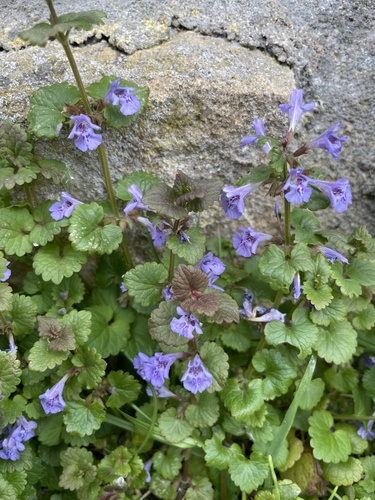
Global distribution
POWO places the native range of Glechoma hederacea in Europe, extending to western Siberia and Xinjiang. Carried abroad by European settlers, it is widely naturalized in North America and New Zealand, where it is sometimes regarded as an invasive weed of lawns and woodland.
- Native4
- Introduced3
- Europe
- Western Russia and Siberia
- Xinjiang (China)
- France
- United States
- Canada
- New Zealand
Hexagons: regions where the plant occurs. Green dots: native range.1
Identity
Ground-ivy (Glechoma hederacea L., 1753), also called creeping Charlie, is an accepted Lamiaceae species described by Linnaeus in Species Plantarum. POWO and INPN confirm the accepted name, without a major disputed synonymy. 1 2
The common name reflects its ivy-like creeping habit rather than membership of Hedera, in the Araliaceae. The epithet hederacea likewise means resembling ivy: a comparison of outline, not a taxonomic connection. 5
Only a few Eurasian species make up Glechoma, including Glechoma hirsuta in southeastern Europe. G. hederacea forms a carpet rarely taller than 20 cm (8 in) and has short hairs almost invisible to the naked eye. G. hirsuta has distinctly hairy foliage, a useful distinction where their ranges overlap. 5
Recognition
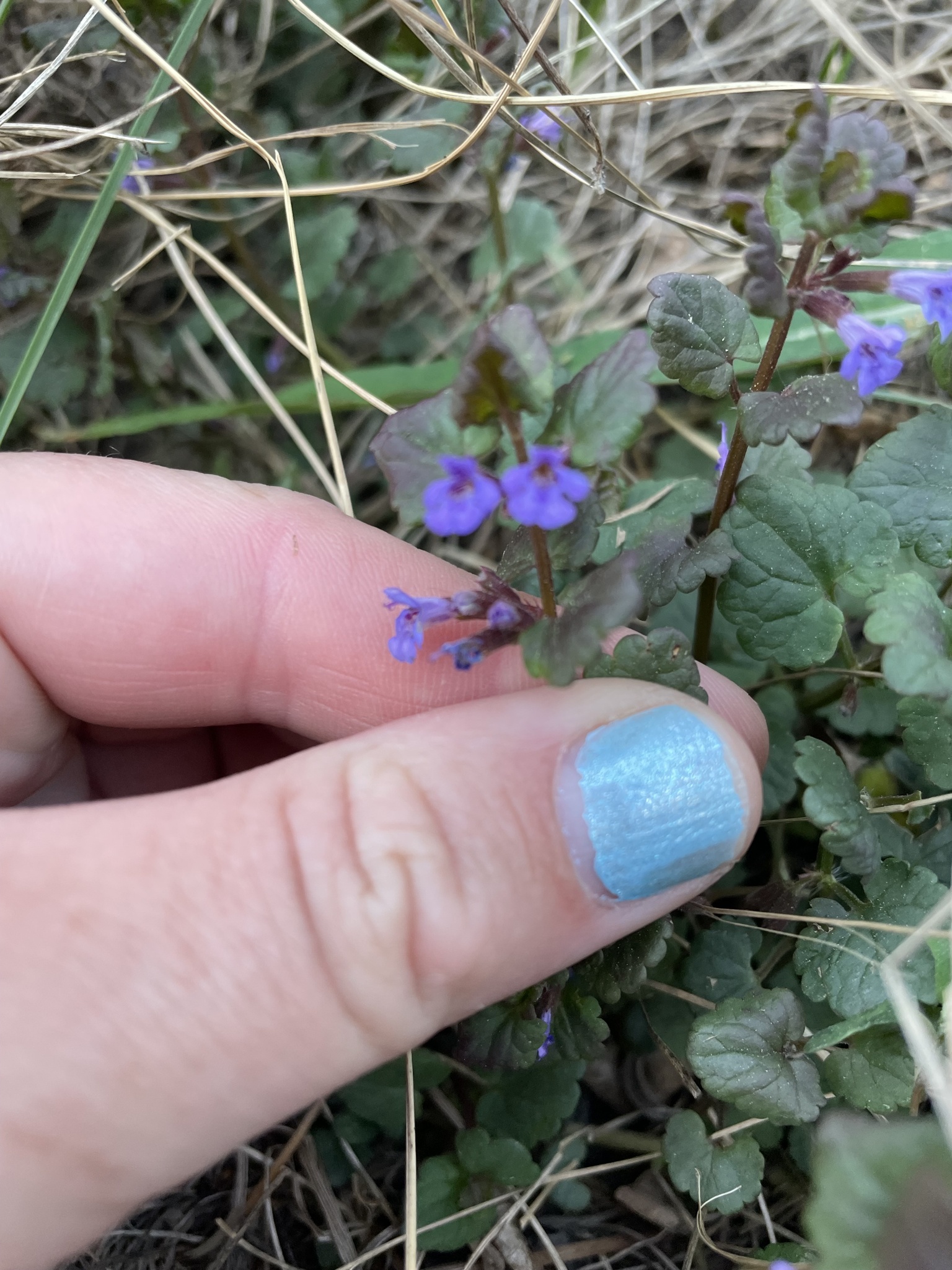
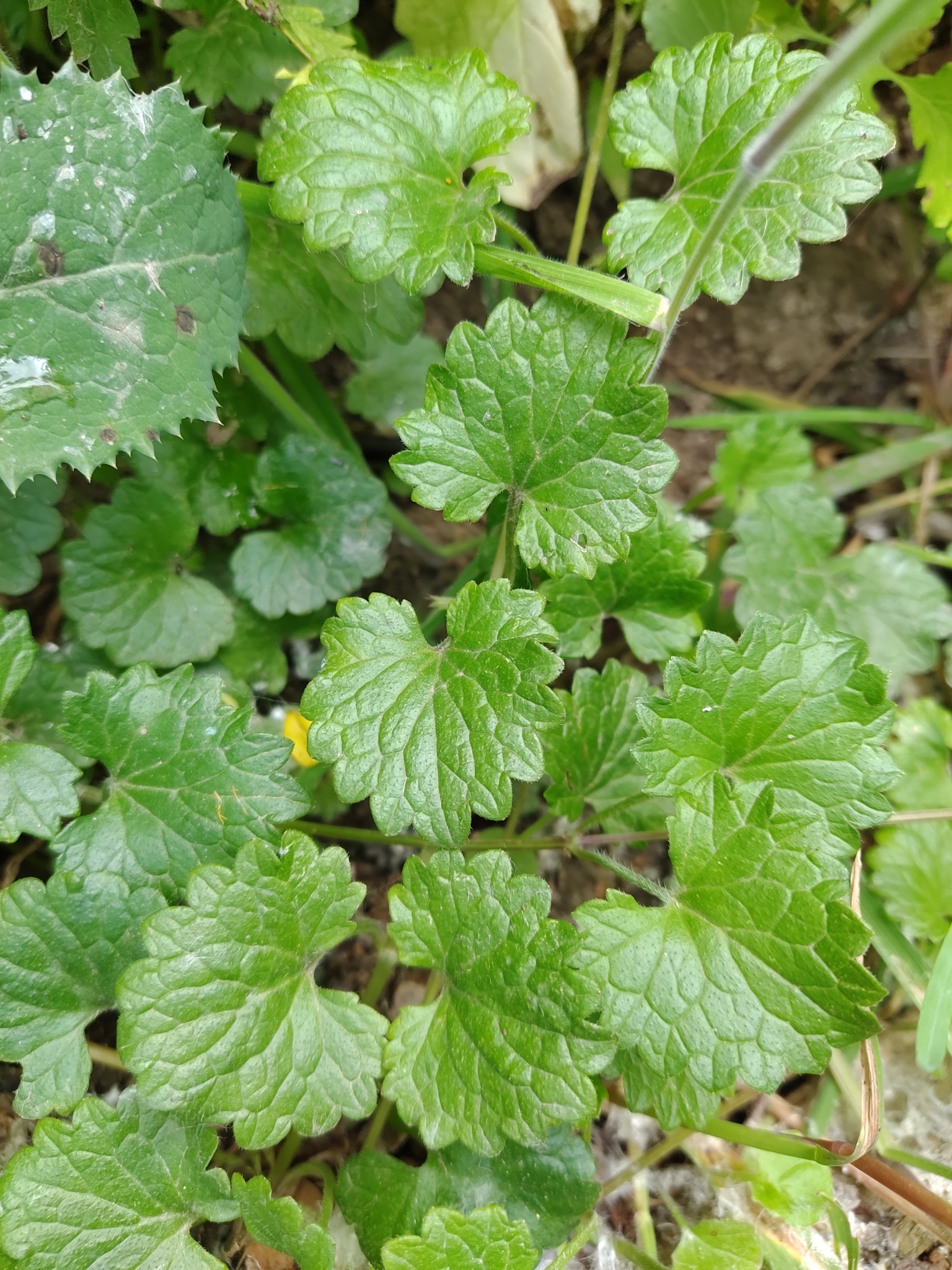
A low carpet develops from square stems creeping along the ground and rooting at each node, a characteristic Lamiaceae feature. Opposite, round to kidney-shaped leaves have scalloped edges and measure 2–3 cm (0.8–1.2 in) long, on stalks 3–6 cm (1.2–2.4 in) long. Crushing the foliage releases a distinctly minty smell. 4 6
Tubular, bilaterally symmetrical flowers range from violet-blue to lavender and occur in groups of two or three in the leaf axils. Flowering extends from mid-spring to midsummer in northern temperate climates, depending on conditions, with a spring peak. 4
Growing conditions strongly affect size: stems range from 5–50 cm (2–20 in) long, while upright growth is often below 20 cm (8 in). An isolated plant without runners or roots at its nodes is a young seedling. The characteristic dense carpet develops only after several months of clonal expansion. 4
Dwarf mallow (Malva neglecta), henbit (Lamium amplexicaule) and purple dead-nettle (Lamium purpureum) share ground ivy’s habitat and often cause confusion. Dwarf mallow has rounded leaves but round rather than square stems and different hairiness. Both dead-nettles belong to Lamiaceae, but lack the same pattern of rooting at nodes and the pronounced minty scent of crushed ground-ivy leaves. 6 7
Useful taxonomy
Within Lamiaceae, Glechoma hederacea belongs to subfamily Nepetoideae, tribe Mentheae, alongside mint and sage. It is a diploidized tetraploid, with 2n = 36 chromosomes (x = 9), confirmed by enzyme analyses of northern and central European populations. 5 9
Diploidization means that the species behaves genetically like a diploid despite its tetraploid origin. Enzyme loci segregate in a conventional disomic pattern, without the usual complications of recently formed polyploids. 9
The plant is also gynodioecious: some individuals bear only female flowers, others hermaphroditic flowers. Female flowers depend on pollen from hermaphrodites, helping explain why an isolated carpet may flower without setting many seeds. 4
Habitat and range
Across its native range, from Europe to western Siberia and Xinjiang according to POWO, ground ivy occupies open woodland, moist grassland, banks and lawns. It tolerates shade and gentle sun provided the soil stays moist, and established carpets withstand winter cold down to about −25 °C (−13 °F) without damage. 1 6
European settlers carried it to several continents. Introduced populations in the United States and Canada form dense carpets at lawn and woodland edges, helped by tolerance of repeated mowing. A stem fragment left on the ground can root within days, making simple hand-pulling unreliable for eradication. 4 7
In France, where it is native, ground ivy is not among the monitored invasive species. Its presence in woodland and lawns forms an ordinary part of the local flora. 2
Life cycle and reproduction
Two reproductive routes operate together. By seed, each pollinated flower produces up to four seeds, released when the stem bends and places ripe seed near the parent; ants may carry it farther. Germination follows within days of contact with moisture, and dry storage for about a month improves germination rates. 4
Clonal expansion provides the other route. Creeping stems bend toward the ground and root at every node, producing new plants independent of the parent. A single clone can cover several square meters, or tens of square feet, explaining how quickly a carpet develops in a suitable bed. 4
Wild bees of the genera Anthophora and Osmia pollinate the flowers. Gall-forming insects such as Rondaniola bursaria also visit the plant, without seriously reducing the vigor of the carpet. 4
Uses and risks
Before hops became widespread in the late 15th century, Saxons and English brewers used ground ivy to clarify and preserve beer. That well-documented use survives in the English names alehoof and gill-over-the-ground. Young leaves were also cooked as a vegetable or infused for respiratory complaints. 4
The essential-oil content is approximately 30 times lower than that of pennyroyal (Mentha pulegium), a related and substantially more toxic mint-family plant. Nevertheless, large amounts pose a documented risk to horses, whether eaten fresh or dried in hay, with reported excessive salivation and breathing difficulty. 4 8
Ingestion by cats and dogs can cause digestive upset. Traditional human food use does not remove the need for certain identification before consuming it outside a supervised culinary setting. 8
Varieties, look-alikes and related plants
Few stable cultivars are recorded; most plants sold correspond to the wild type. Variegata is the most widespread selection, with cream-white markings. It is often grown in hanging pots rather than in the ground because it is less vigorous than the typical plant. 6
Common look-alikes include:
- purple dead-nettle (Lamium purpureum), with more pointed leaves and pink-purple rather than violet-blue flowers;
- henbit (Lamium amplexicaule), whose upper leaves directly clasp the stem;
- dwarf mallow (Malva neglecta), with round rather than square stems and no pronounced minty smell.
These distinctions matter because ground ivy often grows alongside the same species, at lawn or open-woodland edges, creating frequent opportunities for confusion in the field. 7
Main sources
- Plants of the World Online / Kew, Glechoma hederacea L.
- INPN / MNHN, Glechoma hederacea L., 1753
- Wikidata, Glechoma hederacea
- Wikipedia EN, Glechoma hederacea
- Wikipedia DE, Gundermann (Glechoma hederacea)
- NC State Extension Gardener Plant Toolbox, Glechoma hederacea
- bplant.org, Ground Ivy (Glechoma hederacea)
- Rutgers NJAES FS938, Poisonous Weeds in Horse Pastures
- Widén et al., Enzyme variation and inheritance in Glechoma hederacea (Lamiaceae), a diploidized tetraploid
- Plants For A Future, Glechoma hederacea
Frequently asked questions
Is ground ivy a true ivy?
No. Glechoma hederacea belongs to Lamiaceae, the mint family, rather than Araliaceae, the family of Hedera. Its common name refers only to its ivy-like creeping habit.
How can ground ivy be distinguished from dead-nettles?
Ground ivy has square stems that root at every node and a minty smell when crushed. Dead-nettles such as Lamium purpureum have neither the same rooting pattern nor such a pronounced scent.
Is ground ivy toxic?
Large quantities pose a documented risk to horses, with possible salivation and breathing difficulties. Cats and dogs can develop mild digestive upset; historical human food use involves small quantities.
Is ground ivy invasive in a garden?
It is native and not classified as invasive in France. Outside its native range, notably in North America, it forms dense, hard-to-remove carpets regarded as weeds.
Can ground ivy be eaten?
Young leaves have been used in salads and infusions for centuries, and to clarify beer before hops became common. That historical use does not remove the need for certain identification before consumption.
Why do some ground ivy leaves have white markings?
Cream-white variegation characterizes the ornamental cultivar Variegata, often sold in hanging pots. It does not change the species’ growing requirements.
How can ground ivy be kept from spreading?
Cut runners regularly at the edge of a bed and divide the carpet when its center becomes too dense. A mineral border or path helps contain its spread.
Similar plants
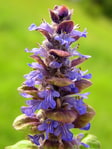
If you are unsure about a plant’s toxicity, ask a botanist or veterinarian for advice.