
Madonna lily (Lilium candidum, )
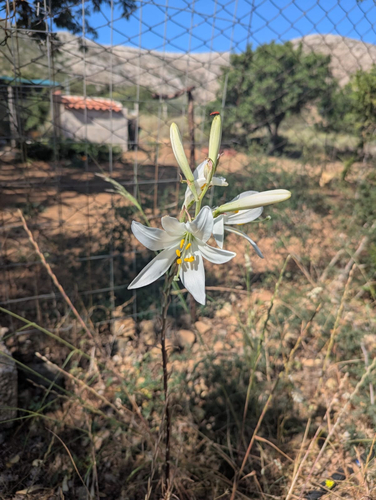

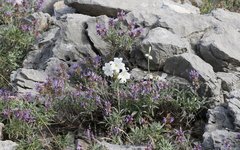
Madonna lily (Lilium candidum L.) is a true lily in the Liliaceae, known for its winter rosette and summer stems of strongly fragrant white flowers. POWO places its native range from the southern Balkans to southwestern Turkey and the Levant; it is introduced or naturalized elsewhere, including France. It needs very shallow planting, well-drained neutral to calcareous soil and absolute caution around cats.
Read moreMadonna lily, Annunciation lily, Ascension lily, French lily, St Joseph's lily and white lily
Allow a few hours of direct sun per day, preferably morning or evening.
Sheltered full sun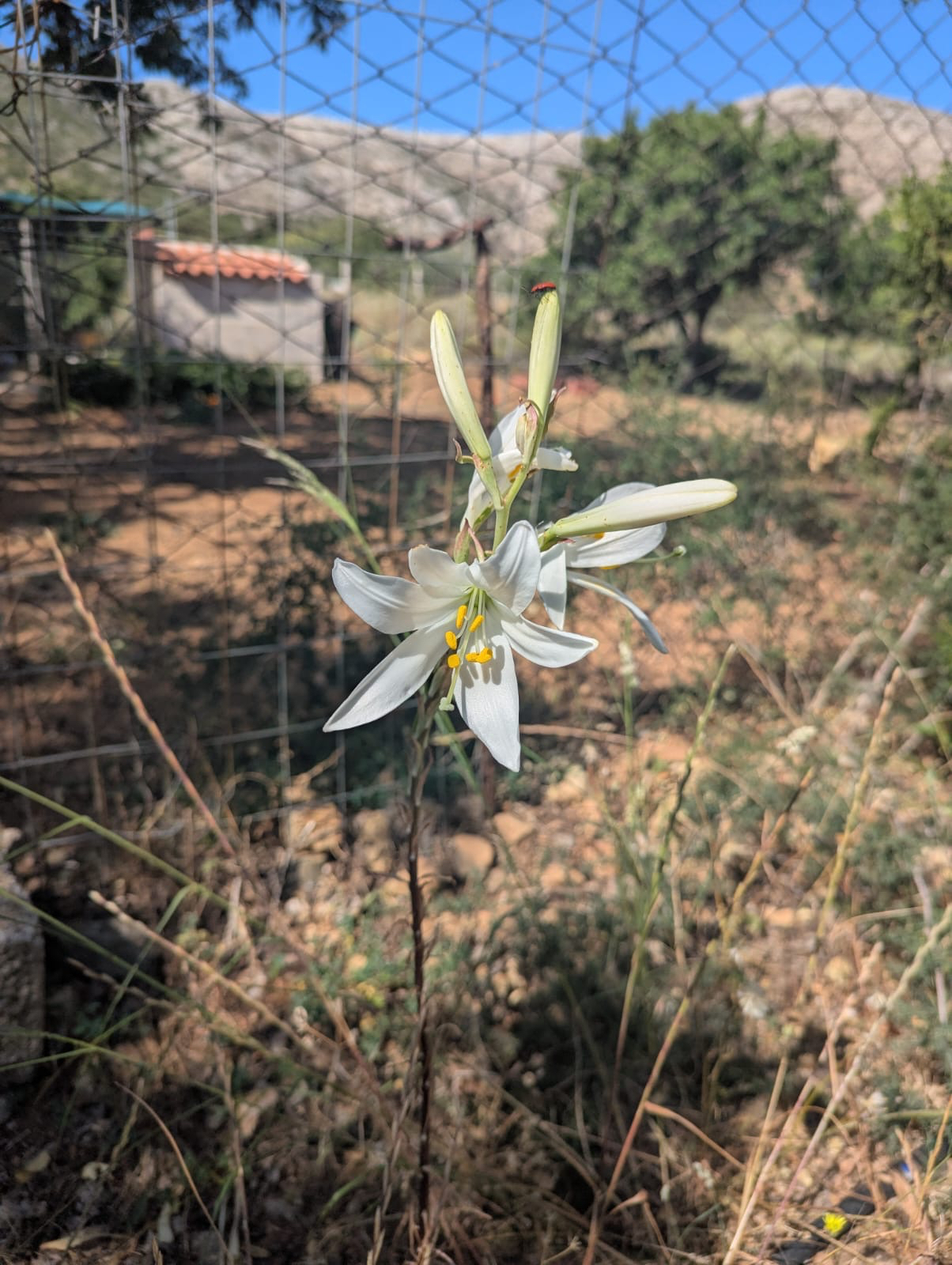
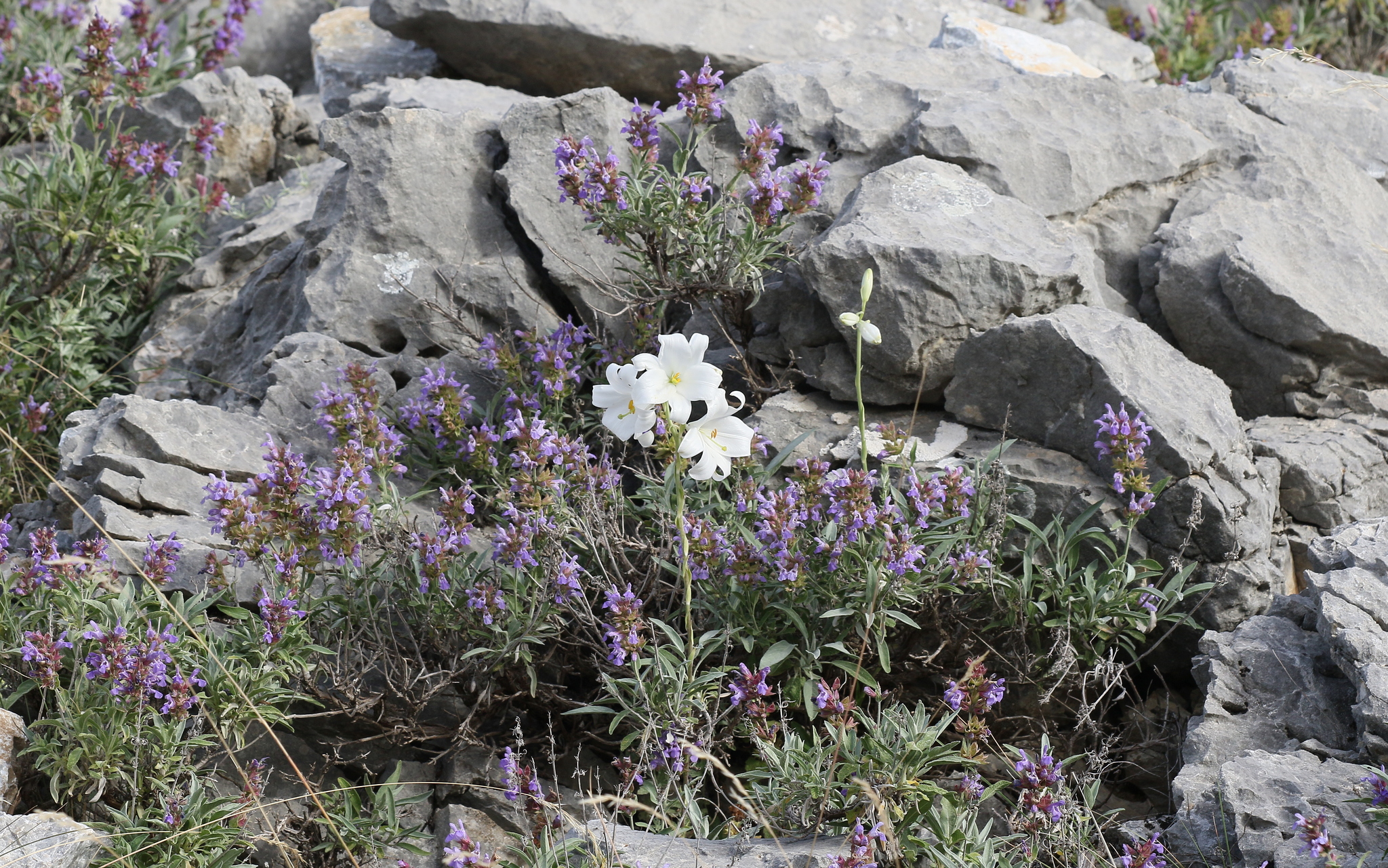


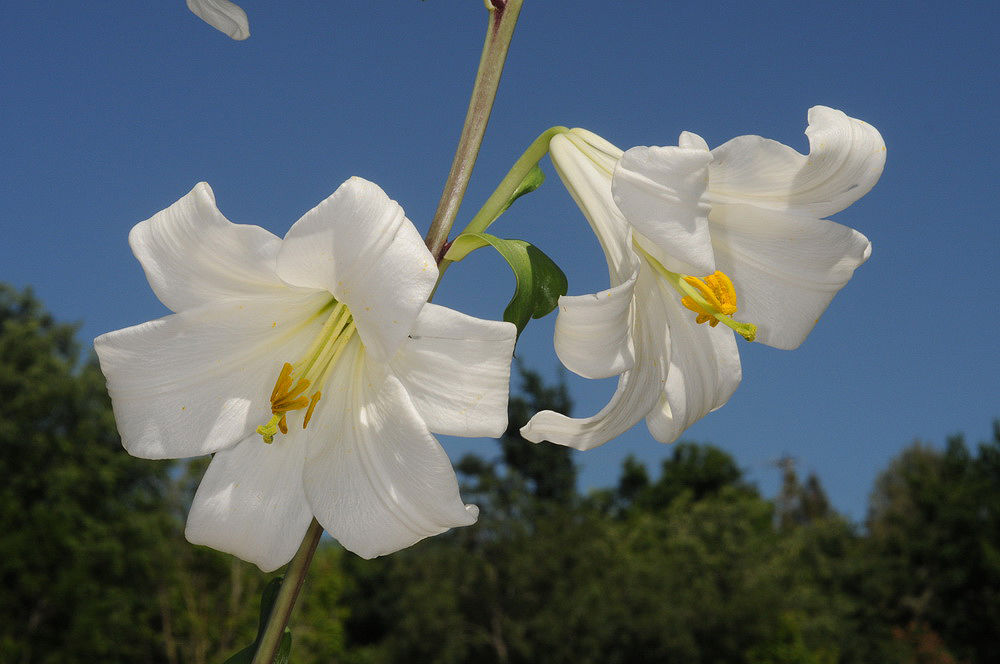
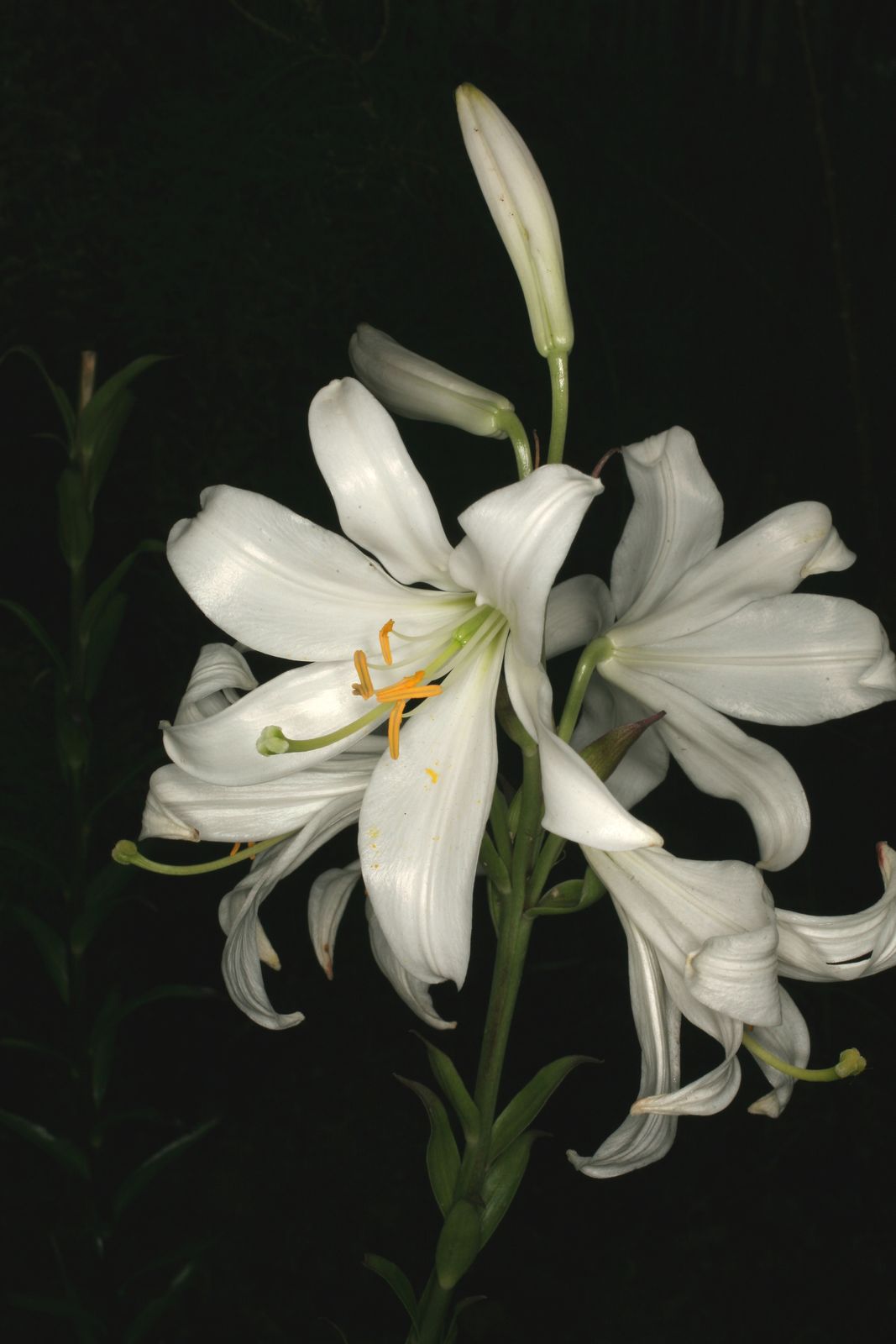

© photo
Jennie Pistevos · cc-by
Kostas Zontanos · cc-by
Christoph Moning · cc-by
Taken Jun 22, 2020 by Rossu . (cc-by-sa)
Taken Mar 1, 2022 by Annemarie Ahrens-Stehle (cc-by-sa)
Taken Oct 16, 2022 by Jim Knopf (cc-by-sa)
Taken Apr 5, 2022 by Jim Knopf (cc-by-sa)
© copyright of the Board of Trustees of the Royal Botanic Gardens, Kew.


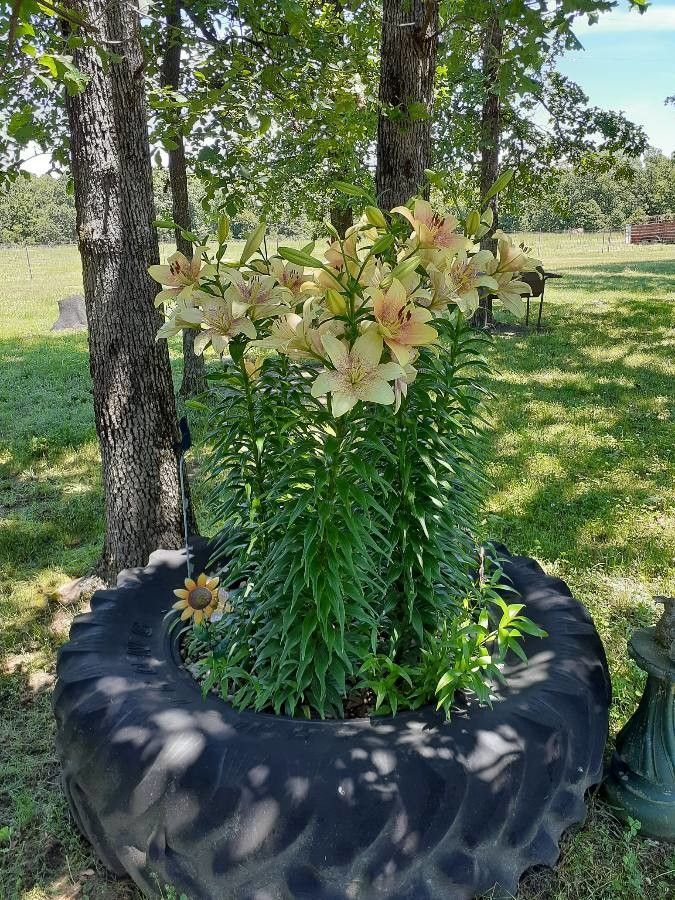


Global distribution
POWO places the native range from southern North Macedonia to southwestern Turkey, and from Lebanon to Israel, with detailed native listings for the Aegean, Greece, northwestern Balkans, Turkey and the Levant. France and Corsica are introductions, consistent with garden cultivation without a French invasive status.
- Native6
- Introduced4
- East Aegean Islands
- Greece
- Northwestern Balkans
- Turkey
- Lebanon-Syria
- Palestine and Israel
- Mainland France
- Corsica
- Italy, Sicily and Sardinia
- Great Britain and Germany
Hexagons: regions where the plant occurs. Green dots: native range.1
Identity
With white, strongly fragrant flowers and an unusual winter rosette, Madonna lily is Lilium candidum L., the accepted name in POWO and WFO. Linnaeus published it in Species Plantarum in 1753. Both references retain it in Lilium, within the Liliaceae. The binomial identifies a particular true lily, not every white flower sold for a bouquet. 1 2
Peace lilies, callas, daylilies, Peruvian lilies and lily-of-the-valley belong to other genera, despite the shared English word “lily” or French lys. Their growing requirements and toxic profiles differ. Establishing that a plant really is Lilium candidum matters before applying advice about its cultivation or the severe danger true lilies pose to cats. 6 9
RHS also lists Annunciation lily, Ascension lily, French lily, St Joseph's lily and white lily for this species. French names such as lis blanc, lys blanc and lys de la Madone likewise need to remain linked to the scientific name. “White lily” describes a color, but it does not by itself distinguish this species from other white-flowered lilies. 5
Recognition
Its growth cycle is more distinctive than flower color alone. Lilium candidum produces a leaf rosette in fall, often keeps it through winter, and sends up an upright flowering stem in spring. The University of Missouri emphasizes this difference from many other garden lilies. A plant with winter leaves should therefore not automatically be expected to behave like a conventional spring-emerging hybrid. 7
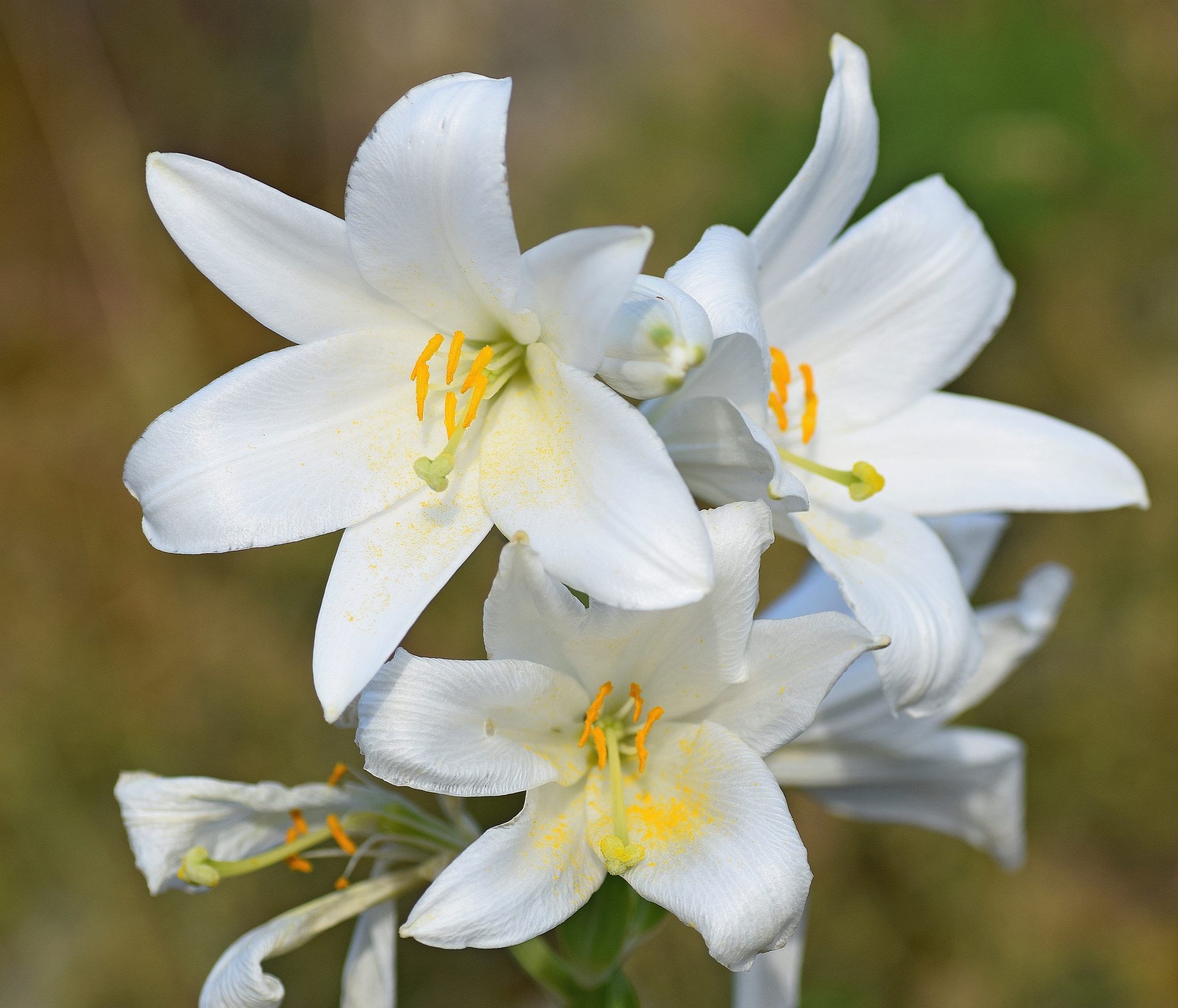
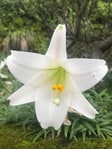
RHS gives a usual mature height of 1–1.5 m (3.3–5 ft), with taller stems possible in very favorable conditions. Glossy dark green leaves are scattered along the stem, followed by a terminal raceme of fragrant white flowers. RHS describes pure white trumpets 6–8 cm (2.4–3.1 in) long, with up to about twenty flowers in a raceme. 5
Yellow pollen stands out on the anthers. It helps identify the flower as a true lily, but it also matters when stems are cut: a cat can brush against a flower and swallow pollen while grooming. A bouquet remains an exposure risk even if the cat never chews a leaf or reaches the bulb. 9 7
Taxonomy and names
Major botanical databases consistently accept Lilium candidum L. WFO lists historical synonyms including Lilium peregrinum, Lilium album and Lilium striatum. POWO also treats Lilium candidum var. salonikae as a synonym. These older names belong in the history of the species rather than being assumed to represent separate plants whenever they appear in a catalog. 2 1
For gardeners, the practical question is whether the bulb really is Lilium candidum. Another white lily could be Lilium longiflorum, a white Oriental hybrid or an unidentified florist's lily. Historical names help interpret old references, but they do not justify selling every named form as an independent taxon. Check the botanical identity alongside the flower's appearance. 5 6
The name Madonna lily also carries a substantial cultural history. Missouri recounts its long cultivation and symbolism in religious art. That history explains its enduring garden appeal, but it does not replace botanical identification or the precautions needed around cats. Its familiar place in paintings and gardens is not evidence that a bouquet is safe for pets. 7
Habitat, range and status
Kew's native-range summary runs from southern North Macedonia to southwestern Turkey, and from Lebanon to Israel. POWO's detailed distribution lists the East Aegean Islands, Greece, the northwestern Balkans, Turkey, Lebanon-Syria and Palestine as native areas. These listed regions describe its botanical range rather than the much wider area in which it has long been cultivated. 1
France and Corsica are introductions in the same source. GBIF records the taxon in its backbone and allows French occurrence records to be consulted, but an occurrence does not make the plant native or establish a national invasive classification. It has no French invasive status in the references used here. This regional assessment should not be transferred to another jurisdiction. 1 3 4
Its growing conditions reflect a Mediterranean pattern: drainage, neutral to calcareous soil, a relatively dry summer rest, strong light and moving air. The Lilium Species Foundation describes slopes, volcanic soils, woodland edges and open forests. RHS recommends well-drained soil enriched with organic matter, with the bulb planted very close to the surface. The shallow planting requirement is especially important when comparing it with other lilies. 11 5
Life cycle and cultivation
Planting depth can determine success or failure. RHS says to plant Lilium candidum very near the surface. Missouri specifies no more than about 2–3 cm (0.8–1.2 in) of soil over the bulb, unlike many lilies planted much deeper. Burying it as though it were a conventional lily hybrid can prevent successful establishment. 5 7
Late summer is the planting season, often August to early September in the Northern Hemisphere schedule described, before the rosette develops. Watering after planting helps roots and fall foliage form; subsequent watering should be measured. During active growth without rain, 10–20 mm/week (0.4–0.8 in/week) is a more useful starting point than constantly waterlogged soil. In another hemisphere, follow the corresponding local season and the plant's growth rather than those months alone. 7 5
Choose fertile, well-drained soil that is neutral to alkaline. Missouri recommends improving tight soil with well-rotted organic matter and considering raised beds if drainage remains poor. A light mulch may keep soil cooler in summer, but must not bury the crown or hold moisture against the bulb. Fertilizer cannot compensate for standing water around a shallow-planted bulb. 7
Spent flowers can be removed after bloom, but leaves must remain while green so the bulb can rebuild its reserves. Propagate by fresh seed or by separating offsets after the foliage dies back. Missouri notes that seed-grown replacements can be useful when old stocks carry viruses. Do not cut healthy foliage early simply to make a border look tidy. 5 7
Toxicity and safety
True lilies must be kept out of homes and gardens accessible to cats. The FDA warns that stems, leaves, flowers, pollen and even vase water from true lilies and daylilies can cause fatal kidney failure in cats in less than three days. Lilium candidum belongs to this true-lily group; its traditional use as a bouquet flower does not remove the danger. 9
ASPCA lists Lilium species as toxic to cats and non-toxic to dogs and horses. The evidence should not be restated as a blanket canine or equine toxicity claim. For dogs, the FDA chiefly notes possible stomach upset without the feline kidney injury; ASPCA does not list toxicity to horses in this entry. These are different audience-specific statements, not interchangeable warnings. 10 9
Early signs in cats can include reduced activity, drooling, vomiting and appetite loss, followed by renal signs. Time matters: if a cat has chewed a lily, licked pollen or drunk water from a vase containing Lilium, contact a veterinarian or veterinary poison control center immediately. Do not wait for kidney symptoms before asking for help. 9 7
Pests and diseases
Inspect early for the lily leaf beetle. UMass Extension explains that it lays eggs and develops chiefly on true lilies (Lilium) and fritillaries. Both adults and larvae eat leaves, stems, buds and flowers, sometimes stripping the plant completely. Finding the pest before extensive feeding is more useful than waiting until the damage is conspicuous. 8
On a small planting, manual inspection is practical: remove red adults, rows of eggs beneath leaves and larvae. The cited schedule extends mainly from April into early fall, depending on local climate; elsewhere, follow the corresponding active season. Any treatment must comply with local product labels and pollinator protection. Early monitoring and reducing infestations remain the main priorities. 8
Viruses, botrytis and rot are the principal disease concerns. Missouri names lily mosaic, cucumber mosaic and botrytis as important problems, and emphasizes drainage to limit root rot. A weak, mottled, virus-infected old plant cannot be repaired with fertilizer. Remove affected stock and start again with healthy material rather than trying to force more growth from an unhealthy bulb. 7 5
Look-alikes and horticultural names
White bouquets commonly invite confusion with Lilium longiflorum, Easter lily, and modern white hybrids. Missouri explicitly warns against confusing Lilium candidum with Lilium longiflorum, whose flowers can look similar. The shared white trumpet shape does not establish that bulbs have the same growth cycle or should be planted at the same depth. 7
Plants called lilies outside Lilium need separate assessment. The FDA distinguishes true lilies and daylilies, highly dangerous to cats, from peace lilies and callas, which chiefly cause oxalate irritation. Lily-of-the-valley and gloriosa are dangerous through other mechanisms. A common name alone cannot identify the risk, even when the flower resembles a familiar lily. 9
Horticultural forms around Lilium candidum are fewer and less standardized than the large Asiatic and Oriental hybrid groups. Interpret historical names such as var. salonikae cautiously because POWO places them in synonymy. Hybrids and garden names such as “Sultan Zumbak” should be checked with the grower. A name's presence in specialist horticulture does not make it the pure species. 1 11
Main sources
- Plants of the World Online / Kew, Lilium candidum L.
- World Flora Online, Lilium candidum L.
- GBIF Backbone Taxonomy, Lilium candidum L.
- GBIF occurrence search, Lilium candidum in France
- Royal Horticultural Society, Lilium candidum (IXb/a)
- Royal Horticultural Society, Lilium genus
- University of Missouri IPM, Madonna Lily: Beauty through the Ages
- UMass Extension, Lily Leaf Beetle
- U.S. FDA, Lovely Lilies and Curious Cats
- ASPCA, Lily toxicity entry
- Lilium Species Foundation, Lilium candidum
Frequently asked questions
Why does Lilium candidum not start growing like other lilies?
It has a different cycle: an autumn rosette and very shallow planting, ideally in August or early September in the Northern Hemisphere schedule described. A bulb buried like a conventional hybrid lily often fails.
Can a bouquet of Madonna lilies be kept with a cat?
No. The FDA and ASPCA treat true lilies as highly dangerous to cats, including pollen and vase water. Keep Lilium out of homes with cats.
Is it toxic to dogs?
It is not classed as causing kidney toxicity in dogs. ASPCA lists Lilium species as non-toxic to dogs and horses, while the FDA chiefly mentions possible stomach upset in dogs.
What soil suits it best?
Fertile, well-drained, neutral to calcareous soil. Missouri and RHS emphasize drainage and very shallow planting.
Should the stem be cut after flowering?
Spent flowers can be removed, but green leaves must stay. Cutting them too early prevents the bulb from rebuilding its reserves.
Is it invasive in France?
No French invasive status is reported. POWO lists France as a region of introduction, but the cited references do not establish a French invasive alien species classification.
Similar plants

If you are unsure about a plant’s toxicity, ask a botanist or veterinarian for advice.