
Easter lily (Lilium longiflorum, )
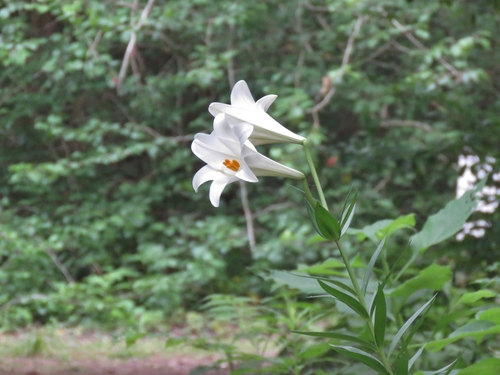
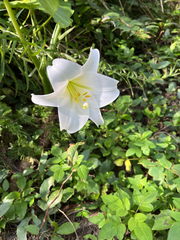
Easter lily (Lilium longiflorum Thunb.) is a true lily in the Liliaceae, known for the large white trumpet flowers sold in spring pots. A bulbous perennial from the islands of East Asia, it is an important forcing crop. Like all true Lilium, it must be kept out of homes and gardens used by cats.
Read moreEaster lily, trumpet lily, white trumpet lily and Bermuda lily
Allow a few hours of direct sun per day, preferably morning or evening.
Full sun to light partial shade, with moist soil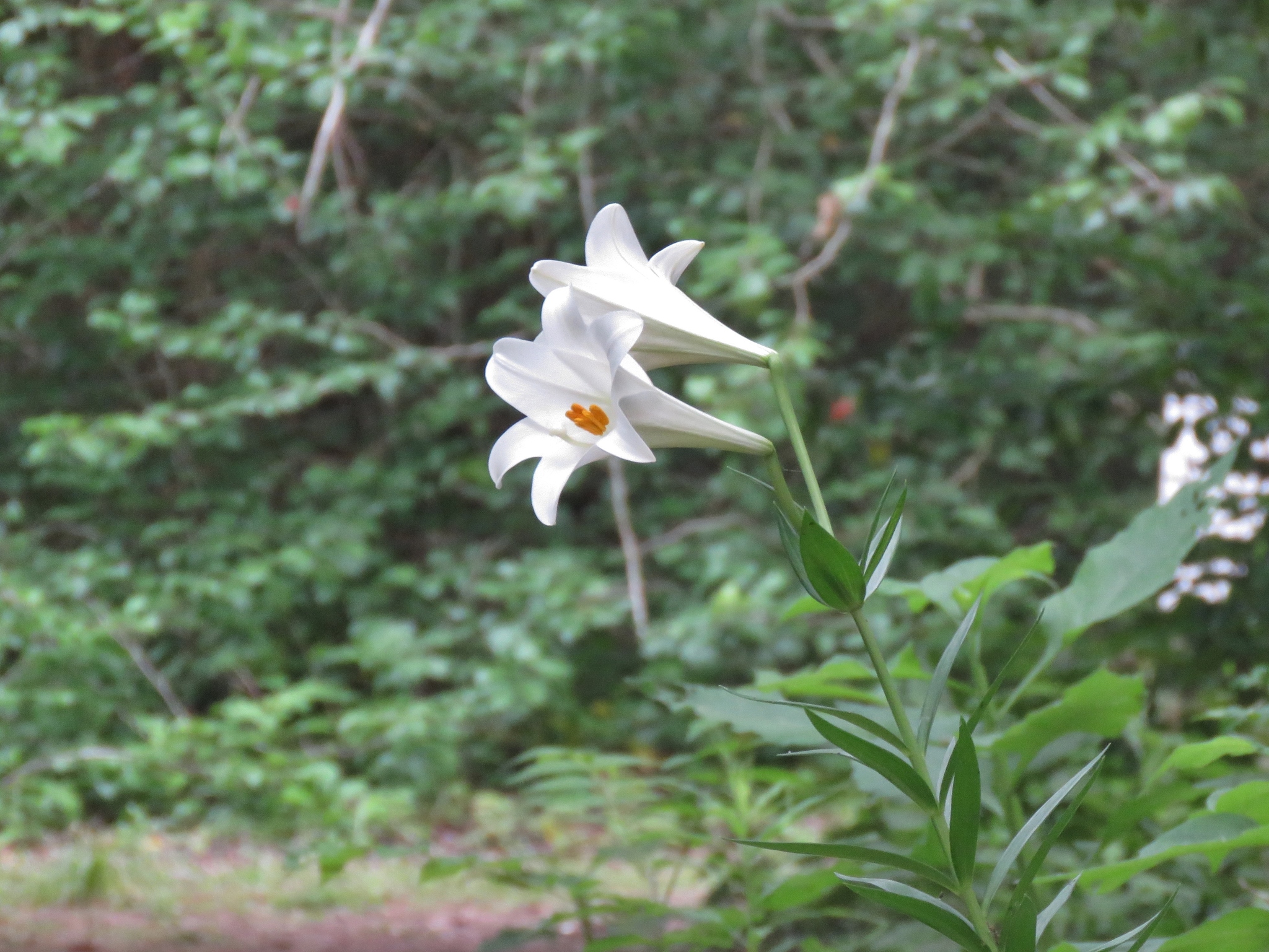
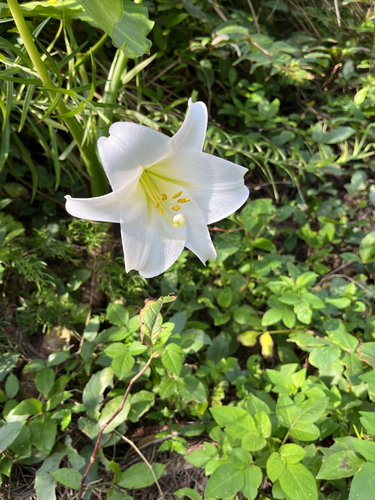


© photo
Annika Lindqvist · cc-by
邱承慶 · cc-by
Taken May 17, 2022 by Arielle (cc-by-sa)
Taken Jan 28, 2021 by alvarez erick (cc-by-sa)
© copyright of the Board of Trustees of the Royal Botanic Gardens, Kew.




Global distribution
POWO, WFO and GBIF treat Lilium longiflorum as an accepted species from the islands of East Asia, with native territories around southern Japan, the Ryukyu/Nansei-shoto, Taiwan and the northern Philippines, depending on the database. It is cultivated in mainland France, with no published invasive status.
- Native4
- Introduced2
- Southern Japan
- Nansei-shoto / Ryukyu
- Taiwan
- Batan and the northern Philippines
- Bermuda
- Southeastern United States
Hexagons: regions where the plant occurs. Green dots: native range.1
Identity
Easter lily (Lilium longiflorum Thunb.) is an accepted species of true lily in the Liliaceae. POWO/Kew links its name to Thunberg's 1794 publication and describes it as a bulbous geophyte of temperate to subtropical biomes. 1
The scientific name describes the plant: longiflorum means long-flowered. Its fragrant white trumpets have given it the English names trumpet lily, white trumpet lily and Bermuda lily. The French names lys de Pâques and lis à longues fleurs likewise refer to Easter or the long flowers. 4 3
“True lily” is an essential distinction. Lilium longiflorum is neither lily-of-the-valley, peace lily nor calla lily. These plants share common names containing “lily,” but differ in botany and toxicity. The major risk here is the danger true Lilium pose to cats. 8 11
Recognition
Spring growth emerges from a scaly bulb without a continuous dry outer tunic. It produces an upright stem, simple or sparsely branched, bearing numerous narrow green leaves, lance-shaped to linear-lanceolate. Horticultural references often describe garden plants around 45 cm–1 m (1.5–3.3 ft) tall, sometimes taller depending on bulb size, selection and conditions. 4 5 6
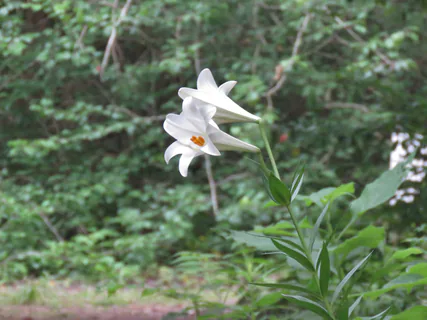
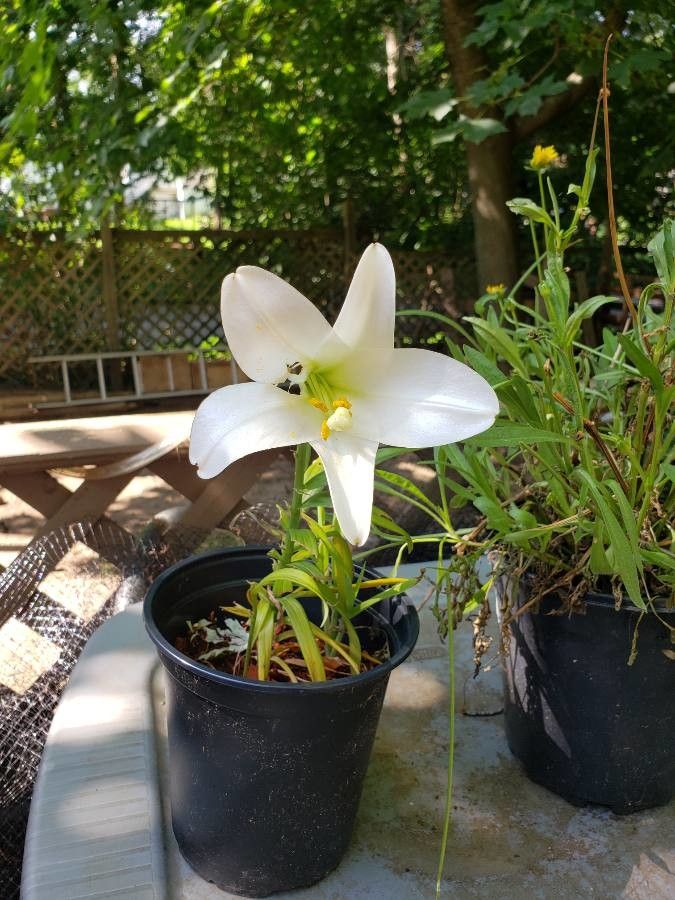
The flower offers the clearest identifying feature: a long, fragrant white to cream funnel or trumpet, with six tepals forming an elongated corolla and sometimes a greenish throat. Commercial potted plants are often compact, with several synchronized buds, while an established garden plant may look taller and less uniform. 5 6
Natural flowering usually falls between late spring and summer, depending on climate. Pots sold around Easter do not contradict that timing: they have been grown under glass to flower on a specific date. A forced pot and a garden bulb can therefore bloom at different times without either being unusually early or late. 5 7
Taxonomy and distribution
The botanical reference is Lilium longiflorum Thunb. POWO, WFO and GBIF treat it as an accepted name within Lilium. Their detailed lists of native and introduced territories may differ, but agree on an origin in the islands of East Asia. 1 2 3
Its native range encompasses southern Japan and neighboring island groups, with Taiwan and the northern Philippines included within the database treatments. Bermuda, where the name Bermuda lily acquired horticultural importance, belongs to its history of cultivation and introduction rather than its original botanical range. 1 3
In mainland France, Lilium longiflorum is cultivated as a potted plant, garden bulb or cut flower. No French invasive status is published for the species, and the cultivation and taxonomic records do not establish problematic naturalization there. This French assessment does not determine its status in other countries. 1 4
Easter lilies and forcing
Easter lily is both a botanical species and a carefully scheduled horticultural crop. Growers adjust planting dates, temperatures and greenhouse management to produce open buds around Easter. This explains the flowering display; professional forcing is not a home-growing protocol. 5 7
A forced pot is often more compact than a garden lily. Grown to look decorative on a particular date, it naturally becomes depleted after flowering. To keep it, remove spent flowers, provide bright, cool conditions, keep the potting mix lightly moist, then allow the leaves to yellow before dormancy or outdoor planting. 5 6
Keeping the plant is not a priority in a home with cats. A forced pot, a fallen flower, pollen on a table or water in an accessible outer pot can still expose a cat. In that setting, the safe recommendation is to keep true Lilium out of the home. 11 12
Garden cultivation
In a garden, Lilium longiflorum needs the basics shared by true lilies of moist soils: a bulb planted without prolonged drying, fertile humus-rich soil, strict drainage and plenty of light while the root zone stays cool. Horticultural references recommend sun or light partial shade, with particular attention to containers and wet winters. 4 6 8
Watering should support growth without drowning the bulb. A practical starting point in the ground is 10–20 mm/week (0.4–0.8 in/week) when it does not rain, with more in a hot container, then less after flowering and yellowing. A dry surface is not the only signal to watch: neither the bottom of the pot nor the bulb's neck should remain saturated. 6 8
Spent flowers can be removed to prevent seed formation, but stems and leaves must stay while green. The foliage replenishes the bulb. Cutting back an actively growing plant, or discarding a pot as soon as the flowers fall, explains many failures to flower the following year. 5 6
Propagation uses offsets, bulb scales or seed. For gardeners, the important limitation is time: a plant raised from a scale or seed takes time to reach flowering size, and hybrids or selections do not always come true from seed. 8
Common problems
Typical problems are those of true lilies: lily beetles, aphids, thrips, slugs, botrytis, viruses and bulb rot. Aphids do more than damage tissues while feeding: they can help spread viruses, making early inspection of young stems and buds worthwhile. 8 6
Botrytis and leaf spots develop especially when foliage stays wet for long periods. Watering at soil level, spacing stems, avoiding stagnant corners and removing badly affected tissues reduce risk. A crowded lily, or one kept in hot, humid indoor conditions, becomes more vulnerable. 6 4
A soft or foul-smelling bulb almost always points to a water problem: undrained potting mix, a full saucer, clay soil saturated in winter or overly damp storage. At the other extreme, a bulb that dries out completely before planting is slow to recover. The balance is moist soil during growth and dormant conditions that never become airless. 8 5
Toxicity and cut flowers
Cats face the central safety risk. The ASPCA lists Lilium species as toxic to cats, with kidney damage as a clinical sign, and non-toxic to dogs and horses. The FDA states that true lilies and daylilies can cause severe kidney failure in cats after exposure to the plant, pollen or vase water. 9 11
Pet Poison Helpline emphasizes that small quantities matter: chewing a leaf or petal, licking pollen from fur or drinking vase water can create an emergency. Merck Veterinary Manual also describes this feline nephrotoxicity of true lilies and the importance of prompt treatment with kidney monitoring. 12 13
Dogs require a separate description: the FDA chiefly reports possible digestive upset, without the kidney failure characteristic of cats. Toxicity should not be generalized to horses; the ASPCA's Lilium species entry lists them as non-toxic. No food or medicinal use of Easter lily is published in either case. 9 11
Removing the anthers is not enough. It reduces pollen stains but does not make the plant safe: leaves, petals, stems and vase water remain a concern. If a cat may have touched, chewed or licked any part of Lilium longiflorum, call a veterinarian or animal poison service immediately. 10 12
Look-alikes and buying plants
“White lily” is too vague a name. Lilium longiflorum can be confused with longiflorum hybrids, LA or LO hybrids, white regal lilies, white Oriental lilies and other true Lilium sold in pots or bouquets. For feline safety, that distinction changes little: a true Lilium or a related hybrid must remain inaccessible to cats. 8 11
The Easter name does not guarantee a pure species. In commerce it may refer to the familiar white pot, a cultivar such as Nellie White, or a related trumpet-flowered hybrid. Before buying, check the binomial, horticultural group, expected height, scent, local hardiness and whether cats use the space. 5 4
False lilies also need to be distinguished. Lily-of-the-valley (Convallaria) is dangerous because of cardiac glycosides; callas and peace lilies irritate through oxalates. Daylilies are not Lilium, but the FDA likewise treats them as highly dangerous to cats. These mechanisms should remain distinct: Lilium longiflorum is a true lily with a feline kidney risk. 11
Main sources
- Plants of the World Online / Kew, Lilium longiflorum Thunb.
- World Flora Online, Lilium longiflorum Thunb.
- GBIF Backbone Taxonomy, Lilium longiflorum Thunb.
- Royal Horticultural Society, Lilium longiflorum
- University of Wisconsin Extension, Easter Lily, Lilium longiflorum
- Missouri Botanical Garden Plant Finder, Lilium longiflorum
- University of Missouri Extension, Easter lilies
- NC State Extension Gardener Plant Toolbox, Lilium
- ASPCA, Lily toxicity entry
- ASPCA, Which Lilies Are Toxic to Pets?
- U.S. FDA, Lovely Lilies and Curious Cats
- Pet Poison Helpline, Lilies
- Merck Veterinary Manual, Toxicity to Animals of Lilies
Frequently asked questions
Is Lilium longiflorum a true lily?
Yes. It is an accepted species of Lilium in the Liliaceae, so it shares the risk profile of true lilies for cats.
Why is it called Easter lily?
The name reflects horticultural use: bulbs are grown and forced to produce white potted plants in spring. Outside, without forcing, flowering is more usually in late spring to summer.
Where does the species come from?
Taxonomic databases place it in the islands of East Asia, notably southern Japan/Ryukyu, Taiwan and the northern Philippines, depending on their scope.
Can an Easter pot be planted out afterward?
Yes in a suitable climate, in moist, well-drained soil after flowering, without cutting green foliage. It is not appropriate if cats can reach the pot, garden or cut plant waste.
Is Easter lily toxic to cats?
Yes, highly. Leaves, flowers, pollen and vase water from true Lilium can cause a kidney emergency in cats.
Is it toxic to dogs and horses?
The ASPCA lists Lilium species as toxic to cats and non-toxic to dogs and horses. The FDA reports possible minor digestive upset in dogs, without the kidney failure characteristic of cats.
Does removing the anthers make it safe?
Removing anthers can reduce pollen stains, but does not make the plant safe for a cat: petals, leaves, stems and vase water remain a concern.
Why does my pot fail to flower again the next year?
A forced pot has already used considerable reserves. Successful replanting requires light, foliage left until yellowing, moist but well-drained soil and a season to recover.
Similar plants



If you are unsure about a plant’s toxicity, ask a botanist or veterinarian for advice.