
regal lily (Lilium regale, )
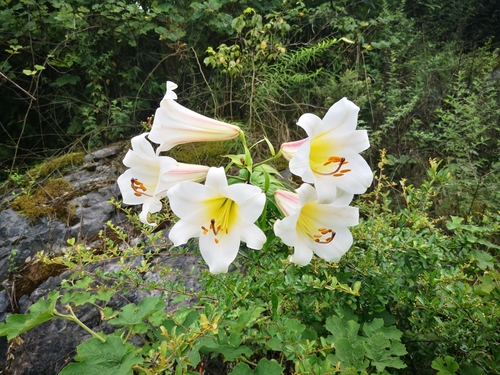
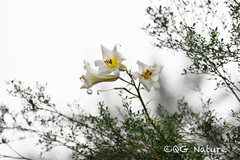

Regal lily (Lilium regale E.H.Wilson) is a true Chinese lily in the Liliaceae, introduced from western Sichuan in the early 20th century and now an important garden trumpet lily. In early summer it bears strongly scented white flowers with yellow throats and often purple-flushed exteriors. Keep it inaccessible to cats: leaves, flowers, pollen and vase water can cause a feline kidney emergency.
Read moreregal lily, royal lily, king's lily and trumpet lily
Allow a few hours of direct sun per day, preferably morning or evening.
Full sun to light partial shade, keeping the base cool
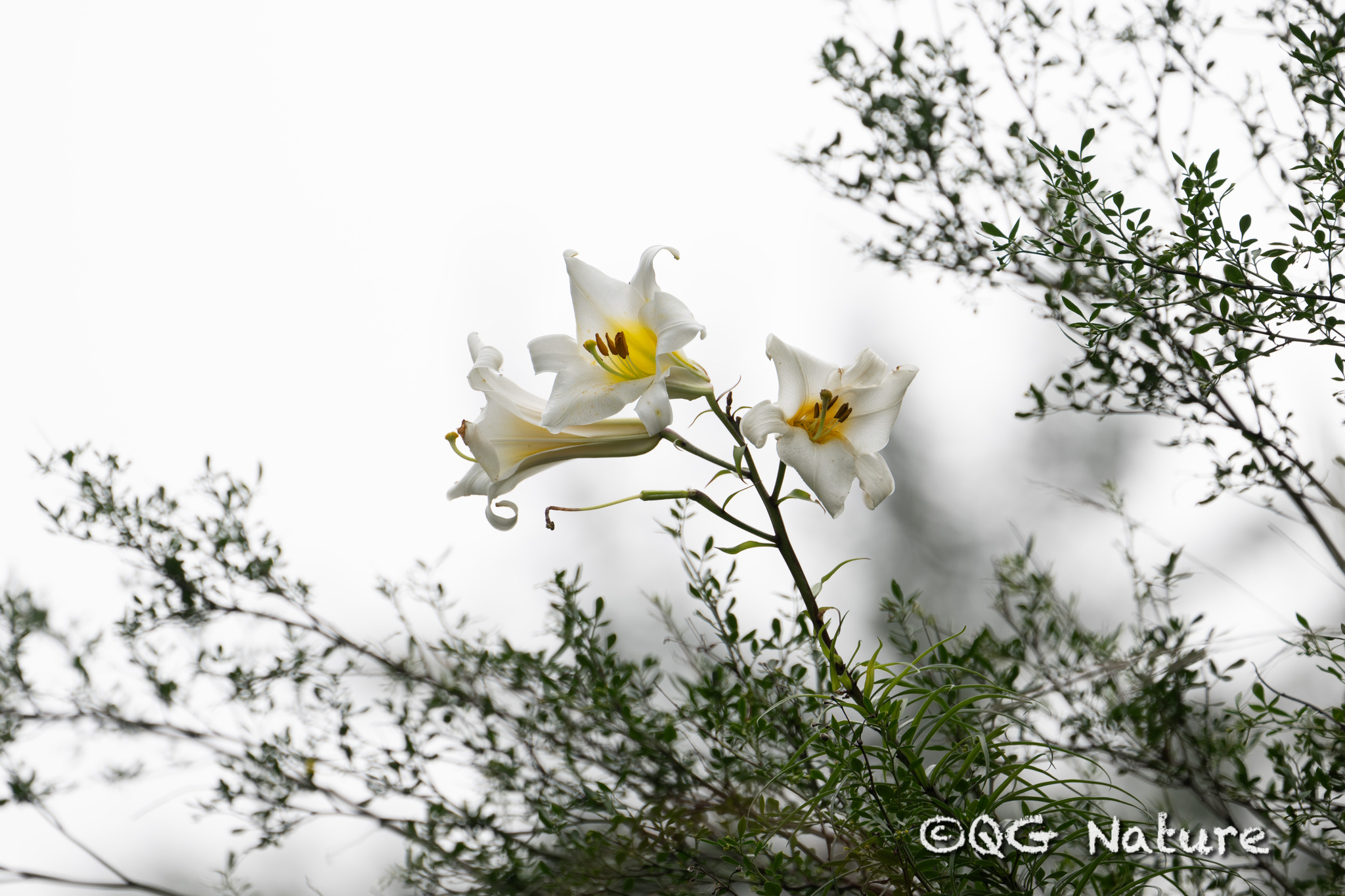


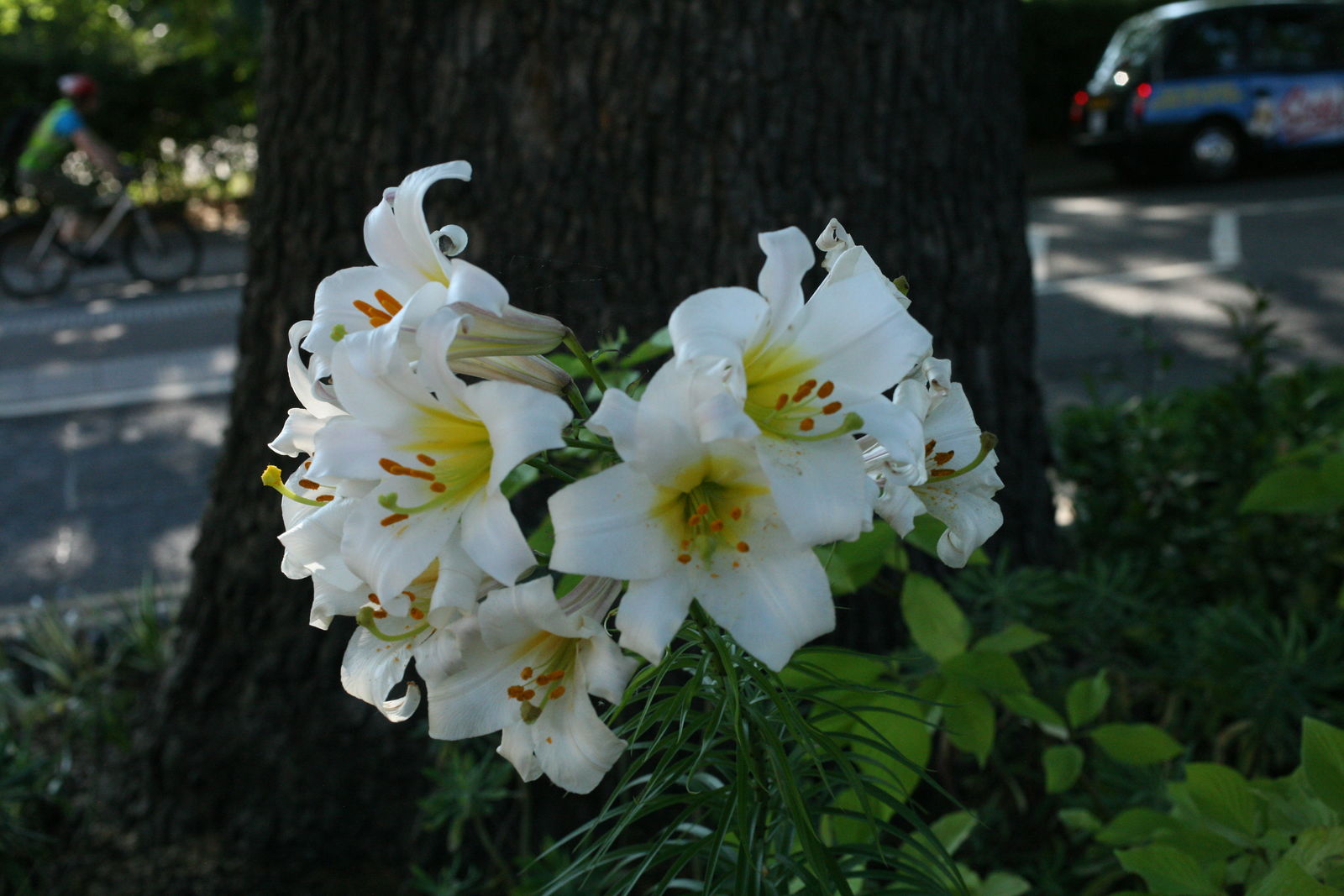
© photo
(c) 王颖, some rights reserved (CC BY-NC), uploaded by 王颖 · cc-by-nc
Wang.QG · cc-by
Wikimedia Commons · CC BY-SA or Public Domain
Taken Jun 24, 2022 by Dave Flack (cc-by-sa)
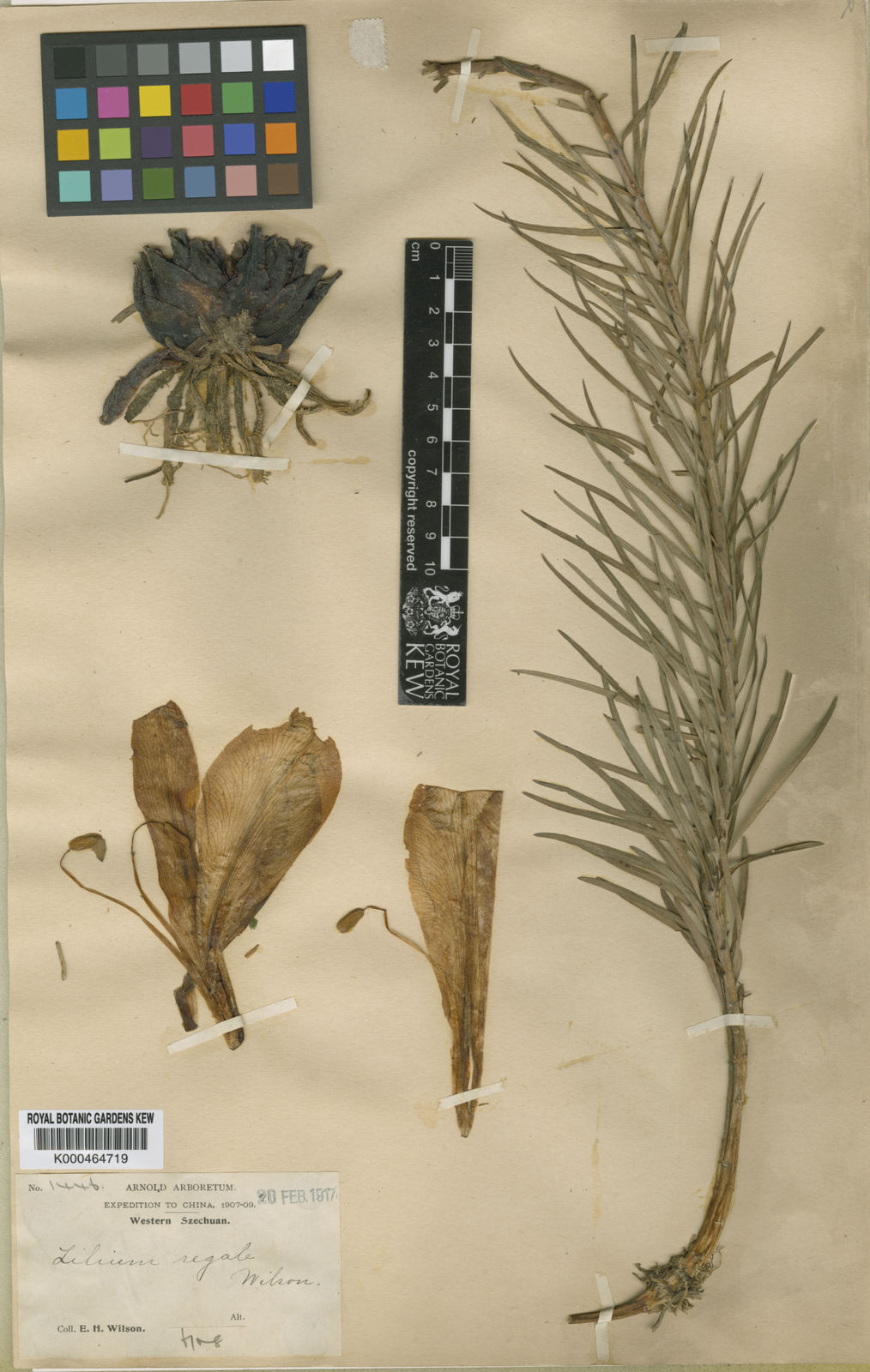
© copyright of the Board of Trustees of the Royal Botanic Gardens, Kew.


Global distribution
POWO and WFO accept Lilium regale as native to China, especially western Sichuan and the Min Jiang valley. French and English horticultural sources describe it as a garden plant, container plant or cut flower; the cited sources do not establish an invasive status in mainland France.
- Native3
- China
- Western Sichuan
- Min Jiang valley
Hexagons: regions where the plant occurs. Green dots: native range.1
Identity
A Chinese trumpet lily with a powerful scent, regal lily (Lilium regale E.H.Wilson) is an accepted species of true lily in the Liliaceae. Kew's POWO records its publication in 1913 and its native range in China; WFO likewise accepts the binomial and the authority E.H.Wilson. 1 2
The name follows the Latin epithet regale, meaning royal. Royal lily and king's lily are other established English horticultural names. In China, its association with the Min Jiang recalls its wild Sichuan origin. 4 3
It belongs to the true Lilium group. That distinction matters in practice: a true lily is neither lily-of-the-valley, a peace lily, a calla nor an Alstroemeria. Growing requirements and toxicity to cats cannot simply be transferred to every plant whose common name includes “lily.” 6 11
Recognition
A scaly bulb produces an upright, leafy stem that is usually unbranched. Green, linear to lance-shaped leaves run along the stem. Horticultural references commonly give a cultivated height of 0.9–1.8 m (3–6 ft), depending on bulb size, light and soil fertility. 4 5
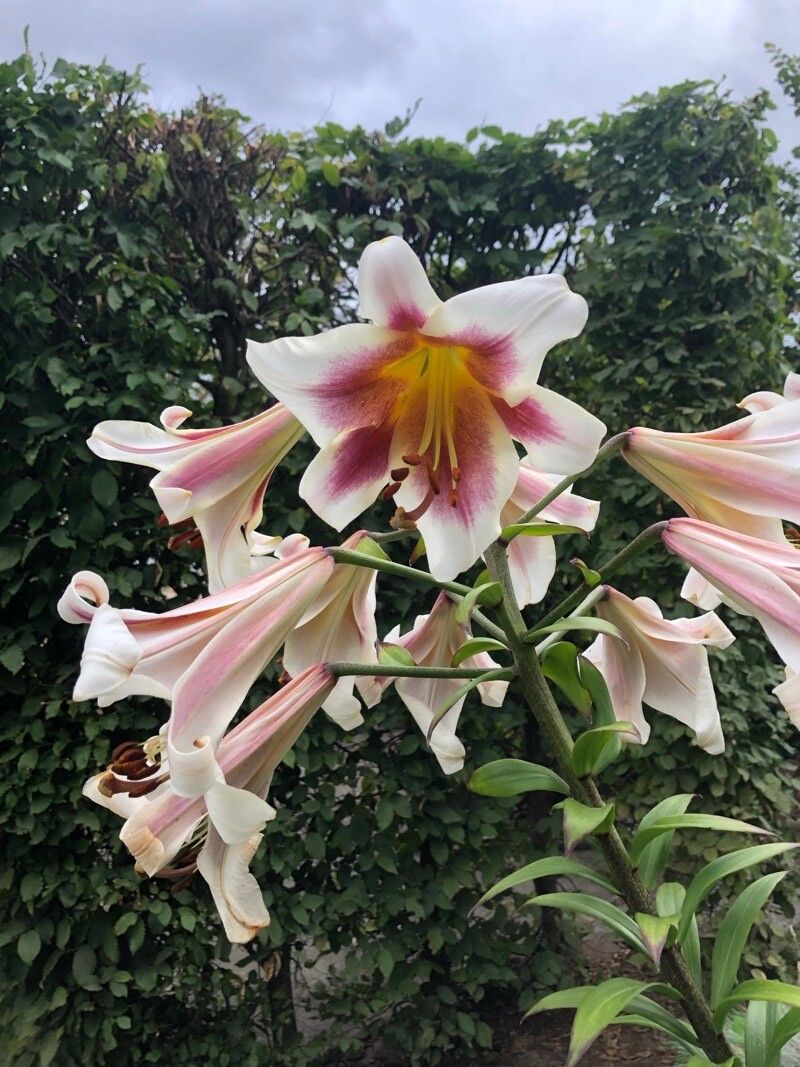
The flower is the clearest feature: a large, strongly scented white trumpet with a yellow throat and a purple or purplish pink flush outside. The RHS places flowering mainly in June and July in its Northern Hemisphere garden setting; Missouri Botanical Garden also describes fragrant summer trumpets at the tops of upright stems. 4 7
Abundant pollen helps identify the flower but also creates a household hazard. It stains clothing and can settle on a cat's coat, then be swallowed during grooming. A cut stem therefore remains a possible exposure, rather than a separate, harmless part of the plant. 11 12
Taxonomy and synonyms
For a stable botanical reference, use Lilium regale E.H.Wilson. POWO and WFO accept it in the Liliales and Liliaceae. Labels such as “regal lily” and “royal lily” are useful in commerce, but do not replace the binomial when checking a source. 1 2
Flora of China places it among the Chinese trumpet lilies and describes white flowers with a yellow throat and purple exterior. The Chinese name min jiang bai he refers to the Min Jiang valley, a more precise geographic connection than “China” alone. 3
Garden-center trumpet lilies and Aurelian hybrids may have a genetic or horticultural connection with regal lily, but they are not automatically Lilium regale. A hybrid can share its trumpet outline, fragrance or hardiness while differing in height, color and soil tolerance. 6 4
Origin, habitat and occurrence
Western China, especially Sichuan, is its recorded origin. Flora of China describes rocky slopes, cliffs, scrub and valley habitats; NC State likewise summarizes a restricted wild range around the Min River. These habitats help explain its cultivation needs: light, air, drainage and moisture that does not stagnate. 3 5
Ernest Henry Wilson collected regal lily in the early 20th century, and it soon became an important parent of modern trumpet lilies. Horticultural accounts often emphasize its relative robustness compared with other spectacular lilies. It does well in temperate gardens provided the bulb does not sit in water. 8 4
In mainland France, regal lily is described as cultivated, whether as a garden bulb, a plant for a deep container or a cut flower. A wild French occurrence or invasive status is not established by the cited sources. Its recorded non-invasive status therefore does not mean that it is absent from cultivation. 1 4
Growing regal lily
Moisture during growth and reliable drainage throughout the year are the essentials. The RHS recommends fertile, moist but well-drained soil in sun or partial shade. Missouri Botanical Garden similarly specifies full sun to partial shade and rich, organic, well-drained soil. 4 7
During growth, 10–20 mm/week (0.4–0.8 in/week) provides a useful watering reference for plants in the ground when rain is absent. Containers need closer attention because a small volume can dry out quickly and become saturated just as quickly. The problem is not simply moist soil, but a bulb trapped in a compact, cold, waterlogged root ball. 5 4
Give it good light. Full sun produces stronger stems and better flowering, although light partial shade is possible, especially in hot climates. As with many lilies, the useful approach is a sunny head and cool feet, maintained with a light mulch or low, non-invasive perennials. 4 6
Regal lily tolerates neutral to slightly alkaline soil better than strongly acid-loving Oriental lilies. It does not need to be forced into pure ericaceous compost, but it dislikes heavy, airless ground. Garden soil mixed with mature compost and a drainage material is preferable to a rich but sticky substrate. 4 7
Flowering and propagation
June and July are the main flowering months in the Northern Hemisphere pattern described by these sources. Elongated buds open into sideways-facing or slightly nodding trumpets, often with a strong fragrance. An established plant may carry several flowers on one stem; its first year after planting can be more modest if the bulb is small or has been stored too long. 4 5
Remove spent flowers if seed is not wanted, but leave the leaves and stem while they remain green. The foliage replenishes the bulb. Cutting too low or too early is a common reason for weak flowering the following year. 4 6
Separating small offset bulbs during dormancy is the simplest propagation method. Scaling and seed sowing are also possible, but take longer. Seed may interest a collector more than someone seeking a quick replacement for a container display or bouquet. 6 8
Common problems
Standing water is the main horticultural risk. A soft bulb, weak regrowth or disappearance after winter often indicates inadequate drainage, especially in a container or compact clay. Planting in loosened, well-drained soil is preferable to trying to compensate with treatments. 4 7
The usual lily pests include lily beetles, aphids, thrips, slugs and snails. Aphids are especially troublesome because they can help spread viruses. Inspecting young stems early is more useful than reacting after they have lost their leaves. 4 6
Foliar diseases such as botrytis develop most readily when air circulation is poor and leaves stay wet. Watering at the base, spacing plants, removing affected leaves and avoiding excess nitrogen prevent many problems. Tall stems also benefit from unobtrusive staking in exposed sites. 5 7
Toxicity and bouquets
Cats are the central safety concern. The ASPCA lists Lilium species as toxic to cats, with kidney damage, and non-toxic to dogs and horses. The FDA describes true lilies as a major danger to cats: leaves, flowers, pollen and vase water can be enough to cause serious poisoning. 9 11
Pet Poison Helpline describes the same practical risk. Even a small exposure can lead to severe acute kidney failure in a cat if treatment is delayed. Merck Veterinary Manual includes true lilies among ornamental plants that damage cats' kidneys and emphasizes prompt intervention. 12 13
For dogs, keep the distinction proportionate. The FDA says dogs that eat lilies may have minor stomach upset but do not develop the kidney failure typical of cats. For horses, no toxicity is reported here: the ASPCA Lilium species entry classifies them as non-toxic. 9 11
The practical rule is strict: no regal lily bouquets in a home with cats, no accessible vase and no pollen left on furniture. Contact a veterinarian or animal poison control center immediately if a cat has chewed or licked the plant, or simply had its coat dusted with pollen. 10 11
Look-alikes and buying plants
Regal lily is most readily confused with other white trumpet lilies and some Longiflorum, Trumpet or Aurelian hybrids. Easter lily (Lilium longiflorum) also has large white trumpets, but its history, sales season and flower details differ. A complete label is more reliable than color alone. 6 4
Before buying, check four things: the binomial or group, mature height, flowering period and whether cats live in the household. A packet labeled “regal lily” should produce a fragrant trumpet lily; one labeled trumpet lily may contain a hybrid rather than the pure species. 4 5
Distinguish the plants loosely called lilies, too. Lily-of-the-valley is dangerous because of cardiac glycosides; callas and peace lilies cause irritation through oxalates; and Alstroemeria does not have the same feline kidney risk as true Lilium. Regal lily is a true lily: cultivate it as a garden bulb and treat it as a major hazard for cats. 11
Main sources
- Plants of the World Online / Kew, Lilium regale E.H.Wilson
- World Flora Online, Lilium regale E.H.Wilson
- Flora of China via eFloras, Lilium regale
- Royal Horticultural Society, Lilium regale
- NC State Extension Gardener Plant Toolbox, Lilium regale
- NC State Extension Gardener Plant Toolbox, Lilium
- Missouri Botanical Garden Plant Finder, Lilium regale
- The Lilium Species Foundation, Lilium regale
- ASPCA, Lily toxicity entry
- ASPCA, Which Lilies Are Toxic to Pets?
- U.S. FDA, Lovely Lilies and Curious Cats
- Pet Poison Helpline, Lilies
- Merck Veterinary Manual, Toxicity to Animals of Lilies
Frequently asked questions
Is Lilium regale a true lily?
Yes. It is an accepted species of Lilium in the Liliaceae. It should not be confused with plants merely called lilies, such as peace lilies, callas, Alstroemeria or lily-of-the-valley.
Where does regal lily come from?
POWO/WFO and horticultural sources place it in China, especially western Sichuan and the Min Jiang valley, where Ernest Henry Wilson collected it in the early 20th century.
When does regal lily flower?
In temperate gardens it flowers mainly in June and July in the Northern Hemisphere pattern described here. The strongly scented white trumpets have yellow throats and purple-flushed exteriors.
What soil suits Lilium regale?
Rich, moist, well-drained soil. It tolerates neutral to slightly alkaline conditions but dislikes heavy, waterlogged ground and containers without drainage.
Can regal lily grow in a container?
Yes, in a deep container with drainage holes and a fertile, well-drained mix. Water needs closer monitoring than in the ground, and containers must remain inaccessible to cats.
Is regal lily poisonous to cats?
Yes, highly so. As a true Lilium, it should be excluded from homes with cats: leaves, flowers, pollen and vase water can be enough to warrant emergency veterinary attention.
Is regal lily toxic to dogs and horses?
The ASPCA Lilium species entry lists lilies as toxic to cats and non-toxic to dogs and horses. The FDA reports possible minor digestive upset in dogs, without the kidney damage typical of cats.
Why does my regal lily fail to return well?
Common causes include wet winter soil, a bulb that dried out before planting, foliage cut back too early, excessive shade, and damage from lily beetles or disease.
Similar plants

If you are unsure about a plant’s toxicity, ask a botanist or veterinarian for advice.