
Purple loosestrife (Lythrum salicaria, )
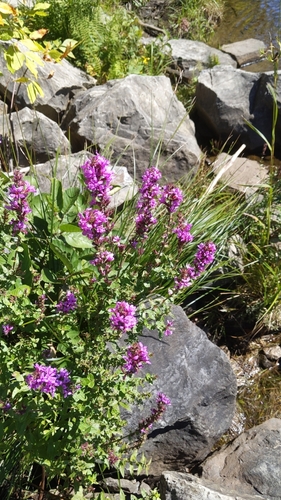
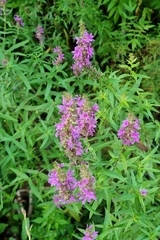
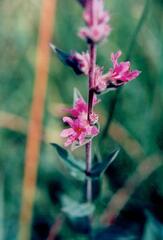
Purple loosestrife (Lythrum salicaria) is an herbaceous perennial in the Lythraceae family, native to temperate Eurasia, northwestern Africa, Ethiopia and eastern Australia. It forms tall clumps topped with conspicuous purplish pink spikes beside ponds, ditches and rivers throughout summer. Introduced to North America in the 19th century, it has become one of the continent's most invasive wetland plants.
Read morePurple loosestrife
Allow a few hours of direct sun per day, preferably morning or evening.
Full sun; tolerates light partial shade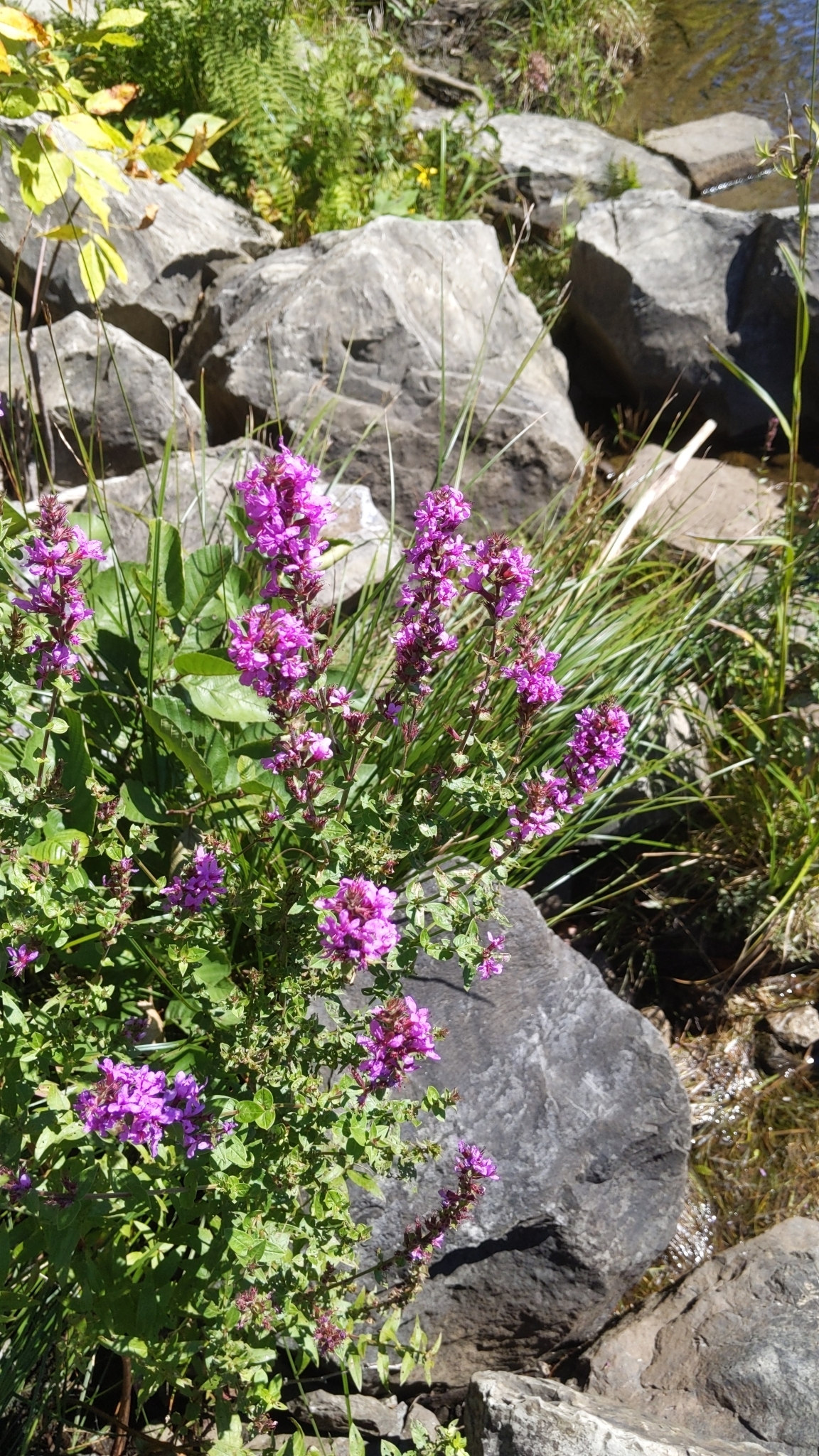
© photo
Mark Connolly · cc0
Владимир Дворкин · cc0
zebedeugalinha · cc-by
(c) Douglas Goldman, some rights reserved (CC BY-SA) · cc-by-sa
(c) zebedeugalinha, some rights reserved (CC BY) · cc-by

Global distribution
The native range of Lythrum salicaria covers temperate Eurasia from the United Kingdom and France to Russia and western Asia, together with northwestern Africa, the Ethiopian highlands and eastern Australia. Introduced to North America in the 19th century, it now ranks among the continent's most invasive wetland plants.
- Native7
- Invasive2
- France
- United Kingdom
- Germany
- Russia
- Morocco
- Ethiopia
- Australia
- United States
- Canada
Hexagons: regions where the plant occurs. Green dots: native range.1
Identity
Purple loosestrife (Lythrum salicaria L., 1753) is an herbaceous perennial in the genus Lythrum, family Lythraceae. The German name is Blutweiderich. In Canadian French it is also called salicaire pourpre. Its stems often exceed 1 m (3.3 ft) tall. Plants of the World Online accepts the name published by Linnaeus in 1753. 1 9
The genus name Lythrum comes from the ancient Greek lythron, “blood,” probably referring to the flowers' color or an old astringent use against bleeding. The epithet salicaria derives from the Latin salix, willow: the narrow leaves resemble willow foliage, although the two genera are not botanically related. 9 8
Recognition
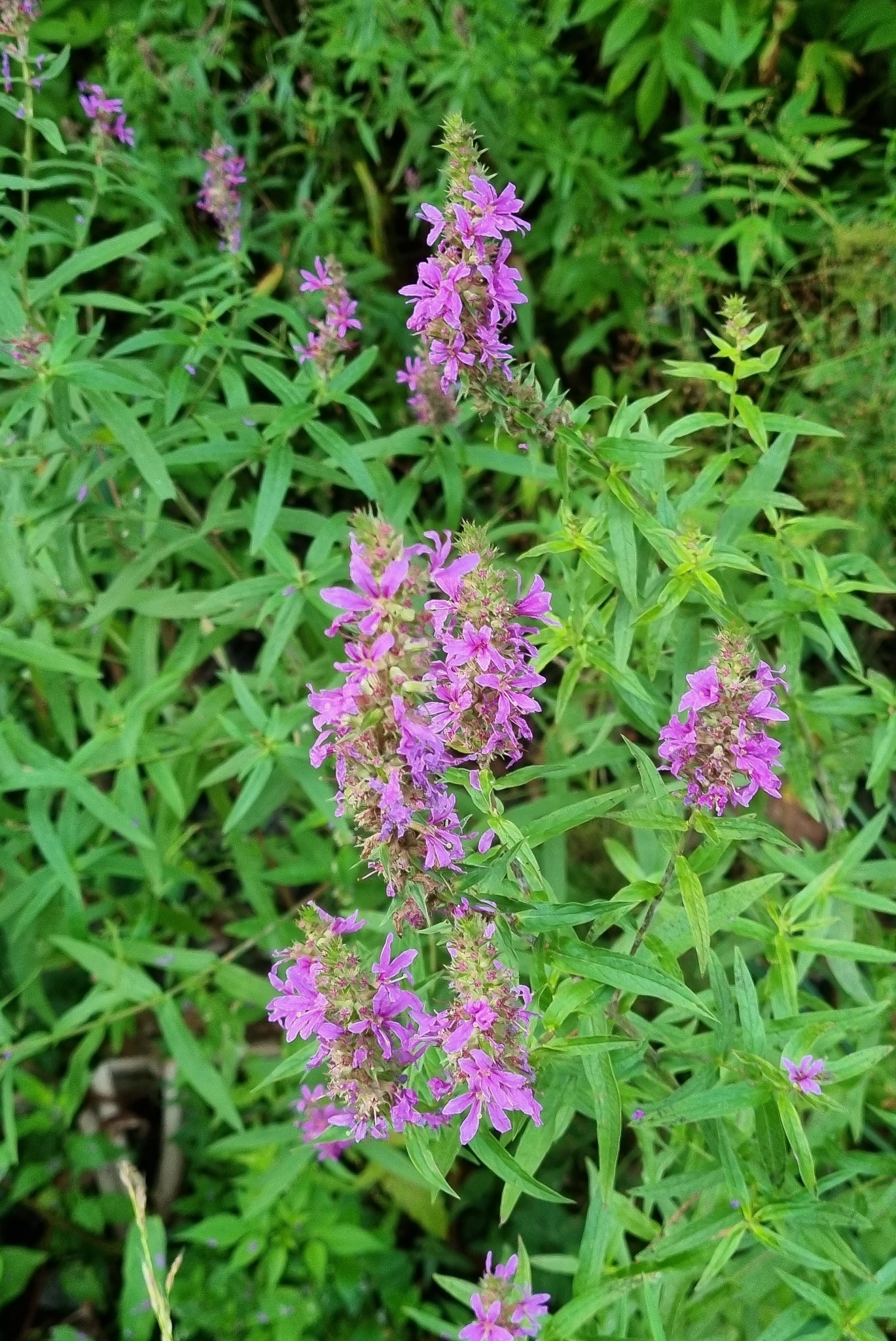
A dense clump of upright, quadrangular stems marks Lythrum salicaria. Often woody at the base, they commonly reach 1–1.5 m (3.3–5 ft) and sometimes 2 m (6.5 ft) on very rich, waterlogged soil. 2 4
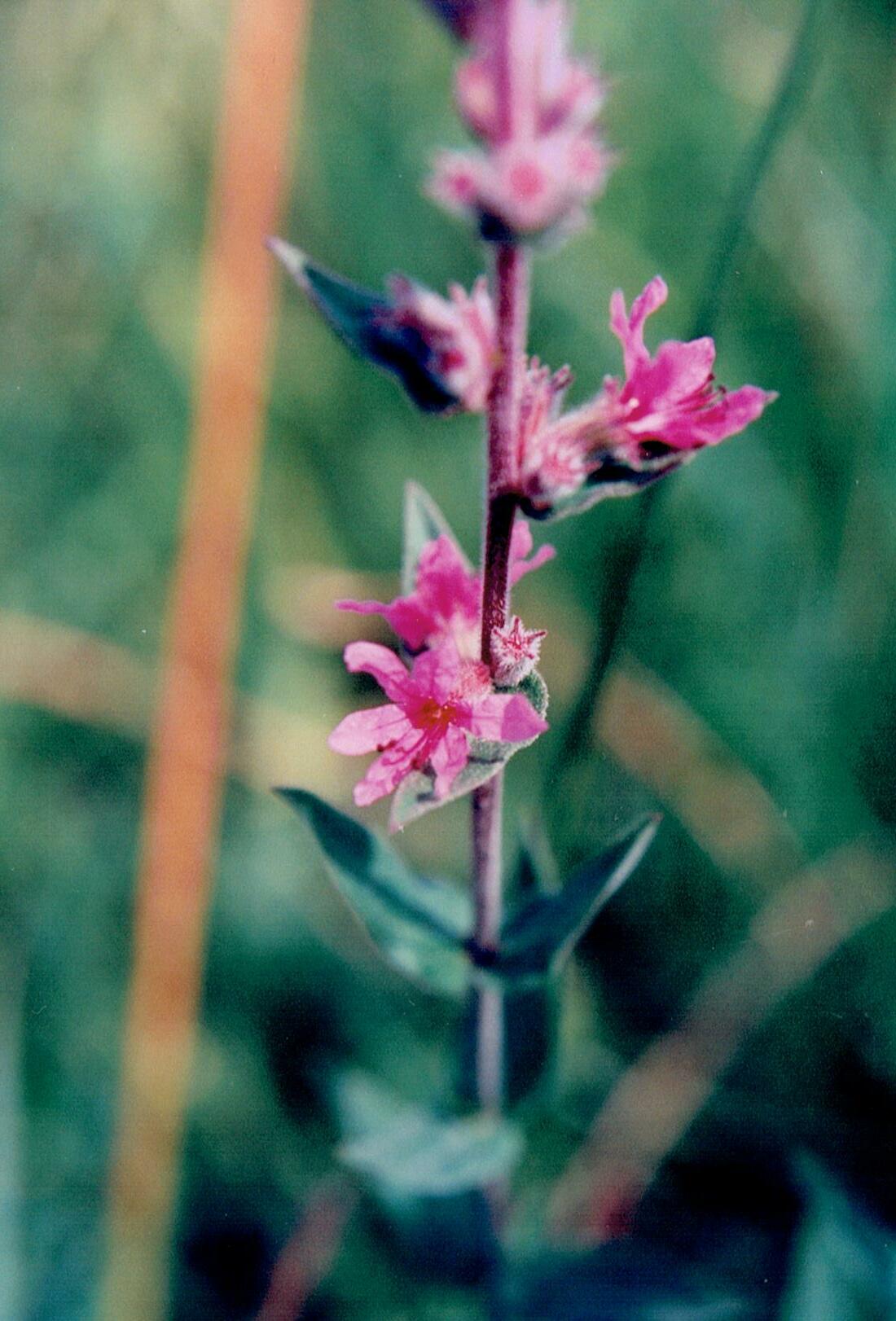
Leaves are opposite or grouped in threes, stalkless, lance-shaped and often downy. They reach 10 cm (4 in) long; their narrow outline accounts for the epithet salicaria. 5
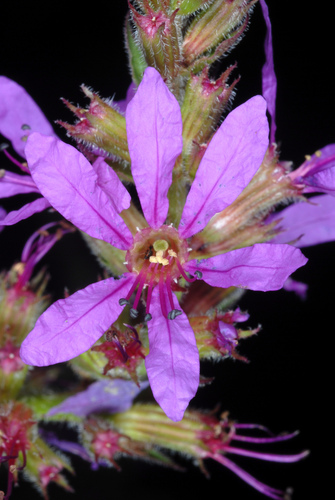
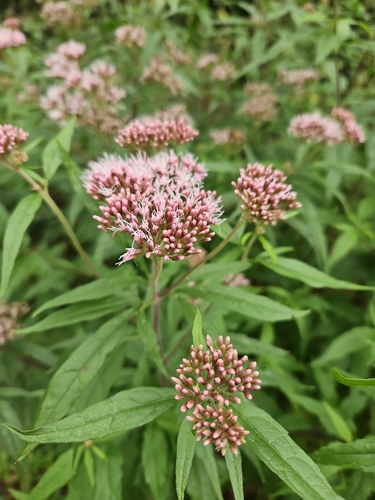
Purplish pink flowers, about 2 cm (0.8 in) across, crowd into dense terminal spikes up to 45 cm (18 in) long, borne from June to September in the Northern Hemisphere. Each flower has six crumpled petals surrounding numerous stamens. 2 5
A less obvious but decisive botanical character lies in the flowers. Each plant bears just one of the species' three tristylous floral forms, named f. brevistyla, f. mediostyla and f. longistyla in nomenclature according to the lengths of the style and stamens. 1
Useful taxonomy
Published in 1753, the accepted name remains Lythrum salicaria L., in the family Lythraceae and order Myrtales. Several synonyms appeared in national floras before POWO settled on a single accepted name: 1
- Salicaria vulgaris Moench
- Lythrum tomentosum Mill.
- Lythrum salicaria f. longistyla Willk. & Lange
- Lythrum salicaria f. mediostyla Willk. & Lange
- Lythrum salicaria f. brevistyla Willk. & Lange
The last three names describe floral forms rather than geographical varieties. They represent the three tristylous flower morphs found on different plants within a single population. 1
Habitat and range
Temperate Eurasia, from the United Kingdom and France to Russia and western Asia, lies within the native range of Lythrum salicaria. That range also includes northwestern Africa, the Ethiopian highlands and eastern Australia. 1 In France, where the species is native, INPN records it across almost the whole metropolitan territory along watercourses. 8
Permanently waterlogged ground suits Lythrum salicaria: riverbanks, streambanks, ditches, marshes and wet meadows. Submergence by a few centimeters (an inch or so) does not trouble it. Prolonged drying of the substrate is the greater constraint on its presence at a site. 5 2
Introduced to North America in the 19th century, probably through ships' ballast water and the horticultural trade, purple loosestrife spread without the natural controls of its original range. It is now among the continent's most harmful wetland weeds, present in almost all U.S. states and Canadian provinces. 7 4
Life cycle and reproduction
Summer flowering extends from June to September in the Northern Hemisphere. Bees, bumblebees and hoverflies pollinate the tristylous flowers, drawn by the abundant pollen on the spikes. The season should be read against local conditions for readers in other hemispheres. 2 5
A mature clump of Lythrum salicaria can produce two to three million seeds a year. Tiny and dispersed by water and wind, they can remain viable in the soil for several years. 7 Vegetative reproduction also occurs: each year the woody crown produces new stems from its base. 6
Two leaf beetle species in the genus Galerucella, specific to Lythrum salicaria, have been introduced to North America as biological control agents. Their larvae defoliate the stems without threatening neighboring species. 7
Uses and risks
The entire aboveground plant is rich in tannins, with analyses reporting 12–14%. It is the traditional astringent used against diarrhea, including in breastfed infants, and against minor bleeding. Young leaves, rich in calcium, are also eaten cooked as a green vegetable. 6
Its main garden role is ornamental, often through compact cultivars such as Robert, awarded the RHS Award of Garden Merit and listed as beneficial to pollinators. 3 The risk lies in the assumption that a cultivar is sterile. Forms long sold that way, including Morden Pink, can still be fertilized by wild pollen and produce viable seed. Several U.S. states and Canadian provinces have consequently banned sale of the species and all its cultivars. 7 4
Field management combines hand removal before capsules form with biological control using Galerucella leaf beetles. Strict observance of local regulations complements those two methods rather than replacing them. 7
Varieties, look-alikes and related plants
Flower color and stature distinguish the horticultural cultivars. Robert stays compact at 40–80 cm (16–31 in), while wild plants often exceed 1 m (3.3 ft). Feuerkerze has almost red spikes, deeper in color than the wild form; the rarer Blush has very pale pink flowers. None is exempt from regulation where the species is listed as a noxious weed. 3
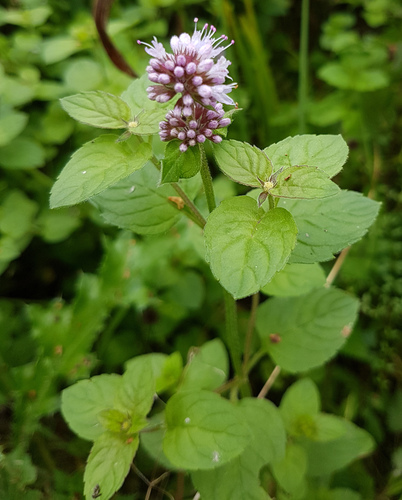
The plants most often confused with it include:
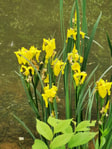
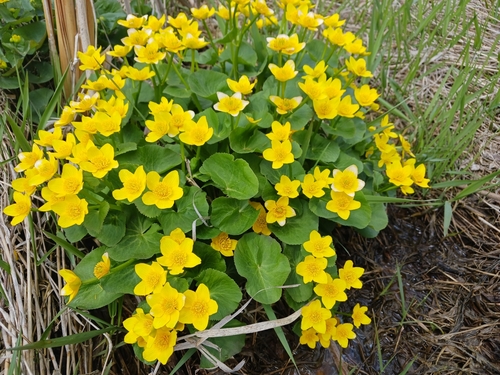
- Epilobium hirsutum, great willowherb, with pink flowers and hairy leaves that are opposite lower on the stem and alternate higher up;
- species of Lysimachia, also called loosestrife in English, despite belonging to another botanical family, Primulaceae.
Identify Lythrum salicaria by the combination of six-petaled purplish pink flowers in dense terminal spikes, square stems, and opposite or three-whorled leaves. Leaf arrangement alone does not separate these plants: it varies among Lysimachia species and along the stems of Epilobium hirsutum. 5 9
Main sources
- Plants of the World Online / Kew, Lythrum salicaria L.
- Royal Horticultural Society, Lythrum salicaria - purple loosestrife
- Royal Horticultural Society, Lythrum salicaria 'Robert'
- NC State Extension, Lythrum salicaria
- Missouri Botanical Garden, PlantFinder Lythrum salicaria
- Plants For a Future, Lythrum salicaria
- King County (Washington), Purple loosestrife identification and control
- INPN / MNHN, Lythrum salicaria L., 1753 - Salicaire commune
- Wikidata, Lythrum salicaria (Q157513)
Frequently asked questions
Is purple loosestrife poisonous?
No toxicity is documented for people or animals. Plants For a Future reports no known risk and even describes the young leaves as edible once cooked.
Why is purple loosestrife invasive in North America but not Europe?
The species is native to Eurasia, where specialist insects and other ecological factors limit its spread. Introduced to North America without those natural controls, it has spread enough to become a regulated noxious weed.
Are purple loosestrife cultivars risk-free?
No. Cultivars long sold as sterile, including Morden Pink, can still be fertilized by wild pollen and produce viable seeds. Their sale is banned in several U.S. states and Canadian provinces.
How is purple loosestrife controlled in North America?
Two leaf beetle species in the genus Galerucella, specific to the plant, have been introduced as biological control agents. Their effectiveness varies between sites and complements hand removal and regulation of sales.
How many seeds does purple loosestrife produce?
A mature clump can produce two to three million seeds a year. They are tiny and dispersed by water and wind, explaining the speed at which the plant colonizes wetlands.
Where can I plant purple loosestrife in a garden?
Along a pool, pond or ditch in full sun, only where the species is not regulated. Checking local legislation before buying remains essential.
How does purple loosestrife differ from Lysimachia, also called loosestrife?
Despite sharing an English common name, the groups belong to different botanical families: Lythraceae for purple loosestrife and Primulaceae for Lysimachia. They are not directly related.
Similar plants
If you are unsure about a plant’s toxicity, ask a botanist or veterinarian for advice.