
Lodgepole pine (Pinus contorta, )
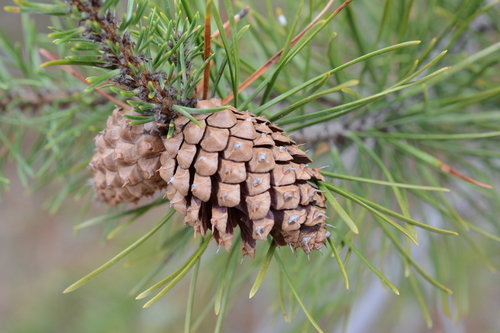
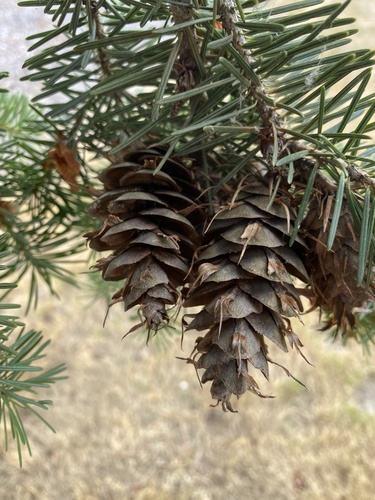
Lodgepole pine (Pinus contorta) is a conifer in the Pinaceae family native to western North America, from southern Alaska and the Yukon to northern Baja California in Mexico. Its short, often slightly twisted needles grow in pairs. Small, prickly cones may remain sealed with resin until the heat of a wildfire opens them.
Read moreLodgepole pine, Shore pine, Twisted pine, Contorta pine, Tamarack pine and Coast pine

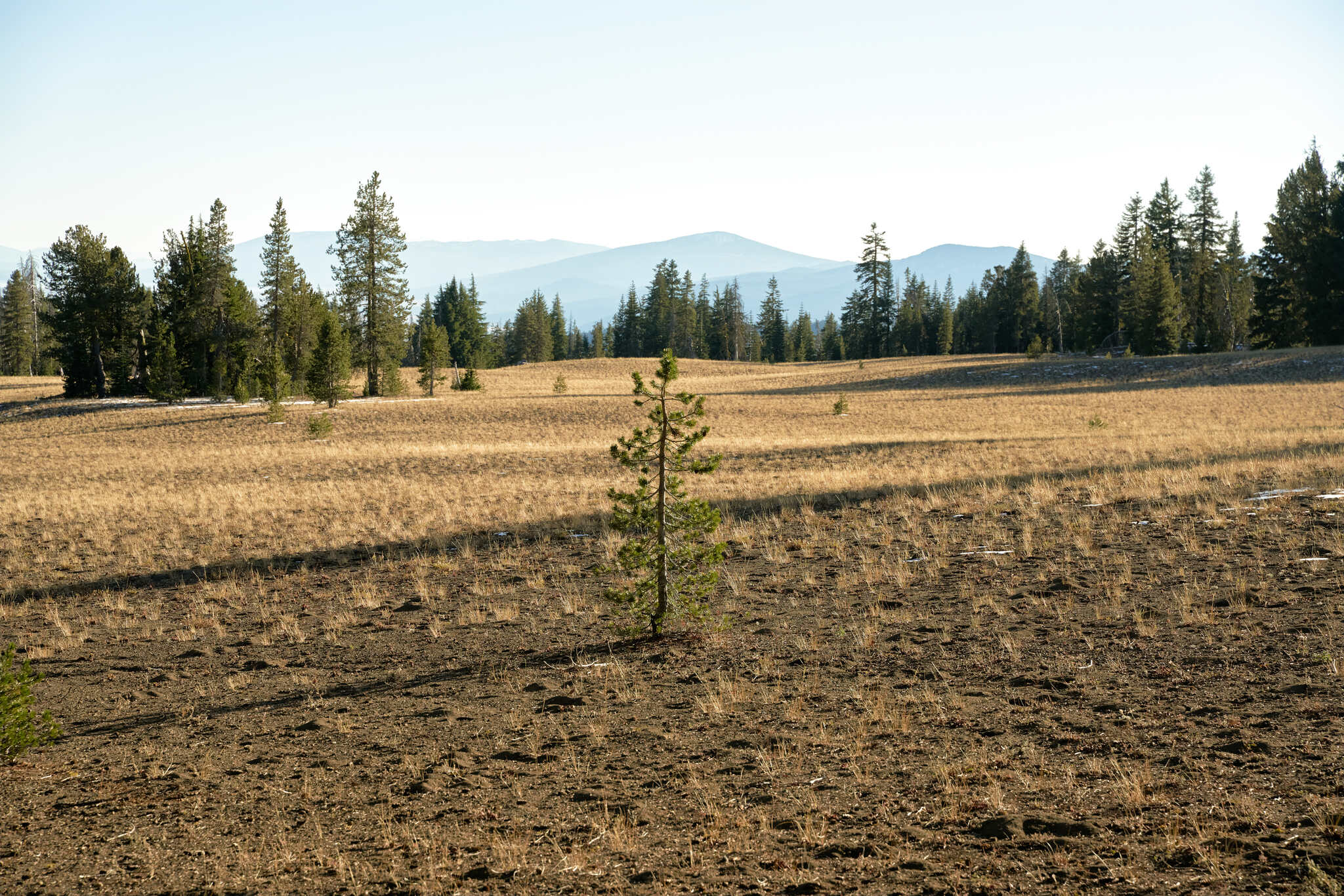
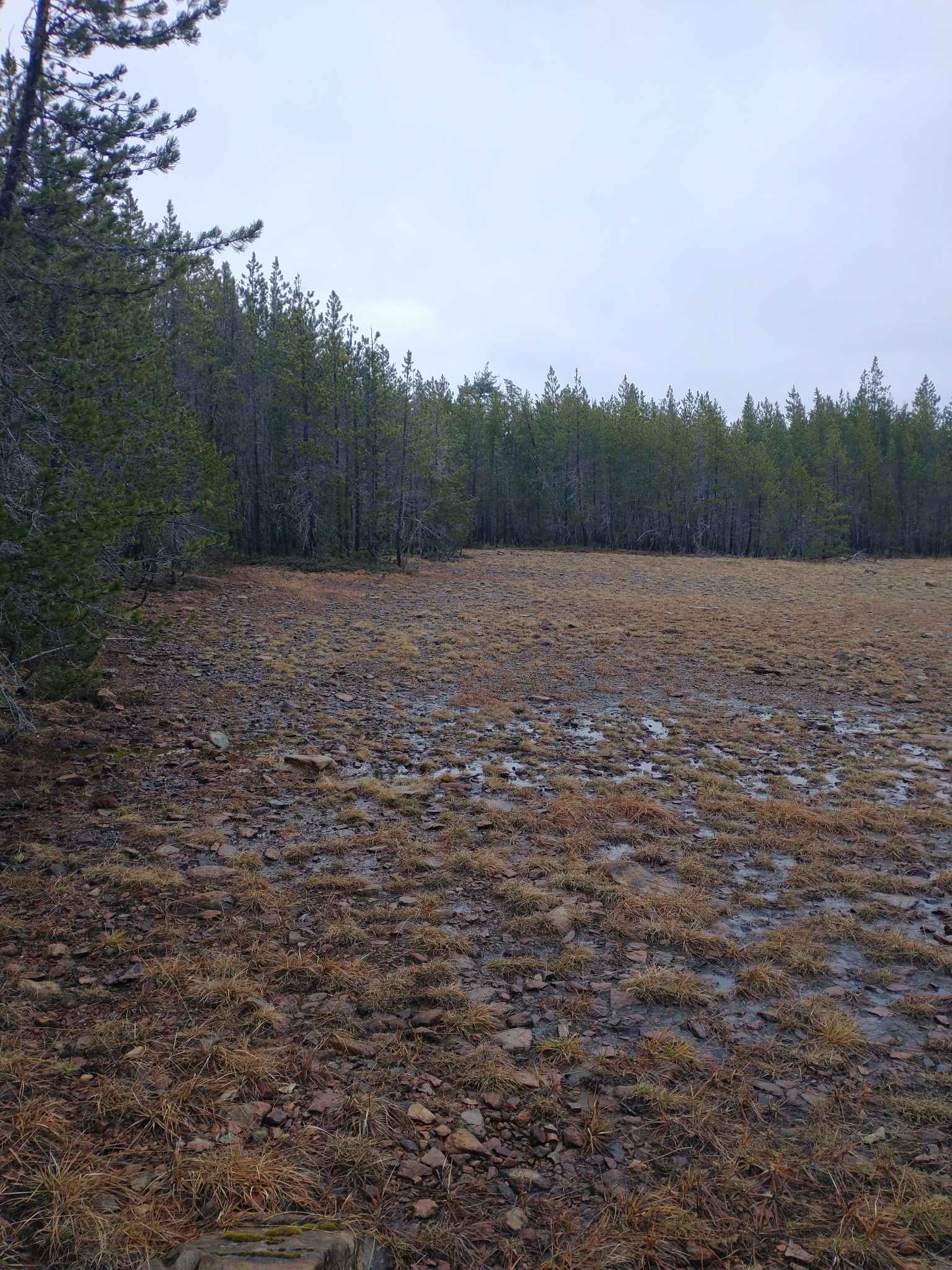


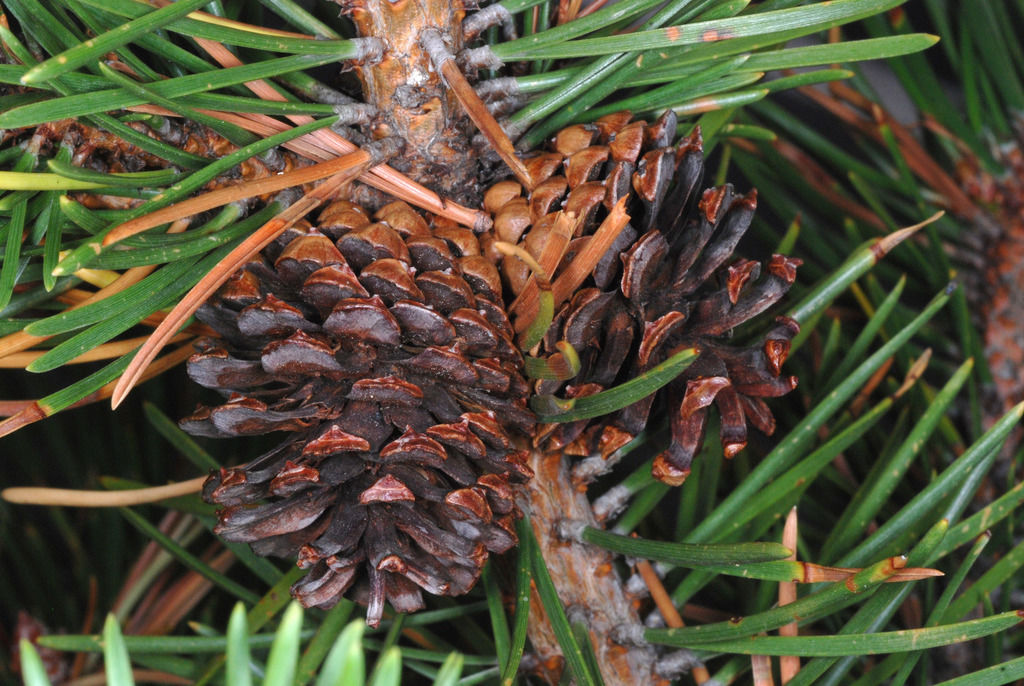
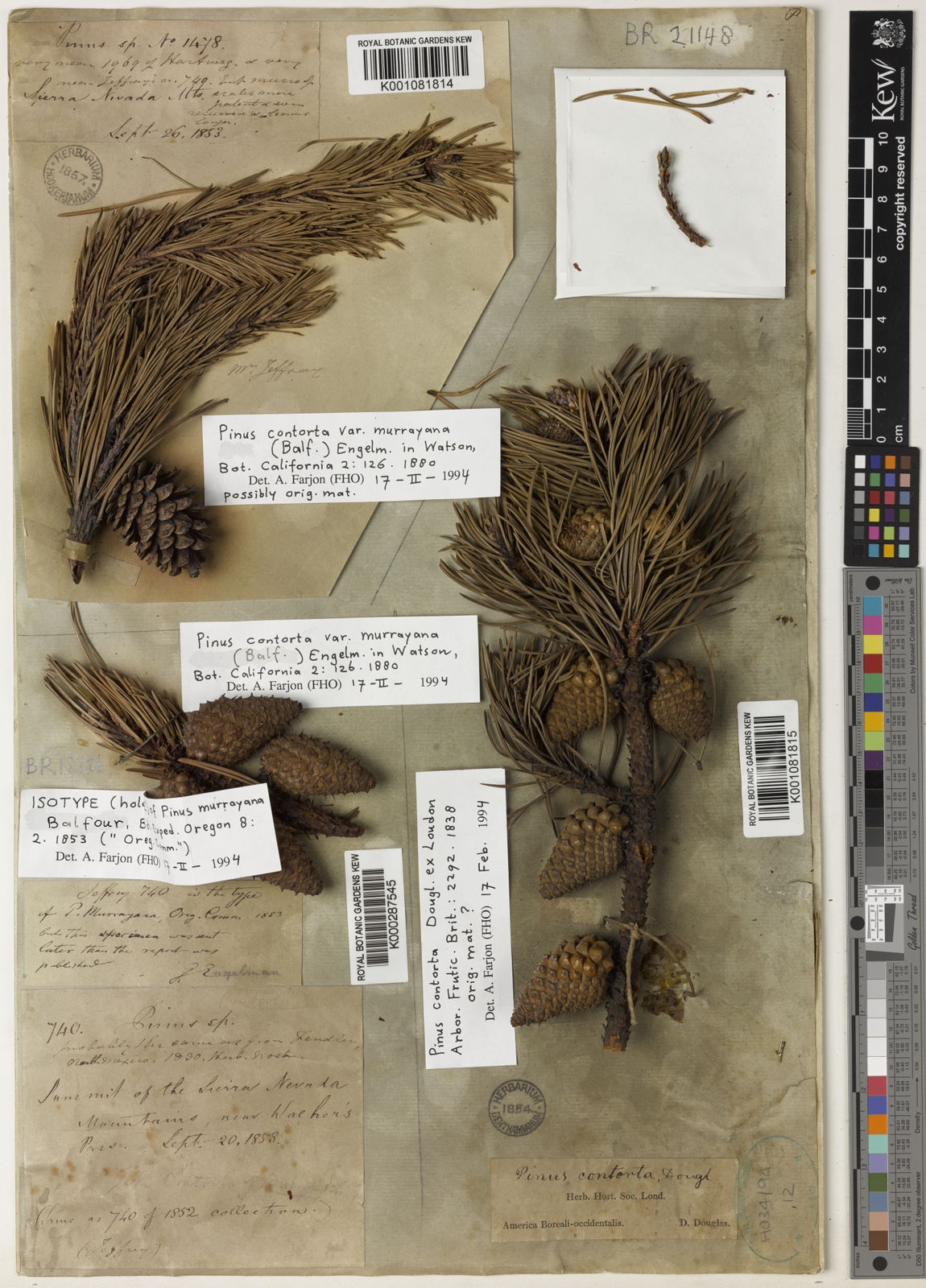
© photo
(c) Alison Northup, some rights reserved (CC BY), uploaded by Alison Northup · cc-by
Jack Wander · cc0
Drew Meyer · cc0
Taken Sep 12, 2021 by Jack Pommer (cc-by-sa)
Taken Oct 15, 1998 by EOL − Charles Webber (cc-by-nc-sa)
© copyright of the Board of Trustees of the Royal Botanic Gardens, Kew.


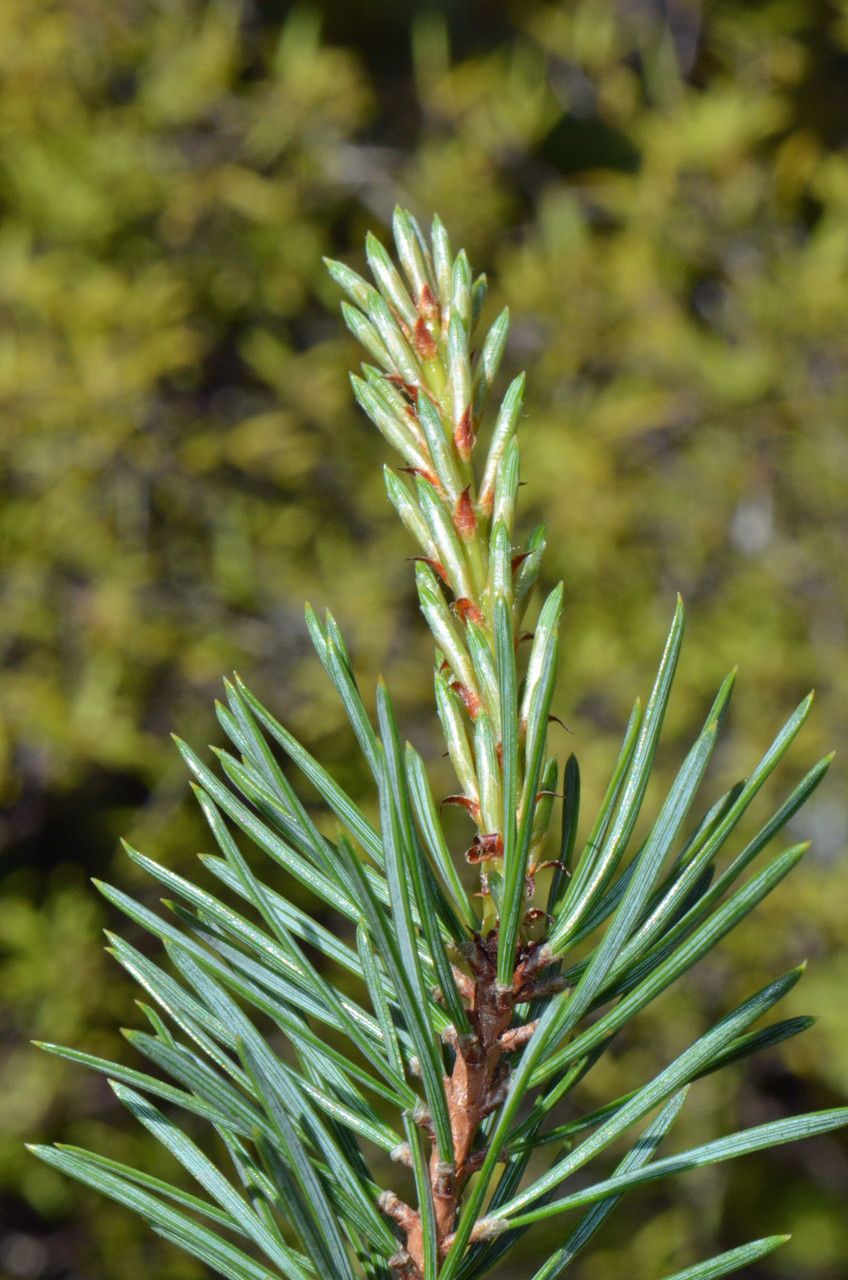


Global distribution
Lodgepole pine is native from southern Alaska and the Yukon (about 64° N) to northern Baja California in Mexico (about 31° N). Its forests cover about 6 million hectares in the western United States and 20 million hectares in Canada. Introduced to Europe and Oceania for timber, it is invasive in several countries, while planting trials in mainland France have failed.
- Native3
- Introduced1
- Invasive5
- United States
- Canada
- Mexico
- Iceland
- Sweden
- United Kingdom
- Denmark
- Ireland
- New Zealand
Hexagons: regions where the plant occurs. Green dots: native range.1
Identity
Lodgepole pine (Pinus contorta Douglas ex Loudon, 1838) is a conifer in the Pinaceae family native to western North America. Scottish botanist David Douglas collected it in the 1820s and chose the epithet contorta for the stunted, twisted coastal trees he encountered first, rather than the perfectly straight trunks of mountain populations. 1 5
The name lodgepole pine reflects a different use: Indigenous peoples of the Rocky Mountains selected its straightest, slenderest trunks for tipi frameworks. The names twisted pine (also contorta pine) and lodgepole pine thus evoke almost opposite silhouettes, one shaped by coastal winds, the other growing straight in mountain forests. 3 4
Alberta designated lodgepole pine its provincial tree in 1984. Its stands dominate a large part of the Canadian province's boreal and subalpine forests. 4
Recognition
Short needles in pairs, often slightly twisted, measure 2–8 cm (0.8–3.1 in) long. This twisting also inspired the French common name. The cones measure 2–7.5 cm (0.8–3 in); their scales end in sharp prickles, and the cones are generally asymmetrical and curve toward the shoot tip. 4
Bark differs markedly between subspecies: thin, scaly and grayish in mountain forms, but thick and block-fissured in shore pine, which offers better protection against salt spray and sand. Orange-red male pollen cones form whorls at the base of new shoots. They distinguish the species from jack pine (Pinus banksiana), which has yellow pollen cones. 3 4
Regional conditions strongly influence adult height. Rocky Mountain trees reach 18–25 m (59–82 ft) at 140 years, Sierra Nevada trees 28–30 m (92–98 ft) in a century, while coastal forms often stop at 6–12 m (20–39 ft). At the alpine limit, stunted krummholz grows only 1–3 m (3–10 ft) tall, looking very different from low-elevation forest trees. 3
Useful taxonomy
Although the accepted scientific name is stable, authors differ on the ranks of its regional forms. Plants of the World Online recognizes four varieties; most field researchers treat them as subspecies because of pronounced genetic and ecological differences:
- Pinus contorta var. contorta Douglas ex Loudon, the coastal coast pine or shore pine, with mostly non-serotinous cones
- Pinus contorta var. latifolia Engelm., the strongly serotinous, fire-adapted Rocky Mountain form
- Pinus contorta var. murrayana (Balf.) S.Watson, the Sierra Nevada and Cascade form, also called tamarack pine
- Pinus contorta var. bolanderi (Parl.) Vasey, a dwarf form endemic to the pygmy forests of Mendocino County, California
Natural hybrids with jack pine (Pinus banksiana) occur where the ranges overlap in central Canada. Despite these changes in rank and the presence of hybrids, the accepted name Pinus contorta remains a reliable reference. 1 3
Habitat and range
From southern Alaska and the Yukon at about 64° N, lodgepole pine reaches northern Baja California in Mexico at about 31° N. It has one of the broadest elevation ranges among North American conifers, growing from sea level along the coast to 3,500 m (11,500 ft) or higher in the mountains. 4 3
Forests dominated by this pine cover about 6 million hectares (15 million acres) in the western United States and 20 million hectares (49 million acres) in Canada, making it one of the continent's most widespread timber trees. 3
Timber planting brought lodgepole pine to Europe and Oceania, where it has become invasive in several countries, including Sweden, Denmark, Ireland and the United Kingdom. New Zealand lists it under the National Pest Plant Accord, which prohibits its sale. Planting trials in mainland France, by contrast, have failed. 7 3
Its extensive range and lack of a widespread threat led to an IUCN Red List assessment of Least Concern in 2013. 8
Life cycle and reproduction
Male and female cones share each lodgepole pine tree, making it monoecious. In mountain populations, especially subspecies latifolia, resin seals many cones shut until heat reaches 45–60 °C (113–140 °F), conditions seldom reached outside a wildfire. 3
Serotiny keeps millions of viable seeds per hectare suspended in the canopy for decades. Fire releases them together onto bare mineral soil enriched with ash. This explains the extremely dense, even-aged stands that recolonize burned ground within a few years. 3
Young trees grow quickly in full light, but the species cannot tolerate shade. Without thinning, dense seedlings may remain in a stagnant stand for decades, with slender trunks and slow growth. Some trees live for more than 300 years. 3
Uses and risks
Pale, straight-grained lodgepole pine wood goes mainly into light framing, paneling, fence and corral posts, utility poles, railroad ties and paper pulp. Fast juvenile growth also makes the species suitable for structural particleboard. 3
Edible inner bark provided emergency food for several Indigenous North American peoples, eaten raw or pounded into cakes when other supplies ran short. Spring sap was drunk, while resin served as chewing gum and a traditional wound antiseptic. 6
Ingestion of lodgepole pine is not documented as toxic to cats, dogs or horses. Its resin and sawdust can, however, cause contact dermatitis in sensitive people, as with other pine species. 6
For the tree itself, the main pest is mountain pine beetle (Dendroctonus ponderosae). Outbreaks have destroyed extensive mature stands in North America in recent decades. Milder winters amplify the problem by reducing winter mortality of the larvae. 3
Varieties, look-alikes and related plants
Jack pine (Pinus banksiana) is the closest frequent look-alike, a relative from eastern and boreal North America that hybridizes with lodgepole pine in central Canada. Pollen-cone color before pollen release separates them clearly: orange-red in lodgepole pine and yellow in jack pine. 3
Garden plants can be confusing because regional forms differ so much: a short, twisted shore pine, a tall, straight Rocky Mountain tree, a dwarf such as Chief Joseph with golden-yellow winter foliage and an RHS Award of Garden Merit, or stunted alpine krummholz. These silhouettes have little in common at a glance. Check the scientific name and geographical origin before buying. 6
Main sources
- Plants of the World Online / Kew, Pinus contorta Douglas ex Loudon
- USDA PLANTS Database, Pinus contorta (lodgepole pine)
- USDA Forest Service, Silvics of North America, Volume 1: Conifers (1990), Lodgepole Pine (Pinus contorta); archived original chapter 2026-03-22
- The Gymnosperm Database, Pinus contorta
- Encyclopaedia Britannica, lodgepole pine
- Plants For A Future, Pinus contorta
- New Zealand Department of Conservation, Wilding conifers (Pinus contorta)
- IUCN Red List of Threatened Species, Pinus contorta assessment
Frequently asked questions
Is lodgepole pine toxic?
Ingestion is not documented as toxic to cats, dogs or horses. Resin and sawdust can cause contact dermatitis in sensitive people, as with other pines.
Why do lodgepole pine cones stay closed on the tree?
In mountain populations, especially subspecies latifolia, resin seals the cones until temperatures reach 45–60 °C (113–140 °F). This serotiny stores millions of seeds per hectare, released together after a fire.
How can I tell lodgepole pine from jack pine?
Lodgepole pine has orange-red pollen cones, while those of jack pine (Pinus banksiana) are yellow. The two species hybridize naturally where their ranges overlap in Canada.
Is lodgepole pine invasive?
It is classified as an invasive pine in Sweden, Denmark, Ireland, the United Kingdom and New Zealand, where its sale is prohibited. Planting attempts in mainland France have failed.
How many lodgepole pine subspecies are there?
Four geographical varieties are recognized: contorta, bolanderi, murrayana and latifolia, with different forms and fire regimes. Some authors treat them as subspecies rather than varieties.
Why is it called lodgepole pine?
The name comes from Indigenous peoples of the Rocky Mountains, who used the straight, slender trunks of subspecies latifolia to build the framework of tipis.
Does mountain pine beetle threaten lodgepole pine?
Yes, it is the main pest. Mountain pine beetle outbreaks have destroyed extensive mature stands in North America, with milder winters intensifying the problem.
Similar plants
If you are unsure about a plant’s toxicity, ask a botanist or veterinarian for advice.