
Kermes oak (Quercus coccifera, )
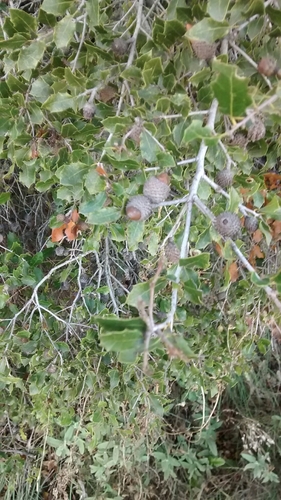
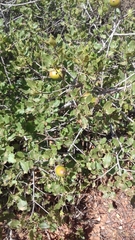
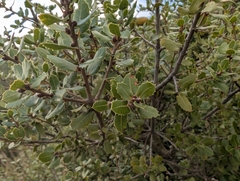
Kermes oak (Quercus coccifera) is an evergreen shrub or small tree in the Fagaceae family, typical of limestone garrigue and maquis around the Mediterranean. Stiff, holly-like leaves and acorns with bristly cups distinguish it from holm oak. The kermes scale insect, once gathered from its branches to make scarlet dye, gave the species its name.
Read moreKermes oak, Holly oak, Garric and Coscoja
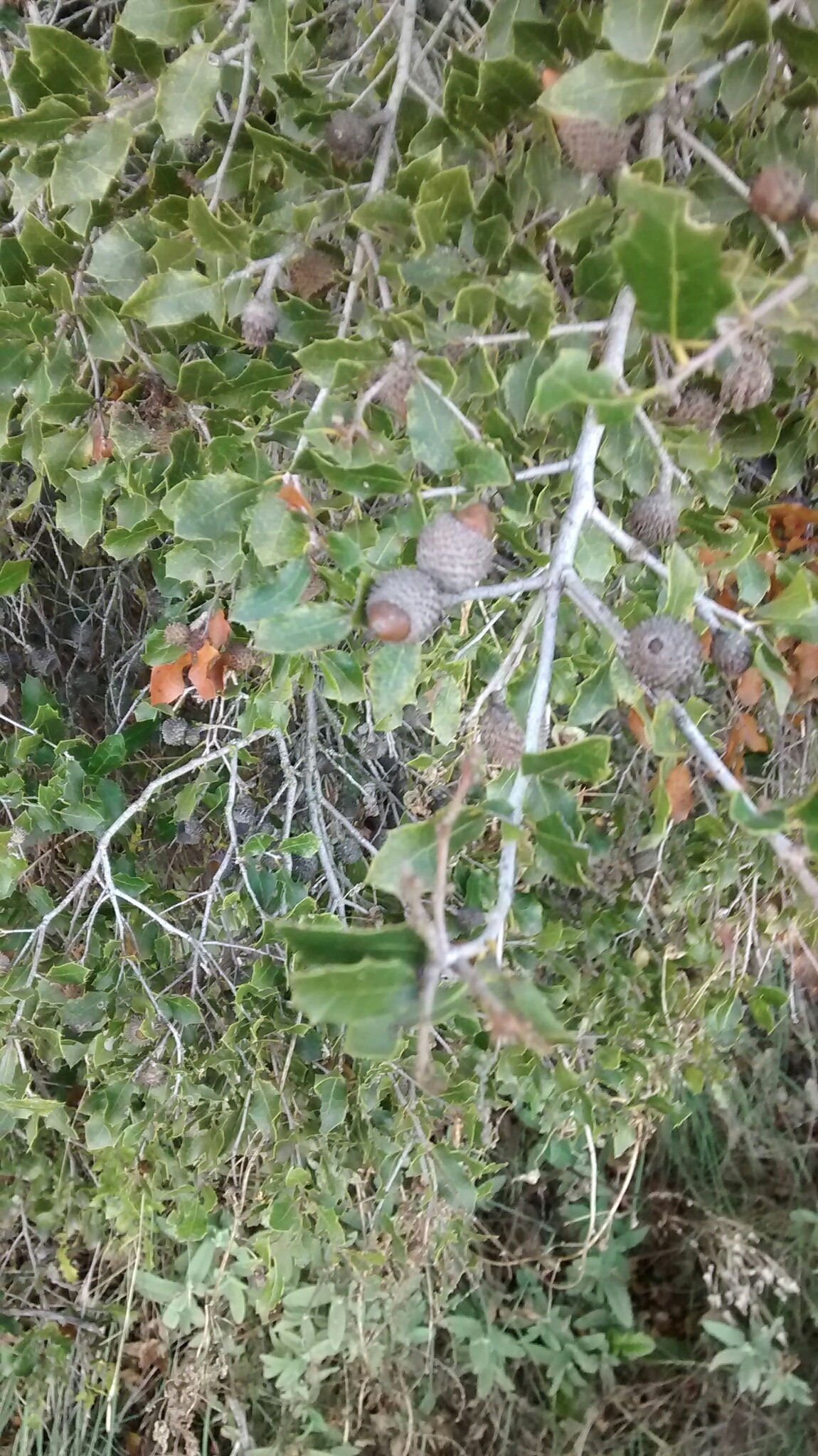
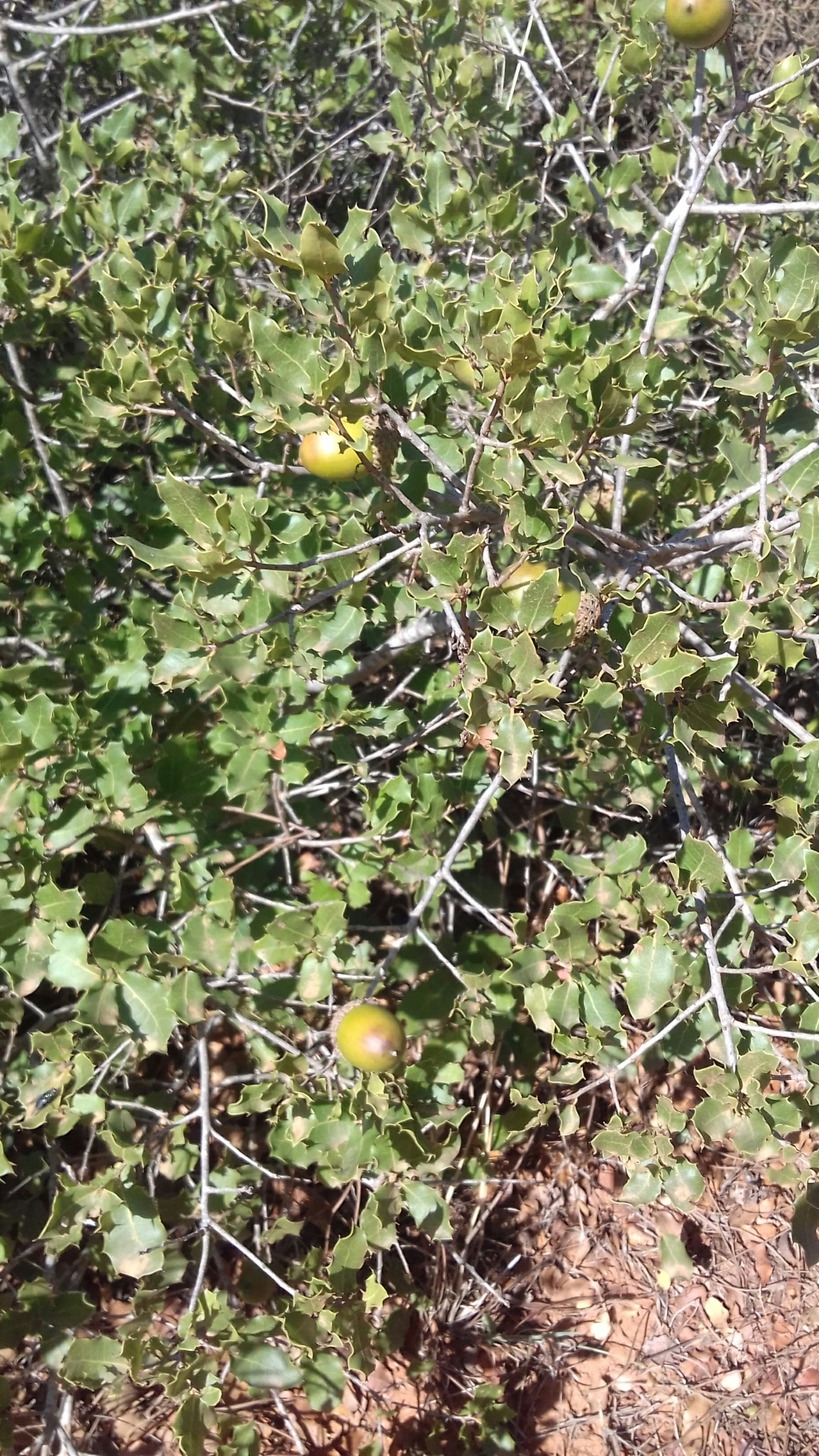
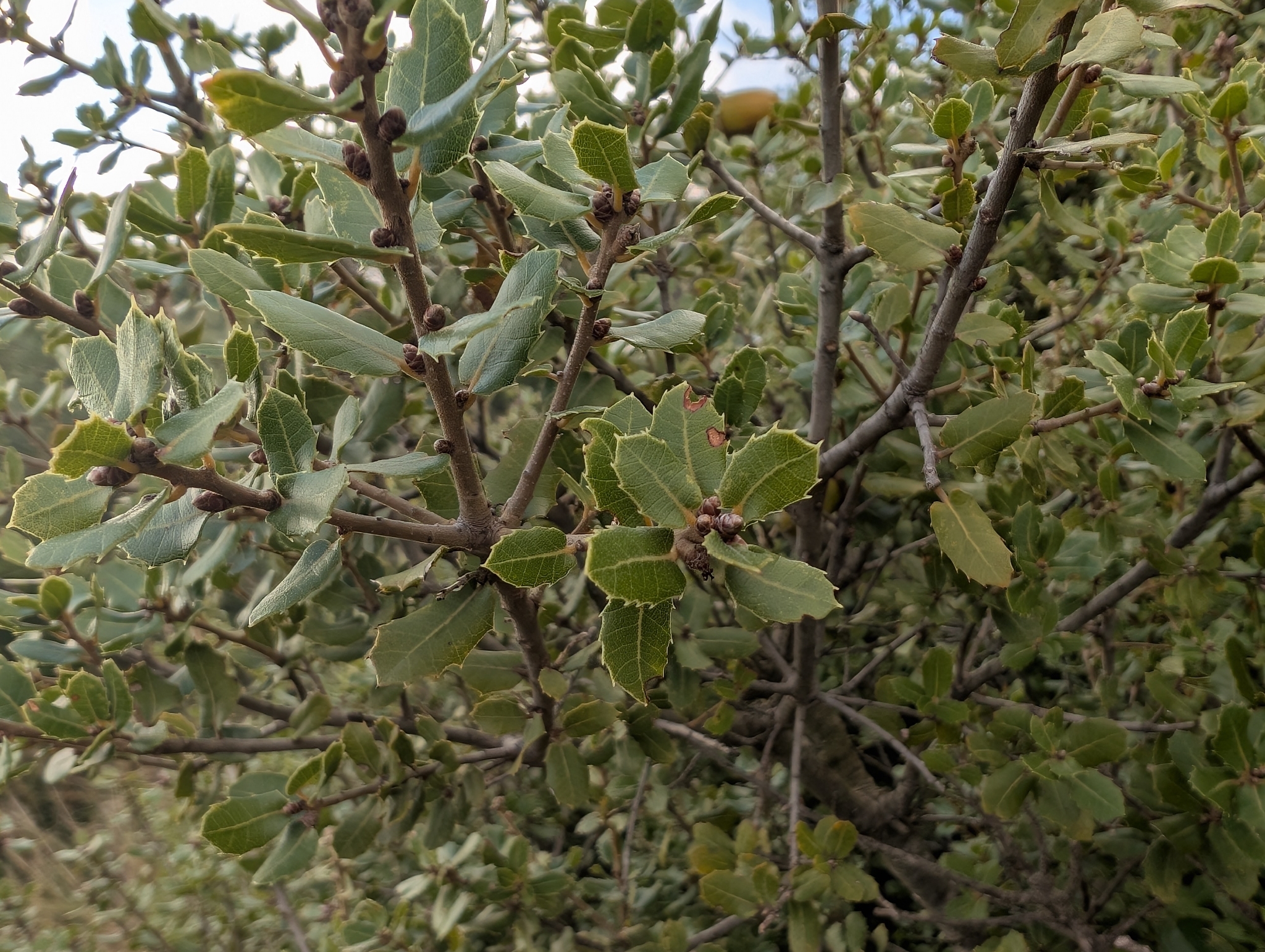


© photo
Quentin Groom · cc0
iNaturalist User · cc-by
Georg E · cc-by
Taken Oct 31, 2021 by Patrick Cartier (cc-by-sa)
Taken Oct 8, 2020 by Jet Meulenbelt (cc-by-sa)
Taken Nov 2, 2018 by Jean-Rémy mallard (cc-by-sa)
Taken Jan 12, 2021 by Jaime Ghuetu (cc-by-sa)
Taken Jun 7, 2021 by Alain Bigou (cc-by-sa)
© copyright of the Board of Trustees of the Royal Botanic Gardens, Kew.


Global distribution
Quercus coccifera is native throughout the Mediterranean basin, from Portugal and Spain to Türkiye and the Middle East, with North African populations in Morocco, Algeria, Tunisia and Libya. It has little horticultural use beyond this range; occurrences outside garrigue remain occasional.
- Native10
- France
- Spain
- Portugal
- Italy
- Greece
- Türkiye
- Morocco
- Algeria
- Tunisia
- Libya
Hexagons: regions where the plant occurs. Green dots: native range.1
Identity
Kermes oak (Quercus coccifera L., 1753) is a low, prickly Mediterranean evergreen shrub or small tree in the Fagaceae family and the genus Quercus. Linnaeus described a plant very different from Europe’s tall deciduous oaks: a dense shrub whose spiny leaves make it distinctly uncomfortable to touch. Local names include garric and coscoja, while holly oak refers to its holly-like foliage. 1 2
The epithet coccifera, meaning “kermes-bearing,” refers to an insect living on the plant rather than to the plant itself. The scale insect Kermes vermilio was long gathered from its twigs to make scarlet dye. This red coloring was traded throughout the Mediterranean before the arrival of New World cochineal, and the dye-producing insect gave the entire species its name. 4 5
Recognition
Low, dense thickets are the familiar form of Kermes oak in garrigue subject to fire and grazing. There it stands 1–3 m (3–10 ft) high, but protected plants can reach 8 m (26 ft) over several decades. 3 5
Small leaves, 3–5 cm (1–2 in) long, are stiff and glossy, with spiny teeth around the edges that recall holly. This creates the commonest identification problem. Holm oak (Quercus ilex) has prickly lower or juvenile leaves, but its upper leaves become smooth-edged with age. Kermes oak retains spiny leaves throughout the shrub, whether young or mature. 3
The acorn offers a second useful feature. Its cup has upright, sharp scales rather than flattened scales, contrasting clearly with the almost smooth cup of holm oak. Ripening takes two years, an unusual cycle among European oaks. Among European oaks, this rare trait is chiefly shared with holm oak itself. 4 3
Useful taxonomy
For Kermes oak, the accepted botanical name in Plants of the World Online is Quercus coccifera L., published in 1753 in the Fagaceae family. 1 2
Several names occur in the botanical synonymy without separate horticultural standing:
- Quercus coccifera var. calliprinos (Webb) Boiss., also treated at subspecies rank;
- Quercus coccifera var. rigida (Willd.) Boiss., a form with stiffer leaves;
- Quercus coccifera var. echinata (Trab.) Albert, associated with forms having especially bristly acorn cups.
Calliprinos has a more disputed status than rigida and echinata. Plants of the World Online treats it as a synonym, while many Middle Eastern authors distinguish Palestine oak as a separate species or subspecies. A spiny oak with bristly acorn cups found in Israel or Lebanon may consequently have different names depending on the taxonomic reference consulted, even though the plant itself is the same. 1
Habitat and range
Throughout the Mediterranean basin, Kermes oak occurs from Portugal and Spain in the west through southern France and Italy to the Balkans, Türkiye and the Middle East. On the southern shore, populations occur in Morocco, Algeria, Tunisia and Libya. 1 5
Dry, stony limestone soils on exposed slopes are its characteristic setting, often where repeated fire or grazing has degraded holm oak woodland. Young seedlings without an established deep root struggle through successive dry summers. Well-rooted plants, by contrast, tolerate prolonged summer drought without watering. 6 5
The International Union for Conservation of Nature assesses Quercus coccifera as Least Concern globally. Its broad distribution offsets localized threats from coastal urban development and some changes in agricultural land use. 7
Life cycle and reproduction
Inconspicuous yellow-green catkins flower in spring, from early to late spring in its native Mediterranean climate. The ensuing fruiting cycle is unusual among temperate oaks: an acorn needs two years to ripen, compared with a single growing season in most European deciduous oaks. 3 4
A two-year ripening cycle allows a single branch to carry both young, immature green acorns and brown acorns from the previous year that have completed development. Gathering acorns in late summer therefore does not guarantee viable seed. Waiting for ripe acorns to fall naturally in late fall or winter is more reliable. 5
Fresh seed is the only reliable method of propagation in cultivation. Acorns quickly lose viability when they dry and should be sown soon after falling, either directly in place or in deep pots. This avoids disturbing the taproot that establishes during the first few months. 5
Uses and risks
Scarlet dye is the best-documented historical use of Kermes oak, more prominent than its present-day roles as a defensive hedge or source of acorns. The scale insect Kermes vermilio colonizes young twigs and supplied dye traded throughout the Mediterranean for centuries. New World cochineal began to replace it in the 16th century. 4
Garden use is mainly as a low defensive hedge, where sharp leaves discourage passage. The acorns contain fewer tannins than those of some other oaks and are sometimes eaten roasted or ground after light leaching in water. No toxicity is documented for humans, cats or dogs. 5
Varieties, look-alikes and related plants
Botanical variants rather than garden cultivars account for the named forms of Kermes oak. Names such as var. rigida and var. echinata belong to the species’ synonymy; they do not represent horticultural selections in the strict sense. 1
The principal plants that can be confused with Kermes oak are:
- Quercus ilex, holm oak, with smooth-edged upper leaves and an almost smooth acorn cup, unlike the persistently prickly foliage of Kermes oak;
- Quercus calliprinos, Palestine oak, treated as a separate species by some Middle Eastern authors but as a synonym by Plants of the World Online;
- Quercus pseudococcifera, recognized as a separate species from North Africa and the western Mediterranean despite its potentially confusing name.
Bristly acorn cups and uniformly prickly foliage provide the most consistent distinction from holm oak. Leaf color and gloss vary too much with exposure and the age of a shoot to be equally dependable. 3
Main sources
- Plants of the World Online / Kew, Quercus coccifera L.
- International Plant Names Index, Quercus coccifera
- Royal Horticultural Society, Quercus coccifera details
- Missouri Botanical Garden Plant Finder, Quercus coccifera
- Plants For A Future, Quercus coccifera
- INPN / MNHN, Quercus coccifera L., 1753 — Kermes oak
- IUCN Red List, Quercus coccifera assessment
Frequently asked questions
How can I distinguish Kermes oak from holm oak?
Kermes oak keeps prickly leaves throughout the shrub, even when mature, whereas holm oak loses the spines on its upper leaves. The acorn cup, covered with upright scales in Kermes oak, is another reliable feature.
Is Kermes oak toxic to dogs and cats?
No. Quercus coccifera is considered nontoxic to humans and domestic animals. Its acorns have fewer tannins than those of other oaks and are neither particularly palatable nor dangerous.
Where does the name Kermes oak come from?
It comes from the scale insect Kermes vermilio, which lives on the young twigs. Dried and ground, the insects supplied a scarlet dye for centuries before being replaced by cochineal from the New World.
Why does Kermes oak grow so slowly?
The species is adapted to the poor, dry limestone soils of garrigue, where it invests first in a deep taproot rather than aboveground growth. Repeated fire and grazing also often keep it shrubby.
Can Kermes oak grow outside a Mediterranean climate?
The species tolerates cold down to about -15 °C (5 °F), according to the Royal Horticultural Society, but needs well-drained limestone soil and full summer sun. Very wet winters and acidic soil suit it poorly.
Does the word garrigue come from Kermes oak?
Yes. Garrigue derives from the Occitan garric, a local name for Kermes oak, which often dominates this Mediterranean vegetation on limestone soils.
Can I sow a Kermes oak acorn found in garrigue?
Yes, if it is sown fresh in fall without being allowed to dry. Because ripening takes two years, some acorns gathered in late summer are still developing. Wait for fully ripe acorns to fall naturally.
Similar plants

If you are unsure about a plant’s toxicity, ask a botanist or veterinarian for advice.