
Baby sage (Salvia microphylla, )
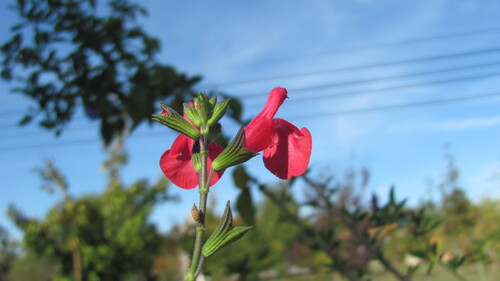
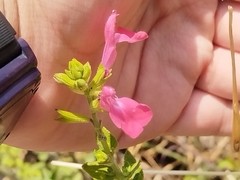
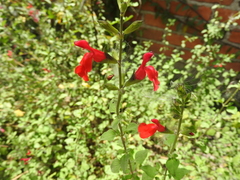
Baby sage (Salvia microphylla) is an aromatic subshrub in the Lamiaceae family, native to Arizona and the mountains of Mexico. Its oval leaves have toothed edges and a blackcurrant scent. It crosses so readily with Salvia greggii that many garden cultivars are actually hybrids of the two species.
Read moreBaby sage, Graham's sage, Blackcurrant sage and Mirto de monte


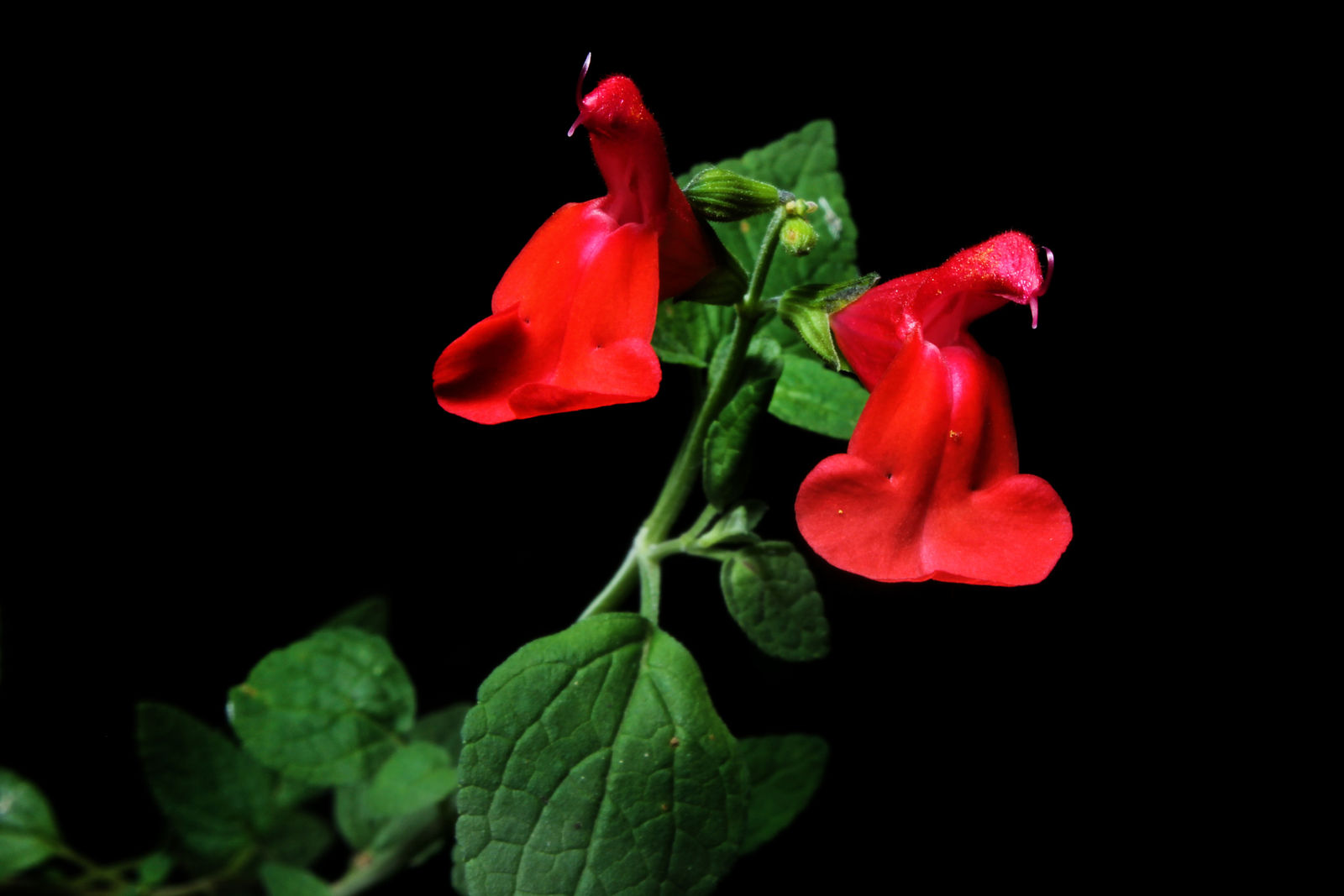
© photo
zebedeugalinha · cc-by
Diego López · cc-by
Oscar Alejandro Morales Juárez · cc-by-nc
Taken Mar 11, 2020 by gonzalez soto sandra (cc-by-sa)
Taken Jun 3, 2020 by Alain Bigou (cc-by-sa)
Taken Oct 24, 2022 by Irmgard Groß (cc-by-sa)
Taken Jul 23, 2020 by Thierry LE COM (cc-by-sa)
Taken Nov 26, 2022 by Annie G (cc-by-sa)
© copyright of the Board of Trustees of the Royal Botanic Gardens, Kew.




Global distribution
The native range of Salvia microphylla lies in southeastern Arizona and the mountains of central, eastern, western and southern Mexico. Plants of the World Online extends this range to Guatemala. Outside its native range, it is mainly a sunny-garden plant, occasionally reported as a garden escape around the Mediterranean.
- Native3
- Introduced2
- United States
- Mexico
- Guatemala
- France
- Spain
Hexagons: regions where the plant occurs. Green dots: native range.1
Identity
Baby sage (Salvia microphylla Kunth, 1818), also known as Graham's sage or Blackcurrant sage, is a subshrub in the genus Salvia and the Lamiaceae family. Plants of the World Online and the International Plant Names Index confirm its accepted name and authority. 1 2
The epithet microphylla comes from Greek and means “small-leaved.” In Mexico, the plant is called Mirto de monte, or “mountain myrtle,” referring to its aromatic foliage used in traditional herbal tea. 6 7
Crushed foliage gives blackcurrant sage its name: the scent is often compared to blackcurrants rather than the minty aroma of other sages. Graham's sage preserves the memory of an old synonym, Salvia grahamii, described by George Bentham in 1830. 3
Recognition
Salvia microphylla forms a bushy, upright subshrub 50 cm–1.5 m (1.6–5 ft) tall and about 1 m (3.3 ft) across, with a base that becomes woody with age. It can flower in its first year and reaches full size in 2–5 years, depending on climate. 3 7
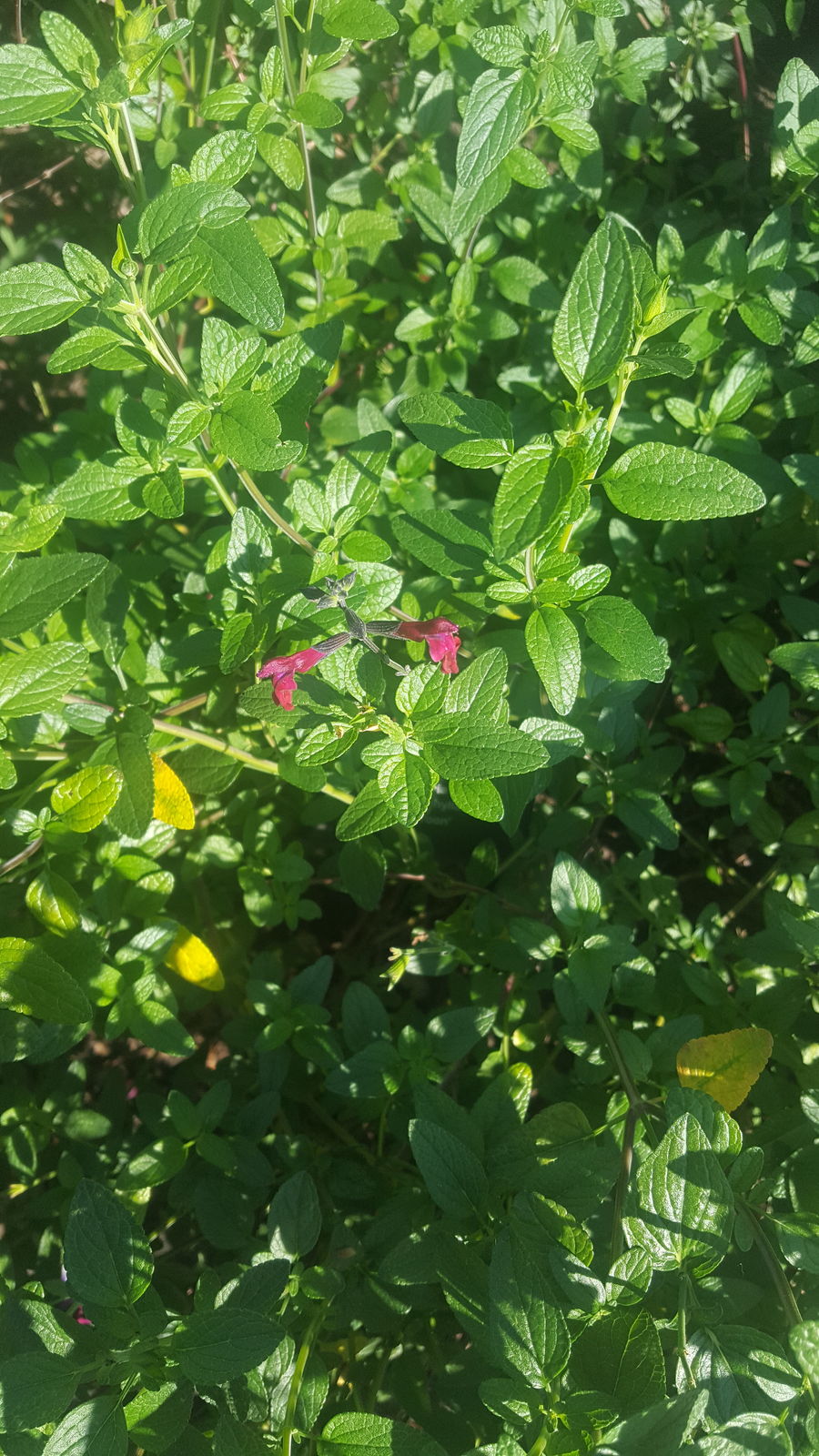
Small, oval leaves have distinctly toothed edges, an easily visible feature separating Salvia microphylla from Salvia greggii, whose leaves are narrow and smooth-edged. A less obvious distinction is the pair of papillae inside the base of the corolla tube, present in Salvia microphylla but absent in its relative. 8
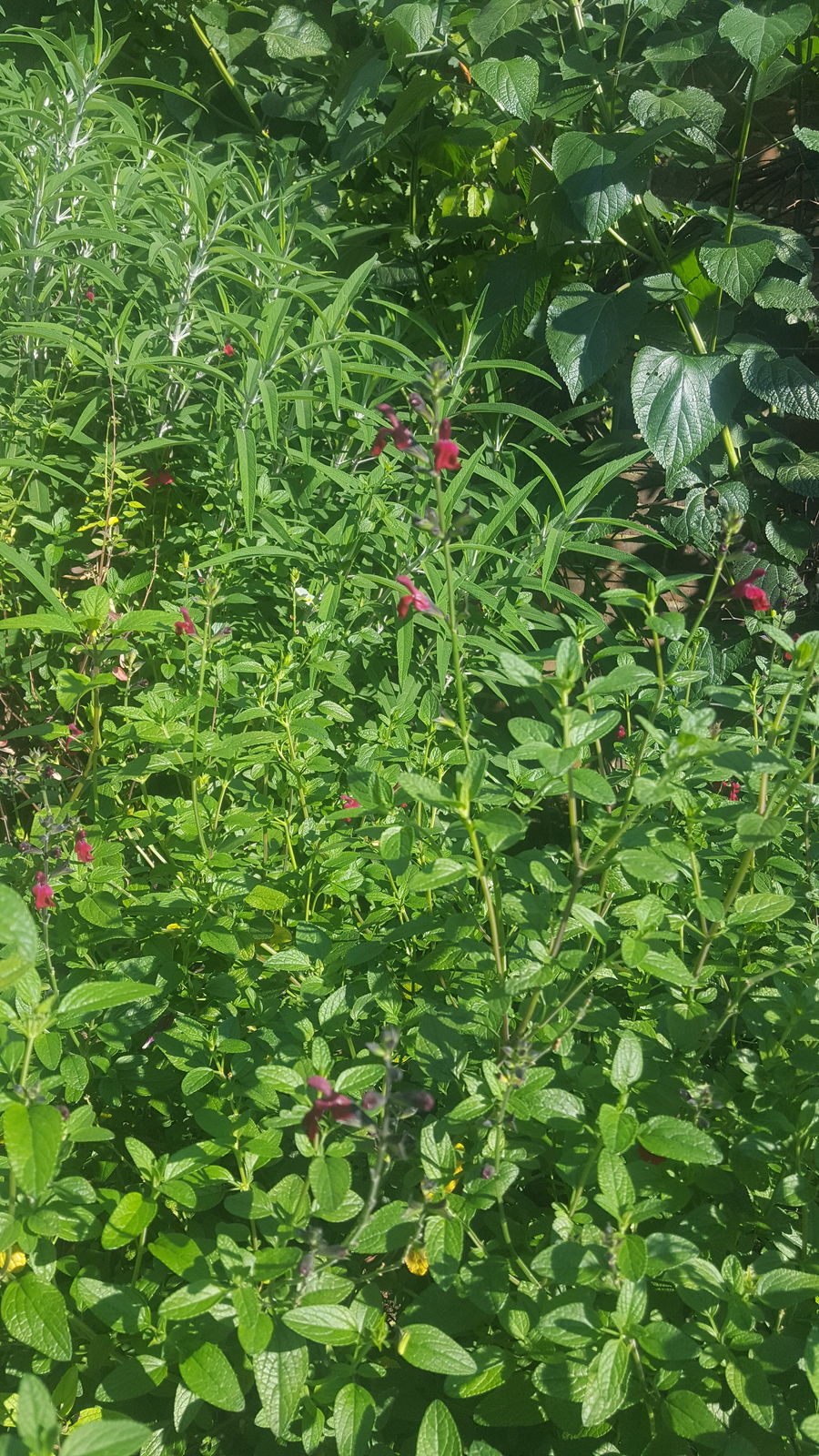
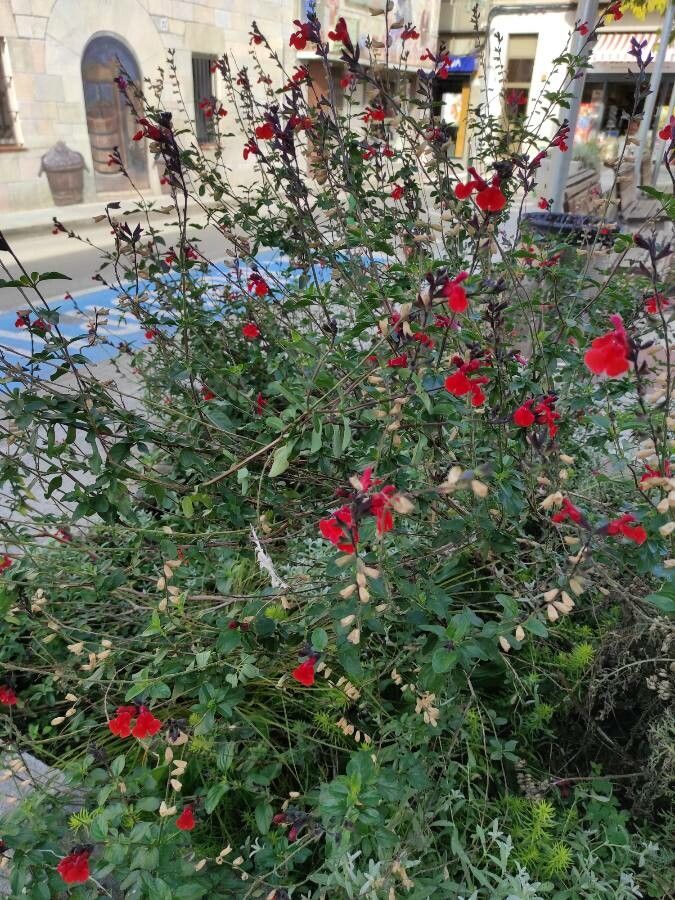
Whorls of flowers at the branch tips come in red, magenta, pink or white, depending on the cultivar. Flowering begins in late spring, sometimes pauses in intense summer heat, then resumes strongly in fall. 7 8
Useful taxonomy
Published in 1818, the accepted name is Salvia microphylla Kunth. The species has long circulated under other names, now recognized as synonyms:
- Salvia grahamii Benth., historical synonym
- Salvia lemmonii A.Gray, historical synonym
- Salvia neurepia Fernald, historical synonym
- Salvia obtusa M.Martens & Galeotti, historical synonym
- Salvia odoratissima Sessé & Moc., historical synonym
- Salvia gasterantha Briq., historical synonym
Three varieties have also been proposed: var. canescens, var. neurepia and var. wislizeni. All are now included under the accepted name. The full binomial, Salvia microphylla, therefore remains a more stable reference than any of these historical synonyms. 1 2
Habitat and range
From southeastern Arizona in the United States, the native range extends through the mountains of central, eastern, western and southern Mexico, with an extension described as far as Guatemala. The plant grows along sunny woodland edges and in open mountain woodland under subtropical conditions. 1 6
Widely introduced to horticulture since the 1990s, the species is now grown in many temperate gardens, including those in the United Kingdom and North America. In France, Salvia microphylla remains primarily a garden plant. Garden escapes are reported around the Mediterranean, without a documented invasive status. 10
The British Royal Horticultural Society rates the species H4, corresponding to occasional frosts between -10 and -5 °C (14–23 °F). The hardiest cultivars tolerate lower temperatures if the soil stays dry in winter. This need for drainage explains why a dry continental climate may suit it better than a milder but wet oceanic winter. 3
Life cycle and reproduction
Terminal flower spikes strongly attract bees, butterflies and hummingbirds. Flowering starts in late spring, often slows during summer heat above 30 °C (86 °F), then resumes in fall before the first frosts. 7 8
Propagation mainly uses cuttings of semi-ripe stems taken in summer, ensuring plants identical to the parent. Spring sowing is also possible, but the species hybridizes so readily with its relatives that seedlings do not always reproduce the desired cultivar faithfully. 6
Uses and risks
Its main use is ornamental, in sunny borders, rock gardens, pollinator gardens and dry beds in Mediterranean or temperate climates. In Mexico, the leaves have also long been used to make traditional herbal tea. 7 6
No toxicity is documented for this species in cats, dogs or humans. The ASPCA lists sage, in the broad sense of the genus Salvia, among plants safe for pets. Concentrated essential oils still call for caution and should never be confused with fresh leaves. 9
The chief growing hazard is stagnant winter moisture, rather than pests. It can kill the plant more readily than moderate dry cold. Fast-draining soil reduces this risk of stem rot. 6
Varieties, look-alikes and related plants
The Royal Horticultural Society award-winning 'Hot Lips' is known for white-and-red summer flowers whose proportion of red varies with temperature and day length. Some plants turn almost entirely white in fall. 'Cerro Potosi', also an award winner, bears large, vivid magenta flowers above rounder foliage. 4 5
Many cultivars sold as Salvia microphylla are actually hybrids with Salvia greggii, grouped under Salvia × jamensis. They are sometimes marketed as “Mexican salvias” without identifying the dominant parent. Checking the toothed leaf edges and the full binomial on the label helps avoid buying a Salvia × jamensis hybrid when seeking true Salvia microphylla. 3 8
Catalogs also carry cultivar names without a direct link to the forms awarded by the Royal Horticultural Society, such as 'Kew Red' and 'Royal Bumble'. These describe vigorous, red-flowering selections that are useful in gardens, without particular botanical significance beyond their color. The full scientific name remains the reliable horticultural reference. 3
Main sources
- Plants of the World Online / Kew, Salvia microphylla Kunth
- International Plant Names Index, Salvia microphylla Kunth
- Royal Horticultural Society, Salvia microphylla - Baby sage
- Royal Horticultural Society, Salvia 'Hot Lips'
- Royal Horticultural Society, Salvia microphylla 'Cerro Potosi'
- Plants For A Future, Salvia microphylla
- NC State Extension Gardener Plant Toolbox, Salvia microphylla
- UC ANR, Fresno Gardening Green, Small leaf salvias
- ASPCA, Sage toxicity entry (genus Salvia)
- INPN, Salvia microphylla Kunth, 1818
Frequently asked questions
Is baby sage toxic to cats and dogs?
No toxicity is documented for this species. The ASPCA lists sage, in the broad sense of the genus Salvia, among plants safe for pets. Concentrated essential oil still requires particular caution.
How do Salvia microphylla and Salvia greggii differ?
Salvia microphylla has distinctly toothed leaf edges and a pair of papillae at the base of the corolla tube, two features absent in Salvia greggii. The species readily cross, producing cultivars sold as Salvia × jamensis.
Why do 'Hot Lips' flowers change color?
The proportion of red and white varies with temperature and day length. Flowers are often bicolored in summer and can become almost entirely white in fall as the days shorten.
Does baby sage need much water?
No. Once established, this sage tolerates drought well and is especially vulnerable to stagnant winter moisture. Well-drained soil matters more than abundant watering for healthy growth.
How cold hardy is baby sage?
The species withstands about -5 to -10 °C (23 to 14 °F), depending on the source and winter drainage. The hardiest cultivars survive lower temperatures if the base is mulched and the soil stays dry.
Where does baby sage come from?
Its native range lies in southeastern Arizona and the mountains of central, eastern, western and southern Mexico, with an extension described as far as Guatemala.
What is the easiest way to propagate baby sage?
Summer cuttings of semi-ripe stems are the most reliable method because they produce plants identical to the parent. The species hybridizes so readily that seedlings do not always reproduce the parent cultivar faithfully.
Similar plants
If you are unsure about a plant’s toxicity, ask a botanist or veterinarian for advice.