
Turkey berry (Solanum torvum, )
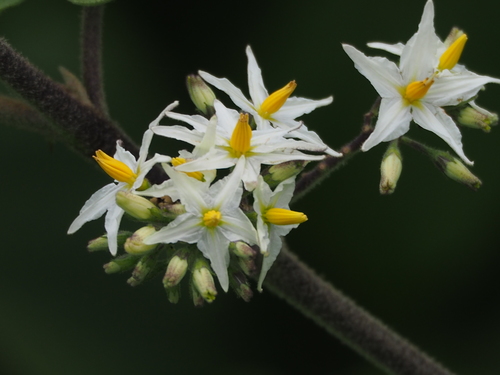
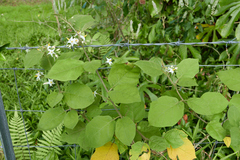
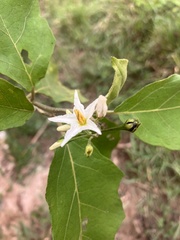
Turkey berry (Solanum torvum) is a spiny tropical shrub in the Solanaceae family, closely related to cultivated eggplant. Native to the Caribbean, southern Mexico and Central America, it has naturalized widely across the tropics, where it is used mainly as a disease-resistant eggplant rootstock and as a food plant for its young green fruits.
Read moreTurkey berry, Pea eggplant, Devil’s fig and Susumber

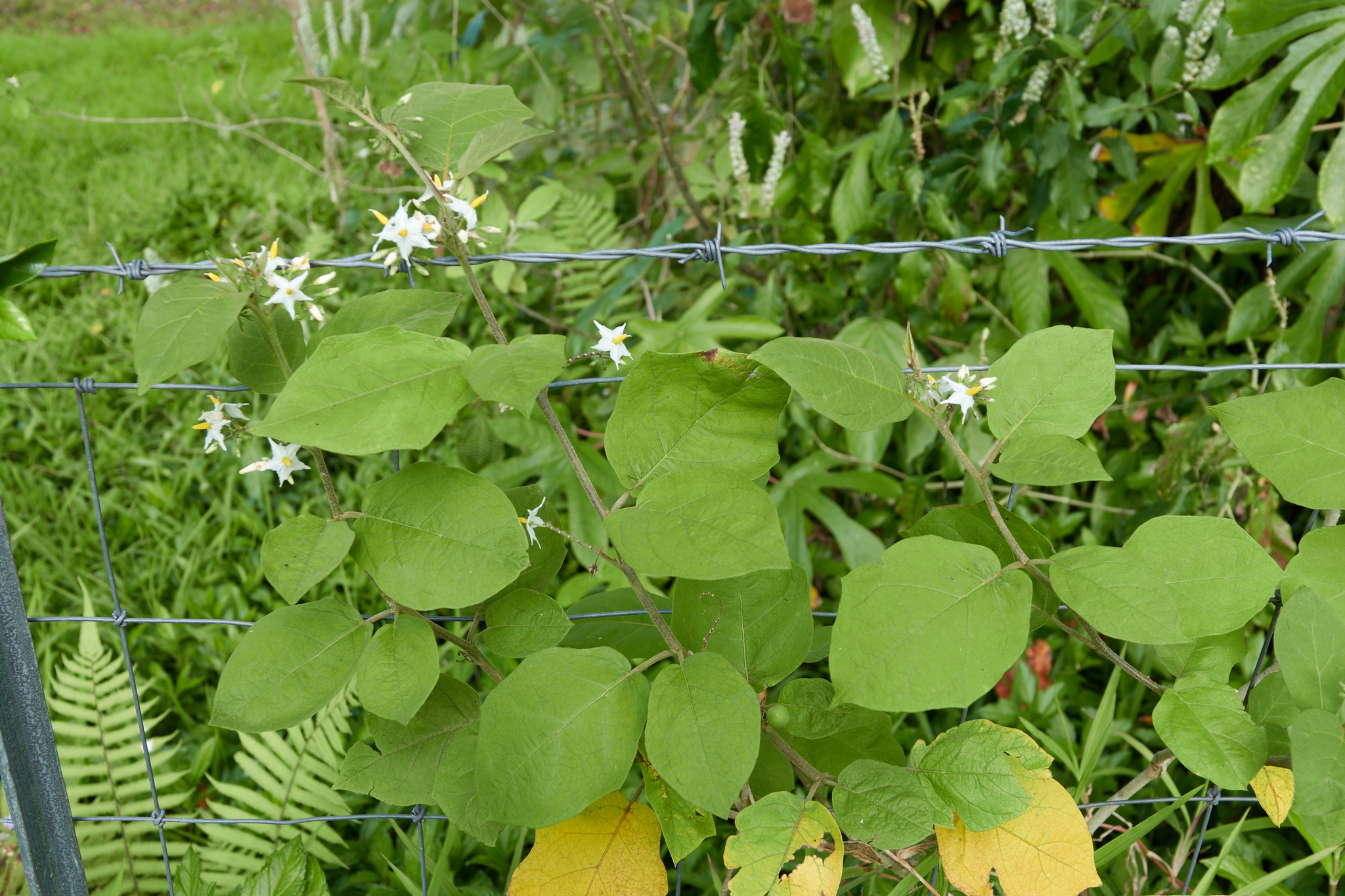


© photo
no rights reserved, uploaded by 葉子 · cc0
iNaturalist User · cc0
rebecca bachman · cc0
Taken Sep 16, 2011 by OTS - Oviedo-Brenes, Federico (cc-by-nc-sa)
Taken Sep 25, 2018 by Royal Botanic Garden Edinburgh - Bhaskar Adhikari (cc-by-nc)
Taken Jun 28, 2016 by christiane Fazer (cc-by-sa)
© copyright of the Board of Trustees of the Royal Botanic Gardens, Kew.


Global distribution
Solanum torvum is native to the Caribbean, southern Mexico, Central America, northern South America and eastern Brazil. Widely distributed as a rootstock and food plant, it has naturalized across most tropical regions. Its invasive status, documented by the IUCN, concerns tropical overseas territories rather than mainland France.
- Native4
- Introduced2
- Invasive4
- Mexico
- Guatemala
- Jamaica
- Brazil
- India
- Thailand
- Mayotte
- Réunion
- New Caledonia
- French Polynesia
Hexagons: regions where the plant occurs. Green dots: native range.1
Identity
Turkey berry (Solanum torvum Sw., 1788), also known as pea eggplant, is a spiny shrub in the Solanaceae family and a close relative of cultivated eggplant (Solanum melongena). Swedish botanist Olof Swartz described it from Caribbean specimens, and its taxonomic identity has remained unchanged since 1788. 1 2
Creole names in the French Caribbean include bringelle marron and bélangère bâtarde. Like the French names aubergine-pois, fausse aubergine and aubergine sauvage, they recall its relationship to eggplant while emphasizing its wild, undomesticated character. 3 4
Recognition
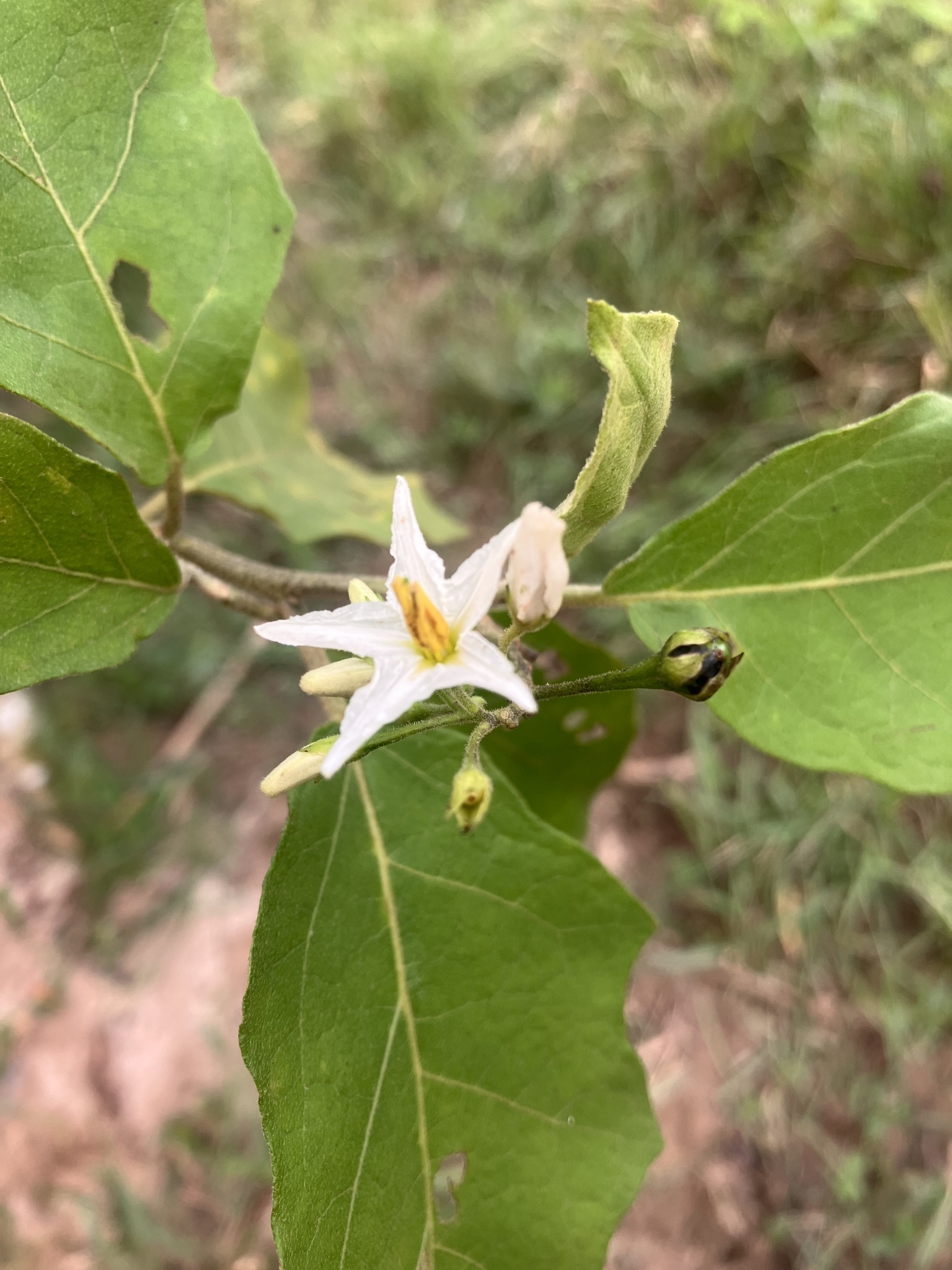
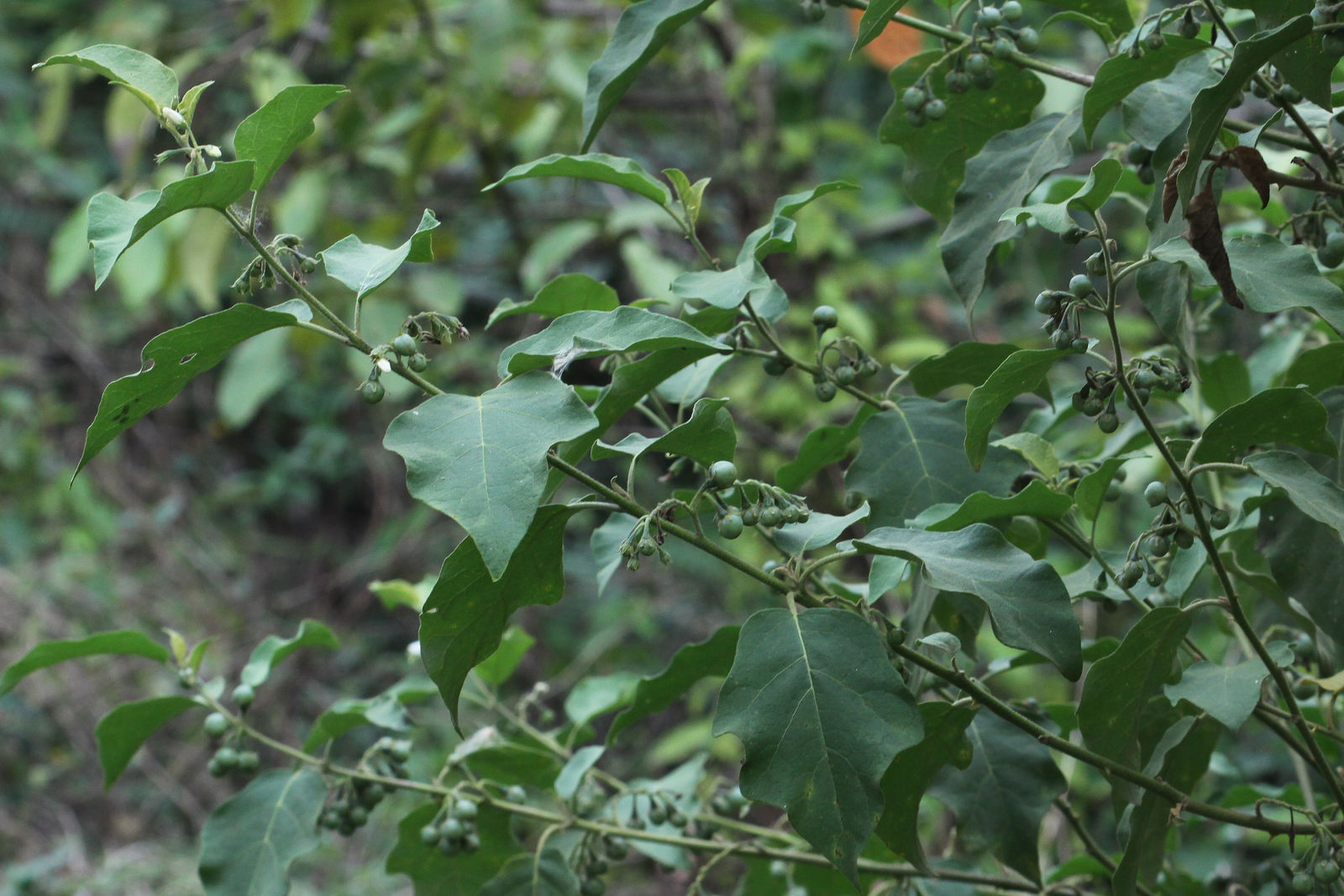
An upright, branching bush 2–4 m (6.5–13 ft) tall, Solanum torvum has grayish bark marked by raised lenticels. Short curved prickles occur on stems, leaf stalks and sometimes leaf veins, distinguishing it from most cultivated nightshades, which tend to have few or no spines. 9 3
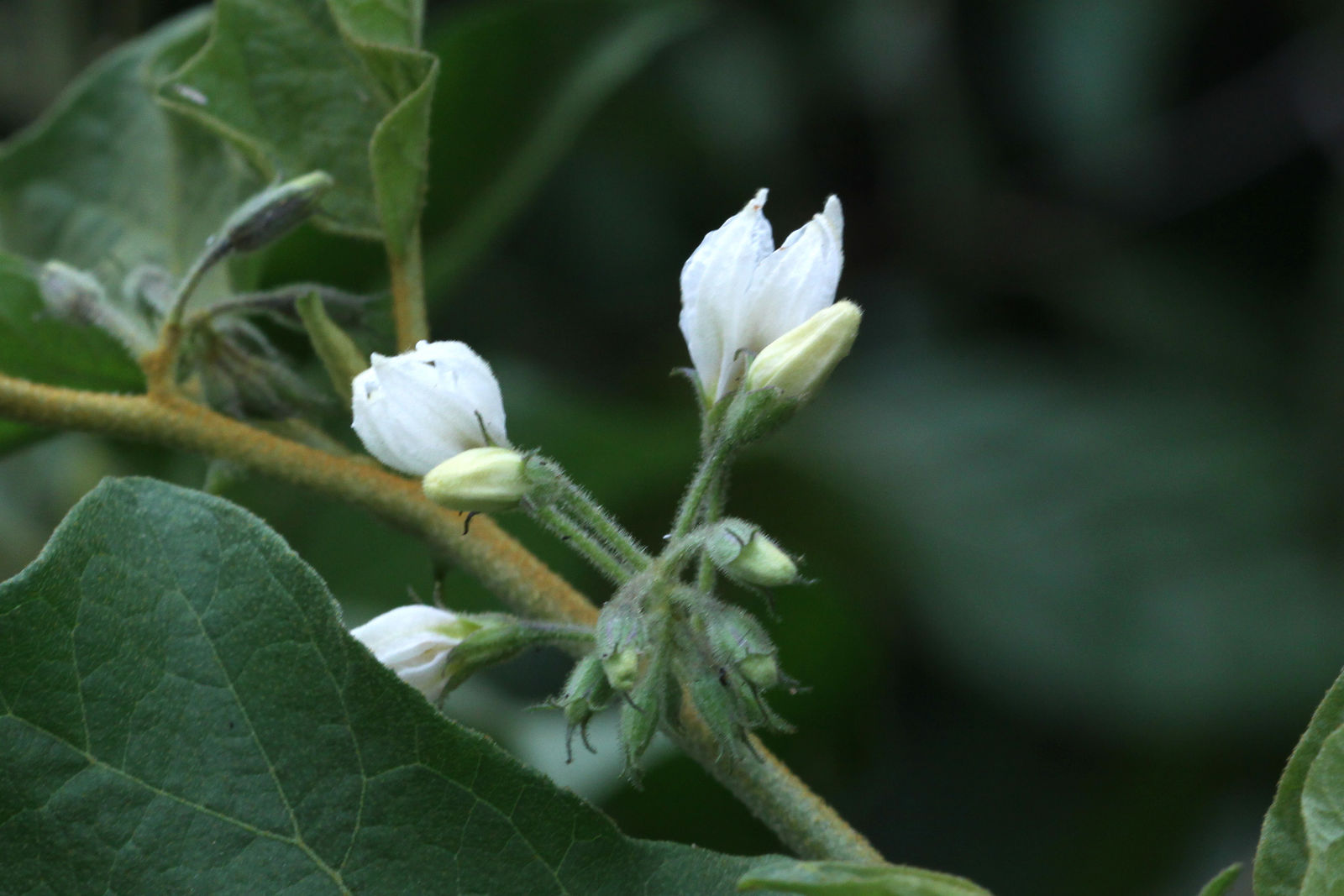
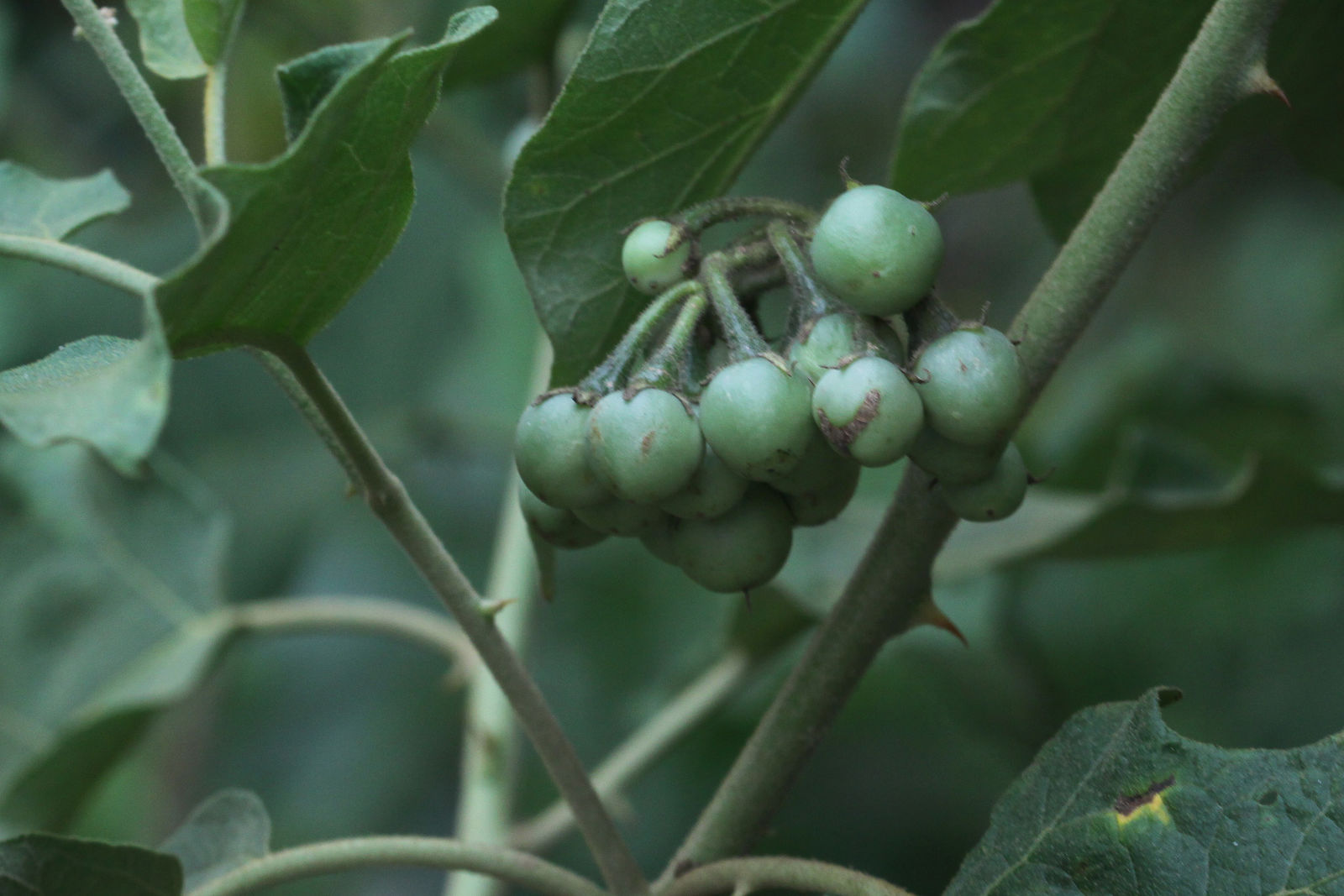
Oval, lobed leaves are alternate or opposite, 7–23 cm (3–9 in) long and finely hairy on both surfaces. White flowers with five pointed lobes open in corymbs at the leaf axils. These develop into tight clusters of spherical berries about 1–1.5 cm (0.4–0.6 in) across, bright green at first and yellow-brown when fully ripe. 4 9
Useful taxonomy
The accepted name in POWO/WCVP is Solanum torvum Sw. Older botanical literature used numerous names now treated as synonyms:
- Historical synonym: Solanum ferrugineum Jacq.
- Solanum campechiense L.
- Solanum verbascifolium var. torvum (Sw.) Bitter
- Solanum torvum var. inerme Nees
- Solanum torvum f. apaense Hassl.
The variety inerme, meaning “unarmed,” illustrates a common field identification problem. Naturally sparsely spiny or spineless populations do exist, but they do not hold a botanical status separate from the typical species. 1 2
Habitat and range
Caribbean islands, southern Mexico and Central America form part of the native range, extending to northern South America and eastern Brazil. In humid tropical climates the species colonizes wasteland, forest edges and roadsides from sea level to 2,000 m (6,600 ft) elevation. 1 9
Distribution as a food crop and rootstock has helped Turkey berry naturalize across most tropical regions, from Africa to Southeast Asia and the Pacific. The IUCN Global Invasive Species Database lists it as invasive in Mayotte, Réunion, New Caledonia and French Polynesia, where dense thickets on disturbed ground compete with local vegetation. 5 6
Invasive status in the French territories concerns these tropical overseas areas. In mainland France, winter temperatures and the species’ lack of frost tolerance prevent lasting establishment in open ground. 6
Life cycle and reproduction
Warm, humid conditions allow almost continuous flowering without a marked winter rest. Each pollinated flower produces a fruit that enlarges within weeks, initially green and firm before turning yellow-brown several months later at full maturity. 9
Propagation mainly uses seed, with marked dormancy and irregular nursery germination, or semi-ripe stem cuttings, which root in three to four weeks. In agriculture, nursery seedlings are grafted before final planting and provide most commercially sold rootstocks. 9
Uses and risks
Grafting is the principal agricultural use of Turkey berry. Its vigor and resistance to root diseases, including bacterial wilt, verticillium wilt and root-knot nematodes, make it a valued eggplant rootstock, sold in strains such as 'Torvum Vigor'. Grafted plants tolerate exhausted soils better and allow longer cropping. 9
Young, firm green berries feature in several tropical cuisines: boiled with yam or ackee in the Caribbean, or cooked in curries and chili pastes in Southeast Asia. Ripe fruit or excessive consumption has caused documented cholinergic poisoning, with digestive upset, dizziness, speech difficulties and, in severe cases, respiratory distress requiring emergency treatment. 7 8
Traditional medicine also uses Turkey berry leaves and fruits for coughs, fever, rheumatism and some skin conditions, and as a diuretic in several tropical regions. These folk uses do not replace medical advice: the same plant contains irritating glycoalkaloids active at doses close to those used in homemade remedies. 9
Varieties, look-alikes and related plants
Strictly ornamental cultivars are absent from Solanum torvum. Named selections such as 'Torvum Vigor' are seed strains for grafting, chosen for vigor and root resistance rather than appearance. 9
Several spiny nightshades can be mistaken for Turkey berry:
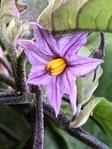
- Solanum mammosum, with yellow-orange nipple-shaped fruits ;
- Solanum aculeatissimum, heavily prickled, with green-and-white-striped fruits ;
- Solanum melongena, cultivated eggplant, usually with few or no prickles.
Three features together distinguish these look-alikes more reliably than any single character: prickly stems, white flowers in corymbs and small round berries in tight clusters. Cultivated eggplant, by comparison, has almost no prickles.
Main sources
- Plants of the World Online / Kew, Solanum torvum Sw.
- International Plant Names Index, Solanum torvum Sw.
- INPN / MNHN, Solanum torvum Sw., 1788
- Tela Botanica, eFlore, Solanum torvum
- IUCN Global Invasive Species Database, Solanum torvum
- Espèces envahissantes Outre-mer (overseas invasive species), Solanum torvum
- Toxicon, solanaceous steroidal glycoalkaloids and poisoning by Solanum torvum
- PMC / Clinical Toxicology, susumber berries and cholinergic poisoning
- Useful Tropical Plants, Solanum torvum
Frequently asked questions
Is Turkey berry the same as eggplant?
No. Cultivated eggplant is Solanum melongena, a different species from Solanum torvum. Both belong to the same genus, and Turkey berry is used as a rootstock onto which eggplant is grafted.
Can you eat Turkey berry fruits?
Young, firm green fruits feature in several tropical cuisines, boiled or cooked in curries. Riper fruits and foliage are not recommended because they contain higher concentrations of irritating glycoalkaloids.
Is Turkey berry poisonous?
Yes. It contains steroidal glycoalkaloids. Documented cases of cholinergic poisoning followed consumption of ripe berries in a traditional Jamaican dish, causing digestive and neurological symptoms.
Why is Turkey berry used as a rootstock?
Its vigor and resistance to several root diseases, including bacterial wilt and root-knot nematodes, make it a valued rootstock for intensively grown eggplant.
Is Turkey berry invasive in France?
It is classified as an invasive alien species in several tropical French overseas territories, including Mayotte, Réunion and New Caledonia. Mainland France’s winter climate prevents lasting establishment outdoors.
How can you distinguish Turkey berry from other spiny nightshades?
The combination of prickly stems, white flowers in corymbs and small round fruits in tight clusters is the most reliable guide, more useful than any single feature alone.
Where does Turkey berry come from?
Its native range covers the Caribbean, southern Mexico and Central America, extending to northern South America and eastern Brazil. It has since naturalized throughout much of the tropics.
Similar plants

If you are unsure about a plant’s toxicity, ask a botanist or veterinarian for advice.