
Northern whitecedar (Thuja occidentalis, )
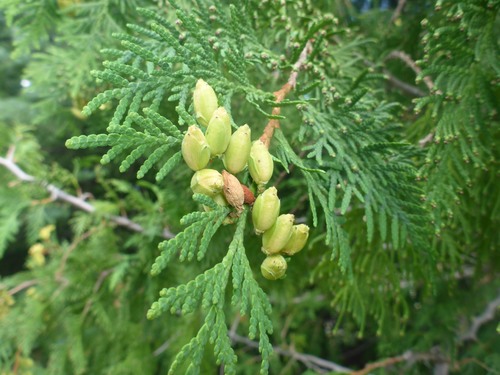
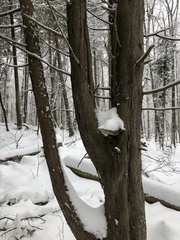
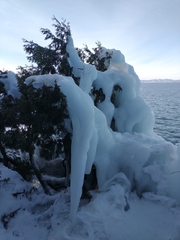
Northern whitecedar (Thuja occidentalis) is an evergreen conifer in the Cupressaceae family, native to eastern Canada and the northeastern United States. It forms stands in calcareous swamps and on rocky ledges, where some trees live for more than four centuries. Its many dwarf and columnar cultivars have made it one of the world’s most widely planted hedge conifers.
Read moreNorthern whitecedar, Eastern white-cedar, Swamp cedar, White cedar, Arborvitae and American arborvitae

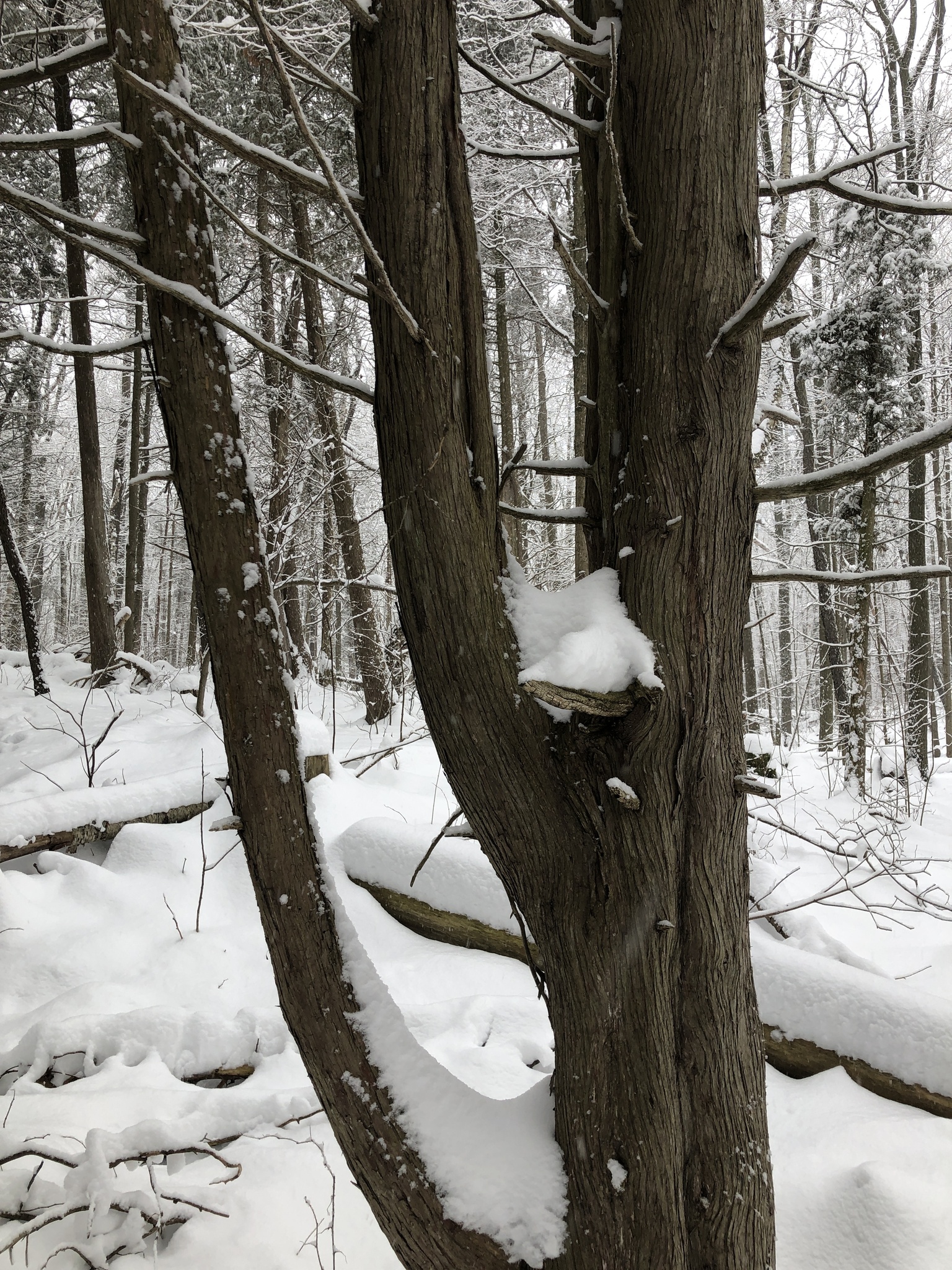


© photo
(c) Donna Pomeroy, some rights reserved (CC BY-NC), uploaded by Donna Pomeroy · cc-by-nc
Mara McHaffie · cc0
Tom Norton · cc-by
Taken Aug 22, 2019 by Marie-Claude Husken (cc-by-sa)
Taken Jan 1, 1800 by Tela Botanica − Thierry Pernot (cc-by-sa)
Taken May 29, 2021 by Zeynep Mutlu (cc-by-sa)
Taken Sep 10, 2020 by Stephane Groulx (cc-by-sa)
© copyright of the Board of Trustees of the Royal Botanic Gardens, Kew.




Global distribution
The native range of Thuja occidentalis extends from eastern and central Canada to the northeastern and north-central United States, with isolated Appalachian populations south to North Carolina and Tennessee. Introduced to Europe in the 16th century, it has since remained widely cultivated there as an ornamental and hedge tree.
- Native2
- Introduced1
- Canada
- United States
- Poland
Hexagons: regions where the plant occurs. Green dots: native range.1
Identity
Northern whitecedar (Thuja occidentalis L., 1753) is an evergreen conifer of the genus Thuja, in the Cupressaceae family. Other established names include Eastern white-cedar, Swamp cedar, White cedar, Arborvitae and American arborvitae. Linnaeus described it in Species Plantarum in 1753, using trees already cultivated in Europe for several generations. 2 1
White cedar names can mislead: this tree belongs to Thuja, whereas true cedars, Cedrus, belong to the separate Pinaceae family. Arborvitae translates Latin arbor vitae, “tree of life,” and recalls a 16th-century episode. Explorer Jacques Cartier is said to have learned from Indigenous peoples how to treat his crew’s scurvy with a decoction of vitamin C-rich foliage. 4 3
Recognition
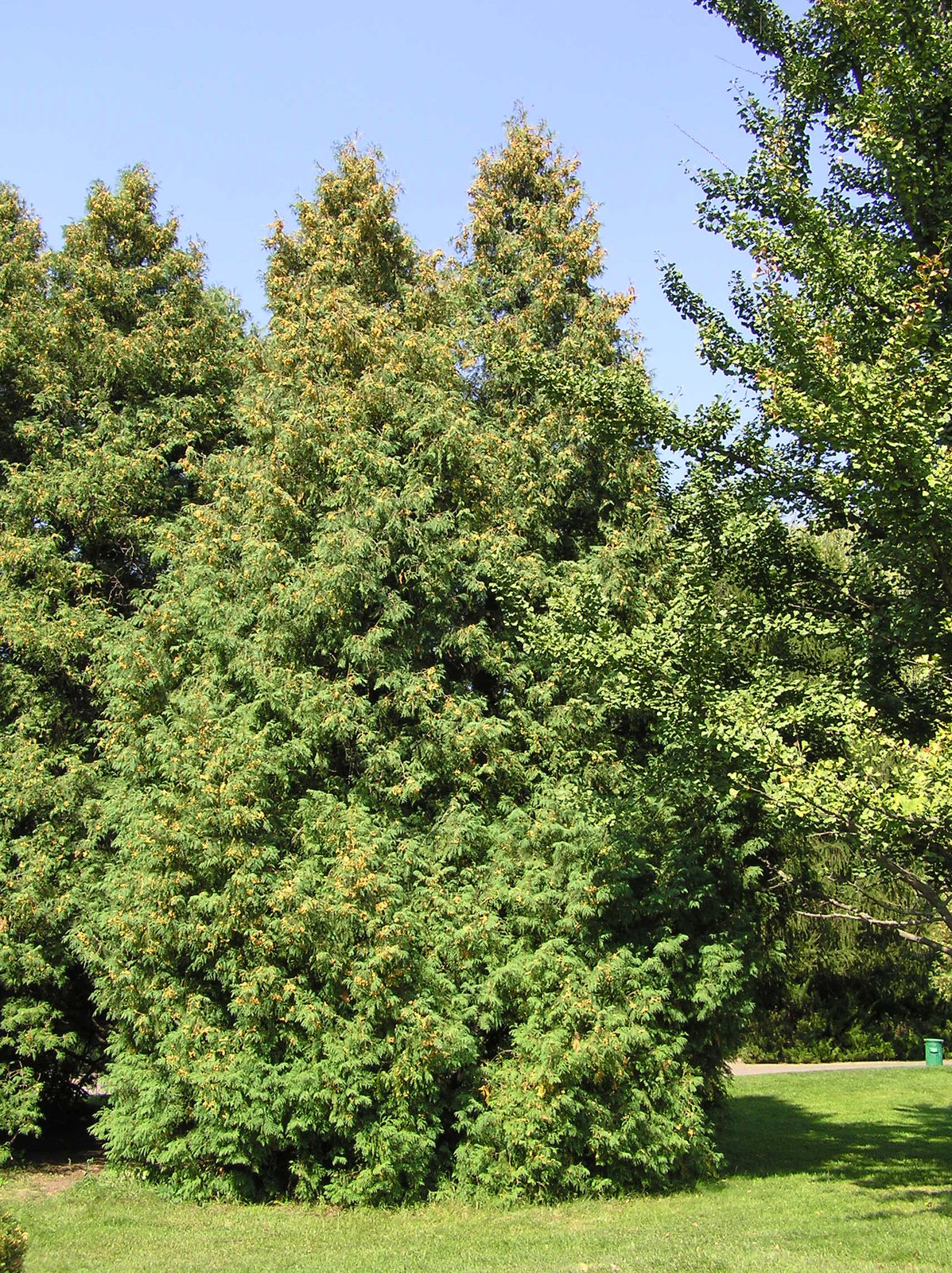
Mature Thuja occidentalis commonly reaches 12–20 m (39–66 ft) tall, spreading 3–5 m (10–16 ft) in well-exposed sites. Growth is very slow in the first few years, then settles around 15–20 years, when its conical to columnar outline becomes established. 4 6
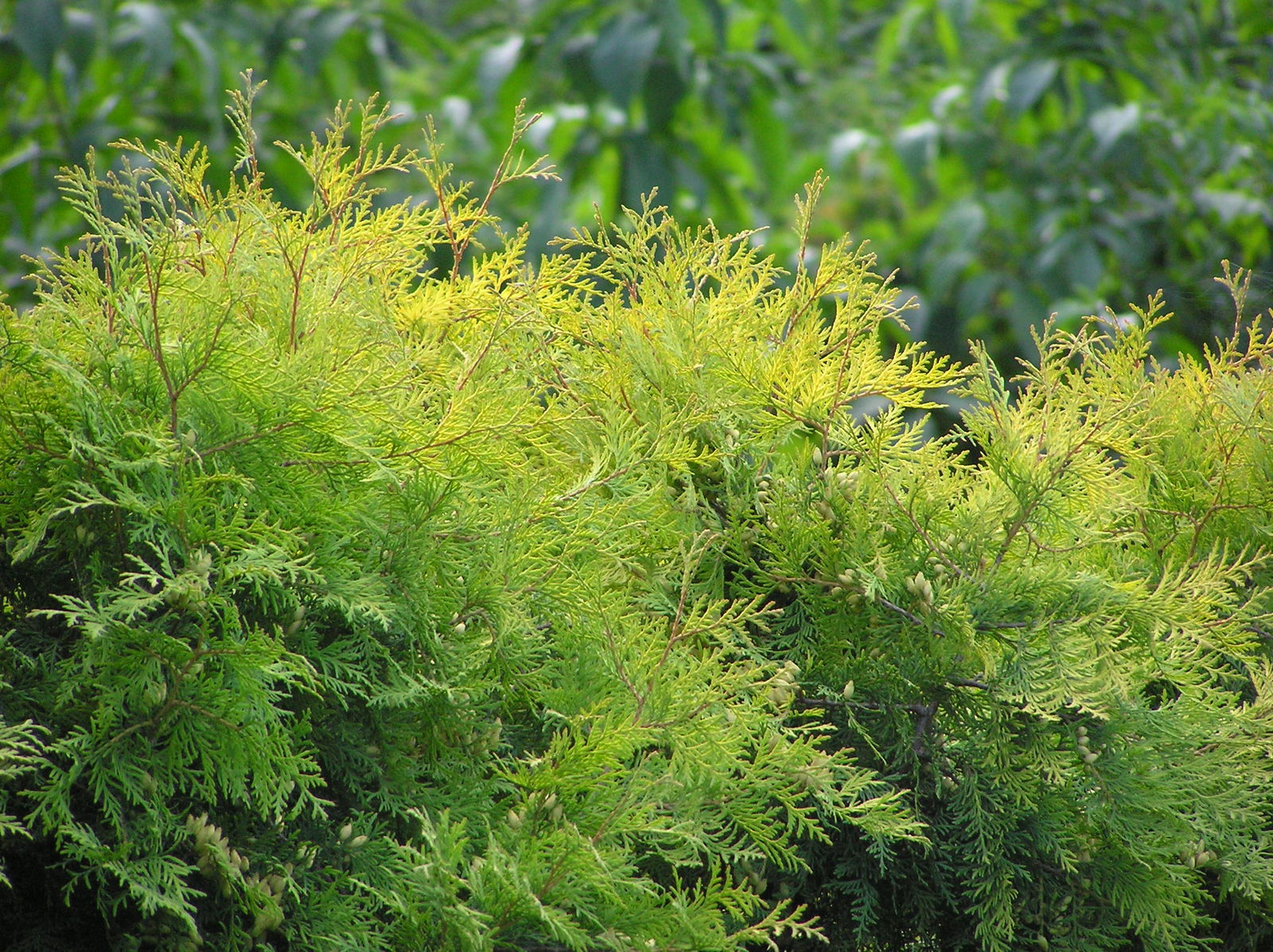
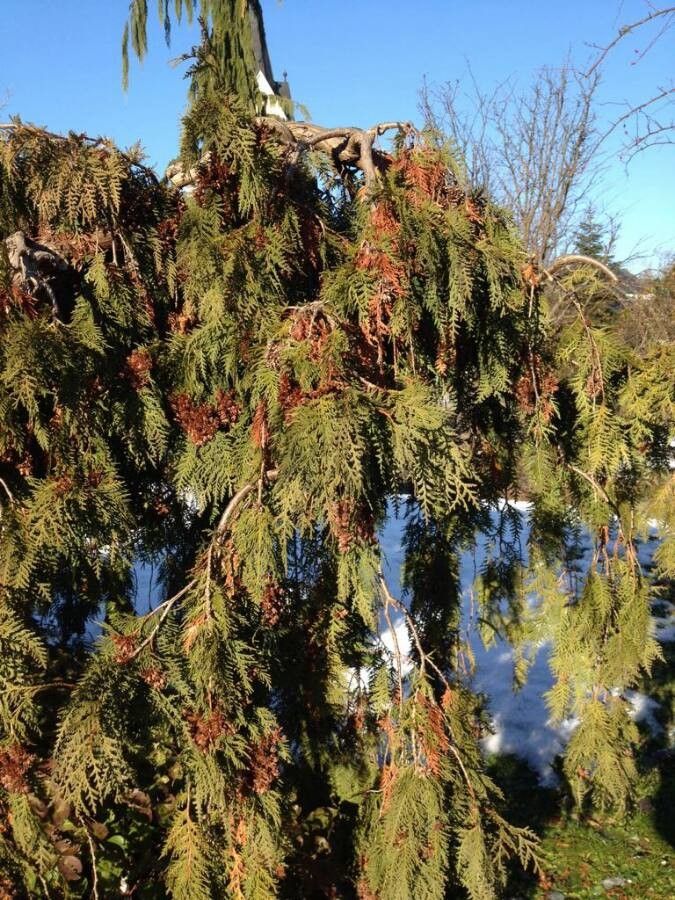
Flattened, overlapping sprays carry fine, scale-like foliage that releases an aromatic scent when crushed. Leaves often turn bronze-brown in winter before returning to green in spring, helping distinguish normal seasonal dormancy from disease. 6 5
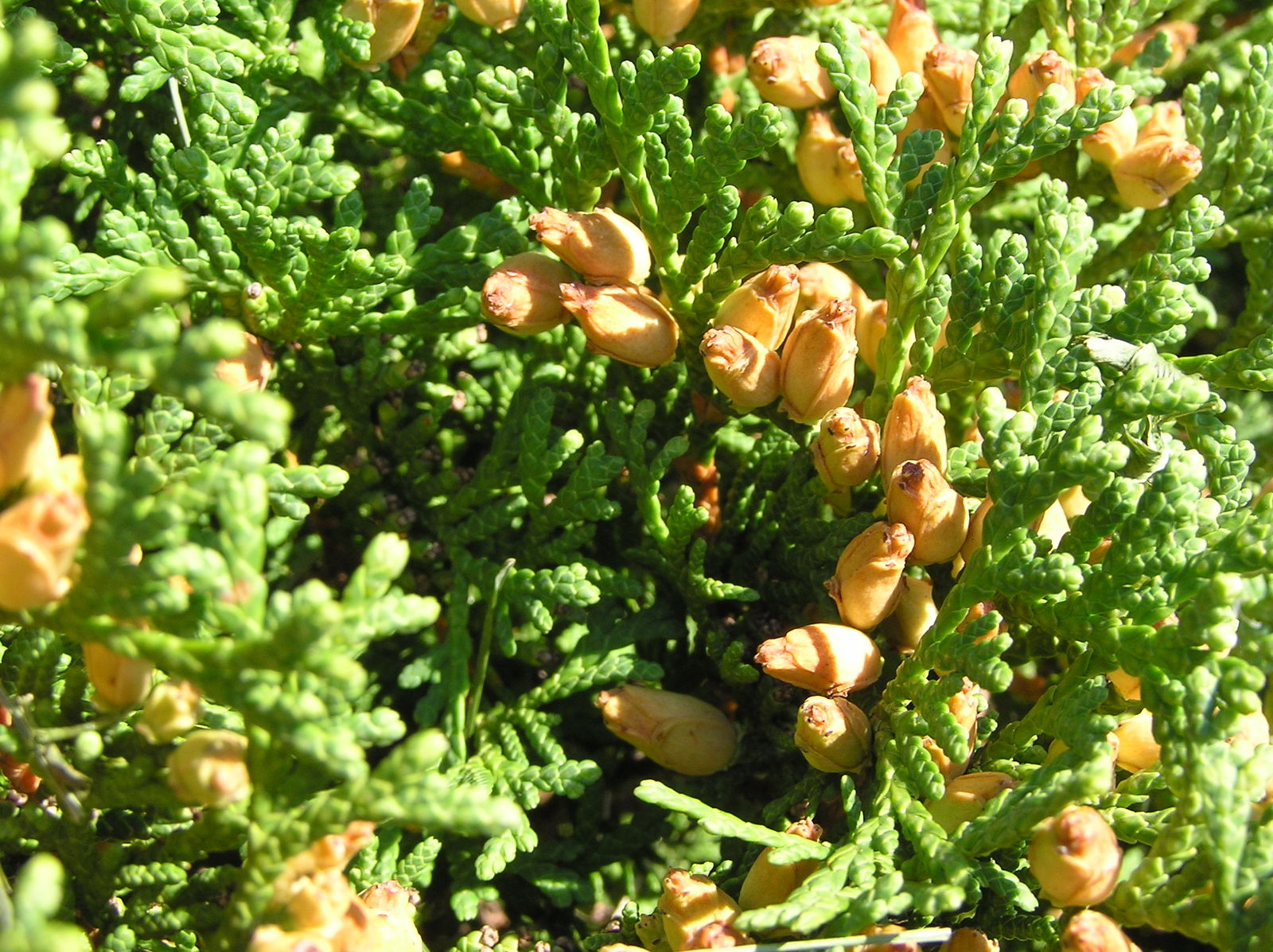
Both sexes occur on one tree: Northern whitecedar is monoecious. Small, upright, egg-shaped cones on short branchlets change from green to light brown by late summer, releasing two winged seeds per scale. 5 7
Useful taxonomy
For the wild species, POWO and IPNI retain the accepted name Thuja occidentalis L., published in 1753. Several historical synonyms remain in older horticultural literature:
- Thuja canadensis K.Koch, historical synonym
- Cupressus arborvitae O.Targ.Tozz., historical synonym
- Thuja odorata Marshall, historical synonym
- Thuja procera Salisb., historical synonym
The full accepted scientific name provides a stable reference because horticultural trade adds another layer of uncertainty. Numerous dwarf and columnar cultivars are sold by cultivar name alone, without always identifying the parent species. 1 3
Other members of Thuja include North American western redcedar, Thuja plicata, and Japanese Thuja standishii. All three have similar scale-like foliage, but Thuja occidentalis is the smallest and the only one adapted to severe continental winters. Thuja plicata inhabits the temperate Pacific coast, sheltered from severe frost. 3
Habitat and range
Eastern and central Canada connect its native range with the northeastern and north-central United States. Isolated populations extend along the Appalachians to North Carolina and Tennessee. It colonizes calcareous swamps and peatlands, moist streambanks, sheltered rocky ledges and cliffs. 4 6
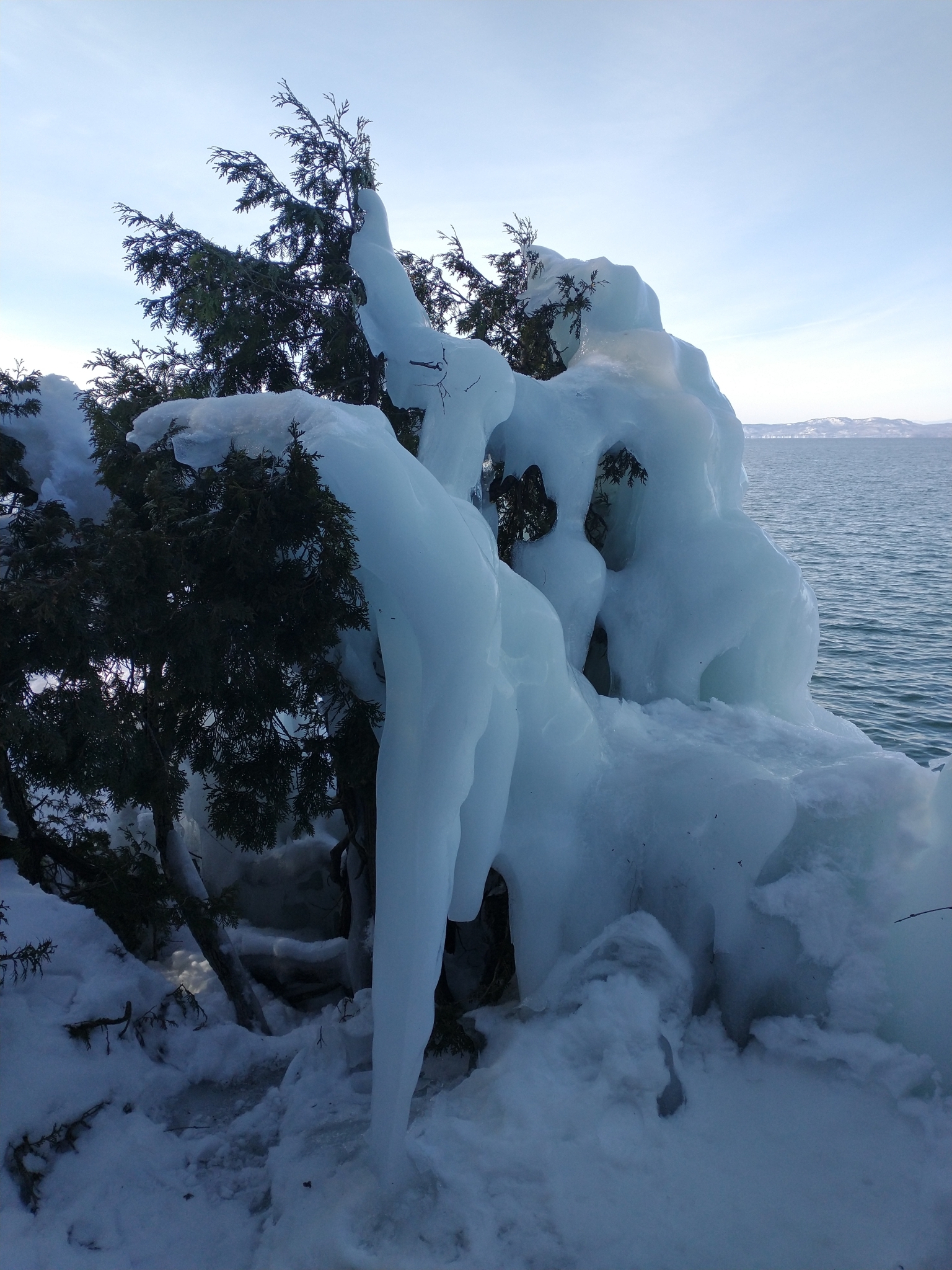
Around the Great Lakes, exposed limestone ledges support stunted, extremely slow-growing trees among the oldest in eastern North America. In favorable moist habitats, the species can exceed four centuries. 4
European cultivation began in the 16th century and continues widely for ornamental trees and hedges. The species has also naturalized locally in some temperate parts of central Europe. 4 8
Life cycle and reproduction
Spring brings conifer “flowering,” or pollination. Tiny male cones release pollen before female cones form on the same branches. The female cones ripen in late summer, changing from green to light brown before opening. 5
Early height growth is remarkably slow: seedlings average only about 8 cm (3 in) a year in their first years, accelerating once their root systems are well established. 4
For cultivated forms, cuttings of semi-ripe shoots taken in late summer preserve cultivar characteristics more reliably than seed, rooting within a few weeks. Seed propagation, used for the wild species, requires several months of cold stratification and gives slow, uneven germination. 7
Uses and risks
Light, soft wood with strong resistance to decay, despite lacking resin, has long been used in North America for canoes, fence posts and roof shingles. 7
Indigenous peoples traditionally used the foliage for fever, coughs and rheumatism. Modern essential oil, rich in thujone, is included in external wart preparations but remains toxic when large quantities are swallowed. Convulsions and deaths have been reported after poorly controlled internal use, and use during pregnancy is prohibited. 7
Unlike concentrated essential oil, the foliage is not classified as toxic to cats and dogs. Ornamentally, Northern whitecedar is chiefly a hedge and screening tree, valued for cold hardiness down to USDA 2 and tolerance of repeated clipping. 6
Varieties, look-alikes and related plants
Hundreds of cultivars are distinguished in horticulture. 'Smaragd' (Emerald Green) dominates compact columnar hedging; 'Brabant' grows faster for quick screening; 'Rheingold' has golden foliage that turns coppery in winter; and the dwarf globe 'Danica' suits small gardens and containers. 5 6
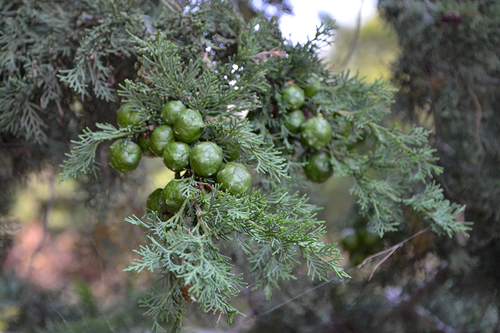
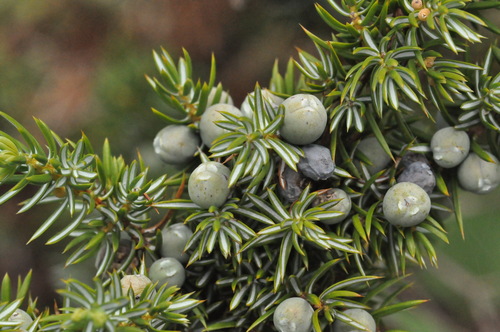
Confusion most often involves western redcedar, Thuja plicata, with broader, drooping branches and a much greater mature size than Thuja occidentalis. False cypresses, Chamaecyparis, have similar scale-like foliage but a different scent when crushed. Junipers, Juniperus, are distinguished by fleshy berries rather than small dry cones.
Main sources
- Plants of the World Online / Kew, Thuja occidentalis L.
- International Plant Names Index, Thuja occidentalis L.
- Integrated Taxonomic Information System, Thuja occidentalis L. (TSN 505490)
- USDA Forest Service, William F. Johnston, Northern White-Cedar (Thuja occidentalis), original Silvics chapter; archived 14 October 2025
- Missouri Botanical Garden Plant Finder, Thuja occidentalis
- NC State Extension Gardener Plant Toolbox, Thuja occidentalis
- Plants For A Future, Thuja occidentalis
- Tela Botanica / bdtfx reference database, Thuja occidentalis
Frequently asked questions
Is Northern whitecedar a true cedar?
No. Despite its white cedar names, this species belongs to Thuja in the Cupressaceae family. True cedars, genus Cedrus, belong to the separate Pinaceae family.
Is Northern whitecedar toxic to cats and dogs?
The foliage is not classified as toxic to cats and dogs. Concentrated essential oil rich in thujone is dangerous if swallowed and must not be used during pregnancy.
Why is Northern whitecedar called the tree of life?
The name recalls a 16th-century episode in which explorer Jacques Cartier is said to have learned from Indigenous peoples how to treat his crew’s scurvy with a decoction of vitamin C-rich foliage.
How does Northern whitecedar differ from Thuja plicata?
Thuja plicata, western redcedar, grows much taller and has broader, drooping branches. Thuja occidentalis stays smaller, with finer, more upright foliage.
Why do some arborvitae hedges become bare at the base?
Cutting too severely into old wood without green foliage prevents regrowth there. Too little light at the base of an overly dense hedge has the same effect.
How long does Northern whitecedar live?
The species commonly lives beyond four centuries in moist habitats. Stunted trees on sheltered limestone cliffs are among the oldest trees in eastern North America.
How can I propagate Northern whitecedar?
Use semi-ripe shoot cuttings in late summer, the most reliable way to preserve cultivars. Seeds require cold stratification and are used for the species itself.
Similar plants
If you are unsure about a plant’s toxicity, ask a botanist or veterinarian for advice.