
Chusan palm (Trachycarpus fortunei, )
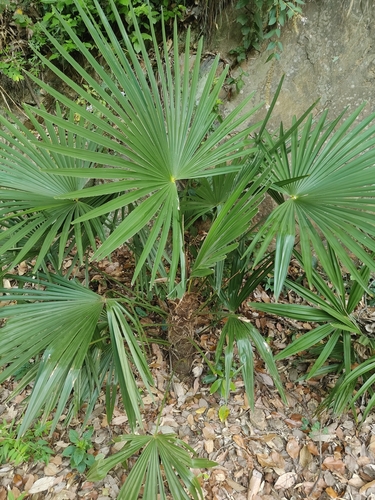
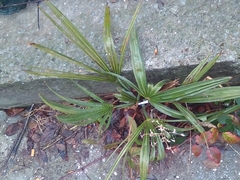
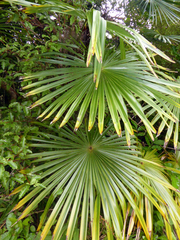
Chusan palm (Trachycarpus fortunei) is an evergreen palm in the Arecaceae, native to central and southeastern China, southern Japan, Myanmar and northern India. Its solitary, fiber-covered trunk and fan-shaped leaves distinguish a species valued for exceptional cold tolerance among palms.
Read moreChusan palm, Windmill palm and Hemp palm
Allow a few hours of direct sun per day, preferably morning or evening.
Full sun is ideal; tolerates partial shade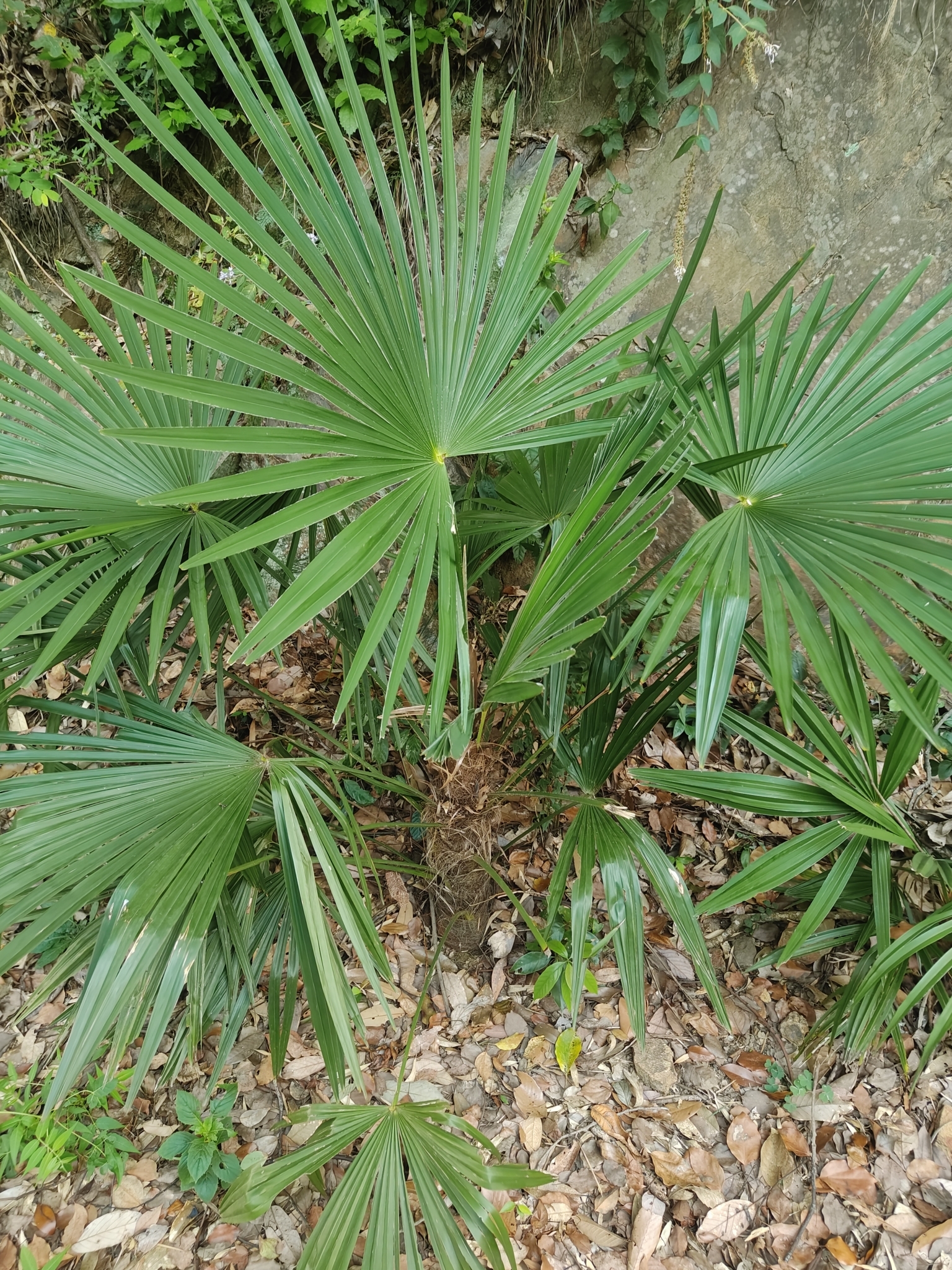
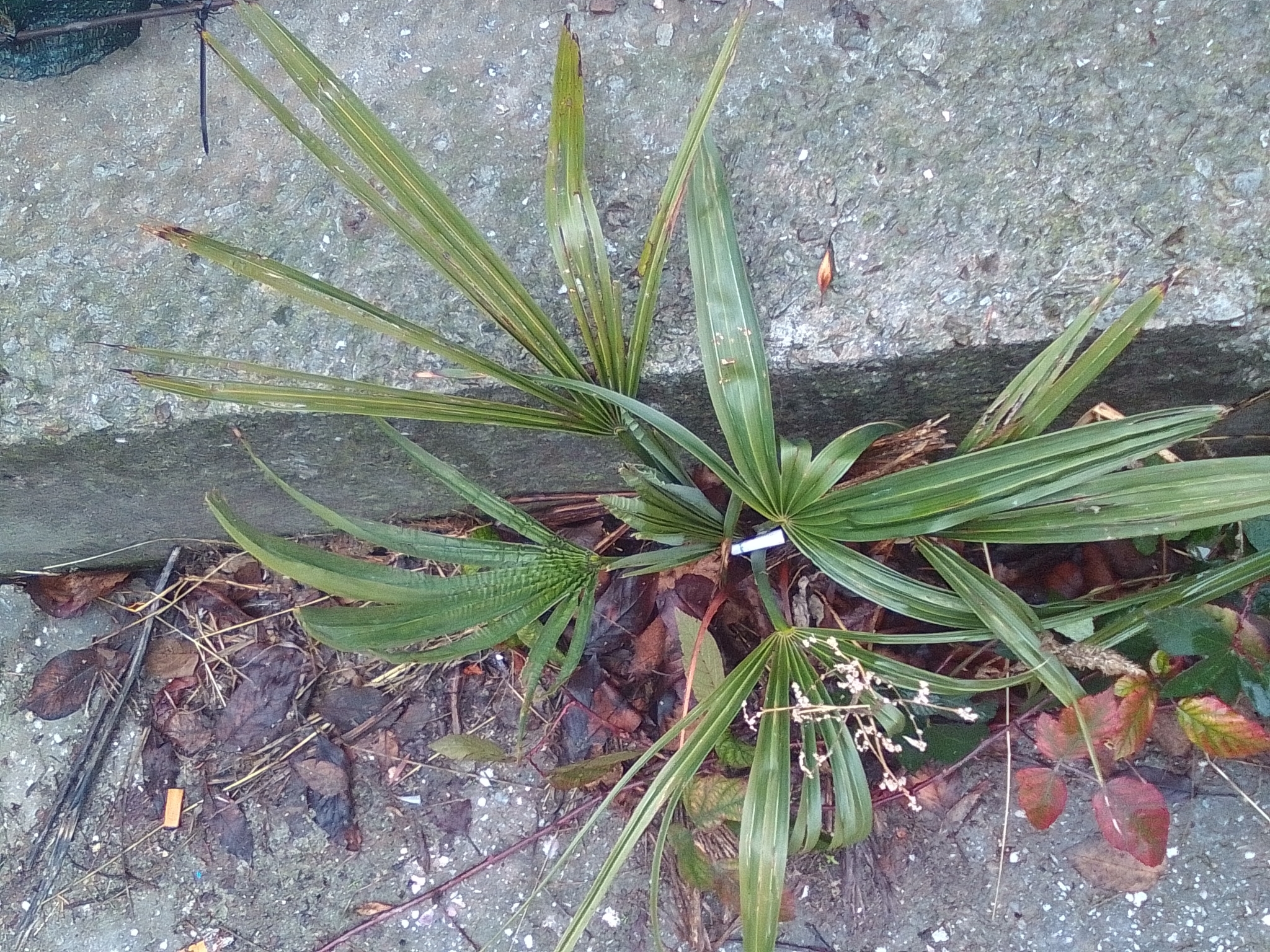


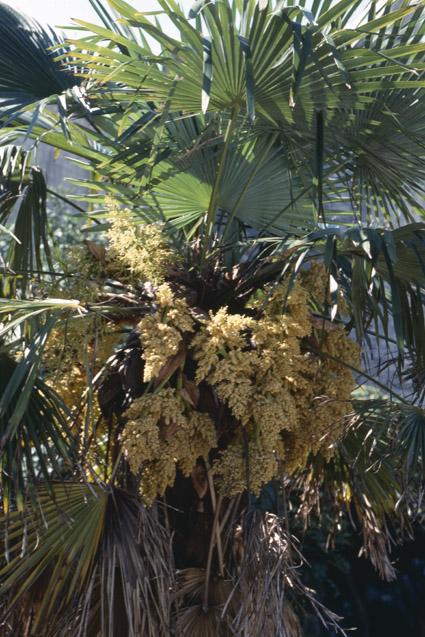
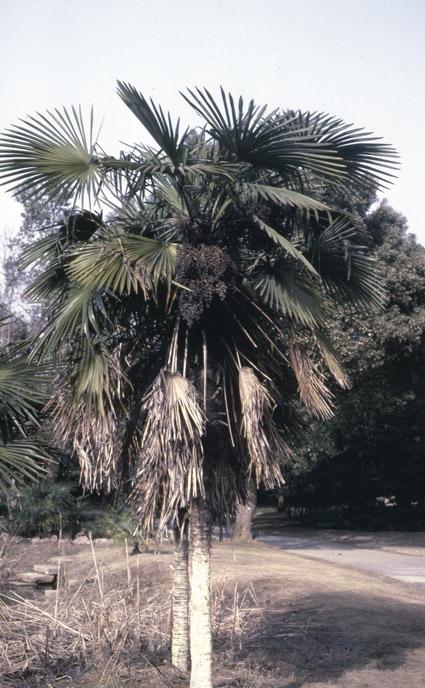
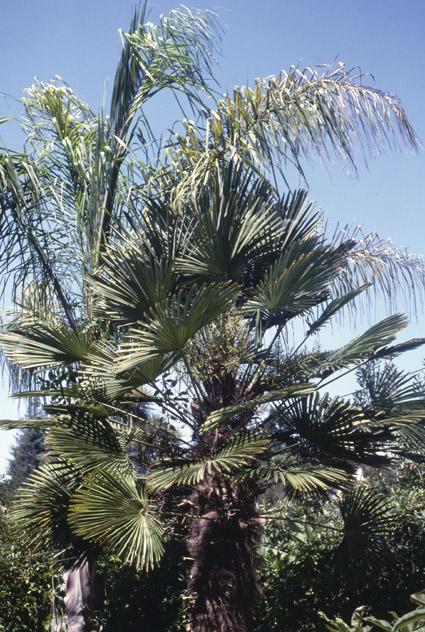
© photo
(c) ChuSR, some rights reserved (CC BY-NC), uploaded by ChuSR · cc-by-nc
Михаил Орлов · cc-by
Peter de Lange · cc-by
Taken May 3, 2017 by Pierre Bonnet (cc-by-sa)
Taken Oct 29, 2022 by Leitão Elis (cc-by-sa)
Taken Oct 5, 2020 by vinay arora (cc-by-sa)
Taken Oct 12, 2019 by thehooklisbon (cc-by-sa)
Taken Feb 16, 2022 by Marzanna Bug (cc-by-sa)
© copyright of the Board of Trustees of the Royal Botanic Gardens, Kew.




Global distribution
The native range covers central and southeastern China, southern Japan, northern Myanmar and northern India, in mountains to 2,400 m (7,900 ft). Ancient cultivation in China and Japan blurs its exact boundaries. Widely planted in temperate gardens, it has naturalized and become locally invasive south of the Swiss Alps.
- Native4
- Invasive1
- China
- Japan
- Myanmar
- India
- Switzerland
Hexagons: regions where the plant occurs. Green dots: native range.1
Identity
Chusan palm (Trachycarpus fortunei (Hook.) H.Wendl., 1861), also known as windmill palm or hemp palm, belongs to the Arecaceae. A well-rooted adult tolerates −15 to −20 °C (5 to −4 °F), whereas a young plant can already be damaged at −8 °C (18 °F). Such cold tolerance is unusual among palms and has helped it spread in cultivation far north of its native range, including the United Kingdom and Atlantic France. 3 1
The epithet fortunei honors Robert Fortune, the English botanist who brought seeds from Chusan Island, now Zhoushan in Zhejiang, around 1850. William Jackson Hooker first described the species as Chamaerops fortunei in 1860, and Hermann Wendland transferred it to Trachycarpus in 1861. Introduced to Europe at Bordeaux’s botanical garden in 1856, the palm subsequently became established in temperate gardens. 2
Recognition
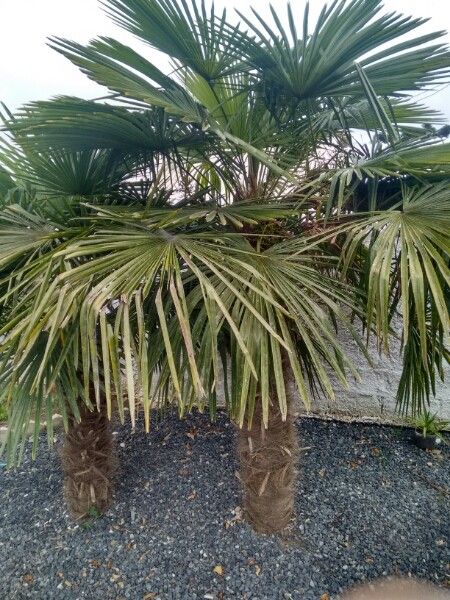
A single, unbranched trunk gives Chusan palm its upright silhouette. In favorable conditions it can reach 12–20 m (39–66 ft) or more; in temperate gardens, most specimens remain below 8–12 m (26–39 ft) after several decades. Persistent brown fibers wrap the trunk in a rough covering reminiscent of woven hemp, explaining the name hemp palm. 3 4
Long leaf stalks, armed with two rows of small spines, support palmate fans that can reach 140–190 cm (4.6–6.2 ft) in length. The species is dioecious: bright yellow male panicles and greenish female panicles occur on separate plants. These branched clusters can approach 1 m (3.3 ft) long and appear in late spring to early summer, in temperate cultivation. 4 3
After pollination, female plants bear small, kidney-shaped fruits resembling beans. Each is about 1 cm (0.4 in) long and turns purplish black when fully ripe in late autumn. The fruit color is a useful detail when distinguishing a mature, fruiting palm from a younger specimen. 4
Useful taxonomy
POWO/WCVP accepts the name Trachycarpus fortunei (Hook.) H.Wendl. Its basionym, Chamaerops fortunei Hook., published in 1860, recalls an earlier classification in which several hardy Asian palms were placed with the Mediterranean genus Chamaerops before Trachycarpus was established. 2 1
Documented synonyms include Chamaerops excelsa hort., Chamaerops fortunei Hook., Trachycarpus caespitosus Becc. and Trachycarpus wagnerianus hort. ex Becc.. The last of these historically referred to the cultivar now included within the species.
Horticultural labels most often retain the name wagnerianus, long sold as a separate species but now included within Trachycarpus fortunei as a cultivar group. The accepted scientific name remains the reliable reference when comparing these older names and nursery listings. 1 5
Habitat and range
Central and southeastern China, southern Japan including Kyushu, northern Myanmar and northern India form the reported native range. Mountain populations occur up to 2,400 m (7,900 ft). Centuries of cultivation in China and Japan make the exact boundaries of the original wild distribution difficult to determine. 4 5
The IUCN assesses Trachycarpus fortunei as Least Concern. Its broad range and long cultivation history place it outside an immediate risk of disappearance, although the distinction between wild populations and ancient plantings is not always straightforward. 6
Planting in temperate regions is widespread, including the United Kingdom, France, Belgium and the Atlantic and Pacific coasts of the United States. In Ticino, south of the Swiss Alps, Chusan palm has naturalized and has been listed as invasive since 2014. Milder winters favor germination of bird-dispersed seeds; established palms compete with native trees for light and space and may locally weaken forests that protect against rockfall. 8
Life cycle and reproduction
Flowering falls in late spring to early summer, in temperate gardens. Male and female flowers occur on separate plants, preventing self-fertilization. A solitary Chusan palm can therefore flower every year without producing a single seed. 4
Warm conditions allow seeds to germinate in one to three months. Seedlings produce three or four undivided leaves during their first year. Growth remains slow for the first three years, then accelerates to about 15–30 cm (6–12 in) annually; raising a palm 1 m (3.3 ft) tall from seed takes roughly five years. 4
Propagation is almost exclusively by seed. The single, unbranched trunk produces no offsets, and there is no reliable cutting method for multiplying it.
Uses and risks
For centuries, the coarse, strong fibers of the leaf sheaths have supplied rope and gardening sacks in China and Japan. The inflorescences are eaten as a vegetable, while the ripe fruits are edible but not especially sought after. These uses concern particular plant parts rather than every part of the palm. 4
The ASPCA classifies Trachycarpus fortunei as non-toxic to cats, dogs and horses. It can therefore serve as an ornamental palm in gardens used by these animals, alongside its value as an unusually hardy evergreen palm for temperate planting. 7
A documented cold-survival record of −27.5 °C (−17.5 °F) comes from Plovdiv, Bulgaria, well below the usual −15 to −20 °C (5 to −4 °F) range for an established adult. Leaves may nevertheless suffer at −12 °C (10 °F), and young plants at −8 °C (18 °F). Since 2001, caterpillars of Paysandisia archon, which tunnel into the trunk, have also threatened this palm in southern Europe. 3
Varieties, look-alikes and related plants
The Wagnerianus group contains semi-dwarf plants with stiffer leaf segments shorter than 45 cm (18 in) and a height rarely exceeding 5 m (16 ft). The smaller stature and leaves improve wind tolerance compared with the usual form. Plants formerly sold as Trachycarpus wagnerianus are now included as a cultivar of T. fortunei. 1
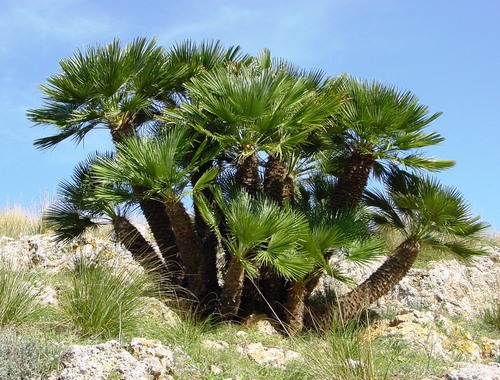
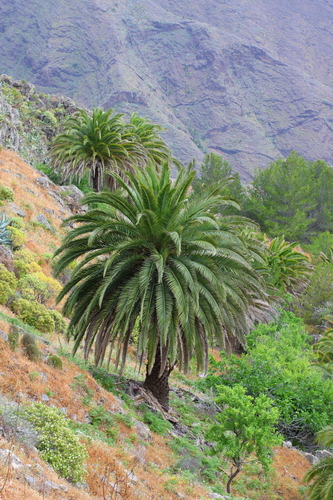
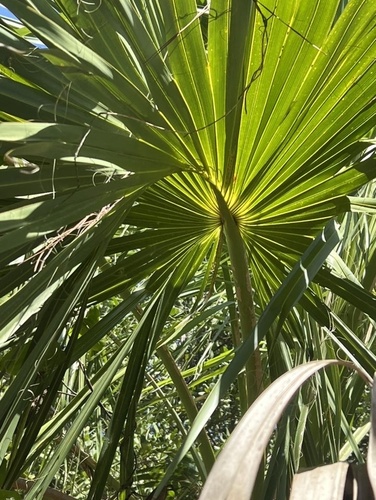
The most frequent confusion is with Chamaerops humilis, the only palm native to continental Europe. Its bushy, often multi-stemmed habit, height of at most 2 m (6.5 ft) and much sharper petiole spines distinguish it from Chusan palm. Other temperate-grown palms, such as Phoenix canariensis and Sabal palmetto, have pinnate or costapalmate leaves rather than the simple fan of T. fortunei.
Main sources
- Plants of the World Online / Kew, Trachycarpus fortunei (Hook.) H.Wendl.
- International Plant Names Index, Chamaerops fortunei Hook. (basionym)
- Royal Horticultural Society, Trachycarpus fortunei - Chusan palm
- NC State Extension Gardener Plant Toolbox, Trachycarpus fortunei
- GBIF, Trachycarpus fortunei (Hook.) H.Wendl.
- IUCN Red List, Trachycarpus fortunei assessment (2024)
- ASPCA, Windmill Palm toxicity entry
- Tonelotto & al., 2022, Iconic but Invasive, Environmental Management
Frequently asked questions
Is Chusan palm toxic to cats or dogs?
No. The ASPCA lists Trachycarpus fortunei as non-toxic to cats, dogs and horses, making it suitable as an ornamental palm in gardens used by pets.
How much cold can Chusan palm tolerate?
An established adult commonly tolerates −15 to −20 °C (5 to −4 °F). A documented record is −27.5 °C (−17.5 °F) at Plovdiv, Bulgaria. Leaves may suffer from −12 °C (10 °F), and young plants from only −8 °C (18 °F).
How do Chusan palm and Chamaerops humilis differ?
Trachycarpus fortunei has a single upright trunk. Chamaerops humilis forms a bushy clump only a few meters wide, with much more spiny leaf stalks, and rarely exceeds 2 m (6.5 ft) in height.
What is Wagnerianus?
It is a semi-dwarf group with stiffer leaf segments shorter than 45 cm (18 in), rarely exceeding 5 m (16 ft). Formerly sold as Trachycarpus wagnerianus, it is now included as a cultivar of Trachycarpus fortunei.
Why is Chusan palm invasive in Switzerland?
In Ticino, milder winters allow bird-dispersed seeds from gardens to germinate without frost damage. The palm colonizes natural habitats, competes with native trees and may locally weaken protective forests.
Where does the name Trachycarpus fortunei come from?
The epithet fortunei honors Robert Fortune, the English botanist who brought seeds from Chusan Island around 1850. Described as Chamaerops fortunei in 1860, the species was transferred to Trachycarpus in 1861.
Are Chusan palm fruits edible?
The ripe fruits are edible but not especially sought after. In China, the inflorescences eaten as a vegetable are the main traditional food use of this species.
Similar plants
If you are unsure about a plant’s toxicity, ask a botanist or veterinarian for advice.