
American century plant (Agave americana, )
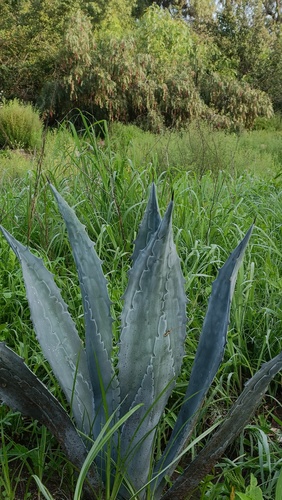
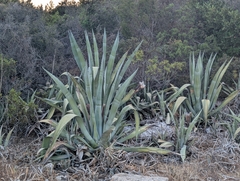
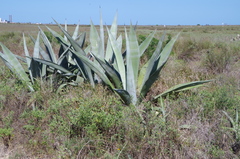
American century plant (Agave americana) is a monocarpic succulent in the Asparagaceae, native to the southern United States and Mexico. Grown worldwide for its fleshy blue-green rosette, it flowers once after several decades, on a stalk that can exceed 5 m (16 ft), then dies, leaving numerous basal offsets.
Read moreAmerican century plant, Century plant, American aloe and Maguey
Place in full sun, with intense direct light all day long.
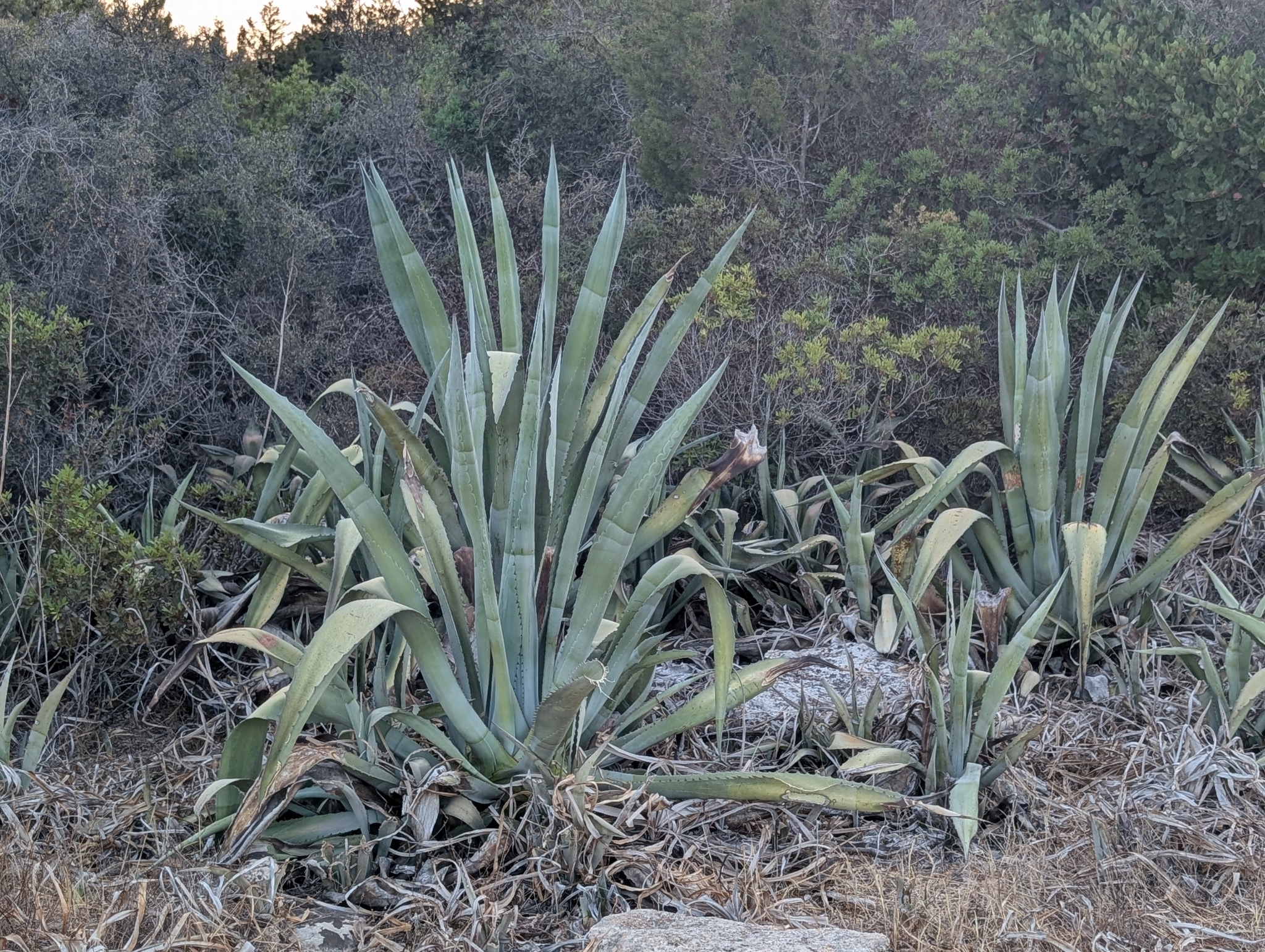
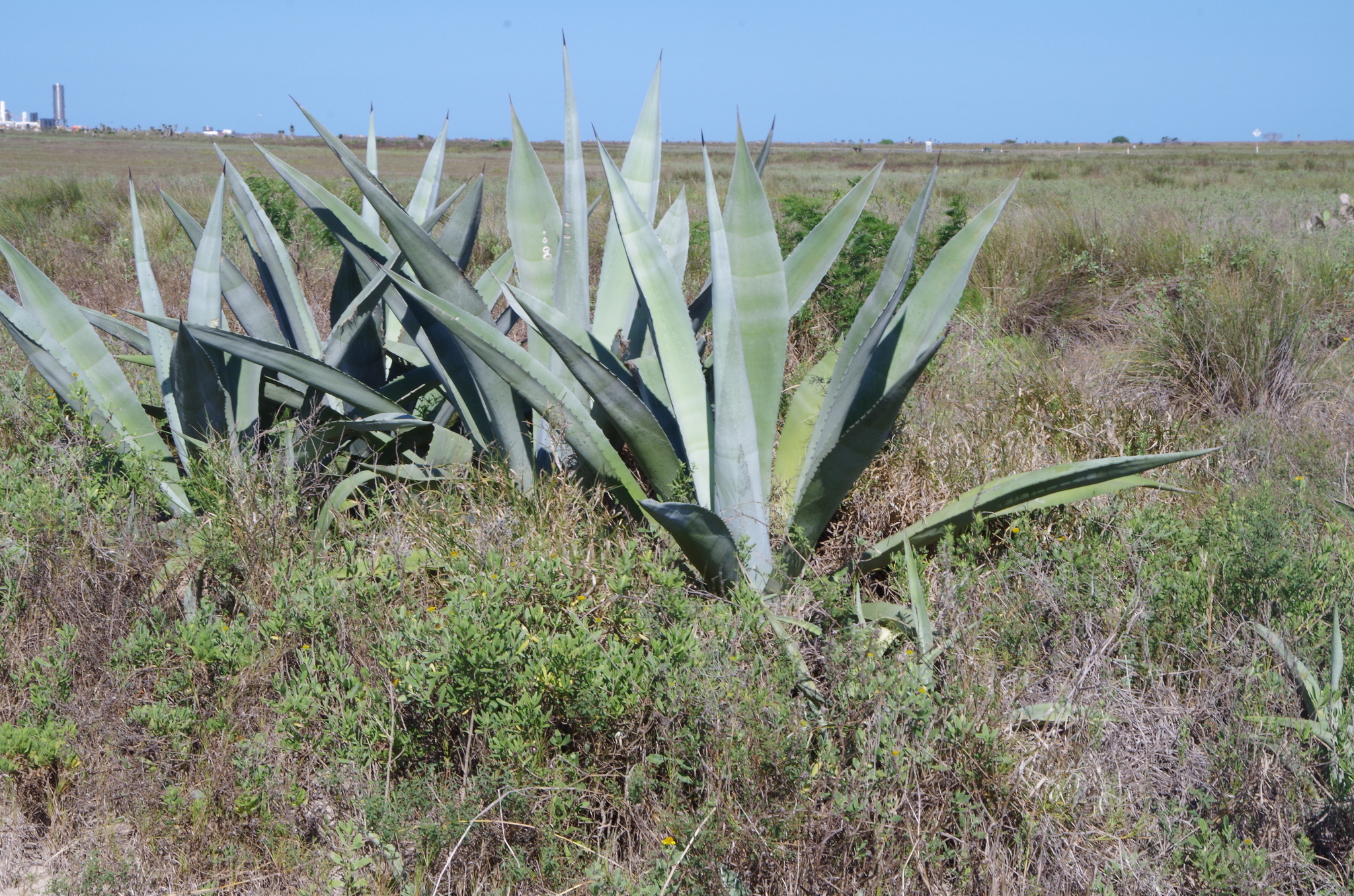


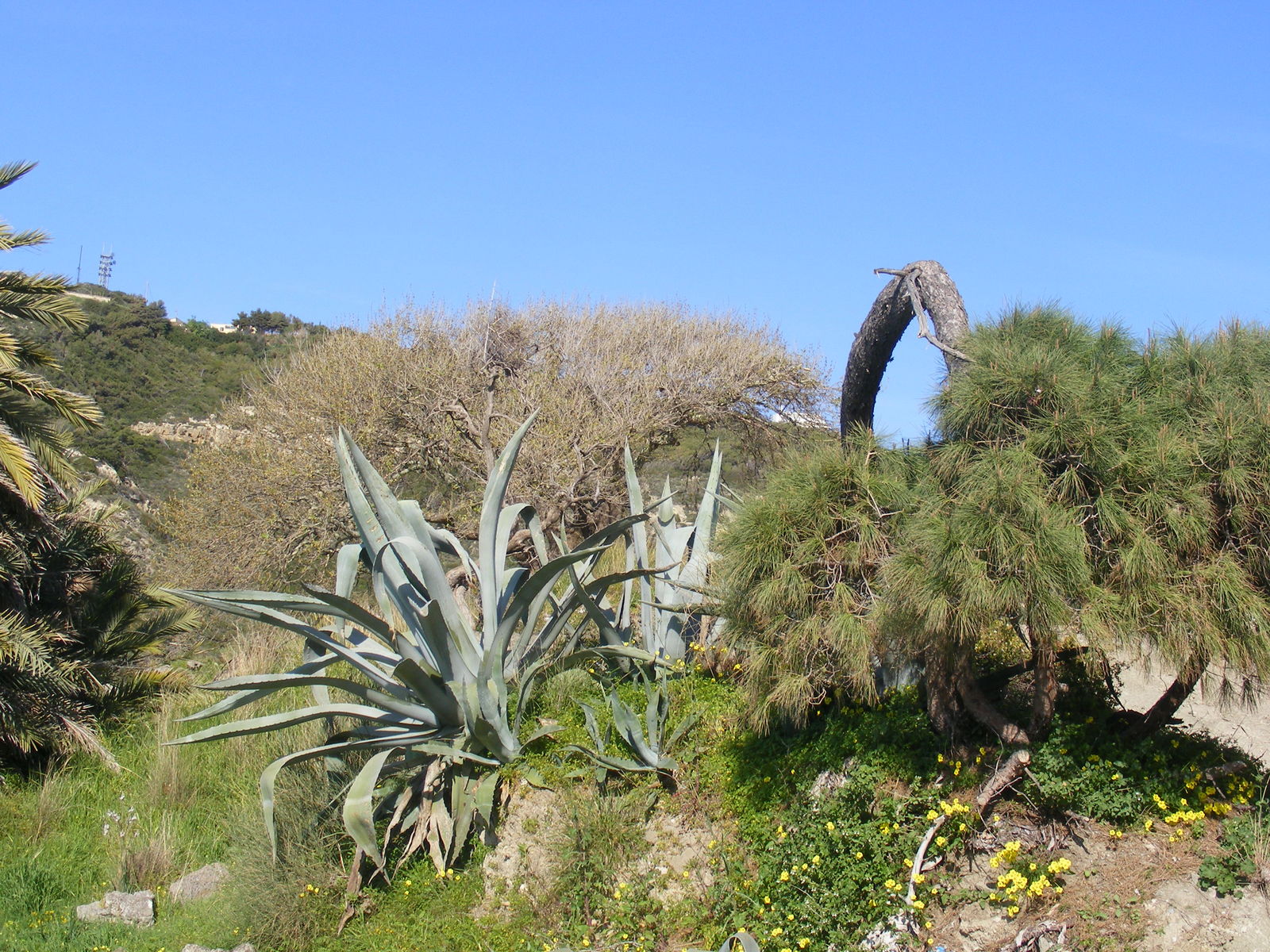

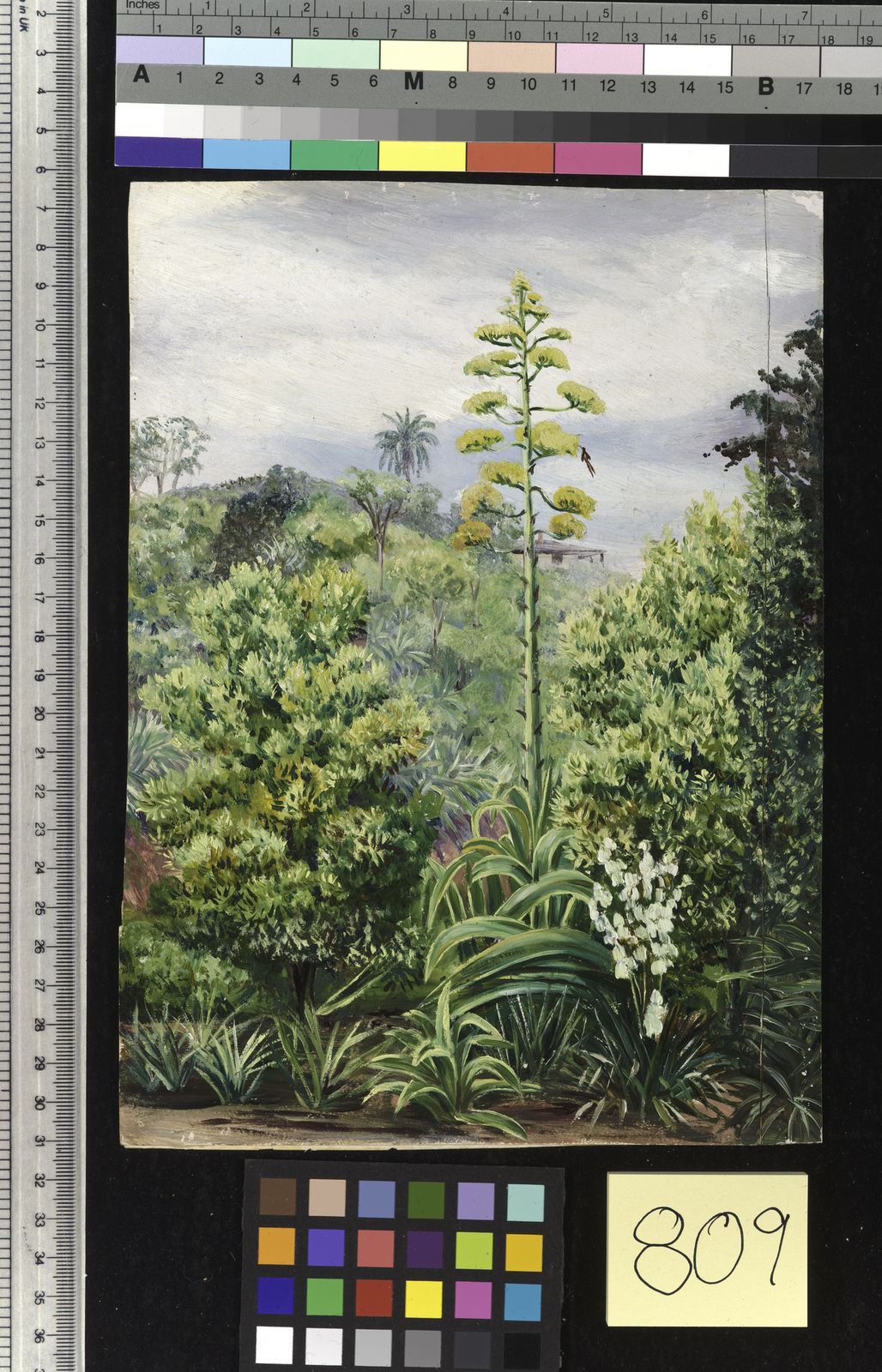
© photo
iNaturalist User · cc0
Marios Thoma · cc-by
Eric Knight · cc-by-nc
Taken May 22, 2019 by Food Story The Sustainable (cc-by-sa)
Taken Nov 29, 2012 by J. Champ (cc-by-sa)
Taken Jul 8, 2013 by Tela Botanica − George FOWLER (cc-by-sa)
Taken Jul 4, 2021 by Joan Francesc (cc-by-sa)
Taken Aug 21, 2019 by Josepe García (cc-by-sa)
© copyright of the Board of Trustees of the Royal Botanic Gardens, Kew.




Global distribution
Agave americana is native to the southwestern United States (Arizona and Texas) and Mexico. Introduced to Europe in the sixteenth century, it has since naturalized across the continents and is monitored as an invasive alien in several coastal regions, including southern France.
- Native2
- Introduced5
- Invasive1
- Mexico
- United States
- Spain
- Italy
- Western Australia
- South Africa
- Réunion
- Metropolitan France
Hexagons: regions where the plant occurs. Green dots: native range.1
Identity
American century plant (Agave americana L., 1753), also called American aloe or maguey and known as choka bleu in Réunion, is a monocarpic succulent in the genus Agave, family Asparagaceae. American aloe is misleading: despite their similar fleshy rosettes, agaves belong to a different family from Aloe. 1 2
Linnaeus described the species in the first volume of Species Plantarum in 1753. It remains the nomenclatural type of the genus Agave. Century plant is an old horticultural exaggeration: it generally flowers after 10–25 years, rather than a century, flowering once before it dies. 8 3 5
Recognition
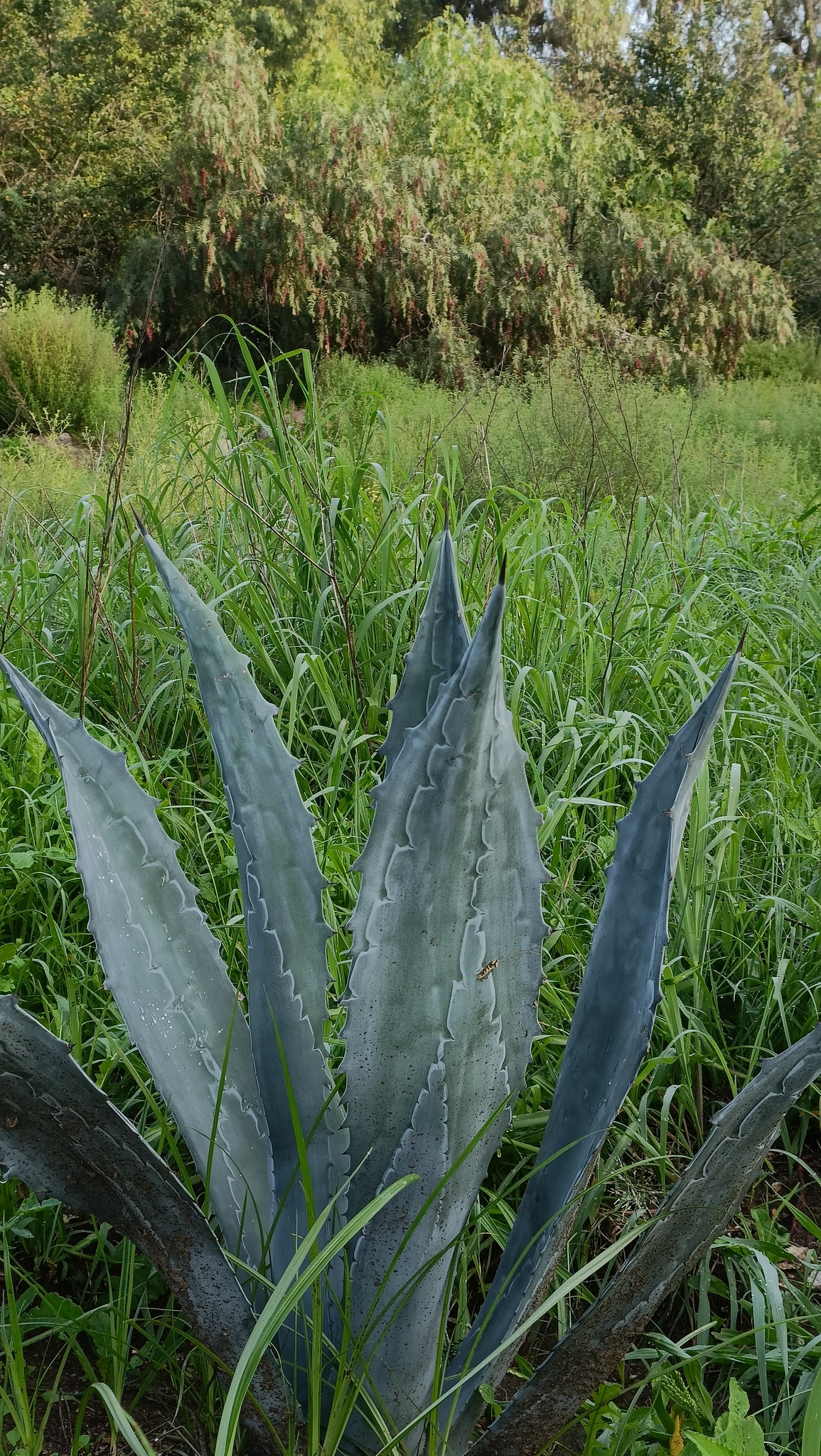
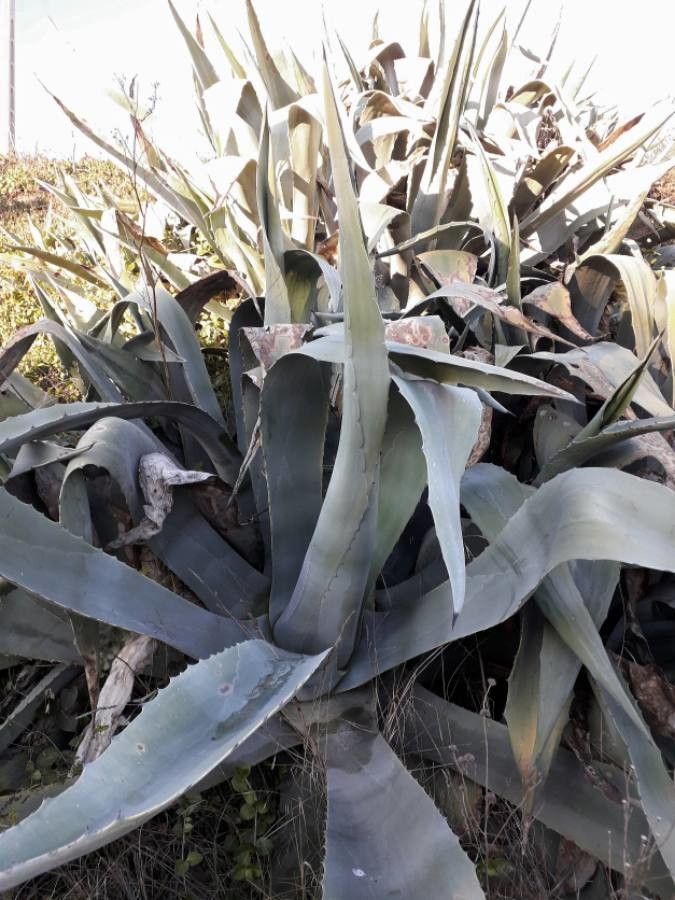
Agave americana forms a fleshy rosette with no apparent stem and roughly thirty lance-shaped blue-green leaves 1–2 m (3.3–6.6 ft) long. Each has widely spaced hooked marginal teeth and a brown terminal spine 2–6 cm (0.8–2.4 in) long, distinguishing it from unarmed or lightly armed agaves. 4 2
In the ground under favorable conditions, the rosette reaches 1–2 m (3.3–6.6 ft) high and 1.5–3 m (5–10 ft) wide. In pots it grows more slowly and remains smaller, often taking 10–20 years to reach its adult form. At maturity it produces an upright flower stalk 5–10 m (16–33 ft) tall, carrying yellow-green flowers in a panicle. 3 4 2
Thick, waxy foliage reduces water loss through transpiration, allowing the plant to tolerate dry, poor soils provided drainage is excellent. Once established in the ground under these conditions, it needs almost no maintenance, regular watering or fertilizer. 5 4
Useful taxonomy
POWO/WCVP accepts Agave americana L., recognizing two subspecies: Agave americana subsp. americana, from Arizona to southern Texas and Mexico, and Agave americana subsp. protamericana Gentry, smaller and less spiny, from southern Texas to northeastern Mexico. 1
Several varietal and historical names also appear in literature and horticulture, where botanical status can be confused with a sales label:
- Agave americana var. franzosini Sprenger
- Agave americana var. oaxacensis Gentry
- Agave americana var. marginata Trel.
- Agave americana var. mediopicta (Hovey) Trel.
- Agave americana var. variegata Hook.
- Agave americana var. striata (Hovey) Trel.
The accepted scientific name, Agave americana, remains the stable reference; several of these varietal epithets are synonyms rather than distinct accepted taxa. 1
Habitat and range
The native range is limited to the southwestern United States, in Arizona and Texas, and Mexico, in arid and semi-arid habitats on sandy or rocky soils. Introduced to Europe in the sixteenth century, it has since naturalized across the continents. Ornamental planting continues to drive that spread. 1 5
In Western Australia, Agave americana is officially classified as a naturalized alien. Escapes near old homesteads and roads reduce native plant diversity in some recorded areas. A similar pattern occurs in several coastal parts of southern France, where it is monitored as an invasive alien plant. 6
In Florida, outside its native range, the few recorded spontaneous populations mainly represent garden escapes. Their presence does not establish an official invasive status, an important distinction between occurrence and actual proliferation. 7
Life cycle and reproduction
Agave americana is monocarpic: each rosette flowers once after 10–25 years, depending on climate, then dies after fruiting. The central flower stalk can exceed 8 m (26 ft) in the most favorable climates. 3 4
Even before flowering, it mainly reproduces clonally. Already rooted basal offsets develop around the plant and take over after the mother rosette dies. Separating these offsets is the fastest method of propagation in cultivation, and much more reliable than seed. 5 2
Uses and risks
Its main use is ornamental, as a focal plant in dry gardens and Mediterranean rock gardens, or in a large terrace pot in cooler climates. Drought and salt-spray tolerance make it a familiar choice for coastal and seaside planting. 2 4
In its native range, sweet sap collected by cutting the flower stalk before flowering is fermented into a traditional drink similar to pulque. Young stalks are roasted as a vegetable, and ground seeds sometimes serve as a thickener. These food uses have remained within its region of origin, unlike ornamental cultivation, which has spread worldwide. 5
The sap contains calcium oxalates, saponins and irritating oils that cause contact dermatitis in humans and domestic animals. Ingestion can irritate the mouth and digestive tract. Wear gloves for maintenance because of both the sap and the sharp leaf teeth. 4 2
Varieties, look-alikes and related plants
Variegated cultivars are not separate species. Marginata has a golden-yellow margin on each leaf; Mediopicta has a broad cream-to-white central stripe; Mediopicta Alba has a pure white central stripe and scorches more readily in full sun than the ordinary plant; and Variegata has irregular white edges. Franzosini, with large glaucous, sparsely spined leaves, looks distinctly softer than the typical form. 1
Common lookalikes include other large ornamental agaves and the genus Furcraea, whose rosettes resemble Agave americana but lack its sharply armed margins. The smaller, less spiny subspecies protamericana is also regularly confused with the typical subspecies. In the field, the brown terminal spine 2–6 cm (0.8–2.4 in) long and widely spaced hooked teeth distinguish these plants more reliably than overall silhouette. 1
Main sources
- Plants of the World Online / Kew, Agave americana L.
- Royal Horticultural Society, Agave americana
- Missouri Botanical Garden Plant Finder, Agave americana
- NC State Extension Gardener Plant Toolbox, Agave americana
- Plants For A Future, Agave americana
- FloraBase, Western Australian government, Agave americana
- Atlas of Florida Plants, Agave americana
- International Plant Names Index, Agave americana L.
Frequently asked questions
Is American century plant an aloe?
No. American aloe is a misleading common name. Agave americana belongs to the Asparagaceae, while Aloe belongs to the Asphodelaceae. Their similar fleshy rosettes result from convergent adaptation to dry climates, rather than close botanical kinship.
Is it toxic to cats and dogs?
Its sap contains calcium oxalates, saponins and irritating oils that cause contact dermatitis in animals and humans. Ingestion can also irritate the mouth and digestive tract, although it is not classified as highly toxic.
Why does my American century plant never flower?
This is normal. Agave americana is monocarpic, flowering just once, usually after 10–25 years depending on climate, then dying. In a pot or a cool climate, it may never flower.
What happens after flowering?
The mother rosette dies after fruiting, as is normal for this monocarpic species. Numerous basal offsets already growing around it take over and can be separated for propagation.
Can it grow in a temperate climate?
Yes, in a pot brought indoors for winter or in the ground in the mildest areas, tolerating about −7 °C (19 °F) depending on the variety. Excellent drainage and winter protection remain necessary beyond that limit.
Are variegated cultivars such as Marginata different species?
No. Marginata, Mediopicta and Variegata are horticultural names associated with leaf variegation, rather than distinct species or botanical varieties of Agave americana.
Where does the name century plant come from?
It is an old horticultural exaggeration of the long wait before the plant’s single flowering. The actual cycle generally lasts about ten to twenty years, never a century.
Similar plants
If you are unsure about a plant’s toxicity, ask a botanist or veterinarian for advice.