
Sisal (Agave sisalana, )
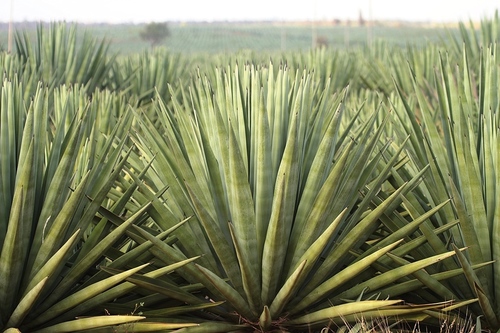
Sisal (Agave sisalana) is a monocarpic succulent in the Asparagaceae, grown worldwide for textile fiber extracted from its leaves. No wild population is known with certainty; the leading hypothesis treats it as a domesticated hybrid from southern Mexico. After several years of leaf harvests, a single flower stalk bears bulbils, then the rosette dies.
Read moreSisal and Sisal hemp
Place in full sun, with intense direct light all day long.



© photo
(c) subhashc, some rights reserved (CC BY-NC) · cc-by-nc
葉子 · cc0
Kevin Faccenda · cc-by
Taken Sep 14, 2022 by Emi Gio (cc-by-sa)
Taken Jun 6, 2020 by mal Kelly (cc-by-sa)
Taken Feb 20, 2022 by Renaud Brochiero (cc-by-sa)
Taken Dec 12, 2020 by Gemma Schaap (cc-by-sa)
© copyright of the Board of Trustees of the Royal Botanic Gardens, Kew.




Global distribution
The precise native range of Agave sisalana remains uncertain. No wild population is confirmed; the leading hypothesis places its origin in southern Mexico, between Chiapas and the Yucatán Peninsula, as a domesticated hybrid. Its name comes from the Yucatán port of Sisal, which exported the fiber in the nineteenth century, although local plantations now mainly grow henequen, Agave fourcroydes. Henry Perrine introduced sisal to Florida in the 1830s; it later spread to Brazil and East Africa for fiber production.
- Native1
- Introduced5
- Invasive1
- Mexico
- Brazil
- Tanzania
- Kenya
- Madagascar
- Florida
- Hawaii
Hexagons: regions where the plant occurs. Green dots: native range.1
Identity
Sisal (Agave sisalana Perrine, 1838), also called sisal hemp, is a monocarpic succulent in the Asparagaceae, cultivated for fiber since the nineteenth century. Unlike most Agave species, it has no confirmed wild population. It occurs only in cultivation or as naturalized plants away from its presumed place of origin. 2 3
The name comes from the port of Sisal on the Yucatán coast, from which fiber was exported to the United States in the nineteenth century with support from the American botanist Henry Perrine. Yet local Yucatán plantations now mainly grow henequen (Agave fourcroydes). The two fibers were long sold under the same trade names, causing confusion that persists today. 5
Recognition
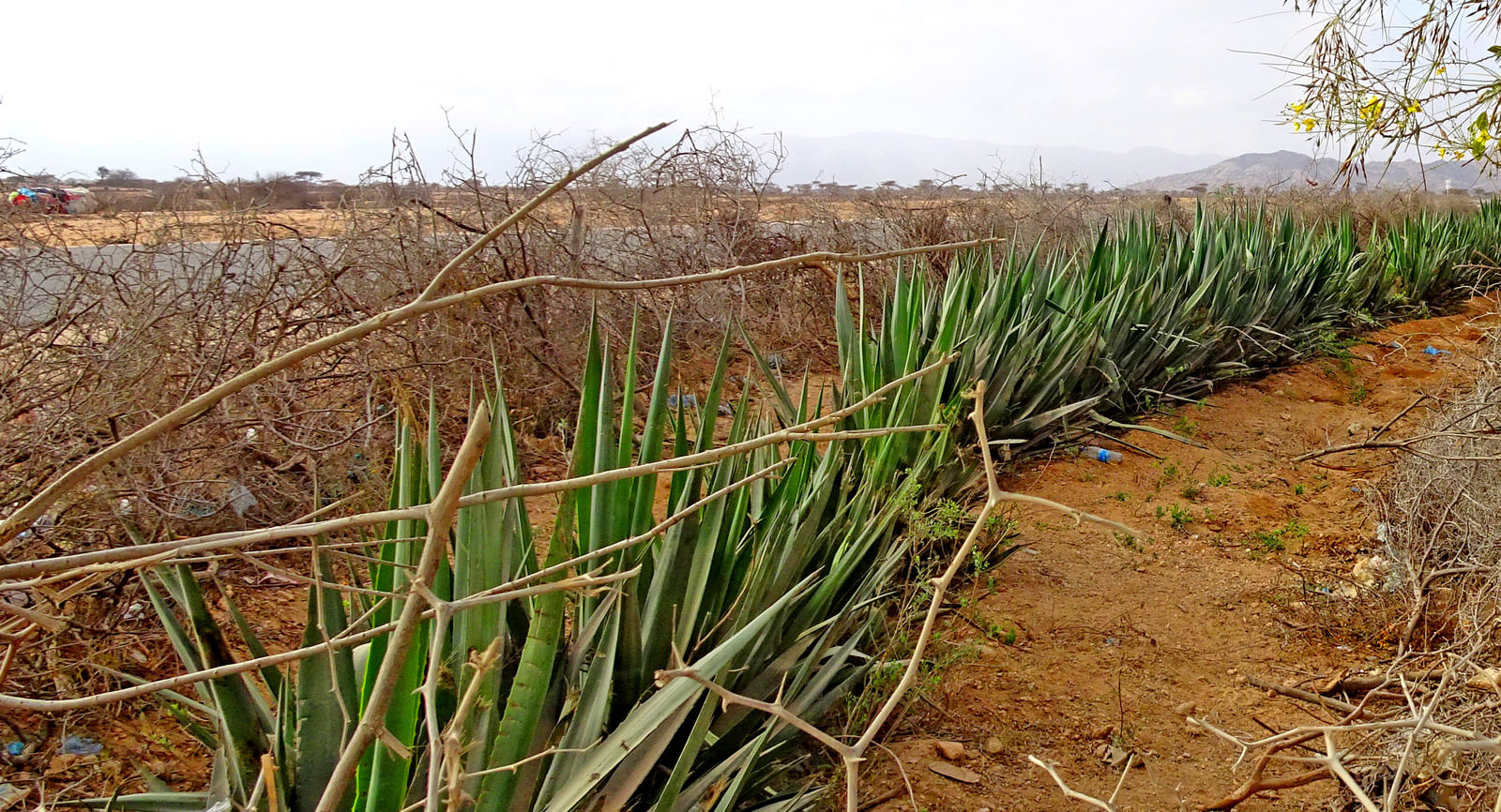
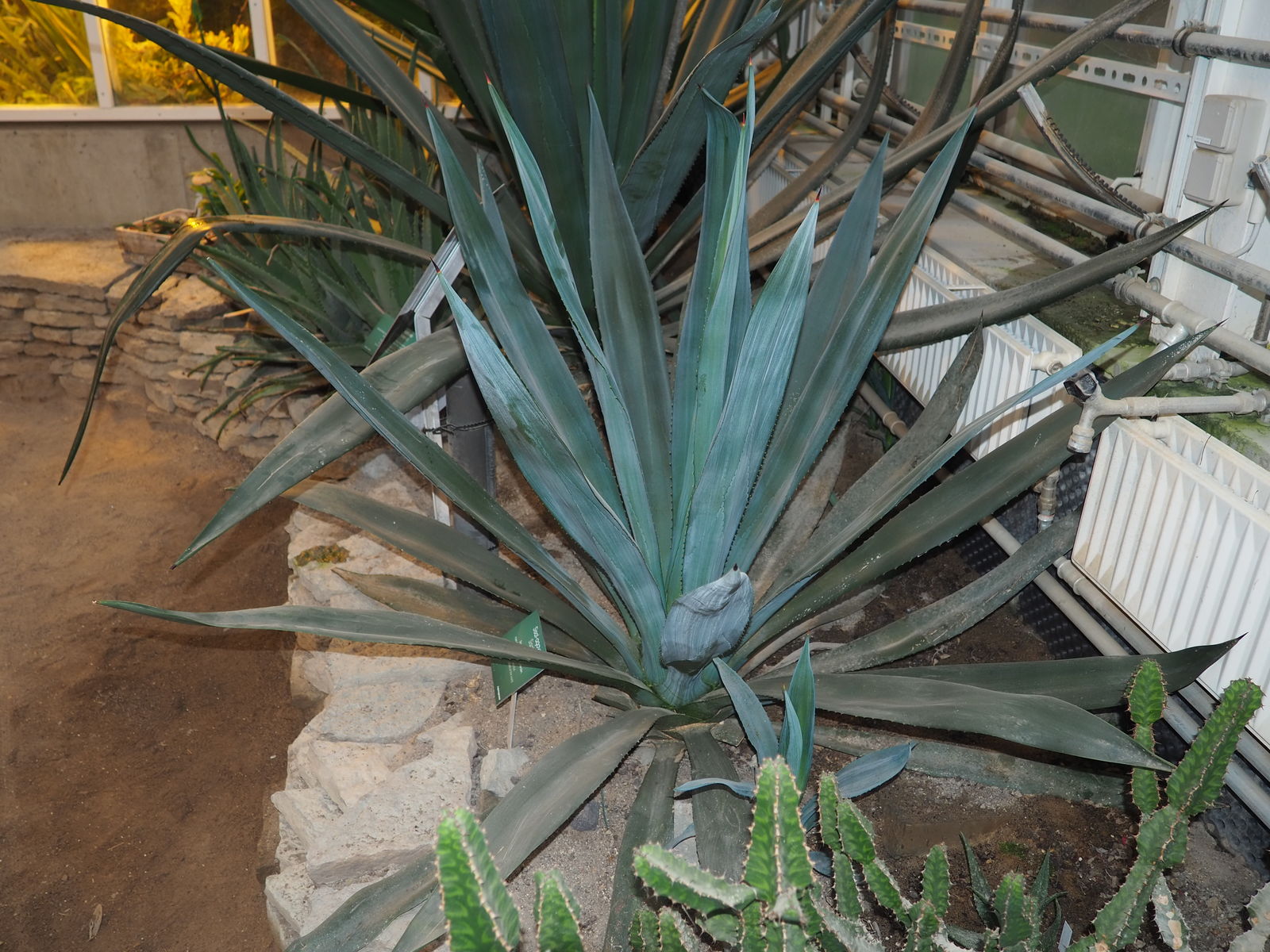
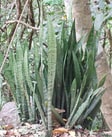
Agave sisalana forms a compact rosette without an apparent stem. Its fleshy gray-green to bright green leaves are 1–1.6 m (3.3–5.2 ft) long. Margins are smooth or nearly so, without conspicuous hooked teeth, readily distinguishing it from Agave americana when the two are sold side by side. 3
A productive rosette commonly yields 200–250 leaves suitable for fiber, harvested continuously from the base without stopping growth at the center. Each leaf provides only about 4% of its weight in usable fiber; decortication removes the remaining pulp and water. 5
The plant remains stemless throughout its productive phase, with no visible stem before the flowering that ends its cycle. This combination of a stemless rosette and smooth leaf margins distinguishes sisal from more heavily armed agaves in the same dry gardens, such as Agave americana and Agave angustifolia. 4
Useful taxonomy
POWO/WCVP accepts Agave sisalana Perrine. Relevant synonyms and infraspecific names include:
- Agave sisalana var. armata Trel.
- Agave sisalana f. armata (Trel.) Trel.
- Agave rigida var. sisalana (Perrine) Engelm.
Its origin remains debated. Botanist H. S. Gentry proposed Chiapas rather than the Yucatán Peninsula, suggesting an ancient hybrid between Agave angustifolia and Agave kewensis, stabilized and spread by Indigenous fiber cultivation. None of these hypotheses is settled, because there is no wild population to examine. 1 5
Treat Agave sisalana as distinct from Agave fourcroydes, rather than as a synonym of henequen. POWO accepts them separately, but their closely intertwined commercial history still causes confusion among traders and gardeners. 1 8
Habitat and range
No natural wild habitat is documented for Agave sisalana. It is recorded as non-native wherever it grows, including Florida, where cultivated plants sometimes escape onto roadsides. 4
After Henry Perrine introduced it to Florida in the 1830s, sisal spread widely as a fiber crop. Brazil became the leading producer, with about 86,000 tonnes (95,000 US tons) in 2020. The German botanist Richard Hindorf introduced cultivation to present-day Tanzania around 1893, helping establish it in East Africa. Madagascar, China and Mexico are also major producing countries. 5 6
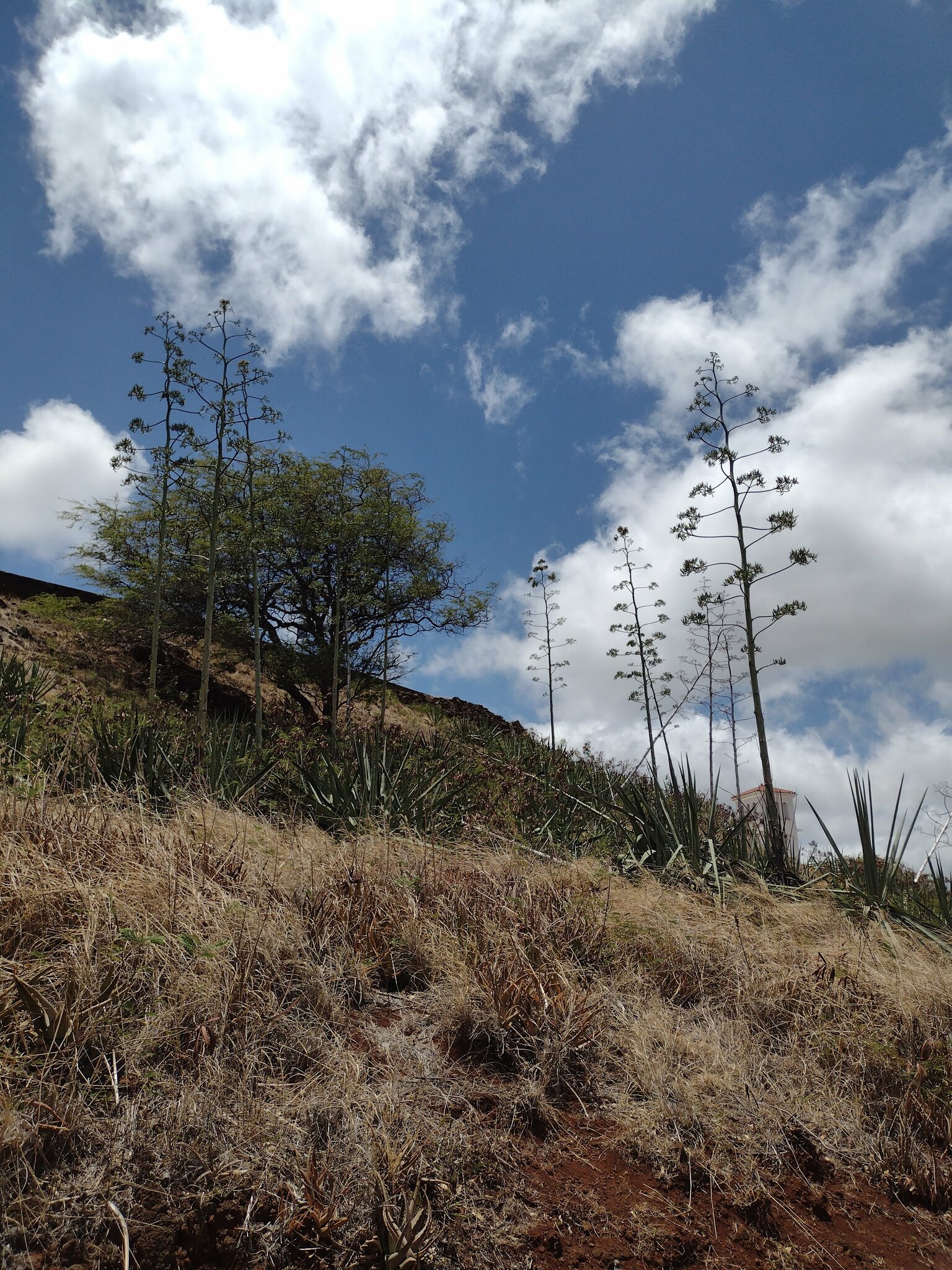
The species is classified as potentially invasive in Florida and naturalized in Hawaii, where abandoned plantations foster dense roadside populations and stands on former farmland. 4 5
Life cycle and reproduction
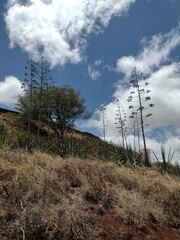
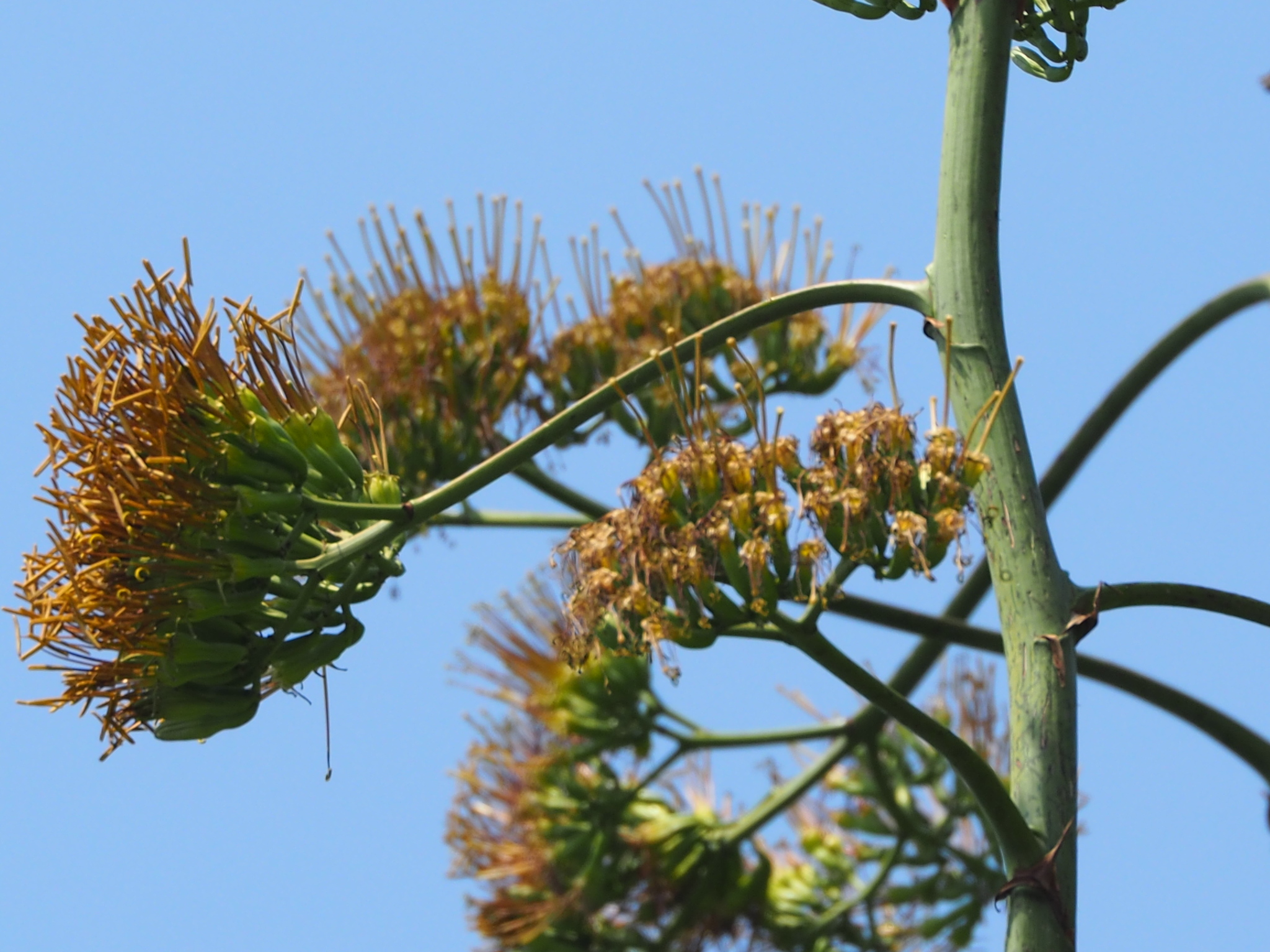
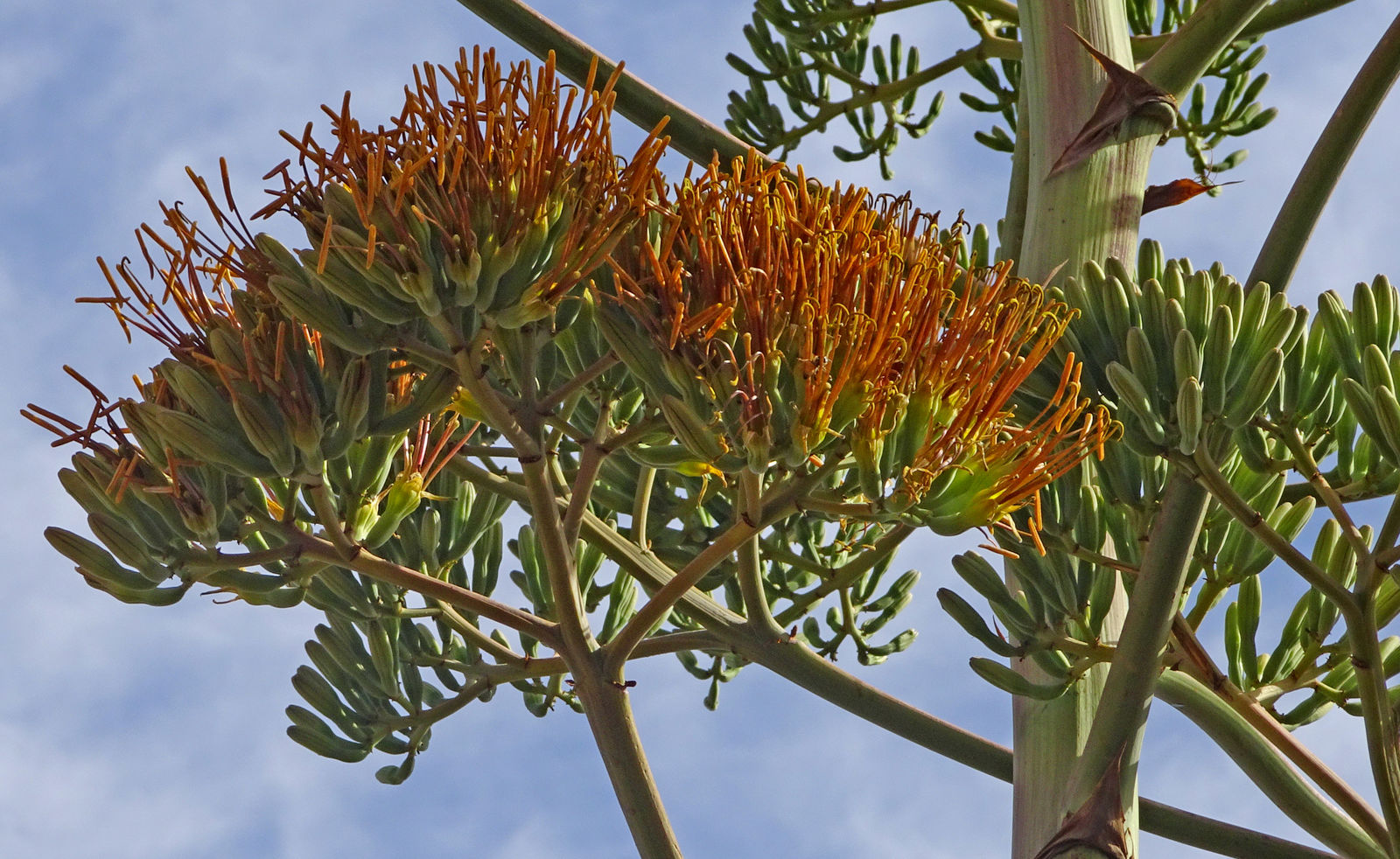
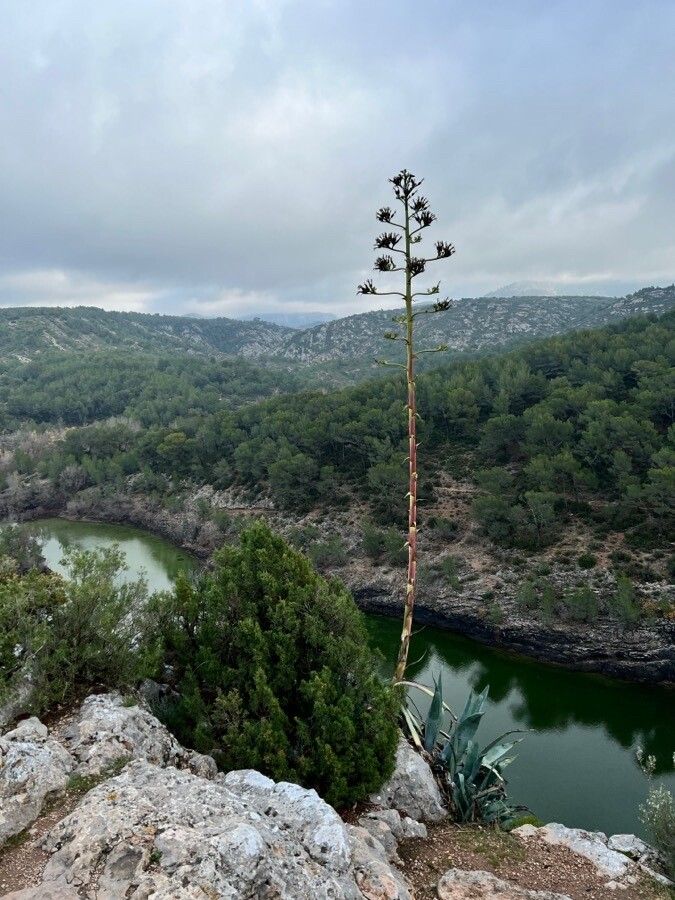
Agave sisalana is monocarpic: the rosette flowers only once, generally after 7–10 years, on a stalk that can exceed 6 m (20 ft). This single flowering invariably marks the end of the mother rosette’s life. 3
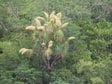
The flower stalk has a distinctive role in propagation. Rather than producing enough viable seed, it mainly bears bulbils, already formed plantlets that detach, fall to the ground and root independently. This permits rapid spread and is far more reliable in cultivation than poorly germinating seed. 5 3
Before flowering, the plant remains productive for several years. Regular harvesting of basal leaves begins at 3–4 years without preventing growth at the center, provided the central bud remains intact. 6
Uses and risks
The principal use is textile fiber, extracted by decortication. A machine with blunt blades crushes and brushes fresh leaves, removing pulp and sap to leave the fibers. Smaller-scale water retting is also practiced in East Africa. Long used for rope and twine, sisal now goes into carpets, geotextiles, footwear and reinforcement for fiberglass or rubber composites. 5
Leaf sap contains irritating saponins and calcium oxalates, causing contact dermatitis in humans and animals exposed to fresh material. No severe acute toxicity by ingestion is known. Gloves remain advisable for harvesting or pruning. 3
Sisal cultivation initially replaced native forests in several producing regions. The absence of chemical fertilizers and deep plowing reduces its soil impact compared with more intensive crops, however. The main documented environmental risk comes from decortication effluent, which pollutes waterways if discharged untreated. 5
Varieties, look-alikes and related plants
The form var. armata, described by Trelease in 1913, has conspicuous marginal teeth, whereas commercial sisal is almost always smooth-edged. The cultivar Variegata, with creamy leaf margins, is grown ornamentally rather than in fiber plantations. 1
The most frequent lookalikes are:
- Agave fourcroydes, henequen, with often longer and sometimes spiny leaves, historically grown in the same Yucatán plantations;
- Agave angustifolia, smaller and more heavily armed, proposed as a possible parent in Gentry’s hypothesis;
- Agave americana, substantially larger, with conspicuous hooked marginal teeth absent from Agave sisalana.
The leaf margin is a quicker field distinction than overall size or color. Smooth in Agave sisalana, it is almost always armed in Agave fourcroydes and Agave angustifolia, its close relatives grown in the same collections. 4
Main sources
- Plants of the World Online / Kew, Agave sisalana Perrine
- International Plant Names Index, Agave sisalana Perrine
- Plants For A Future, Agave sisalana
- Atlas of Florida Plants, Agave sisalana
- Wikipedia (EN), Sisal (Agave sisalana)
- USDA PLANTS Database, Agave sisalana plant profile
- NCBI Datasets, Agave sisalana taxonomy record
- Tropicos / Missouri Botanical Garden, Agave sisalana Perrine
Frequently asked questions
Is sisal the same plant as henequen?
No. Sisal (Agave sisalana) and henequen (Agave fourcroydes) are distinct fiber species. They were long grown and traded together through the port of Sisal in Yucatán, explaining the persistent confusion between their names.
Is sisal toxic to cats and dogs?
Leaf sap contains irritating saponins and calcium oxalates that cause contact dermatitis in animals and humans. The plant is not classified as highly toxic by ingestion.
Why does my potted sisal never flower?
This is normal. Agave sisalana is monocarpic, flowering only once, generally after 7–10 years, then dying. In a pot or a cool climate, it may never flower.
Does sisal grow wild?
No confirmed wild population is known. The best-supported hypothesis treats it as a domesticated hybrid, probably derived from Agave angustifolia, that arose in southern Mexico before cultivation spread it worldwide.
How is sisal fiber extracted?
Decortication crushes and brushes fresh leaves, leaving only the fibers, about 4% of leaf weight. Small-scale water retting is also practiced in East Africa.
What plants are confused with sisal?
The main lookalikes are Agave fourcroydes, or henequen, with often longer and sometimes spiny leaves, and Agave angustifolia, a possible parent, which is smaller and more heavily armed.
Can sisal grow in a temperate climate?
Yes, in a pot brought indoors for winter or in the ground in the mildest regions, provided temperatures stay above −5 °C (23 °F). Very free-draining soil remains necessary beyond that limit.
Similar plants

If you are unsure about a plant’s toxicity, ask a botanist or veterinarian for advice.