
Golden trumpet (Allamanda cathartica, )
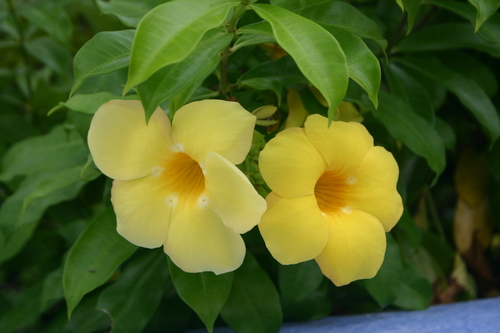
Golden trumpet (Allamanda cathartica) is a scrambling climber in the Apocynaceae, native from northern South America to northern Bolivia. Grown in the tropics for large, bright yellow trumpet flowers, it releases toxic white latex when cut. Its stems climb by leaning on supports rather than using tendrils, so cultivated plants need regular tying in.
Read moreGolden trumpet, Yellow allamanda and Common allamanda

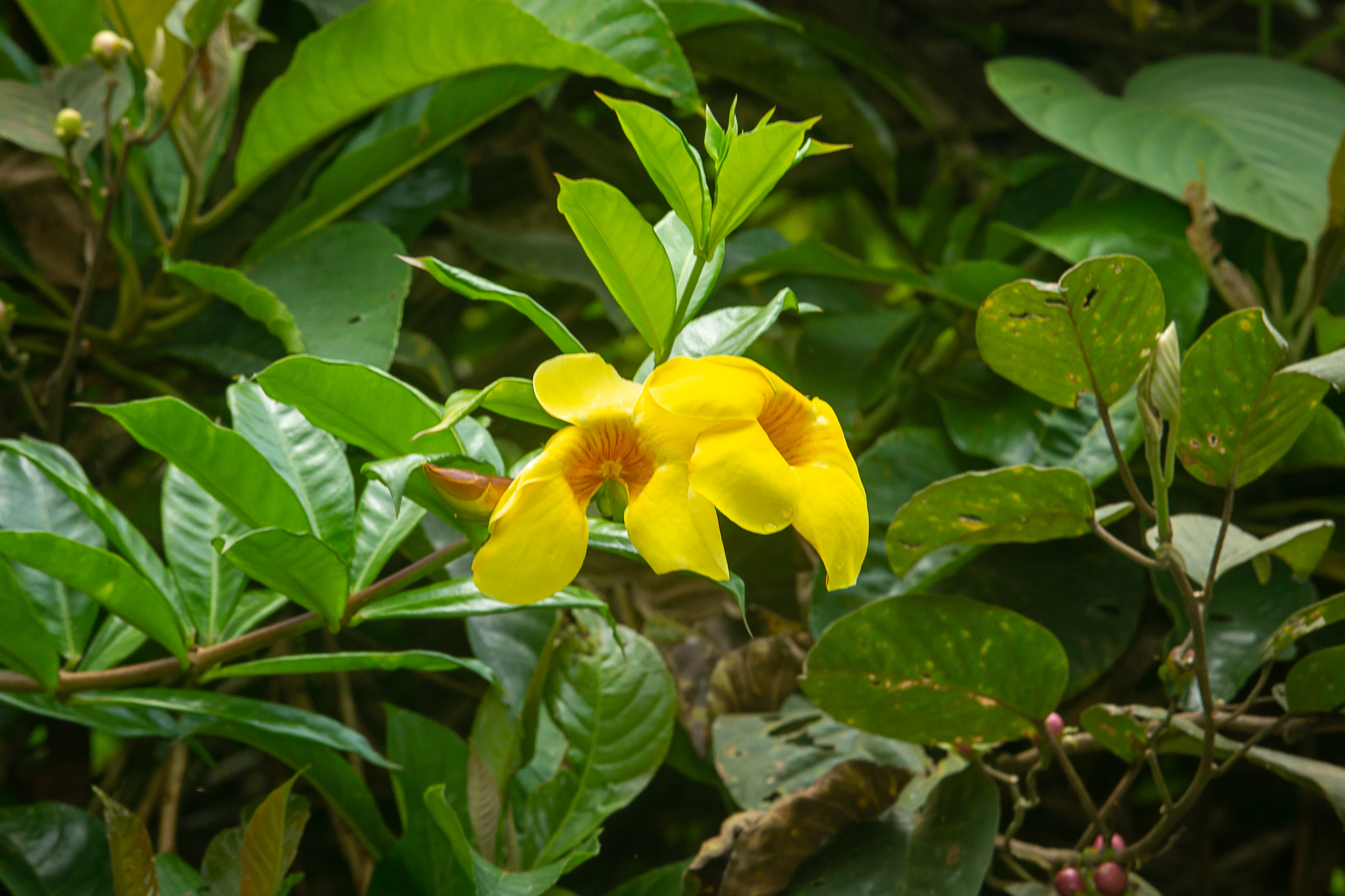
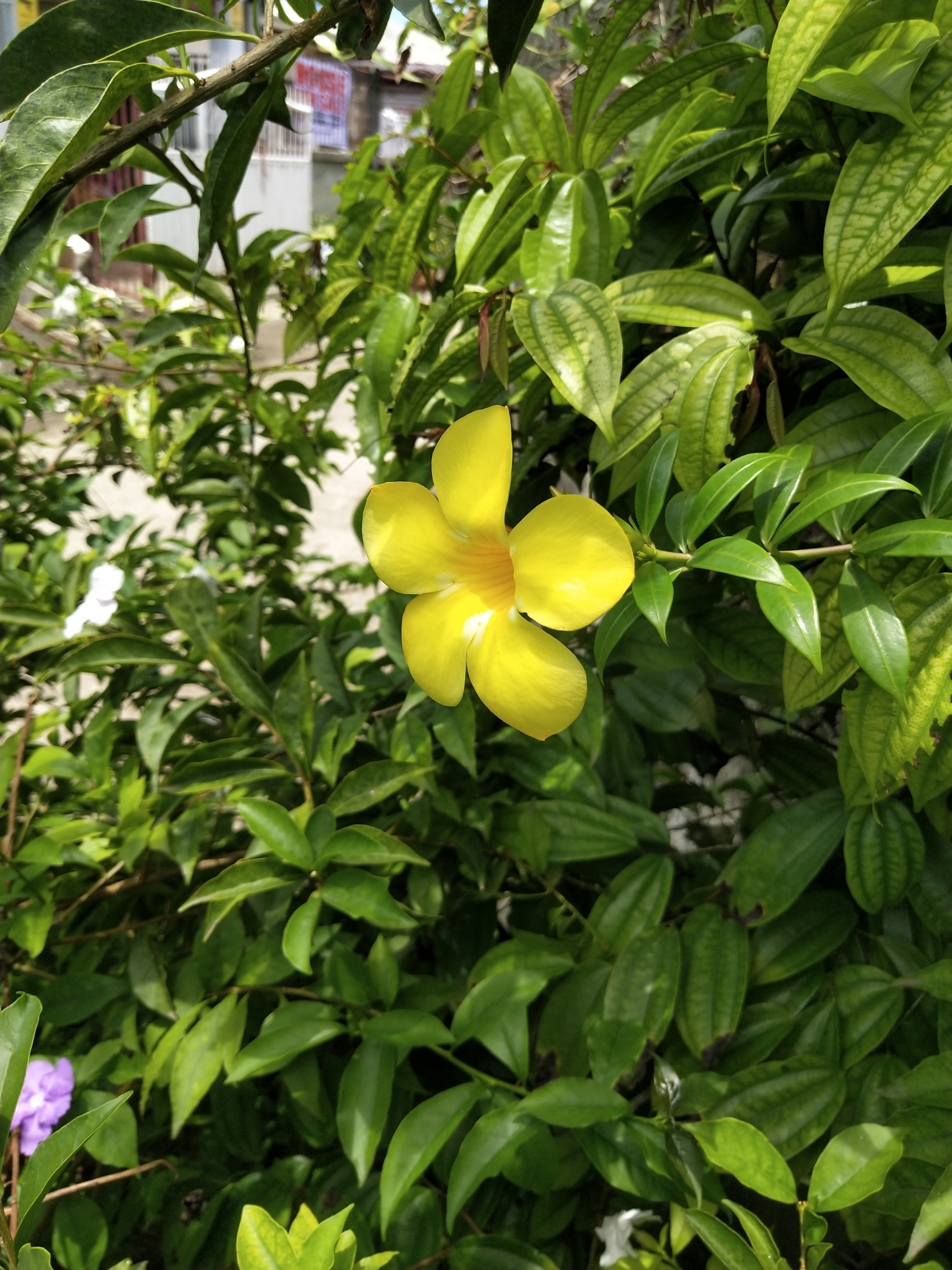


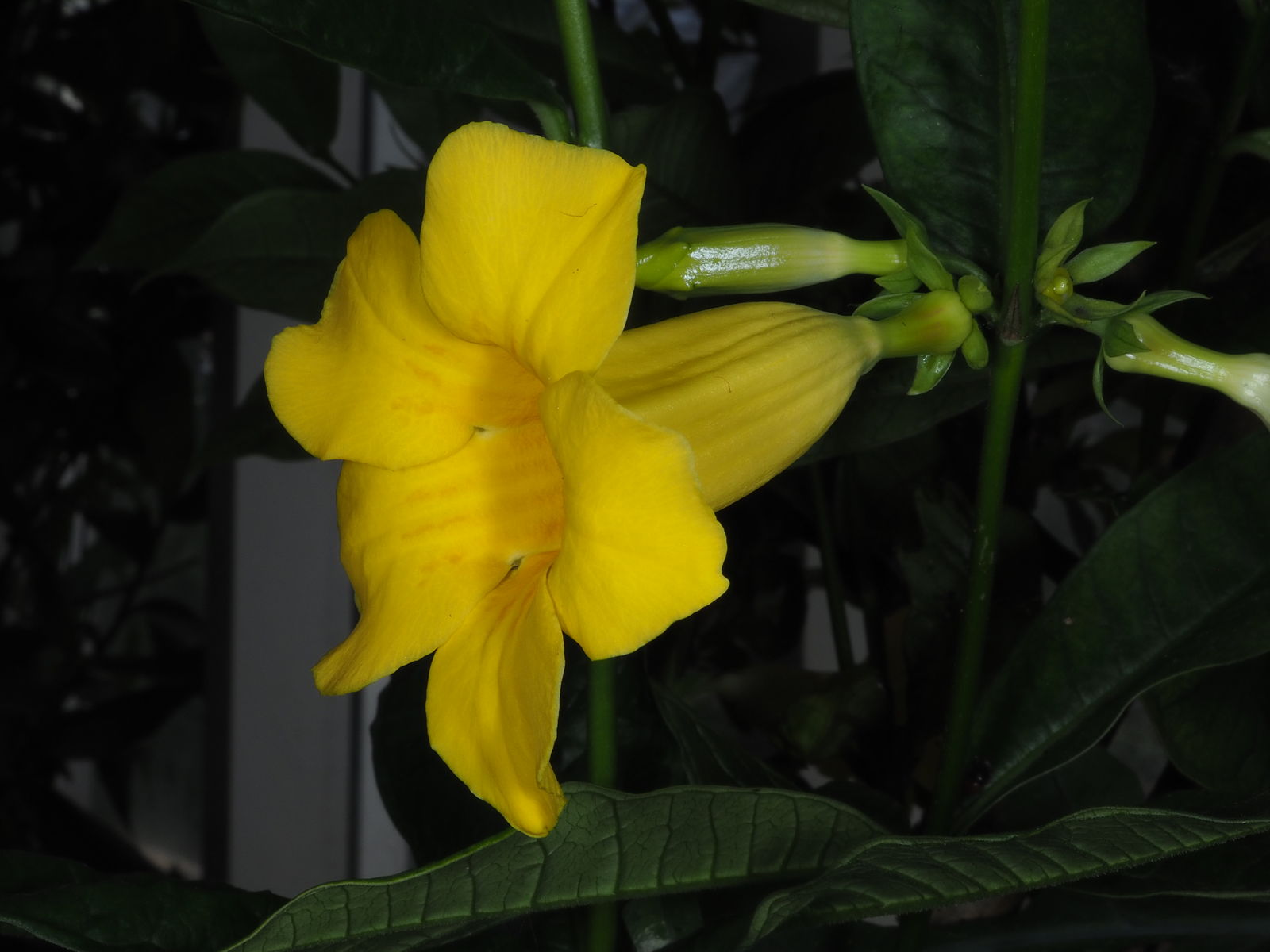

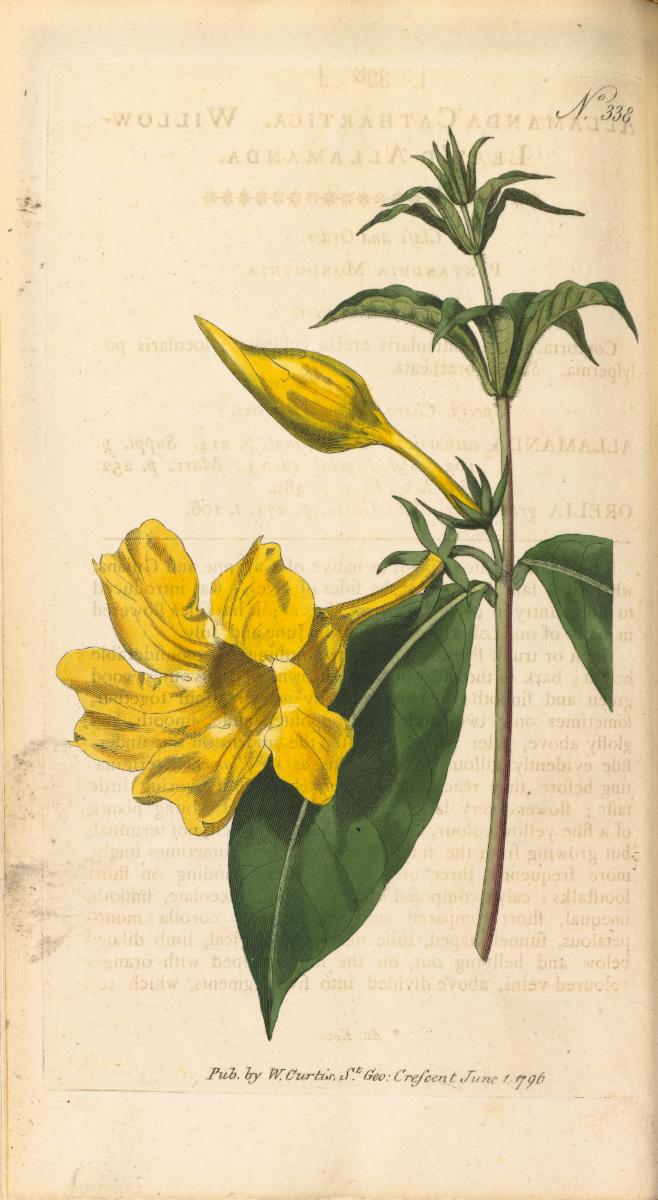
© photo
(c) Pedro, some rights reserved (CC BY-NC), uploaded by Pedro · cc-by-nc
iNaturalist User · cc-by-sa
Greg III Espera · cc-by
Taken Nov 27, 2012 by H. Goëau (cc-by-sa)
Taken Mar 26, 2020 by Aasi (cc-by-sa)
Taken Dec 1, 2022 by Salima Herry (cc-by-sa)
Taken May 11, 2014 by Tela Botanica − Céline PIRAT (cc-by-sa)
Taken Jan 20, 2007 by Tela Botanica − Geneviève Botti (cc-by-sa)
© copyright of the Board of Trustees of the Royal Botanic Gardens, Kew.


Global distribution
Allamanda cathartica is native to northern South America, from Venezuela and the Guianas to northern Bolivia and Brazil. Horticulture has spread it widely. It has naturalized in many tropical regions and can become locally invasive, notably in Australia.
- Native5
- Introduced1
- Invasive1
- French Guiana
- Suriname
- Venezuela
- Brazil
- Bolivia
- Costa Rica
- Australia
Hexagons: regions where the plant occurs. Green dots: native range.1
Identity
Golden trumpet (Allamanda cathartica L., 1771), also called yellow allamanda and known in French as liane à lait, is a scrambling climber in the Apocynaceae, native from northern South America to northern Bolivia. 1 8
The genus honors Swiss naturalist Frédéric-Louis Allamand, a correspondent of Linnaeus who sent him seeds from French Guiana in the eighteenth century. The Latin epithet cathartica, purgative, recalls the former use of latex and leaves as a powerful laxative. 5
Cut stems release milky white latex, a characteristic of the Apocynaceae that explains the French name liane à lait, milk vine. 6
Recognition
The plant is a scrambling shrub with long stems, purple at first and later green, without true tendrils. Without support it stays short rather than climbing. 3 Against a wall or arbor in tropical ground plantings, it commonly reaches 8–12 m (26–39 ft); annual pruning keeps potted plants below 2–3 m (7–10 ft). 2
Leaves occur in whorls of four. Lance-shaped, glossy above and dull beneath, they measure 10–20 cm (4–8 in) on short stalks. Trumpet flowers with five fused lobes reach 8–12 cm (3–5 in) across, in vivid yellow to orange, sometimes with fine throat stripes. 2 7
The fruit is a rounded capsule covered in soft spines, about 5 cm (2 in) across, releasing roughly thirty winged seeds when ripe. 8 It is uncommon outside the native range because the necessary pollination occurs infrequently in ornamental cultivation. 3
Useful taxonomy
The genus Allamanda contains several South American species in the Apocynaceae subfamily Rauvolfioideae. 1 Several historical forms of Allamanda cathartica were long treated as separate varieties before being placed in synonymy:
- Allamanda cathartica var. williamsii (Anon.) L.H.Bailey
- Allamanda cathartica var. grandiflora L.H.Bailey & Raffill
- Allamanda cathartica var. hendersonii (W.Bull ex Dombrain) L.H.Bailey & Raffill
- Allamanda cathartica var. nobilis (T.Moore) L.H.Bailey & Raffill
- Allamanda cathartica var. schottii (Pohl) L.H.Bailey & Raffill
The name schottii causes nursery confusion. Many horticultural sources now treat it separately as Allamanda schottii, bush allamanda, a compact nonclimbing shrub, unlike the 8–12 m (26–39 ft) scrambling form trained against a support. Accepted scientific name and plant habit remain the reliable distinctions. 8
Habitat and distribution
Within its native range, the plant occupies humid forest edges, stream banks and sunny marshy areas from Venezuela and the Guianas to northern Bolivia and Brazil. 1 8
Horticulture has spread it across most tropical and subtropical climates. Central America and the Greater Antilles are among the regions where it has strongly naturalized. 6
In Australia, particularly Queensland, garden escapes colonize rainforest edges, mangroves and roadsides. There it is regarded as invasive and competes with native vegetation. 4
Life cycle and reproduction
Flowering extends from summer into fall in temperate greenhouses or conservatories, and is almost continuous in hot tropical climates. 3 2
Horticultural propagation is almost entirely by greenwood cuttings. Rooting hormone encourages semi-ripe stems taken in early local summer to root within 3–6 weeks, in growing medium around 21 °C (70 °F). 6
Leaf-extract trials measured a dose-dependent laxative effect comparable with senna, consistent with the traditional use reflected in its name. The margin between active and toxic doses remains narrow, explaining why modern medicine abandoned that use in favor of a strictly ornamental role. 5
Uses and risks
Ornamental use predominates: flowering hedges and arbors in tropical climates, or bright greenhouses and conservatories in temperate regions, where it must overwinter above 7 °C (45 °F). It is cold-sensitive, and frost can destroy unprotected stems. 2 7
The whole plant is toxic. White latex contains the iridoid lactones plumericin, allamandin and allamandicin, irritating skin and mucous membranes. Ingestion causes nausea, vomiting, diarrhea and dry mouth. 5 For cats, dogs and horses, contact with or ingestion of any part, including leaves, stems, flowers and sap, is classified as toxic. 6
Recent pharmacological studies also investigate antileukemic activity of allamandin, but no therapeutic use is validated. Wear gloves when handling the plant. 5
Varieties, lookalikes and related plants
The most widespread horticultural forms derive from older botanical varieties. Hendersonii, with larger orange-toned flowers, and Grandiflora, with pale yellow flowers, are still sold under those names rather than their synonym status. 1
The commonest confusion is with bush allamanda, Allamanda schottii, a nonclimber with smaller flowers sold under the same general name. Other colorful climbing Apocynaceae, including Mandevilla, can also be confused in nurseries without reliable labels. 3
Habit distinguishes them more reliably than flowers. Stiff, upright stems indicate A. schottii; flexible scrambling stems with whorled leaves indicate Allamanda cathartica. Corolla size is secondary: Hendersonii and Grandiflora selections approach 12 cm (4.7 in), versus about 8 cm (3.1 in) in an unselected seedling.
Main sources
- Plants of the World Online / Kew, Allamanda cathartica L.
- Royal Horticultural Society, Allamanda cathartica - golden trumpet
- Missouri Botanical Garden Plant Finder, Allamanda cathartica
- Queensland Government Business, Yellow allamanda invasive plant profile
- Pratama et al., review of the phytochemistry, pharmacology and toxicology of Allamanda cathartica
- Florida Plant Atlas / USF, Allamanda cathartica species page
- Monaco Nature Encyclopedia, Allamanda cathartica
- GBIF, Allamanda cathartica L. species page
Frequently asked questions
Is yellow allamanda toxic to cats and dogs?
Yes. All parts, including the latex, contain irritating iridoid lactones. Ingestion causes nausea, vomiting and diarrhea in cats, dogs and horses. Sap irritates skin and eyes.
Why is my allamanda not flowering?
Too little direct light is the commonest cause. Yellow allamanda needs at least 6 hours of full sun daily. Late pruning can also delay flowering by removing future flowering shoots.
What does cathartica mean?
The Latin epithet means purgative, recalling the former use of latex and leaves as a powerful laxative. That use has been abandoned in favor of ornamental cultivation.
Does allamanda climb a support unaided?
No. It has no true tendrils. Long scrambling stems need regular tying to a stake or trellis to develop a climbing habit.
What minimum temperature can yellow allamanda tolerate?
Cold below 10 °C (50 °F) causes leaf drop. Keep the plant above 7 °C (45 °F) when overwintering and protect it from frost. In temperate climates, bring the plant under cover from local fall onward.
How does it differ from Allamanda schottii?
Allamanda schottii, bush allamanda, is a compact, nonclimbing shrub with smaller flowers. Allamanda cathartica is a scrambling climber with larger flowers. Nurseries sell both under the general name allamanda.
Similar plants
If you are unsure about a plant’s toxicity, ask a botanist or veterinarian for advice.