
Chinese onion (Allium chinense, )


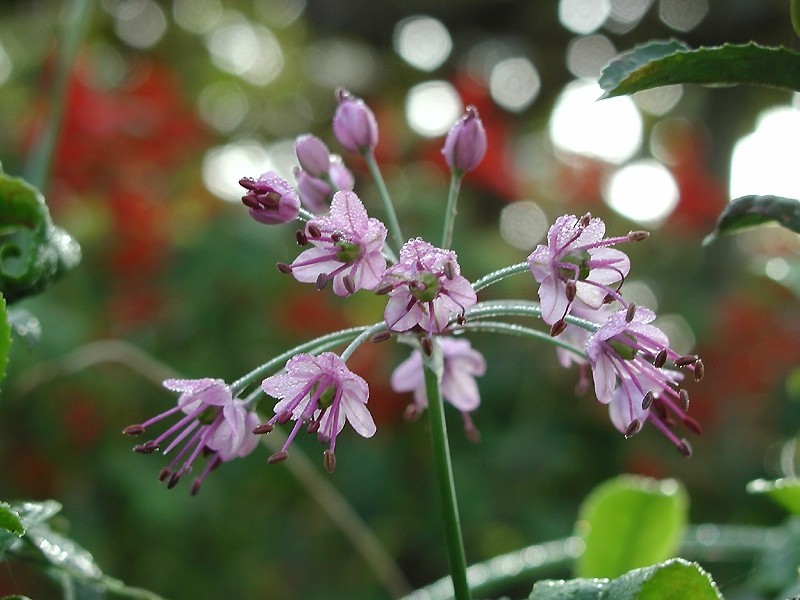
Chinese onion (Allium chinense), also known as rakkyo, is a bulbous perennial in the Amaryllidaceae, native to southern China as far as Hainan. Cultivated for centuries in East Asia for its small, crisp, mildly onion-flavored bulb, it has slender leaves with a triangular cross section and late mauve flowers toward the end of summer.
Read moreChinese onion, Rakkyo, Jiaotou and Cu kiệu


© photo
(c) たね, some rights reserved (CC BY-SA) · cc-by-sa
Wikimedia Commons · CC BY-SA or Public Domain
Wikipedia · CC BY-SA
© copyright of the Board of Trustees of the Royal Botanic Gardens, Kew.
Global distribution
Allium chinense is native to southern China as far as Hainan, across provinces from Henan to Guangxi. Widely grown as a vegetable, it has naturalized elsewhere in East Asia and North America. These introduced areas are distinct from its Chinese native range.
- Native1
- Introduced3
- China (south to Hainan)
- Taiwan
- South Korea
- United States
Hexagons: regions where the plant occurs. Green dots: native range.1
Identity
Chinese onion (Allium chinense G.Don, 1827), widely known by the Japanese name rakkyo, is a bulbous perennial in Allium, family Amaryllidaceae. Scottish botanist George Don described the species in 1827. It has been grown for centuries in China, Japan and Vietnam for its small, crisp bulb. 1 2
The Chinese name jiaotou and Vietnamese cu kiệu refer to the same plant, particularly its culinary preparations. Unlike common onion, Allium chinense never forms one large, solitary bulb. Instead, successive divisions produce a clump of small bulbs grouped at the base. 4 2
Recognition
Allium chinense is a low bulbous perennial reaching 20–50 cm (8–20 in) in flower. Its white, egg-shaped bulb reaches 4–5 cm (1.6–2 in) across only in its second or third year of cultivation. 2 3
Slender, hollow leaves have a distinctly triangular cross section and feel angular to the touch. This character distinguishes Chinese onion from common chives, whose leaves are round, and garlic chives, whose leaves are flat. Leaf shape therefore remains useful even when a clump is not in flower. 4 3
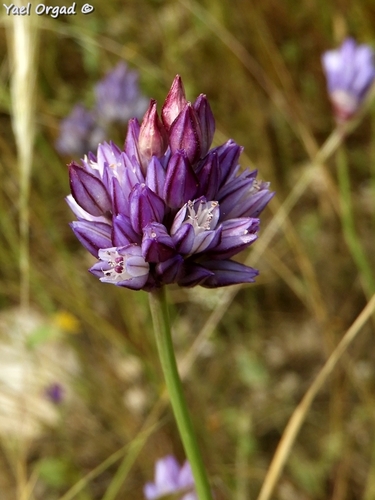
Leaves turn yellow and fall over in midsummer, a seasonal rest unusual among cultivated alliums, most of which stay green through the warmer growing season. Allium chinense resumes growth in autumn and then sends up an almost leafless flowering stem with a loose umbel of around twenty small pale mauve to purplish-pink flowers. 4 2
Useful taxonomy
George Don described the species as Allium chinense G.Don in 1827. Long placed in the Liliaceae and later the Alliaceae, Allium now belongs to the Amaryllidaceae, subfamily Allioideae. The later homonym Allium chinense Maxim. (1859) is illegitimate and must be distinguished from the accepted name. Principal synonyms include:
- Allium bakeri Regel
- Allium bodinieri H.Lév. & Vaniot
- Allium martini H.Lév. & Vaniot
- Allium exsertum G.Don
- Caloscordum exsertum (G.Don) Herb.
- Allium splendens Miq. (illegitimate name)
The name bakeri is particularly easy to misinterpret. North American sellers still use it for a slender-bulbed form, although it is now treated as the same species as Asian rakkyo, rather than as a separate Chinese onion. 1
Habitat and range
The native range of Allium chinense covers southern China as far as Hainan, across provinces from Henan to Guangxi through Hunan and Guangdong. Cultivation spread outward from this region to the rest of East Asia. 1 4
Widely grown as a vegetable and condiment, it has naturalized far from its original range, in temperate Asia and North America. There it sometimes escapes vegetable gardens onto waste ground and sunny banks. These occurrences outside cultivation are distinct from its native Chinese distribution. 4 5
Full sun is essential; Chinese onion does not grow in shade. It tolerates calcareous, sandy or loamy soils provided they drain well, and withstands temperatures down to about −20 °C (−4 °F). Drainage and exposure remain important alongside cold tolerance. 2 3
Life cycle and reproduction
Chinese onion follows an unusual rhythm among cultivated alliums. Foliage grows in spring, then falls over and yellows in midsummer heat, before growth resumes in autumn. Flowering follows on almost leafless stems in late summer to early autumn, corresponding to August and September in the Northern Hemisphere conditions described. 4 2
Each umbel holds around twenty small mauve flowers, but viable seeds remain rare. Because seed propagation is unreliable, Chinese onion is multiplied almost exclusively by dividing the bulb offsets, separating them when a bulb naturally divides into several parts. 3 4
In a vegetable garden, bulbs reach market size after two to three years. Growers often harvest earlier, toward the end of the first summer, to obtain smaller, more tender bulbs for pickling. Harvest timing thus affects the size and texture of the product. 5 2
Uses and risks
Chinese onion is chiefly a food plant. The rakkyo bulb is eaten raw or cooked, with a crisp texture and a distinct but relatively mild onion flavor. Young leaves, flowers and young seedpods are also eaten. Sweet-sour pickling is the dominant bulb use: as an accompaniment to curry in Japan, or as cu kiệu for Lunar New Year in Vietnam. 2 4
In China the bulb also appears in traditional medicine as a digestive tonic, including preparations for chest tightness or intestinal complaints. These are folk-medicine uses and do not replace medical advice. Their traditional role is separate from the familiar culinary use of the bulb. 5 2
Edible for humans, Allium chinense remains toxic to domestic animals. Like other Allium species, it contains sulfur compounds that cause hemolytic anemia in cats, dogs and horses after ingestion, with vomiting, dark urine and weakness. 6
Varieties, look-alikes and related plants
Chinese onion is chiefly grown in its botanical form, with relatively few named cultivars. Allium bakeri persists in North American commerce for a slender-bulbed form now included in the species. Cu kiệu refers to a Vietnamese preparation rather than a distinct cultivar. 1
The main look-alikes are other small bulbous alliums of East Asia:
- Allium tuberosum, garlic chives, has flat leaves and white flowers;
- Allium schoenoprasum, common chives, has round, hollow leaves and pink flowers;
- Allium bakeri remains a historical synonym, although sometimes sold as a separate name.
Three features distinguish Allium chinense from these other small bulbous alliums: triangular leaves, a small round bulb harvested in summer and late mauve flowers on an almost bare stem. Together they confirm the identity of a plant sold as rakkyo. 4 3
Main sources
- Plants of the World Online / Kew, Allium chinense G.Don
- Plants For A Future, Allium chinense (rakkyo)
- Royal Horticultural Society, Allium chinense
- Chicago Botanic Garden, Allium chinense (rakkyo, Chinese chives)
- UF/IFAS Extension EDIS, Rakkyo — Allium chinense G.Don. (HS654)
- ASPCA, Chives (Allium) toxicity entry
- Encyclopaedia Britannica, chive (Allium)
Frequently asked questions
Is Chinese onion toxic?
For humans it is an edible vegetable and condiment, used in cooking and pickles. Like other Allium plants, it is toxic to cats, dogs and horses, with a risk of hemolytic anemia if eaten.
How does Chinese onion differ from chives or garlic?
Allium chinense has leaves with a triangular cross section, a small round bulb harvested in late summer and late mauve flowers. Common chives have round leaves, while garlic forms a head divided into cloves.
Why do the leaves turn yellow in summer?
This is normal summer dormancy. Leaves fall over and turn yellow in heat, then growth resumes with cooler weather and autumn rain before flowering.
How are the bulbs harvested and stored?
Lift bulbs in late summer once the foliage has yellowed. Eat them fresh, preserve them in sweet-sour pickles, or dry them for longer storage.
Does Chinese onion become invasive?
It has naturalized in parts of East Asia and North America, but produces few viable seeds. Its spread remains chiefly associated with deliberate cultivation by division.
How is rakkyo eaten?
The bulb is chiefly sweet-sour pickled, served alongside curry in Japan or prepared as cu kiệu for Lunar New Year in Vietnam.
Similar plants

If you are unsure about a plant’s toxicity, ask a botanist or veterinarian for advice.