
Garlic chives (Allium tuberosum, )
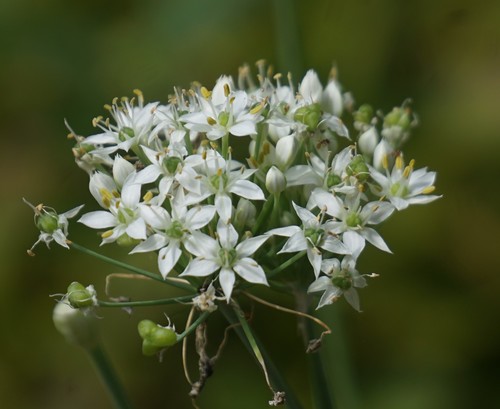
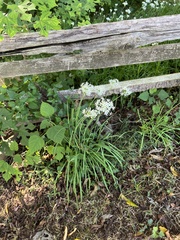
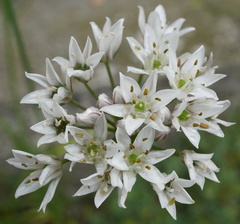
Garlic chives (Allium tuberosum) is a bulbous perennial in the Amaryllidaceae, native from the Himalaya to northern China. Cultivated for centuries as a culinary herb in East Asia, it forms clumps of flat leaves and bears umbels of sweetly scented, star-shaped white flowers in late summer.
Read moreGarlic chives and Chinese chives
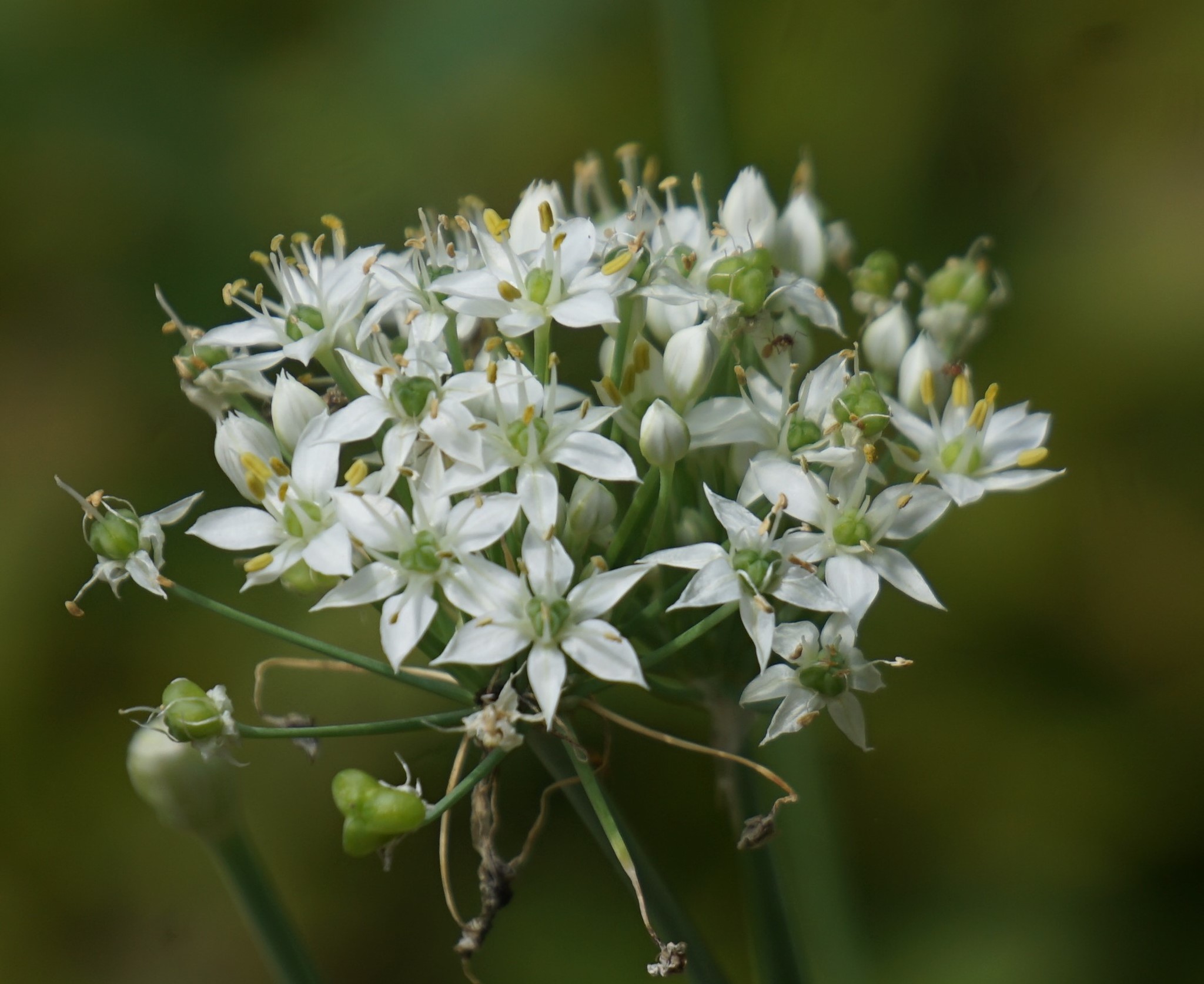


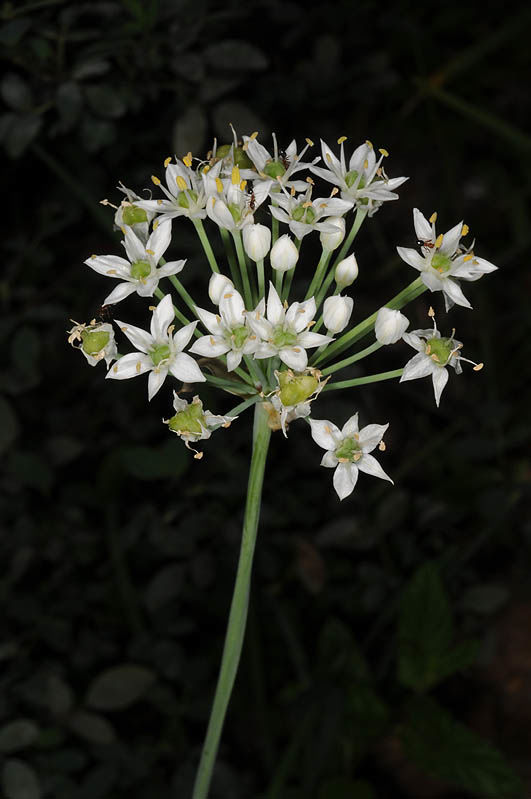
© photo
(c) Mary Morrow, some rights reserved (CC BY-NC), uploaded by Mary Morrow · cc-by-nc
Jasper Shide · cc0
Patrick Hacker · cc-by
Taken May 29, 2020 by Nyunyshkin (cc-by-sa)
Taken Jan 1, 1900 by EOL − Forest & Kim Starr (cc-by)
Taken Sep 3, 2014 by Royal Botanic Garden Edinburgh - Patrick Kuss (cc-by-nc)
Taken Oct 23, 2019 by Jesse (Jesse Bee) (cc-by-sa)
© copyright of the Board of Trustees of the Royal Botanic Gardens, Kew.


Global distribution
Allium tuberosum is native from the Himalaya to northern China, around southwestern Shanxi. Widely cultivated as a culinary herb, it has spread and naturalized across much of Asia and other temperate regions. These introduced areas are distinct from its original range.
- Native3
- Introduced4
- China
- India (Himalaya)
- Nepal
- Japan
- South Korea
- Vietnam
- United States
Hexagons: regions where the plant occurs. Green dots: native range.1
Identity
Garlic chives (Allium tuberosum Rottler ex Spreng., 1825), also called Chinese chives, is a bulbous perennial in Allium, family Amaryllidaceae. Cultivated for centuries in East Asia, it serves as a familiar vegetable-garden herb, filling a culinary role comparable to that of onion and garlic elsewhere. 1 4
French names include ciboulette chinoise, ail odorant, ciboule de Chine and ciboulail. Its mild but distinct garlic flavor is stronger than that of common chives. White umbels late in the growing season make it ornamental as well as useful in cooking, and it is easy to grow along a sunny border. 2 3
Recognition
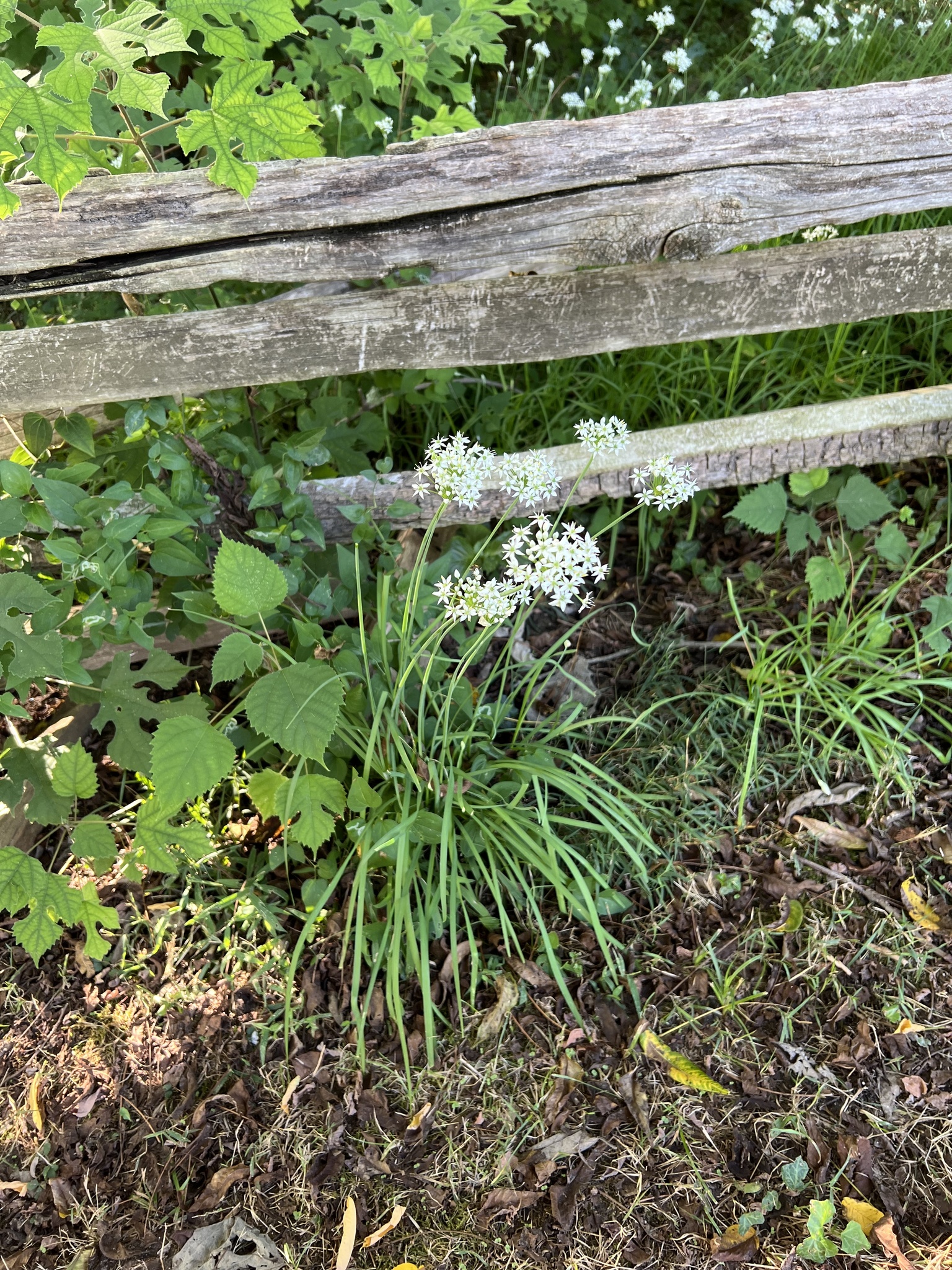
Allium tuberosum forms a dense clump from small, elongated, fibrous bulbs about 1 cm (0.4 in) across, without a large underground onion. Flat, strap-shaped leaves measure 1.5–8 mm (0.06–0.3 in) wide, unlike the hollow leaves of common chives. All parts release a clear garlic smell when crushed. 3 6
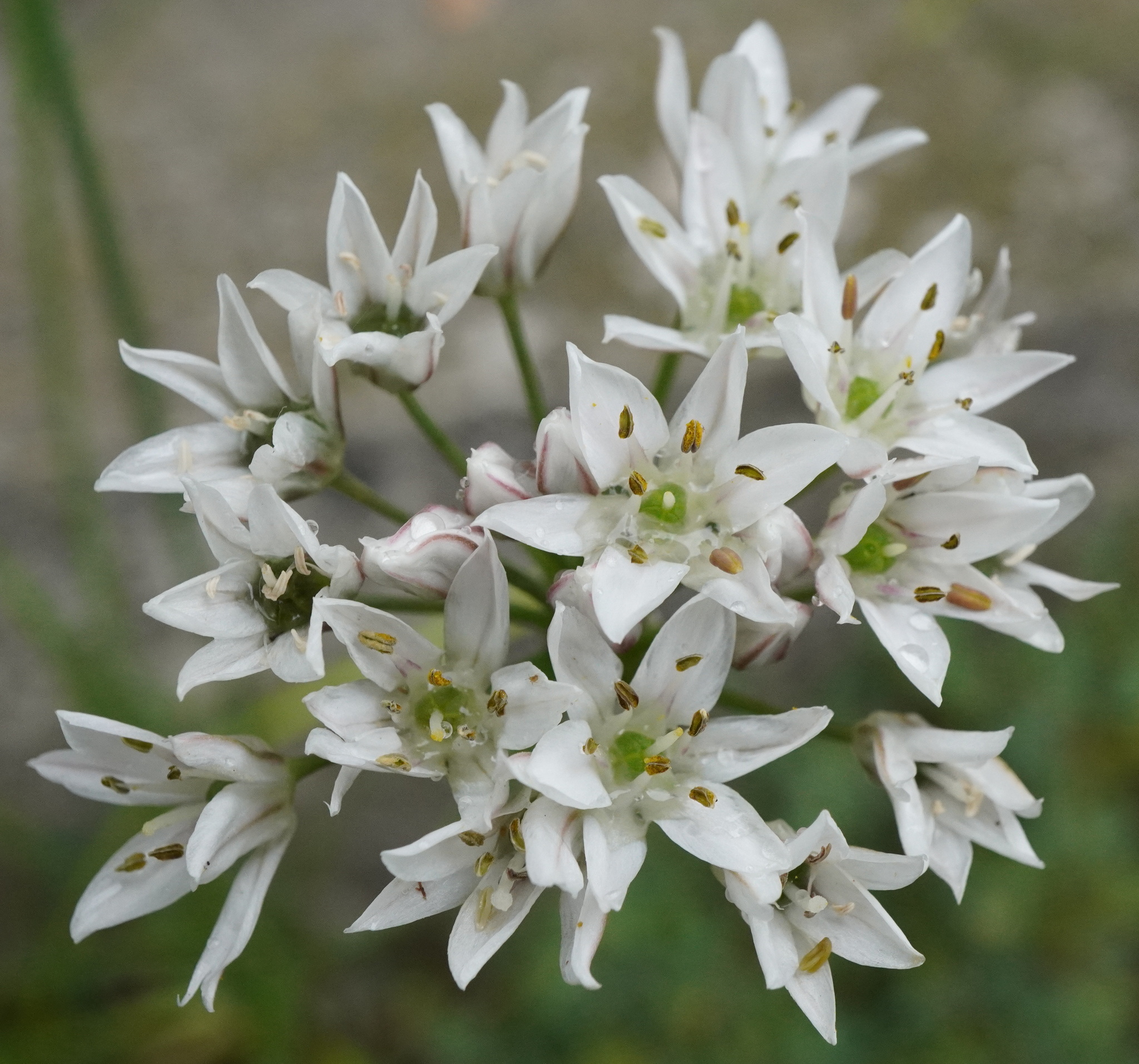
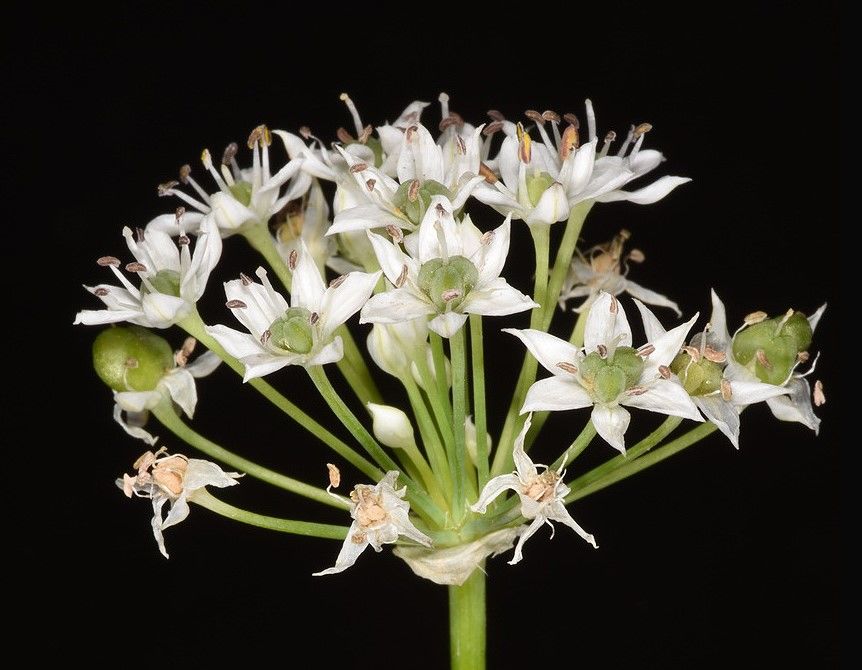
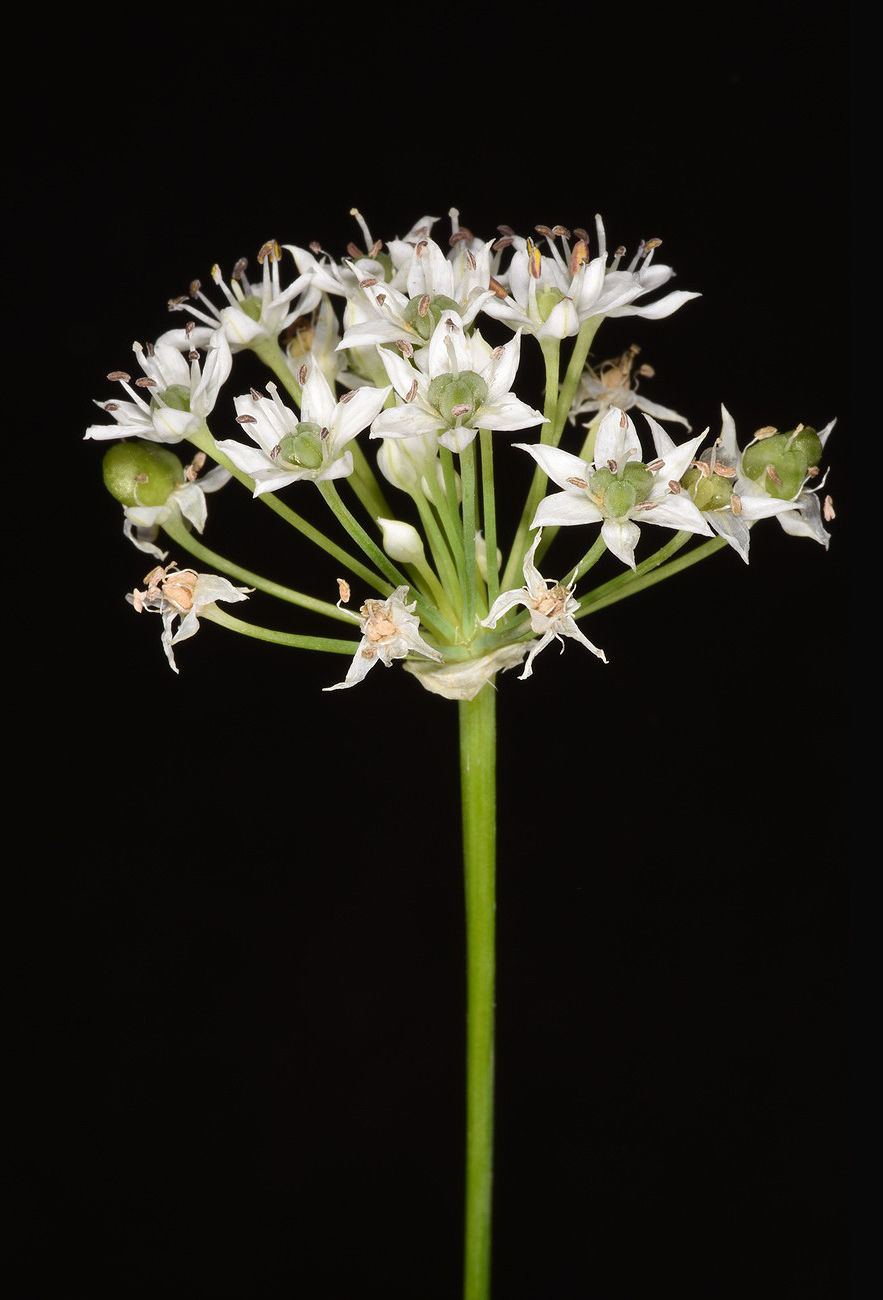
In late summer, upright, rigid flowering stems 25–60 cm (10–24 in) tall rise well above the foliage. Each carries a loose, rounded umbel of small white star-shaped flowers, whose tepals have a fine brown midrib. The flowers smell more like violets than garlic, despite the foliage’s distinctly garlic-like scent. 2 3
The established foliage remains relatively low, reaching around 30–50 cm (12–20 in) at most. After flowering, capsules open to release angular black seeds. These account for the sometimes abundant seedlings that appear around a clump when flower heads are left to mature. 6 5
Useful taxonomy
The species name Allium tuberosum Rottler ex Spreng. was published in 1825. Allium, long placed in the Liliaceae and later the Alliaceae, is now included in the Amaryllidaceae. Several older names remain in synonymy:
- Allium tuberosum Roxb. (illegitimate name)
- Allium roxburghii Kunth
- Allium uliginosum G.Don
- Allium tuberosum f. yezoense (Nakai) M.Hiroe
- Nothoscordum sulvia (Buch.-Ham. ex D.Don) Kunth
The accepted scientific name Allium tuberosum provides the consistent botanical identity. Garlic chives and Chinese chives refer to the same species, but have no separate taxonomic rank. A difference in those common names does not identify a different botanical species. 1 4
Habitat and range
From the Himalaya, the native range extends to northern China, around southwestern Shanxi. From this region, garlic chives spread as a vegetable and culinary herb into cultivation throughout East Asia. Its long history as a crop must be distinguished from its original native distribution. 1 6
The easy-growing species has naturalized far beyond its origins, in temperate Asia and North America, occupying waste ground, sunny banks and roadsides. Missouri Botanical Garden describes it as spreading quite vigorously through self-sowing and tuberous rhizomes. Both mechanisms can enlarge a planting beyond its original limits. 3 5
In suitable temperate climates, garlic chives is a hardy outdoor perennial, productive from late spring into autumn. Its cultivated European range is distinct from its Asian native range. In France it is grown in vegetable beds and borders, without widespread invasive behavior reported there. 2
Life cycle and reproduction
As a perennial, Allium tuberosum regrows from its base each year. Flowering comes late in the growing season, chiefly in late summer to early autumn, corresponding to August and September in Northern Hemisphere temperate conditions. White umbels attract many pollinating insects when numerous other perennials have finished flowering. 3 6
After pollination, each flower develops into a small capsule releasing black seeds. Ready self-sowing explains its sometimes colonizing behavior: allowing umbels to set seed can be enough for new clumps to appear nearby. This spread is separate from intentional propagation by dividing established plants. 3 5
There are two main propagation methods. Seed, sown in warmth in local spring, emerges in two to three weeks; a young plant takes around one season to form a productive clump. Division every three years in local spring rejuvenates older plants and quickly produces new clumps while retaining the parent’s characteristics. A divided clump becomes productive again from its second year. 2 5
Uses and risks
Garlic chives is chiefly a food plant. All aboveground parts are edible for humans: flat leaves add mild garlic flavor to salads, eggs, soups and fillings, while flower buds and young flowering stems are also cooked. White umbels and decorative dried stems also suit an ornamental border. 4 6
Edible for humans, the plant remains toxic to animals. Like other Allium species, it contains sulfur compounds that destroy red blood cells and cause hemolytic anemia. The ASPCA chives entry lists toxicity to cats, dogs and horses, with vomiting, dark urine, weakness and increased heart rate after ingestion. Keep culinary herb beds out of pets’ reach. 8
Varieties, look-alikes and related plants
Garlic chives is chiefly cultivated in its botanical form, with flat leaves and white umbels. Selections include Geisha, with broader leaves valued for foliage harvest, and horticultural labels such as Monstrosum for more vigorous clumps. These identify variations in cultivation rather than separate species. 2
The most frequent look-alikes are other garden alliums:
- Allium schoenoprasum, common chives, has hollow leaves and pink flowers;
- Allium fistulosum, Welsh onion, has cylindrical, hollow leaves;
- Allium ramosum is a very close relative sometimes confused with garlic chives in commerce.
The combination of flat leaves, a garlic smell when crushed and white, star-shaped umbels in late summer is the most reliable guide. Together these features confirm that a plant sold as garlic chives or Chinese chives is Allium tuberosum. 3 1
Main sources
- Plants of the World Online / Kew, Allium tuberosum Rottler ex Spreng.
- Royal Horticultural Society, Allium tuberosum - Chinese chives
- Missouri Botanical Garden, Allium tuberosum
- Encyclopaedia Britannica, chive (Allium)
- Plants For A Future, Allium tuberosum
- North Carolina Extension Gardener Plant Toolbox, Allium tuberosum
- University of Wisconsin Extension, Garlic Chives, Allium tuberosum
- ASPCA, Chives (Allium) toxicity entry
Frequently asked questions
Are garlic chives toxic?
They are an edible culinary herb for humans, used in Asian cooking. Like other Allium plants, they are toxic to cats, dogs and horses. The ASPCA chives entry describes vomiting and hemolytic anemia after ingestion by these animals.
How do garlic chives differ from common chives?
Common chives (Allium schoenoprasum) has hollow leaves and pink flowers. Allium tuberosum has flat leaves, white star-shaped flowers and a distinctly more garlic-like flavor.
Do garlic chives become invasive?
They self-seed readily and can spread through rhizomes. Removing faded umbels before seeds develop usually limits spontaneous seedlings.
How are garlic chives harvested?
Cut the leaves 3–5 cm (1.2–2 in) above soil level with clean scissors. They regrow several times during the season. Flower buds and young flowering stems are also edible.
When do garlic chives flower?
They flower in late summer, chiefly August and September in Northern Hemisphere temperate conditions. White umbels rise above the leaves and attract many pollinating insects.
Are garlic chives winter hardy?
Yes. They are very hardy perennials, down to USDA zone 3. In cold climates the foliage dies back in winter and regrows from the roots in spring without special protection.
Similar plants

If you are unsure about a plant’s toxicity, ask a botanist or veterinarian for advice.