
Asparagus (Asparagus officinalis, )
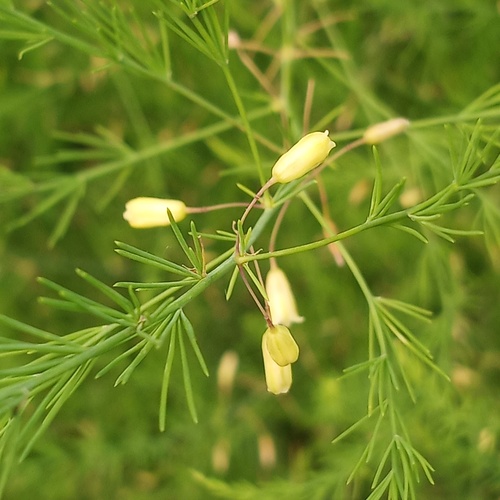
Asparagus (Asparagus officinalis) is a dioecious perennial in the Asparagaceae family, originating in the eastern Mediterranean basin. Its fleshy young shoots, called spears, are harvested in spring before opening into tall, branching, fernlike stems. Grown white, green or purple depending on cultivation, it is the most widely cultivated perennial vegetable in the genus Asparagus.
Read moreAsparagus and Garden asparagus
Allow a few hours of direct sun per day, preferably morning or evening.
Full sun; performs poorly in shade
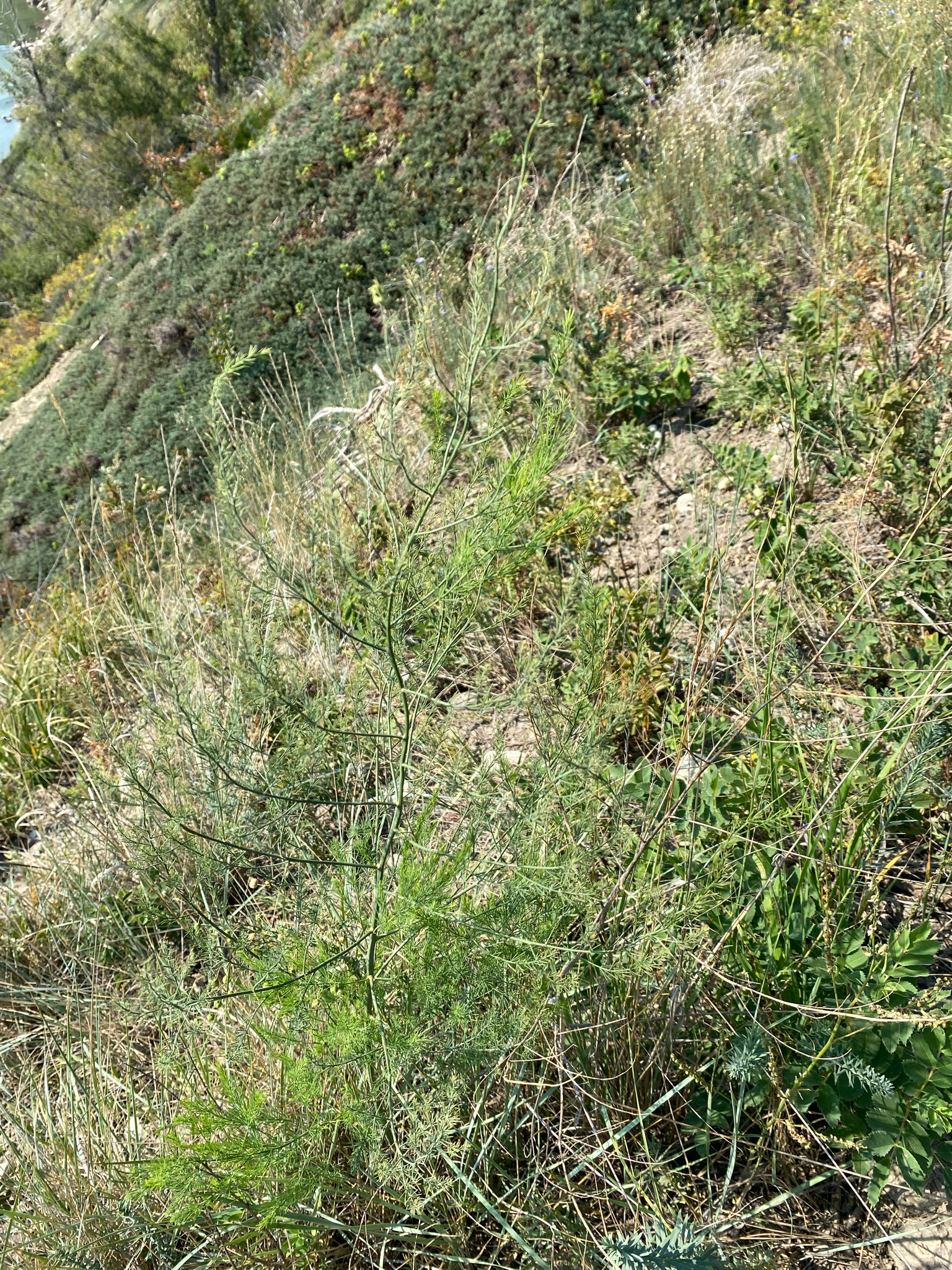




© photo
(c) Wayne Longbottom, some rights reserved (CC BY-NC), uploaded by Wayne Longbottom · cc-by-nc
Bob Lefebvre · cc0
Marie-Louise Besenius · cc0
Taken Apr 28, 2015 by Samuel Dufour-Kowalski (cc-by-sa)
Taken Jun 27, 2021 by Bela Borbely (cc-by-sa)
Taken Jul 28, 2022 by Emeline (cc-by-sa)
Taken Nov 4, 2022 by sara mega (cc-by-sa)
Taken Nov 14, 2021 by Manuëlle (cc-by-sa)
© copyright of the Board of Trustees of the Royal Botanic Gardens, Kew.




Global distribution
Asparagus officinalis originated in the eastern Mediterranean basin and spread naturally into central Europe and western Asia. Long cultivation has led to local naturalization outside this range, including its occurrence as an environmental weed in parts of Australia.
- Native4
- Introduced1
- Invasive1
- France
- Spain
- Italy
- Greece
- United States
- Australia
Hexagons: regions where the plant occurs. Green dots: native range.1
Identity
Asparagus (Asparagus officinalis L., 1753), also called garden asparagus, is a dioecious perennial in the Asparagaceae family, formerly placed in the lily family, Liliaceae. 1 10
The name traces back to ancient Greek asparagos, Latinized as asparagus. In French it passed through the form esparge, recorded in 1256, before becoming asperge in the 16th century. Greeks introduced the plant to Italy, and Roman agricultural writers already described its cultivation. 10
After Rome fell, asparagus largely disappeared from western Europe, surviving mainly in monastery gardens as a medicinal plant. It was reintroduced through Flanders in the 15th century, with cultivation documented in France by 1469. 10
Recognition
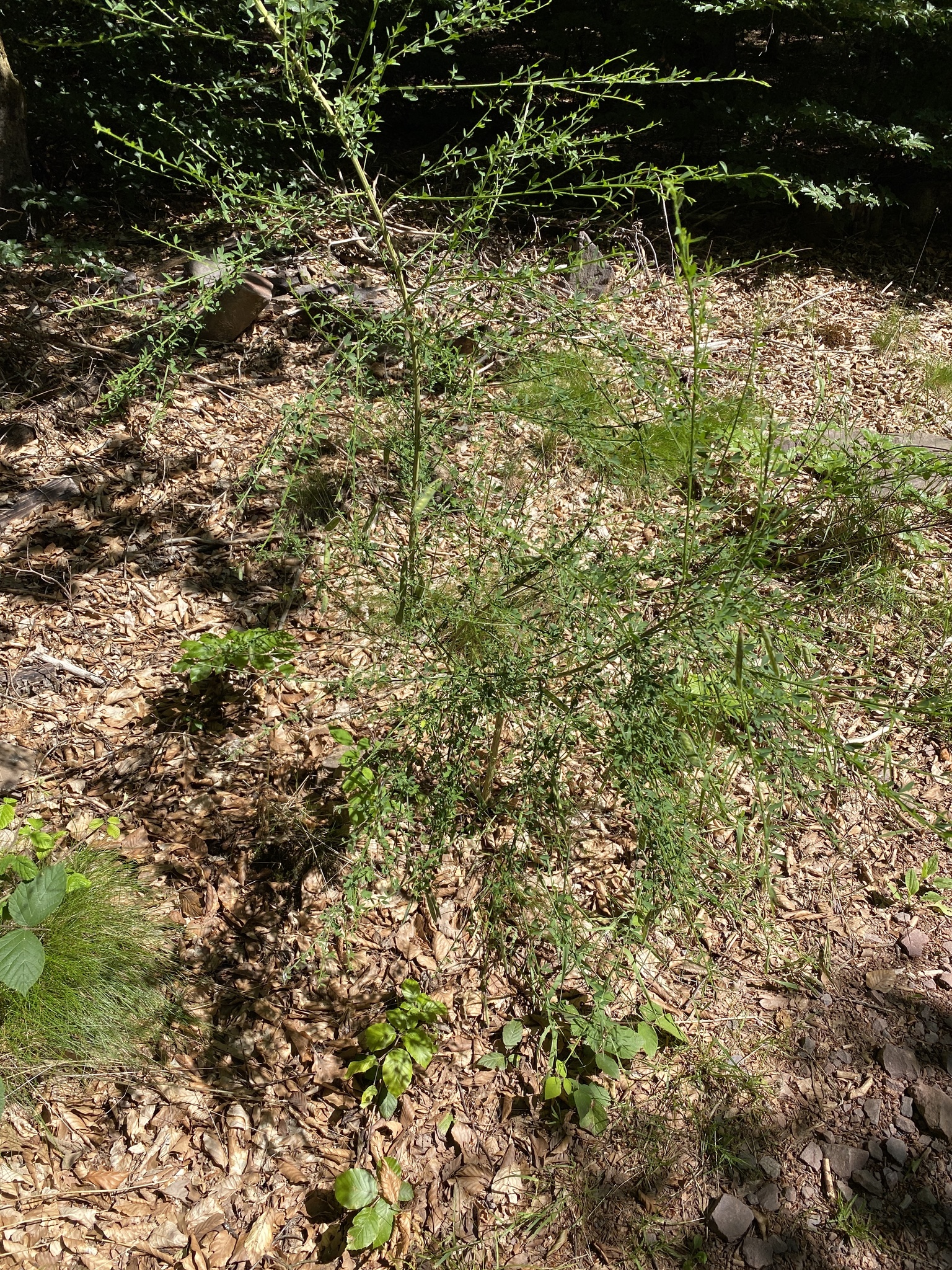
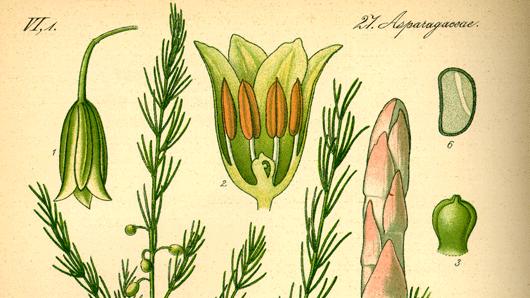
The apparent leaves are actually threadlike cladodes, grouped in small tufts. They carry out photosynthesis in place of the true leaves, which are reduced to tiny scales. 10 5
Fernlike stems grow 1 to 1.5 m (3.3 to 5 ft) tall, sometimes higher in rich soil. The spear is the distinctive fleshy young shoot: upright, with tightly packed scales, and harvested before it opens into a branching, fernlike stem. 10 3
Separate male and female plants make the species dioecious. Males carry small pollen-producing flowers, while females develop small red berries that ripen in late summer. Growers favor males because they devote no energy to fruit and give higher yields. 10 6
Useful taxonomy
Kew and POWO retain Asparagus officinalis L., 1753 as the accepted name. It is the only edible species in the genus Asparagus widely grown as a horticultural crop. 1 8
Botanical varieties including var. altilis and var. sativus have been described, but mainly represent coastal or cultivated populations of the same species. They are not distinct taxa that gardeners need to distinguish in practice. 1
France's INPN records this species as part of the native flora, distinct from the more southerly Asparagus acutifolius, a wild asparagus with finer foliage and a woody base. 7
Habitat and range
An eastern Mediterranean origin was followed by natural expansion into central Europe and western Asia, before cultivation carried asparagus to every continent. 10 1
Wild populations grow in sandy, well-drained soil, often in coastal grassland, dunes or on riverbanks. Coastal populations tolerate salt, explaining their natural occurrence on dune ridges. 4
Vegetable cultivation introduced asparagus beyond its native range, and it sometimes naturalized. In Australia it is classed as an environmental weed in Victoria and a minor or potential weed in the southeast and southwest, colonizing waste ground, roadsides and disturbed wetlands. 9
Production figures reported by the French source place China far ahead with nearly 90% of global tonnage, followed by Peru, Mexico and Germany. French annual harvests are reported at around 20,000 to 25,000 metric tons. 10
Life cycle and reproduction
A crown, sold as a bare-root cluster of fleshy roots, needs its first spring and growing season to establish, without harvesting. Picking remains partial in the second year, with full harvests from the third year and a productive life of 15 to 20 years. 3 4
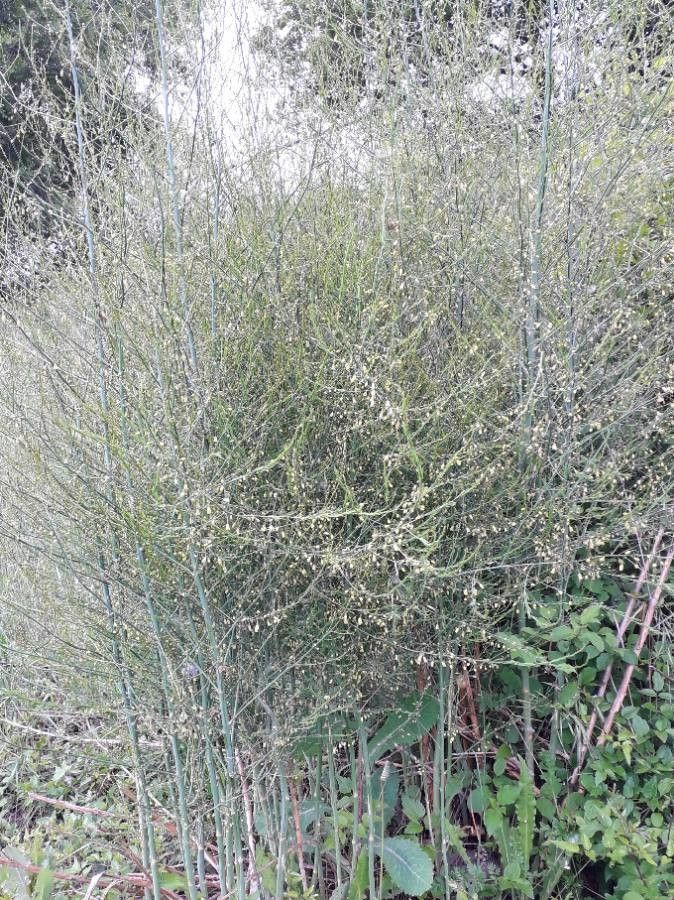
Spring warmth brings spears through the soil within days. Unpicked shoots unfold into tall, branching, fernlike stems that feed the crown until fall, then yellow and collapse with the arrival of cold weather. 6 3
Flowering occurs from late spring into summer on fully developed stems. Female plants bear red berries containing black seeds that germinate readily, explaining the sometimes aggressive self-seeding seen in gardens and wild populations. 10 6
Uses and risks
The spear is eaten raw or cooked as a vegetable, with cultivation strongly influencing flavor. White asparagus, picked beneath soil ridges before emerging, retains a characteristic delicate bitterness. Green asparagus, exposed to light, develops chlorophyll and a stronger taste. Purple asparagus falls between the two, with anthocyanin-tinted tips. 10
Asparagus is not toxic to humans or the main domestic animals. Caution concerns the female plant's red berries, which can irritate the digestive system if eaten. Sap sometimes causes contact dermatitis in sensitive people. 4 5
After eating asparagus, asparagine is converted into odorous sulfur compounds, giving urine a distinctive smell in most consumers. People taking anticoagulants or prone to gout or kidney stones have reason to moderate their intake. 10
Varieties, look-alikes and related plants
Notable selections include Argenteuil, a historical name from the white-asparagus growing area near Paris, and Mary Washington, an old North American cultivar selected for rust resistance. All-male F1 hybrids include Andréas, developed in 1991 to maximize spear yield. 10
Among look-alikes, Bath asparagus (Ornithogalum pyrenaicum) accounts for many reports from gardens and wild gathering. This unrelated lily-family plant produces a superficially similar shoot, but eating it can cause throat swelling several hours later. 10
Mediterranean wild asparagus, Asparagus acutifolius, has a woody base and stiffer, pricklier cladodes. These features help distinguish it from cultivated asparagus when gathering wild shoots. 8
Main sources
- Plants of the World Online / Kew, Asparagus officinalis L.
- Royal Horticultural Society, Asparagus officinalis - common asparagus
- Royal Horticultural Society, How to grow asparagus
- Plants For A Future, Asparagus officinalis
- NC State Extension, Asparagus officinalis
- Missouri Botanical Garden Plant Finder, Asparagus officinalis
- INPN MNHN, Asparagus officinalis L., 1753
- Tela Botanica eFlore, Asparagus officinalis
- Environmental Weeds of Australia / Lucidcentral, Asparagus officinalis
- Wikipedia FR, Asperge
Frequently asked questions
Is asparagus a vegetable or a flower?
It is a perennial vegetable. The edible spear is a young shoot harvested before it develops into a flowering, fernlike stem.
Why is some asparagus white and some green?
Color depends on cultivation. White asparagus grows under ridges of soil, protected from light; green asparagus is exposed to sunlight and develops chlorophyll.
How long before the first asparagus harvest?
Allow about three years after planting a crown: no harvest in the first year, a partial harvest in the second and a full harvest from the third.
Why does asparagus change the smell of urine?
Asparagine in the spear is converted into volatile sulfur compounds after digestion, changing urine odor in most people who eat it.
Is asparagus toxic to cats and dogs?
The edible spear is not toxic. Only the red berries produced by female plants can irritate the digestive system if eaten.
How does asparagus differ from Bath asparagus?
Bath asparagus, Ornithogalum pyrenaicum, is a lily-family plant unrelated to Asparagus officinalis. Its young shoot resembles an asparagus spear but can cause throat swelling after ingestion.
Do I need to replant asparagus every year?
No. A properly planted crown remains productive in the same place for fifteen to twenty years, making it a long-term vegetable-garden crop.
Similar plants

If you are unsure about a plant’s toxicity, ask a botanist or veterinarian for advice.