
Peach-palm (Bactris gasipaes, )
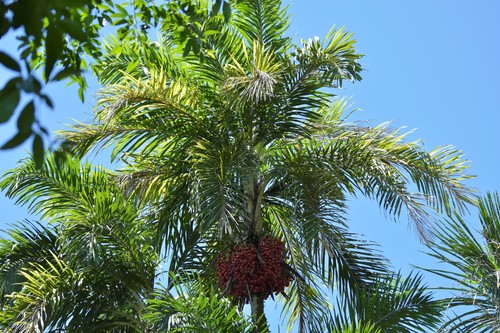
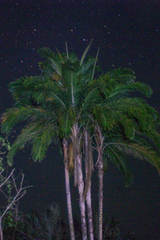
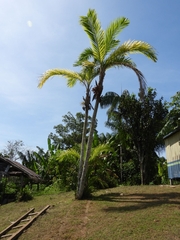
Peach-palm (Bactris gasipaes), also called pejibaye, pupunha or chontaduro in different countries, is an Amazonian palm in the Arecaceae, long domesticated by Indigenous peoples. It forms clumps of trunks ringed with black spines, bears clusters of fruit that must be cooked before eating and supplies hearts of palm without destroying the entire rootstock.
Read morePeach-palm, Peach palm, Pejibaye, Pupunha and Chontaduro
Allow a few hours of direct sun per day, preferably morning or evening.
Partial shade when young; full sun when mature


© photo
(c) jorgebrito, some rights reserved (CC BY-NC), uploaded by jorgebrito · cc-by-nc
Diogo Luiz · cc-by
Marcio Santos Ferreira · cc-by
Taken Apr 17, 2019 by OTS - J. González (cc-by-nc-sa)
© copyright of the Board of Trustees of the Royal Botanic Gardens, Kew.




Global distribution
Bactris gasipaes is native to the Amazon basin, from Bolivia through Brazil, Peru, Ecuador and Colombia. Cultivation extends much farther, north to Honduras, with introductions in Florida, the Caribbean and the Philippines. Native range, ancient cultivation areas and recent introductions therefore need to be distinguished.
- Native5
- Introduced3
- Bolivia
- Peru
- Ecuador
- Colombia
- Brazil
- Trinidad and Tobago
- United States (Florida)
- Philippines
Hexagons: regions where the plant occurs. Green dots: native range.1
Identity
Peach-palm (Bactris gasipaes Kunth, 1816), also called pejibaye or pupunha in different countries, belongs to Bactris, family Arecaceae. 1 2 Unlike most other members of the genus, grown for small wild fruits, Indigenous peoples domesticated this species for larger, nutritionally rich fruit.
Chontaduro is the prevailing name in Colombia and Ecuador, pejibaye in Costa Rica, pupunha in Brazil and parépou in French Guiana. 3 8 In the sixteenth century, a Spanish chronicler already described the fruit’s importance to Amazonian peoples as almost on a level with their own families. 6 Domestication dates back 3,000–4,000 years, making it one of the Americas’ oldest cultivated palms. 6
Recognition
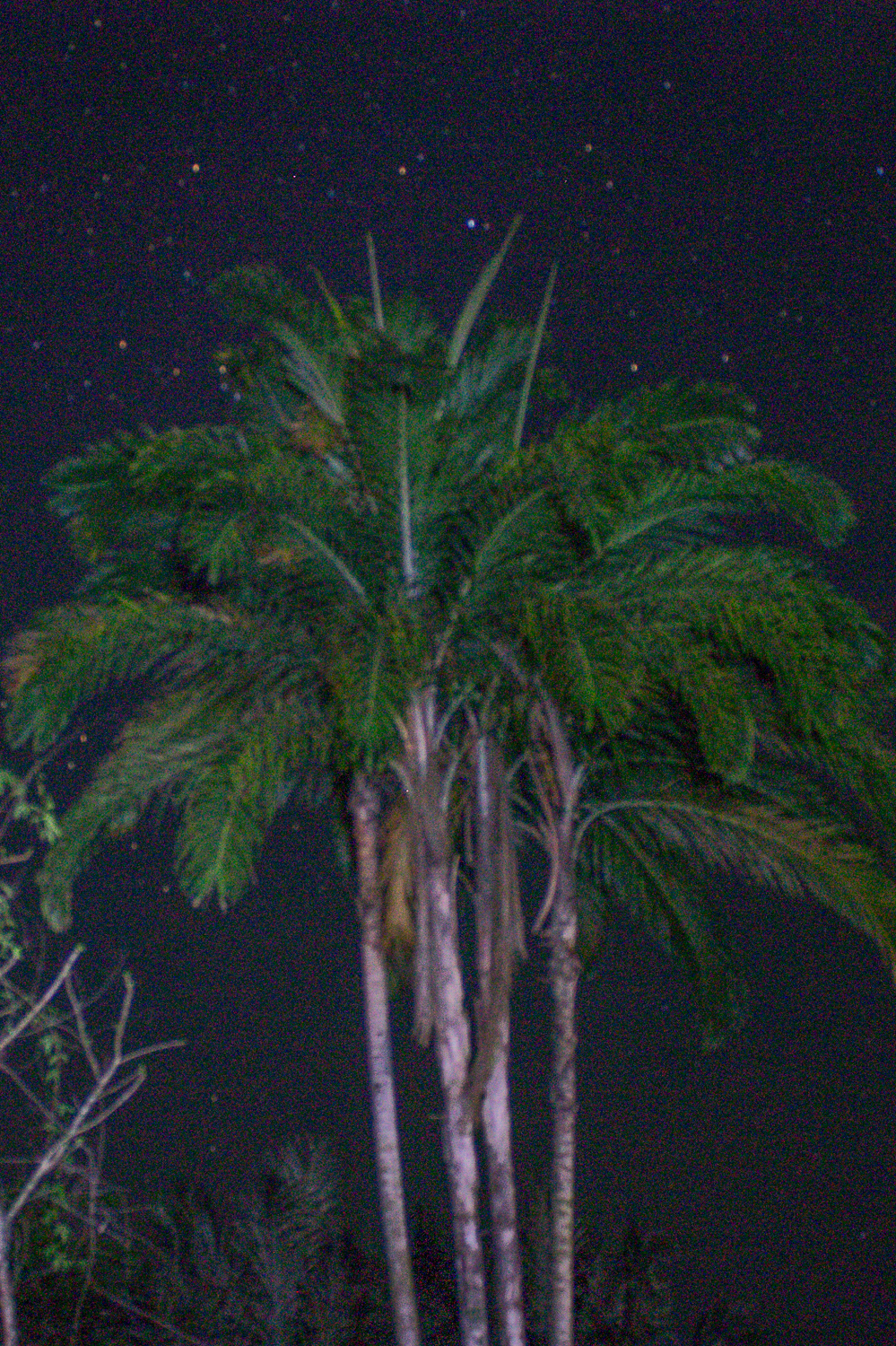
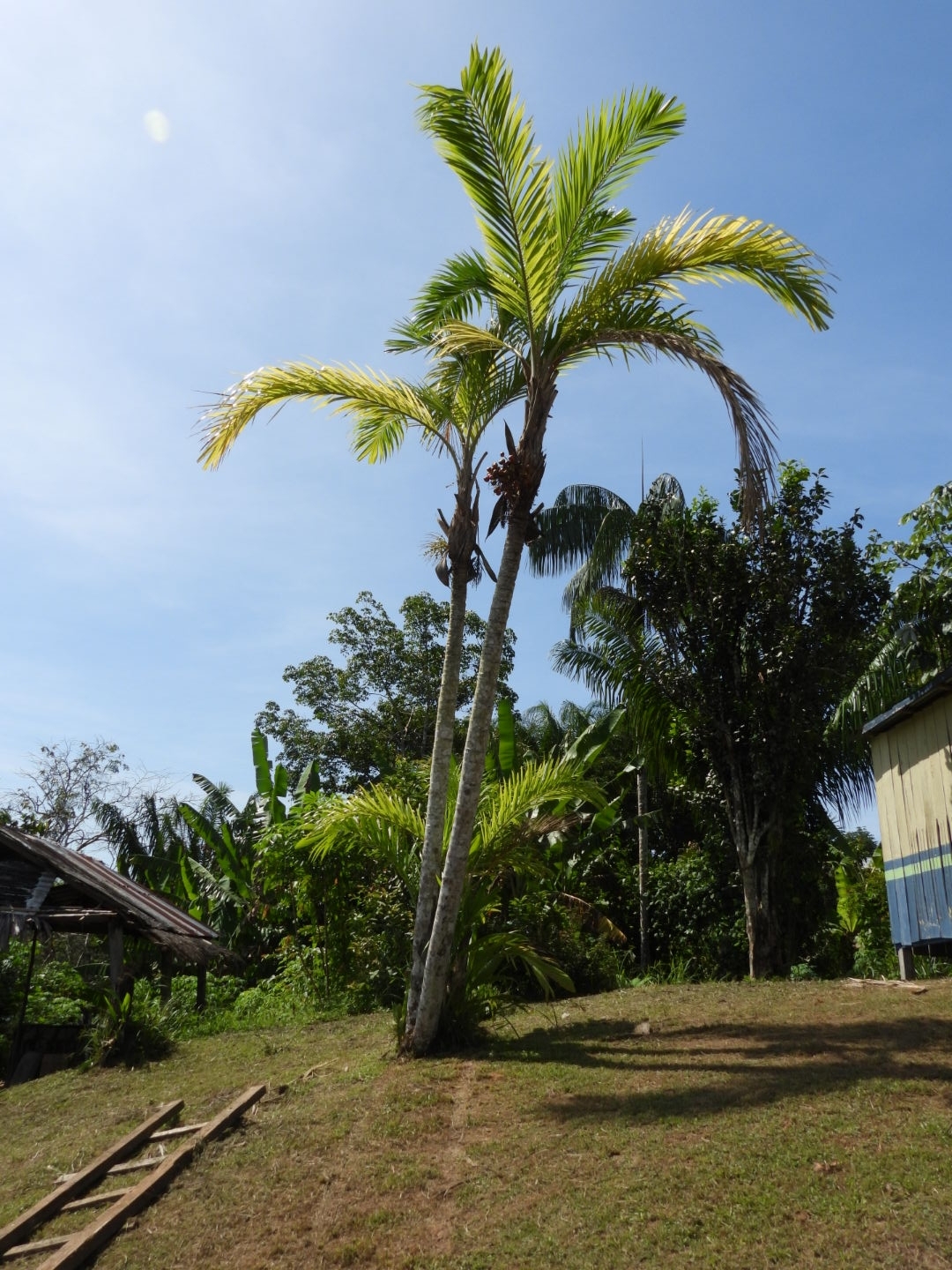
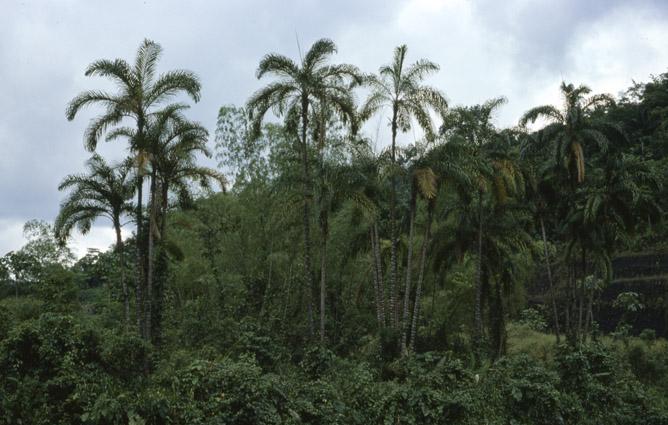
Bactris gasipaes usually grows as a clump of several trunks arising from one rootstock, resembling açaí, Euterpe oleracea, another clumping Amazonian palm whose trunks are smooth and unarmed. Each trunk commonly reaches 15–20 m (49–66 ft), with old specimens recorded to 30 m (98 ft), and measures 10–30 cm (4–12 in) across. 4 5
Rings of long black spines, often exceeding 5 cm (2 in), are the main field-identification feature. They form regular circles from the base to the top of the trunk. Unarmed cultivars sold as Spineless exist, but spiny forms still predominate in traditional cultivation. 4 5
Pinnate fronds 2.4–3.6 m (8–12 ft) long form a dense crown. Fruits hang in clusters of 50–300, turning yellow, orange or red depending on the variety. Each measures 2.5–5 cm (1–2 in) across and contains a single conical seed with an oily kernel. 5
Useful taxonomy
Kew accepts Bactris gasipaes Kunth. The species has two botanical varieties: Bactris gasipaes var. chichagui (H.Karst.) A.J.Hend., chiefly wild, with small, oily fruits; and Bactris gasipaes var. gasipaes, cultivated, with larger, starchier fruits. 6 1
Fruit size defines three groups: microcarpa, below 20 g (0.7 oz); mesocarpa, 21–70 g (0.7–2.5 oz); and macrocarpa, above 70 g (2.5 oz). In practice, these size classes matter more than fruit color when distinguishing cultivated lines. 6
Habitat and range
The precise center of domestication remains debated. Genetic diversity is greatest in northern Peruvian and Ecuadorian Amazonia, pointing to an Amazonian rather than Central American center. 6
No truly wild population of the domesticated variety gasipaes is known today, unlike the wild variety chichagui. The species chiefly occupies human-disturbed ecosystems, riverbanks and forest gaps, below regional elevation limits of 800–1,800 m (2,600–5,900 ft). 4 It is now cultivated from Bolivia to Honduras, with introduced populations in Florida, the Caribbean and the Philippines. 5 7 Temperatures below 10 °C (50 °F) cause severe damage, ruling out outdoor cultivation beyond tropical regions.
Life cycle and reproduction
Fresh seed is the standard propagation method, germinating slowly in two to four months under warm, humid conditions. Dividing basal shoots also propagates an established clump without starting again from seed. 4
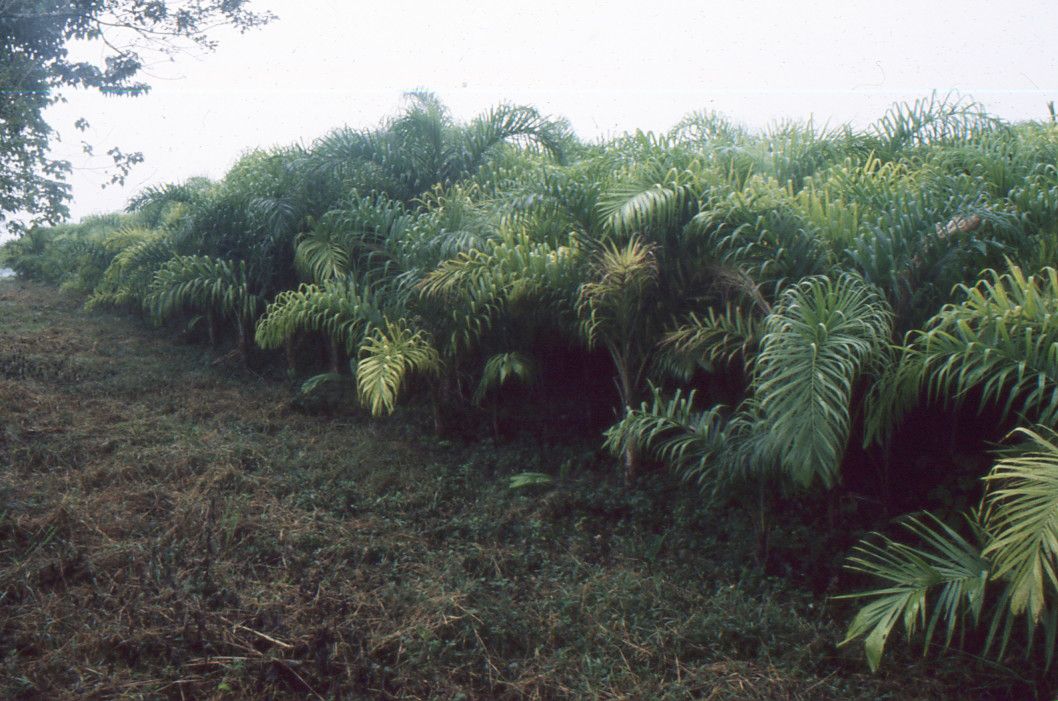
The first fruit harvest comes at three to eight years, depending on elevation, earlier in hot lowlands than cool uplands. An established clump stays productive for 50–75 years, with seasonal yields measured in tens of kilograms (tens of pounds) from a multi-trunked plant. 5
Uses and risks
Raw fruit is caustic. It contains the alkaloid pupunhadine, calcium oxalate crystals and a trypsin inhibitor, three substances that remain irritating until the fruit is cooked. Cooking, generally for 30 minutes to several hours in salted water, is necessary before eating. 3 5
Cooked fruit supplies carbohydrates, beta-carotene and essential amino acids, comparing favorably with banana nutritionally. 3 The terminal bud is harvested as heart of palm and eaten raw or cooked. Because the plant forms a clump, harvesting a single trunk leaves the entire rootstock alive, unlike a solitary palm. 6
Peach palm is primarily a food crop rather than an ornamental. Plantations producing hearts of palm, notably in Ecuador, Bolivia and Costa Rica, exploit the clumping habit for repeat harvests without replanting between cycles.
The principal practical hazard is mechanical rather than toxic: black trunk spines several centimeters (a few inches) long require thick gloves and long sleeves during harvesting and maintenance. 4
Varieties, look-alikes and related plants
Beyond the two botanical varieties, commercial selections chiefly differ in fruit size and the presence or absence of spines, as in the unarmed selection Spineless. 4
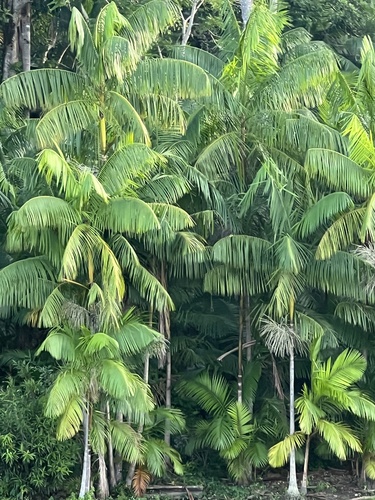
Açaí is the most frequent source of confusion. Both Amazonian palms form clumps and supply hearts of palm, but Bactris gasipaes generally has rings of black trunk spines. Fruit color and bunch size vary between varieties and cultivars. Unarmed cultivars such as Spineless also prevent the two species being distinguished by spine presence or absence alone. 7
Main sources
- Plants of the World Online / Kew, Bactris gasipaes Kunth
- International Plant Names Index, Bactris gasipaes Kunth
- Plants For A Future, Bactris gasipaes
- Useful Tropical Plants Database, Bactris gasipaes
- Purdue University NewCROP, Pejibaye (Bactris gasipaes)
- PMC, Peach Palm (Bactris gasipaes) — Ancestral Tropical Staple with Future Potential
- Wikipedia EN, Bactris gasipaes
- Wikipedia FR, Pupunha
Frequently asked questions
Is raw peach palm fruit poisonous?
Yes. Raw fruit is caustic. It contains the alkaloid pupunhadine, calcium oxalate crystals and a trypsin inhibitor, all irritating. Cooking in salted water for 30 minutes to several hours remains necessary before eating.
Can peach palm be grown indoors in France?
Only a young plant is suitable, in a heated, very humid greenhouse. The tall, spiny adult clump needs constant warmth and does not suit a normal home.
How can hearts of palm be harvested without killing the whole plant?
Its clumping habit makes this possible. Cutting one trunk for its terminal bud leaves the rootstock alive, provided the other shoots are preserved. A solitary palm would not have this capacity.
How long before the first fruit harvest?
Three to eight years, depending on elevation and climate, sooner in hot lowlands than cool uplands. An established clump then remains productive for 50–75 years.
How do varieties gasipaes and chichagui differ?
Variety gasipaes is domesticated, with larger, starchier fruits. Variety chichagui remains chiefly wild, with smaller, oilier fruits.
Are peach palm spines dangerous?
Yes. Rings of black spines, often several centimeters (a few inches) long, require thick gloves when harvesting. Spineless cultivars sold as Spineless reduce this risk.
Which palm is most often confused with peach palm?
Açaí, Euterpe oleracea. Both form clumps and supply hearts of palm, but Bactris gasipaes generally has rings of black trunk spines. Its spineless cultivars, such as Spineless, cannot be distinguished from açaí by this feature alone.
Similar plants


If you are unsure about a plant’s toxicity, ask a botanist or veterinarian for advice.