
Açaí palm (Euterpe oleracea, )
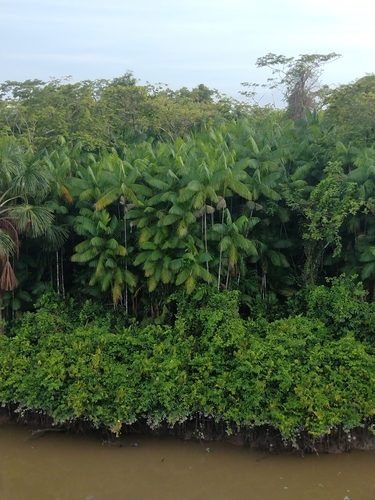


Açaí palm (Euterpe oleracea) is an Arecaceae palm from northern Amazonia, where it forms clumps of slender, ringed stems. Small purple-black drupes with a very thin pulp supply a worldwide market for juices and food supplements. Palm hearts can also be harvested without destroying the entire clump.
Read moreAçaí palm, Açaí and Assai palm
Allow a few hours of direct sun per day, preferably morning or evening.
Partial shade when young; full sun as an adult with high humidity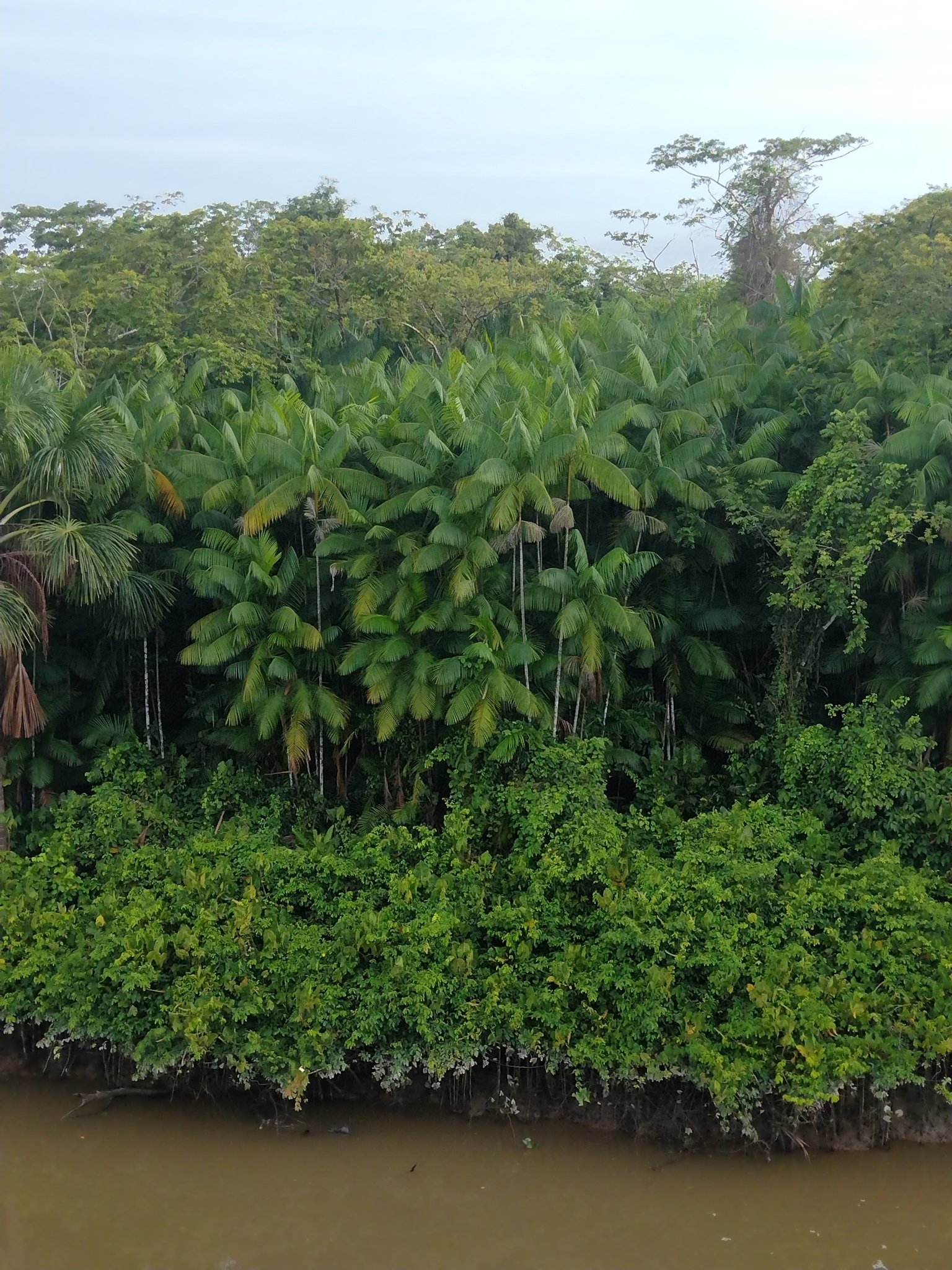



© photo
Lucas Kaminski · cc-by
Wikimedia Commons · CC BY-SA or Public Domain
Taken Apr 17, 2019 by OTS - O. Vargas (cc-by-nc-sa)
© copyright of the Board of Trustees of the Royal Botanic Gardens, Kew.




Global distribution
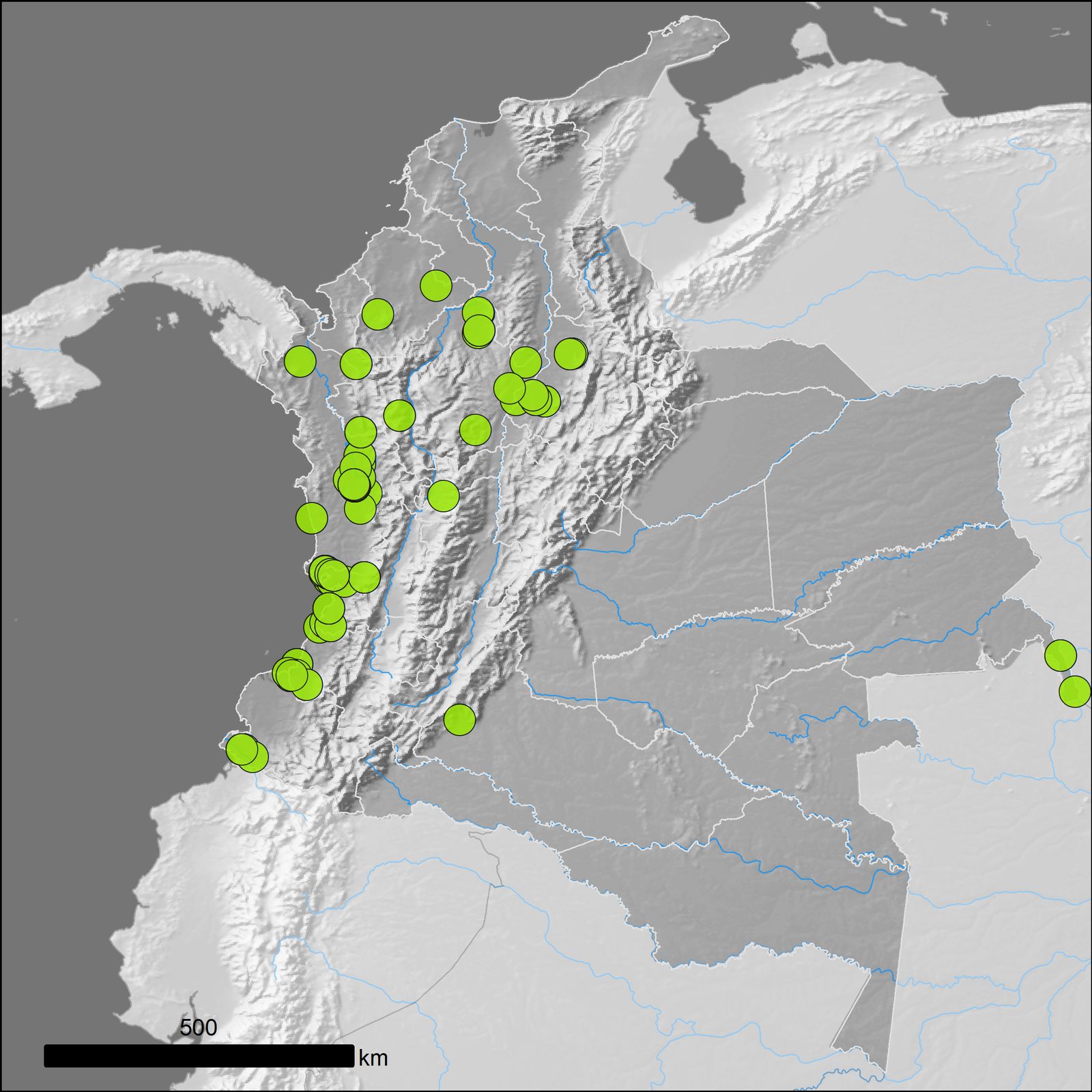
Euterpe oleracea is native to the Amazon estuary and Guiana Shield, from northern Brazil to Trinidad and Tobago. Large-scale cultivation remains limited outside this area; most world production still comes from harvesting natural forests rather than plantations.
- Native8
- Brazil
- Guyana
- French Guiana
- Suriname
- Venezuela
- Trinidad and Tobago
- Colombia
- Ecuador
Hexagons: regions where the plant occurs. Green dots: native range.1
Identity
Açaí palm (Euterpe oleracea Mart., 1824), also called assai palm, belongs to Euterpe in the Arecaceae family. Its Guianan names include wassaï and pinot. Unlike most palms, it grows in a clump of several stems from one base. A palm heart can therefore be cut from one stem without killing the entire plant, allowing repeated harvests in the Amazon estuary. 1 6
The name açaí comes from Tupi ïwasa'i, a fruit that weeps or expels water, referring to the thin pulp extracted by pressing. The word spread worldwide in the 1990s, eventually becoming established even in France in place of wassaï and pinot, older names in French Guiana. 4 6
The genus Euterpe is named after the Greek muse of music. Botanist Carl Friedrich Philipp von Martius chose it in 1824 for these slender palms. 5
Recognition
Euterpe oleracea has a clumping habit. One base often supports 10–20 stems, compared with a single trunk in most other Arecaceae. Each slender, ringed stem, 7–18 cm (2.8–7 in) in diameter, can exceed 20–25 m (65–82 ft) in flooded forest. 3 6
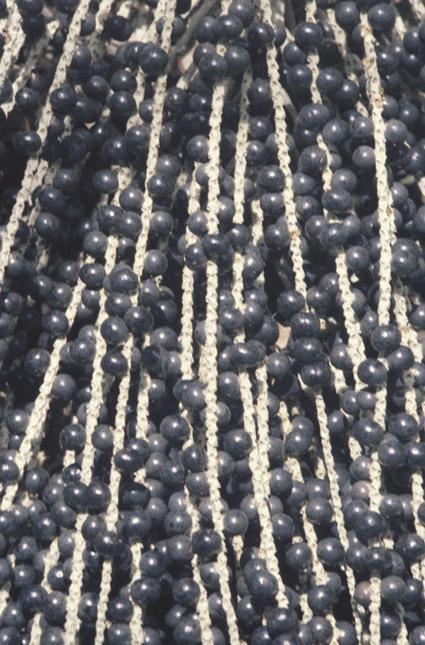
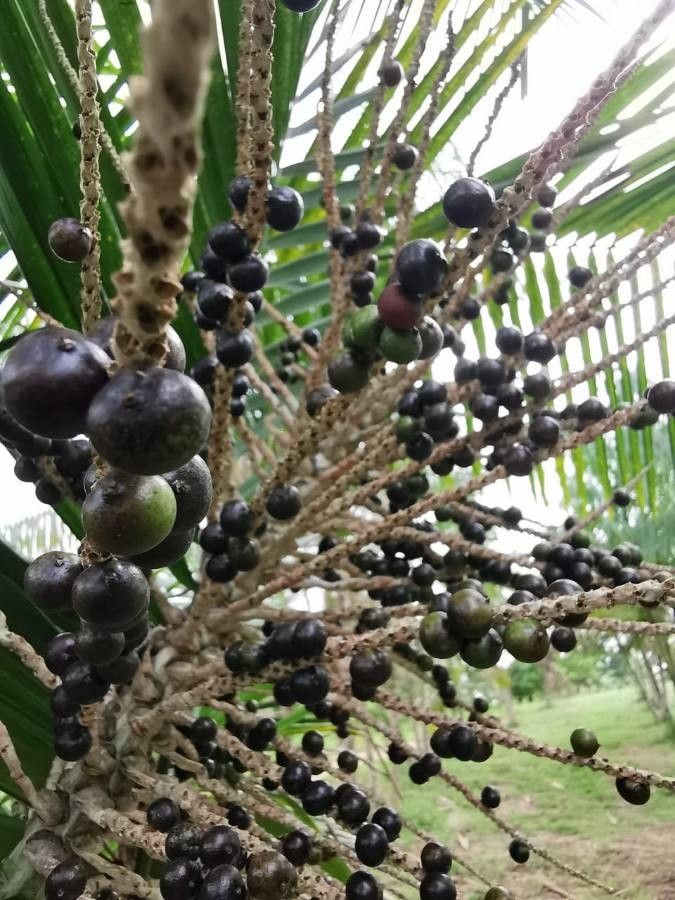
The crown holds 8–14 pinnate leaves nearly 3 m (10 ft) long, each with 50–70 leaflets in a drooping fan. Small spherical fruits turn purple-black when ripe and measure 1–2 cm (0.4–0.8 in) across. Dense clusters can contain up to 1,000 fruits. The seed occupies 60–80% of the fruit's volume, leaving a pulp layer less than 1 mm (0.04 in) thick around it. 4 2
In waterlogged soil, the stem base develops pneumatophores. These aerial roots allow the palm to breathe while its substrate remains saturated, where a palm with ordinary roots would eventually suffer oxygen deprivation. 6
Useful taxonomy
Plants of the World Online recognizes Euterpe oleracea Mart. as the accepted name. Older names including Euterpe brasiliana Oken, Euterpe badiocarpa Barb.Rodr. and Euterpe cuatrecasasiana Dugand are now treated as synonyms. 1
The practical distinction is its clumping growth. Euterpe oleracea has several stems, whereas the closely related Brazilian jussara, Euterpe edulis, has one stem and dies when its palm heart is harvested. This difference makes açaí a renewable forest resource, while jussara can be harvested only once. 5
Habitat and range
The species is native to northern South America, especially the Brazilian states of Pará, Amapá and Amazonas. Native populations also occur in Guyana, French Guiana, Suriname, Venezuela, Trinidad and Tobago, Colombia and Ecuador. 1 3
Its preferred habitat is seasonally flooded swamp forest, the várzea of the Amazon estuary, on sandy, waterlogged soils beside rivers. Almost pure stands have a local Guianan name, pinotières. Beyond this native area, most global fruit production still comes from natural forest harvests rather than agricultural plantations. 6 2
Life cycle and reproduction
Propagation is normally by seed sowing. Seeds lose viability within three months and should be sown promptly after soaking for 24 hours. Germination is around 80% over 30–70 days, under partial shade. 2 3
Selected plants often begin fruiting at 3–5 years. Açaí then fruits almost all year, slowing during the rainy season. New stems regenerate from the base, so cutting one for its palm heart does not kill the whole clump, provided the other shoots are preserved. 4 3
Uses and risks
The pressed fruit pulp is rich in anthocyanins and antioxidants. It is consumed as juice, sorbet or with tapioca flour. The terminal bud is eaten cooked and tastes similar to artichoke, but harvesting it kills that stem because it has no lateral shoot. 3 2
No toxicity is documented for people or pets; only excessive palm-heart consumption can cause diarrhea. A separate health concern involves unpasteurized juice. When fruit is poorly cleaned, it has been identified as a possible vehicle for Chagas disease, caused by Trypanosoma cruzi carried on insects crushed with fruit during artisanal harvesting. 2 4
Manual fruit harvest also presents a direct human hazard. Harvesters climb stems without harnesses, sometimes reaching 21 m (69 ft). Young adolescents are still employed in this work in some Amazonian areas. 4
Varieties, look-alikes and related plants
Commercial selections mainly improve pulp yield. BRS-Pará produces 15–25% pulp per fruit, while the rarer Branco bears fruit that remains greenish when ripe instead of turning purple-black. 4
The most documented confusion is with jussara, Euterpe edulis, whose single stem is destroyed by palm-heart harvesting. In Pará, the popular name palmeira juçara sometimes denotes açaí itself, creating further confusion with the species known nationally by that name. 5 6
Main sources
- Plants of the World Online / Kew, Euterpe oleracea Mart.
- Plants For A Future, Euterpe oleracea
- Useful Tropical Plants Database, Euterpe oleracea
- Wikipedia EN, Açaí palm
- Wikipedia EN, Euterpe (plant)
- Wikipedia FR, Euterpe oleracea
- PMC, Anticancer potential, molecular mechanisms and toxicity of Euterpe oleracea extract
Frequently asked questions
Is açaí toxic to cats and dogs?
No toxicity is documented for people or pets. Only excessive consumption of palm heart can cause diarrhea, without an identified toxic constituent being implicated.
Can I grow açaí indoors in a temperate climate?
Only a young plant is suitable, in a heated, very humid greenhouse or conservatory. A tall adult clump needs constant warmth and will not develop in an ordinary home.
Where does the name açaí come from?
It comes from Tupi ïwasa'i, describing a fruit from which water is pressed. The Brazilian word spread worldwide in the 1990s, displacing the Guianan names wassaï and pinot.
Why does harvesting a palm heart not kill the entire plant?
Euterpe oleracea grows in clumps with several stems. Cutting one stem for its heart leaves the clump alive, provided the other shoots are preserved. A solitary palm cannot do this.
How long does açaí take to produce its first fruit crop?
Selected plants often begin fruiting between 3 and 5 years old. The palm then fruits almost year-round, slowing during the rainy season.
Which species is most often confused with açaí?
Euterpe edulis, the Brazilian jussara palm, has one stem and dies when its heart is harvested, unlike the clumping açaí palm.
Does açaí juice carry any particular health risk?
Unpasteurized juice made from poorly cleaned fruit has been identified as a possible vehicle for Chagas disease in some Amazonian areas, through insects crushed with the fruit during artisanal harvesting.
Similar plants
If you are unsure about a plant’s toxicity, ask a botanist or veterinarian for advice.