
Paper mulberry (Broussonetia papyrifera, )
Paper mulberry (Broussonetia papyrifera) is a deciduous, dioecious tree in the Moraceae family, native to East and Southeast Asia. Its fibrous bark has long supplied papermaking in China and tapa barkcloth in the Pacific. Widely introduced elsewhere, it is invasive in several regions.
Read morePaper mulberry
Allow a few hours of direct sun per day, preferably morning or evening.
Full sun; tolerates partial shade in open woodland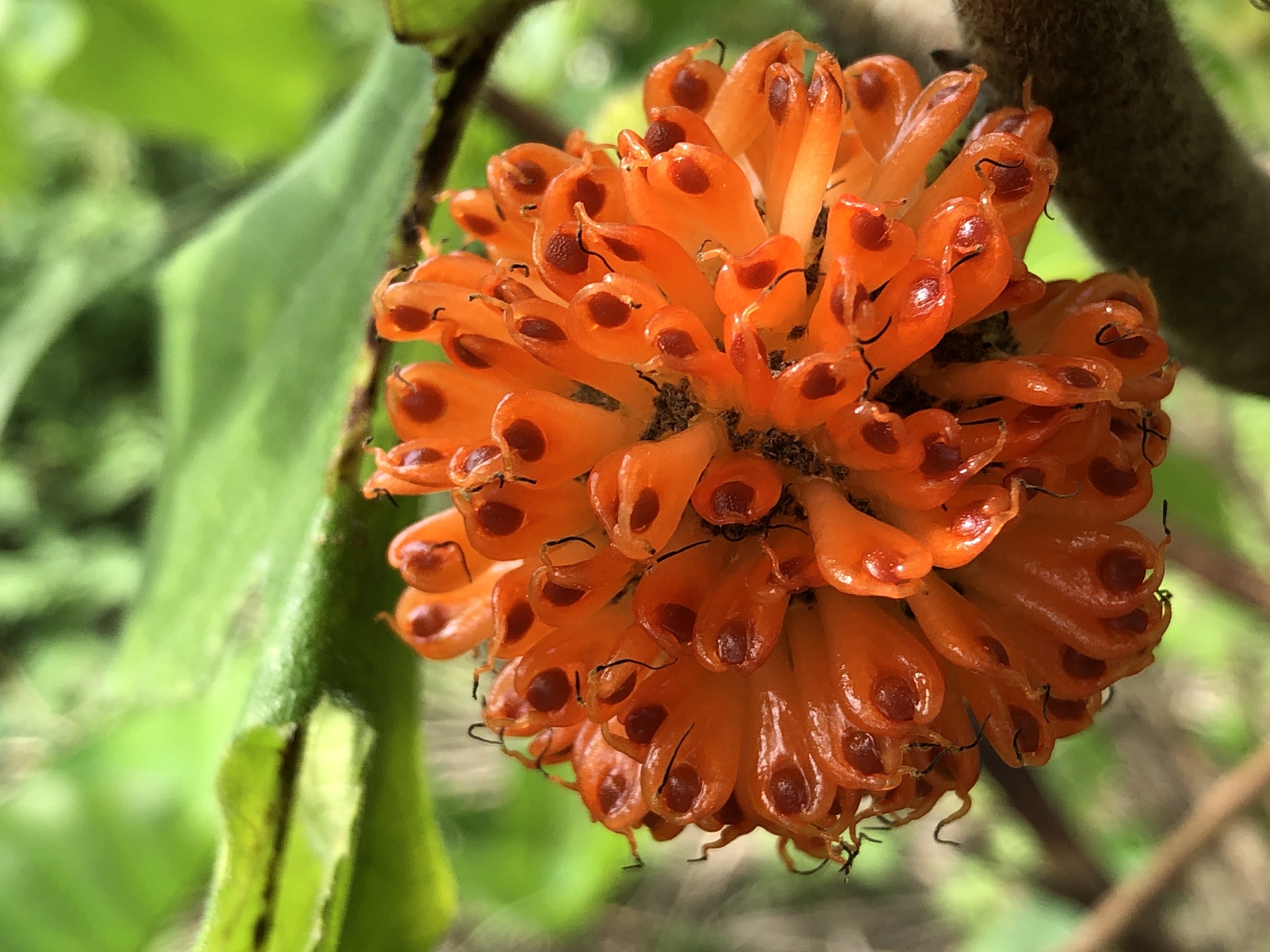


© photo
(c) dearufo, some rights reserved (CC BY-NC) · cc-by-nc
Marino Linić · cc0
Christian Waddingham · CC BY-NC
Taken Aug 22, 2021 by Jorge Cugat Herrero (cc-by-sa)
Taken Oct 1, 2022 by Visant (cc-by-sa)
Taken Nov 10, 2022 by kora leach (cc-by-sa)
© copyright of the Board of Trustees of the Royal Botanic Gardens, Kew.


Global distribution
Broussonetia papyrifera is native from India to Korea, including mainland China, Taiwan, Japan, Myanmar and Indochina. Austronesian peoples carried it early into Southeast Asia and the Pacific; later horticultural introductions brought it to Europe and the Americas. It has since naturalized and sometimes spread extensively on several continents.
- Native6
- Introduced1
- Invasive3
- China
- Taiwan
- Japan
- South Korea
- Myanmar
- India
- New Caledonia
- Metropolitan France
- United States
- Pakistan
Hexagons: regions where the plant occurs. Green dots: native range.1
Identity
Paper mulberry (Broussonetia papyrifera (L.) L’Hér. ex Vent., 1799) is a deciduous, dioecious tree in the Moraceae family. The genus honors naturalist Pierre Broussonet (1761–1807), who brought the first female plants cultivated in Europe from China. The epithet papyrifera refers to papermaking from its bark fibers, a Chinese practice documented since ancient times. 1 4
Across New Caledonia and much of the Pacific, paper mulberry is closely associated with tapa barkcloth. Its inner bark is beaten and softened into a traditional fabric for clothing and ceremonies, a use that predates the arrival of Western paper in the region. 6
Recognition
Male and female paper mulberry flowers grow on separate trees: an isolated male can flower every spring without producing fruit. In temperate gardens the tree commonly reaches 4 to 8 m (13 to 26 ft), while native trees in favorable warm conditions can reach 15 to 20 m (49 to 66 ft). 2 3
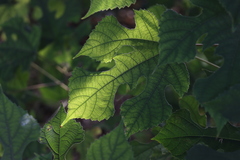
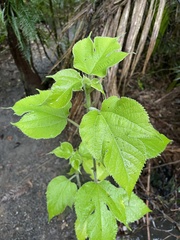
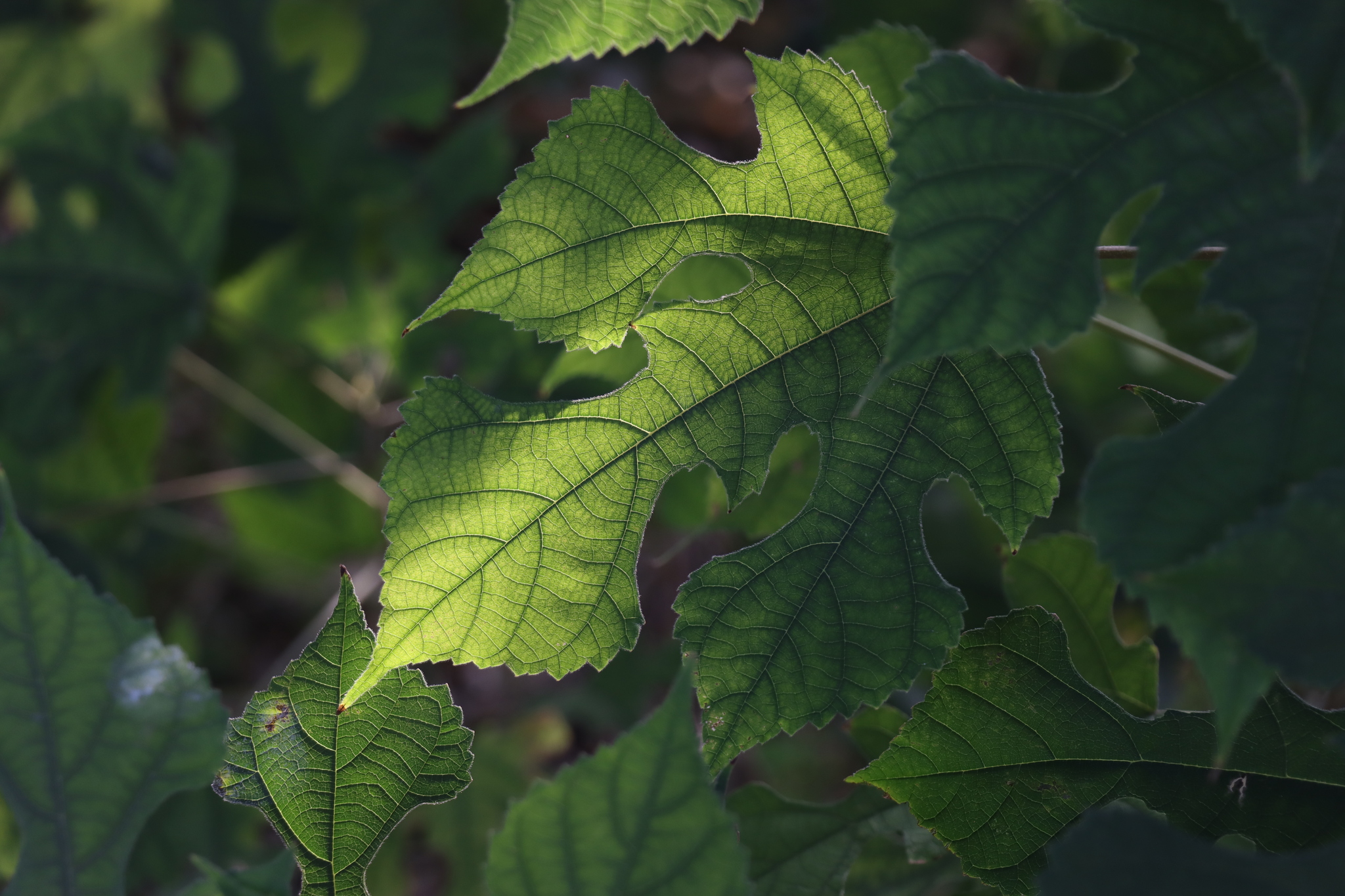
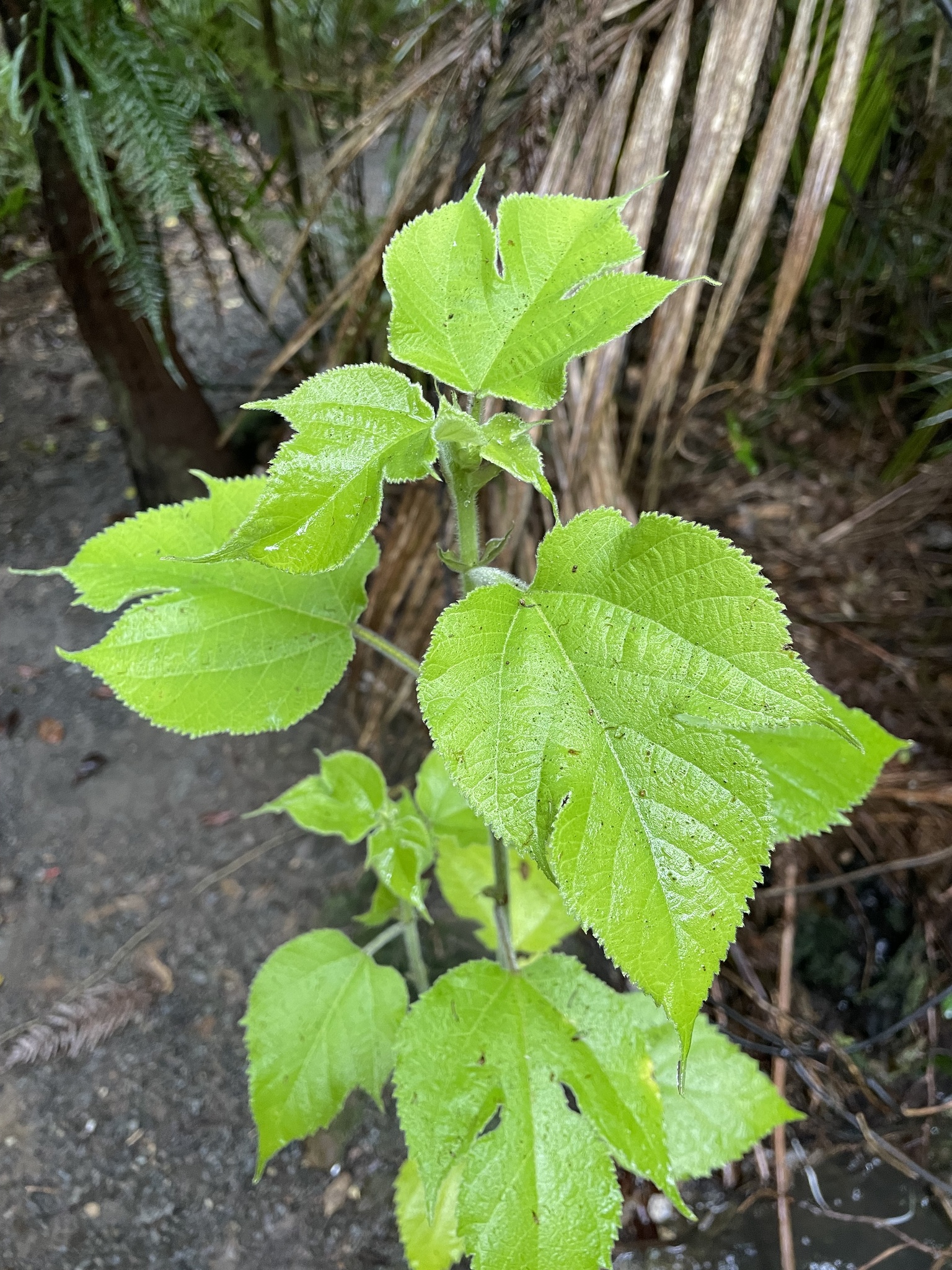
Alternate leaves, 6 to 18 cm (2.4 to 7 in) long, show striking variation in shape. Oval, unlobed leaves may grow beside leaves deeply divided into three or five lobes, sometimes on the same tree. This variation is normal and does not indicate disease. 3
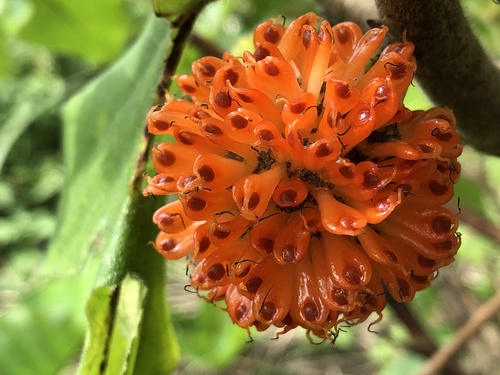
Pendant yellowish cylindrical catkins carry the male flowers; female flowers form small spherical heads. After pollination, the female heads develop into fleshy orange to red aggregate fruits about 2 to 4 cm (0.8 to 1.6 in) across. Young shoots are downy and reddish brown, releasing abundant milky sap when cut, a conspicuous feature compared with many other Moraceae, including white mulberry. 3
Useful taxonomy
POWO/WCVP accepts Broussonetia papyrifera (L.) L’Hér. ex Vent. This combination transferred Linnaeus’s original Morus papyrifera L., published in 1753, into Broussonetia. Its synonyms include historical combinations and cultivated forms:
- Morus papyrifera L., the original name
- Papyrius papyrifera (L.) Kuntze, a historical combination
- Broussonetia papyrifera var. laciniata Ser., a named leaf form
- Broussonetia papyrifera f. variegata (Ser.) Schelle, the variegated form
- Broussonetia papyrifera f. leucocarpa (Audib. ex Ser.) Rehder, the white-fruited form
About ten East Asian species belong to Broussonetia. They include Broussonetia kazinoki, a relative grown in Japan for papermaking and sometimes confused with B. papyrifera in older horticultural literature. The accepted scientific name provides a more stable reference than vernacular names that change between regions. 1 4
Habitat and range
From India eastward to Korea, the native range includes mainland China, Taiwan, Japan, Myanmar and Indochina. Paper mulberry colonizes forest margins, riverbanks and disturbed soil in warm, humid conditions. 1
The IUCN assesses Broussonetia papyrifera as Least Concern globally because of its broad native range and stable population. This conservation assessment is separate from its invasive behavior outside that range. 8
Ornamental introductions followed by escape from cultivation have established it well beyond Asia. In Florida it is treated as a species of concern, and several southeastern US states include it on restricted-tree lists. 5
European guidance from the RHS discourages planting and reports its inclusion on the European list of invasive alien species of Union concern, with sales prohibited in some territories. These regional restrictions should be checked against the rules where a tree is being considered. 2
Pacific dispersal of paper mulberry also traces human movement. Chloroplast DNA analysis of more than 600 samples shows a Taiwanese clone accompanying Austronesian migrations into Polynesia, where trees for tapa continue to be propagated by cuttings rather than seed. 6
Life cycle and reproduction
Spring flowering occurs before or alongside leaf emergence. Male catkins release abundant pollen over a short period. This pollen is among Asia’s extensively studied airborne allergens, with a demonstrated association between atmospheric concentrations and consultations for asthma or allergic rhinitis. 7
Pollinated female heads develop summer aggregate fruits, ripening into fleshy orange spheres eaten and dispersed by birds. Propagation relies mainly on seed, which germinates quickly, or root cuttings; the tree also produces vigorous suckers from its spreading root system. 4
Uses and risks
Inner bark supplies the tree’s principal traditional material. Its fibers, several centimeters long, have been used in Chinese papermaking since ancient times and, when beaten, in Pacific tapa barkcloth. Dried young leaves also serve as a livestock supplement rich in protein and vitamins. 6 4
Pollen allergy is the main documented health concern, increasing sharply where extensive planting has been followed by naturalization. Ingestion toxicity is considered low or absent. A flowering male tree beside a frequently used patio or window can be a problem for susceptible people. 7
Ecological damage is a second concern. Suckers and self-sown seedlings allow rapid colonization of waste ground, woodland edges and abandoned farmland, displacing local vegetation in several tropical and subtropical regions. 5
Varieties, look-alikes and related plants
Few stable ornamental cultivars are available. White-variegated f. variegata and the deeply cut, fringed-leaf f. laciniata are chiefly historical curiosities, rarely offered by nurseries today. White-fruited f. leucocarpa has a similar status. 1
Look-alikes include the following relatives:
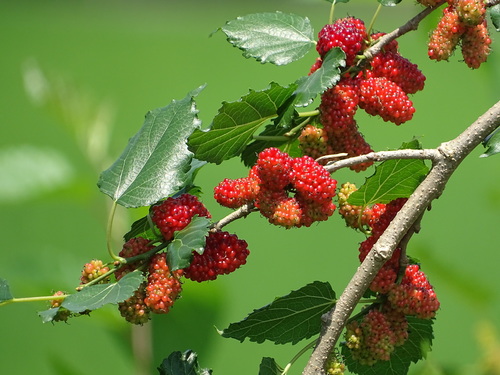
- Morus alba, white mulberry, has less downy leaves and lacks the conspicuous milky sap described here;
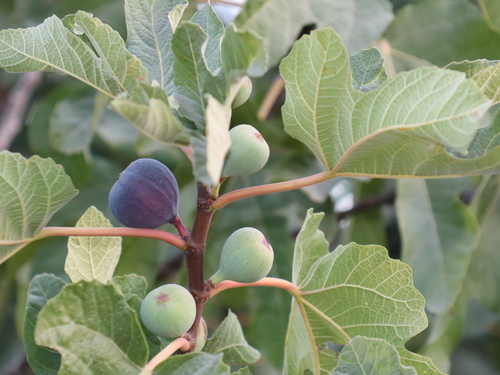
- Ficus carica, common fig, can have lobed leaves resembling those of young paper mulberry;
- Broussonetia kazinoki is a closely related East Asian species grown for the same papermaking use.
Abundant milky sap at a cut, combined with strongly variable leaf shape, is the main identification guide in this comparison. Neither white mulberry nor common fig shares the same combination of features.
Main sources
- Plants of the World Online / Kew, Broussonetia papyrifera (L.) L'Hér. ex Vent.
- Royal Horticultural Society, Broussonetia papyrifera
- Missouri Botanical Garden Plant Finder, Broussonetia papyrifera
- Plants For A Future, Broussonetia papyrifera — Internet Archive, 2026-06-13
- University of South Florida, Atlas of Florida Plants, Broussonetia papyrifera
- Chang et al., 2015, Human-mediated dispersal of paper mulberry and Austronesian expansion, PNAS
- Jiang et al., 2022, Broussonetia papyrifera pollen and allergic rhinitis, Clinical & Experimental Allergy
- IUCN Red List, Broussonetia papyrifera assessment (2018)
Frequently asked questions
Is paper mulberry poisonous to animals?
No ingestion toxicity is documented for cats, dogs or horses. The main concern is pollen, which may trigger respiratory allergies in susceptible people.
Why does my paper mulberry have different leaf shapes?
Variable leaf shape is normal in Broussonetia papyrifera. One tree may carry simple oval leaves alongside deeply lobed ones, especially when young or on vigorous shoots.
Why is paper mulberry invasive?
Vigorous suckering and the many viable seeds produced by female trees allow it to colonize waste ground and forest edges rapidly outside its native range. Several regions list it as an invasive alien species.
Are paper mulberry and white mulberry the same tree?
No. Broussonetia papyrifera and Morus alba both belong to the Moraceae family but are in different genera. Abundant milky sap and strongly variable leaf shapes are useful field features of paper mulberry.
What was paper mulberry bark traditionally used for?
Fibers in the inner bark have been used for papermaking since ancient times in China. Beating and softening the same bark produces tapa, a traditional Pacific cloth used for clothing and ceremonies.
Can paper mulberry pollen affect public health?
In several Asian regions where the tree was widely planted, clinical studies link pollen peaks with increased consultations for asthma and allergic rhinitis, especially among people already sensitized.
Should I plant a paper mulberry?
Planting is discouraged where the tree poses an invasion risk, and it is listed among invasive alien species of concern in Europe. Check restrictions where you live. Existing trees need monitoring to limit suckers and self-sown seedlings.
Similar plants
If you are unsure about a plant’s toxicity, ask a botanist or veterinarian for advice.