
Climbing fig (Ficus pumila, )
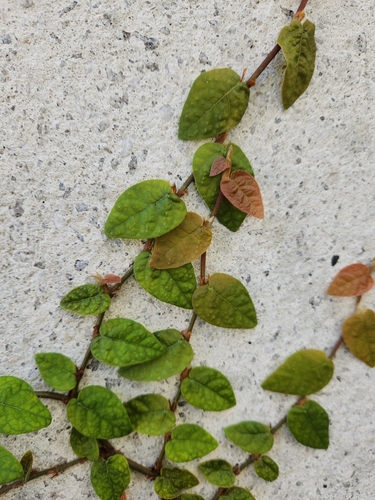
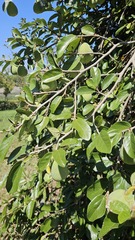
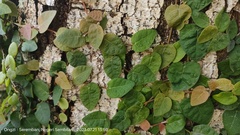
Climbing fig (Ficus pumila), also called creeping fig, is an East Asian climber in the Moraceae family. Young stems cling to walls with short adhesive roots and carry tiny heart-shaped leaves. Mature plants develop free-standing fruiting shoots with much larger, leathery leaves.
Read moreClimbing fig and Creeping fig
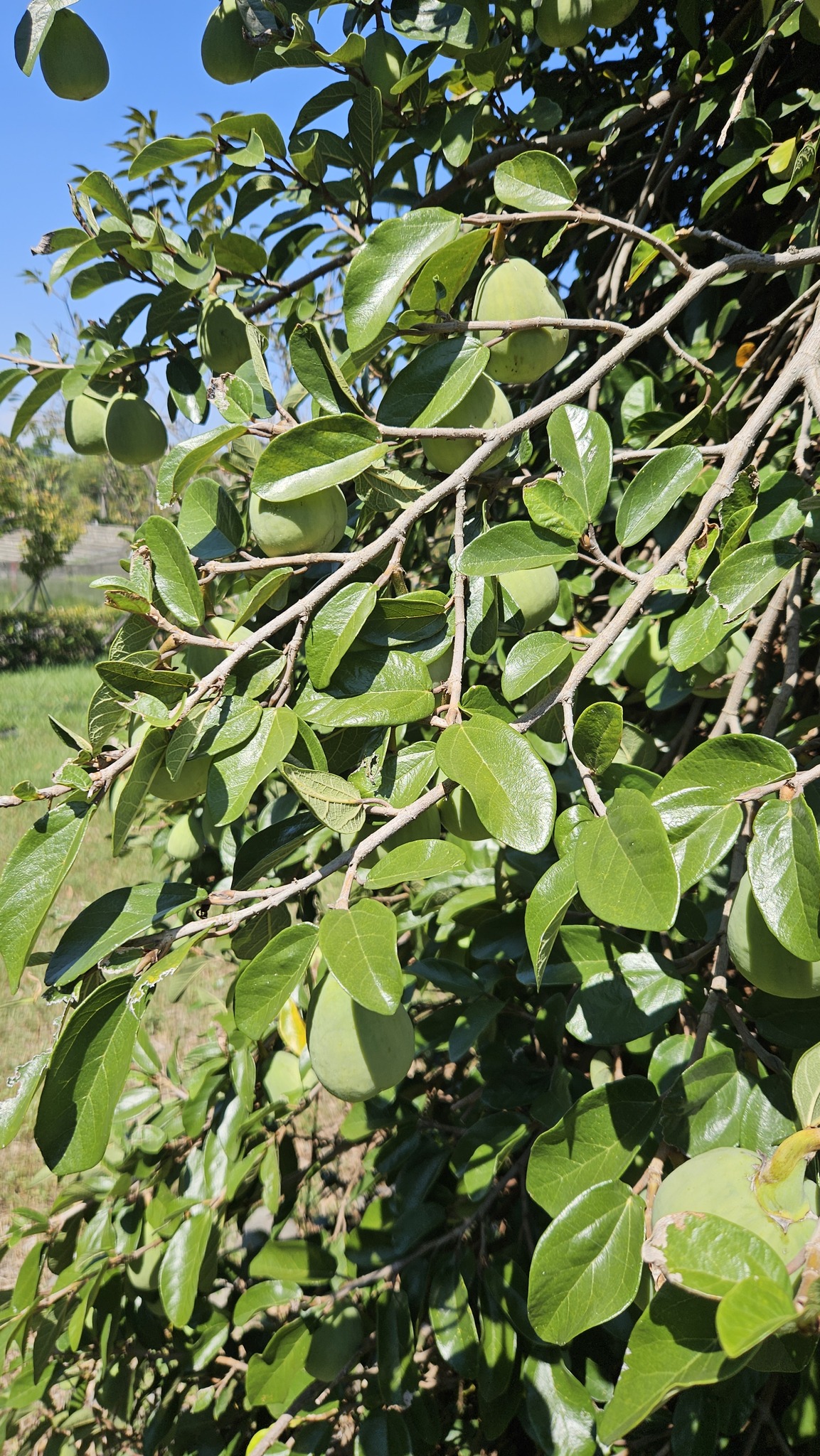
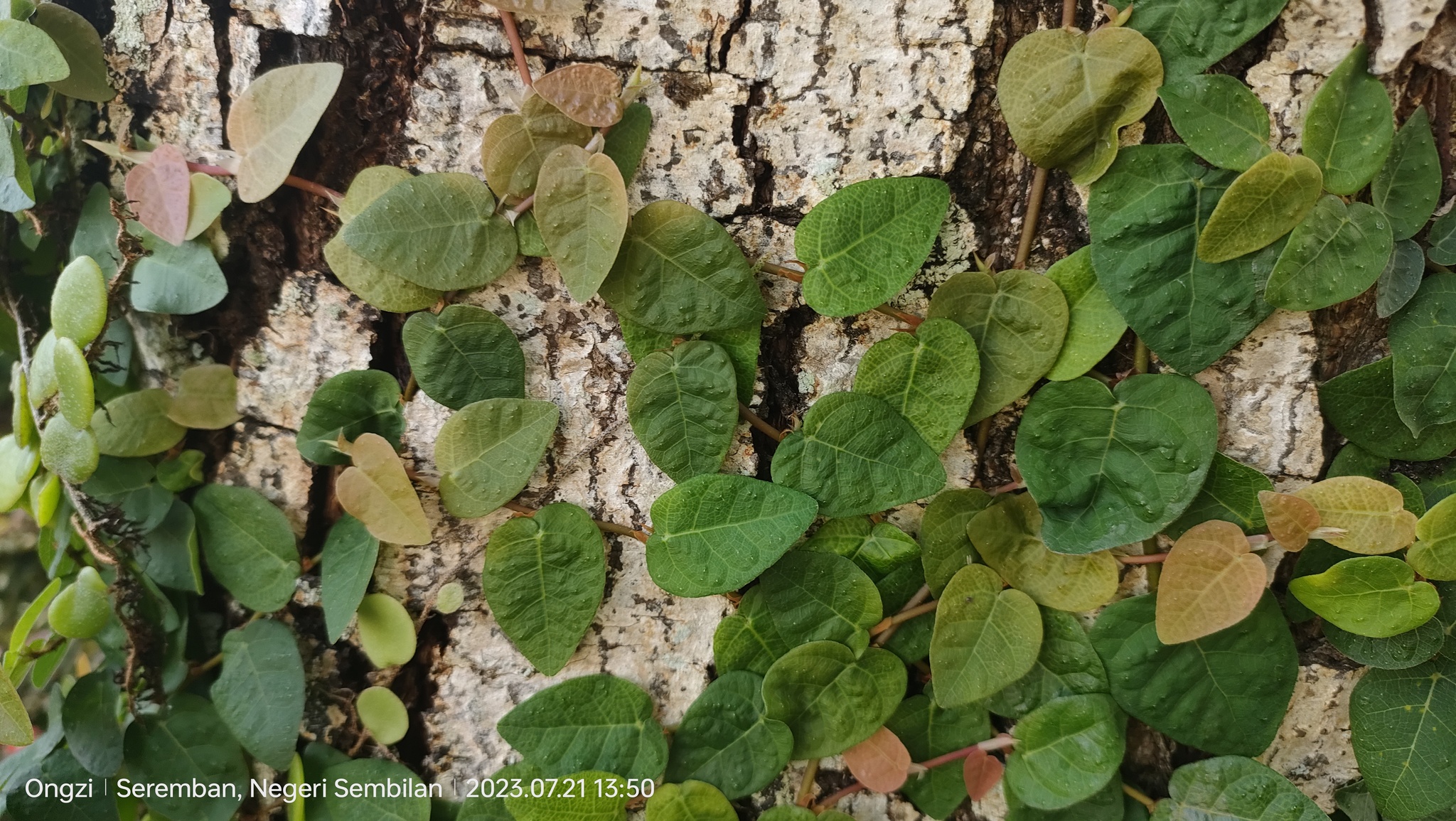
© photo
Jo Roberts · cc0
胡正恆(Jackson Hu) · cc-by
Ong Jyh Seng · cc-by-sa
(c) 胡正恆(Jackson Hu), some rights reserved (CC BY) · cc-by
(c) Jo Roberts, some rights reserved (CC BY) · cc-by
Global distribution
Ficus pumila is native to central and southern China, Japan, Taiwan and Indochina. Widely planted to cover walls, it has naturalized outside this range, notably in the southeastern United States. These introduced populations are distinct from its East Asian native range.
- Native4
- Introduced2
- China
- Japan
- Taiwan
- Vietnam
- United States (Florida)
- Australia
Hexagons: regions where the plant occurs. Green dots: native range.1
Identity
Climbing fig (Ficus pumila L., 1753), also known as creeping fig, belongs to the genus Ficus in the Moraceae family. Its epithet comes from the Latin pumilus, meaning dwarf, and refers to the very small leaves borne on juvenile shoots. 1 5
In Europe, the species is especially familiar as a houseplant or wall covering capable of clothing an entire surface. Its slender stems attach with short adhesive roots, like those of ivy, and form a dense evergreen covering. 2 4
Recognition
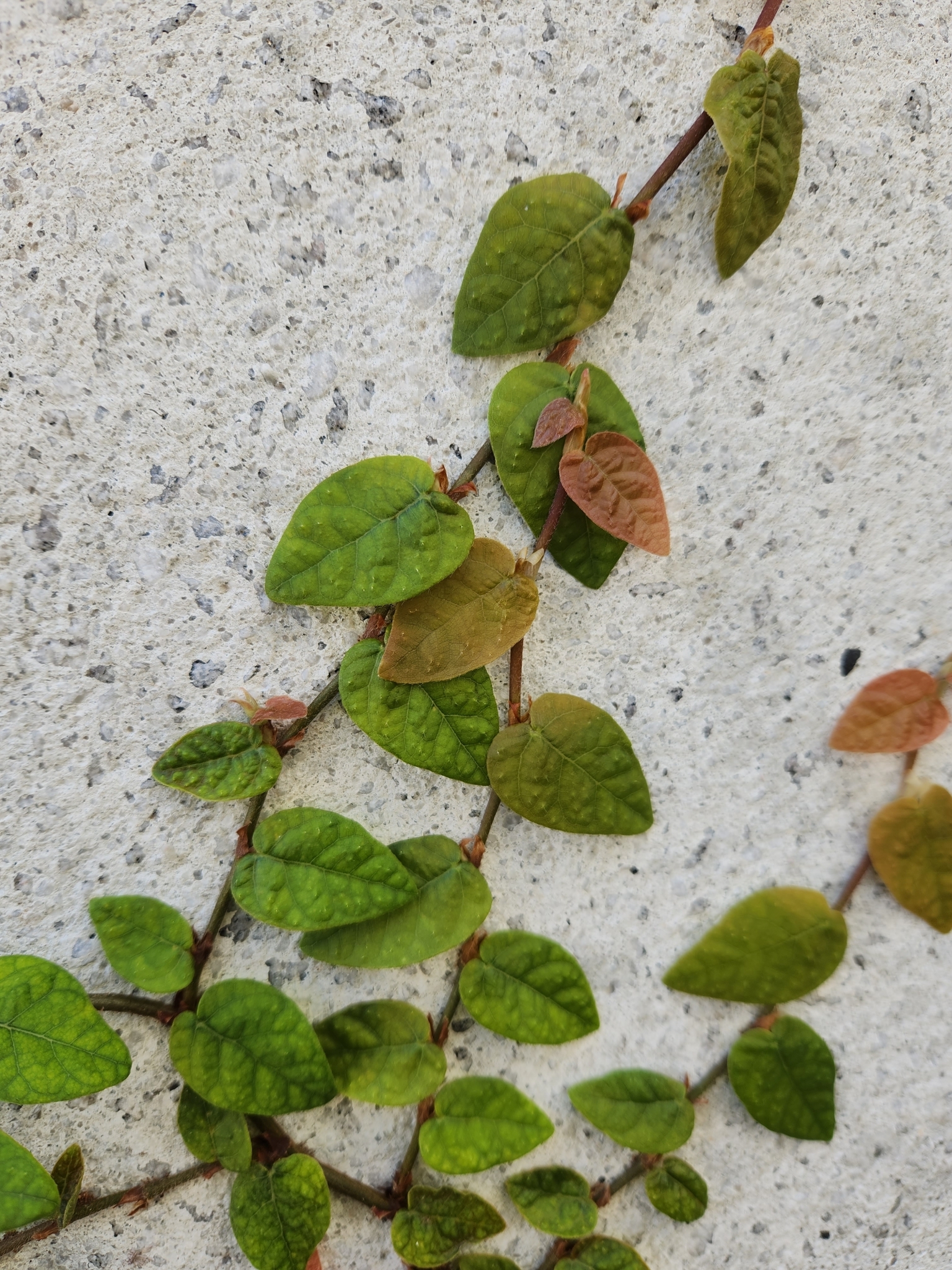
Ficus pumila has pronounced leaf dimorphism. Juvenile climbing stems bear small, leathery, heart-shaped leaves about 2.5 cm (1 in) long. Medium to dark green, they alternate along stems held close to the support. 4 3
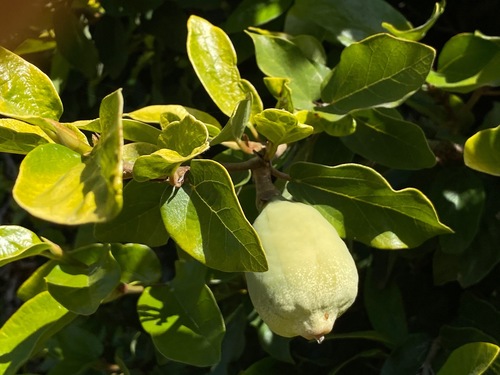
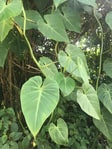
As the plant ages, it produces fruiting shoots that project away from the wall or trunk. Their leaves become markedly larger, oval to elliptic, and reach 10 cm (4 in) long. Cutting a stem or leaf releases the white latex characteristic of figs. 4 3
Short adhesive roots arise along juvenile stems and fasten them to the support, allowing the plant to cover a whole wall without stakes. Indoors, climbing fig remains flexible and commonly spreads 1–2 m (3–7 ft); planted outdoors in a mild climate, it can climb several meters. 2 3
Useful taxonomy
Carl Linnaeus described the species as Ficus pumila L. in 1753. Within the large genus Ficus, older names and infraspecific ranks still occur, including:
- Ficus pumila var. pumila
- Ficus pumila var. awkeotsang (Makino) Corner
- Ficus pumila Thunb. (illegitimate name)
- Ficus stipulata Thunb.
- Plagiostigma pumila Zucc.
The accepted scientific name is Ficus pumila L. Cultivar names such as Minima and Variegata identify horticultural selections rather than separate species. By contrast, awkeotsang, grown in Taiwan, is a recognized botanical variety. 1 5
Habitat and range
The native range lies in the humid subtropical regions of central and southern China, Japan, Taiwan and Indochina. The plant grows on rocks, shaded cliffs and tree trunks, using its adhesive roots to climb and cover broad surfaces. 1 3
Unlike hemiepiphytic figs, it is not a strangler: it uses its support without parasitizing it. Greater cold hardiness than tropical figs allows it to grow in USDA zones 8–11, although severe cold kills its growth back to ground level. 4 2
Widely cultivated as a wall covering and houseplant, climbing fig has naturalized beyond its native range, notably in the southeastern United States and other warm regions. These introductions are distinct from its East Asian origins. 4 3
Life cycle and reproduction
The flowers are enclosed inside a hollow fig, an unusual inflorescence whose pollination depends on a small specialized wasp. Where this pollinator is absent outside the native range, fertile seed production is limited even if mature shoots form figs. 5 3
Figs appear only on adult shoots growing away from the support, in mild climates. They turn from green to purple as they ripen. In Taiwan, seeds of variety awkeotsang supply the mucilage used to make a traditional food jelly; this local use does not extend to the ornamental forms. 4 3
Propagation in cultivation mainly uses stem cuttings with a node or ground layering. Stems readily root where they touch the growing medium. Allow latex from the cut surface to dry before planting. A cutting taken just below a node, kept warm in bright indirect light, develops its first roots in three to five weeks. For layering, pin a leafy stem against moist growing medium and wait for roots before separating it from the parent. 2 6
Uses and risks
The main use is ornamental: a wall covering in mild climates, or a climbing or trailing houseplant. Adhesive roots make it effective on walls, trellises and terrariums, but the same attachment can mark painted or crumbling surfaces. 2 4
The white latex of figs is a mild irritant. Contact can cause redness and itching on sensitive skin, while ingestion can irritate the mouth and cause minor digestive upset. The ASPCA classifies climbing fig as toxic to cats and dogs, generally with moderate signs. Keep it beyond the reach of pets and young children, and wear gloves when pruning. 7 8
Varieties, look-alikes and related plants
Cultivated forms are not separate species. Minima is a dense, slow-growing selection with very small leaves; Variegata and Sunny have cream variegation and need more light to retain their colors; Quercifolia denotes lobed foliage. When buying a plant, check its cultivar name, stem condition and density of foliage. 2
The most frequent look-alikes include:
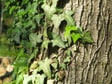
- Hedera helix, English ivy, another surface-covering climber with adhesive roots;
- Ficus elastica, the rubber plant, an indoor fig with much larger leaves;
- Ficus lyrata, the fiddle-leaf fig, with violin-shaped leaves.
Tiny heart-shaped leaves on juvenile stems, short adhesive roots and white latex together provide the most reliable features for identifying Ficus pumila sold as climbing fig. 4 1
Main sources
- Plants of the World Online / Kew, Ficus pumila L.
- Royal Horticultural Society, Ficus pumila - creeping fig
- Missouri Botanical Garden, Ficus pumila
- North Carolina State Extension, Ficus pumila - creeping fig
- Encyclopaedia Britannica, Ficus (plant genus)
- Plants For A Future, Ficus pumila
- ASPCA, Creeping fig (Ficus pumila) toxicity entry
- Merck Veterinary Manual, houseplants and ornamentals toxic to animals
Frequently asked questions
Is creeping fig toxic?
Its white latex mildly irritates skin and mucous membranes. Ingestion can cause mouth irritation and minor digestive upset. The ASPCA lists creeping fig as toxic to cats and dogs, generally with mild signs; keep it away from pets and young children.
Why does my creeping fig have unusually large leaves?
Its foliage changes as it ages. Adult stems that grow away from the support bear much larger, more leathery leaves than the tiny heart-shaped leaves on juvenile climbing stems.
Can creeping fig climb a wall?
Yes. Short adhesive roots attach it to surfaces, much like ivy, and it can cover an entire wall. Indoors, it is often trained on a trellis or moss pole, or grown in a hanging container.
Which plants resemble creeping fig?
Ivy is the most frequent look-alike because it also covers surfaces and has adhesive roots. The very small heart-shaped leaves and white fig latex are useful distinguishing features.
How much light does creeping fig need?
Bright indirect light or partial shade produces the best foliage. It tolerates gentle morning sun, but scorching direct sun dries out its small leaves.
How large does creeping fig grow?
Indoors on a support, it commonly spreads 1–2 m (3–7 ft). In the ground in a mild climate, it can cover several meters of wall, with taller adult shoots.
Are variegated forms separate species?
No. Variegata and Sunny are cultivars selected for their cream variegation, rather than separate species. They need slightly more light to retain their leaf coloring.
Similar plants

If you are unsure about a plant’s toxicity, ask a botanist or veterinarian for advice.