
Lemon balm (Melissa officinalis, )

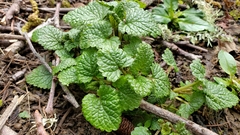
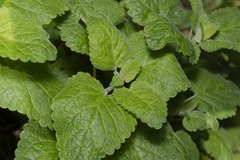
Lemon balm (Melissa officinalis) is a perennial herb in the Lamiaceae, native to the eastern Mediterranean Basin and western Asia. Its puckered leaves release a lemon scent when crushed, distinguishing it from other garden members of the family, such as catnip and mints.
Read moreLemon balm and balm
Give plenty of ambient light without direct sun on the leaves.
Full sun to partial shade depending on climate


© photo
Karen Wilson · cc0
Gavin Slater · cc-by
Eleftherios Katsillis · cc-by
Taken May 4, 2021 by willi brun (cc-by-sa)
Taken Jul 20, 1907 by Tela Botanica − Anne-Marie GRIMAUD (cc-by-sa)
Taken May 14, 2020 by kimleyson (cc-by-sa)
Taken Jun 12, 2022 by John Sycorax (cc-by-sa)
Taken Aug 10, 2021 by Jacques Zuber (cc-by-sa)
© copyright of the Board of Trustees of the Royal Botanic Gardens, Kew.




Global distribution
The native range of Melissa officinalis extends from the eastern Mediterranean Basin to western and Central Asia, reaching northwestern Africa depending on subspecies. Cultivated since antiquity, it has naturalized widely in temperate Europe and on other continents, often occurring as a garden escape rather than an originally wild plant.
- Native4
- Introduced3
- Greece
- Türkiye
- Italy
- Morocco
- France
- United Kingdom
- United States
Hexagons: regions where the plant occurs. Green dots: native range.1
Identity
Lemon balm (Melissa officinalis L., 1753), also called balm, is a perennial herb in the genus Melissa, family Lamiaceae. The genus name comes from ancient Greek mélissa, “bee,” and describes its most obvious garden feature: summer flowers that attract honeybees far more strongly than the inconspicuous flowers of other Lamiaceae in the same herb bed. 1 7
The French names mélisse citronnelle, citronnelle and thé de France refer to the lemon-scented foliage and its long use as a substitute for imported tea. The lemon scent of crushed leaves is a useful identification clue alongside leaf shape and growth habit. 7 4
Recognition
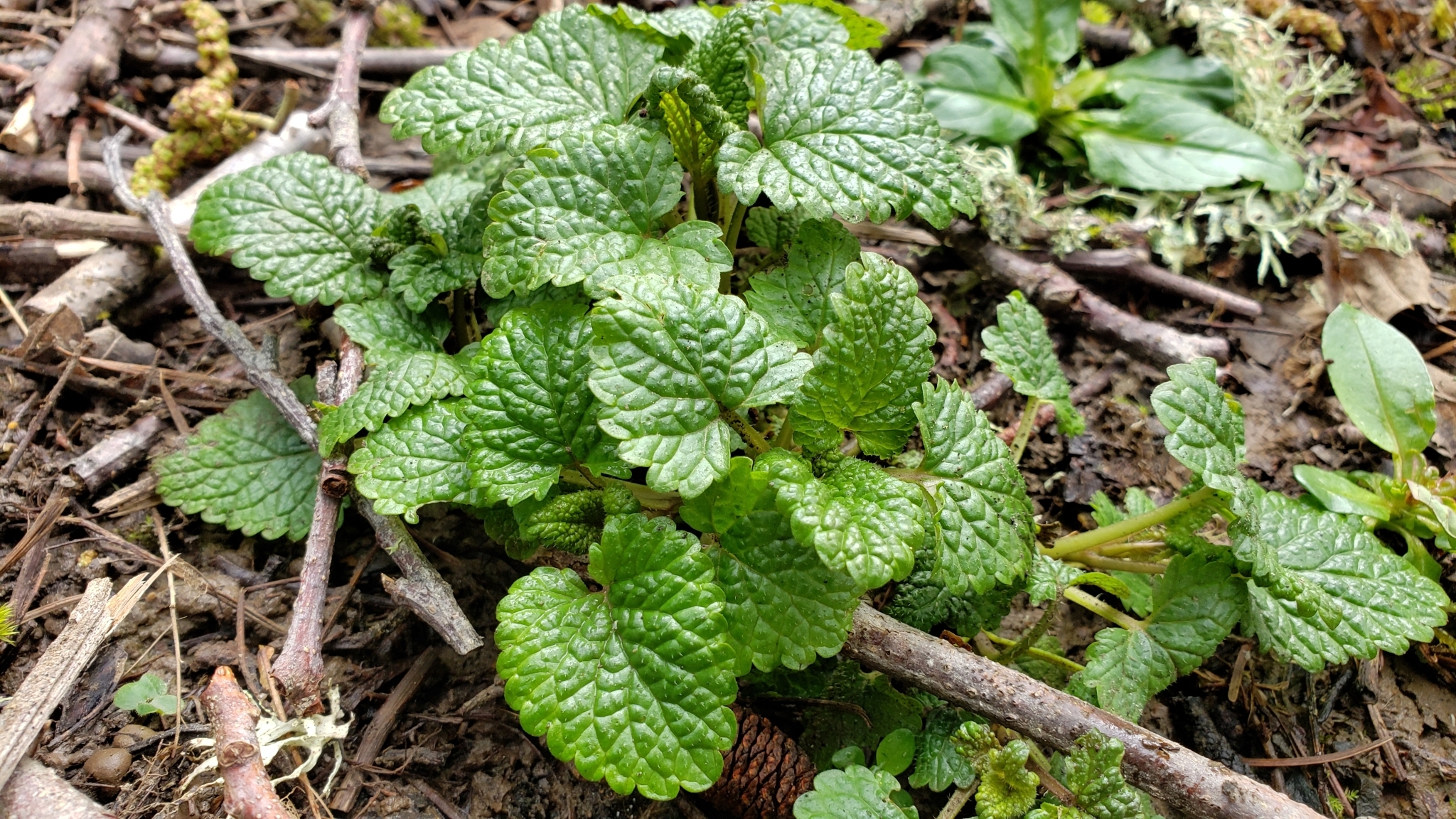
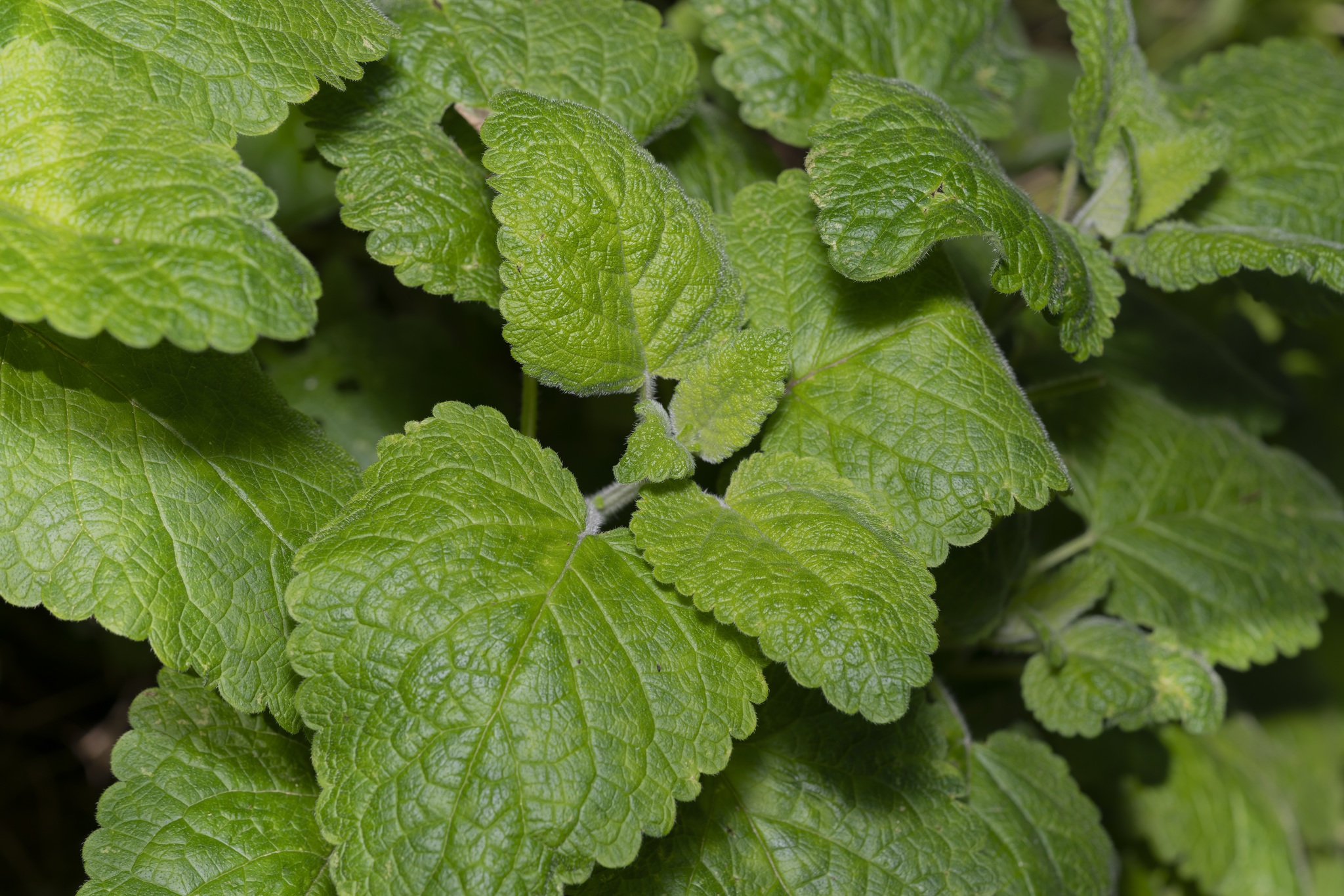
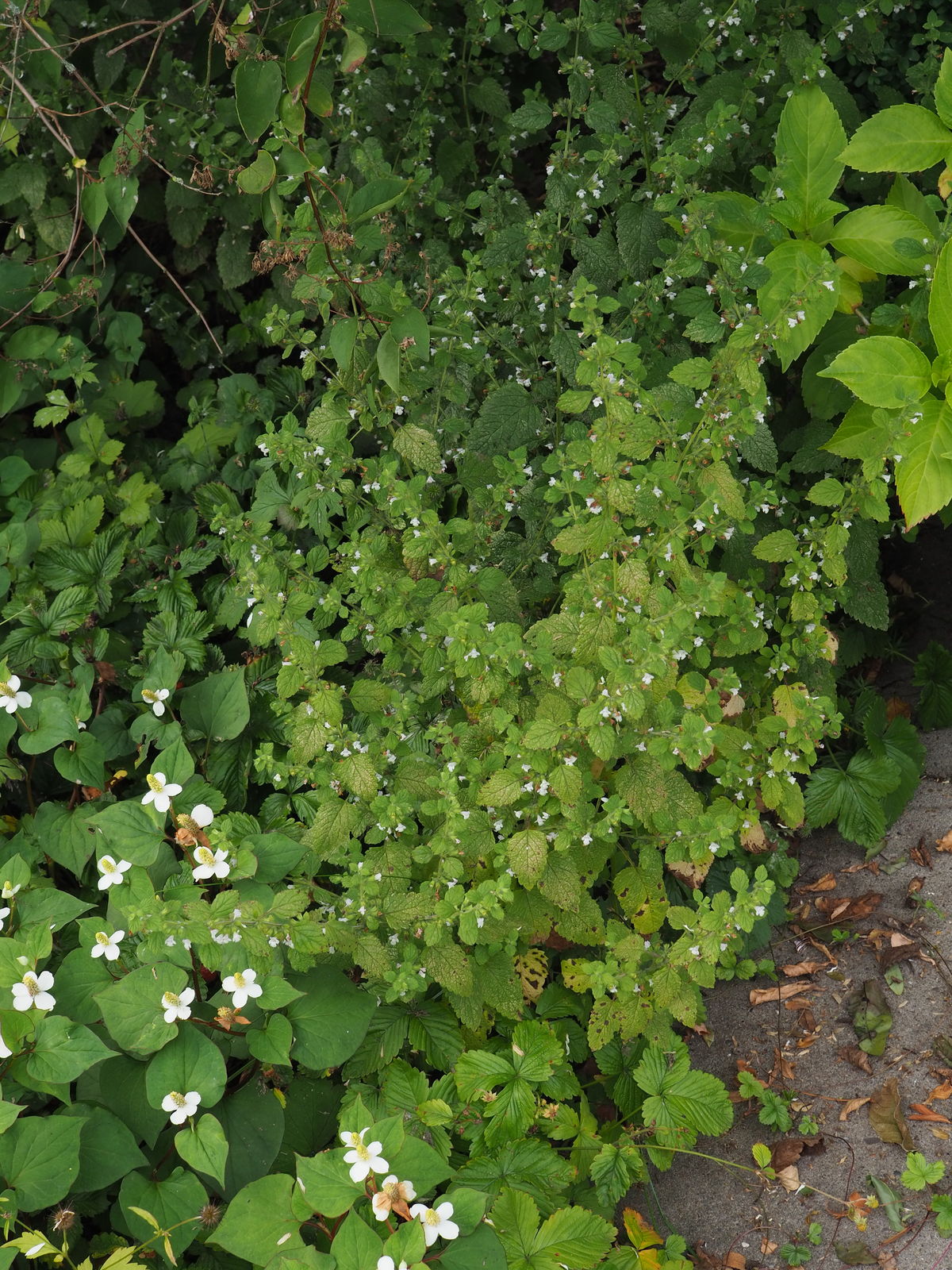
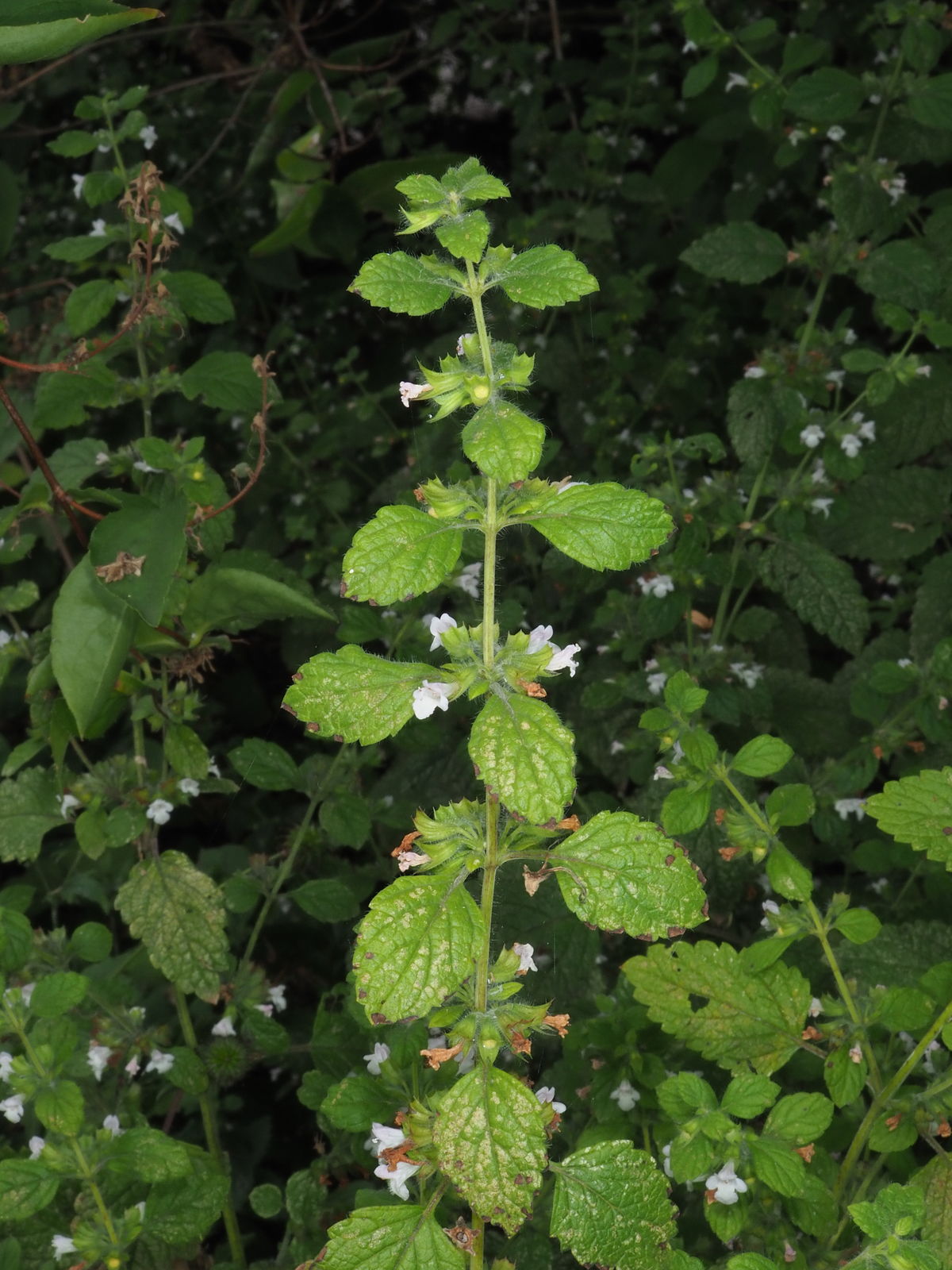
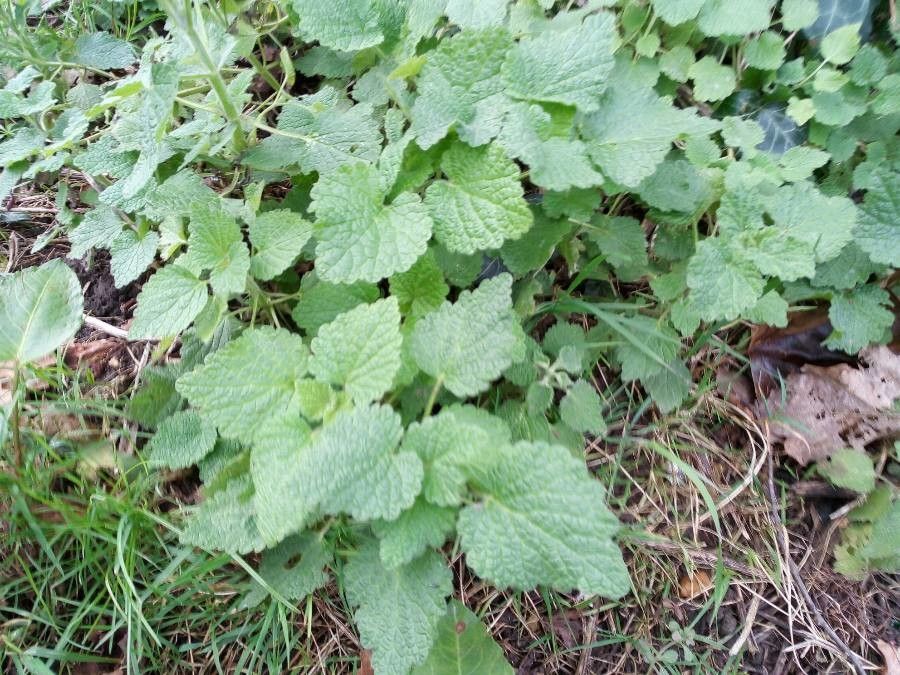
Square, upright, branching stems form a bushy clump, typically 30–100 cm (12–39 in) tall. Older plants often spread wider than they are high, broadening rather than growing upward. The opposite, oval, puckered, toothed leaves release a clear lemon scent as soon as they are crushed. 2 3
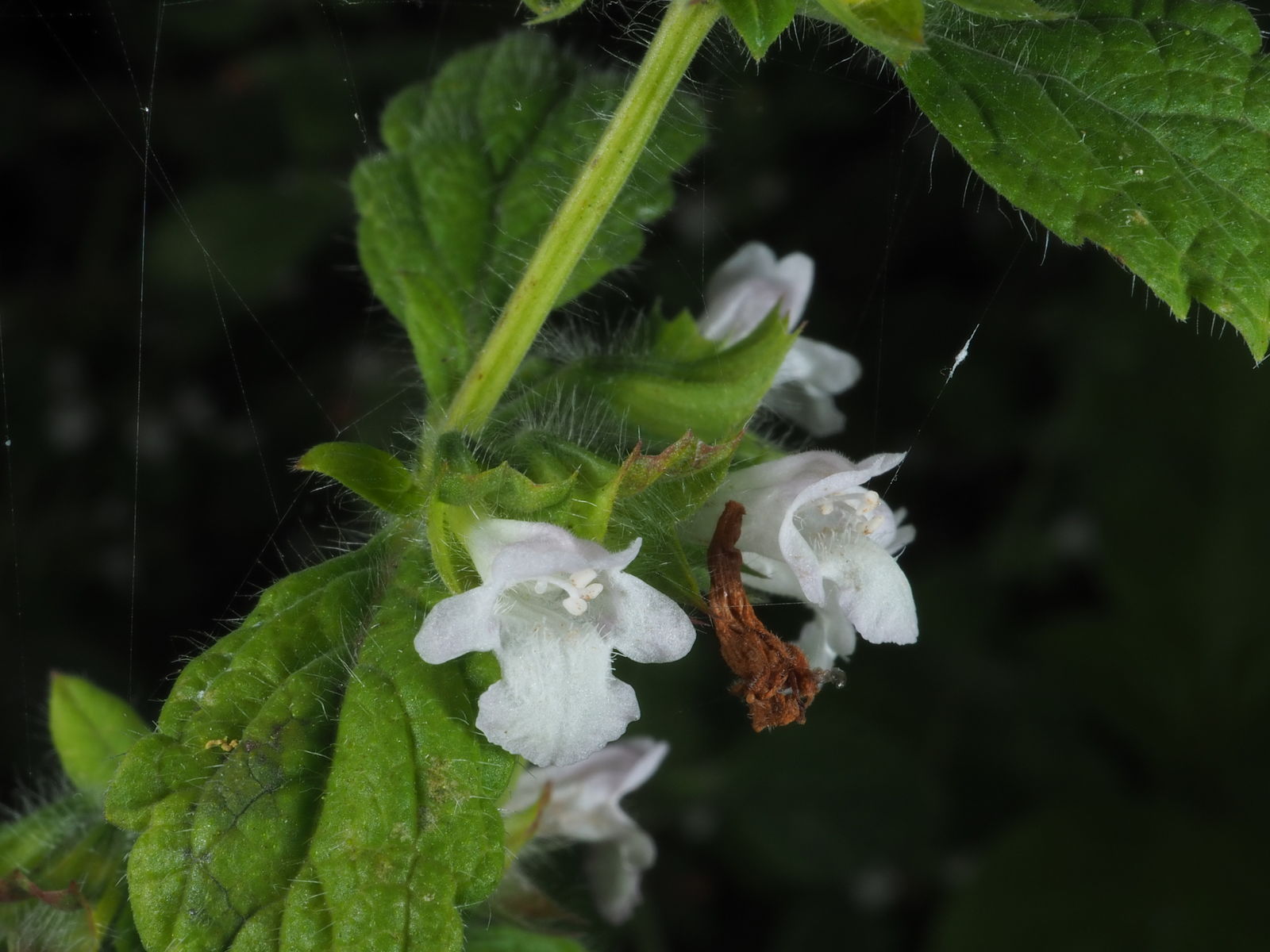
Small white to cream flowers, sometimes tinged pale violet, appear in summer in whorls in the upper leaf axils. These whorls are easily overlooked in a border but attract concentrated pollinator visits and extend the garden’s nectar supply through midsummer. 3 2
Scent can help distinguish common look-alikes alongside other traits: lemon balm smells clearly of lemon, catnip has a muskier note and mint a distinctly menthol scent, although their leaves can look almost identical. 4
Useful taxonomy
The accepted name is Melissa officinalis L., published in 1753 in Melissa, one of the smaller genera of Lamiaceae with only a few recognized species. 1
Two subspecies are distinguished geographically: Melissa officinalis subsp. officinalis, the more widespread, ranging from southern Europe to western and Central Asia and northwestern Africa; and Melissa officinalis subsp. inodora Bornm., restricted to the eastern Mediterranean as far as northern Iraq. 1
Numerous historical synonyms remain in old herbaria and catalogs, including Melissa altissima Sm. and Melissa graveolens Host, all referred to the same accepted name in modern taxonomic revisions. Melissa officinalis therefore remains the stable reference when buying or citing the plant. 1
Habitat and range
Native to the eastern Mediterranean Basin and western to Central Asia, the species grows at woodland edges, in hedges and on disturbed soils, often in sun to partial shade. 1 7
Cultivated since antiquity for aromatic and medicinal uses, lemon balm has naturalized widely beyond its original range. Today it occurs as a garden escape in France, the United Kingdom and much of North America, on waste ground, rubble and roadsides. 4 7
This readiness to self-seed explains why a “wild” lemon balm near a dwelling almost always derives from earlier cultivation rather than a genuinely native population. Hardiness to about −15 °C (5 °F) in drained soil, depending on region, also helps explain naturalization well beyond its native range, into northern Europe and much of temperate North America. 4
Life cycle and reproduction
Seed germinates in 10–20 days at 18–20 °C (64–68 °F). Nodal stem cuttings root in water in 2–3 weeks. After germination or rooting, the plant first forms a rosette of puckered leaves, then quickly develops square, branching stems into a dense clump within one to two seasons. 5
Summer flowering falls in June–August in the Northern Hemisphere, depending on climate, on stems bearing several whorls of small white to cream flowers. After fertilization, each flower produces small achenes that ensure abundant self-seeding if flower stems are not cut in time; seasonal dates shift in the Southern Hemisphere. 3 2
In cultivation, propagation relies mainly on clump division in spring or fall and nodal stem cuttings, which root in water in two to three weeks. Seed also works but is unsuitable for variegated cultivars such as Aurea, whose yellow marbling is not retained in seedlings. 5 3
Uses and risks
The main uses are culinary and aromatic: young fresh leaves flavor herbal teas, salads and sauces, ideally harvested just before flowering for maximum aroma. The plant also has a long history in European herbalism for its traditional calming properties. 5 4
Its essential oil, rich in citral and citronellal, yields so little through distillation that it ranks among the most expensive essential oils on the market. This scarcity explains frequent adulteration with citronella or lemon oil. 8
Composition varies markedly with origin and harvest time: fresh leaves picked before flowering contain more citral than leaves distilled too late, whose oil is poorer in lemon-scented compounds. Beyond essential oil, the leaf contains phenolic acids such as rosmarinic acid, often discussed in studies of its calming effects. 8 5
ASPCA classifies the plant as non-toxic to cats, dogs and horses. This assessment of the plant does not establish the safety of concentrated essential oil or define a safe exposure threshold for it. 6
Varieties, look-alikes and related plants
The most widespread cultivars vary in leaf color or scent intensity: Aurea, with golden-yellow-marbled foliage, is propagated by division because seed does not preserve its variegation; Variegata has subtler creamy-white variegation; and Citronella is a stronger lemon-scented selection grown for essential-oil production. A fourth, Quedlinburger Niederliegende, is a low, spreading German selection cultivated for mechanized field harvesting rather than garden ornament. 5 3
Frequent look-alikes include:
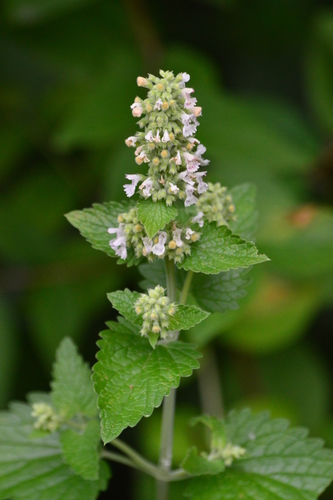
- Nepeta cataria, catnip, with similarly shaped leaves but a muskier scent;
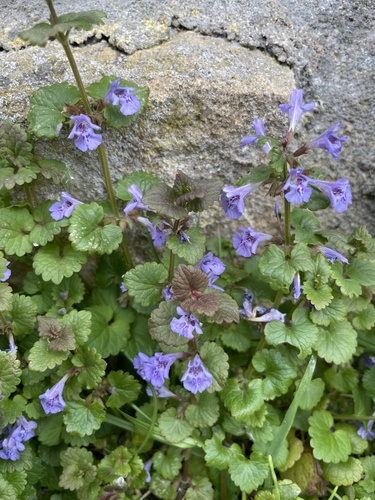
- Glechoma hederacea, ground ivy, with a more creeping habit and smaller, rounded leaves;
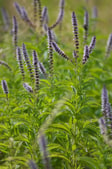
- Mentha spicata and other mints, recognizable by their distinctly menthol scent.
Before flowering, the scent of crushed leaves is a useful clue alongside leaf shape and growth habit when identifying these garden Lamiaceae. Flower characters become available once the plants bloom. 4
Main sources
- Plants of the World Online / Kew, Melissa officinalis L.
- Royal Horticultural Society, Melissa officinalis details
- Missouri Botanical Garden Plant Finder, Melissa officinalis
- NC State Extension, Melissa officinalis
- Plants For A Future, Melissa officinalis
- ASPCA, Lemon balm toxicity entry
- INPN / MNHN, Melissa officinalis L., 1753
- PMC, Bioactive Compounds, Medicinal Benefits, and Contemporary Extraction Methods for Lemon Balm
Frequently asked questions
Is lemon balm toxic to cats or dogs?
ASPCA classifies the Melissa officinalis plant as non-toxic to cats, dogs and horses. That assessment does not establish the safety of concentrated essential oil.
How can lemon balm be distinguished from catnip or mint?
The most reliable feature is the scent of crushed leaves. Lemon balm has a clear lemon fragrance, catnip a muskier scent and mint a distinctly menthol note, despite sometimes similar leaf shapes.
Why does lemon balm take over the garden?
It readily self-seeds after flowers fade, while its spreading rootstock quickly forms new clumps. Cutting flower stems before seed dispersal greatly limits its spread.
Should lemon balm be cut back after flowering?
Yes. Cutting the clump back to a few centimeters (about an inch or two) above the ground encourages young, more fragrant foliage and reduces both self-seeding and the risk of powdery mildew late in a damp season.
Is lemon balm essential oil really rare?
The yield of genuine essential oil is very low relative to the mass of leaves distilled. This makes it one of the most expensive essential oils on the market and a frequent target of adulteration with citronella or lemon oils.
Which lemon balm cultivars are grown?
The most common cultivars are Aurea, with golden-yellow-marbled leaves, Variegata, with creamy-white variegation, and Citronella, a stronger lemon-scented selection used for essential-oil production.
Similar plants
If you are unsure about a plant’s toxicity, ask a botanist or veterinarian for advice.