
Oregano (Origanum vulgare, )
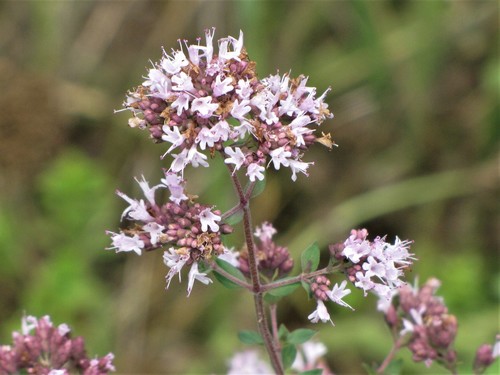
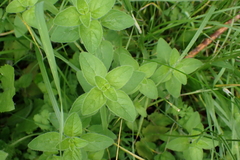
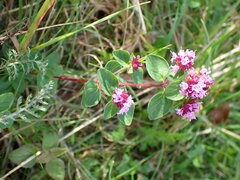
Oregano (Origanum vulgare) is a herbaceous perennial in the Lamiaceae family, native to Europe and western and central Asia as far as China. Its branched, square stems bear aromatic leaves harvested as a culinary herb. In summer, small pink, mauve or white flowers form clusters heavily visited by pollinators.
Read moreOregano, Wild marjoram and Common oregano
Allow a few hours of direct sun per day, preferably morning or evening.
Full sun; tolerates light partial shade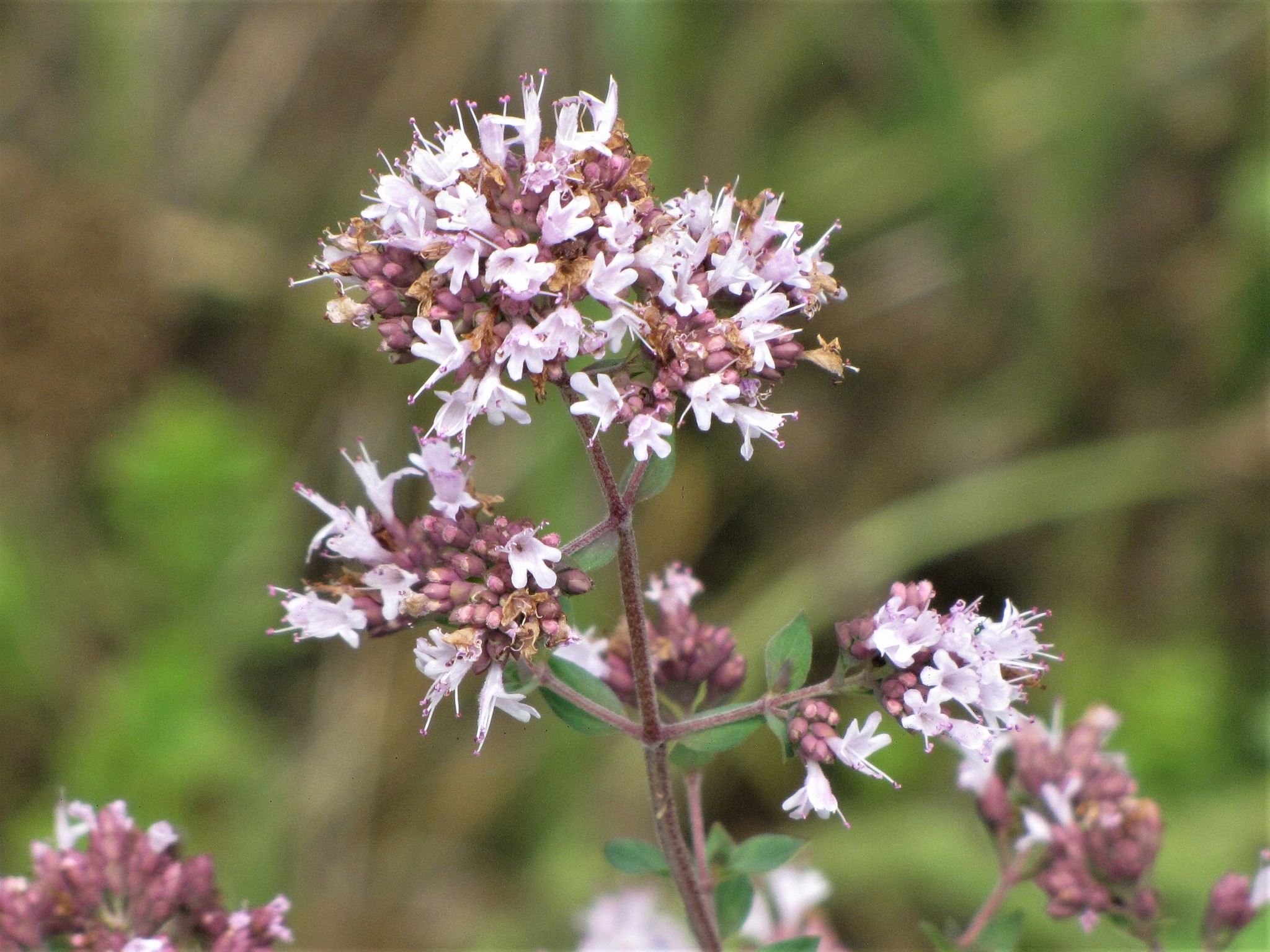



© photo
(c) Παναγιώτης Ραφαηλίδης, some rights reserved (CC BY-NC), uploaded by Παναγιώτης Ραφαηλίδης · cc-by-nc
Robert H. Wardell · cc0
Stephen James McWilliam · cc0
Taken Aug 23, 2014 by Tela Botanica − Benoit FOUCHER (cc-by-sa)
Taken Jul 14, 2019 by Andriy Martynyuk (cc-by-sa)
Taken Jun 28, 2021 by Alain Bigou (cc-by-sa)
Taken Jul 26, 2021 by Philippe Bissières (cc-by-sa)
Taken Jul 7, 2018 by Cruz Fer (cc-by-sa)
© copyright of the Board of Trustees of the Royal Botanic Gardens, Kew.




Global distribution
The native range of Origanum vulgare covers Europe, including the United Kingdom, and western and central Asia as far as China, on dry, calcareous soils. Introduced early to North America for culinary and medicinal use, the species has become widely naturalized there.
- Native6
- Introduced2
- France
- Greece
- Italy
- Turkey
- United Kingdom
- China
- United States
- Canada
Hexagons: regions where the plant occurs. Green dots: native range.1
Identity
Oregano (Origanum vulgare L., 1753), also called wild marjoram, is a herbaceous perennial in the genus Origanum, family Lamiaceae. The genus name comes from the ancient Greek origanon, traditionally interpreted as combining oros, mountain, with an element associated with brightness or joy. The familiar translation “joy of the mountains” evokes its sunny hillside habitat. 3 1
People have gathered this species as a seasoning and remedy since Greek and Roman antiquity. Dried leaves remain a staple Mediterranean herb, while essential oils rich in carvacrol and thymol are studied for their antimicrobial properties. 4 10
Recognition
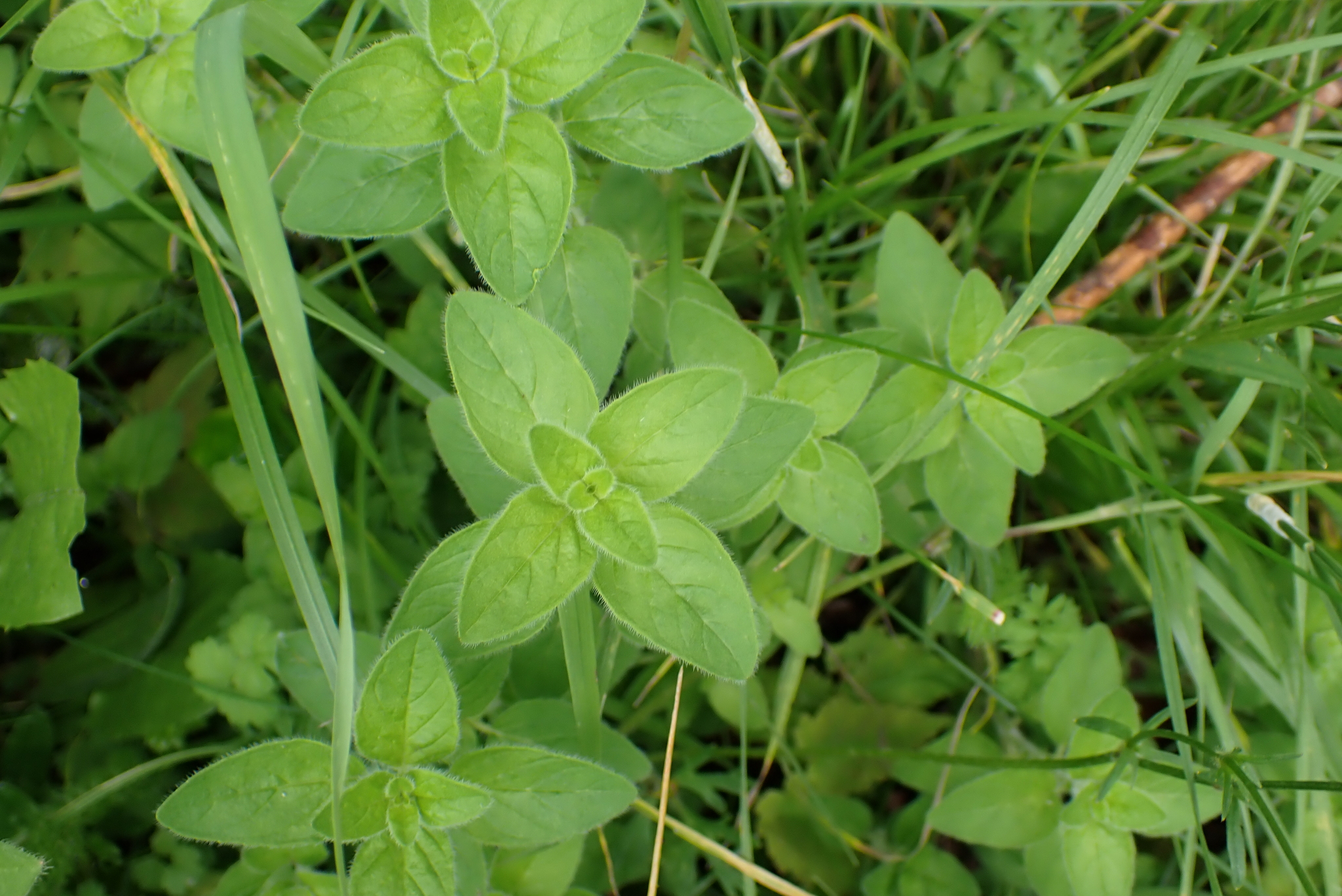
Bushy clumps reach 20–90 cm (8–35 in) tall and spread 30–80 cm (12–31 in), with a woody base and creeping rhizomes. Square stems, characteristic of the mint family, carry opposite, oval to rounded leaves dotted with aromatic glands. 5 3
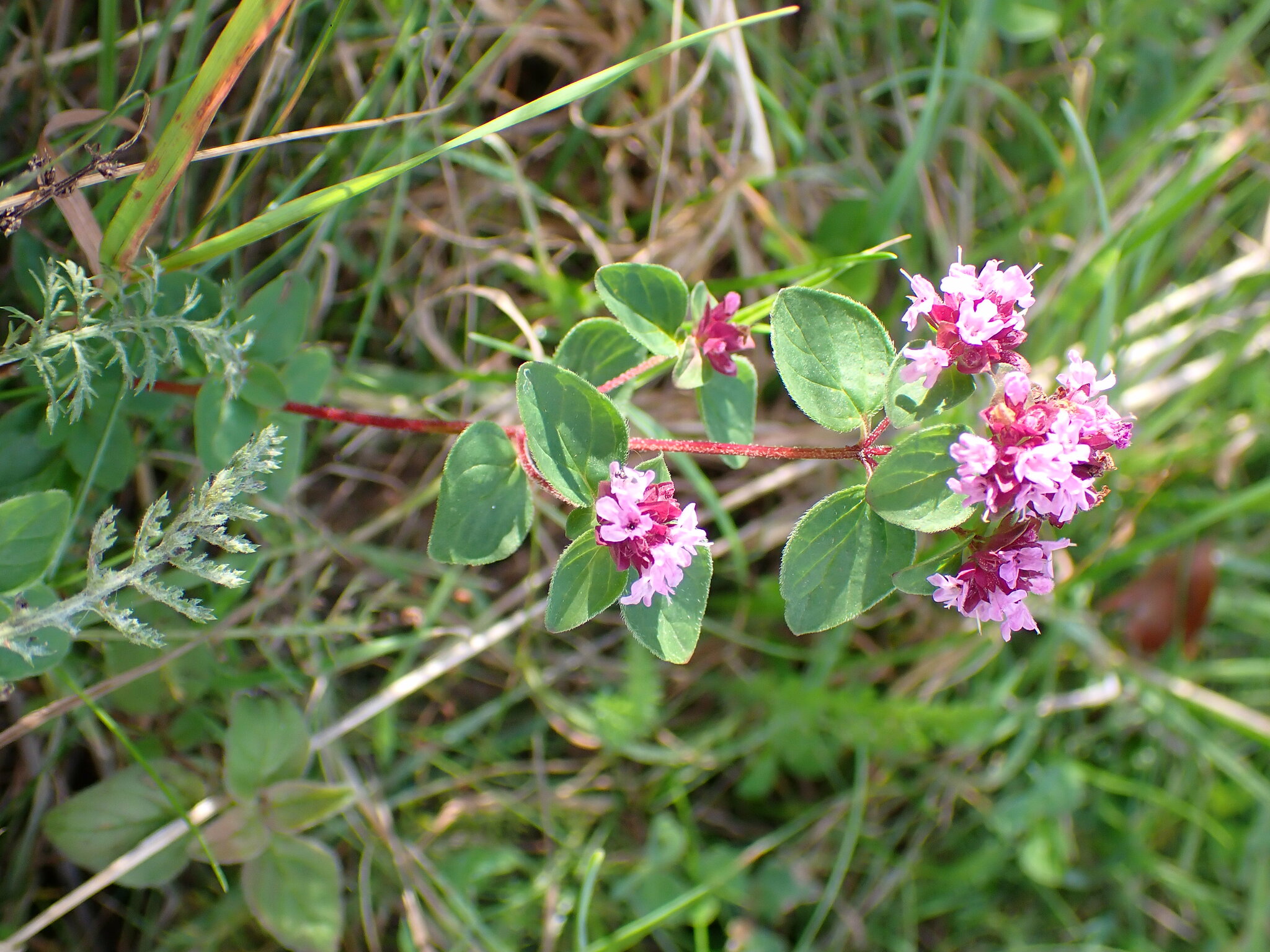
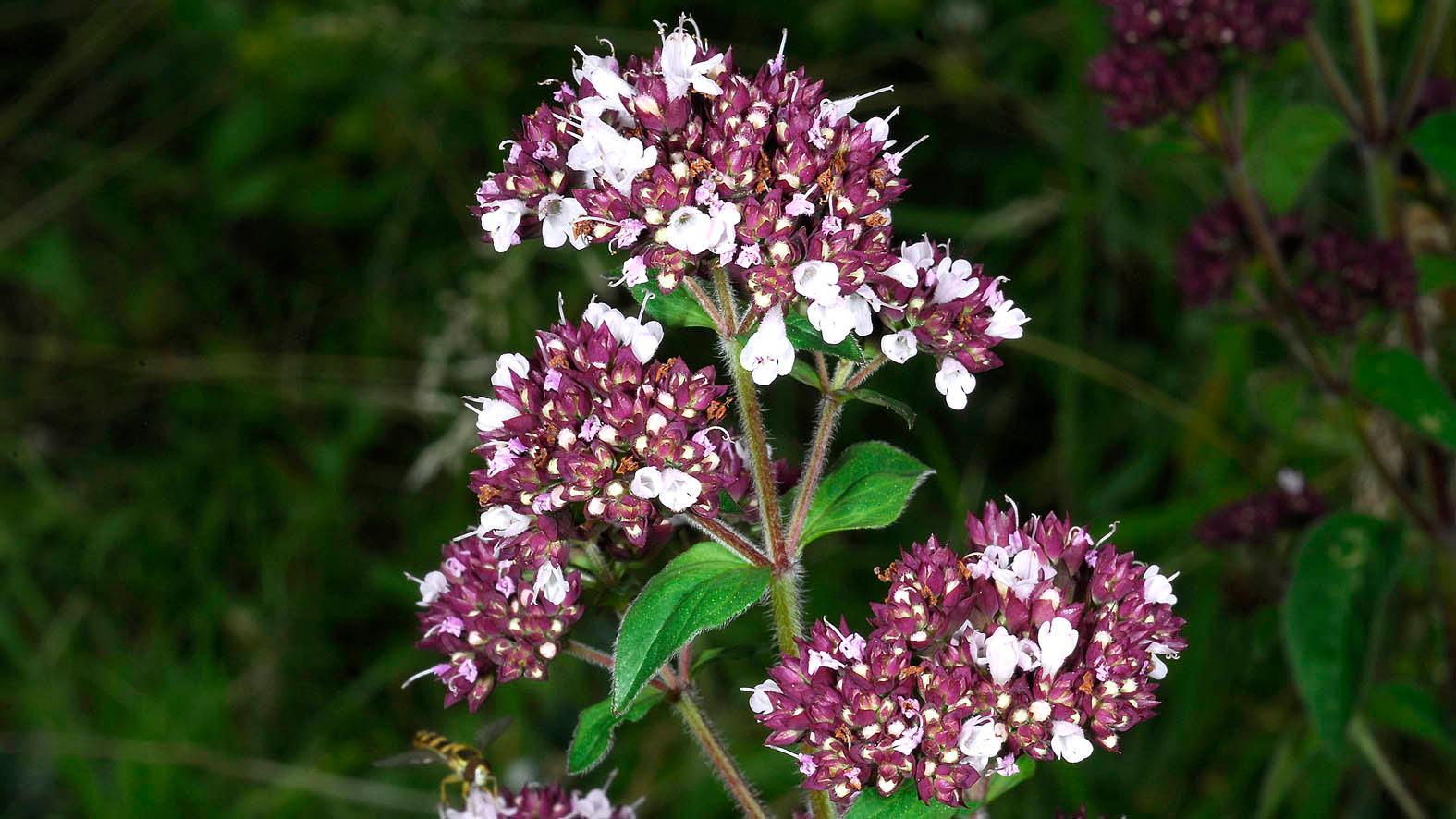
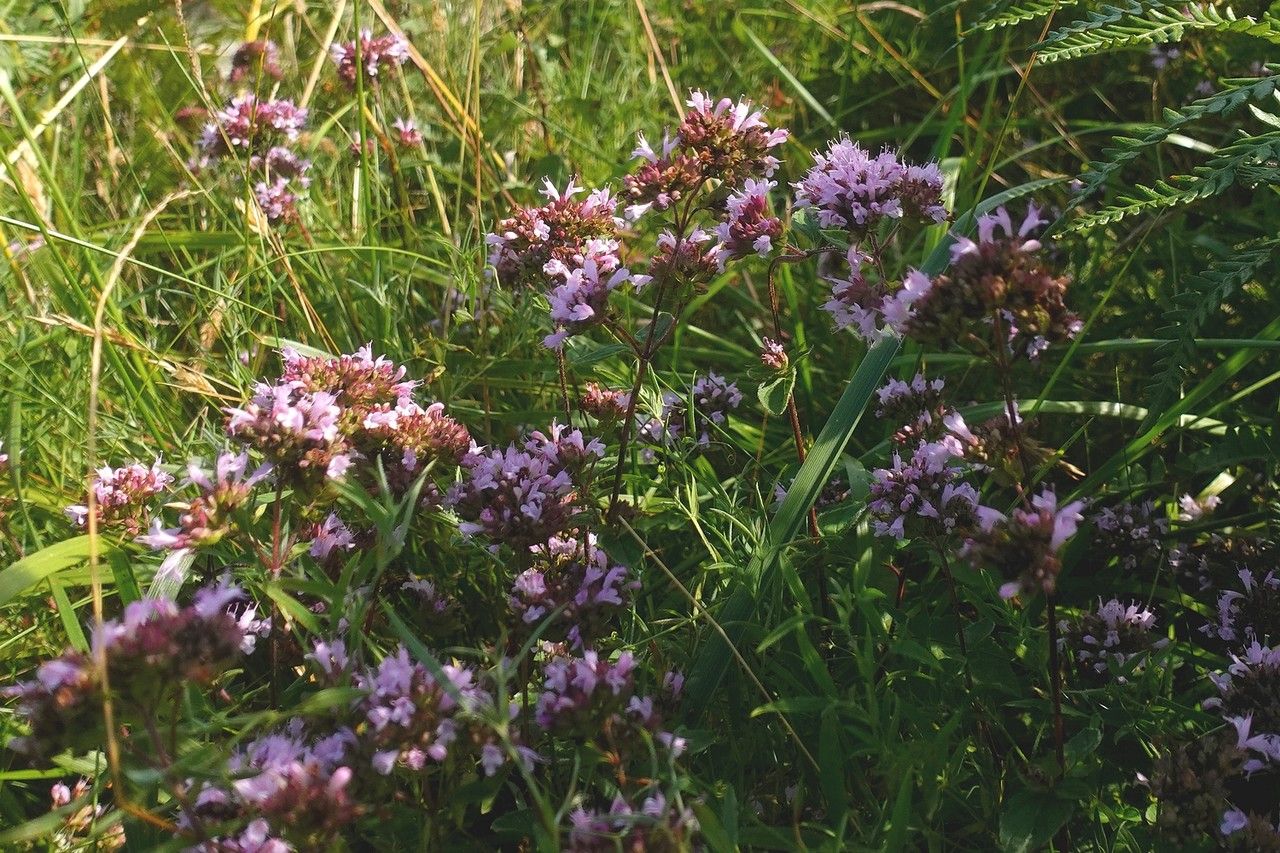
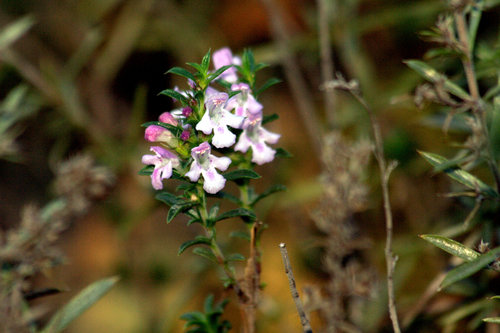
From July to October in its European seasonal setting, oregano produces small tubular flowers about 4 mm (0.16 in) long. Pink, mauve or white blooms gather in terminal clusters surrounded by often purplish bracts. This flowering period can last almost four months and attracts many bees, butterflies and other pollinators. 3 2
Crushing a leaf releases an aroma that is often more useful for identification than the outline alone. Its strength varies greatly with subspecies, climate and harvest time, so a lightly scented clump is not necessarily misidentified. 10
Useful taxonomy
POWO/WCVP accepts Origanum vulgare L., a variable species with several geographically distinct subspecies:
- Origanum vulgare subsp. vulgare, from Europe to Siberia and China;
- Origanum vulgare subsp. hirtum (Link) A.Terracc., from southeastern Europe to Turkey, often sold as Greek oregano;
- Origanum vulgare subsp. virens (Hoffmanns. & Link) Bonnier & Layens, from Macaronesia and the western Mediterranean;
- Origanum vulgare subsp. glandulosum, gracile and viridulum, distributed from North Africa to the Himalayas.
Oregano grown in France most often belongs to subspecies vulgare and generally has a subtler aroma than commercial Greek oregano. The latter usually comes from subspecies hirtum, which contains more carvacrol. 10
Habitat and range
From Europe, including the United Kingdom, the native range stretches through western and central Asia as far as China. Dry, calcareous soils are characteristic habitats. 1 7
French populations are common on limestone hillsides, in dry grasslands, Mediterranean scrub and sunny woodland edges. INPN records the species under the French names corresponding to common oregano and wild marjoram. 7
Early introductions to North America supplied culinary and medicinal uses. Origanum vulgare has since become widely naturalized there, particularly in the eastern United States and on the West Coast, beyond its original range; the cited accounts do not document an invasive status. 3 5
Well-drained slopes and poor soils support wild oregano where many other perennials struggle to establish. It shares these conditions with thyme and savory. This preference for lean ground explains why oregano in rich soil can grow tall quickly while becoming less compact and less aromatic. 5
Life cycle and reproduction
Summer flowering, from July to October in its European setting, is followed by small dry fruits divided into four nutlets, typical of the mint family. Essential-oil content is highest just before flowers open, which explains why culinary harvesting generally takes place then rather than at full bloom. 3 4
Propagation is straightforward by spring seed sowing at 10–13 °C (50–55 °F), division in spring or fall, or cuttings from young shoots in early summer. All three methods are easy and quick. Division preserves the parent plant’s aromatic character, while seedlings may vary more in scent. 4
Uses and risks
Culinary use is the principal reason to grow oregano. Fresh or dried leaves season tomato sauces, pizza, grilled meat and legumes, especially in Italian and Greek cooking. Essential oil, rich in carvacrol and thymol, is also studied for antiseptic and antispasmodic properties. 4 10
Normal culinary quantities pose no particular concern for people. The ASPCA, however, lists oregano as toxic to cats, dogs and horses. Concentrated phenolic oils can cause mild vomiting and diarrhea after substantial ingestion, especially through essential-oil products or supplements. 6
During pregnancy, concentrated medicinal doses should be avoided; ordinary quantities used in cooking pose no particular concern. 4
Along a vegetable-bed edge, near tomatoes or cabbages, oregano is also used as a companion plant. Traditional organic-gardening guidance suggests that aromatic foliage may disrupt the orientation of some pest insects. Its nectar-rich flowers also feed pollinators already living in the garden.
Varieties, look-alikes and related plants
Foliage distinguishes several garden cultivars: ‘Aureum’ has golden leaves and is valued more for appearance than strong aroma; ‘Country Cream’ has cream-edged leaves; and ‘Compactum’ forms a dense dwarf clump useful for edging. 8 9
Sweet marjoram (Origanum majorana) is a frequent source of confusion. It is a separate species with grayer foliage, less cold hardiness and a gentler aroma than wild oregano. Another culinary trap is Mexican oregano, Lippia graveolens, a member of the Verbenaceae family sometimes sold as dried oregano despite belonging to a different genus. 4
Common thyme (Thymus vulgaris) shares similar habitats and culinary uses, but its much smaller leaves and lower, more spreading habit distinguish it from oregano.
Main sources
- Plants of the World Online / Kew, Origanum vulgare L.
- Royal Horticultural Society, Origanum vulgare (oregano)
- Missouri Botanical Garden Plant Finder, Origanum vulgare
- Plants For A Future, Origanum vulgare
- NC State Extension Gardener Plant Toolbox, Origanum vulgare
- ASPCA, Oregano toxicity entry
- INPN, Origanum vulgare L., 1753 — oregano, wild marjoram
- Royal Horticultural Society, Origanum vulgare 'Aureum'
- Royal Horticultural Society, Origanum vulgare 'Country Cream'
- Bendini et al., review of phytochemistry and antimicrobial properties of Origanum vulgare and subspecies, PMC8457725
Frequently asked questions
Are oregano and marjoram the same plant?
No. Oregano (Origanum vulgare) and sweet marjoram (Origanum majorana) are distinct species in the same genus. Sweet marjoram has grayer leaves, a gentler aroma and less cold hardiness than wild oregano.
Is oregano toxic to cats and dogs?
The ASPCA lists oregano as toxic to cats, dogs and horses, with mild vomiting and diarrhea after substantial ingestion. Normal culinary quantities pose no particular concern for people.
Why is my garden oregano milder than store-bought dried oregano?
European wild oregano, usually subspecies vulgare, often has a subtler aroma than commercial Greek oregano, generally subspecies hirtum, which is richer in carvacrol. Some products sold as oregano even come from another species, Lippia graveolens.
How can I recognize wild oregano?
Look for a bushy clump with square stems, opposite gland-dotted leaves and small pink or mauve flowers in terminal clusters, on a sunny calcareous slope. In its European seasonal setting, it flowers from July to October.
When should I harvest oregano for the best flavor?
Essential-oil content is highest just before the flowers open. Harvesting later, during full bloom, gives less aromatic leaves.
Does oregano attract pollinators?
Yes. Its long summer flowering season attracts many bees, butterflies and other pollinators, making it useful in nectar-rich borders.
Where does the name oregano come from?
It comes from the ancient Greek origanon, traditionally interpreted as combining oros, mountain, with an element associated with brightness or joy: “joy of the mountains.”
Similar plants
If you are unsure about a plant’s toxicity, ask a botanist or veterinarian for advice.