
Stinking passionflower (Passiflora foetida, )
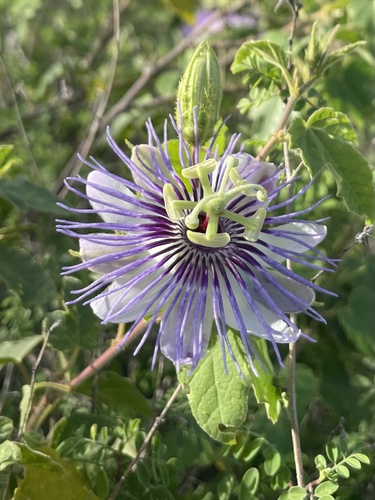
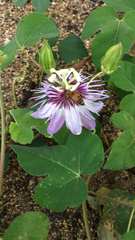
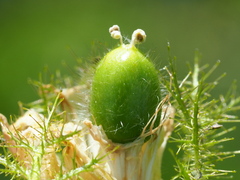
Stinking passionflower (Passiflora foetida) is an herbaceous vine in the Passifloraceae family, native to tropical and subtropical America. Its finely divided, sticky bracts trap small insects around flowers and young fruit, making it a protocarnivorous species. Introduced throughout the tropics, it is now considered invasive in several warm regions.
Read moreStinking passionflower, Fetid passionflower, Running pop, Wild water lemon and Love-in-a-mist
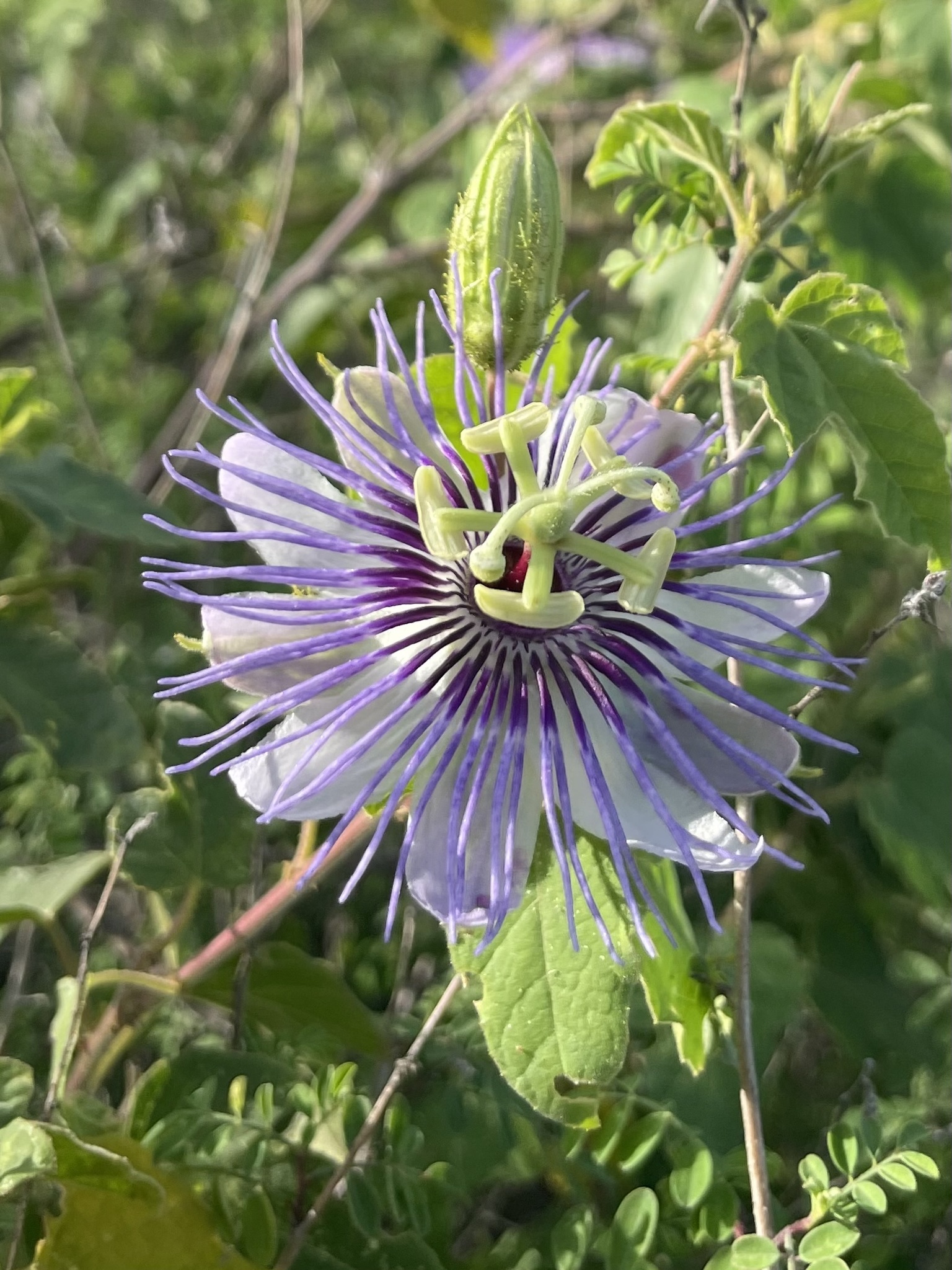
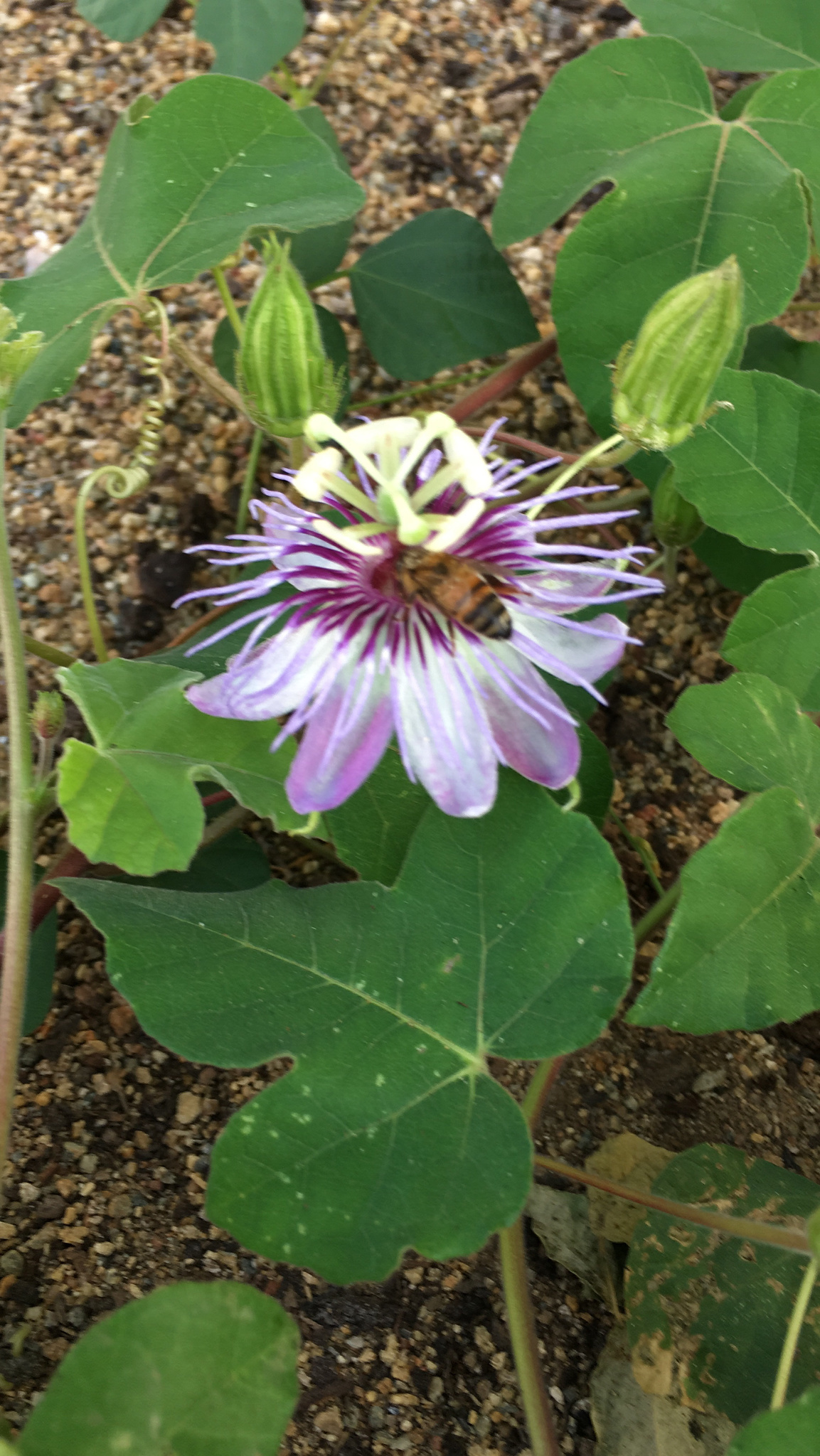
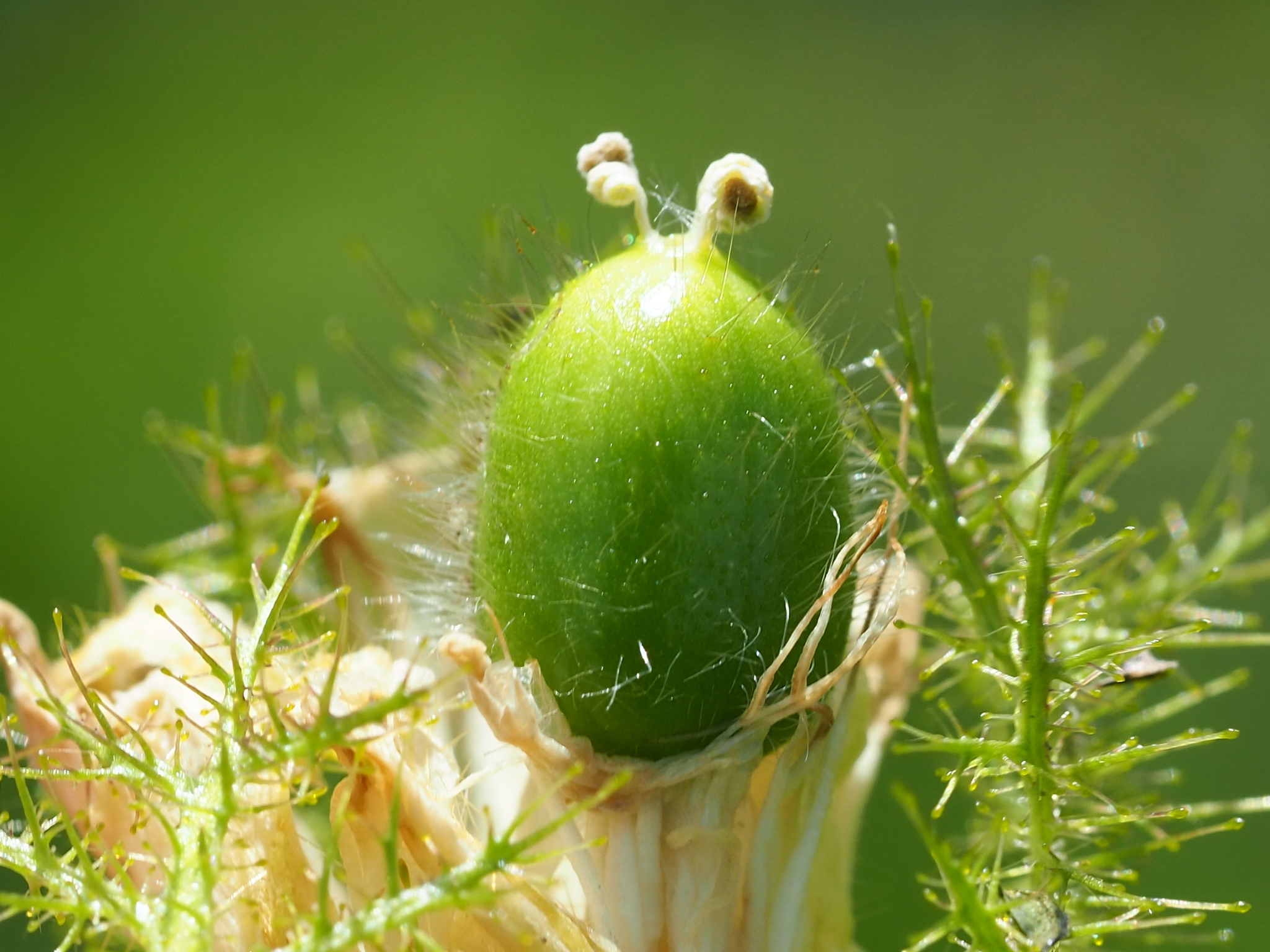


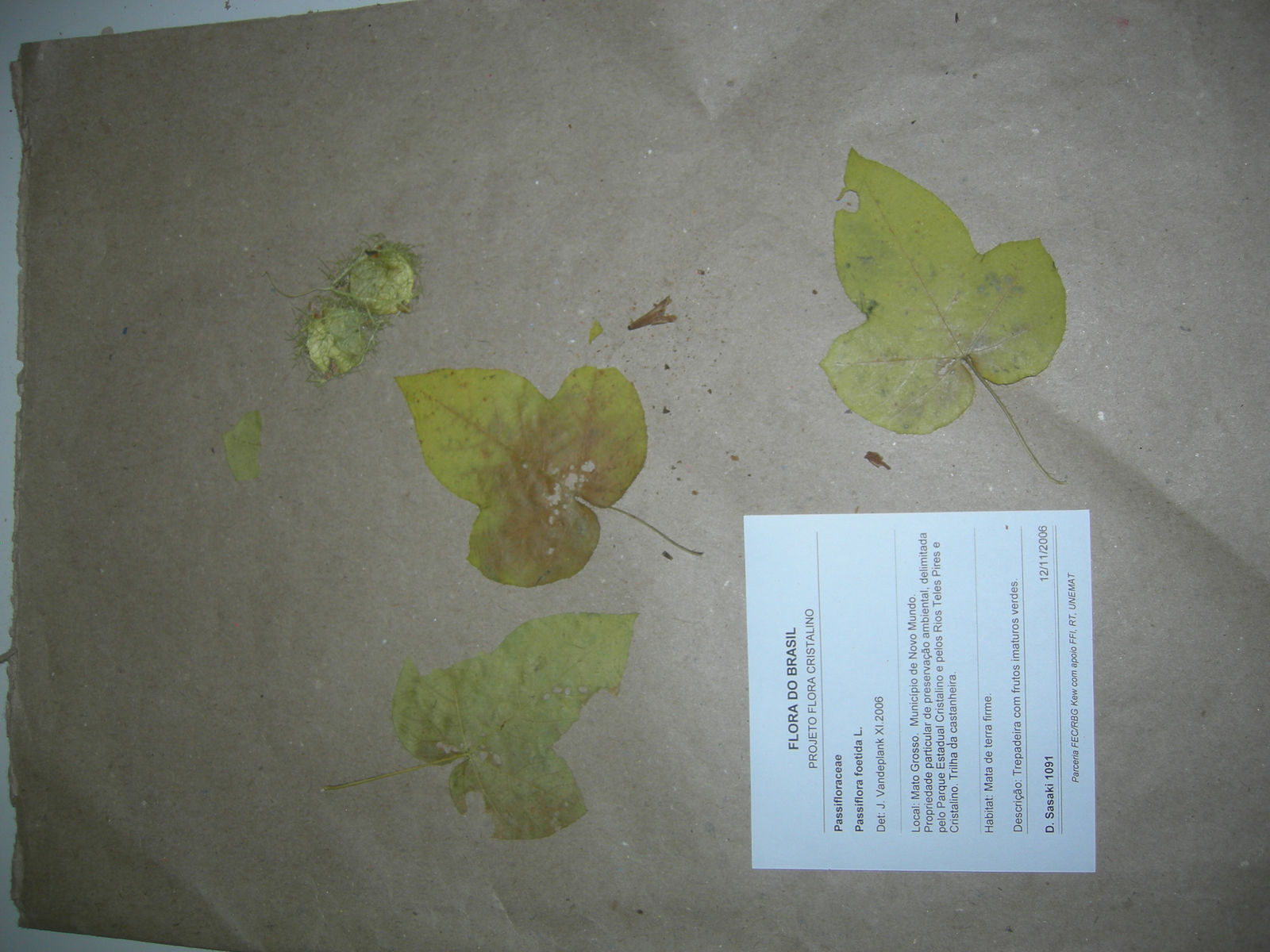


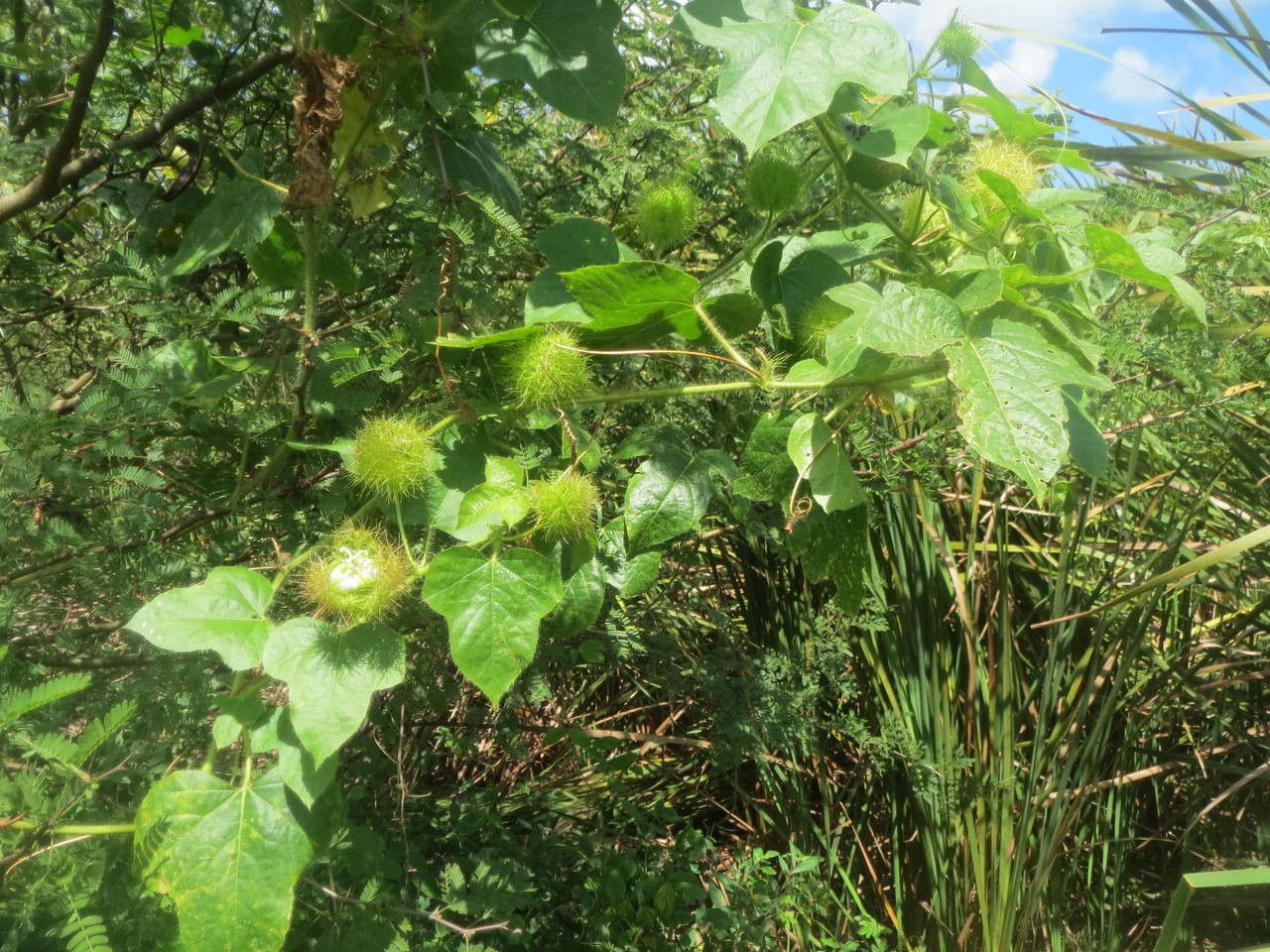
© photo
(c) Eric JTh van Haag, some rights reserved (CC BY-NC), uploaded by Eric JTh van Haag · cc-by-nc
iNaturalist User · cc0
葉子 · cc0
Taken Nov 29, 2012 by J. Champ (cc-by-sa)
Taken Nov 12, 2022 by Blue Bottle (cc-by-sa)
Taken Nov 11, 2015 by Tela Botanica − Hugo SANTACREU (cc-by-sa)
Taken Sep 9, 2022 by Marzanna Bug (cc-by-sa)
© copyright of the Board of Trustees of the Royal Botanic Gardens, Kew.




Global distribution
The native range of Passiflora foetida spans tropical and subtropical America, from the southern United States to northern Argentina. Introduced into most warm regions since the nineteenth century, it is now pantropical and locally invasive, notably on several Pacific islands and in Australia.
- Native5
- Introduced4
- Invasive2
- Mexico
- United States (Texas, Arizona)
- Brazil
- Argentina
- Cuba
- India
- Vietnam
- Hawaii
- Réunion
- Fiji
- Australia
Hexagons: regions where the plant occurs. Green dots: native range.1
Identity
Stinking passionflower (Passiflora foetida L., 1753) is an herbaceous vine in the genus Passiflora, family Passifloraceae. The Latin epithet foetida means stinking and describes the acrid odor released by glandular hairs on stems and crushed leaves. 1
Regional names reflect its pantropical spread. English speakers also use Fetid passionflower, Running pop, Wild water lemon and Love-in-a-mist. In Réunion, poc-poc and grenadille-caméléon occur, while marie-gougeat is used in several French overseas territories. Introduction into different regions has produced a varied local vocabulary for the same plant. 8
Recognition
Sticky hairs and a pungent smell provide immediate clues to identification. Slender stems, tendrils and leaves carry hairs tipped with viscous glands. Alternate leaves have one to five lobes, depending on the variety. 6
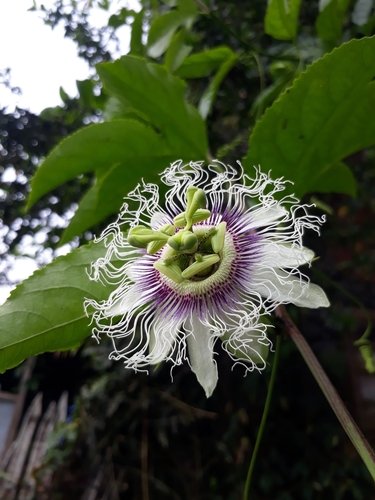
Finely divided bracts distinguish Stinking passionflower from other common passionflowers. They form a threadlike net, almost lace, enclosing the bud and later the fruit, unlike the entire bracts of Passiflora edulis and Passiflora caerulea. This net secretes sticky mucilage rich in digestive enzymes, including proteases and acid phosphatases, trapping small plant-eating insects around the vulnerable reproductive organs. This protocarnivorous behavior was described in 1995. 7
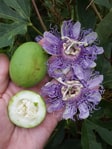
Flowers measure 2–6 cm (0.8–2.4 in) across, smaller than large ornamental passionflowers such as Passiflora caerulea. Colors range from white and cream to pink and pale purple. Globose fruit 2–4 cm (0.8–1.6 in) across turns from green to yellow, then orange or red when fully ripe, with translucent pulp surrounding many black seeds. 6
Useful taxonomy
For this taxon, POWO accepts Passiflora foetida L. Historical heterotypic synonyms encountered in botanical literature include:
- Tripsilina foetida (L.) Raf., a historical botanical name
- Dysosmia foetida (L.) M.Roem., a historical botanical name
- Granadilla foetida (L.) Gaertn., a historical botanical name
These names refer to earlier botanical treatments of the species.
More than thirty botanical varieties are also recognized by POWO, including Passiflora foetida var. hirsuta Mast. and var. nigelliflora (Hook.) Mast. Hairiness and bract division are their main distinguishing features. Amid variable and sometimes ambiguous local common names, Passiflora foetida L. provides a stable reference for gardeners and botanists across regions. 1 2
Habitat and range
Tropical and subtropical America holds the native range, extending from the southern United States (Texas, Arizona) through Mexico, the Caribbean and Central America to northern Argentina. POWO classifies it as an annual to biennial climber, which can behave as a short-lived perennial in constant tropical conditions. 1
Trade and horticulture introduced this vine into most warm regions from the nineteenth century onward. It has naturalized in Africa, South and Southeast Asia, Pacific islands and Hawaii. 4
Disturbed ground allows Stinking passionflower to form dense cover that delays or prevents other species establishing. The Global Invasive Species Database records it in 27 regions, including Fiji, Australia and several Pacific archipelagos. 3
Thousands of worldwide observations are grouped by GBIF under the accepted name, a spread much wider than the American native range alone would suggest. 2
Life cycle and reproduction
Constant tropical warmth allows almost continuous flowering and fruiting once temperatures exceed 16 °C (61 °F). Cold below 3 °C (37 °F) destroys the plant. 6
Bees and other insects attracted to the fringed flower pollinate it before fruit develops. Seeds germinate best fresh, with pulp still attached. Stored seeds require 24 hours of soaking and may take up to a year to emerge. Stem cuttings and air layering also propagate the vine. 6
Birds eat ripe fruit and disperse seeds over long distances. Their role helps explain the rapid colonization observed on disturbed land. 3
Uses and risks
Fully ripe yellow to orange-red fruit is eaten raw or in drinks; cooked young leaves are eaten in some tropical cuisines. Green fruit, however, remains toxic. 6
Fresh foliage contains cyanogenic glycosides, at higher concentrations during the dry season. An experimental goat study recorded clinical signs, including tachycardia, incoordination and dilated pupils, after ingestion of 4–8 g/kg of fresh leaves. Poisoning was much more frequent in the dry season (11 of 14 goats) than in the rainy season (3 of 13). Intravenous sodium thiosulfate produced complete recovery in treated animals. 5
Traditional folk medicine in several tropical countries uses the plant for insomnia, coughs and digestive complaints. These uses lack clinical validation comparable to the culinary use of ripe fruit. 4
Food use therefore depends strongly on maturity and plant part: the ripe fruit provides nourishment, while fresh foliage is toxic. This distinction limits culinary use despite the species' wide geographic spread. 6
Varieties, look-alikes and related plants
The English name love-in-a-mist, sometimes applied to this vine because of its netlike bracts, also names Nigella damascena, an unrelated member of Ranunculaceae. A common name alone can therefore cause confusion. 4
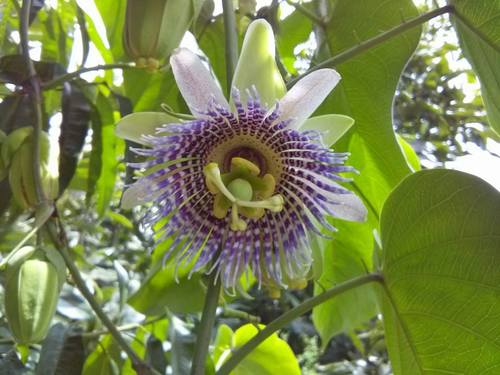
Comparison with cultivated Passiflora edulis and Passiflora caerulea is especially useful. Both have larger flowers and commercially used fruit, whereas Stinking passionflower is chiefly a small-flowered tropical weed, identified by sticky, threadlike bracts and its characteristic smell. 1 2
Main sources
- Plants of the World Online / Kew, Passiflora foetida L.
- GBIF Backbone Taxonomy, Passiflora foetida L.
- IUCN Global Invasive Species Database, Passiflora foetida
- Hawaiian Ecosystems at Risk (HEAR), Passiflora foetida species info
- Carvalho et al., Intoxicação experimental por Passiflora foetida em caprinos, Pesquisa Veterinária Brasileira, 2011
- Useful Tropical Plants Database, Passiflora foetida
- Radhamani, Sudarshana & Krishnan, Defense and carnivory (dual role of bracts in Passiflora foetida), Journal of Biosciences, 1995
- INPN / MNHN, Passiflora foetida L., 1753, French common names
Frequently asked questions
Is Stinking passionflower fruit edible?
Only the fully ripe yellow to orange-red fruit is eaten raw or in drinks. Green fruit remains toxic and must not be eaten.
Why does Stinking passionflower smell unpleasant?
The epithet foetida means stinking in Latin. The odor comes from sticky glandular hairs covering the stems and leaves, especially when crushed.
Is Stinking passionflower invasive?
Yes, in several tropical and subtropical regions where it has been introduced. It forms dense cover that delays other species establishing, notably on Pacific islands and in Australia.
Is Stinking passionflower toxic to animals?
Fresh leaves contain cyanogenic glycosides that have caused documented poisoning in goats, especially in the dry season. Green fruit is also affected.
What do the sticky bracts around the flowers do?
They secrete mucilage rich in digestive enzymes that traps small plant-eating insects, a defensive behavior described as protocarnivorous.
How does it differ from ornamental Passiflora edulis or Passiflora caerulea?
Those species produce larger flowers and commercially used fruit. Stinking passionflower is chiefly a small-flowered tropical weed, recognizable by its sticky, threadlike bracts.
Where is Stinking passionflower native?
Its native range spans tropical and subtropical America, from the southern United States to northern Argentina. Carl Linnaeus described it in 1753.
Similar plants

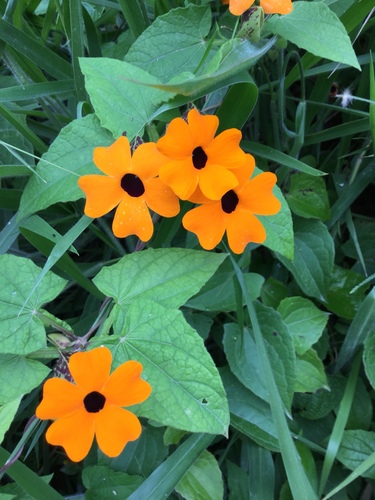
If you are unsure about a plant’s toxicity, ask a botanist or veterinarian for advice.