
White poplar (Populus alba, )
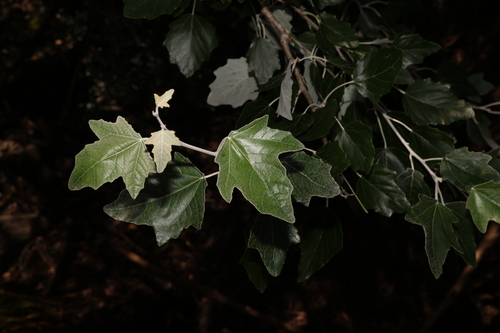
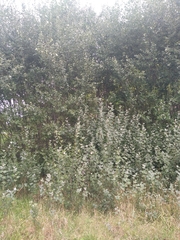
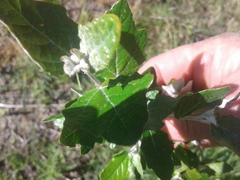
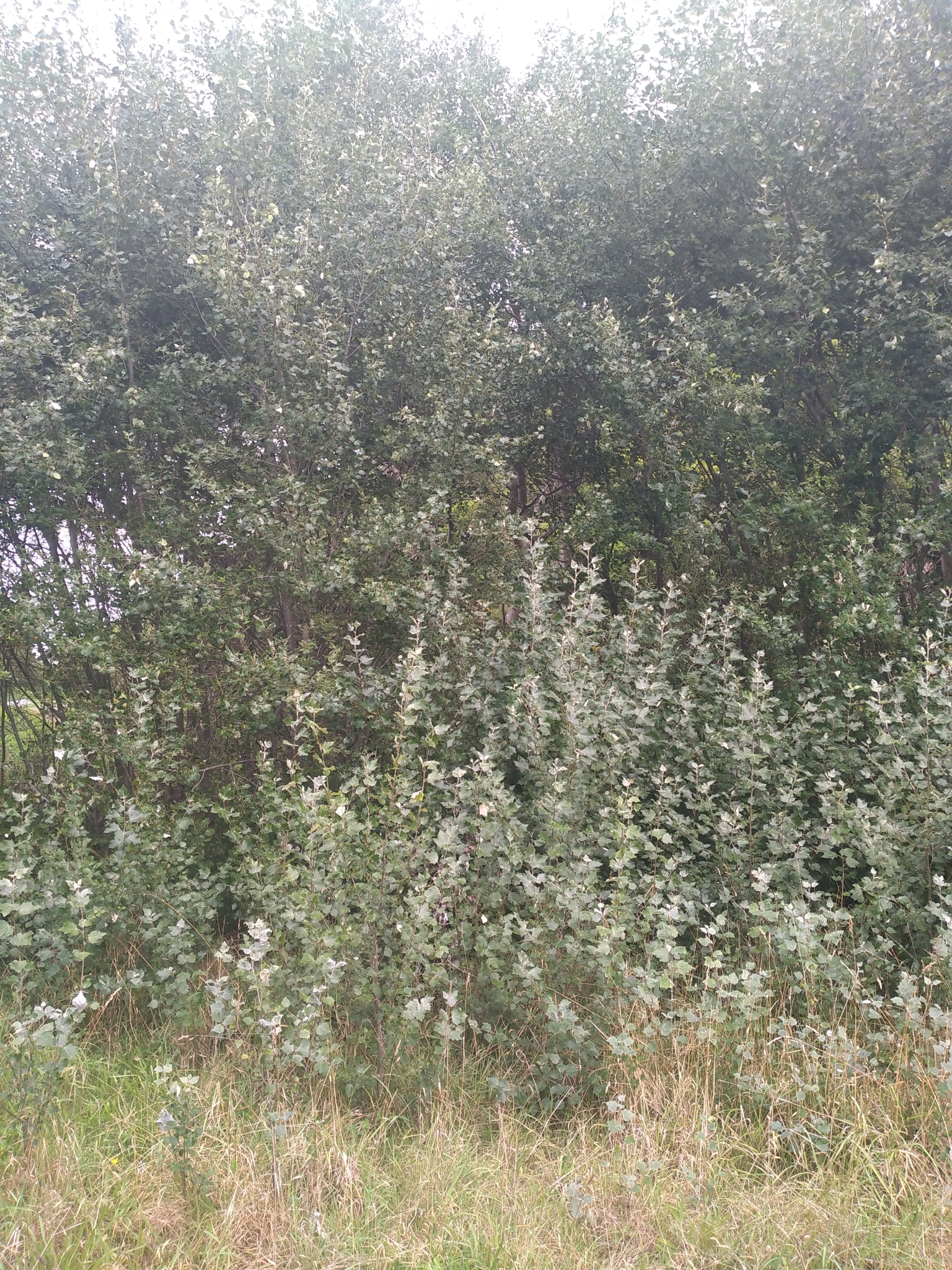
White poplar (Populus alba) is a large dioecious tree in the Salicaceae family, native from North Africa’s Atlas Mountains through southern and central Europe to Xinjiang. Dark green leaf surfaces contrast with thick white down beneath. Vigorous root suckering often creates entire colonies around a single tree.
Read moreWhite poplar, Silver poplar, Silverleaf poplar and Abele


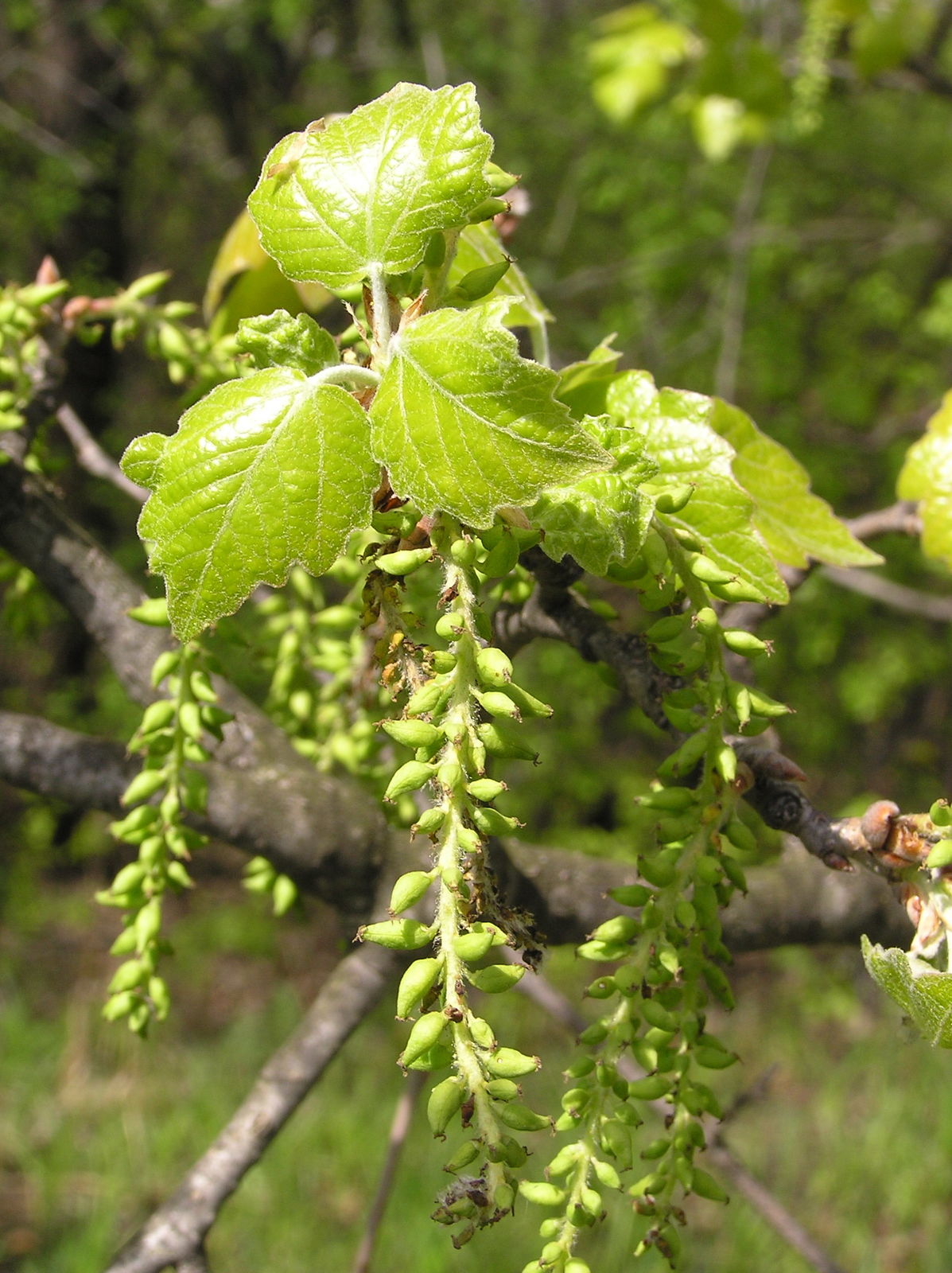
© photo
Greg Tasney · cc-by-sa
Leon Perrie · cc-by
Brett Sandford · cc-by
Taken Sep 21, 2021 by Hugo SARRAUT (cc-by-sa)
Taken Jul 8, 2020 by iserte jose (cc-by-sa)
Taken Oct 7, 2014 by Tela Botanica − Liliane Roubaudi (cc-by-sa)
Taken Sep 27, 2021 by Jean-René Girardeau (cc-by-sa)
© copyright of the Board of Trustees of the Royal Botanic Gardens, Kew.




Global distribution
Populus alba is native from North Africa’s Atlas Mountains through southern and central Europe to Xinjiang and the western Himalayas. In France it is native in the Mediterranean south and Rhône Valley, but mainly planted farther north. Introduced to North America as early as 1748, it is now widely naturalized there.
- Native4
- Invasive2
- France
- Italy
- Morocco
- China
- United States
- Canada
Hexagons: regions where the plant occurs. Green dots: native range.1
Identity
White poplar (Populus alba L., 1753), also called silver poplar or abele, belongs to Populus in the Salicaceae family. The epithet alba, Latin for ‘white’, describes the pale felt covering leaf undersides and young shoots. Dark green upper surfaces contrasting with cottony white undersides make the tree recognizable even without flowers or fruit. 1 3
From the Atlas Mountains of Morocco and Algeria to Xinjiang, white poplar occupies a broad native range across southern and central Europe. In France it is considered native in Mediterranean valleys and the Rhône corridor, where it forms characteristic riverside gallery forests. Farther north in France, the tree is mainly planted beyond its native range. 7 8
Recognition
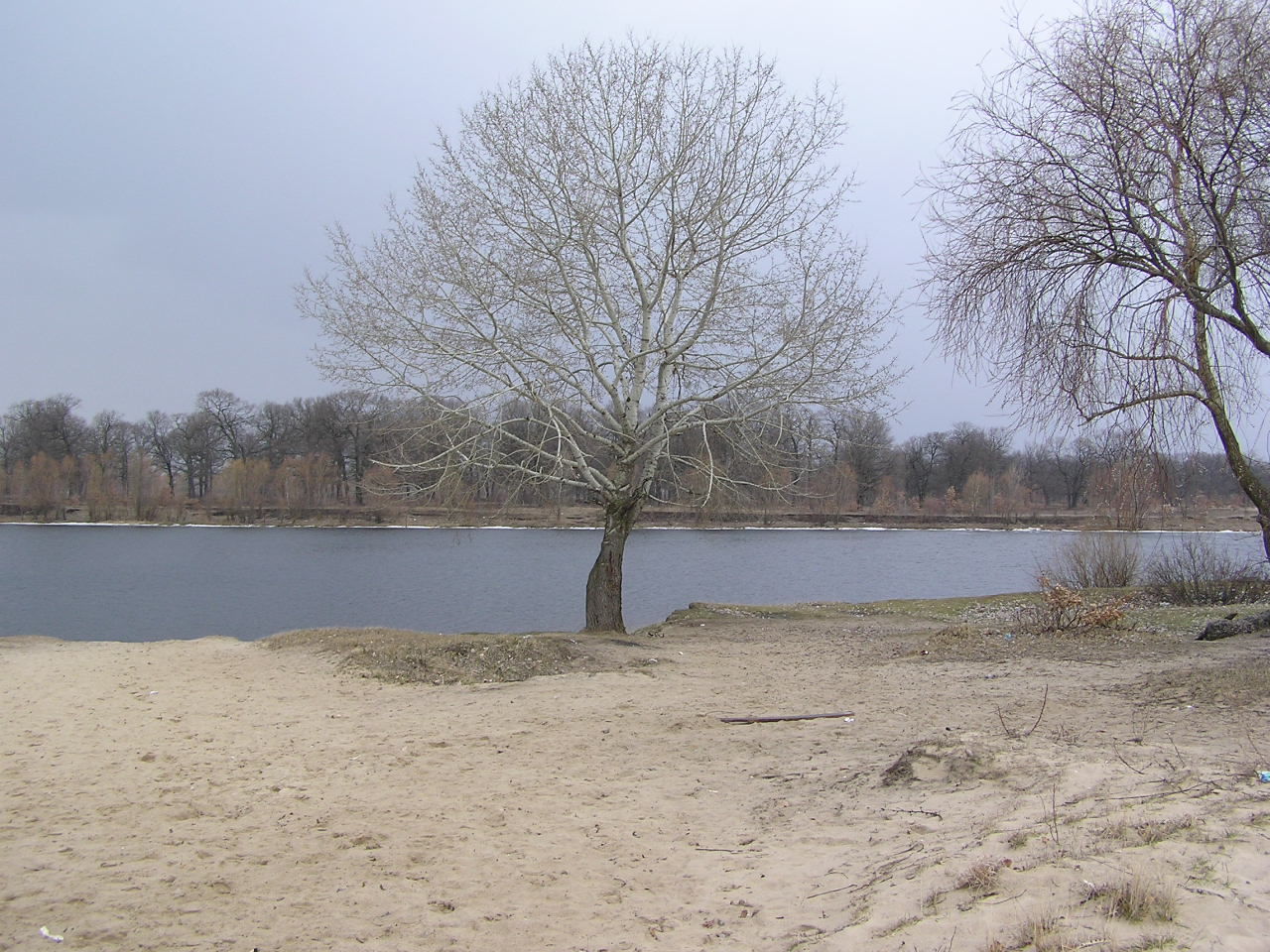
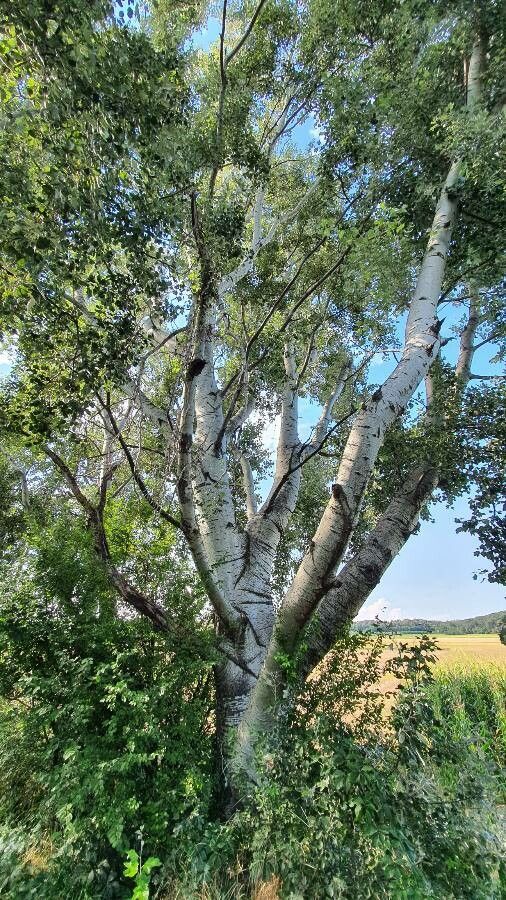
A broad trunk and spreading crown give white poplar its medium to large stature, reaching 15–30 m (50–100 ft) tall. The trunk can exceed 2 m (6.5 ft) in basal diameter. Young bark is smooth and gray-white with dark diamond-shaped marks, later cracking into gray plates near the base. 3 4
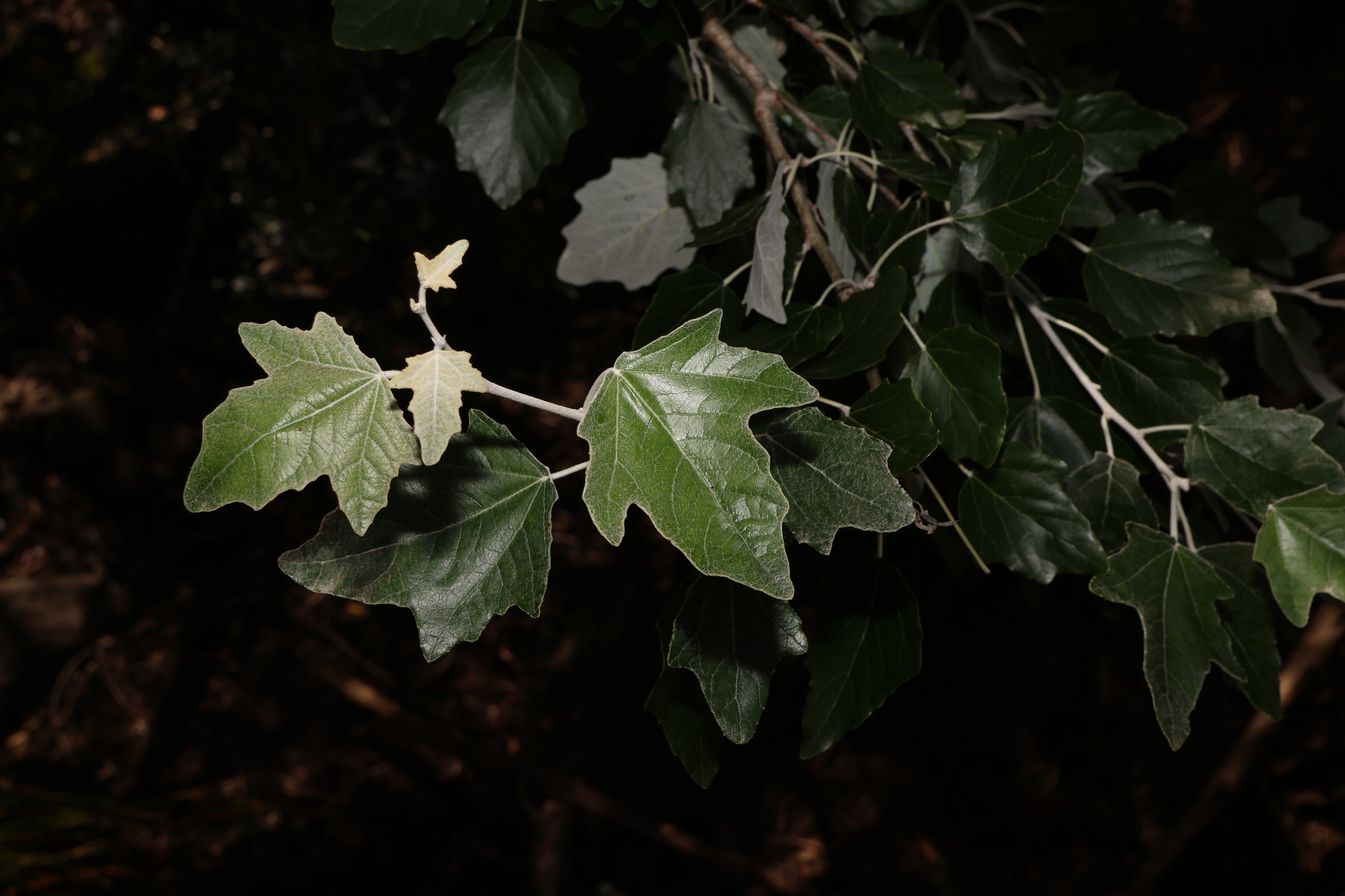
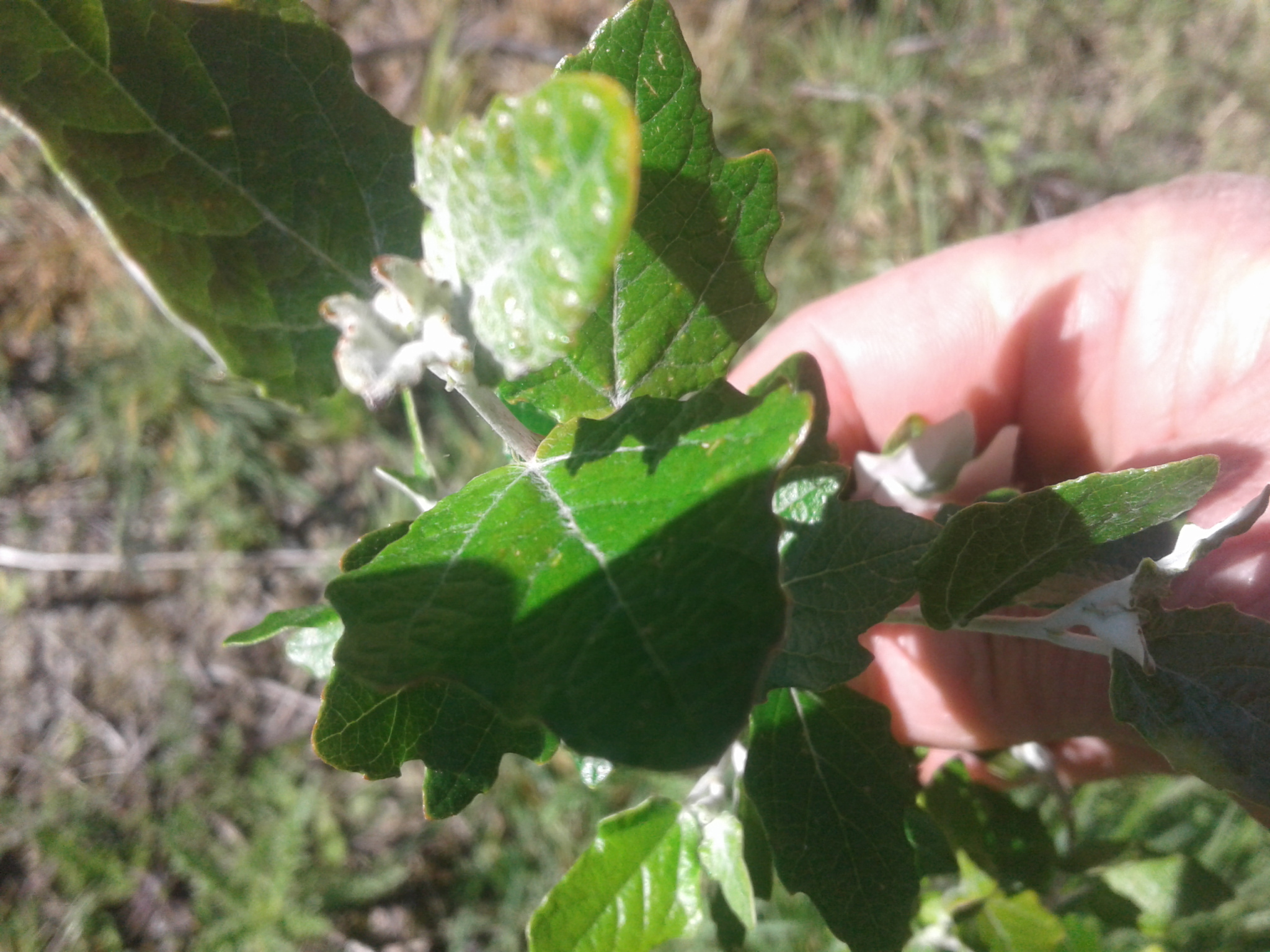
Leaves 4–15 cm (1.5–6 in) long have three to five irregular lobes, recalling maple or ivy foliage. Glossy dark green upper surfaces contrast strongly with thick cottony white down beneath, giving the crown a silver flash in the wind. Young shoots and buds have the same white felted covering. 4 3
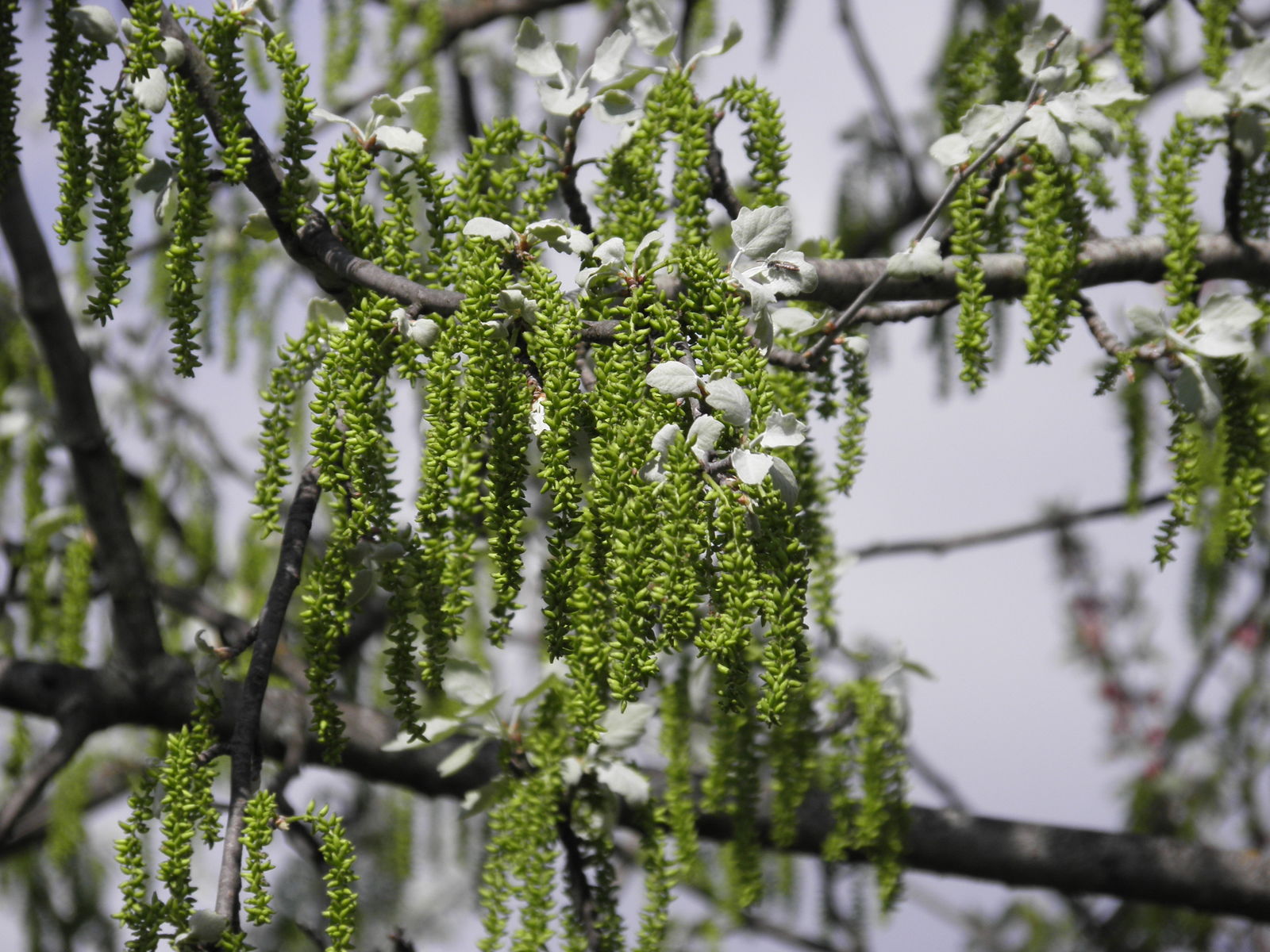
White poplar is dioecious: separate trees carry gray male catkins with dark red stamens or gray-green female catkins. They appear in early spring before the leaves. Female capsules subsequently release tiny, cottony-haired seeds dispersed by wind in later spring. 3 4
Useful taxonomy
POWO/WCVP accepts the name Populus alba L. Numerous varieties and forms have been described, most now treated as botanical synonyms or used as horticultural cultivar names:
- Populus alba var. nivea Aiton
- Populus alba var. pyramidalis Bunge
- Populus alba var. bolleana (Lauche) Ed.Otto
- Populus alba f. richardii Beissn.
- Populus alba var. pendula Loudon (historical variety and form names)
When identification is uncertain, POWO’s accepted scientific name remains the stable reference. Several former variety names also circulate commercially for a particular tree outline or leaf color, with usage varying among nurseries. 1
Habitat and range
North Africa’s Atlas Mountains mark the western end of a native range extending through southern and central Europe to Xinjiang and the western Himalayas. White poplar favors moist sites, often beside rivers, in climates with hot summers and cool to mild winters. 1 2
In France, native populations occur in the Mediterranean south and Rhône Valley. With white willow, it forms riverside gallery forests recognized as habitats of European Community interest. Elsewhere in France it is mainly planted in avenues or windbreaks, sometimes becoming locally naturalized. 7 8
Introduction to North America dates to 1748, and white poplar has since become widely naturalized there. Records cover 43 US states, and the tree is regarded as invasive in several regions. The cited account also reports a planting prohibition in Connecticut; such restrictions apply within their own jurisdiction. 6
Life cycle and reproduction
Before any leaves unfold, white poplar flowers in early spring, with exact timing depending on climate. After pollination, female flowers form capsules that release tiny seeds surrounded by cottony down within a few weeks. Seed viability is very short, so this reproductive opportunity is brief. 3 5
Vegetative spread is equally conspicuous through root suckering. Shallow lateral roots produce shoots as far as 20–30 m (65–100 ft) from the original trunk, forming colonies genetically identical to one individual. This explains dense groves around a solitary tree long before seedlings establish. 6
Uses and risks
Soft, light wood with relatively low flammability has traditionally supplied matches, packing crates and paper pulp; the bark yields yellow dye. White poplar is also widely planted as a windbreak and to stabilize sandy soils or dunes, using its dense network of spreading roots. 5 6
The bark contains salicylates, associated with the historical development of aspirin and traditionally used for fever and rheumatic pain. No toxicity is documented for cats, dogs or people. The status remains uncertain for horses, however, because specific data are lacking. 5
Those spreading roots that stabilize soil also cause problems near buildings. They can lift paving and damage drains or foundations. Planting more than 15–20 m (50–65 ft) from structures allows space for a root system that extends well beyond the visible trunk. 2 4
Varieties, look-alikes and related plants
Foliage and silhouette distinguish the sought-after horticultural forms. 'Nivea' has particularly white leaf felt; 'Pyramidalis', often sold as 'Bolleana', forms a narrow upright crown; and 'Richardii' produces golden young leaves that turn green as the season advances. 1
Three related trees are frequent sources of confusion:
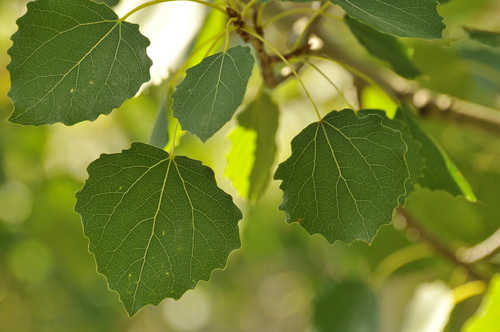
- European aspen, Populus tremula, lacks white felt beneath its leaves;
- Gray poplar, Populus × canescens, is a natural hybrid of Populus alba and Populus tremula, with intermediate, less dense down;
- Black poplar, Populus nigra, has diamond-shaped leaves green on both surfaces, without down.
Thick white felt beneath the leaves, combined with irregular lobes in the blade, usually separates Populus alba from these three related trees. The underside is especially useful when crown shape alone is misleading.
Main sources
- Plants of the World Online / Kew, Populus alba L.
- Royal Horticultural Society, Populus alba (White poplar)
- Missouri Botanical Garden Plant Finder, Populus alba
- NC State Extension Plant Toolbox, Populus alba
- Plants For A Future, Populus alba
- Wikipedia (EN), Populus alba
- INPN / MNHN, Populus alba L., 1753, White poplar
- Tela Botanica (BDTFX reference), Populus alba L.
Frequently asked questions
Is white poplar poisonous to cats and dogs?
No toxicity is documented for cats, dogs or people. Its status remains uncertain for horses because species-specific data are lacking.
How can I recognize white poplar in winter?
Smooth gray-white bark marked with dark diamonds is the most reliable clue, together with the many root suckers often visible around the trunk.
Why does my young white poplar produce so many suckers?
Root suckering is a natural reproductive method in this species. Root injury or severe pruning can intensify it.
Can I plant white poplar close to a house?
It is better avoided. Its spreading roots can lift paving and damage drains or foundations within 15–20 m (50–65 ft).
Is white poplar invasive?
It is generally managed without particular difficulty within its native European range. In North America, where it was introduced as early as 1748, it is considered invasive in several regions.
What is the difference between Pyramidalis and Bolleana?
Both names refer to the same narrow, upright outline and are used interchangeably in nurseries, without a stable botanical distinction.
How can I distinguish white poplar from European aspen?
White poplar has thick white down beneath its leaves. European aspen lacks this covering and has green, hairless leaves on both sides.
Similar plants
If you are unsure about a plant’s toxicity, ask a botanist or veterinarian for advice.