
Red currant (Ribes rubrum, )
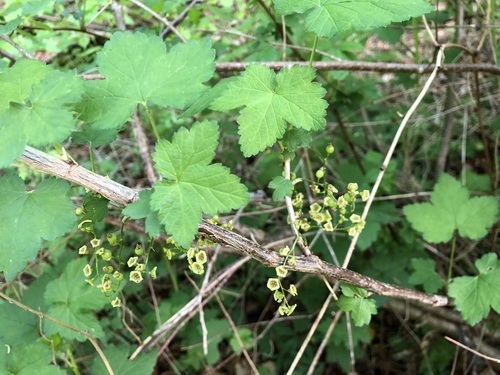

Red currant (Ribes rubrum) is a deciduous fruit shrub in the Grossulariaceae family, native to western and central Europe. It is grown for its small, translucent red berries, borne in hanging clusters and both tart and edible. Hardy and undemanding, it is a familiar soft fruit in temperate gardens.
Read moreRed currant and Redcurrant



© photo
Jason Grant · cc-by
Gavin Slater · cc-by
Grzegorz Grzejszczak · cc-by-sa
Taken Apr 2, 2015 by Tela Botanica − Yoan MARTIN (cc-by-sa)
Taken Apr 10, 2010 by Tela Botanica − Jean-Luc GORREMANS (cc-by-sa)
Taken Apr 7, 2015 by Tela Botanica − Gérard LEVESLIN (cc-by-sa)
Taken Jul 5, 2014 by Tela Botanica − Dominique REMAUD (cc-by-sa)
Taken May 28, 2022 by Annemarie Ahrens-Stehle (cc-by-sa)
© copyright of the Board of Trustees of the Royal Botanic Gardens, Kew.




Global distribution
Ribes rubrum is native to western and central Europe, where it grows wild in cool woodland, damp woodland edges and riverside woods. Cultivation has spread it throughout the temperate Northern Hemisphere. It sometimes escapes gardens and naturalizes along woodland and hedgerow margins.
- Native5
- Metropolitan France
- Germany
- Belgium
- United Kingdom
- Netherlands
Hexagons: regions where the plant occurs. Green dots: native range.1
Identity
Red currant (Ribes rubrum L., 1753), also written redcurrant, is a deciduous fruit shrub in the Grossulariaceae family and the genus Ribes. Its small translucent red berries hang in clusters and are tart and edible. This hardy bush grows 1–1.5 m (3–5 ft) tall and is a classic soft fruit of temperate gardens. 1 3
Western and central Europe are its native home, where wild plants occupy cool woodland. Long domestication has made it a widespread crop. The name red currant distinguishes it from blackcurrant and gooseberry, two close relatives in the same genus. 2 4
Recognition
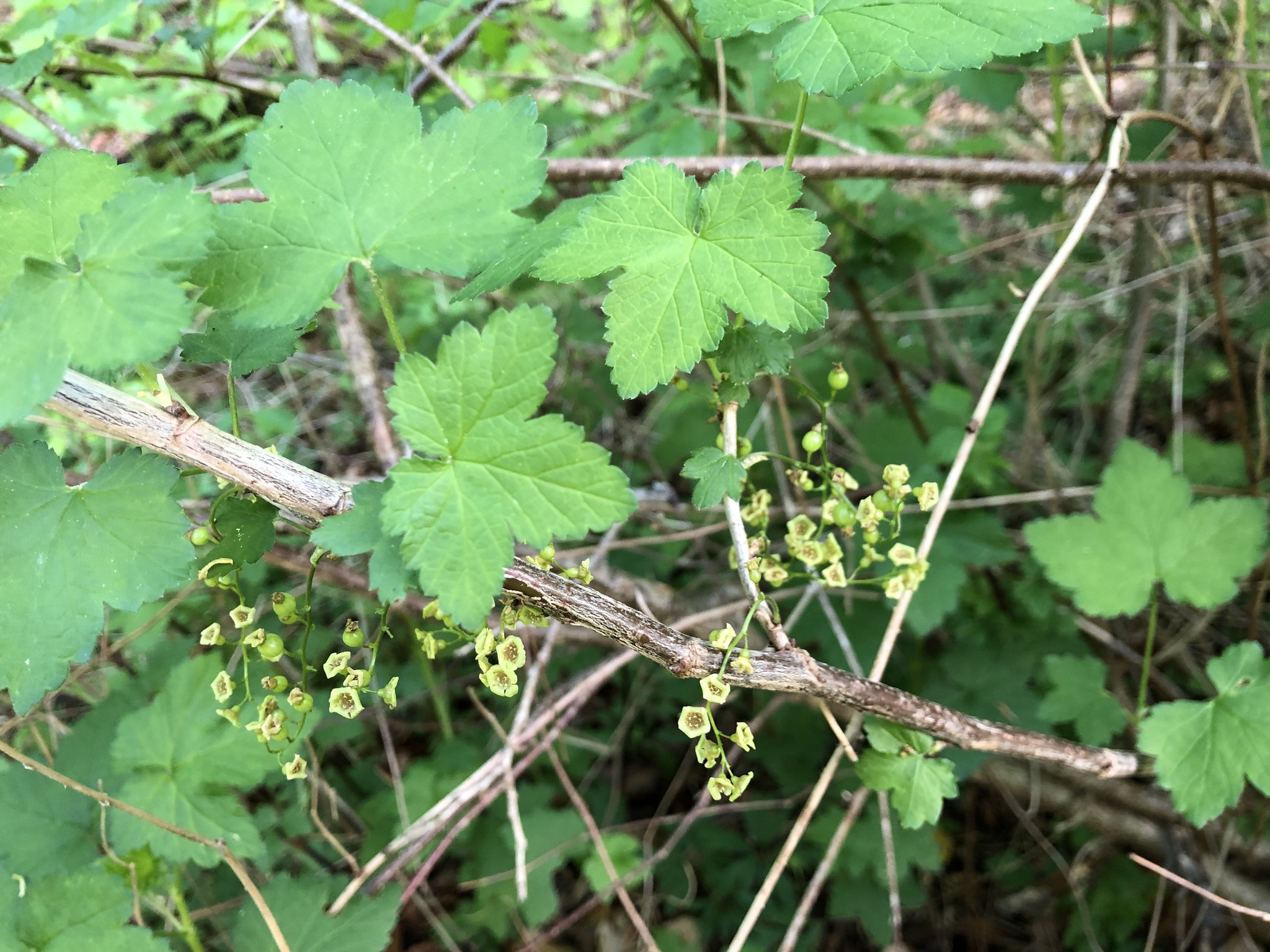
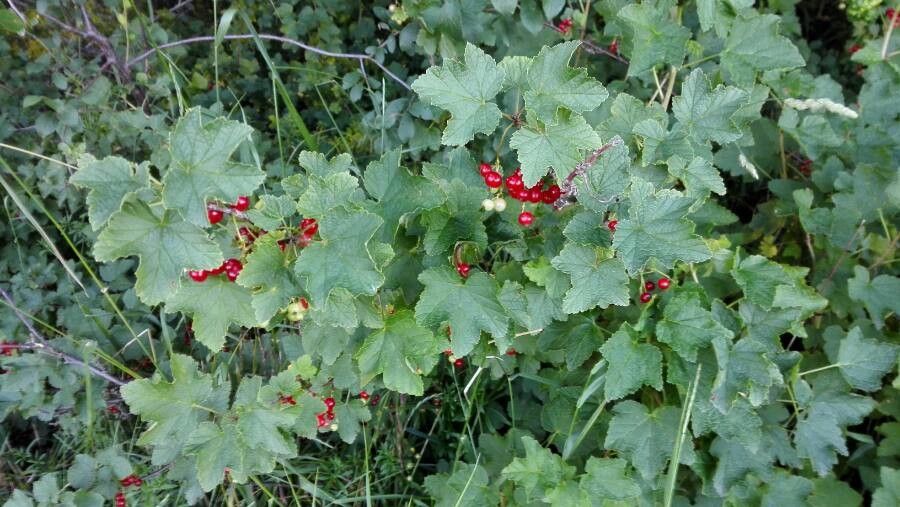
Upright growth and flexible, thornless branches give Ribes rubrum its bushy outline, with several stems of different ages in one clump. Alternate leaves have three to five toothed lobes, medium-green upper surfaces and paler undersides. Crushing a leaf releases no marked smell. 2 3
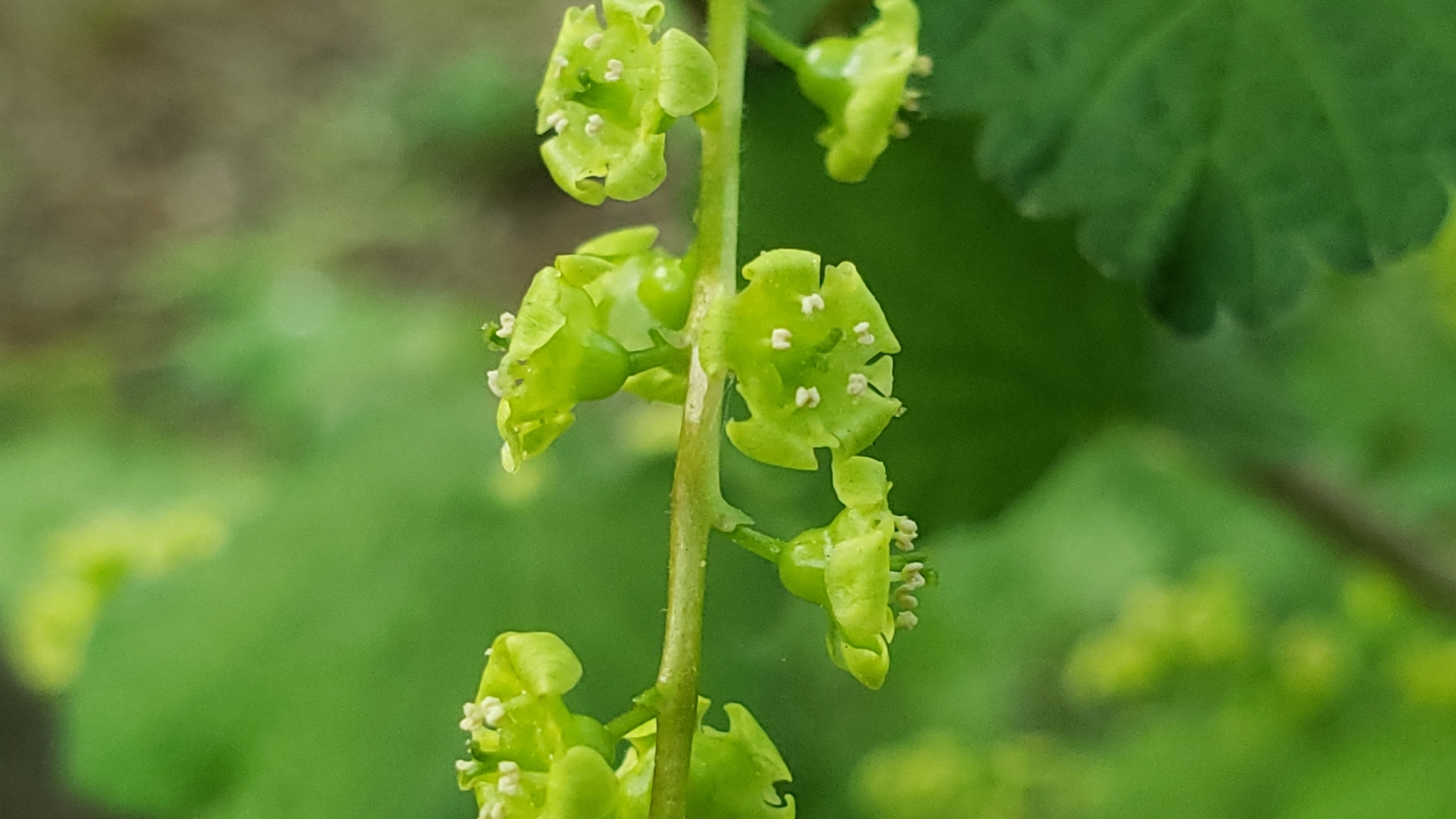
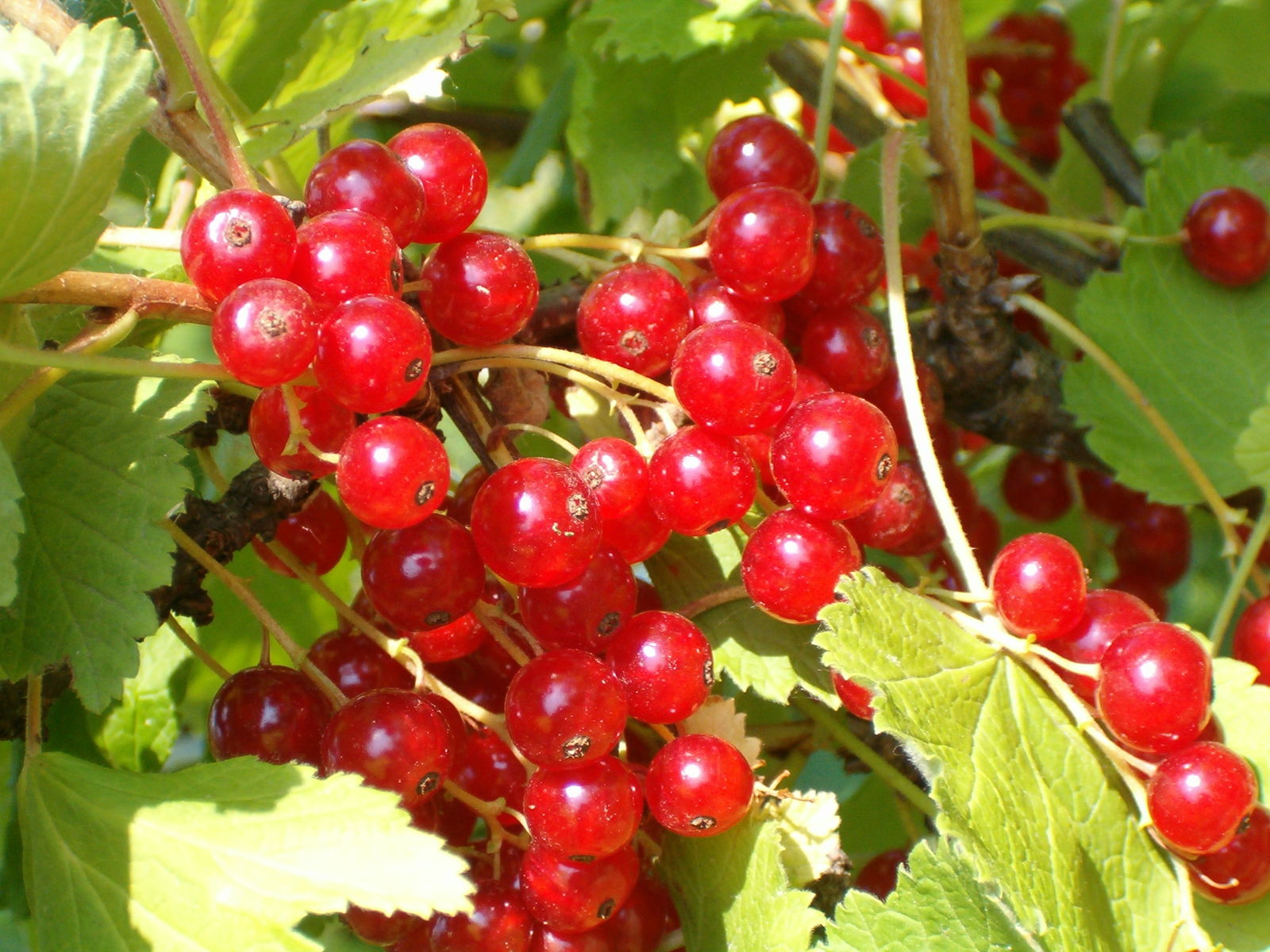
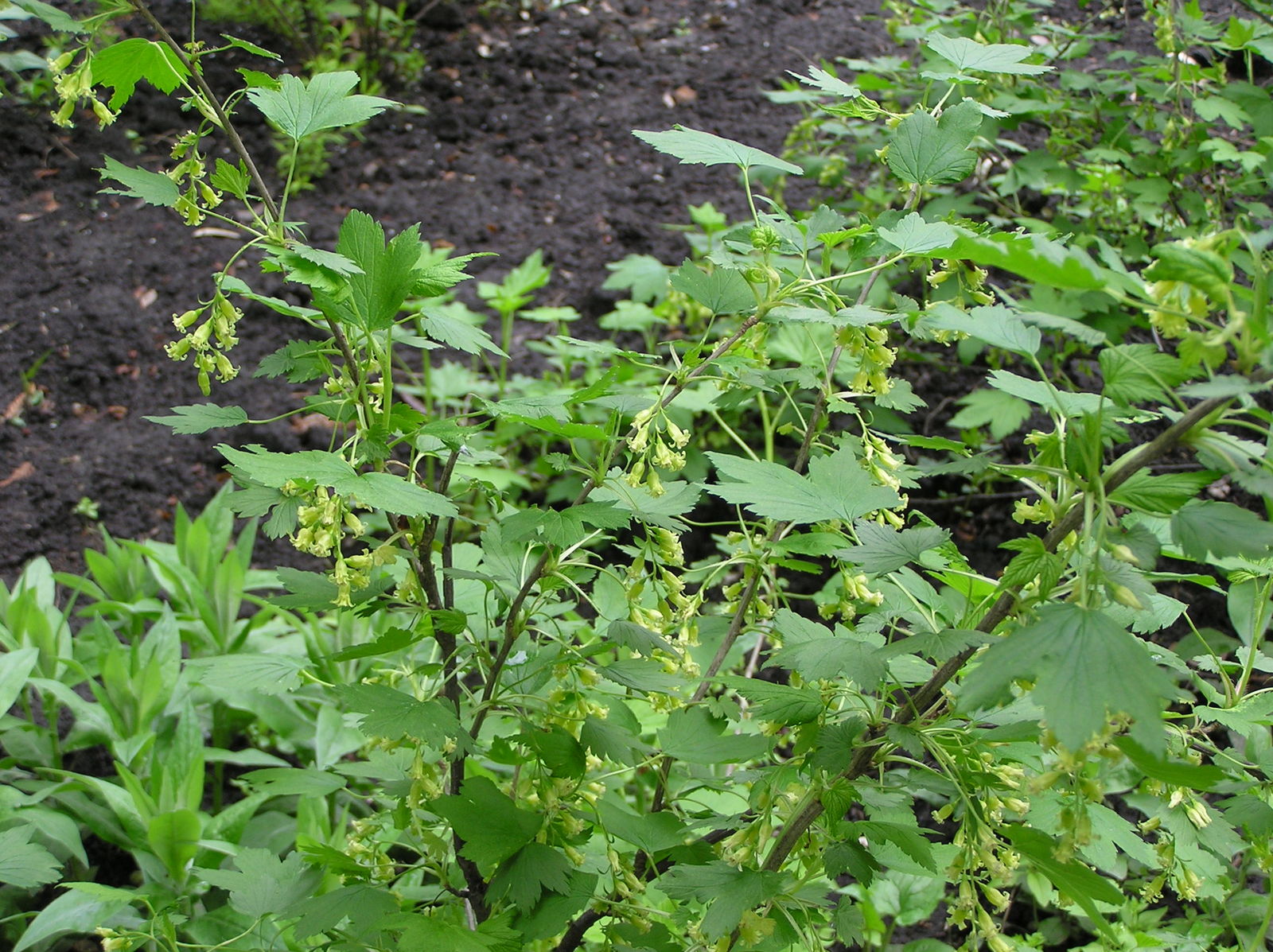
Small, inconspicuous greenish flowers appear in hanging clusters in spring. They develop into round, translucent red berries 8–12 mm (0.3–0.5 in) across, arranged along a shared stalk in clusters known as strigs. The distinctly tart flesh contains a few small seeds. 3 4
Two features separate red currant from its relatives. Thornless stems distinguish it from gooseberry, which has spiny stems and solitary fruits. Leaves without a strong smell distinguish it from blackcurrant, whose crushed leaves release a powerful resinous scent. 2 6
Useful taxonomy
Described by Linnaeus in 1753 as Ribes rubrum L., this species belongs to the Grossulariaceae family. Older botanical and horticultural literature uses several synonyms, often associated with cultivated forms:
- Ribes vulgare Lam., a historical synonym
- Ribes sativum (Rchb.) A.Berger
- Ribes sylvestre (Lam.) Mert. & W.D.J.Koch
- Grossularia rubra (L.) Scop.
- Ribesium rubrum (L.) Medik.
The historical name Grossularia rubra once placed red currant with the gooseberries, before the group was brought together within Ribes. The accepted scientific name, Ribes rubrum, remains the stable reference: many alternative names chiefly refer to cultivated forms or regional descriptions of the same species. 1 5
Habitat and range
Cool, damp European habitats support wild Ribes rubrum. It grows in moist woodland, shaded edges, riverside woods and stream banks in western and central Europe, benefiting from humus-rich soil and humid air. 1 3
Cultivation has carried red currant across the temperate Northern Hemisphere, from Scandinavia to North America. It thrives where the climate stays reasonably cool and readily withstands harsh winters. This very hardy species even needs a substantial period of winter cold to flower well. 2 6
Garden escapes sometimes naturalize beside woods and hedges without becoming invasive. Intense heat and drought are a greater problem, scorching the foliage and compromising fruit production. 4 2
Life cycle and reproduction
Among the garden’s earliest fruit crops to bloom, red currant flowers in early spring. Bees and other insects pollinate its small greenish flowers in hanging clusters, which provide early nectar. Most varieties are self-fertile, so a single bush usually produces a crop. 4 2 8
Following flowering, each cluster develops a series of red berries that ripen in early summer. Harvest whole clusters once they are fully colored, holding the stalk to avoid crushing the delicate fruits. A well-managed bush reaches full production from its third year and remains fruitful for many years. 3 6
Mature wood cuttings planted in fall root readily, making propagation straightforward. Dividing old clumps and layering offer other routes. Winter pruning regularly renews the framework: keep eight to ten branches of varied ages and remove wood over three years old that has become less productive. 2 6 8
Uses and risks
Tart red berries are valued chiefly for food. They can be eaten fresh, but their pectin content makes them especially useful for jellies, jams, syrups, coulis, juice, and fillings or garnishes for pies and desserts. The famous Bar-le-Duc preserve, called currant caviar, is made by removing each berry’s seeds by hand with a goose quill, an old craft from Lorraine. 3 4
Regarding safety, the fruit is edible, and the species has no notable toxicity to humans, cats, dogs or horses. It can be grown and harvested without special precautions. Its main enemies are pests and diseases: aphids that blister leaves, sawfly larvae capable of stripping a bush in days, clearwing moth larvae that tunnel into branches, and fungi such as powdery mildew or anthracnose in stagnant conditions. 2 6
Varieties, look-alikes and related plants
Named cultivars are horticultural selections rather than separate species. Jonkheer van Tets is an early, very productive variety; Red Lake is a midseason classic with long clusters; Stanza ripens later; and White Grape produces sweeter translucent white berries. Check ripening time and vigor before buying to spread the harvest. 2 8
Close relatives in the garden cause the most frequent mix-ups:
- Ribes nigrum, blackcurrant, with black berries and strongly aromatic leaves;
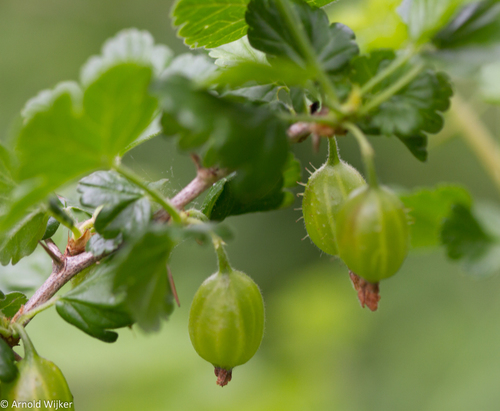
- Ribes uva-crispa, gooseberry, with thorny branches and large solitary berries.
Clusters of red berries, thornless branches and leaves without a strong smell remain the most reliable combination for identifying red currant, Ribes rubrum. 1 3
Main sources
- Plants of the World Online / Kew, Ribes rubrum L.
- Royal Horticultural Society, Ribes rubrum — common redcurrant
- Encyclopaedia Britannica, red currant
- Plants For A Future, Ribes rubrum
- International Plant Names Index, Ribes rubrum L.
- University of Minnesota Extension, growing currants and gooseberries
- Wikidata, Ribes rubrum (Q146661)
- Royal Horticultural Society, How to grow redcurrants — Ribes rubrum
Frequently asked questions
Are red currants edible?
Yes. Red currant berries are edible. Their tart flavor works fresh or in jelly, jam, syrup and coulis. No notable toxicity is reported in humans or domestic animals.
What is the difference between red currant and blackcurrant?
Red currant (Ribes rubrum) has translucent red berries in clusters and leaves without a strong smell. Blackcurrant (Ribes nigrum) has black berries and leaves that smell strongly aromatic when crushed.
How can I tell red currant from gooseberry?
Red currant has thornless stems and small red fruits in clusters. Gooseberry (Ribes uva-crispa) has thorny branches and larger, solitary berries ranging from green to reddish.
Where should I plant red currants?
Gentle morning sun or cool partial shade is best. The shrub likes moisture-retentive soil and suffers in hot dry exposures, which scorch leaves and damage fruit.
When should I harvest red currants?
Harvest in early summer when all the berries in a cluster have developed their full color. Pick the entire cluster by its stalk to avoid crushing the fragile translucent fruits.
How should I prune red currants?
Prune in winter when it is not freezing. Keep a framework of eight to ten branches of different ages and remove wood more than three years old, which has become less productive, to renew fruiting.
How hardy is red currant?
Very hardy, it tolerates severe winters and hard frosts without protection. A substantial period of winter cold is essential for good flowering and fruiting the following spring.
Similar plants
If you are unsure about a plant’s toxicity, ask a botanist or veterinarian for advice.