
Diseases
Bacterial soft rot
Stems become soft and translucent and collapse at the base.
Bacterial soft rot is a fast-moving infection that liquefies plant tissue. The bacteria, often in the genus Pectobacterium, secrete enzymes that dissolve pectin, the cement holding plant cells together, turning the stem into a watery, foul-smelling mush. Infection enters through a wound or waterlogged soil and spreads quickly in warm, humid conditions, blocking sap flow. Without immediate intervention to remove affected parts, the plant's structure collapses, leading to its rapid, complete death.
Signs to check
- A visibly soft, spongy stem that feels watery to the touch.
- The affected area turns brown or black and often translucent.
- A foul smell of decay coming from the rotten area.
- Sudden collapse of the plant at its base, even though the potting mix is moist.
What you may see
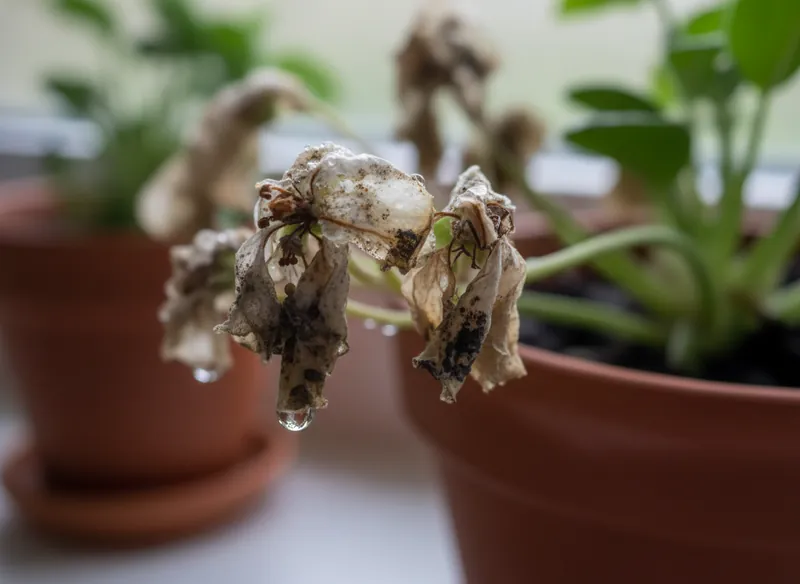
- Flower rot · Flowers or flower buds develop soft, brown spots that spread and cause them to disintegrate when touched.
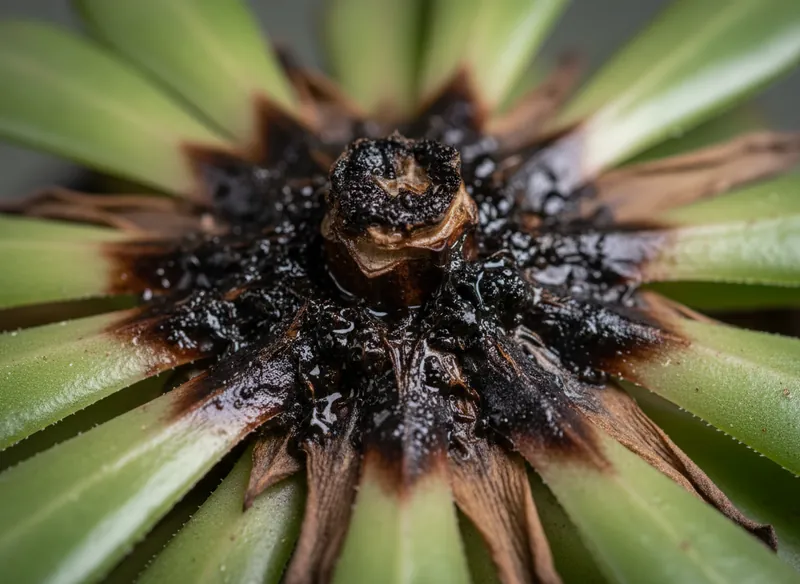
- Rot in the center of the plant · Collapse and wet discoloration appear in the center of the plant, where new leaves emerge.
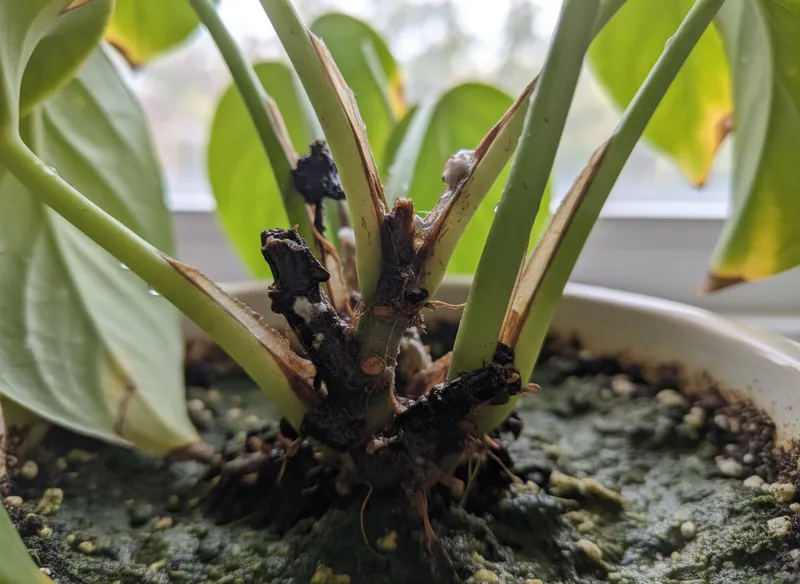
- Soft stem rot · A section of stem becomes soft, watery, and discolored, often causing the plant to collapse or break.
What to do now
Treat waterlogged potting mix
- Stop all watering immediately. Do not add another drop.
- Gently remove the plant from its pot to inspect the roots. This is the most important step.
- Examine the root system: healthy roots are white and firm, while rotten roots are brown, black, and soft and come away easily.
- Use clean, disinfected pruning shears or scissors to cut off all rotten roots without hesitation. Keep only the healthy part of the root system.
- Discard the old, waterlogged potting mix and clean the pot with hot, soapy water to kill the fungi and bacteria responsible for rot.
- Repot the plant in fresh, dry, well-draining potting mix. Choose a pot only slightly larger than the volume of roots remaining.
- Wait at least 3 to 5 days before the first very light watering. The plant needs time to heal and form new rootlets.
Sanitation pruning
- Disinfect your tools. Use 70% alcohol or diluted bleach (1 part to 9 parts water) to avoid spreading the infection from one part of the plant to another.
- Locate the diseased area. Plan to cut at least 2 to 3 cm (about 0.8 to 1.2 in) into the healthy part of the stem or leaf to make sure you remove all traces of disease.
- Make a clean, decisive cut with your tool. Do not crush the tissue; a clean cut allows the plant to heal much faster.
- Examine the cut you just made. If the center of the stem still shows discoloration or black spots, cut a little farther down until the tissue is entirely green and healthy.
- Discard the cut material immediately in the trash. Never put it in the compost, as diseases could develop there and contaminate other plants.
- Clean your tools again when you finish. This is a good habit to avoid spreading problems the next time you garden.
Prevention
- Always check the potting mix with your finger 5 cm (about 2 in) deep before watering.
- Always use pots with drainage holes.
- Empty the saucer 30 minutes after each watering so roots do not sit in water.
- Adjust watering frequency to the seasons: reduce it significantly in fall and winter where growth and water use slow down.
- Inspect your plants every week to spot the first signs of disease.
- Ensure good air circulation around your plants by avoiding overcrowding.
- Remove dead leaves or leaves that have fallen onto the potting mix as soon as you see them.
- Always disinfect cutting tools before and after each use.